REVIEW · KATHMANDU
Kathmandu Heritage Walk | Heritage Walk of Kathmandu
Book on GetYourGuide →Operated by Breakfree Adventures Pvt. Ltd. · Bookable on GetYourGuide
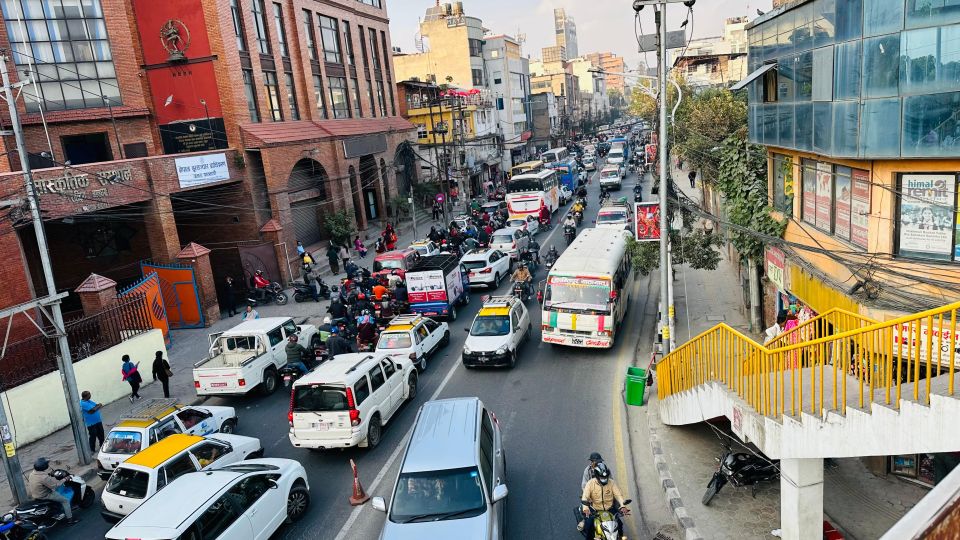
Kathmandu can be noisy. This walk gives you control, starting in Thamel and mixing temples, markets, and craft stalls into one easy route. I especially like the contrast: Shanti Bihar Stupa is a calm pocket of peace, right when the city noise starts to feel like a wall.
You’ll also get a guiding hand that can adjust the pace. In past private groups, guides like Martin (praised for pacing that covered lots of ground without being too hard for seniors) and Madan (praised for professionalism and time efficiency) set the tone. The main drawback is simple: it’s a 3.5-hour walking day and transportation isn’t included, so comfy shoes matter more than you think.
One more smart angle: this itinerary keeps you away from UNESCO World Heritage sites, so you spend more time in everyday neighborhoods and fewer hours chasing the most famous photo spots.
In This Review
- Key highlights worth showing up for
- Thamel to temples: why this walking route feels useful
- Where the tour begins, how the 3.5 hours usually feel
- Thamel, Tahiti, and local markets: street time with structure
- Shanti Bihar Stupa: a peace stop that changes the rhythm
- Indrachowk sacred stops: Akash Bhairab plus Sankata and Mahankal Bhairab
- Gold Souq and Annapurna Temple: craftsmanship and architecture in the center
- Bhotahiti and the neighborhoods you might miss
- Price and logistics: does $40 buy real value?
- Should you book Kathmandu Heritage Walk?
- FAQ
- Where does the Kathmandu Heritage Walk start?
- How long is the tour?
- Is this a private tour or shared group?
- Is transportation included in the price?
- What is included with the $40 price?
- Are UNESCO World Heritage sites included?
- What language is the guide?
- What should I bring?
- Who isn’t this tour suitable for?
Key highlights worth showing up for
- Thamel-first start: Easy to find, with shops and food right at the beginning and end.
- Shanti Bihar Stupa reset: A peaceful break from street noise during a walking itinerary.
- Indrachowk sacred stops: Akash Bhairab Temple plus more temple visits around the area.
- Gold Souq craftsmanship: A focused market stop that’s more about making and design than just shopping.
- Private-group pacing: You’re not stuck in a huge crowd rhythm.
Thamel to temples: why this walking route feels useful
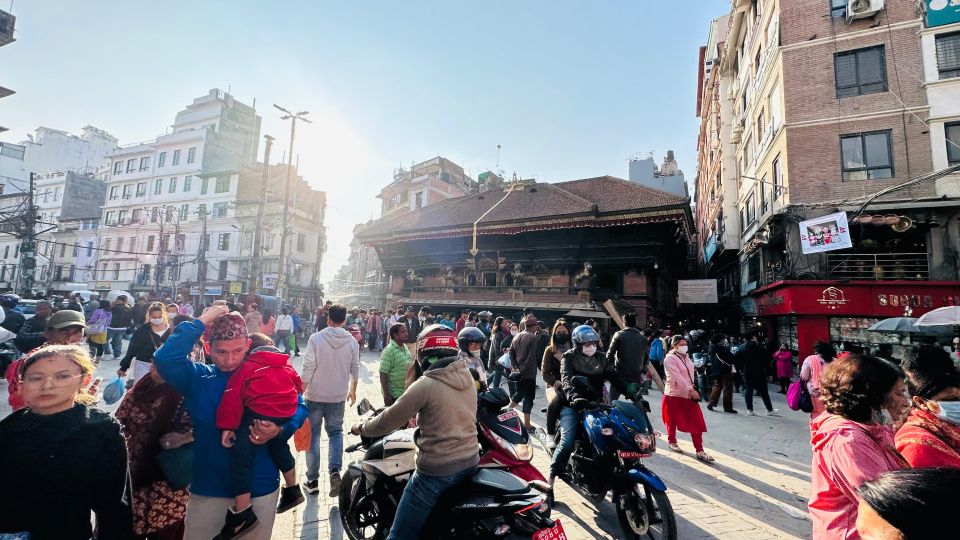
If you’re spending limited time in Kathmandu, your day planner usually turns into a fight: pick the big landmarks, or try to understand how people actually live. This Heritage Walk is built for the second goal, without ignoring the spiritual side of the city. You start and finish in Thamel, so you don’t lose your bearings at the end of the tour when your feet are already giving opinions.
What I like is the balance of stops. You’re not only bouncing between churches-and-cathedral style points, or only shopping. You get a sequence that moves from street life into quieter sacred spaces, then back to markets and local neighborhoods.
It’s also a good value-style tour for the first day of a trip. At $40 per person (for a 3.5-hour outing), you’re paying for a guide, clear direction, and a set route that helps you avoid wasting time figuring out what’s where. The tour includes a government certified guide and 1000ml mineral water, which is one less small “trip tax” you have to manage yourself.
And yes, the rating is strong: it shows 5/5 across 4 reviews, with people praising guides by name and specifically calling out pacing and professionalism.
You can also read our reviews of more walking tours in Kathmandu


Where the tour begins, how the 3.5 hours usually feel
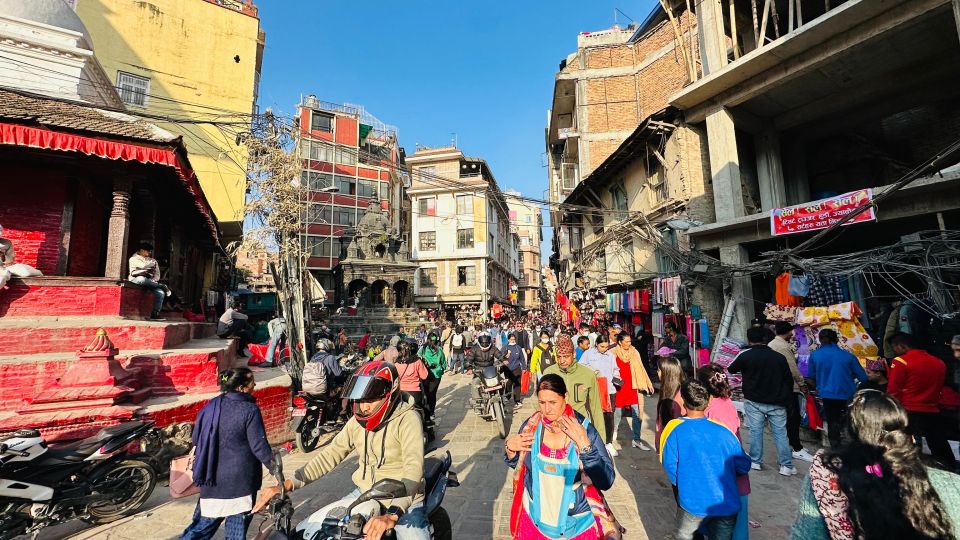
The meeting point is practical and easy: at Breakfree Adventures entrance in Thamel, in front of Everest Bank Limited. That matters because Kathmandu’s streets can turn from “walkable” to “confusing” fast, especially when you’re returning after dark or after a full day of exploring.
This is a private group and it runs for 3.5 hours with an English live guide. A private setup can be a real comfort. In one private booking, Martin was noted for selecting destinations the two-person group hadn’t seen before, and for controlling the pace so it didn’t turn into a leg-burner.
Even with a guide handling directions, this is still a walking itinerary. Transportation is not included, and meals aren’t included either. So think of it as a half-day plan where you’ll want:
- Comfortable shoes you can walk in for a few hours
- A light rain plan (umbrella is recommended)
- A camera for temple exteriors and market scenes
- A face mask or protective covering (recommended)
This tour also marks one key boundary in advance: UNESCO World Heritage sites are not included. If your must-see list includes UNESCO entries, you’ll want to pair this with a separate plan. If your goal is city culture beyond the headline list, this route makes sense.
Thamel, Tahiti, and local markets: street time with structure
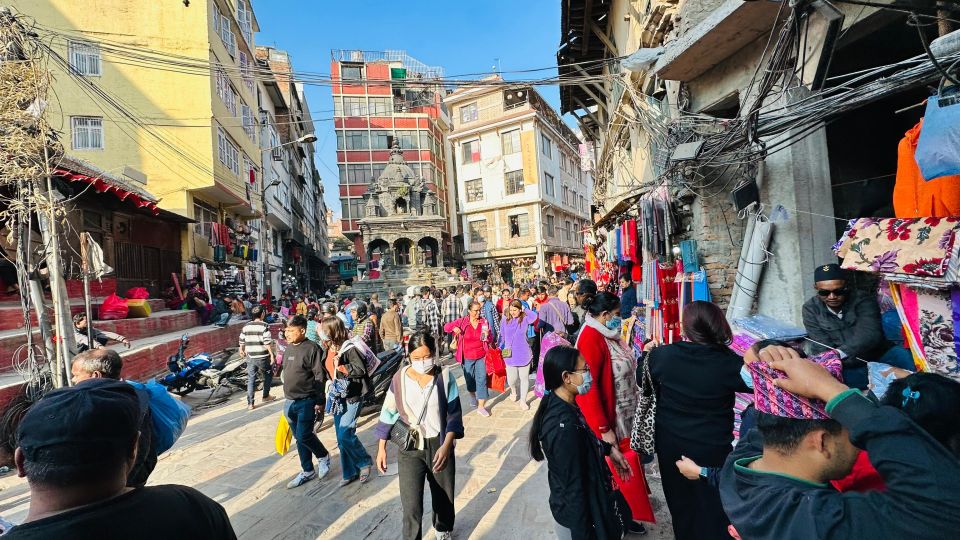
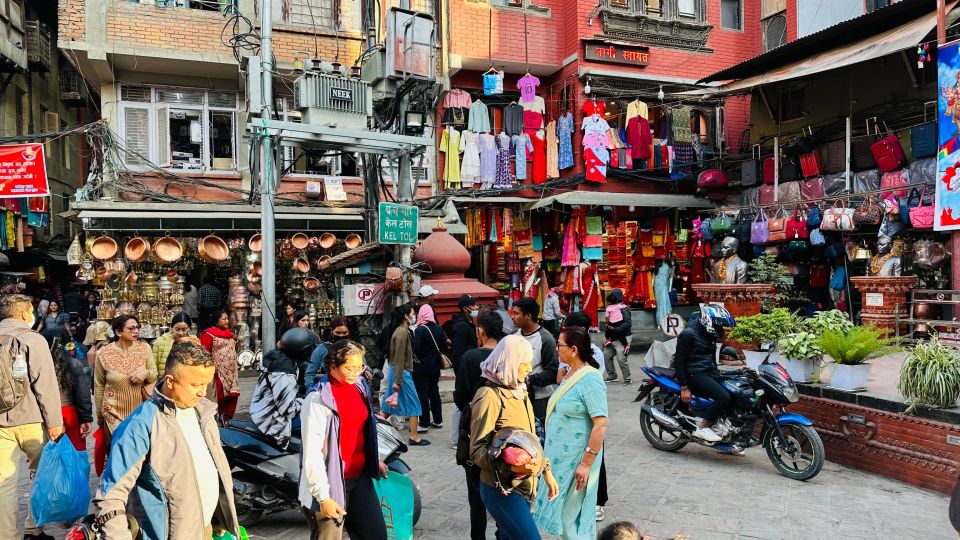
Thamel is where most first-timers end up, mostly because it’s convenient. This tour uses that convenience on purpose. You begin in Thamel, then move to Tahiti, where traditional architecture and modern life sit side by side. You’ll get that “how the city actually looks” feeling without having to piece together neighborhood routes on your own.
Then comes the part that often surprises people who expect only temples: you also get time for local markets. The tour includes a lively local market stop near the end, before returning to Thamel. That’s valuable because you’re not shopping on empty energy. You’ve already built context with the religious and craft stops, so market time feels less random.
For you, the market segment is likely where your questions pop up:
- What should you buy (and what should you skip)?
- How do prices and quality compare?
- What’s for everyday use versus tourist-focused items?
The Gold Souq stop (more on that next) helps a lot with this. It trains your eye for craftsmanship, so when you reach the broader market you’re more likely to buy something you actually understand.
One practical tip: Thamel can get busy with sellers and passersby. If you’re aiming for calm photos, keep your camera handy but don’t expect every angle to be empty. This isn’t a “quiet stroll.” It’s a guided day in real Kathmandu.
Shanti Bihar Stupa: a peace stop that changes the rhythm
Shanti Bihar Stupa is described as a peaceful sanctuary amid urban chaos, and that’s exactly how it works as part of the route. The itinerary isn’t only about stacking points. It’s about rhythm: you go from busy streets into a calmer space, then back out again.
This is the kind of stop I’d call a reset button. Your brain gets a break from constant movement and the constant scanning for where to go next. Instead, you’re dealing with stillness, observation, and quiet respect. Even if you’re not religious, sacred spaces tend to slow your pace naturally.
Practically, this stop also helps with logistics. After Thamel and the move toward other areas, you’ll likely be ready for a slower moment. Shanti Bihar Stupa gives you that without needing to plan anything extra on your own.
A small consideration: because it’s a place of worship and reflection, it’s smart to dress and act accordingly. The tour recommends comfortable clothes, and that’s the sweet spot. Don’t overthink it, just keep it respectful.
Indrachowk sacred stops: Akash Bhairab plus Sankata and Mahankal Bhairab
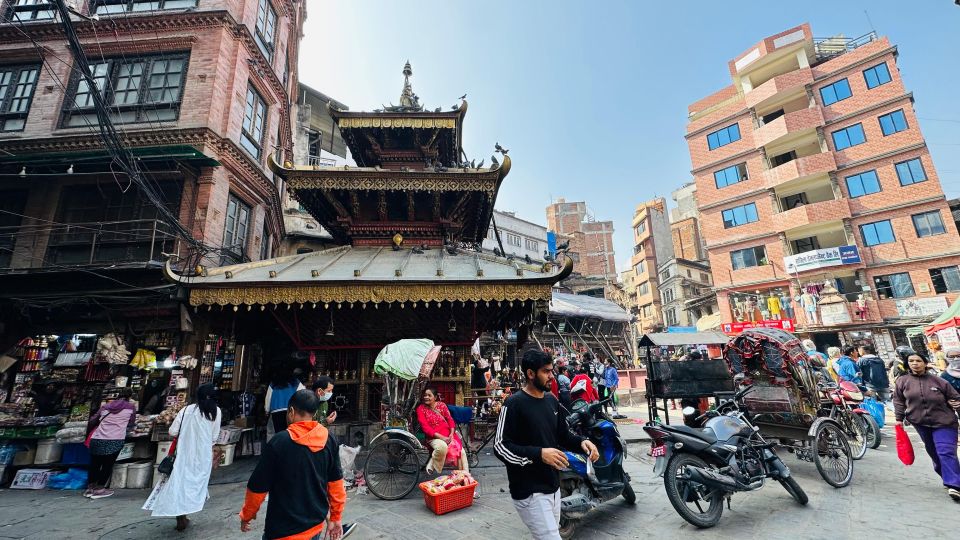
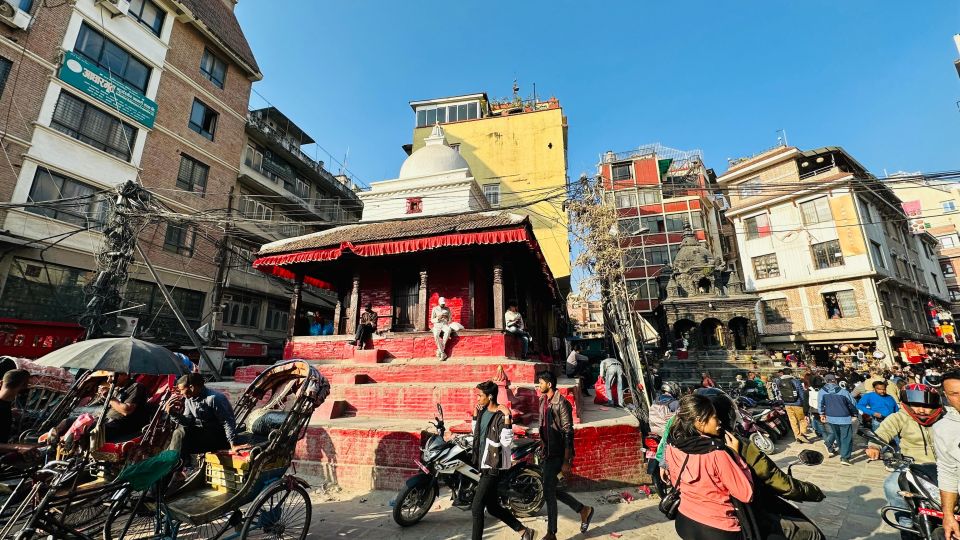
The tour’s temple segment centers on Akash Bhairab Temple in Indrachowk, and it’s singled out for a devout atmosphere around this historic sacred site. If you like Kathmandu for its spirituality and street-level faith, this section is a highlight. It’s not just “pretty buildings.” It’s a living part of the city’s daily religious world.
From there, the route continues to Sankata Temple and Mahankal Bhairab. Even without getting technical about details you might not need, the structure matters. You’re moving through places that carry cultural meaning, in a way that’s guided rather than chaotic.
Here’s what you should prepare for in this part of the day:
- Short walks between sites
- Time spent observing and learning from your guide
- A slower pace than the market streets, but still within a 3.5-hour flow
Also, keep in mind the age and mobility notes. The tour is not suitable for people over 70 and not suitable for wheelchair users. That doesn’t mean the day is extreme, but it does mean you should assume uneven sidewalks, steps, and standard temple-area footwear challenges.
If you’re in that eligible range and you like structured spiritual stops, this temple cluster is where you’ll feel the tour’s “heritage walk” promise most clearly.
You can also read our reviews of more historical tours in Kathmandu


Gold Souq and Annapurna Temple: craftsmanship and architecture in the center
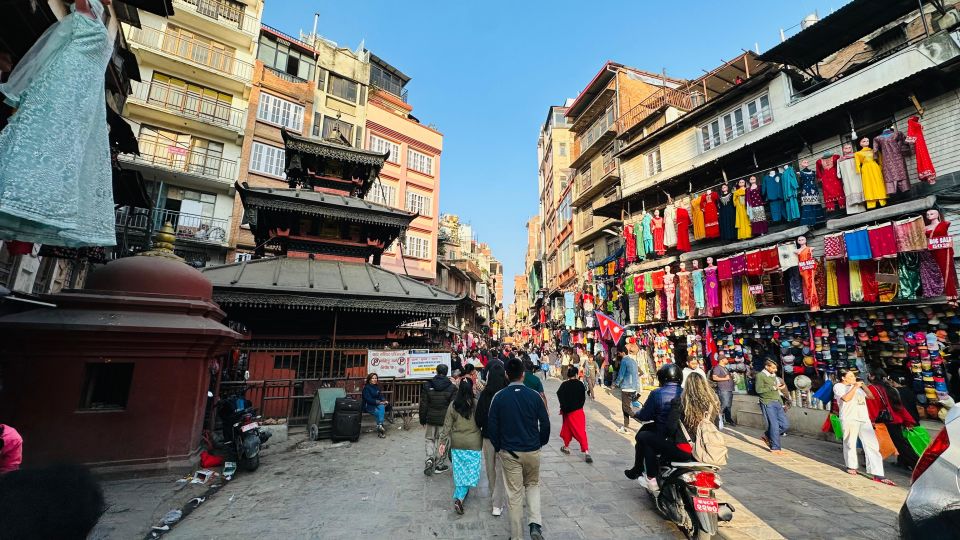
After the sacred stops, the tour shifts to something more hands-on: Gold Souq. This isn’t described as a random bazaar. It’s framed as a place to explore exquisite craftsmanship in Kathmandu. That changes how you’ll experience it. Rather than trying to bargain for the sake of bargaining, you can focus on design, workmanship, and what different items are made for.
Then you finish up with Annapurna Temple, described for its splendor in the city center. If you’ve been enjoying the spiritual theme, this is a satisfying closure: you get another major temple moment before you swing back toward markets and Thamel.
For your practical decision-making, this pairing works well:
- Gold Souq helps you slow down and look carefully at material and design.
- Annapurna Temple provides a clean, recognizable cultural payoff in the middle of the city.
It’s also a nice blend for photos that don’t feel like the same subject repeated. Market textures and temple architecture create visual variety within a short time window.
Bhotahiti and the neighborhoods you might miss
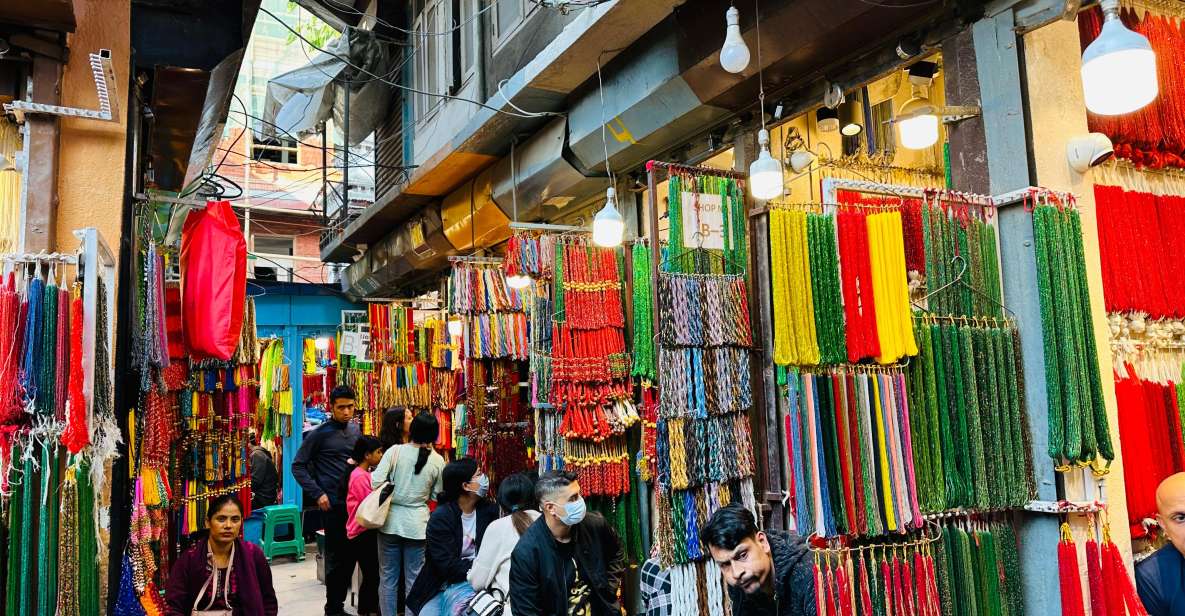
The tour includes Bhotahiti, described as a locale brimming with local flavor. That’s a phrase that usually means one thing in practice: you’re not only seeing what’s marketed to tourists. You’re getting a slice of everyday neighborhood texture as you walk from one notable spot to the next.
This kind of stop is often what makes a short tour feel more than just a checklist. You’re seeing the city in between the headline names. It helps you understand where you are, how locals move, and how the city’s spiritual and commercial life overlap.
And because the tour ends back in Thamel, the neighborhood feel doesn’t vanish the moment you return. You’re still in the same convenient area where you can keep exploring afterward, grab dinner, or just decompress without needing another ride or navigation plan.
This also keeps the overall day more forgiving. Even if one stop doesn’t click for you, another one will. Markets and craft appeal to one kind of curiosity. Stupas and temples appeal to another. Bhotahiti is for the people who like the city’s side streets and real-life energy.
Price and logistics: does $40 buy real value?
At $40 per person for 3.5 hours, the headline question is whether you’re paying for something you’d struggle to do on your own. In this case, you’re paying for:
- A government certified guide
- Clear guidance through multiple named locations
- 1000ml mineral water
- Service charge included
What’s not included is just as important:
- Transportation if needed
- Meals & drinks
- Personal expenses
So when does this price feel like a good deal? When you value time. If you’d otherwise spend a lot of energy figuring out routes, negotiating your way around unfamiliar neighborhoods, or worrying you’re missing the right turn, the guide becomes the real product.
Also, private-group format matters. It’s easier to move at your comfort level, and it’s easier to ask questions without feeling like you’re competing for attention in a larger group. Past bookings highlighted this. Martin was praised for pacing that wasn’t too strenuous for seniors, and Madan was praised for being professional and time efficient.
Should you book if you’re trying to do everything yourself? You can. But if you want a guided pathway through central Kathmandu that includes craft and faith (and avoids UNESCO stops), this is one of the simpler ways to get there.
Should you book Kathmandu Heritage Walk?
Book it if you want a short, guided Kathmandu day that mixes Thamel street life, quieter sacred spaces like Shanti Bihar Stupa, and city-center culture including Akash Bhairab, Gold Souq, and Annapurna Temple—without spending your half-day on UNESCO sites.
Consider skipping it if you need wheelchair access, you’re older than the tour’s guidance suggests, or you want lots of downtime with minimal walking. This is a walk-and-see plan, not a sit-by-a-driver plan.
If you’re fitting this into a first trip, it’s a smart orientation day. You’ll leave with a better sense of how Kathmandu’s spiritual places and everyday neighborhoods fit together, and you’ll know where to head next on your own.
FAQ
Where does the Kathmandu Heritage Walk start?
The tour starts at the Breakfree Adventures entrance in Thamel, located in front of Everest Bank Limited.
How long is the tour?
The duration is 3.5 hours.
Is this a private tour or shared group?
It’s a private group.
Is transportation included in the price?
No. Transportation is not included if you need it.
What is included with the $40 price?
It includes a government certified guide, 1000ml mineral water, and service charge.
Are UNESCO World Heritage sites included?
No. UNESCO World Heritage sites are not included in this tour.
What language is the guide?
The live tour guide is English.
What should I bring?
Bring your passport, comfortable shoes, an umbrella, a camera, comfortable clothes, and a face mask or protective covering.
Who isn’t this tour suitable for?
It is not suitable for pregnant women, wheelchair users, babies under 1 year, people over 95 years, and people over 70 years.