REVIEW · KATHMANDU
Kathmandu Private Sightseeing Tour | UNESCO World Heritage Sites
Book on Viator →Operated by Mount Glory Treks & Expedition Pvt.Ltd. · Bookable on Viator
Kathmandu is a temple map you can actually manage in one day. This private sightseeing tour strings together some of the best-known UNESCO World Heritage Sites around Kathmandu Valley, with a guide who keeps the route sensible and the stops meaningful. You can also choose a lighter version with fewer sites, depending on how much walking and time you want.
I really like two things here. First, the English-speaking city tour guide helps you connect what you’re seeing with what it means, not just where to stand for photos. Second, you get hassle-free pickup from your Thamel hotel and travel by private car with AC, which matters when Kathmandu traffic and weather turn your day into a moving puzzle.
One drawback to plan for: the headline price doesn’t include monument entrance fees, and your final cost changes based on whether you select 2, 4, or 7 UNESCO sites. Also, a full 7-site day can feel long, so it helps to choose a pace that fits your energy.
In This Review
- Key highlights that make this Kathmandu UNESCO tour work
- A one-day UNESCO plan for Kathmandu Valley (without the chaos)
- Thamel hotel pickup and AC private comfort
- Kathmandu Durbar Square: Hanuman Dhoka, Kumari, and Buddha Park
- Swayambhunath, the Monkey Temple, and why the hill matters
- Pashupatinath and Guhyeshwari: Shiva-focused sights near the airport
- Boudhanath Stupa: a giant UNESCO sphere for Buddhist prayer
- Patan Durbar Square: a calmer pace inside Kathmandu Valley’s core
- Bhaktapur Durbar Square and Changunarayan: the extra effort that pays
- Price and logistics: what the $35 really means
- Who should book this Kathmandu private UNESCO tour
- A few practical tips so your day stays enjoyable
- Should you book this Kathmandu Private Sightseeing Tour?
- FAQ
- What UNESCO World Heritage Sites are included on the full route?
- Does the tour include pickup in Kathmandu?
- Are monument entrance fees included in the tour price?
- Is lunch included?
- How long is the Kathmandu private sightseeing tour?
- What happens if weather is bad or you need to cancel?
Key highlights that make this Kathmandu UNESCO tour work
- You control the pace with fewer or more UNESCO sites (the route can cover 2, 4, or 7 UNESCO stops, depending on what you choose)
- Thamel hotel pickup plus AC private transport cuts down the time you’d otherwise spend figuring out connections
- Guides like Manoj and Santos keep the timing realistic, even when rain and traffic slow things down
- You hit the big spiritual anchors in the right order without wasting time backtracking through the city
- Entrance fees are a known add-on (listed amounts are 1200 NPR for 2 sites, 2600 NPR for 4 sites, and 6000 NPR for 7 sites)
- Good weather is important, because the experience is designed for outdoor temple viewing
A one-day UNESCO plan for Kathmandu Valley (without the chaos)
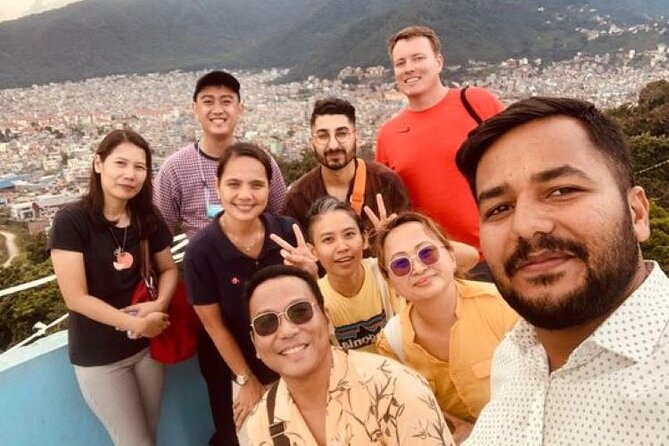
Kathmandu can be overwhelming fast: lanes are narrow, traffic can be unpredictable, and temples are everywhere you look. The value of this tour is that it turns all that noise into a focused route, with a guide who can answer the practical questions as you go.
The other smart part is choice. If you’re seeing Kathmandu for the first time, you might want a 4-site day so you don’t feel rushed. If you’re the type who loves getting a lot done and can handle a long outing, the full 7-site option is the way to go. Either way, the day is built around UNESCO sites that form the core of Kathmandu Valley’s cultural identity.
I like that the tour stays flexible within its structure. Even on busy days, guides have a track record of adjusting when conditions get messy, including rain and slower-than-expected traffic.
You can also read our reviews of more private tours in Kathmandu

Thamel hotel pickup and AC private comfort
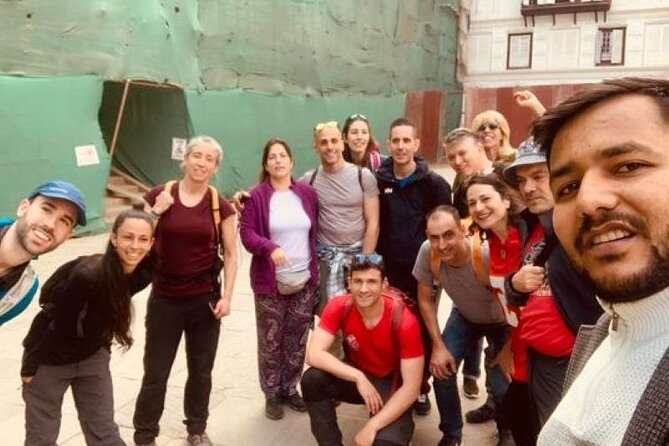
Starting in Thamel is a big deal. If you’re staying around Thamel, you won’t waste time negotiating meeting points or figuring out transport on your first morning. Pickup is offered directly from your Thamel hotel, then you’re in a private vehicle with AC for the drive between clusters.
This is one of those details you only notice when you don’t have it. Kathmandu’s traffic can stretch your day, and heat can drain you before you even hit the first major temple. The AC car makes the schedule more believable, and it keeps you from starting the day already tired.
You’ll also get a bottle of mineral water as part of the tour. It sounds small, but on a long temple day it helps you stay steady while you’re waiting for your next stop and walking at altitude and in warm air.
Kathmandu Durbar Square: Hanuman Dhoka, Kumari, and Buddha Park
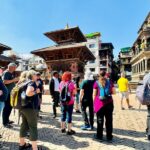
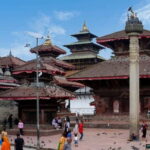
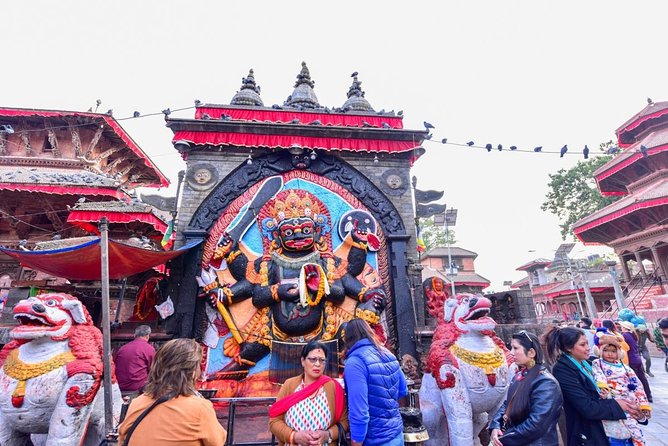
Your day often begins at Kathmandu Durbar Square, centered around Basantapur Durbar and popularly associated with Hanuman Dhoka Palace. This is a royal palace area that anchors the old city feel, and it’s a UNESCO site for a reason: the carvings, courtyards, and temple structures reflect how power and devotion intertwined here.
This stop also ties directly into some of the most iconic Kathmandu sights. You’ll spend time around Hanuman Dhoka Durbar, then you’ll also see the Living Goddess tradition associated with Kumari. That’s one of those experiences that feels different from a normal temple visit because it’s tied to a living cultural practice, not just stone and steps.
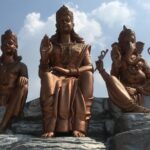
Then there’s the Buddha Park portion, including the giant three Buddha statues. It’s a strong visual reset after the palace complex. The watch-out here is energy: Durbar Square areas can involve lots of steps and uneven ground, so wear shoes you can move in comfortably.
Admission fees for monuments in this area are not included, so you’ll want to factor that into your budget for the total UNESCO option you pick.
Swayambhunath, the Monkey Temple, and why the hill matters
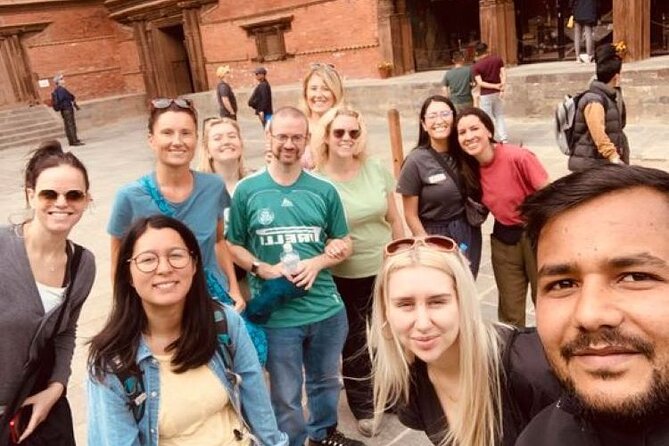
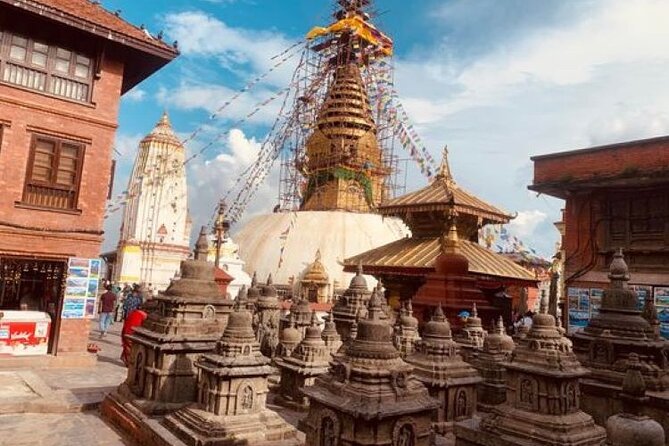
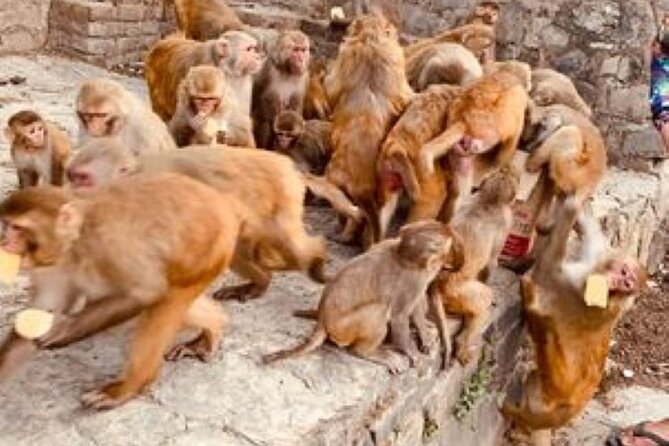
Next comes Swayambhunath, an ancient stupa perched on a hilltop. It’s famous worldwide as the Monkey Temple, and the reason is obvious: it sits high enough to command views, and the area has lots of life around it.
You’re there for more than the payoff views over Kathmandu. The stupa complex has smaller stupas scattered around, and the major stupa includes the well-known Buddha eyes motif. The eyes are one of those features people remember because they change how you look at the entire viewpoint. Instead of just seeing a skyline, you feel like you’re being watched by a symbol that’s part of the religious space.
Plan for time to slow down here. Even if you’re not lingering for hours, you’ll want a few minutes to get your bearings and notice details in the complex. Hilltop sites also mean you’ll feel the walk sooner if you picked the longer 7-site option.
Entrance fees are extra, but the experience depends on how long you’re given at this stop. With a guided visit, you’re more likely to understand what you’re seeing as you go.
Pashupatinath and Guhyeshwari: Shiva-focused sights near the airport
From Swayambhunath, the route moves to Pashupatinath Temple, one of the most important Hindu pilgrimage sites in Nepal and another UNESCO World Heritage Site. It’s also noted as being close to the airport area, which helps explain why it fits neatly into a one-day route without turning into a half-day travel detour.
You’ll also see Guhyeshwari Temple as part of this stop area. That pairing matters because you get two layers of devotion within the same general zone. Even if you’re not an expert in Hindu temple layouts, having a guide helps you understand how these spaces relate to each other.
What to watch for here is timing and crowds. Pashupatinath can get busy, and the site has areas where the best views are not always the easiest to reach. Your guide’s job is to help you move smartly while still respecting how the religious space functions.
As with other major sites, monument entrance fees are not included, so your total cost depends on whether you choose the 2, 4, or 7 UNESCO option.
You can also read our reviews of more historical tours in Kathmandu

Boudhanath Stupa: a giant UNESCO sphere for Buddhist prayer
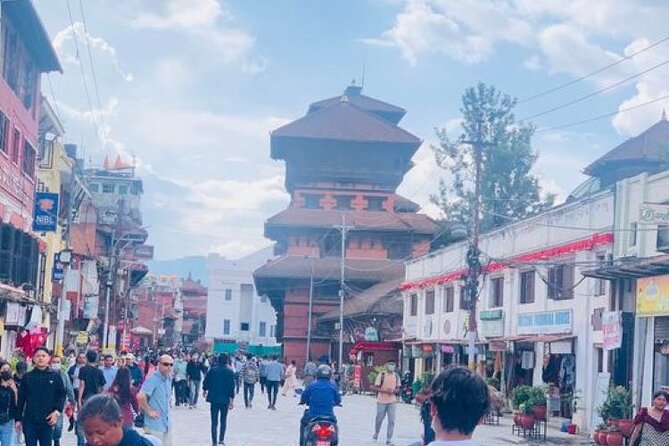
Then you shift to Buddhism at Boudhanath Stupa, described as the largest spherical stupa of its kind and a UNESCO World Heritage Site. This is the kind of site where the scale hits you quickly. The stupa isn’t a small landmark you pass by; it’s the center of gravity for the area.
You’ll see why locals and visitors come in steady numbers each day. Around Boudhanath, people move in patterns of prayer and attention, and it’s one of the better places on the tour for slowing down and observing without needing to understand every detail.
This stop also works well as a contrast to the Hindu temples you saw earlier. You’ll feel a difference in how the spaces are used and what kind of atmosphere you notice first. Your guide can point out what to look for so you don’t just experience it as a visual scene.
Again, entrance fees are extra, so the best strategy is to match the number of UNESCO sites you want to your budget and your stamina.
Patan Durbar Square: a calmer pace inside Kathmandu Valley’s core
Patan Durbar Square (in Lalitpur) is another major palace and monument area, also a UNESCO site. The feeling here can be more relaxed than the first Durbar Square you visit, even though it’s packed with Hindu and Buddhist monuments and old-world architecture.
This is a smart stop for people who like details: you get a sense of Kathmandu Valley’s shared artistic language across different cities. A guide also helps you focus on what makes Patan’s structures distinct rather than treating it like another collection of temples.
You’ll likely spend about two hours in this zone, which is a good window. It’s long enough to look closely and not just rush through the highlights, but short enough to keep the day from tipping into pure exhaustion.
Entrance fees apply here as well. If you’re aiming for value, a guided explanation is what turns the time into something you remember, instead of just a checklist.
Bhaktapur Durbar Square and Changunarayan: the extra effort that pays
A full 7-site day often includes Bhaktapur Durbar Square, sometimes called Khopa Lyaku. It sits at about 1350 meters, and the elevation can add a subtle “slower breathing” feel even if you’re not trying to be dramatic about it. Bhaktapur’s Durbar Square is known for its distinctive architecture, including fourteen octagonal pillars and details above the cornice.
If Patan felt slightly calmer, Bhaktapur can feel even more about craft and form. The guide can help you notice why the layout and design matter, not just that the structures exist.
Finally, you may end with Changunarayan, an ancient Hindu temple on a hilltop. This is described as one of the oldest temples and is known for distinctive construction and long-standing religious belief in the region. It’s a strong finale because it feels like you climbed away from the city core into a temple with a deeper time-worn identity.
The catch: this ending works best if you didn’t start the day too fast. A 7-site schedule can be physically tiring, and on rainy days it can be mentally tiring too. Guides have adjusted routes in the past to help you stay on track, and that’s where a good guide like Manoj can make a difference.
Price and logistics: what the $35 really means
At $35 per person, this tour can be excellent value if you want a guided day that includes private AC transport, taxes for tour logistics, a bottle of mineral water, and an English-speaking guide. That price is also appealing when you’re traveling with friends or family because it stays structured around your group only.
But you should treat entrance fees as the big variable. Monument entrance fees are listed as:
- 6000 Nepali Rupee for 7 UNESCO sites
- 2600 Nepali Rupee for 4 UNESCO sites
- 1200 Nepali Rupee for 2 UNESCO sites
So the question is not just what you pay upfront. It’s what kind of day you want: a quick UNESCO taste, a balanced mid-length route, or the full stretch that hits almost every major UNESCO anchor in Kathmandu Valley.
Lunch is not included, and tips for the guide and driver are not included. You’ll want to plan for food on your own, especially if you’re doing a long 8-10 hour day. If you’re the kind of person who needs a sit-down meal to recharge, factor that into the timing you expect.
For the best value, I’d recommend matching the site count to your personal pace. If you pick 7 when you really wanted 4, you might feel like you’re sprinting from sacred stop to sacred stop. If you pick 4 when you can handle more, you’ll leave with the satisfying feeling of having seen enough without feeling cooked.
Who should book this Kathmandu private UNESCO tour
This tour is a strong fit if you want:
- a guided UNESCO day without having to plan each stop yourself
- a private vehicle experience with AC and pickup from Thamel
- an English-speaking guide who can explain what you’re seeing while you move between sites
It’s also great for first-timers who want the top Kathmandu Valley hits in one outing. If you already know the basics and just want logistics handled, it also works well because the private format keeps you from negotiating with multiple transport partners.
If you’re sensitive to long walking days, uneven temple steps, or you know your energy drops quickly in heat, consider the 2-site or 4-site version. A full 7-site day can be tiring even when everything goes smoothly.
A few practical tips so your day stays enjoyable
Bring shoes you can walk in. Temple floors and pathways can be uneven, and hilltop sites mean more uphill steps than you might expect.
Wear clothes that are respectful and easy to manage. You’ll be going from exterior areas to places where people expect quiet focus. Even when you’re not sure what rules apply, dressing simply helps you avoid awkward moments.
If you’re planning for photos, remember that not every angle is easy at busy sites. With a guide, you’ll spend less time chasing the perfect shot and more time understanding the best way to experience each place.
Finally, don’t forget that weather matters. The experience is designed with good weather in mind, and the operator notes that the tour can be adjusted or refunded if poor conditions disrupt the plan.
Should you book this Kathmandu Private Sightseeing Tour?
I’d book it if you want a structured, private UNESCO day that’s easier than doing the route yourself. The mix of Durbar Squares and major religious sites hits the big names, and the private AC transport plus Thamel pickup makes the long day feel manageable.
I’d choose the 4-site option if you want time to actually look at details instead of racing. I’d choose the 7-site option only if you’re comfortable with a long outing and you like a packed plan.
This is also a good pick if you want a guide who can handle timing challenges. Real examples include guides who managed to keep the day on track even with rain and traffic, and who guided visitors to do six sites instead of forcing seven when conditions made it smarter.
If your goal is Kathmandu UNESCO highlights with less stress and more understanding, this tour is a solid match.
FAQ
What UNESCO World Heritage Sites are included on the full route?
The full route includes Kathmandu Durbar Square (Hanuman Dhoka), Swayambhunath, Pashupatinath, Boudhanath Stupa, Patan Durbar Square, Bhaktapur Durbar Square, and Changu Narayan.
Does the tour include pickup in Kathmandu?
Yes. Pickup is offered from your Thamel hotel, and you travel by private car with AC for the day.
Are monument entrance fees included in the tour price?
No. Monument entrance fees are not included. Entrance fees are listed as 6000 Nepali Rupee for 7 UNESCO sites, 2600 for 4 UNESCO sites, and 1200 for 2 UNESCO sites.
Is lunch included?
No. Lunch is not included, so you’ll need to plan your own meal during the day.
How long is the Kathmandu private sightseeing tour?
It runs about 8 to 10 hours.
What happens if weather is bad or you need to cancel?
The experience requires good weather. If it’s canceled due to poor weather, you’ll be offered a different date or a full refund. Cancellation is free up to 24 hours in advance for a full refund.