REVIEW · KATHMANDU
Kathmandu: Full Day Private Top 4 UNESCO Heritage Tour W/Lunch.
Book on Viator →Operated by Travel with Ram · Bookable on Viator
Four UNESCO stops, one easy Kathmandu day. I like how this private tour turns the big names—Swayambhunath, Pashupatinath, Boudhanath, and Patan Durbar Square—into a logical, well-timed route. I also like the air-conditioned vehicle plus hotel pickup and drop-off, which saves a lot of effort when you’re bouncing between hilltop, riverfront, and temple zones. One thing to consider: entrance fees aren’t automatically included in every case, so you may need to pay directly depending on the option you choose.
The best part is the day feels guided, not rushed. Your English-speaking guide (Ram) helps you understand what you’re looking at, and several experiences like this stand or fall on the guide’s ability to make the places click. From the feedback I’ve seen, Ram tends to keep things organized and helps you feel safe while moving through busy religious areas.
It’s a good pick if you want a full cultural day without coordinating transport on your own. If you’re the type who likes seeing how different traditions share the same Kathmandu Valley space, this route makes a strong one-day case.
In This Review
- Key Highlights If You Want the Big UNESCO Picture
- Why This Kathmandu Top 4 Route Works in One Day
- Comfort and Convenience: Hotel Pickup, Air-Conditioned Travel, Private Pace
- Stop 1: Swayambhunath Monkey Temple and Hilltop City Views
- Stop 2: Patan Durbar Square for Newar Craft and Malla-Era Details
- Stop 3: Pashupatinath Temple on the Bagmati River
- Stop 4: Boudhanath Stupa and the Big White Dome Effect
- Lunch on the Move: Box Lunch Details That Matter
- Ram’s Role: English Explanations, Safety, and a Smooth Flow
- Price and Value: What Makes $10 Work (and What Might Cost Extra)
- Timing, Pace, and How to Plan Your Expectations
- Best Fit: Who This Kathmandu Heritage Tour Is For
- Should You Book This Kathmandu UNESCO Heritage Tour?
- FAQ
- Which UNESCO sites are included in the tour?
- How long does the Kathmandu private tour take?
- Is hotel pickup and drop-off included?
- What’s included in the lunch?
- Do I need to pay entrance fees?
- Is free cancellation available?
Key Highlights If You Want the Big UNESCO Picture
- Private, English-speaking guidance with skip-line help that keeps the day moving.
- Hotel pickup and drop-off plus an air-conditioned vehicle between sites.
- Swayambhunath views from the hilltop Monkey Temple area.
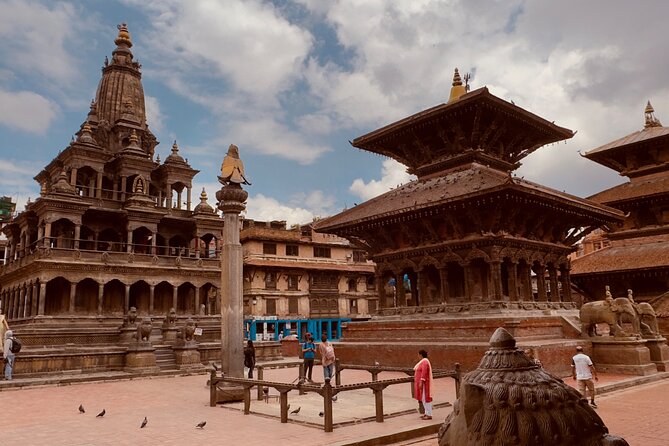
- Patan Durbar Square Newar architecture connected to the Malla monarchs.
- Pashupatinath on the Bagmati River with its iconic pagoda-like temple form.
- Boudhanath Stupa scale—the massive white dome and golden spire you can’t miss.
Why This Kathmandu Top 4 Route Works in One Day
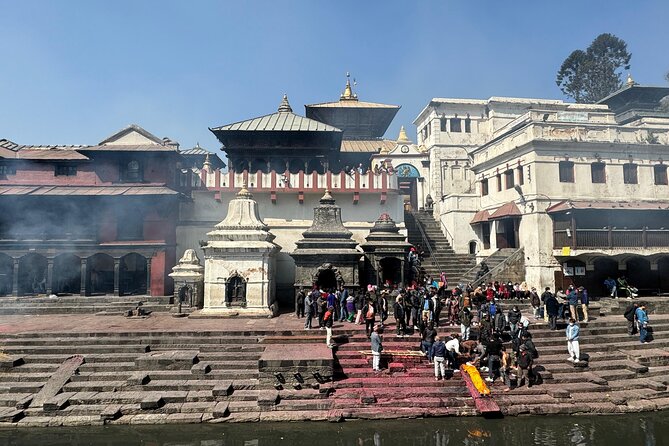
Kathmandu’s UNESCO sites aren’t all in one neat neighborhood. They’re spread out across the valley, with different religious settings and different vibes—from hilltop stupa viewpoints to the riverfront atmosphere at Pashupatinath. That’s exactly why a planned route matters.
This tour strings the sites together in a way that makes sense for a 6 to 7 hour day. You start at Swayambhunath, then move into Patan Durbar Square in Lalitpur, and later hit Pashupatinath and Boudhanath. With private transport and a guide to manage timing, you’re less likely to waste hours figuring out routes, tickets, and which site to hit first.
Also, the tour isn’t just a checklist. Ram’s role is to explain what the monuments mean and how they connect to local spiritual life and craft traditions. If you like walking through places and getting the story that makes the carvings, courtyards, and iconography click, that adds real value to a one-day visit.
You can also read our reviews of more private tours in Kathmandu

Comfort and Convenience: Hotel Pickup, Air-Conditioned Travel, Private Pace
You can think of the vehicle as the hidden hero of this itinerary. The day involves multiple zones and some uphill movement (especially at Swayambhunath). Having hotel pickup and drop-off means you start from your own location and don’t waste time getting to a meeting point.
You also get an air-conditioned vehicle, which is a big deal on a long day. Even if you enjoy sightseeing heat and crowds, sitting comfortably between sites helps you show up fresh for each monument. The tour is private, so the pace stays aligned with your group rather than getting stretched by a larger group schedule.
There’s also a practical touch: a mobile ticket is included. That can make things smoother when you’re handling entry steps for the sites that require tickets.
Stop 1: Swayambhunath Monkey Temple and Hilltop City Views
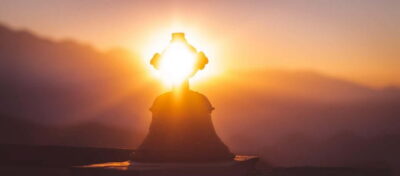
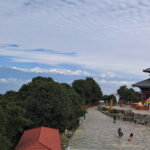
Swayambhunath is one of the easiest places to fall for in Kathmandu because it hits two goals at once: religion and viewpoints. It’s perched on a hill, and the Swayambhunath Stupa (often called the Monkey Temple) is a very old sacred monument in the Kathmandu Valley.
You’ll spend about 1 hour here. That’s enough time to get your bearings, look closely at the stupa area, and take in the outlook that makes this stop special. If you enjoy noticing symbols, watch for the way the complex is arranged around the stupa and how visitors move through the space.
Admission is listed as free for this stop, which is helpful for planning your day budget. One more practical note: even if the visit is short, being on a hill means you should expect some steps or uphill walking.
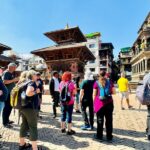
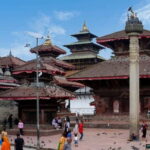
Stop 2: Patan Durbar Square for Newar Craft and Malla-Era Details
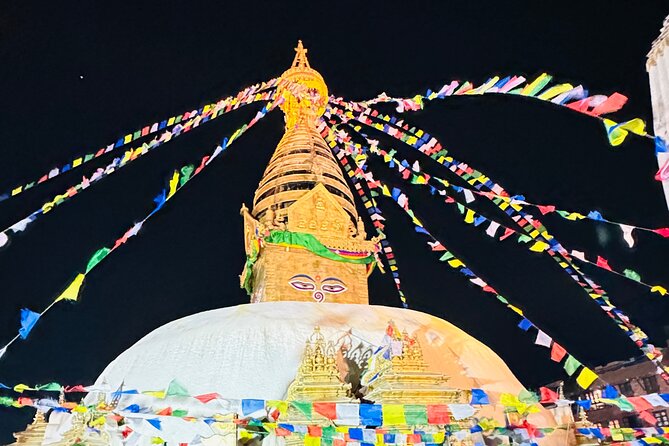
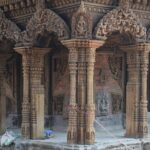
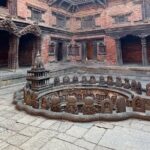
Next comes Lalitpur’s Patan Durbar Square, a cultural and historical complex that connects directly to the Malla monarchs. This is where the Kathmandu Valley story gets more architectural and more hands-on.
You’ll have about 2 hours here, which is the longest stop in the day besides Patan being a slower zone on purpose. Patan is known for its Newar architecture, and this kind of site rewards you for going a bit slower: noticing doorways, carved details, courtyards, and the layout of the square.
Admission is marked as not included, so it’s worth budgeting for an entrance fee at this stop unless you chose an all-inclusive option that covers monument fees.
One reason I like including Patan is that it shifts the day. You’re not just looking at religious monuments in isolation—you’re seeing how rulers, artisans, and civic life played out in stone and wood across generations.
Stop 3: Pashupatinath Temple on the Bagmati River
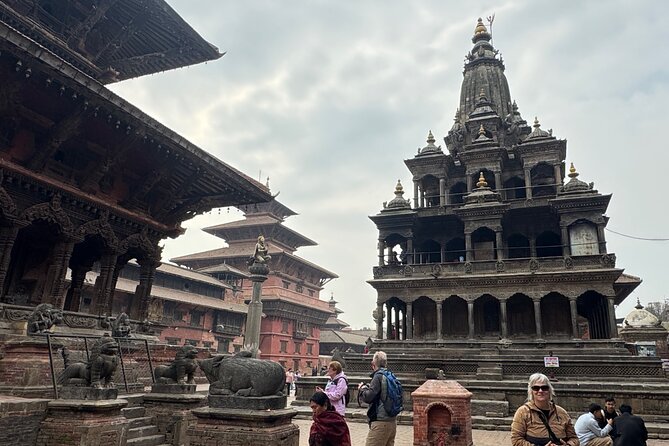
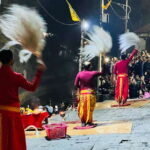
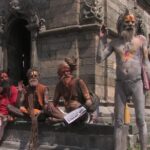
Then you move to Pashupatinath Temple, one of the most sacred Hindu temples dedicated to Lord Shiva. It sits along the Bagmati River, and that river setting changes the feel of the visit compared with hilltop or urban-square monuments.
This stop is about 1 hour. The temple’s most striking features are its ornate, pagoda-like structure and the golden roof, plus the careful wood carving work you can spot when you slow down and look closely. Even if you’re not there for religious practice, it helps to understand that this place operates as a living spiritual center, not just a photo stop.
Admission is listed as not included here, so plan on paying directly unless your package option covers it.
A practical way to enjoy Pashupatinath is to keep your expectations realistic. You’re stepping into a major pilgrimage area. That means being respectful with your time and your behavior, and letting the guide explain what you’re seeing instead of trying to read everything on signs alone.
You can also read our reviews of more historical tours in Kathmandu


Stop 4: Boudhanath Stupa and the Big White Dome Effect
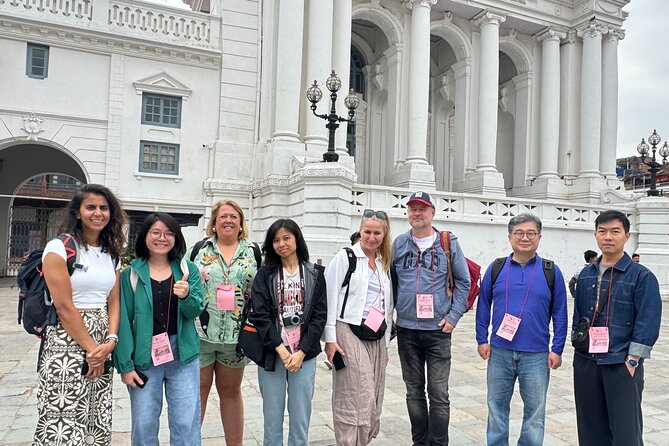
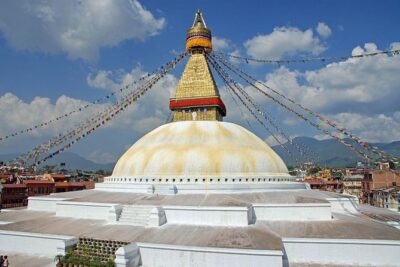
After Pashupatinath, the day shifts again—this time to Buddhism. Boudhanath Stupa is one of the biggest and most popular Buddhist stupas in the world and is a UNESCO World Heritage site.
You’ll have about 1 hour for Boudhanath. It’s the kind of place where scale does half the work: the massive white dome and the golden spire dominate your view. The stupa is also adorned with Buddha’s imagery, so it’s a great stop if you like iconography and visual storytelling.
Admission is listed as not included here. If your goal is to avoid managing extra payments, look for the package option that includes entrance fees.
Boudhanath is also a strong ending stop. It’s visually calm compared with temples where activity is more intense, and it gives your brain a chance to rest while you keep absorbing meaning from the monument itself.
Lunch on the Move: Box Lunch Details That Matter
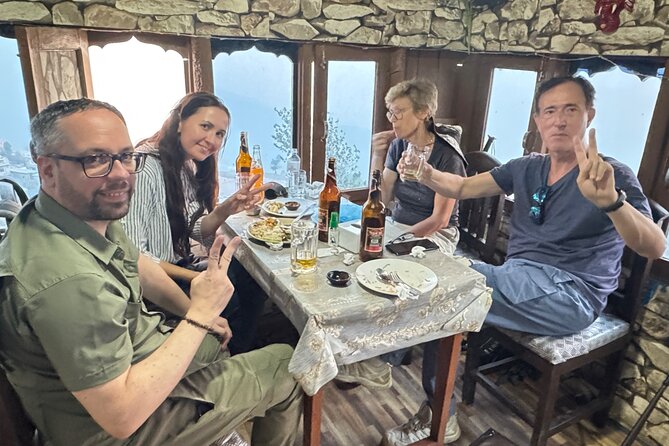
A long temple day can fall apart if lunch is vague or repetitive. Here, lunch is handled with a box lunch that includes 1 liter of bottled water, plus a muffin, croson, fruits, and juice.
That matters because it solves two problems at once:
- You don’t lose sightseeing time hunting for food.
- You get water already accounted for, which is helpful during a full 6 to 7 hour route.
The tour also includes water with lunch, so you’re not forced to keep interrupting the visit to find refreshments.
Ram’s Role: English Explanations, Safety, and a Smooth Flow
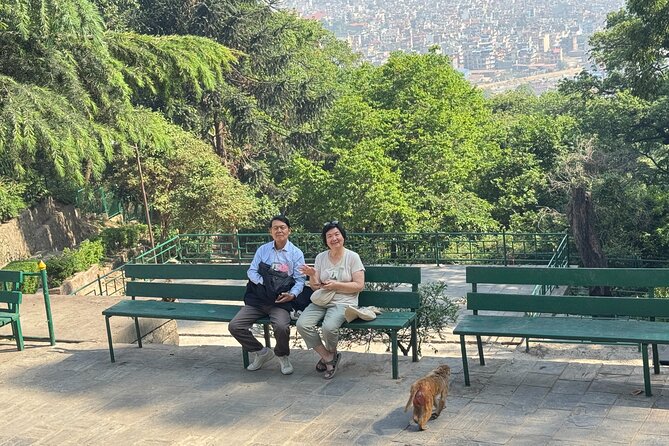
This tour stands or falls on the guide. In this case, Ram is the central reason people recommend it.
From the feedback patterns I see, Ram tends to:
- Give in-depth explanations of historic buildings and what they mean spiritually and culturally.
- Keep the day easy to manage, with clear guidance and a calm approach.
- Help you feel safe and protected while moving through significant religious areas.
Another thing I like: the guide doesn’t treat the monuments like museum objects. The explanations connect the stupa and temple forms to real local traditions. That’s the difference between seeing a set of photos and understanding what the monuments are for.
The tour is also described as adaptable to interests, which is useful if you want more time on architecture at Patan or want context at Pashupatinath before you start noticing details.
Price and Value: What Makes $10 Work (and What Might Cost Extra)
At $10 per person, the value is the first question on your mind. The tour includes more than just a name on a ticket: you get private transport, a professional English-speaking guide, hotel pickup and drop-off, and a box lunch with bottled water.
You also get all taxes and service charge included, which removes some uncertainty that many budget tours don’t bother to handle.
What could change the final cost is entrances. The details provided say monument entrance fees aren’t included across the board, with one important note: there’s an all-inclusive option that includes entrance fees and lunch. So the smartest move is to confirm which option you’re booking before you compare to other tours.
Also, tips and personal expenses aren’t included. That’s normal for guided tours, but it’s still good to remember when you’re doing your total budget math.
Bottom line: you’re paying for a planned day with transportation, guide time, and lunch. If entrance fees are extra for your selected option, that’s the main adjustment.
Timing, Pace, and How to Plan Your Expectations
The day runs about 6 to 7 hours. With four major stops—1 hour at Swayambhunath, 2 hours at Patan Durbar Square, 1 hour at Pashupatinath, and 1 hour at Boudhanath—you’re looking at roughly 5 hours of monument time, plus driving and buffers.
That’s a workable pace. It’s enough time to see each site clearly and still have the guide explain what’s worth noticing. It’s not a slow wandering day where you can linger indefinitely, so if you want a long, unstructured “take my time” style, you might need a different format.
Best Fit: Who This Kathmandu Heritage Tour Is For
This is a great match if you:
- Want a one-day UNESCO highlight route in Kathmandu’s valley.
- Enjoy spiritual and cultural sites more than shopping or nightlife.
- Prefer a guide who can connect architecture and sacred spaces to stories you can understand quickly.
- Want comfort and logistics handled, especially with hotel pickup and private transport.
It also makes sense if you’re a solo visitor or a couple because private tours give you your own group pace. And since it’s described as suitable for most people and near public transportation, it’s easy to fit into many travel schedules.
Should You Book This Kathmandu UNESCO Heritage Tour?
I’d book it if you want a focused day with transport, guide explanation, and lunch handled—so you can spend your mental energy on what you see. It’s also a strong choice if you care about getting context, not just photos, and you like the idea of Ram guiding the whole arc from hilltop stupa views to riverfront Hindu sacred space and the giant Boudhanath stupa.
I wouldn’t book it if you specifically want a fully entrance-fee-free day and don’t want to pay anything extra at monuments. In that case, check the all-inclusive option carefully and confirm what’s covered.
If your priority is: see the big four UNESCO sites with comfort and a local guide who keeps things organized, this tour earns a place high on your list.
FAQ
Which UNESCO sites are included in the tour?
The tour covers Swayambhunath, Patan Durbar Square, Pashupatinath Temple, and Boudhanath Stupa.
How long does the Kathmandu private tour take?
It runs about 6 to 7 hours.
Is hotel pickup and drop-off included?
Yes. Hotel pickup and drop-off are included, and you travel between sites in an air-conditioned vehicle.
What’s included in the lunch?
You get a box lunch with 1 liter of bottled water, a muffin, croson, fruits, and juice.
Do I need to pay entrance fees?
Entrance fees are not included for some sights and must be paid directly by guests. There is also an all-inclusive option that includes entrance fees and lunch—so it depends on what you choose.
Is free cancellation available?
Yes. You can cancel for a full refund up to 24 hours in advance.