REVIEW · KATHMANDU
Private Half-Day Tour of Boudhanath and Pashupatinath Temples in Kathmandu
Book on Viator →Operated by Pigeon Travel And Tours Pvt Ltd · Bookable on Viator
Pashupatinath and Boudhanath feel worlds apart. That’s exactly why this private half-day tour works: you get the Hindu river ghats first, then you slow down at Boudhanath Stupa with prayer wheels and Buddhist statues. I like that the tour is built around your schedule—hotel pickup, a private vehicle, and a guide who explains what you’re seeing—so you spend less time figuring things out and more time noticing details. One consideration: at Pashupatinath, the riverside activity can be intense, and it’s not for everyone.
Here’s what makes it especially practical: the pacing is short enough to fit your Kathmandu plan, but the stops are long enough to learn. I also appreciate that the essentials are covered—entrance fees and a local English-speaking guide—so you don’t end up hunting for tickets mid-day. If you’re sensitive to crowds, be aware that these are major religious sites, so bring patience and dress respectfully.
In This Review
- Key Things to Know Before You Go
- Two UNESCO Sites, One Smooth 4-Hour Window
- Pashupatinath: Riverbank Ghats and Hindu Ritual Watching
- Dress code and respectful viewing
- Boudhanath Stupa: Prayer Wheels, Buddhist Statues, and Shared Reverence
- Why the pairing makes sense
- What You Actually Get From the Private Guide and Driver
- The quiet win: fewer logistics decisions
- Price Check: Is $47 Worth It for Transport and Tickets?
- Timing, Crowds, and the Realities of Temple Visits
- Where food fits in
- Who This Tour Suits Best
- Should You Book This Private Half-Day Tour?
- FAQ
- What is the duration of the tour?
- What time does the tour start?
- Is this a private tour?
- What sites does the tour visit?
- Are entrance fees included?
- Does the tour include hotel pickup and drop-off?
- Is transportation provided?
- Do I need to pay for a guide?
- Is food included?
- What about water?
- Is there a dress code?
Key Things to Know Before You Go
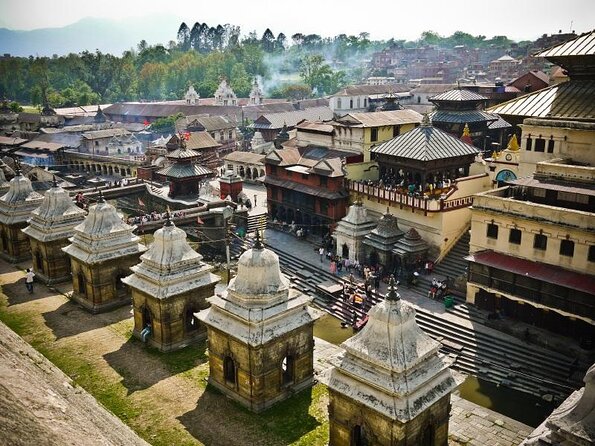
- Two UNESCO World Heritage sites in about 4 hours, without the hassle of transportation planning
- Private guide + private vehicle, plus hotel pickup and drop-off for a low-stress day
- Entrance fees included, so you can spend your mental energy on the places, not paperwork
- Riverbank views at Pashupatinath, where temple activity happens right along the Bagmati
- Boudhanath’s prayer wheels and Buddhist statues, with time to slow down and observe
- Dress code required for places of worship, so pack something modest
Two UNESCO Sites, One Smooth 4-Hour Window
If your Kathmandu time is limited, this is the kind of half-day plan that actually fits real life. The tour is scheduled to start at 10:00 am and runs about 4 hours, which is a sweet spot: long enough to understand both sites, short enough that you don’t feel cooked by the end of it.
The big value is how it’s handled as a package. You get private transport, an English-speaking local guide, entrance fees, and hotel pickup/drop-off. That combo matters in Kathmandu, where getting from one major religious site to another can eat up time—especially if you’re trying to coordinate taxis around traffic and queues.
This is also clearly designed for a small group experience: it’s a private tour/activity, meaning only your group participates. If you’re traveling as a couple, solo, or with a small set of friends, that makes the guide’s attention feel more personal.
You can also read our reviews of more private tours in Kathmandu
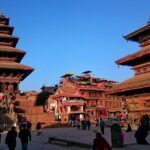
Pashupatinath: Riverbank Ghats and Hindu Ritual Watching
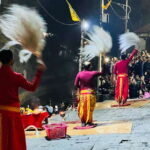
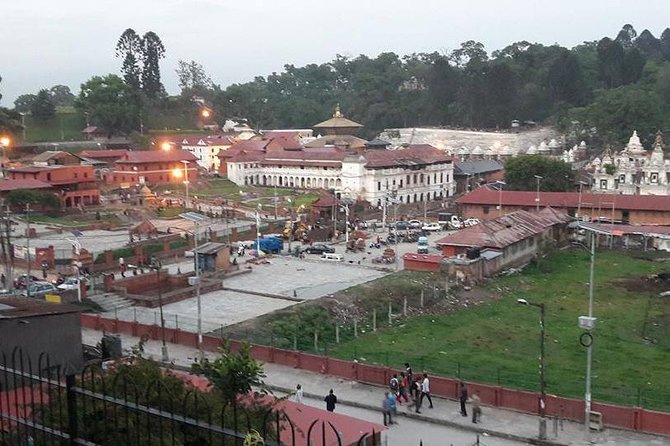
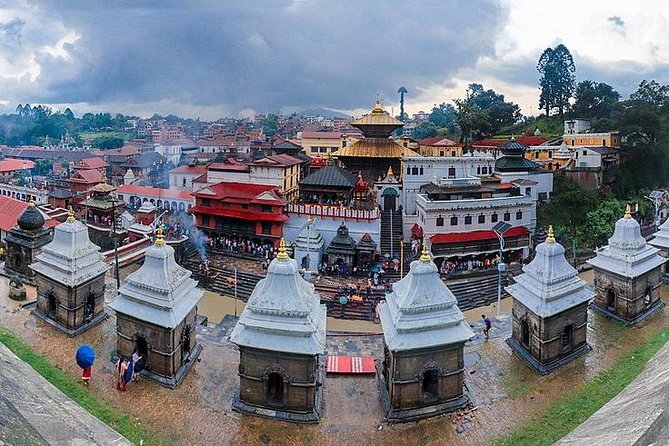
Pashupatinath Temple sits on the Bagmati River, about 5 kilometers northeast of Kathmandu. It’s the holiest Hindu pilgrimage destination in Nepal, and the temple complex serves as the seat of the national deity Lord Pashupatinath. In practical terms, that means you’re not looking at a single building—you’re watching a whole religious landscape.
On this tour, you get roughly 2 hours at Pashupatinath with admission included. Your guide helps you interpret what you’re seeing from the riverbank, where temple activities play out along the ghats. This is one of the moments where a guide earns their fee: they can explain the significance of what’s happening around you, instead of leaving you to guess.
Here’s the key emotional/real-world note. The riverside atmosphere can include cremation activity, and if that’s something you’d rather avoid, you should know that going in. Even with a guide, it’s still a real religious practice happening in a public setting. I’d call that the main “consideration” for this tour.
What I like about this stop is the way it connects place and meaning. The Bagmati River isn’t just scenery—it’s part of the ritual geography. You’ll likely feel the contrast immediately: this is more active and earth-level than the quiet, symbolic vibe you get later at Boudhanath.
Dress code and respectful viewing
A dress code is required for places of worship, so plan to cover up modestly. If you show up underdressed, you can lose time. If you show up right, you can focus on the viewing angles your guide suggests—especially where you can observe riverbank life without blocking others.
Boudhanath Stupa: Prayer Wheels, Buddhist Statues, and Shared Reverence
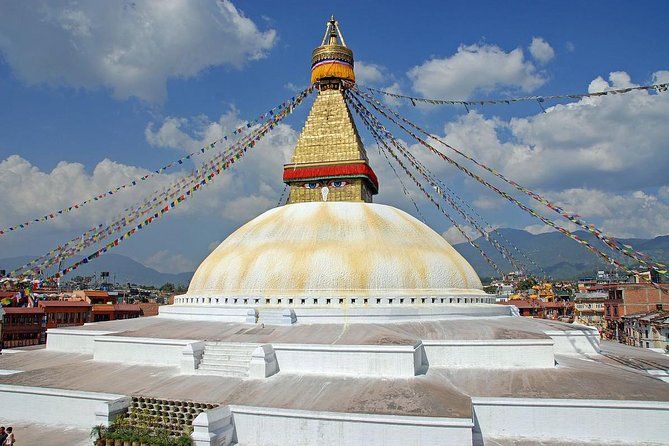
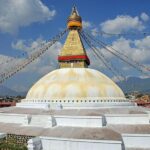
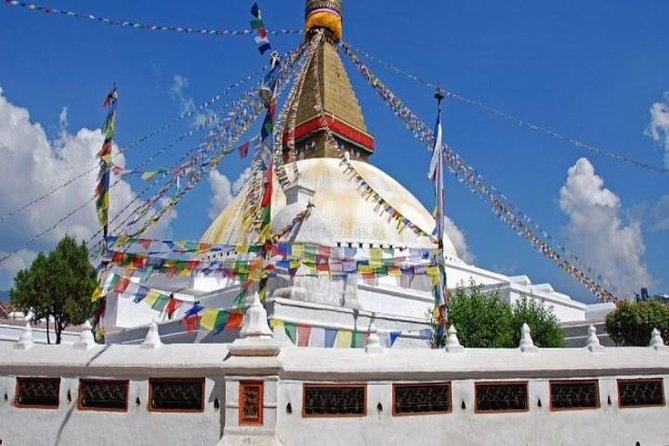
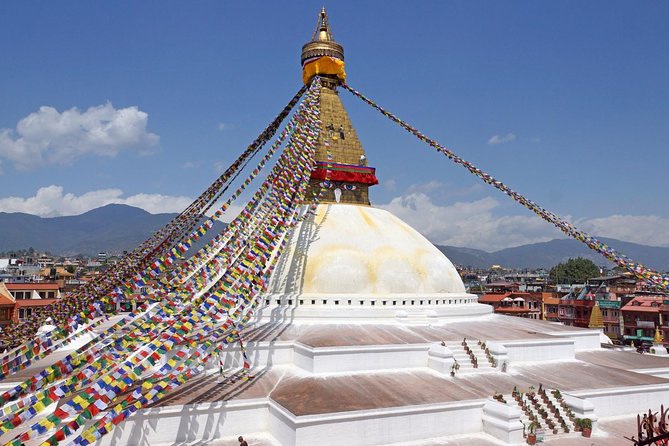
Then you shift gears to Boudhanath, about 11 km from the center in the northeastern outskirts of Kathmandu. Boudhanath is a stupa, and it’s famous for its massive mandala, one of the largest spherical stupas in Nepal. This place is sacred not only for Nepalis but also for Tibetans, which is part of what makes it feel like a living cultural meeting point rather than just a monument.
You’ll get another 2 hours here, with admission included. The experience is built around observation: you’ll see prayer wheels and Buddhist statues, and your guide will connect those objects to Buddhist devotion and everyday practice.
This stop is often more about mood than momentum. At Pashupatinath, you’re watching activity tied to a river system. At Boudhanath, you’re in a slower rhythm—circling, looking, listening to the sense of devotion that moves through the space. If you like photography, this is where you’ll likely enjoy it most, because there are lots of textures and meaningful details—wheels, statues, and the stupa’s architecture—without needing to “figure out” what you’re looking at.
One practical note: because it’s an important religious site with ongoing worship, it can still feel busy. The difference is that the energy is steadier. If you want one stop that’s easier on the nerves, Boudhanath is usually the calmer half of the day.
Why the pairing makes sense
You might wonder why these two sites belong together. For me, the logic is simple: Nepal’s religious life is layered, and this tour lets you see that layering fast. Hinduism at Pashupatinath is highly ritual and river-centered. Buddhism at Boudhanath is symbolic and object-centered. Seeing both in one morning gives you a better mental map of Kathmandu’s spiritual geography.
You can also read our reviews of more tours and experiences in Kathmandu
What You Actually Get From the Private Guide and Driver
A tour like this lives or dies on the guide. And from real experiences with this kind of setup, what stands out is the pacing and explanation—someone who doesn’t rush you, and someone who can answer your questions without turning it into a lecture.
In particular, I’ve seen how helpful it can be when a guide really takes time to make sure you understand. For example, Mr. Bishnu was noted for arriving on time and explaining history and background in a detailed, patient way. That’s exactly what you want here: you’re walking through sacred spaces where names, symbols, and practices matter.
The driver also matters more than people expect. With a private vehicle, you’re not stuck watching traffic plans change. You’re just going. One review-style theme that comes up again and again with this tour type is the “easy start and finish” feeling—pickup handled smoothly and the guide waiting for you at your hotel so you’re not wandering around trying to find the group.
And in multilingual moments, it can help that guides vary by language. One guide named Pawan was mentioned as speaking French, which is useful if you’re traveling with someone who’d rather follow details in French.
The quiet win: fewer logistics decisions
You won’t have to worry about entrance tickets because they’re included. You won’t have to solve transport between the sites. You’re also getting two mineral water bottles per person, which might sound basic, but in Kathmandu it’s one less thing to manage while you’re moving around religious areas.
Price Check: Is $47 Worth It for Transport and Tickets?
At $47.00 per person for a half day, the price looks low only if you assume you’re paying for sightseeing without paying for the “how.” The truth is that this tour bundles the pieces that usually cost extra or take time to coordinate: private vehicle, hotel pickup and drop-off, English-speaking local guide, and entrance fees.
So where does the value come from?
- If you try to do this on your own, you’ll likely spend money on multiple rides plus time waiting. This tour handles the ride routing.
- You get guidance inside the sites. Without that, you’ll still see famous places, but you’ll miss context that helps everything click.
- Entrance fees and a mobile ticket reduce hassle. You don’t need to stop and negotiate or track down tickets during your day.
Could you do it cheaper with a taxi and no guide? Maybe. But if you care about understanding what you’re seeing—and you want a morning that feels controlled—this tends to be a good deal for what you’re actually buying: time + context + convenience.
Timing, Crowds, and the Realities of Temple Visits
The tour starts at 10:00 am, and each site gets about 2 hours. That’s a practical schedule because it gives you time to look without feeling like you’re speed-walking. It also helps you avoid the day turning into a full-day grind.
Still, keep expectations realistic. These are major religious sites. Even with a private guide and vehicle, you’ll still deal with normal site crowds and the shared public setting. Your best move is simple: show up modestly dressed, stay flexible, and let the guide handle the flow.
Also, because Pashupatinath involves riverside activity, your comfort level matters. If you’re easily unsettled by ceremonies like cremations, this tour can still be worthwhile—just approach it with eyes open and decide ahead of time how you want to handle viewing.
Where food fits in
Food and drinks are not included. Since you’re out for about 4 hours, plan to eat before you go (or after you return). That way, you can focus on the sites instead of stopping somewhere you’re not excited about just to refill.
Who This Tour Suits Best
This is a strong fit if you want a focused religious sightseeing day without the stress of transportation planning. It’s especially good for:
- First-time visitors who want two major UNESCO sites in one half day
- People who enjoy understanding symbolism, ritual, and cultural context
- Couples or small groups who value a private guide and private vehicle
- Travelers who prefer a structured plan with fewer decisions
It may be less ideal if you strongly dislike the possibility of seeing cremation activity at Pashupatinath. If you’re unsure, consider whether you’d be comfortable from a respectful viewing distance and whether you can keep your comfort level in mind while you’re there.
Should You Book This Private Half-Day Tour?
Book it if you want a low-hassle morning that pairs two UNESCO sites with a guide who helps you make sense of what you’re seeing. The entrance fees included, the hotel pickup/drop-off, and the private vehicle are the kind of value that pays off fast when you’re short on time.
Pass (or think twice) if you’d rather avoid any chance of cremation-related viewing at Pashupatinath. Otherwise, this is a practical way to experience Kathmandu’s Hindu and Buddhist traditions in a single, well-paced outing.
FAQ
What is the duration of the tour?
The tour lasts about 4 hours (approx.), including time at both Pashupatinath Temple and Boudhanath Stupa.
What time does the tour start?
The start time is 10:00 am.
Is this a private tour?
Yes. It’s a private tour/activity, and only your group will participate.
What sites does the tour visit?
You’ll visit Pashupatinath Temple and Boudhanath Stupa.
Are entrance fees included?
Yes. Entrance tickets for both stops are included.
Does the tour include hotel pickup and drop-off?
Yes. Pickup and drop-off from your hotel or airport are included.
Is transportation provided?
Yes. You’ll travel by private vehicle.
Do I need to pay for a guide?
No additional guide fee is required as the tour includes an English-speaking local guide.
Is food included?
No. Food and drinks are not included.
What about water?
The tour includes 2 mineral water bottles per person.
Is there a dress code?
Yes. A dress code is required to enter places of worship and selected museums, so dress modestly.