REVIEW · KATHMANDU
Kathmandu World Heritage Tour
Book on Viator →Operated by The Great Adventure Treks & Expedition - Private Day Tours · Bookable on Viator
Five UNESCO sites, one Kathmandu day.
This tour packs Kathmandu Valley World Heritage stops into a single outing, with a licensed guide and hotel pickup that saves you from planning the jump between neighborhoods.
I love the private AC vehicle and included bottled water, so the day doesn’t turn into a sweaty city scramble. I also like the pacing: you get real time at each landmark, from hilltop views to Durbar Square courtyards, without the feeling that someone is yelling hurry.
Watch your budget: monuments fees (NRP 3600, about $28 per person) and site admissions are not included, and lunch and dinner are on your dime.
In This Review
- Key highlights before you go
- A Kathmandu Valley “greatest hits” day that stays focused
- Guide + transport: where the value actually shows up
- Swayambhunath Monkey Temple and the hilltop city view
- Pashupatinath on the Bagmati River: a major Hindu landmark
- Boudhanath Stupa: big scale, big faith, UNESCO-level significance
- Patan Durbar Square: UNESCO at a slower tempo
- Kathmandu Durbar Square: where the day ends on historic high ground
- Price and fees: what you’ll really spend
- How long it takes and how to plan your day
- Who should book this UNESCO Kathmandu Valley loop
- Should you book this Kathmandu World Heritage Tour?
- FAQ
- Which UNESCO World Heritage sites are visited on this Kathmandu tour?
- How long is the Kathmandu World Heritage Tour?
- Is hotel pickup and drop-off included?
- Are monuments fees and site admissions included in the price?
- Is this a private tour?
- Can I cancel for a full refund?
Key highlights before you go
- Five UNESCO World Heritage stops in one day across Kathmandu Valley
- Hotel pickup and drop by private, air-conditioned vehicle
- A licensed guide who can explain what you’re seeing, with names like Mani, Charn, lil, and Kapil showing up in shared experiences
- Bottled water included, plus taxes handled
- Monuments fees and admission tickets are extra, so plan for the full spend
A Kathmandu Valley “greatest hits” day that stays focused
If you’re short on time in Kathmandu, this kind of day tour is exactly the smart move. Instead of picking one site and getting “site-splashed” by random add-ons, you get a structured loop of UNESCO World Heritage sights that are famous for good reason.
You’re also not stuck in a bus-lurching museum routine. This is a day about being out in the real religious and historic spaces of the valley. Between the hilltop shrine, major riverfront Hindu temple, the giant Buddhist stupa, and both Durbar Squares, you’ll see a lot of Kathmandu’s layers in one go.
The trade-off is simple: it’s a long day. The tour runs about 10 to 15 hours, and the stops include walking around open areas and moving between districts. If you prefer slow mornings and long museum-style stays, you’ll need to decide whether you want depth or speed that day.
You can also read our reviews of more historical tours in Kathmandu

Guide + transport: where the value actually shows up
The price isn’t just for sightseeing. You’re paying for a government licensed tour guide, plus private air-conditioned transport with pickup and drop from your hotel.
That matters in Kathmandu Valley because travel time can eat your schedule fast. Having a car waiting for you keeps your day coherent. It also reduces the stress of negotiating transport between sites, especially when you’re doing five major landmarks in one session.
And then there’s the small practical stuff that makes a difference: bottled water is included, and taxes are handled. In the feedback people share about this operator, punctual, clear communication comes up again and again (names like Mani and drivers like Ramesh are specifically mentioned for being professional and on time). That’s the kind of thing you notice less while it’s happening, but really feel when it’s missing.
Swayambhunath Monkey Temple and the hilltop city view
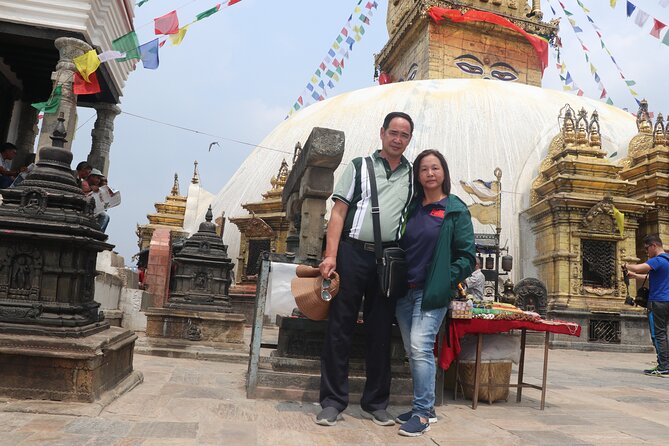
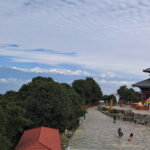
Swayambhunath is one of Kathmandu’s most iconic religious sites, and it’s not hard to see why. It’s a sacred Buddhist shrine—often called the Monkey Temple—set on a hilltop overlooking the city.
This stop is about two things at once:
- getting oriented with Kathmandu Valley from above
- experiencing a major religious landmark that has been standing for generations
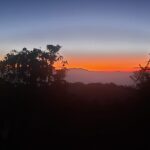
With around 3 hours here, you have time to look around without treating it like a drive-by. You’ll also get the payoff the overview promises: a Kathmandu valley view from the top of the Swayambhu hill. That view is one of the best reasons to start with this stop early in the day, because it sets the tone for everything else you’ll see.
One practical consideration: you’re going up to a hilltop. Even without getting into specifics, plan for uneven ground and allow your body to move at a steady pace. If you’re traveling with limited mobility, ask your guide what the safest route looks like once you arrive.
Pashupatinath on the Bagmati River: a major Hindu landmark
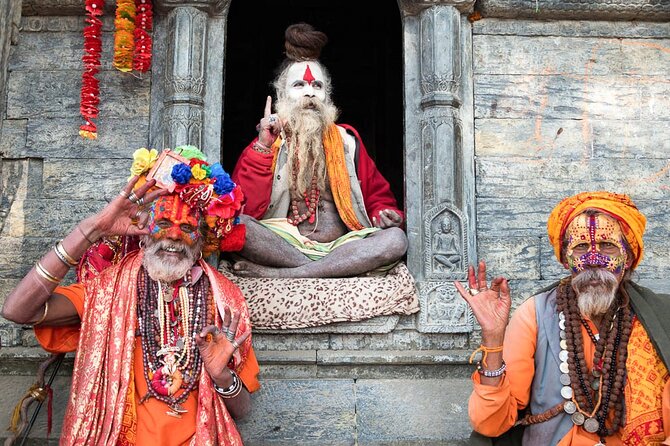
From the hilltop Buddhist shrine, you shift to a heavyweight in Hindu sacred geography. Pashupatinath Temple sits on the banks of the Bagmati River and is dedicated to Lord Shiva. It’s described as one of the most sacred Hindu temples in the world, so you can expect a place people treat with real seriousness.
This stop runs about 2 hours, which is a useful amount of time for a temple complex like this. You’re not racing through details. Instead, you can take in the setting, notice the religious activity around the temple area, and spend enough time learning what you’re looking at with your guide.
Because it’s a living religious site, the biggest piece of “how to enjoy it” is simple: follow your guide’s lead on where to stand, what areas you can enter, and how to respect the space. If you keep an easy pace and let the guide manage the flow, the experience feels smooth rather than chaotic.
Boudhanath Stupa: big scale, big faith, UNESCO-level significance
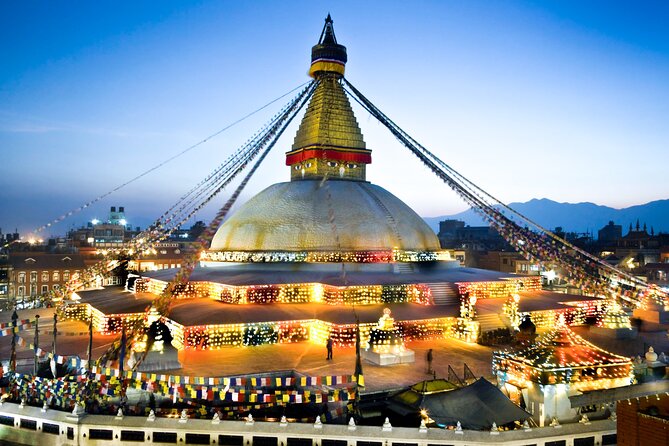
Next comes Boudhanath Stupa, located in the heart of Kathmandu. This is one of the largest and most sacred Buddhist stupas in the world, and it’s recognized as UNESCO World Heritage.
You’re scheduled for about 2 hours here, which is perfect for a stupa-focused stop. Two hours gives you room to:
- take in the stupa’s scale
- understand why it’s historically important
- get grounded in Buddhist architecture after the more temple-and-shrine feel of the earlier stop
One specific detail worth noting: the stupa is believed to have been built in the 14th century. That gives this stop a different kind of weight. You’re not just looking at a monument; you’re looking at something with deep historical time behind it.
If you like slower photo pauses, this is one of the better places to linger a bit. Not because you have unlimited time, but because the object itself—the stupa—does the work of holding attention. Your job is to slow down enough to actually notice proportions and the way the site pulls people into its orbit.

Patan Durbar Square: UNESCO at a slower tempo
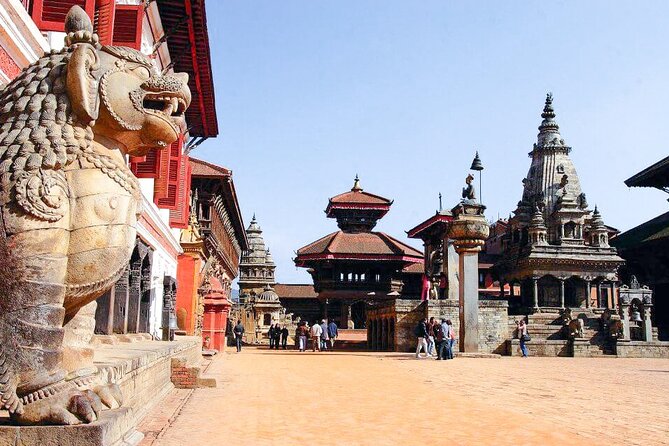
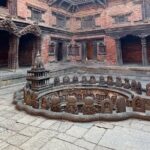
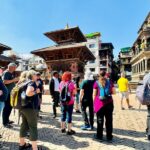
Most first-timers focus on Kathmandu first, so Patan Durbar Square is a great choice to balance the day. Patan is known as the city of artisans, and the square reflects that reputation through the ancient temples, palaces, and shrines packed into the area.
This stop gets about 3 hours, which signals that the operator expects you to actually absorb the architecture rather than just tick a box. I like this kind of timing because it lets you do a real comparison: Patan gives you a different feel from Kathmandu’s Durbar Square, even though both are UNESCO-linked historic cores.
What makes this stop work in a “five-sites-in-one-day” plan is variety. By the time you reach Patan, you’ve already seen major religious spaces. Now you’re in a historic civic-religious area where craftsmanship and architectural detail are the main attraction.
The only caution is mental energy. After a full day of moving, it’s easy to start snapping pictures without really looking. In Patan, I’d make an effort to slow down for the first half hour. If you set that pace, the rest of the time feels more rewarding.
Kathmandu Durbar Square: where the day ends on historic high ground
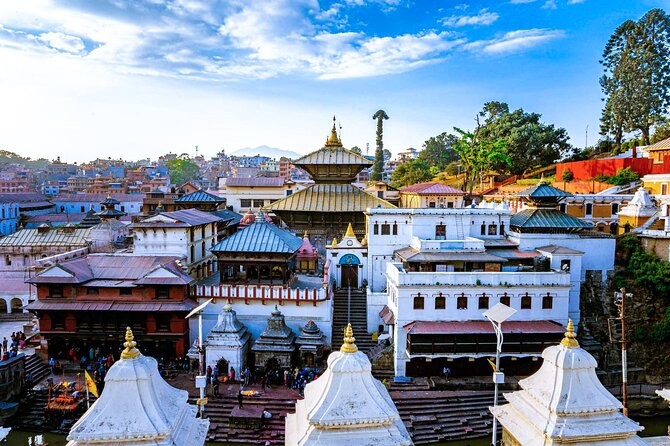
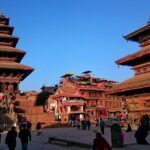
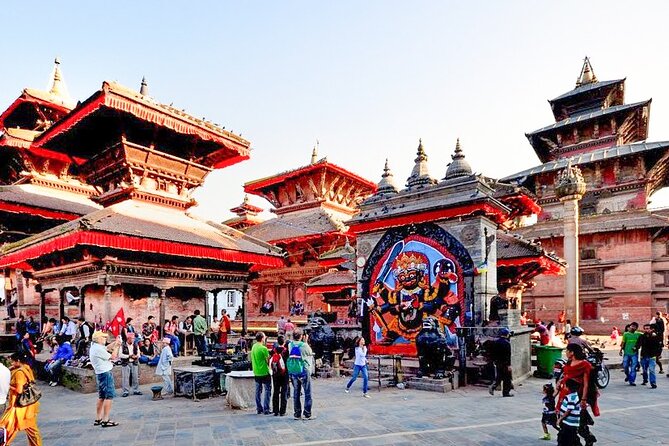
Your final major stop is Kathmandu Durbar Square, located in the heart of Kathmandu. This is also a UNESCO World Heritage site, filled with historic temples, palaces, and courtyards—an architecture-heavy finale to a day that started with a hilltop view.
You’ll have about 2 hours here. That’s a short enough window that you’ll never feel stuck in one spot, but long enough to still understand the layout and catch the major visual features.
Why do it as the last stop? Because it lets you come back to the “human-scale” historic spaces after religious monuments and the stupa. Durbar Squares work well as a concluding chapter, since the courtyards and temple groupings encourage you to pause and observe rather than only follow the crowd.
If you’re tired, focus on simple goals: pick one temple-courtyard cluster to study, and let the rest be background. You’ll get a better memory of what matters than if you try to absorb everything at once.
Price and fees: what you’ll really spend
The base price is $50 per person, and it covers a lot of real on-the-ground value: a licensed guide, sightseeing around World Heritage sites, private air-conditioned transportation with hotel pickup and drop, bottled water, and all taxes.
But the tour is clear about what’s not included. You’ll need to budget for:
- Monuments fees of NRP 3600 (about $28) per person
- Admission tickets / entry fees for the sites
- Lunch and dinner
- Gratuities for guide and driver
- Soft and hard drinks
So the honest way to think about the value: the $50 is for the guiding and the logistics, not for walking into every monument for free. If you add the monuments fee and then whatever admission tickets apply at each stop, your all-in day cost will rise fast.
Still, I think the structure is good value if you want a guided route through five major UNESCO sites without the headaches of arranging transport and figuring out entrance rules on your own.
How long it takes and how to plan your day
The tour is listed at 10 to 15 hours. That’s a wide range, and it’s worth assuming you’ll be out for most of the day, with time eaten by driving between sites and time spent waiting for entry or gathering again after each stop.
Here’s what I suggest you do before you go:
- Eat a proper breakfast before pickup. Lunch may not be included.
- Bring a light layer if you get chilly in air-conditioned vehicle rides.
- Plan to move steadily rather than sprinting between viewpoints.
Also note the weather angle: the experience requires good weather, and if it’s canceled due to poor conditions you’ll be offered a different date or a full refund. That’s a signal to take weather seriously rather than treating it like optional icing.
Who should book this UNESCO Kathmandu Valley loop
This tour fits best if you’re:
- visiting Kathmandu for the first time and want a fast, high-impact introduction
- short on time but still want major UNESCO stops, not just one temple
- the kind of person who likes having a plan so the day doesn’t drift
It can also work well for families or couples because it’s private—your group only. That said, it’s still a long day across multiple districts, so if you get worn out easily, consider whether a shorter route might suit you better.
The biggest strength is that you’re not doing the sightseeing alone. You have a licensed guide, and the overall service gets strong notes for being organized and prompt in shared experiences (with guide names like Mani, Charn, lil, and Kapil standing out, and drivers such as Ramesh mentioned for professionalism).
Should you book this Kathmandu World Heritage Tour?
Yes, I’d consider booking it if your goal is to see five UNESCO World Heritage sites in one structured Kathmandu Valley day and you want the convenience of hotel pickup in a private AC vehicle.
I’d only hesitate if:
- you hate long days and constant moving
- you’d rather spend more time at fewer places
- you don’t want to deal with extra costs like monuments fees, admissions, and meals
If you’re ready for a full, guided “greatest hits” day with real religious and historic weight, this one is a practical way to make Kathmandu Valley feel both comprehensive and manageable.
FAQ
Which UNESCO World Heritage sites are visited on this Kathmandu tour?
You’ll visit Swaymbhunath, Pashupatinath, Boudhanath Stupa, Patan Durbar Square, and Kathmandu Durbar Square.
How long is the Kathmandu World Heritage Tour?
It runs about 10 to 15 hours.
Is hotel pickup and drop-off included?
Yes. Pickup and drop from your hotel are included by private vehicle.
Are monuments fees and site admissions included in the price?
No. Monuments fees (NRP 3600 approx., about $28 per person) and entry/admission fees for all sites are not included.
Is this a private tour?
Yes. It’s a private tour/activity, so only your group participates.
Can I cancel for a full refund?
Free cancellation is available up to 24 hours in advance for a full refund. If you cancel less than 24 hours before the experience starts, you won’t receive a refund. If the tour is canceled due to poor weather, you’ll be offered a different date or a full refund.