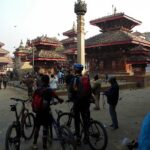
If you like your views earned, this ride fits. You’ll pedal from Kathmandu toward Nagarkot’s famous high-altitude viewpoint, with an old-city detour that keeps the day interesting beyond the downhill rush. Two things I really like: the front suspension bikes and helmets included, and the fact that the route layers scenery with stops in places like Sankhu and UNESCO-listed Bhaktapur.
One consideration: this tour is built for professional-level riders and strong fitness. The altitude gain plus the serious riding time means it’s not a casual spin-through-the-city kind of outing.
In This Review
- What makes it feel worth $165
- Key things to know before you ride
- The ride’s core idea: altitude, distance, and real city edges
- Bike setup and guide support: what’s included, and what that means for you
- Distance and timing reality: 35 km one way, plan for a full day
- Stop 0: Thamel start point, where the ride becomes real
- Stop 1: Sankhu Village for a quick taste of Newari old town
- Stop 2: Nagarkot viewpoint, where the mountains steal the show
- Stop 3: Bhaktapur’s medieval core, UNESCO in a tight window
- The challenge level: why this tour fits advanced riders
- The Himalayan view experience: what you should expect, honestly
- Value check: is $165 a good deal?
- Who should book this, and who should skip it
- Practical expectations for your day on the bike
- Should you book Kathmandu: Extreme Mountain Biking Day Tour?
- FAQ
- How long is the Kathmandu Extreme Mountain Biking Day Tour?
- How far is the biking distance?
- Where does the tour start and end?
- Are pickup and drop-off included?
- Is this a private tour?
- What bike and safety gear are included?
- Who guides the ride?
- Are meals included?
- Are tickets or admissions needed for the stops?
- What about cancellation or refunds?
- Is travel insurance included?
What makes it feel worth $165
The price isn’t just for a guide and a bike—it’s for a working ride setup: a local guide plus an expert mechanic, and a customized Giant or Fuji front suspension bike (you don’t have to hunt one down). You’re also paying for a private experience, so the plan and pace are handled for just your group.
The itinerary timing can run long in practice. The description lists a 6-hour duration, but it also frames this as an 8–9 hour full-day round-trip, so expect a real day on the bike even with short photo-and-rest stops.
Key things to know before you ride
- Pro-level route: designed for riders with serious stamina and comfort on technical terrain
- Altitude climbing story: from about 1,300 meters up to around 2,100 meters at Nagarkot
- Big distance, not a sampler: 35 km one-way, then back again for roughly 70 km total
- Short culture stops: Sankhu, Nagarkot, and Bhaktapur each get a quick window
- View payoff depends on weather: Nagarkot can offer Everest on a clear day
- Mechanic support included: a guide with bike expertise helps reduce ride-day stress
You can also read our reviews of more cycling tours in Kathmandu
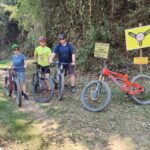
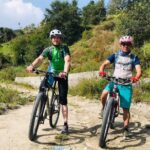
The ride’s core idea: altitude, distance, and real city edges
This is a “work for it” Kathmandu cycling day. You start in Thamel, then head north-east toward Sankhu, continue on to Nagarkot, and finish back in Thamel after passing through Bhaktapur. The big hook is the climb: you’re leaving Kathmandu’s ~1,300 meters and rising toward a viewpoint around 2,100 meters.
What makes the experience feel authentic is the mix of modes. You’re not only bouncing down a trail; you’re transitioning through living towns with old Newari streets (Sankhu), a classic Himalayan viewpoint stop (Nagarkot), and a medieval UNESCO center (Bhaktapur). That blend keeps the day from becoming “just riding.”
Also, this is set up as a private tour. You’re not negotiating a crowded-group pace, and your guide can adjust in real time if the road or your energy level demands it.
Bike setup and guide support: what’s included, and what that means for you
Your ride includes a customized Giant or Fuji front suspension bike plus a helmet. That matters more than it sounds. A front suspension setup can smooth out rough sections and help your arms stay fresh when the road gets uneven—especially when you’re already fighting distance and altitude.
You also get a local guide/expert mechanic. Even when you feel strong, bikes can have small issues: a loose bolt, a tired brake, a flat that needs fast attention. Having someone who knows bikes as well as the route reduces the chance of “ride day chaos.”
Price-wise, $165 per person becomes easier to stomach when you remember what’s covered: the bike, helmet, mechanic support, and taxes/service charges. You’re not paying extra just to have equipment that fits the terrain.
What’s not included is equally important: bike clothing and any support vehicle. If you don’t own decent cycling gear, plan on buying or borrowing what you need locally, because “regular clothes” can become uncomfortable on a long, hot-and-cool ride where you’ll be sweating, then stopping.
Distance and timing reality: 35 km one way, plan for a full day
The route is described as 35 km one-way. That means you’re looking at about 70 km total by the time you ride there and back. The tour duration is listed as 6 hours, but it’s also framed as an 8–9 hour full-day round-trip.
So here’s my practical take: treat it as an all-day outing even if everything goes smoothly. The stops are short, but your energy will still drain. If you’re training for it, aim for the mindset of a long ride with a few quick pauses—not a half-day city loop.
If you’re wondering whether you’ll “arrive fresh,” you probably won’t. This is adventure riding with a view reward at the end. Plan your day around that.
Stop 0: Thamel start point, where the ride becomes real
Thamel is the Kathmandu tourist hub, and that’s where the tour starts and ends. Starting here makes sense because it’s easy to find, and it typically means you can sort last-minute needs before you roll out.
The advantage for you is mental clarity: you begin in a familiar area, then gradually shift into quieter zones as the ride heads toward Sankhu and beyond. The drawback is that if you’re hoping for a “straight into nature” feel from minute one, Thamel doesn’t give that. This is a ride that transitions.
Stop 1: Sankhu Village for a quick taste of Newari old town
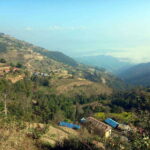
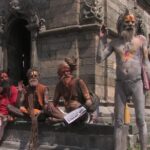
Sankhu is described as an old Newari town about 17 km from Kathmandu, north-east of the city. You’ll get around 10 minutes here, with admission listed as free.
What I like about a short first stop like this is that it helps you reset without turning the day into a checklist. You’ll likely use it to catch your breath, take photos, and mentally recalibrate after the first chunk of riding.
The trade-off is time. Ten minutes isn’t enough to slow down and really wander. If you want depth—craft shops, local streets, and the feel of Newari town life—you’ll need more time than the ride schedule allows.
Still, as a “taste,” it works. It gives context that you’re not only passing through terrain—you’re moving through real communities.
Stop 2: Nagarkot viewpoint, where the mountains steal the show
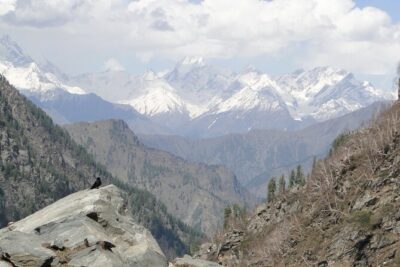
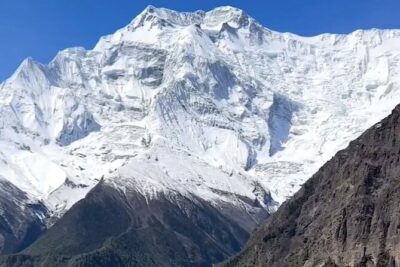
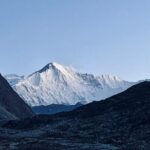
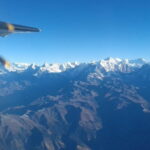
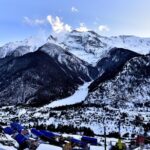
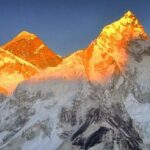
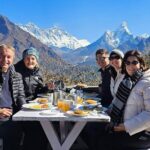
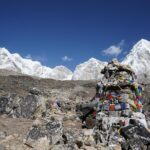
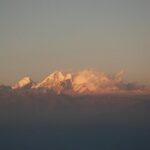
Nagarkot is the big scenic highlight. It’s described as the popular Himalayan viewpoint, and on a clear day you may be able to see Mount Everest far in the distance. You’ll have about 30 minutes here, again with admission listed as free.
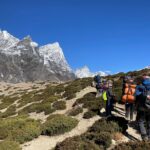
Here’s why this stop is worth the effort. The ride pushes you upward—starting around 1,300 meters and climbing to roughly 2,100 meters at the viewpoint. When you reach that height, the air and the view change fast. Even a short pause can feel like a payoff ceremony after a long climb.
The drawback is the weather dependency. If the sky is hazy, you may not get the same dramatic mountain separation (including Everest). You can’t control that. What you can control is your pacing and your willingness to show up even if the view is only “good,” not perfect.
Tip for your mindset: treat the Nagarkot stop as a fast photo-and-breathe moment. Don’t expect it to replace a full day of sightseeing. The purpose here is the biking reward.
Stop 3: Bhaktapur’s medieval core, UNESCO in a tight window
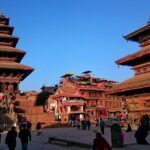
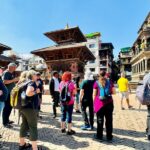
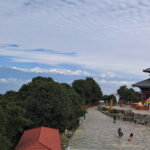
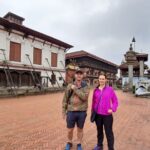
Bhaktapur is a medieval city and a UNESCO World Heritage Site. Your stop is listed as about 30 minutes, with admission listed as free.
This is a smart placement in the route because Bhaktapur tends to shift the mood again. The ride has been about effort and elevation, and then you’re dropped into a place where the streets and architecture tell a different story. Even in a short time, you can feel how “old city” Bhaktapur is compared with modern Kathmandu edges.
The consideration: 30 minutes goes quickly. You won’t have time for a full museum or long courtyard exploration. If Bhaktapur matters to you, consider adding a separate day later in Kathmandu so you can do it slowly without racing your legs back to the bike.
Still, as a mid-ride cultural checkpoint, it’s a meaningful bonus that makes this more than a scenic descent.
The challenge level: why this tour fits advanced riders
This is explicitly designed for professional-level riders seeking a challenging experience, with an emphasis on strong physical fitness. That makes sense given the climb and the distance.
What “challenging” likely means for you in real terms:
- You’ll be riding at a sustained effort level for long stretches.
- Altitude can make breathing feel harder even if you’re in good shape.
- Front suspension helps, but you still need bike control and comfort on uneven road surfaces.
If you’re new to long rides or still learning how your body handles sustained climbing, this is the wrong place to test yourself. Choose something more gradual until you’ve built endurance and technique.
On the other hand, if you’re already riding regularly and you want Kathmandu in a more intense way than sightseeing, this is the kind of day that sticks in your memory.
The Himalayan view experience: what you should expect, honestly
The tour’s viewpoint claim is clear: Nagarkot can offer Everest far behind on a clear day. That’s the big promise, but it’s also the most weather-sensitive part of the day.
So what can you count on?
- You will reach a high viewpoint elevation around 2,100 meters.
- You’ll get a dedicated stop time to see the mountains.
- You’ll get a visual shift from city to high-country scenery as the ride rises.
What you can’t guarantee is that Everest will be visible. The right expectation makes the experience better, not disappointing. When the sky is clear, you get the full payoff. When it’s not, you still get high-altitude views, the satisfaction of arriving there on your bike, and the sense that Kathmandu isn’t just temples and traffic.
Value check: is $165 a good deal?
For a day tour in Kathmandu, $165 can sound steep until you itemize what you’re getting.
You’re paying for:
- A customized Giant or Fuji front suspension bike
- Helmet
- A local guide plus expert mechanic
- Private group setup
- All taxes and service charges
You’re not paying for:
- Meals
- Bike clothing
- Insurance or evacuation coverage
- Any support vehicle (if you need one)
When the equipment is included and the mechanic is there, the value becomes clearer—especially if you’d otherwise have to rent a proper bike and still worry about maintenance. If you already own the right gear and want meals included, you might feel like the price is “just for the ride.” But for most visitors who don’t want to manage equipment headaches, it’s a fair exchange for a high-effort day done the right way.
Who should book this, and who should skip it
This tour makes sense if:
- You’re comfortable riding longer distances and sustaining effort.
- You want serious Kathmandu scenery, not just casual sightseeing.
- You like challenge riding with built-in viewpoints and short culture stops.
Skip it if:
- You’re looking for a gentle, beginner-friendly cycling day.
- Long distances and altitude make you nervous.
- You want meals and a slow pace built into the schedule.
One more practical note: if you’re bringing kids, they must be accompanied by an adult. Since the ride is built for professional-level fitness, use your judgment carefully on whether a child can realistically handle the effort and route demands.
Practical expectations for your day on the bike
Here’s how to prepare your brain for success.
Bring or secure the basics you’ll be missing:
- Cycling clothing you’re comfortable in for a long day (not provided)
- Sun protection and layers (altitude and temperature can shift)
- Any personal water/food plan, since meals aren’t included
On the day:
- Start steady. With a climb and long distance, going out too hard usually punishes you later.
- Save your best focus for Nagarkot. The viewpoint is the payoff moment, and you’ll want your energy and attention for it.
Since the schedule includes only brief stops, the ride itself is the main event. Treat the towns as quick chapters in the story.
Should you book Kathmandu: Extreme Mountain Biking Day Tour?
If you want Kathmandu as a serious cycling challenge, yes—this is a strong pick. You get pro-level route design, equipment and mechanic support included, and a viewpoint finish at Nagarkot that can be spectacular when conditions cooperate.
I’d only tell you to hesitate if you’re not already training for long-distance riding or you get shaky with altitude. The schedule is demanding, and the “short stop times” mean you won’t be able to slow things down later to compensate.
If you’re ready for a tough day with real rewards—views, old towns, and a sense of accomplishment—this one belongs on your list.
FAQ
How long is the Kathmandu Extreme Mountain Biking Day Tour?
It’s listed at about 6 hours, and it’s also described as an 8–9 hour full-day round-trip.
How far is the biking distance?
The route covers a one-way distance of 35 km, with the round-trip nature of the day bringing you back afterward.
Where does the tour start and end?
The tour starts and ends in Thamel, Kathmandu.
Are pickup and drop-off included?
Pickup is offered.
Is this a private tour?
Yes. It’s a private tour/activity, and only your group participates.
What bike and safety gear are included?
You’ll get a customized Giant or Fuji front suspension bike and a helmet.
Who guides the ride?
The tour includes a local guide and an expert mechanic.
Are meals included?
No. Meals are not included.
Are tickets or admissions needed for the stops?
Admission tickets are listed as free for Sankhu Village, Nagarkot, and Bhaktapur during the stops.
What about cancellation or refunds?
This experience is non-refundable and cannot be changed for any reason. If you cancel, you won’t get a refund.
Is travel insurance included?
No. Travel insurance, evacuation, and medical expenses are not included.