REVIEW · KATHMANDU
Kathmandu Private Tour of UNESCO World Heritage Sites
Book on Viator →Operated by Amazing Kathmandu Tours · Bookable on Viator
Seven UNESCO stops, one smooth day plan. This private Kathmandu tour strings together the valley’s top sacred sights and heritage squares without the hassle of mixing with other groups. You’ll get a professional English-speaking guide plus private transport, so you can ask questions, pause for photos, and keep moving on your own rhythm. I like that it’s built around the classic Kathmandu circuit: pagodas, temples, stupas, and those three royal durbar squares.
Two things I especially like: first, you cover multiple UNESCO World Heritage sites in a single day, so your time in Nepal doesn’t get swallowed by transit planning. Second, the day touches the full spiritual spectrum, from Hindu river rituals at Pashupatinath to Buddhist reverence at Boudhanath. One consideration: the itinerary is tightly scheduled, and two stops are listed as very short (Boudhanath and Kathmandu Durbar Square), so if you want long wandering time everywhere, you may feel a bit rushed.
In This Review
- Key Highlights You’ll Care About
- Why This 9-Hour UNESCO Loop Works in Kathmandu
- Changu Narayan Temple: the Quiet Start You’ll Appreciate
- Bhaktapur Durbar Square: Royal Craft in Stone and Courtyards
- Boudhanath Stupa: Iconic Buddhism, Short Time Slot
- Pashupatinath on the Bagmati River: Rituals and Pagoda-Style Drama
- Patan and Kathmandu Durbar Squares: Two Royal Centers, Different Feel
- Patan Durbar Square
- Kathmandu Durbar Square
- Swayambhunath Monkey Temple: Best Views, Best Finish
- Price and Logistics: What You’re Actually Paying For
- Who This Private Tour Suits Best (and Who Should Rethink It)
- Should You Book This Kathmandu UNESCO Day Tour?
- FAQ
- What time does the Kathmandu UNESCO tour start?
- How long is the tour?
- Is this a private tour?
- Are pickup and transportation included?
- What UNESCO sites are included?
- Is lunch included?
- Are entrance fees included?
- What’s the price per person?
- What is the cancellation policy?
- Is the tour suitable for everyone?
Key Highlights You’ll Care About
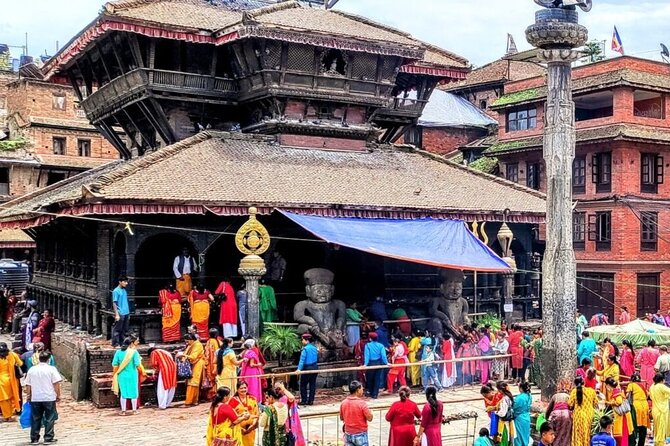
- Private-group route: Only your group participates, with pickup offered and an air-conditioned vehicle.
- UNESCO coverage in one day: All seven sites are on the plan, from Changu Narayan to Swayambhunath.
- Clear expectations on time: Most stops are around an hour, but a couple are intentionally brief.
- Guide-led cultural context: You’ll have a professional English-speaking guide to explain what you’re seeing.
- Entrance fees separate from the tour price: Temple payments total $48 cash if you visit all seven sites (Swayambhunath is listed as free).
Why This 9-Hour UNESCO Loop Works in Kathmandu
Kathmandu can feel like sensory overload. This tour has a simple advantage: it’s organized into one logical route, starting at Changu Narayan and looping through the valley’s most important UNESCO sites before finishing at Swayambhunath. That means you spend less time figuring out logistics and more time understanding what each place is for.
For the money, I think the value comes from what you’re buying besides sightseeing. You’re paying for transport, a guide, and a full schedule that hits major sites without you needing to coordinate multiple tickets or drivers. The base price is $47.50 per person, which is low compared to the cost of hiring a driver and guide for a full day on your own.
The day is about nine hours, starting at 9:00 am. Since you’re covering seven sites, you’ll want to treat this as an intense “greatest hits” format: plenty of highlights, but not endless time at each stop. If you like to linger, plan to use your guide to prioritize what matters most to you.
You can also read our reviews of more private tours in Kathmandu

Changu Narayan Temple: the Quiet Start You’ll Appreciate
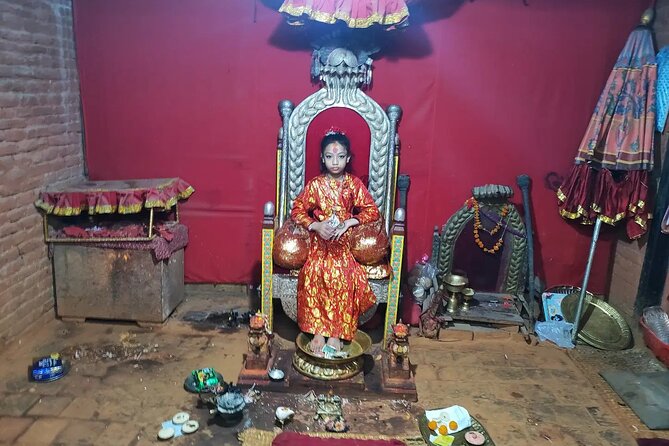
Changu Narayan Temple is a strong first stop because it’s different from the busy squares and main roads you’ll hit later. It’s described as tucked in a quiet forest, which is exactly what you want early in the day: fewer crowds, calmer atmosphere, and a feeling of stepping into a much older Kathmandu Valley.
This temple is noted as one of the oldest in the valley, dating back to the Licchavi days (around 450–750 AD). The site’s layout includes a two-tiered pagoda-styl structure, which you’ll see as you walk around and look for details. Even if you’re not an architecture nerd, this is the place where you get your bearings about Kathmandu’s long timeline.
Time on-site is listed as about 1 hour, but because the setting is calmer, that hour can feel satisfying rather than rushed. One practical tip: go in expecting a slower pace. The value here is in the atmosphere and age, not in volume of souvenir stops.
Bhaktapur Durbar Square: Royal Craft in Stone and Courtyards
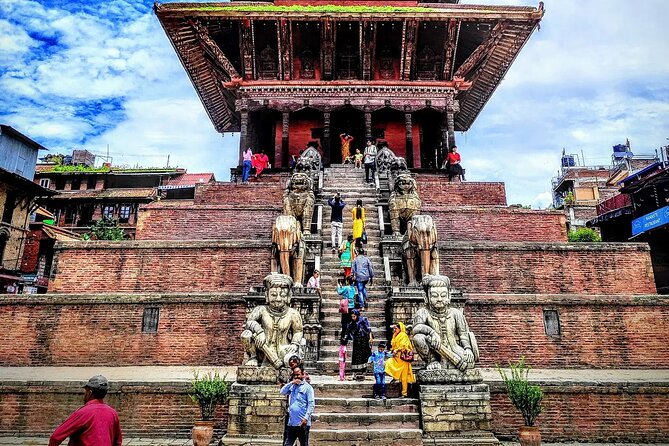
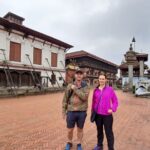
Next up is Bhaktapur Durbar Square, the heart of Bhaktapur. The plan calls it enchanting, and the reason is simple: durbar squares are physical history. You’re looking at spaces that were designed for power, ceremony, and public life—then kept alive by daily use.
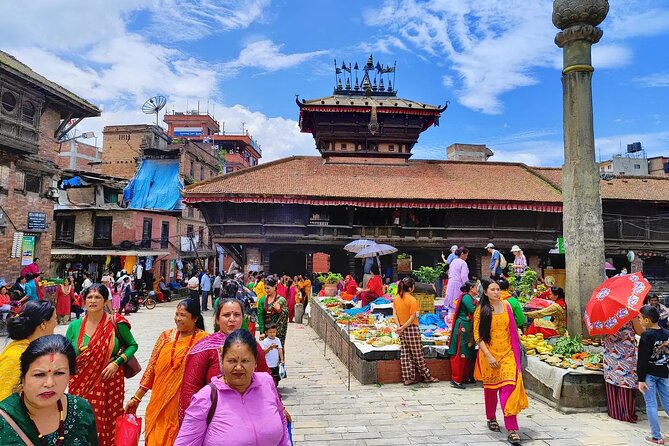
The square is described as made up of four distinct squares: Pottery Square, Dattatreya Square, Taumadhi Square, and more within the overall complex. That matters because you can explore in sections. Instead of trying to do everything at once, you can pick what pulls you in—craft areas, temple zones, and the open courtyard feel of a royal center.
You’ll have about 1 hour here. Entrance fees are not included, so if this stop matters to you, plan for cash temple payments later in the day. The drawback to be aware of is also the upside: durbar squares can involve uneven walking and lots of steps. Wear shoes that don’t mind Nepal’s stone and cobbles.
Boudhanath Stupa: Iconic Buddhism, Short Time Slot
Boudhanath Stupa is Nepal’s most iconic Buddhist site, and it’s hard to miss why. It’s described at 36 meters (118 ft) tall, with a massive white dome covered in art and surrounded by prayer flags. From a distance, it’s a visual anchor for the entire area.
Here’s the one scheduling issue: the itinerary lists this stop at about 1 minute with no entrance fee included. That’s extremely short, so don’t treat it as a deep visit. Instead, think of it as a quick orientation moment—where you get the wow factor and then move on.
If you want more time at Boudhanath than the plan allows, you’ll need to be strategic. Since it’s a private tour, you can ask your guide about the best use of that time for your priorities. Maybe that means focusing on the prayer flag edges and the stupa’s dome details rather than trying to do everything.
Still, even a quick stop can be worthwhile. Sometimes it’s the first real view of the day that locks in the meaning of the route: Kathmandu’s spiritual layers are close together, but they feel very different.
Pashupatinath on the Bagmati River: Rituals and Pagoda-Style Drama
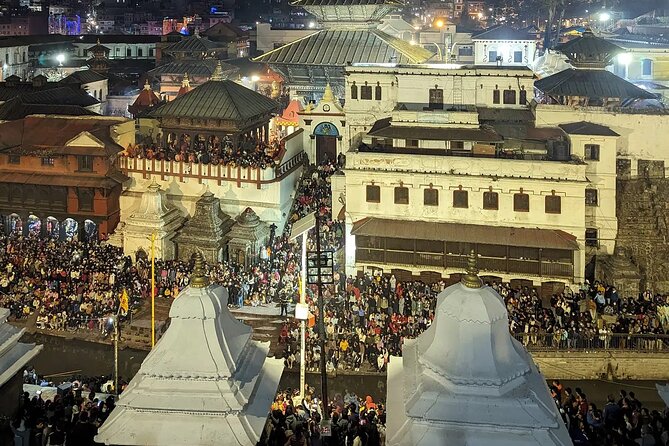
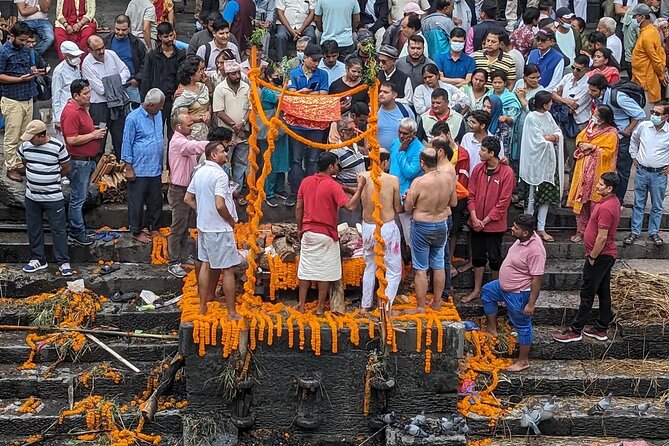
Then the tour shifts to Pashupatinath Temple, Kathmandu’s holiest Hindu shrine, set along the Bagmati River. This is where the spiritual tone changes. You’re not looking at architecture only—you’re seeing a living religious setting.
The description emphasizes devotion to Lord Shiva and highlights pagoda-style architecture and intense devotional energy. You’ll also be facing the fact that this is a riverside temple where ceremonies take place. Even if you’re simply observing from the right vantage points, you’ll likely feel how central the river is to the whole ritual story.
Time here is listed as about 1 hour, which is a decent block. It’s long enough to take in the main temple area and absorb how people move through the space. Keep your expectations realistic: this is a site where you should be respectful, keep your voice down, and avoid blocking people during ceremonies.
Entrance fees aren’t included, so again, plan on the cash payment side of things. If you’re sensitive to crowds, note that religious sites can be busy, especially later in the morning. Getting a schedule that starts early is a real advantage.
You can also read our reviews of more historical tours in Kathmandu

Patan and Kathmandu Durbar Squares: Two Royal Centers, Different Feel
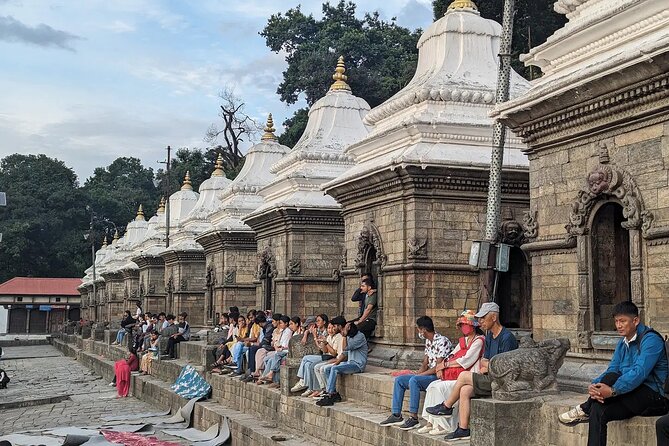
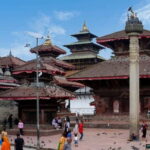
After Pashupatinath, you’ll hit the heritage-heavy part of the day: Patan Durbar Square and Kathmandu Durbar Square (also known as Basantapur Durbar and Hanuman Dhoka).
Patan Durbar Square
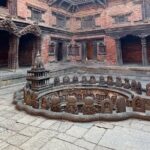
Patan Durbar Square is described as an artistry showcase, with architectural finesse and a profusion of magnificent work. This is another UNESCO durbar square where stone details matter. The value in a guide-led stop is that you don’t just see buildings—you learn what to look for and why those shapes, levels, and courtyard layouts were built the way they were.
Your time here is listed as about 1 hour. Entrance is not included. If you like to photograph religious architecture, Patan is the kind of place where you can keep finding new angles as you walk.
Kathmandu Durbar Square
Kathmandu Durbar Square is another major royal complex in the valley and an integral part of the UNESCO listing. It’s scheduled for about 1 minute on the plan, which is honestly a blink-and-you-miss-it stop.
So how do you make it worthwhile? You don’t try to see it all. You pick one or two priorities: maybe a key temple frontage, maybe the central courtyard view, maybe a specific structure your guide points out. That’s also where the private nature helps—your guide can steer you to what fits your interests within the tight time.
If a longer visit is your goal, you may want to treat this as a “check-in and photos” stop, not a full exploration day.
Swayambhunath Monkey Temple: Best Views, Best Finish
To close the day, you’ll go to Swayambhunath, better known as the Monkey Temple, perched on a hill for panoramic views over the Kathmandu Valley. The itinerary describes the white dome and the iconic Buddha’s all-seeing eyes, which you’ll likely spot as a strong focal point from different angles.
Swayambhunath is listed with 1 hour and admission ticket free. That combination is a big deal. It gives you time at an impressive viewpoint without adding another paid entrance stop.
It’s a good way to wrap your day because you get context. After visiting temples, stupas, and durbar squares around the valley, the view helps everything click into place. You can look down and understand how these heritage sites fit into the city’s structure.
Just keep in mind that hills mean stairs and uneven ground. Bring shoes you trust, and expect monkeys to be part of the scene. Keep your belongings secure and follow your guide’s advice.
Price and Logistics: What You’re Actually Paying For
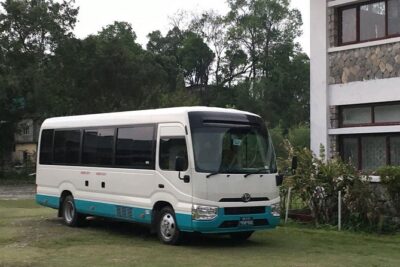
The tour price is $47.50 per person, with pickup offered and an air-conditioned vehicle included. You’re also getting a professional English-speaking guide and a mobile ticket option, which usually simplifies check-in and reduces paperwork.
Now for the real budget math: entrance fees are not included. The tour notes that if you visit all seven sites, entrance fees total $48 cash per person, paid to temple authorities. Since Swayambhunath is listed as free, the exact amount you pay depends on which sites you actually enter.
Here’s the practical takeaway: plan to bring cash. Even if you’re using the tour price as your baseline, you’ll want another wallet-ready buffer for temple payments.
Value-wise, this tour is best when you want structure. If you tried to assemble seven UNESCO sites by yourself, you’d likely pay more in driver time and lose the benefit of a guide connecting the dots between places.
Also, the day starts at 9:00 am. That’s a smart timing choice because you can often enjoy temples and squares with fewer people than later in the day. The itinerary still has short stops, but early timing helps the longer ones feel more comfortable.
Who This Private Tour Suits Best (and Who Should Rethink It)
This private format makes sense if you want a clear route with minimal friction. You’ll likely enjoy it if you:
- want to hit all seven UNESCO sites in one day
- appreciate a guide’s cultural explanations in English
- prefer comfort with an air-conditioned vehicle
- don’t want to coordinate transport between far-flung sites yourself
It may feel less ideal if you’re the type who needs 2–3 hours at every stop. Two scheduled moments are extremely short, including Boudhanath and Kathmandu Durbar Square. If your dream day is long, slow, and deeply detailed at just one or two places, you’d probably be happier with a lighter itinerary.
One more note from what I’m paying attention to: the tour highlights religious and heritage sites that involve walking, steps, and active ceremonies. It’s listed that most people can participate, and service animals are allowed, but you should still plan for uneven ground and respectful behavior.
Should You Book This Kathmandu UNESCO Day Tour?
I’d book it if you want a single, focused day that gives you a strong introduction to Kathmandu Valley’s most important heritage sites. The guide-led approach plus private transport is a practical combo, and the route makes sense for first-timers or anyone with limited time.
I would hesitate only if you’re chasing slow, long visits at every stop. Because the plan compresses two locations into very short slots, you may feel like you’re collecting key moments rather than fully settling into each site.
If you do book, come ready to move. Wear comfortable shoes, carry cash for temple entrances, and use your guide’s expertise to pick your must-see details fast. Done right, this is the kind of day that helps you understand why Kathmandu’s UNESCO sites feel connected even when they’re spiritually different.
FAQ
What time does the Kathmandu UNESCO tour start?
The start time is 9:00 am.
How long is the tour?
The duration is approximately 9 hours.
Is this a private tour?
Yes. It’s listed as a private tour/activity, meaning only your group will participate.
Are pickup and transportation included?
Pickup is offered, and the tour includes an air-conditioned vehicle.
What UNESCO sites are included?
The tour includes Changu Narayan Temple, Bhaktapur Durbar Square, Boudhanath Stupa, Pashupatinath Temple, Patan Durbar Square, Kathmandu Durbar Square, and Swayambhunath.
Is lunch included?
No, lunch is not included.
Are entrance fees included?
No. Entrance fees are not included. If you visit all seven sites, the entrance fee totals $48 per person, paid in cash to temple authorities. Swayambhunath is listed as free.
What’s the price per person?
The price is $47.50 per person.
What is the cancellation policy?
You can cancel for free up to 24 hours in advance of the experience for a full refund.
Is the tour suitable for everyone?
It notes that most travelers can participate, and service animals are allowed.