REVIEW · KATHMANDU
Kathmandu Cultural Tour – Kathmandu Valley Sightseeing Tour
Book on Viator →Operated by Adventure Vision Treks and Travels · Bookable on Viator
Four UNESCO sites, one focused Kathmandu day.
This private sightseeing run is built for short stays, with Buddhist and Hindu landmarks in a tight timeline, plus guided context as you go. You’ll see Swayambhunath, Boudhanath, Pashupatinath, and Patan Durbar Square—each with its own spiritual language and look.
What I like most is the practical flow: hotel pickup and drop-off plus a private vehicle means you spend less time negotiating rides and more time looking up at temples. I also love having a guide who ties the sights to meaning—so the day doesn’t feel like a checklist, it feels like a story about Kathmandu Valley.
One caution: entry fees are not included, so plan for ticket costs on top of the $78 price. And because this is a fixed multi-stop plan, I’d confirm your guide is actually joining you (not just a driver), especially for the more meaningful stops like Pashupatinath.
In This Review
- Key highlights worth planning around
- Four UNESCO World Heritage Sites in one half-day plan
- Entering Swayambhunath’s Monkey Temple and getting your bearings
- Boudhanath’s vast stupa and the calm of “Little Tibet”
- Pashupatinath: a UNESCO Hindu temple where you choose what to witness
- Patan Durbar Square: 17th-century stonework and a softer finish
- Price of $78: what you’re really paying for (and what you still cover)
- Logistics that actually matter on temple-heavy days
- Should you book this Kathmandu Valley cultural tour?
- FAQ
- How long is the Kathmandu Cultural Tour?
- Is hotel pickup and drop-off included?
- Do I get a private vehicle and driver/guide?
- Which UNESCO sites are included?
- Are entry fees included in the price?
- What is the tour price?
- Is this tour private or shared?
- Is a mobile ticket provided?
- Do you need good weather for the tour?
- How much notice is needed for free cancellation?
Key highlights worth planning around
- Four UNESCO World Heritage Sites in one half-day outing
- Swayambhunath’s short hill walk for big city views and monkey temple vibes
- Boudhanath’s “Little Tibet” atmosphere with prayer wheels and monastic chanting
- Pashupatinath’s cremation rituals—powerful, but you choose how closely to watch
- Patan Durbar Square as a calmer finish, with a museum and an easy evening stroll
Four UNESCO World Heritage Sites in one half-day plan
If you only have one day in Kathmandu, this tour is designed to cut through the guesswork. Instead of hopping around on your own, you’re carried between major sites in about 5 to 6 hours, with pickup from your hotel and drop-off at the end. That pacing matters in Kathmandu Valley, where traffic and travel time can quietly eat your day.
You’re also not just seeing monuments. You get a guide to explain what you’re looking at—Buddhist stupas, Hindu temple life, and how royal squares fit into the region’s story. That extra layer turns photos into understanding, and it helps you notice details you might otherwise miss.
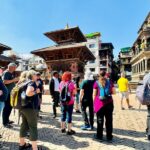
The group is private (only your group participates), which is great if you want flexibility about walking pace, restroom breaks, or how long you linger at each courtyard. It also makes the day feel less chaotic than typical group sightseeing.
That said, the tour still moves. You’ll be leaving each stop with a time limit in mind, and because entry tickets are separate, you’ll want to manage your own cash/cards and ticket timing smoothly.
You can also read our reviews of more historical tours in Kathmandu

Entering Swayambhunath’s Monkey Temple and getting your bearings
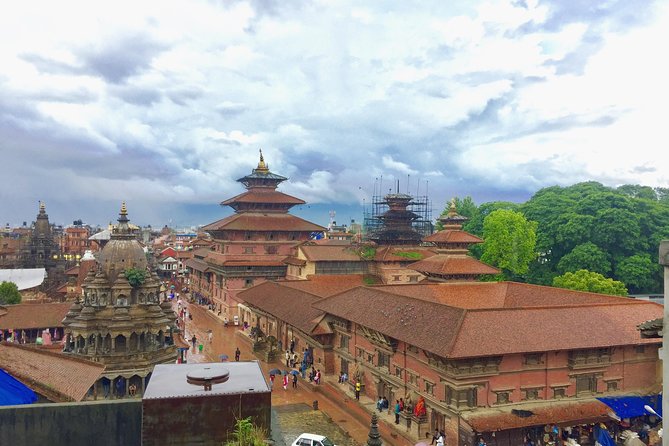
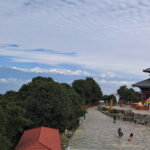
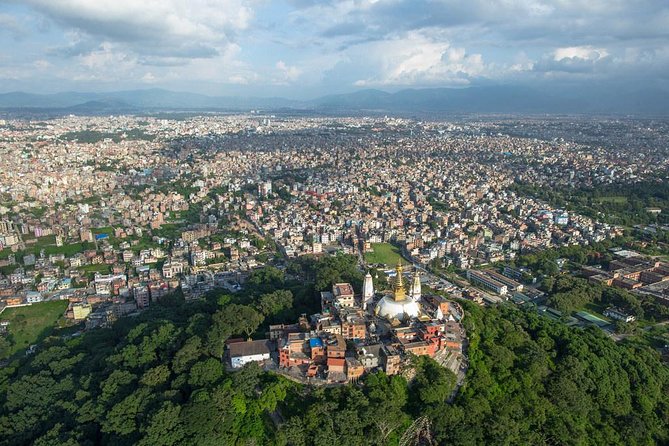
Swayambhunath is the kind of place that tells you instantly where you are in Kathmandu Valley: hilltop, ancient, and packed with spiritual energy. You’ll climb up with a short walk of about 5 minutes to reach the summit areas. It’s not a long hike, but it’s enough to make the panoramic view feel earned.
Once you’re up, the sight hits fast. The temple complex is built around a very old Buddhist stupa, and it’s surrounded by shrines and smaller temples. It feels crowded in the best way—like the site is alive with layers of belief. And yes, the famous monkeys are part of the experience. They’re playful, and they show up as part of the place’s mythology and local culture.
One big practical win here is orientation. Looking across the city from Swayambhunath helps you understand Kathmandu’s layout, which makes your later wandering (and even future taxi rides) less stressful. If you plan to explore beyond this tour, you’ll feel more confident afterward.
A quick consideration: Swayambhunath typically involves some walking and steps. If you’re short on mobility, tell your driver/guide early so you can pace it. Also, this stop is listed for about 2 hours, so don’t treat it like a photo pit stop. Plan to actually slow down and watch worshippers, prayer gestures, and the layout of the shrines.
Finally, admission isn’t included here. Entry fees are on you, so budget for that when you’re planning the full half-day cost.
Boudhanath’s vast stupa and the calm of “Little Tibet”
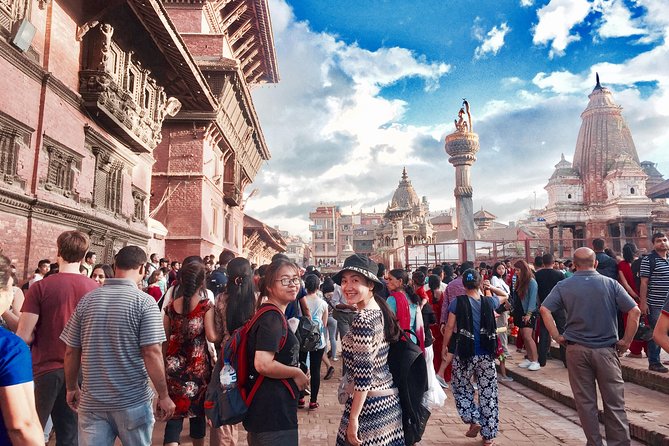
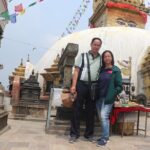
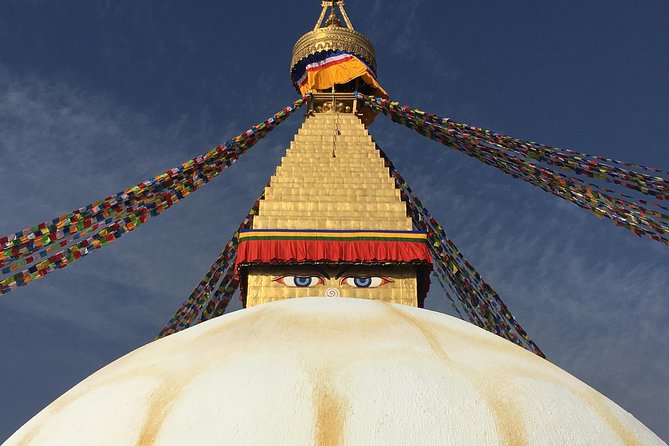
If Swayambhunath is high-energy and scenic, Boudhanath is its calm cousin. You’ll head to Boudhanath Stupa, described as the largest Tibetan stupa in the world. That scale changes the whole mood. Instead of the hilltop viewpoint dominating your brain, the stupa becomes the center of gravity.
Boudhanath is in an area often called Little Tibet, and the vibe matches the name. You’ll notice monks and you’ll hear the rhythm of chanting alongside the steady turning of prayer wheels. The place can feel quieter in your ears even when there are lots of people around. It’s a strong contrast with Swayambhunath’s mix of view, myth, and movement.
This is a great stop for learning how Buddhism expresses devotion. At Boudhanath, a lot of meaning is communicated through repetition—spinning wheels, walking a route around the stupa, returning your attention to the same forms. A guide helps here by pointing out what to watch for, instead of leaving you to guess which rituals are happening and why.
Time-wise, you’re at Boudhanath for about 1 hour. That’s usually enough to take in the stupa’s size, read the basic flow of the courtyard, and step into a calmer mental rhythm for a bit.
As with the other UNESCO sites, entry fees aren’t included, so keep that in mind. Also, bring a light layer if the weather shifts—open air religious sites can change how comfortable you feel.
Pashupatinath: a UNESCO Hindu temple where you choose what to witness
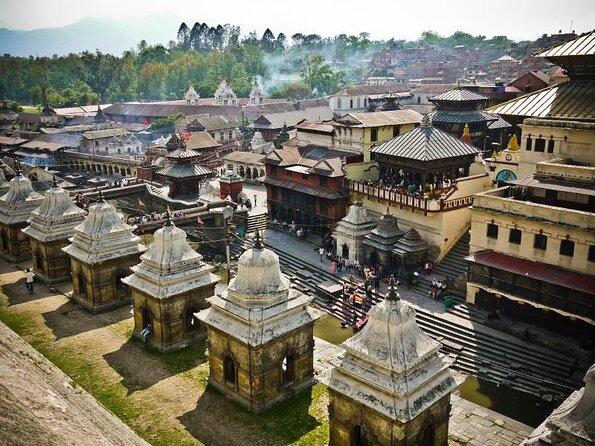
Pashupatinath Temple is one of the most important Hindu sites in Nepal, and it’s also a UNESCO World Heritage Site. The main draw isn’t just architecture—it’s what happens around the temple and the river.
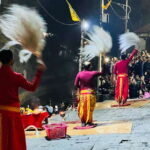
This temple is closely tied to cremation rituals, which take place openly along the Bagmati River. That’s not a side detail. It’s core to why people travel here and why the site carries such weight in Hindu belief.
This is the stop where your personal comfort level matters most. Some visitors find it deeply reflective, because it forces you to confront life, death, and what comes after. Others find it intense or unsettling, because it’s not staged for tourists—it’s practiced as part of a living faith.
The good news is that you can choose. When you arrive, you can decide whether you want to observe closely or keep more distance. A thoughtful guide should help you understand what you’re seeing so you can make the right call for yourself.
Expect about 1 hour at this stop. That’s enough to understand the setting, see key areas of the temple complex, and decide how you want to handle the river-side rituals.
Also plan your behavior here. Respect matters more at Pashupatinath than at most tourist stops. Keep your voice down, avoid blocking pathways, and follow any guidance your guide gives about where it’s appropriate to stand or move.
Admission isn’t included here either, so budget ticket costs.
Patan Durbar Square: 17th-century stonework and a softer finish
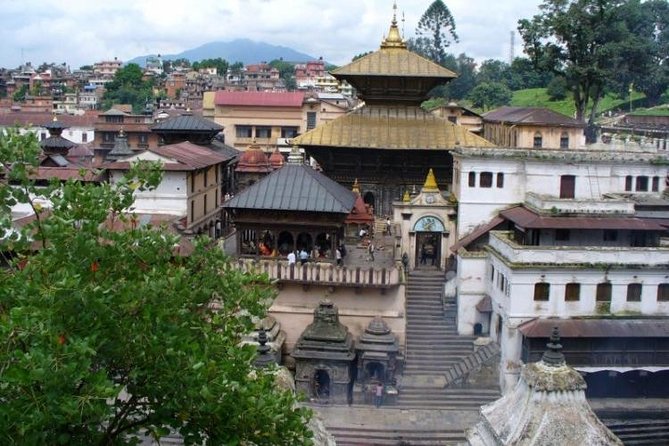
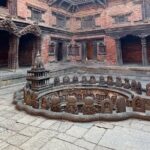
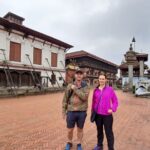
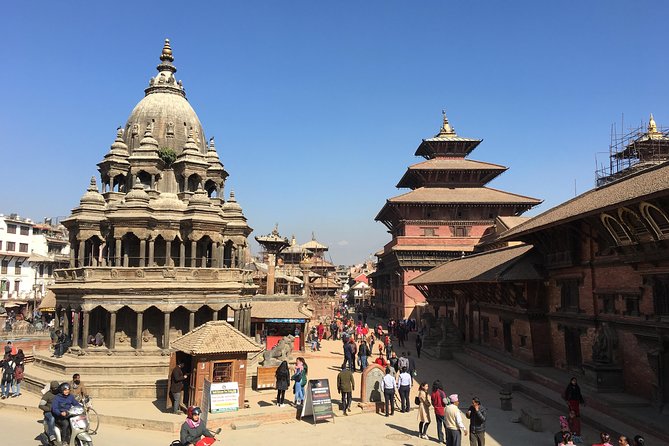
After two intense spiritual stops, Patan Durbar Square feels like an exhale. You’ll go to Patan (Lalitpur), where this royal square is listed as one of the three historic royal squares in the Kathmandu Valley.
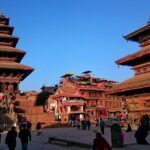
The standout is the architecture—17th-century style—with temples and courtyards that look built to last. Patan’s Durbar Square also includes a museum, which can help connect the visual details to how royal and religious life worked in the valley.
I especially like this ending because it gives you time to slow down and simply look. The tour’s plan sets about 2 hours here, which gives you room to walk at an easy pace instead of rushing through like you’re late for a train. This is also a good moment for a gentle cultural reset before you return to your hotel.
The tour guide will likely point out what makes Patan different from Kathmandu’s major temple areas. That context helps you see Patan as more than a spare stop—it’s a major cultural center with its own identity.
And yes, there’s a local tip baked in: try a cup of authentic Patan tea if your day’s schedule and your guide’s recommendations line up. Small pauses like this make the afternoon feel lived-in rather than purely touristic.
Admission isn’t included at Patan Durbar Square either, so confirm what tickets you’ll need once you’re there.


Price of $78: what you’re really paying for (and what you still cover)
At $78 per person, this tour can feel like a fair deal if your day would otherwise cost you similar transport time and separate entrance tickets. You’re paying for a private vehicle, hotel pickup and drop-off, and a driver/guide, plus one bottle of bottled water.
In practical terms, you’re buying time and friction reduction. You don’t need to coordinate separate rides between far-flung temple areas, and you don’t need to interpret every site alone. In a place like Kathmandu Valley, that “less hassle” factor is real value.
The big extra cost is straightforward: entry fees to World Heritage sites are not included. That means your total out-of-pocket cost will be the tour price plus those site tickets. I recommend you budget for that in advance so you’re not scrambling at each stop.
Also note: the tour operates as a private activity for your group only. That’s usually what makes the per-person price make sense—if you’re traveling with someone, the cost often feels easier to justify than hiring a driver plus a guide separately on your own.
Finally, the tour can require good weather. If it’s canceled due to poor weather, you should be offered another date or a full refund. If you’re traveling at a time when skies can change fast, this flexibility is worth having.
Logistics that actually matter on temple-heavy days
Because this tour is temple-focused, a few small planning choices make a big difference.
Plan for walking, not just sightseeing. You have several major areas where you’ll move around courtyards and stairways. Even though the Swayambhunath climb is short, the total time on your feet adds up across four UNESCO stops.
Dress for respect and comfort. You’ll be in active religious spaces. Go with clothing that lets you move easily and helps you feel comfortable in warm or shifting weather. If you want a simple rule: cover shoulders and keep your bottoms modest.
Bring the right mindset for Pashupatinath. This is not a place for shock humor. Be calm, be respectful, and let your guide help you choose what you want to witness.
And one more real-world tip: since this tour includes four specific destinations, I’d confirm the day-of plan with your guide/driver at the start. One smooth trip starts with clear expectations, especially in a format that can shorten or extend time at each stop.
Should you book this Kathmandu Valley cultural tour?
You should book it if:
- you want a short, guided way to see four major UNESCO landmarks
- you like temple context (not just photos)
- you’re okay with the fact that one stop, Pashupatinath, may feel intense depending on how closely you choose to observe
You might skip or reconsider if:
- you hate paying separate entry fees and want everything bundled
- you prefer long, slow stays at fewer sites instead of covering a lot in 5 to 6 hours
- you need heavy accessibility support, since temple areas often mean stairs and uneven ground
If you do book, you’ll get the best experience by treating this like a guided cultural lesson: ask questions, watch how the religious practices work in real time, and give yourself enough patience for the emotional stop at Pashupatinath.
FAQ
How long is the Kathmandu Cultural Tour?
The tour lasts about 5 to 6 hours.
Is hotel pickup and drop-off included?
Yes. Hotel pickup and drop-off are included.
Do I get a private vehicle and driver/guide?
Yes. The tour includes transport by private vehicle and a driver/guide.
Which UNESCO sites are included?
The tour visits Swayambhunath, Boudhanath Stupa, Pashupatinath Temple, and Patan Durbar Square.
Are entry fees included in the price?
No. Entry fees to World Heritage sites are not included.
What is the tour price?
The price is $78.00 per person.
Is this tour private or shared?
It’s private. Only your group will participate.
Is a mobile ticket provided?
Yes. The tour includes a mobile ticket.
Do you need good weather for the tour?
Yes. The experience requires good weather, and if it’s canceled due to poor weather you should be offered a different date or a full refund.
How much notice is needed for free cancellation?
You can cancel for a full refund up to 24 hours in advance.