REVIEW · KATHMANDU
PashupatiNath and BoudhaNath – Private/Small Group
Book on Viator →Operated by Amazing Kathmandu Tours · Bookable on Viator
Two faiths meet in sacred Kathmandu. In a 3-hour, max-5 group, I loved the short walk rhythm and the guide-led explanations that turn Hindu samskaras and Buddhist ideas into something you can actually hold in your head. One drawback: at Pashupatinath, only Hindus can enter the main temple, so what you see is mostly from the approach areas rather than inside the core shrine.
What makes this one worth your time is the way it links the spiritual world of Hindu Nepal to the Tibetan Buddhism of Boudhanath, with the guide also pointing out religious harmony and even the way belief systems can shape daily life and food culture. By the end, you drop out right at the Boudhanath Gate, so you can keep wandering when you’re ready.
In This Review
- Key things I’d note before you go
- Why Pashupatinath and Boudhanath work better as one tour
- Pashupatinath Temple: the oldest Hindu landmark, with one important access rule
- Aryaghat crematoria and the 16 samskaras explained
- Mrigasthali Deer Park: Shiva’s story in a short, pleasant pause
- Gorakhnath Mandir and the way toward Boudhanath
- Guhyeshwari Shaktipeeth: Satidevi and the idea of Shaktipeeth
- Boudhanath Stupa: Tibetan Vajrayana, prayer flags, and first-time basics
- Guru Lhakhang Monastery: Padmasambhava and Dharma Chakra Parivartana
- Thanka center stop: mandala thinking and healing-bowl basics
- Price and logistics: what you really pay for
- Who should book this tour
- Should you book this PashupatiNath and BoudhaNath tour?
- FAQ
- What is the duration of the PashupatiNath and BoudhaNath private/small group tour?
- How large is the group?
- Are entrance fees included?
- Do I need to pay entrance fees in cash?
- Where does the tour start and end?
- Is the tour guided and in English?
Key things I’d note before you go
- Max 5 people keeps questions flowing, not just photos.
- Pashupatinath + Aryaghat includes the last rites setting, explained through Shodasha Samskaras (16 rites).
- Shiva-linked stops at Mrigasthali Deer Park and Gorakhnath add story and context, not just sightseeing.
- Boudhanath stupa fundamentals for first-timers: prayer flags, the Four Noble Truths, and the Eightfold Path.
- Thangka and healing-bowl basics at a Thanka center gives you something practical to take home.
Why Pashupatinath and Boudhanath work better as one tour
Kathmandu can feel like one long layered sentence: Hindu gods and Buddhist teachers, temples and monasteries, rituals and quiet prayer. This tour makes that layering make sense by moving you from the Hindu heart of Pashupatinath into the Tibetan Buddhist orbit of Boudhanath without changing your pace.
I like that it’s not just two monuments. The guide ties the day together by explaining how each tradition understands life, death, teaching, and practice. If you’re the kind of traveler who hates leaving a site with only a postcard version of meaning, this format is built for you.
And you get a built-in reason to respect what you’re seeing. The day includes the crematoria area at Aryaghat, but it’s framed with religious context so you’re not standing there guessing at symbolism.
You can also read our reviews of more private tours in Kathmandu

Pashupatinath Temple: the oldest Hindu landmark, with one important access rule
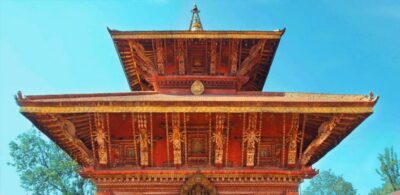
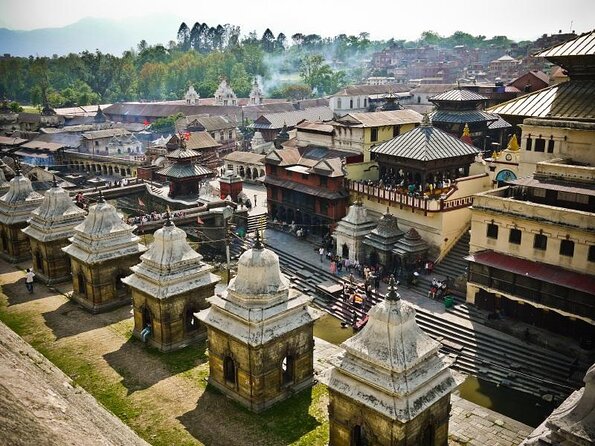
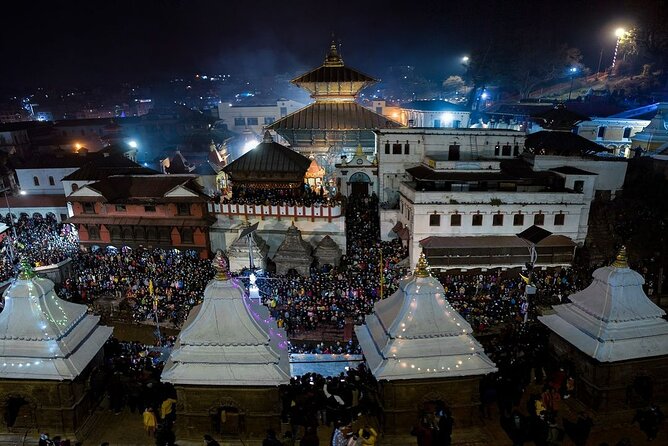
Pashupatinath is described as the oldest Hindu temple of the Kathmandu Valley, and it’s also a major draw for Hindu devotees far beyond Nepal. Your tour starts there, and you’ll get the big picture fast: why it matters, why people come, and why this place feels serious.
The key consideration is access. The main temple is restricted—only Hindus can go inside—so you should expect to see much of the complex from the approach and then continue on toward Aryaghat. In practice, that means you’ll spend less time staring at doors and more time absorbing what’s around the site: the flow of people, the setting for rites, and where the day’s story goes next.
Also, admission for Pashupatinath isn’t included in the tour price, so budget for a cash entrance ticket at the site (NRP 1000, about US$9).
Aryaghat crematoria and the 16 samskaras explained
Aryaghat is where the cremation setting comes into view, and it’s famous precisely because you can observe how Hindu last rites are carried out. The tour stays focused on meaning, with the guide explaining Shodasha Samskaras, the 16 rites of passage in Hindu life.
This is the part of the tour that most strongly separates a guided experience from wandering on your own. If you try to interpret the scene without guidance, it’s easy to turn something solemn into something purely curious. With an explanation of the samskaras and what the rites represent, your eyes start reading details instead of just processing shock.
Timing is also reasonable: you spend about 30 minutes here, which is long enough to get context without turning it into a forced stare. Admission for this stop is not included, so you’ll need to plan for the cash ticket as well.
Practical tip for your mindset: if you’re sensitive to death rituals, give yourself permission to watch quietly and take breaks when you need them. A good guide should pace this so you stay in control of your comfort level.
Mrigasthali Deer Park: Shiva’s story in a short, pleasant pause
After the heavier tone of Pashupatinath and Aryaghat, Mrigasthali Deer Park acts like a story break. You’ll have around 15 minutes here to explore the area while learning how the place connects to Lord Shiva and how it got its name.
This stop matters because it keeps the day from becoming one continuous “big emotion” hour. You’re still in the same religious geography, but now you’re learning through story and place-name logic rather than rites of passage.
Admission for Mrigasthali Deer Park is included, so you don’t need to add another cash ticket for this segment. It’s also a nice moment for questions, since the tour group is small and the guide can slow down without derailing the schedule.
Gorakhnath Mandir and the way toward Boudhanath
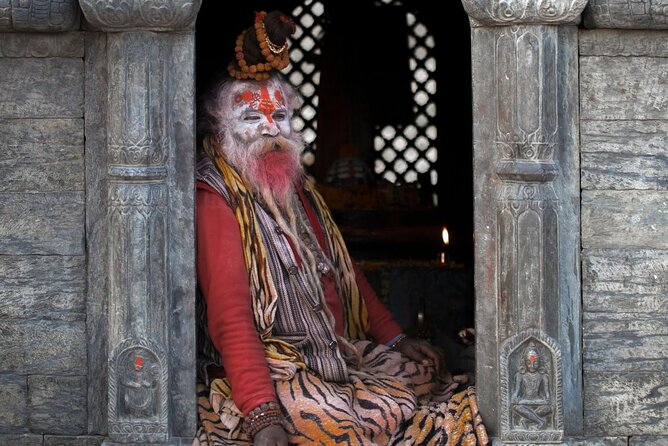
Next up is a rest and a temple stop at Gorakhnath Mandir. You’ll spend about 30 minutes here, learning the story of Guru Gorakhnath. On the way, the route also includes Guhyeshwari Temple, with explanations tied to the day’s shift from Hindu spaces toward the Tibetan Buddhist center at Boudhanath.
This is a good segment if you like connections between traditions. Gorakhnath is not presented as a random stop. The guide uses it to keep the theme of Nepal’s spiritual mix moving forward—story after story, rather than one temple and then a jump.
Admission for Gorakhnath Mandir is included. Even though the visit is brief, it helps you feel like you’re traveling through a living religious map, not just moving between photo stops.


Guhyeshwari Shaktipeeth: Satidevi and the idea of Shaktipeeth
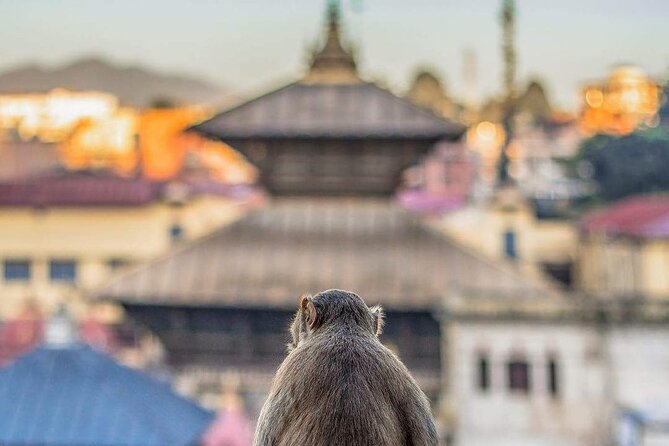
Guhyeshwari Shaktipeeth is a short but meaningful bridge. You’ll be there for about 20 minutes, with the guide telling the story of Satidevi and explaining the concept of Shaktipeeth.
Then comes the travel time to the Boudhanath area—about 20 minutes to reach the stupa. It’s one of the tour’s practical rhythms: you learn, then you move, then you learn again.
One plus here: admission is free for this stop. That’s a small detail, but it adds up if you’re trying to keep total costs clear.
Boudhanath Stupa: Tibetan Vajrayana, prayer flags, and first-time basics
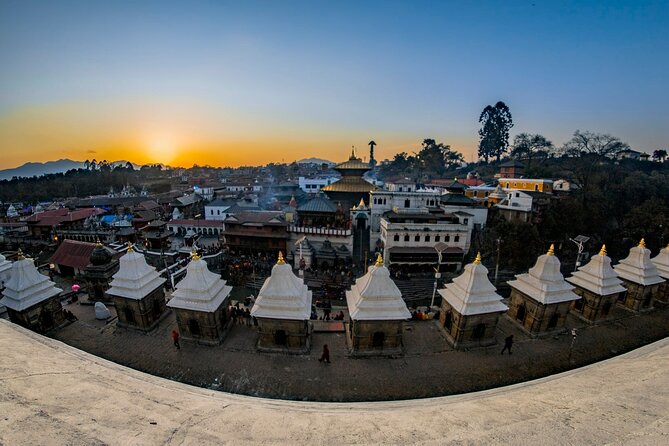
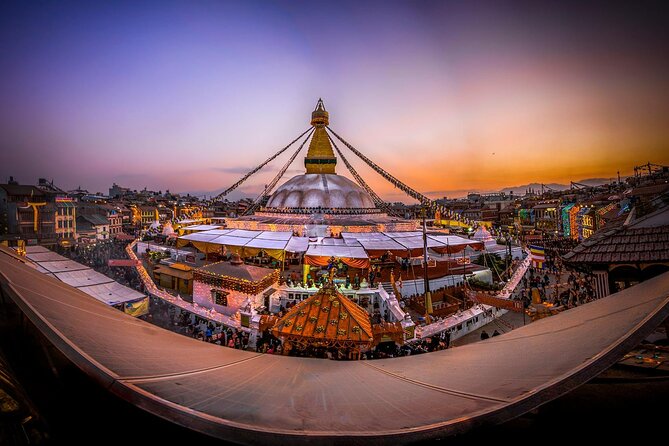
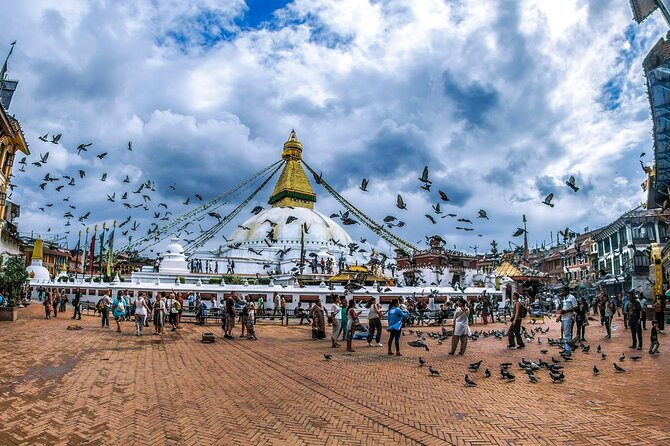
Boudhanath Stupa is the big visual anchor of the day. It’s described as the second largest stupa of its kind in the world, and it’s strongly associated with Tibetan Buddhism (Vajrayana Buddhism).
You’ll get about 45 minutes here to explore the basics of Buddhism as taught at this stupa. The guide covers practical concepts you can recognize on-site, including prayer flags, the five elements, the Four Noble Truths, and the Eightfold Path.
What I like about this portion is that it’s not theoretical lecturing. It’s tied to what you can see around the stupa—so the ideas feel like labels for visible things, not homework.
Admission for Boudhanath Stupa is not included, and you’ll pay it in cash (NRP 400, about US$4). Plan for that so it doesn’t distract you once you arrive.
Guru Lhakhang Monastery: Padmasambhava and Dharma Chakra Parivartana
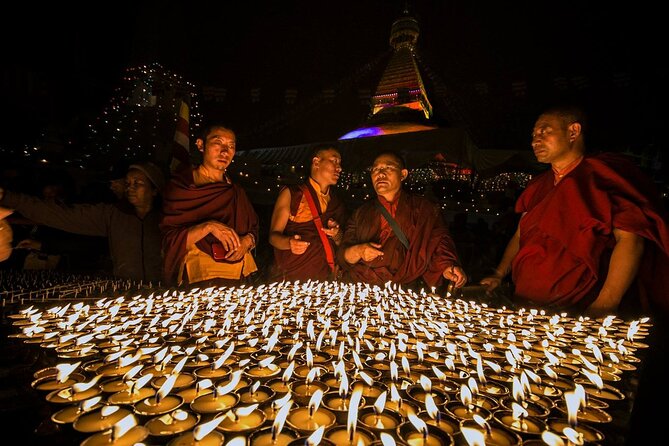
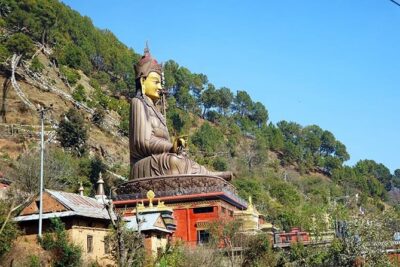
From the stupa, you move into Guru Lhakhang Monastery for about 10 minutes. Even with the short time, the guide explains what a typical monastery looks like and focuses on key religious figures and teaching themes—Guru Padmasambhava and Dharma Chakra Parivartana.
This is a compact stop, but it does one useful job: it connects the stupa’s public prayer space to a more structured monastic setting. If you’ve ever wondered why Buddhism can feel both public and ritual-heavy, this is the quick answer.
Admission for Guru Lhakhang is free, so there’s no extra cash ticket pressure here.
Thanka center stop: mandala thinking and healing-bowl basics
The last major visit is at a Boudha Stupa Thanka Center, where you’ll spend about 15 minutes. This part is different in a good way. Instead of only listening, you get the chance to focus on Thanka art, especially the idea of mandala, and you’ll also learn the basics about healing bowls.
If you like souvenirs that aren’t just magnets, learning what goes into thangka design and mandala concepts gives you a frame for appreciating what you might later see in shops. It also helps the day land softly: rites and stupa teachings on one side, then art and sound tools on the other.
Admission for this center is included.
At the end, you’re dropped near the Boudha stupa area (the tour ends at the Boudhanath Gate). That’s ideal because you can keep looking around at your own pace without needing to fit the rest of the day into a rigid schedule.
Price and logistics: what you really pay for
The tour price is listed at US$15 per person for a private/small group, up to 5 people. That’s the guide and the structure, and with a small group you can ask follow-up questions without feeling rushed.
Then there are entrance fees not included for key sites: Pashupatinath (NRP 1000 about US$9) and Boudhanat (NRP 400 about US$4), paid in cash at the entrance. The data also lists an extra US$13 per person for these entrance fees, which aligns with the two cash tickets above.
So in plain terms, you should expect the day to land around the mid-to-high twenties per person once you add the major entrance costs. For what you get—two major spiritual zones, a guided explanation of Hindu rites, and a guided start with Tibetan Buddhist concepts—that total can feel fair, especially if you’re the kind of traveler who wants meaning, not just movement.
Timing is about 3 hours total. That’s long enough to learn and see, but short enough to fit into Kathmandu without exhausting you. The small-group size also matters here. If you’re traveling solo or as a couple and you want personal attention, this setup is built for it.
You also get a mobile ticket and English-speaking guidance. The tour notes service animals are allowed and that it’s near public transportation, which is useful if you’re not planning on taxis for every step.
Who should book this tour
This is a strong match if you:
- Want Hinduism and Buddhism explained in the same day, with real context around rituals
- Prefer small-group pacing and time for questions
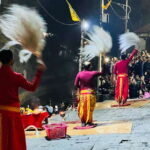
- Like story-driven guides who connect places to beliefs (Santosh is specifically noted in feedback as adjusting schedules for special experiences such as ceremonies like aarti, and as having studied culture, history, and archeology)
It may not be ideal if:
- You’re hoping to spend lots of time inside the main sanctum at Pashupatinath (the main temple is restricted to Hindus)
- You find crematoria settings difficult even when explained respectfully
Should you book this PashupatiNath and BoudhaNath tour?
Yes, if you want Kathmandu to make sense fast and you value explanations tied to what you’re actually standing in front of. The standout value here is the combination of guided symbolism (especially around the 16 samskaras) and the practical start you get on Boudhanath’s Buddhist teachings.
I’d book it if you’re comfortable with the fact that part of the experience is watching solemn Hindu rites from outside the restricted areas, and if you’re ready to treat the day as more than sightseeing.
If you want, tell me your travel dates and whether you’re more curious about Hinduism, Buddhism, or both—I can help you decide whether this 3-hour format fits your Kathmandu plan.
FAQ
What is the duration of the PashupatiNath and BoudhaNath private/small group tour?
The tour lasts about 3 hours.
How large is the group?
The experience has a maximum of 5 travelers.
Are entrance fees included?
Entrance fees are not included for Pashupatinath and Boudhanath Stupa. Admission is included or free for other listed stops (such as Mrigasthali Deer Park, Gorakhnath Mandir, Guhyeshwari Shaktipeeth, Guru Lhakhang Monastery, and the Thanka center, depending on the stop).
Do I need to pay entrance fees in cash?
Yes. The entrance fees for Pashupatinath (NRP 1000, about US$9) and Boudhanat/Boudhanath (NRP 400, about US$4) are to be paid in cash at the entrance.
Where does the tour start and end?
The tour starts at Gaushala Bus Stop on Ring Rd, Kathmandu, and ends at the Boudhanath Gate.
Is the tour guided and in English?
Yes. It includes an English-speaking guide.