REVIEW · KATHMANDU
Kathmandu Heritage Tour – Private Full-Day UNESCO Sites & Temples
Book on Viator →Operated by Himalayan Recreation Treks & Expedition Pvt.Ltd · Bookable on Viator
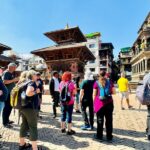
Kathmandu in one tight loop beats guesswork. This private full-day tour strings together the valley’s most famous UNESCO sights, with a guide who helps you read the temples—and explains how the 2015 earthquake changed Nepal’s landmarks and daily life. It also runs with a real Kathmandu pace, so you can take photos, catch your breath, and still cover a lot.
I love the private guide element: the day runs smoothly and you get meaning behind what you’re looking at, not just dates on stone. I also love the hotel pickup and drop-off plus bottled water, because Kathmandu traffic can eat your time fast when you’re doing it on your own.
One thing to consider: entrance fees are extra (and some sites may show earthquake damage), so your final spend is likely higher than the $60 tour price on paper. Budget for lunch locally too—about $10 is suggested.
In This Review
- Key highlights that make this tour worth your time
- How a private UNESCO Kathmandu loop saves you time
- Price check: $60 tour vs the real total for entrances and lunch
- First stop: Swayambhunath Monkey Temple views and prayer halls
- Kathmandu Durbar Square and Kumari Chowk: royal power made human
- Quick temple hits: Basantpur Dabali, Hanuman Dhoka, and Taleju Bhawani
- Pashupatinath and the crematoria: Hindu ritual you will not forget
- Boudhanath Stupa and the calm side of the valley
- Garden of Dreams: a breather after big sacred sites
- What the guides get right (and why it matters)
- Pace, timing, and what to wear for a 5–8 hour day
- Who should book this Kathmandu Heritage Tour
- Should you book this tour? My call on value and first-time comfort
- FAQ
- How long is the Kathmandu Heritage Tour?
- What’s included in the price?
- Are entrance fees included?
- Which UNESCO sites are included?
- Does the tour address earthquake damage?
- Is lunch included?
- Can I change my dates or cancel?
Key highlights that make this tour worth your time
- Private guide and private vehicle, with hotel pickup and drop-off
- UNESCO main hits in one day: Swayambhunath, Kathmandu Durbar Square, Pashupatinath, and Boudhanath
- Real context on 2015 earthquake impact on sites you’ll see
- Fast stops at smaller temple highlights like Hanuman Dhoka and Kumari Chowk
- Crematoria visit at Pashupatinath for an unforgettable look at Hindu ritual life
- Good first-day structure when you want orientation fast
How a private UNESCO Kathmandu loop saves you time
If this is your first time in Kathmandu Valley, the biggest risk isn’t missing a sight—it’s spending half your day traveling between them and still ending up confused. This tour solves that by handling the route with a private vehicle and building in a sensible order: start high (Swayambhunath), shift into the royal center (Kathmandu Durbar Square and nearby squares), then move to the river-side spiritual heavyweight (Pashupatinath) before finishing at Boudhanath.
The “private” part matters. Your group stays together, your guide sets the pace, and you’re not stuck waiting while another mini-group negotiates tickets, bathrooms, or where to stand for a photo. Reviews attached to this tour consistently mention smooth timing and great guide support, with guides named like Krishna A., Jamuna, Janina, and SuJan showing up in accounts of excellent English and careful pacing.
A private format also helps with practical stuff: where to stand so you don’t block people, when to move on to avoid the thickest crowds, and what to look for once you arrive.
You can also read our reviews of more private tours in Kathmandu

Price check: $60 tour vs the real total for entrances and lunch
The headline price is $60 per person, with a private guide, transport, and pickup/drop-off included. That’s a fair base for Kathmandu, especially when you’re packing multiple major sites into one day.
But entrance fees are at your expense, and that’s where people often feel the sticker shock. One firsthand account in the mix described paying about $60 total in entry fees across several sites, with many places in the $10–$15 range and one lower-cost stop (they cited $2.50). Another common pattern here: it’s not just the “big” UNESCO sites, because the route also includes additional squares/temple areas.
On top of that, food isn’t included. Expect about $10 for lunch purchased locally, and you’ll likely want water and snacks if you’re the type who doesn’t like thinking about food timing while temples are calling.
So here’s the practical way to budget: treat $60 as your guide-and-driver cost, then add a separate allowance for entrance fees + lunch, plus your usual tips if you use them in Nepal. If you plan for that from the start, the value feels much better.
First stop: Swayambhunath Monkey Temple views and prayer halls
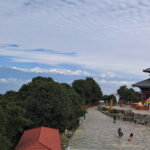
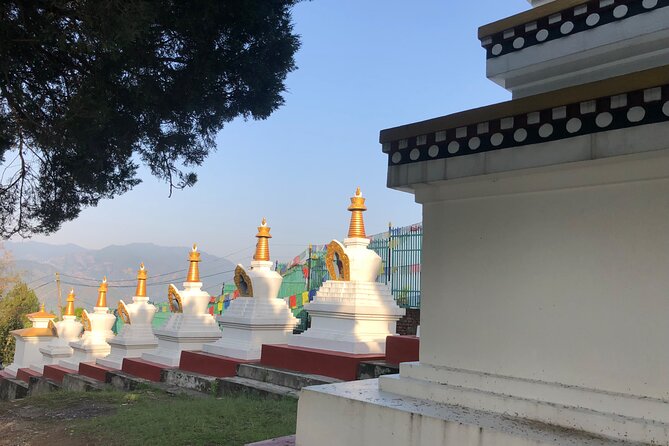
Swayambhunath (the Monkey Temple) is a smart opener. It’s high on a hill, so right away you get the valley’s geography—how streets and rivers relate, and where the big temple areas sit in relation to the city.
Plan for about one hour here. You’ll climb or navigate your way up through temple areas, with lots of small details to notice: prayer areas, carved surfaces, and the layered feeling that this is both a major pilgrimage stop and a living, day-to-day religious place.
The guide angle is especially helpful at Swayambhunath. A good guide helps you understand what you’re seeing beyond the obvious photo spots—why certain structures matter, and how Buddhist symbolism appears in the layout. This tour’s framing also ties in context about Nepal’s 2015 earthquake. Some areas were damaged, and your guide will explain how that has shaped restoration and how people approach these places now.
One practical note: this is a “walking and watching” stop. If you’re short on patience for crowds and steps, you may want to keep water handy and aim for calm, steady movement rather than rushing for the best angle.
Kathmandu Durbar Square and Kumari Chowk: royal power made human
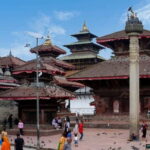
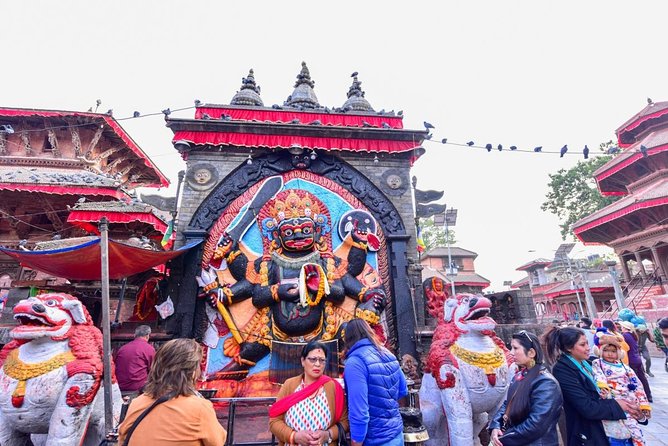
Next comes the big one: Kathmandu Durbar Square. Plan about one hour for the core experience. This is where the city’s former royal world shows up in stone—ornate buildings, carved details, and a layout built around power and ceremony.
This tour doesn’t treat Durbar Square like just another photo stop. The highlight is the Kumari (the living goddess). You may sometimes spot her in a window at Kumari Chowk nearby. It’s brief and unpredictable by nature, so don’t assume you’ll catch it like a show. Even so, knowing what she represents—and why the tradition exists—changes how you look at the place around you.
The best guide help here is interpretation. When your guide explains the significance of monuments and the way Hindu and Buddhist beliefs coexist across the valley, Durbar Square stops feeling like a museum and starts feeling like a working cultural system.
If you’re hoping for maximum architecture and minimal explanation, this tour still works. But if you like understanding the symbolism, you’ll get more out of every corner.
Quick temple hits: Basantpur Dabali, Hanuman Dhoka, and Taleju Bhawani
After the main Durbar area, the route includes several smaller but memorable stops. They’re short—often 10 to 15 minutes—which is exactly why they’re included. The day stays packed without turning into a blur where nothing sticks.
Here’s what those quick stops do for you:
- Basantpur Dabali: a very old tourist center with a beautiful Hindu temple. Even in a short visit, it adds texture and shows you Kathmandu beyond the biggest monuments.
- Hanuman Dhoka: this square includes real monkeys and honors Hanuman, the monkey god. It’s lively, a bit chaotic, and fun in the best way—until you realize you’ll be competing with monkey-smart camera angles.
- Taleju Bhawani Temple: this is tied to the Malla kings’ legacy (rulers from the 12th to the 18th century). The fact that it connects politics, religion, and temple worship makes it more than a quick glance.
A short stop can be a drawback if you’re the type who wants deep time in one place. But for first-timers who want a “Kathmandu sampler” that still hits core UNESCO areas, these quick hits are a win. You get breadth, and then later in your trip you can return to the parts that grab you.
You can also read our reviews of more historical tours in Kathmandu

Pashupatinath and the crematoria: Hindu ritual you will not forget
If there’s one stop that tends to stay with people, it’s Pashupatinath Temple. You’ll spend about one hour here, and the tour includes a second Pashupatinath segment as well, plus The Crematoria area for around 30 minutes.
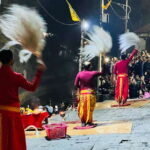
This is a sacred Hindu site and one of the most revered in the world. The tour includes time at the richly-ornamented pagoda area that houses the sacred linga (a phallic symbol) of Lord Shiva. If you’re expecting something like a quiet European cathedral visit, shift gears. This is active religion, with worship and ceremony happening around you.
Then comes the crematoria visit. The experience can sound heavy before you see it, but the point of including it is to understand how Nepal approaches death and devotion with reverence, not spectacle. One account described it as similar to India in mood but with more reverence and less hype, which matches how Pashupatinath tends to feel: serious, local, and deeply meaningful.
Practical advice: wear clothing you’re comfortable kneeling/standing in for a bit, and keep your camera use respectful. Your guide should be able to suggest where to stand, what to observe, and how to avoid getting in the way.
Also, because of the 2015 earthquake, some parts of the area may show damage. That doesn’t ruin the visit—it changes what you notice. Instead of just seeing a monument, you’ll be aware of resilience and repair.
Boudhanath Stupa and the calm side of the valley
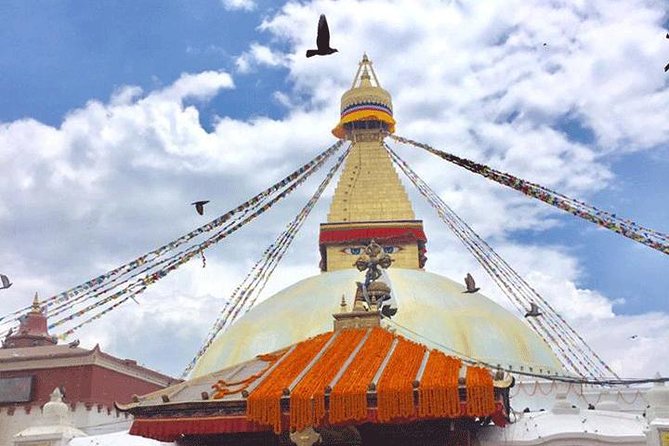
After the intensity of Pashupatinath, Boudhanath Stupa feels like a reset. You’ll have about one hour at the stupa, one of the valley’s major Buddhist landmarks.
The stupa is described as around 2,500 years old, built in the 5th century, with four pairs of eyes of Lord Buddha in four cardinal directions. Those details matter because once you know to look for them, the stupa stops being one big white sphere and becomes a carefully designed symbol.
This is also a great spot to notice daily faith practices. You’ll see pilgrims and locals moving around the stupa, pausing, watching, and praying. It’s not just heritage; it’s living religion.
If you’re tired from walking earlier, this is a good place to go slow. Stand, observe, and let the guide’s explanations tie the day together—how Kathmandu’s Hindu and Buddhist sacred worlds sit side-by-side in the valley’s cultural logic.
Garden of Dreams: a breather after big sacred sites
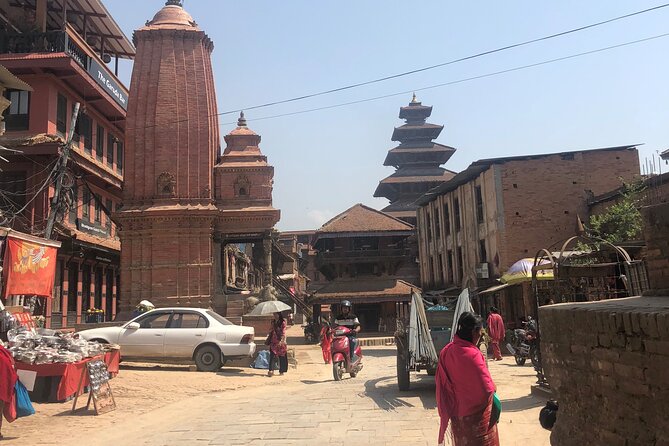
The route includes the Garden of Dreams, described as a neo-classical historical garden in central Kathmandu. It’s a nice contrast to temples and squares because it gives you a calmer rhythm.
The garden’s design shares features with formal European garden planning, including paved paths around the perimeter. Think of it as a pause for your brain: you’ve seen symbolism in stone and ritual in action—now you get curated quiet.
This stop can be a big plus if you want the day to end with something gentle rather than just more steps. If you’re someone who gets temple fatigue (normal!), this break is exactly the kind of balance that turns a “big day” into a “good day.”
What the guides get right (and why it matters)
This tour’s value isn’t only the itinerary. It’s what the guide does while you’re walking.
Across the guide experiences attached to this tour, the recurring wins are:
- Clear English (people specifically praised guides like Krishna A., Jamuna, Janina, and SuJan)
- Patience with pacing, including time for photos
- Meaningful explanations, so architecture and ritual aren’t just pretty or strange
- Safety and comfort, including good navigation through traffic stress
In other words: the guide reduces your mental workload. Without them, Kathmandu can feel like a list of sights. With them, it starts to feel like a story.
Still, I’d recommend you set your own expectations. You will not do every corner deeply in one day. This tour is built to cover the big landmarks and key temple squares, so you end the day with a strong foundation. Later, you can return to your favorites with more time on your own.
Pace, timing, and what to wear for a 5–8 hour day
The day runs about 5 to 8 hours. That wide range matters because Kathmandu traffic and crowd levels can shift the timing.
A private tour helps you manage that. Your guide can adjust within reason, and the loop is structured so you’re not trapped in one long travel stretch without a payoff.
For comfort:
- Wear shoes that handle stairs and uneven surfaces.
- Bring a light layer. Temple areas can swing between sun and shade.
- If you have a bigger appetite for photography, plan to move a little slower. The tour is designed to allow it, but you still want to be respectful of ceremony and foot traffic.
And because the tour notes significant earthquake damage at some sites, expect parts of buildings or areas to look different than in older photos. That’s part of the real story of Kathmandu right now.
Who should book this Kathmandu Heritage Tour
Book this if you:
- Are a first-time visitor who wants orientation fast
- Want a private guide to explain what matters at each stop
- Prefer a structured loop that covers major UNESCO areas rather than random wandering
- Like mixing Hindu and Buddhist sacred sites in one day
You might think twice if you:
- Hate entrance fees and surprise costs
- Want long, quiet time in one monument (this tour is built for coverage)
- Are very sensitive to the emotional weight of the crematoria setting (it’s included, and it’s serious)
That said, the route is also practical. It includes a mix of longer stops (like Swayambhunath, Kathmandu Durbar Square, Pashupatinath, and Boudhanath) and shorter “texture” stops (like Basantpur Dabali, Hanuman Dhoka, and Kumari Chowk).
Should you book this tour? My call on value and first-time comfort
If your goal is to see the Kathmandu Valley’s biggest UNESCO sights with less stress, this tour is a strong fit. The base price covers the hard parts: private guide, private vehicle, and pickup/drop-off. Then the entrances and lunch become the predictable add-ons you can budget for up front.
My main recommendation is simple: treat this as a foundation day. You’ll leave with names, locations, and context that make the rest of your trip easier. And if your guide is someone like Krishna A., Jamuna, Janina, or SuJan, you’re likely to get the kind of calm, patient guidance people consistently praise—especially for pacing and clarity.
I’d book it if you want a guided, high-signal day. I would not book it if you’re chasing a cheap, do-it-all-without-thinking price tag. The tour is good value; the real cost depends on entrances and how you plan food and time.
FAQ
How long is the Kathmandu Heritage Tour?
It runs about 5 to 8 hours.
What’s included in the price?
Included are hotel pickup and drop-off, bottled water, a private tour guide, and transport by private vehicle.
Are entrance fees included?
No. Entrance fees are at your expense.
Which UNESCO sites are included?
You’ll visit UNESCO World Heritage sites including Swayambhunath, Kathmandu Durbar Square, Pashupatinath, and Boudhanath.
Does the tour address earthquake damage?
Yes. The tour notes that there has been significant damage to some of the sites visited due to the April and May 2015 earthquakes, and you’ll hear how the earthquake affected Nepal’s people and top attractions.
Is lunch included?
Food and drinks are not included. The tour notes you should expect to spend around $10 USD for lunch purchased locally.
Can I change my dates or cancel?
You can change the date and time for free. Cancellation is free up to 24 hours in advance for a full refund.