REVIEW · KATHMANDU
Full Day Private Tour of Kathmandu – UNESCO World Heritage Sites
Book on Viator →Operated by Shepherd Holidays · Bookable on Viator
Four sacred Kathmandu stops in one smooth day. This private UNESCO heritage route strings together Swayambhunath, Pashupatinath, Boudhanath, and Kathmandu Durbar Square, so you get a clear feel for Nepal’s Hindu and Buddhist worlds without spending the day figuring out logistics. You’ll also have a guide to help connect the architecture, symbolism, and everyday religious life you’re seeing.
I especially love having a private guide to put names, iconography, and meaning into plain English, the way guides like Subu and Sumit are described. I also like the practical side: hotel pickup, drop-off, and an air-conditioned vehicle that keeps this long day from feeling exhausting.
One consideration: it’s still a full 6 hours, and entrance fees for the main sites are not included, so you’ll want some extra cash ready.
In This Review
- Key Highlights Worth Your Attention
- A Smart 6-Hour Plan Through Kathmandu’s Major UNESCO Sites
- What You Really Get for $35 (And Where You’ll Pay Extra)
- Stop 1: Swayambhunath Monkey Temple and the Hindu-Buddhist Connection
- Stop 2: Pashupatinath Temple on the Bagmati River
- Stop 3: Boudhanath Stupa and Tibetan Buddhism’s Visual Language
- Stop 4: Kathmandu Durbar Square and the City’s Traditional Heart
- Why Having Guides Like Subu, Ram, Sumit, and Bijay Changes the Day
- Who This Tour Is Best For
- Tips to Make the Most of the Day
- Should You Book This Kathmandu UNESCO Heritage Tour?
- FAQ
- What is the duration of the Kathmandu UNESCO heritage private tour?
- Which UNESCO World Heritage sites are visited?
- Is hotel pickup and drop-off included?
- Are entrance fees included for the main sites?
- What’s included in the price?
- Is this a private tour or a group tour?
- Is a mobile ticket provided?
- Is there an air-conditioned vehicle?
- Are service animals allowed?
- Can I cancel for a full refund?
Key Highlights Worth Your Attention
- Four UNESCO landmarks in one focused route, rather than hopping around the city on your own
- Private guide time that helps you understand what you’re looking at at each stop
- Comfort-first logistics with hotel pickup, drop-off, and an A/C vehicle
- Monk temples, Shiva shrines, and Tibetan Buddhism all in the same day—easy comparison
- Mobile ticket plus bottled water to keep the day simple
A Smart 6-Hour Plan Through Kathmandu’s Major UNESCO Sites
Kathmandu can feel like a maze at first. This tour’s value is that it turns the maze into a straight line: you move from one major religious site to the next with private transportation and a guide keeping the story straight. The pacing also matters. Each of the four stops is about an hour, which is long enough to look around and absorb what makes each place different, without letting the day drag.
At $35 per person, you’re not just paying for entry viewpoints. You’re paying for people: a private guide plus private transport and pickup/drop-off. For many visitors, that’s what makes the difference between snapping photos and actually understanding why these places matter to Nepal.
You can also read our reviews of more private tours in Kathmandu

What You Really Get for $35 (And Where You’ll Pay Extra)
Here’s what the tour includes: hotel pickup & drop-off, bottled water, private transportation in an air-conditioned vehicle, and a private tour guide. You’ll also have a mobile ticket, and confirmation happens at booking.
Where you’ll likely spend more: entrance fees. The tour explicitly notes that admission tickets to enter the main sites are not included. So think of the listed price as the cost of the day’s structure—transport, guide, and the route—while site entry is a separate line item.
If you’re traveling as a group, the tour also lists group discounts as a feature, which can improve value. Even if you’re going solo, the private setup is a big part of the appeal: you get your guide’s attention and your pace, not a moving herd.
Stop 1: Swayambhunath Monkey Temple and the Hindu-Buddhist Connection
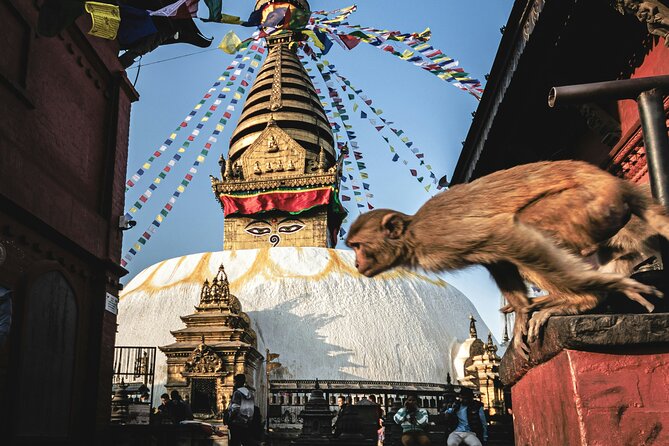
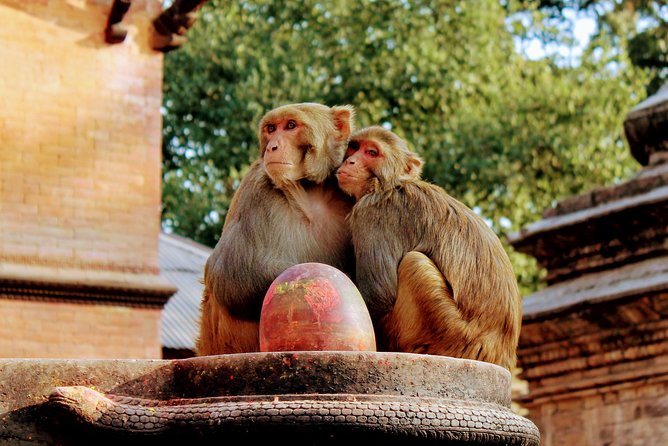
Swayambhunath is famous enough to show up in almost every Kathmandu “must-see” conversation, and for good reason. It’s known as the monkey temple, and it’s significant to both Hindu and Buddhist followers. That shared meaning is the key takeaway here: you’re not just visiting a landmark; you’re watching how multiple traditions live side by side in the same sacred space.
What you’ll see includes a lofty conical spire crafted out of copper and gold plated. That detail matters because it tells you this place isn’t only about vibes or views—it’s also about craftsmanship and religious symbolism working together. With a guide, you can connect the design to what people believe and how they practice.
Practical consideration: this is one of the stops where your hour can fill up fast. You’ll likely spend time observing people’s rituals and moving through the crowded areas. If you want quiet photos, plan to be flexible and not treat every angle as guaranteed.
Stop 2: Pashupatinath Temple on the Bagmati River
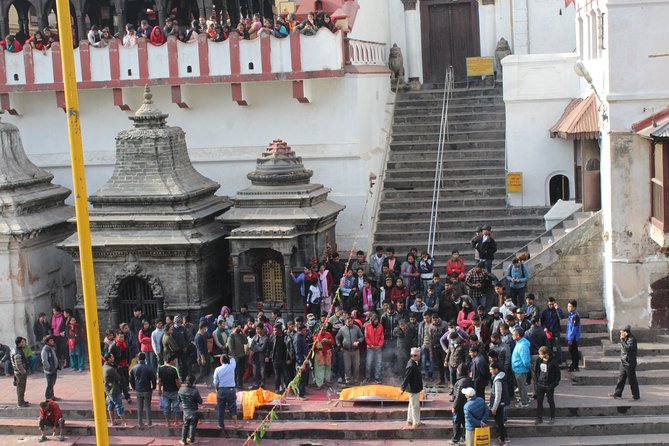
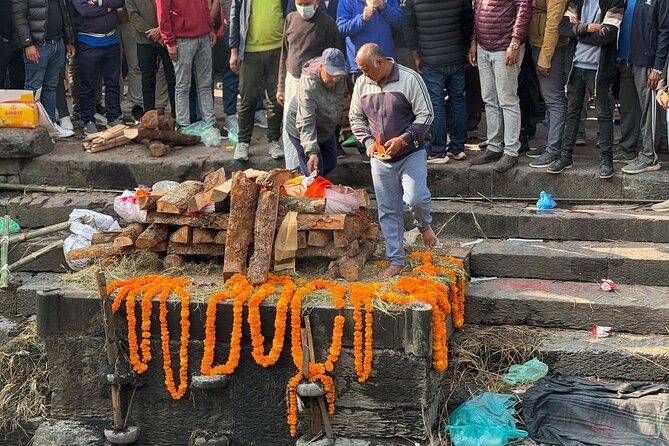
Pashupatinath is one of Kathmandu’s most spiritually important Hindu sites. It sits on the banks of the Baghmat(i) River, and it’s dedicated to Lord Shiva. If you want a clear sense of how central Shiva worship is in Nepal, this is the place to focus.
The big advantage of a guided visit is context. Without it, you can still appreciate the site, but you might miss the symbolic logic behind what you’re seeing—what matters, what’s repeated, and why people travel here from far away. The tour guide time makes this stop more than a picture stop; it turns it into a “now I get it” stop.
Drawback to keep in mind: Pashupatinath is a living religious center, so behavior that feels normal elsewhere may be inappropriate here. You’ll want to stay respectful and follow your guide’s cues so you can experience it without friction.
Stop 3: Boudhanath Stupa and Tibetan Buddhism’s Visual Language
Boudhanath is where Kathmandu suddenly feels very different. This stupa is described as one of the largest in South Asia, with strong influence from Tibetan Buddhism. The most eye-catching feature is the whitewashed dome painted with the all-seeing eyes of the Buddha.
That “visual language” is why this stop is often a favorite. You’re not relying only on verbal explanations. You can read the meaning from what’s painted and how the space is arranged for devotion. A good guide helps you understand how those visual elements connect to prayer and belief, so you’re not just staring at impressive art.
Because the tour keeps each stop to about an hour, Boudhanath is a sweet spot. Long enough to walk the area at an unhurried pace and notice the repeated symbols, but short enough that you won’t feel worn out before the final stop.
You can also read our reviews of more historical tours in Kathmandu
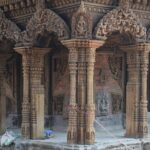
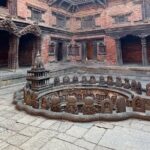
Stop 4: Kathmandu Durbar Square and the City’s Traditional Heart
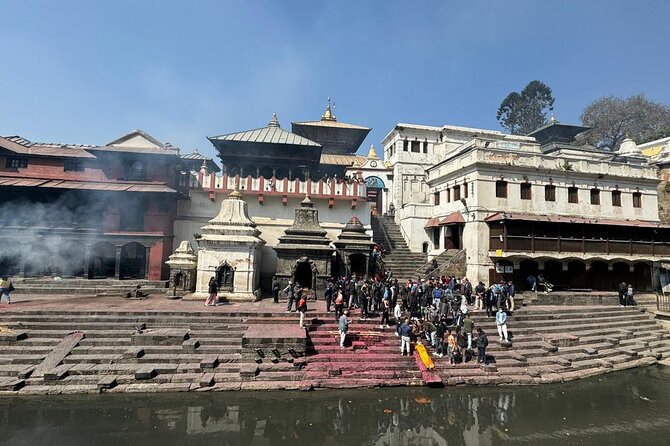
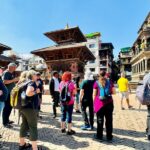
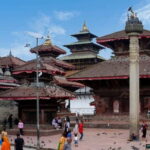
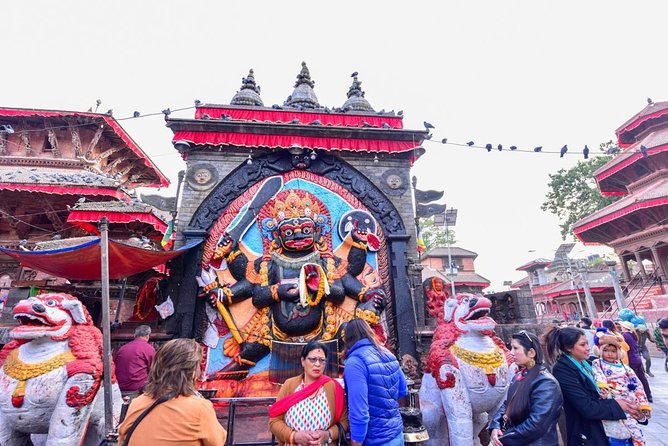
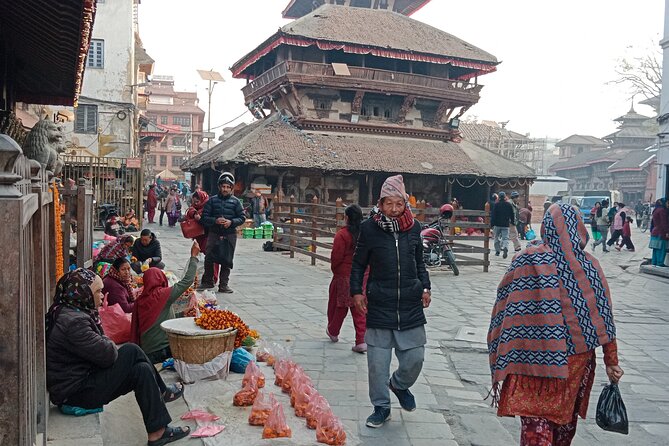
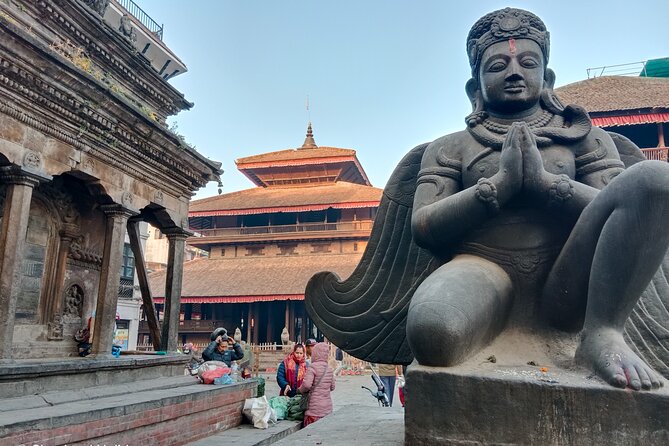
Kathmandu Durbar Square is the traditional heart of the city and Kathmandu’s most spectacular legacy of traditional architecture. The date range mentioned for the square’s core identity is the 17th and 18th centuries, which gives you a sense of how long the city’s craft and power were expressed here.
This stop can feel like a shift from religious monuments to civic architecture. In other words, it shows you Nepal’s spiritual life and also the older structures tied to the city’s past. With a guide, it’s easier to connect the details you see—craft, layout, and design choices—to the era that shaped them.
One consideration: because it’s an important central site, it can be busy. That’s not a deal-breaker, but it means you may need patience if you’re trying to get a photo at a very specific angle.
Why Having Guides Like Subu, Ram, Sumit, and Bijay Changes the Day
The strongest praise in the experience centers on the guides and drivers making the day feel personal and easy. People highlight guides such as Subu and Sumit for being highly knowledgeable about the sites and for communicating clearly. They also mention the driver—names like Ram and Bijay—as part of the smooth flow of the day.
Here’s what that usually means in real life: you spend less time guessing what you’re looking at, and you spend more time noticing. The humor and the way information is explained in an easy way can turn a long day into a genuinely satisfying one.
In a city where things can be confusing even for experienced travelers, this is a real value. A private guide doesn’t just translate words. They help you sort priorities: what’s essential today, what can wait, and what specific symbols deserve your attention.
Who This Tour Is Best For
This is a great fit if:
- you want four major UNESCO sites without planning a half-dozen moving parts
- you prefer a private guide who can answer questions as you go
- you’re interested in the links between Hindu worship and Buddhist symbolism
- you’d rather spend your energy watching and learning than navigating
The tour also notes that service animals are allowed and that most travelers can participate. If you’re comfortable with a full-day pace and walking around major religious sites, this should work well.
Tips to Make the Most of the Day
Since entrance fees and food aren’t included, the biggest planning move is simple: come ready to pay for site entry and handle your own meals. The day is long enough that you’ll want to plan lunch on your own rather than hope the schedule covers it.
Also, lean on the private guide. If something catches your eye—an icon, a specific ritual, a construction detail—ask what it means. That’s where the day becomes more than a checklist.
Finally, for the sites where crowds are likely, don’t treat timing like math. Treat it like strategy: if you can, take a quick first look, then circle back for a calmer moment.
Should You Book This Kathmandu UNESCO Heritage Tour?
If you want a structured, no-stress way to see Kathmandu’s biggest UNESCO religious landmarks in one day, this tour is a solid choice. The combination of private transportation, hotel pickup/drop-off, a private guide, and bottled water makes the $35 price feel reasonable—especially once you factor in that you’re not handling routing, timing, and explanations on your own.
Skip it only if you strongly dislike long days or you’d rather travel independently without paying for a guide. Also remember: entrance fees are extra, and you’re responsible for food and drinks.
If your goal is to leave Kathmandu with a clearer understanding of how these sacred sites function—spiritually, historically, and artistically—this is one of the easier ways to get there in 6 hours.
FAQ
What is the duration of the Kathmandu UNESCO heritage private tour?
The tour runs for about 6 hours.
Which UNESCO World Heritage sites are visited?
The tour visits Swayambhunath, Pashupatinath, Boudhanath, and Kathmandu Durbar Square.
Is hotel pickup and drop-off included?
Yes, hotel pickup and drop-off are included.
Are entrance fees included for the main sites?
No. Entrance fees to enter the main sites are not included.
What’s included in the price?
The price includes bottled water, private transportation, a private tour guide, and an air-conditioned vehicle, plus pickup and drop-off.
Is this a private tour or a group tour?
It is a private tour. Only your group participates.
Is a mobile ticket provided?
Yes, the tour includes a mobile ticket.
Is there an air-conditioned vehicle?
Yes, private transportation is provided in an air-conditioned vehicle.
Are service animals allowed?
Yes, service animals are allowed.
Can I cancel for a full refund?
Yes. Free cancellation is available up to 24 hours in advance for a full refund. If you cancel less than 24 hours before the experience starts, the amount paid is not refunded.