REVIEW · ANNAPURNA CIRCUIT
Annapurna Circuit Trekking 13 Days
Book on GetYourGuide →Operated by Adventure Bound · Bookable on GetYourGuide
Thorong La makes this trek real. In 13 days you’ll move from the Marshyangdi River valley up through thinning air, with Thorong La (5,416m) as the headline and Manang’s Tibetan Buddhist feel as a big theme. I love that this route mixes classic Himalayan views with real village life, not just a straight grind uphill.
I also like the support. You’re not on your own: a licensed guide (and small-group size capped at 12) plus included meals, permits, and even key cold-weather gear means you can focus on walking and adjusting. The main drawback to plan for is the altitude and the basics: you’ll sleep in tea house rooms on most nights, and the trek asks real effort once you’re higher.
In This Review
- Quick hits before you go
- Price and logistics: what $970 covers (and what it doesn’t)
- Why the Annapurna Circuit feels like a journey, not a checklist
- Day-by-day: from Kathmandu access to Jagat and Dharapani
- Chame to Pisang to Manang: the middle of the circuit gets cultural
- Yak Kharka, Thorong Phedi, and crossing the high pass
- Muktinath to Jomsom: the Kali Gandaki side of the story
- Tatopani to Ghorepani to Poon Hill: finishing with a classic sunrise
- Guides and service: why this company’s small-group setup matters
- What you’ll likely feel at each altitude zone
- How to prep smartly (not obsessively) for this circuit
- Should you book Adventure Bound’s Annapurna Circuit trek?
- FAQ
- What is the highest point on this trek?
- How many days is the Annapurna Circuit trek?
- What meals are included during the trek?
- What accommodation style is provided?
- Is a porter included?
- What gear is provided?
- Which seasons are best to go?
Quick hits before you go
- Thorong La at 5,416m: the signature high crossing, with Muktinath waiting at the other side
- Manang acclimatization day: a full day in one place to help you handle the climb better
- Cultural stops beyond the views: Manang Tibetan Buddhism and Muktinath’s spiritual center
- Hot springs day: Tatopani gives you a chance to soak after descending
- Gear and first-aid support included: sleeping bag and down jacket, plus an Oximeter in the kit
- Support that starts before you land: owner Laxman is known for being proactive with formalities and questions
Price and logistics: what $970 covers (and what it doesn’t)
$970 per person buys you a lot of the heavy lifting. You get pickup from Kathmandu international airport, a mix of public transport and taxis during the route, a government-licensed guide, permits, and 12 nights in basic tea houses (twin sharing). You also get 1 hotel night in Pokhara with breakfast, plus a tourist bus back to Kathmandu.
On top of that, meals are handled: breakfast, lunch, and dinner during the trek. You’ll also have access to cold-weather basics if you need them—sleeping bag, down jacket, and a duffel bag are provided (then returned after the trip). A first aid kit with normal supplies and an Oximeter is included, along with an ACT trek map.
The trade-off is what’s not included. You’ll still pay for your Nepal entry visa and international airfare, plus hotel in Kathmandu and meals in the city. Soft and hard drinks aren’t included, and if you want a porter you pay extra (listed at $250). Private transport isn’t included either, so you’re committing to the group’s bus/taxi rhythm.
If you like clear structure—wake, walk, eat, sleep—this package fits. If you want total freedom to set your own daily pace, you’ll feel constrained by the fixed walking schedule and shared lodging.
Why the Annapurna Circuit feels like a journey, not a checklist
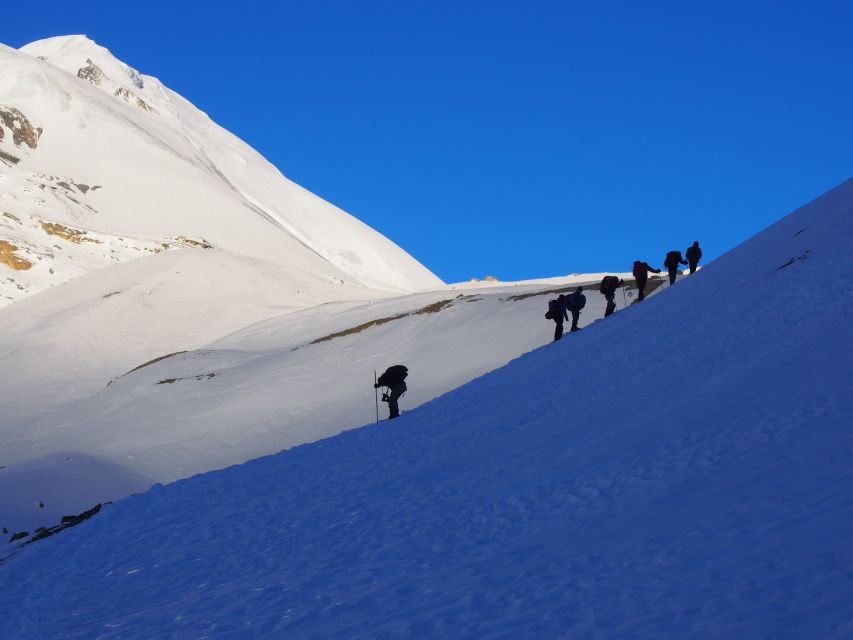
This trek earns its reputation because it changes constantly. You start in river-valley terrain and climb into higher, colder zones where the air feels sharper and the days become more about timing and pacing. The route also shifts cultures as you go, with Manang bringing Tibetan Buddhist influence into the mix.
The Annapurna Circuit also has two distinct “moods.” One is the greener, wetter feel early on, with forests and waterfalls around the Marshyangdi River valley. The other is drier and more austere later, including the arid Lower Mustang-side terrain you pass through on the way toward the high pass.
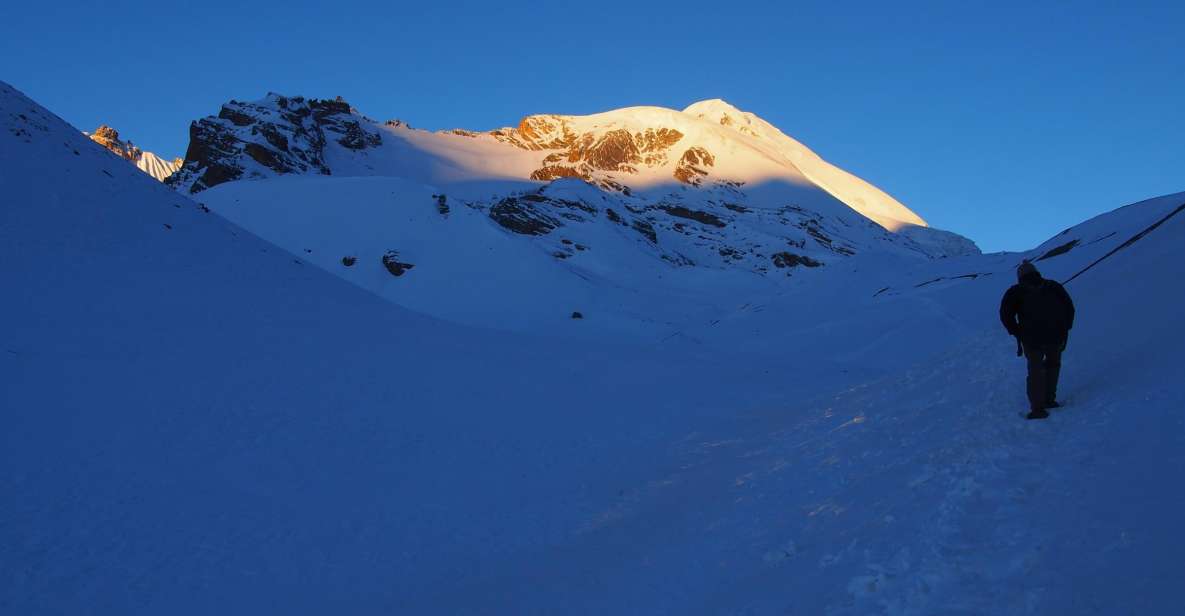
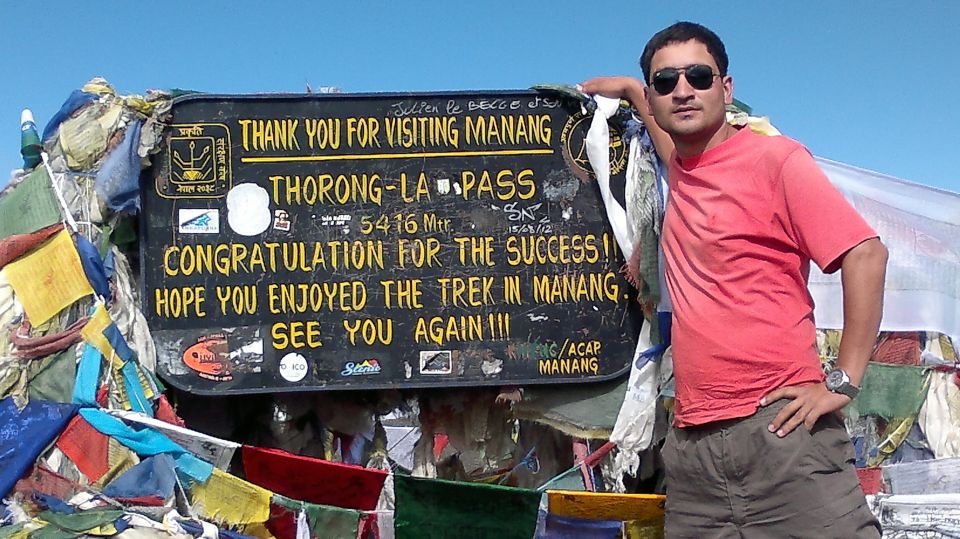
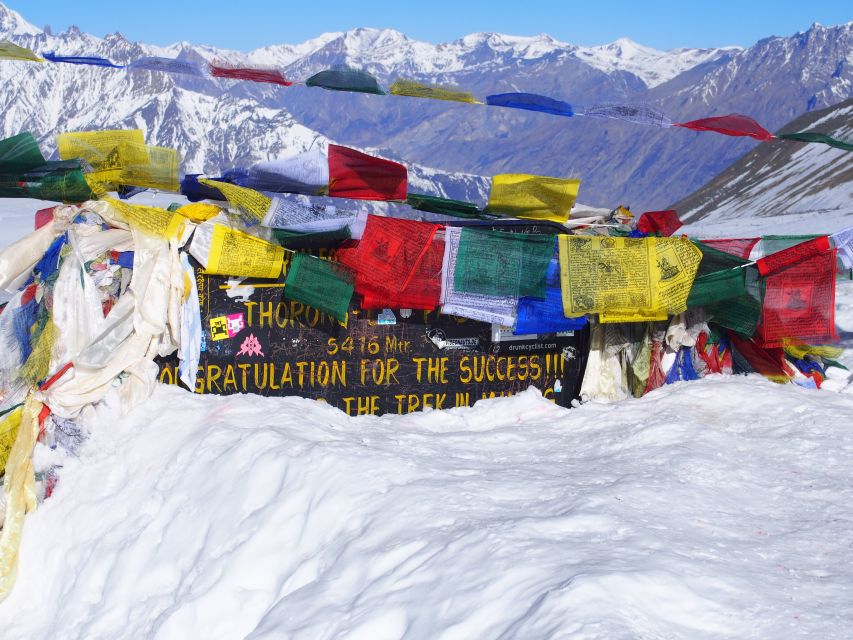
And then there’s the pass itself. Thorong La is the moment you remember later, not because it’s dramatic on paper, but because the effort and altitude make it feel earned. When you drop toward Muktinath after that crossing, you get a spiritual payoff to balance the physical grind.
Day-by-day: from Kathmandu access to Jagat and Dharapani
Day 1 starts with a long drive. You’ll travel from Kathmandu to Jagat (1,100m) via Besisahar for about 8–9 hours. It’s a useful warm-up in the sense that you’re not immediately trekking, but it also sets the tone: Nepal roads are part of the adventure.
Day 2 is your first real day on trail, trekking from Jagat to Dharapani (1,960m) for roughly 6–7 hours. This is where the Marshyangdi River valley starts to feel like home base. You’ll likely see the everyday Nepal you don’t always catch in cities: local communities, busy trail life, and the kind of scenery that’s active rather than still.
Day 3 is another steady climb from Dharapani to Chame (2,710m), about 5–6 hours. Chame sits higher, and that matters. You’ll start to feel the change in effort even if your pace stays calm. For me, that’s the best way to handle the circuit—treat early uphill days like technique practice.
Practical note: because tea houses are basic, early days are a good time to build a simple routine. I’d keep one or two layers you’re comfortable adjusting in and stick to a consistent hydration habit.
Chame to Pisang to Manang: the middle of the circuit gets cultural
Day 4 climbs to Pisang (3,300m), about 5–6 hours from Chame. Pisang is a key step up, and the higher altitude starts to make the air feel thinner on uphill sections. The reward is the growing sense of being watched by the bigger peaks around you.
Day 5 goes from Pisang to Manang (3,540m) over about 6–7 hours. This is where you shift from forested valley trekking toward a more high-altitude feel. Manang also adds a cultural layer: Tibetan Buddhist influence becomes more obvious as you move.
Then Day 6 is your acclimatization day in Manang. Not “rest” as in doing nothing—more like staying at altitude long enough to improve your odds. You’re still at a lower stress level than crossing higher on consecutive days, and that buffer is one of the smartest parts of this schedule.
If you tend to overdo it, this is where you get a chance to rein yourself in. I’d use the day to walk a bit, eat well, and keep your pace gentle. It’s a simple lesson: altitude punishes ego.
Yak Kharka, Thorong Phedi, and crossing the high pass
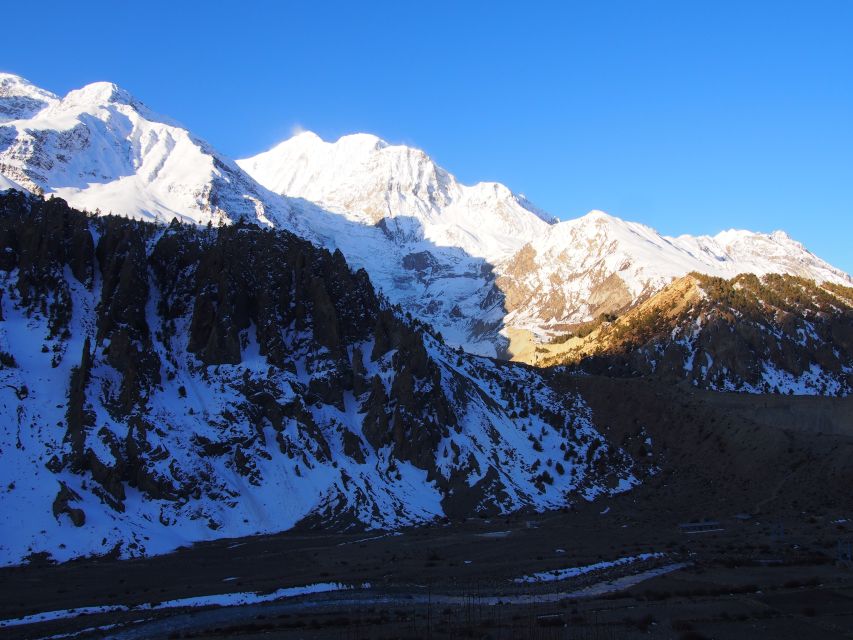
Day 7 takes you from Manang to Yak Kharka (4,120m) in about 4–5 hours. The higher you go, the more the trek becomes about rhythm. It’s not just about how fast you move—it’s about keeping breathing controlled and not spiking energy too early.
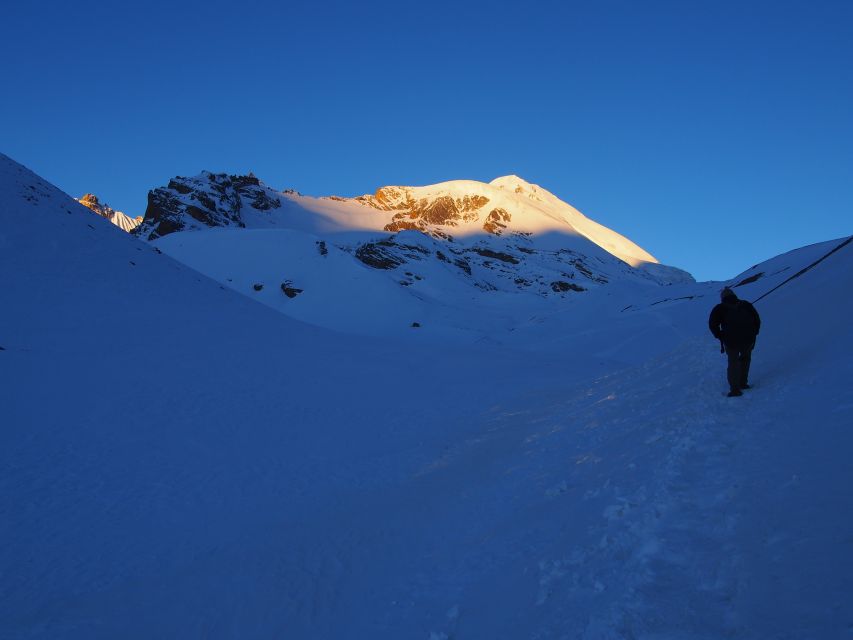
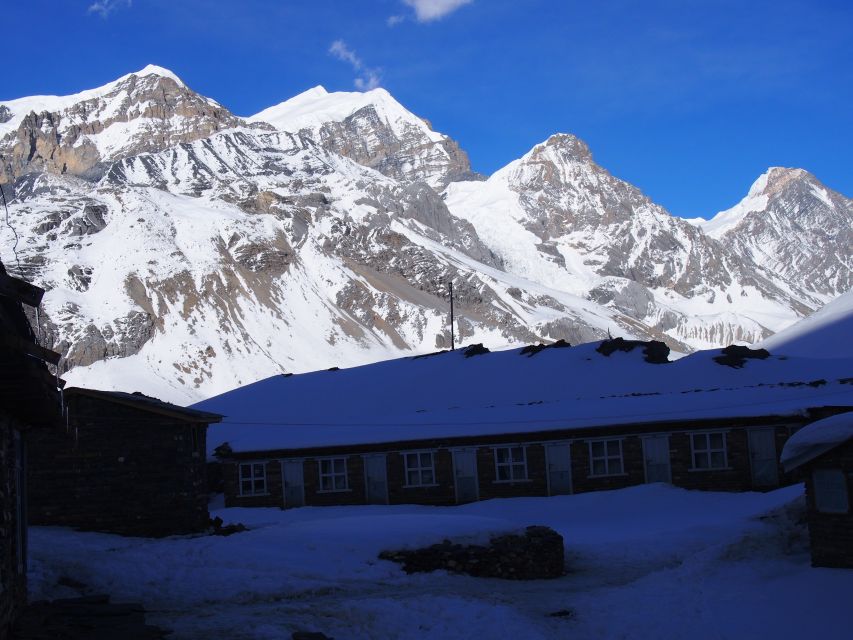
Day 8 goes from Yak Kharka to Thorong Phedi (4,450m) for roughly 4–5 hours. Thorong Phedi is essentially your staging point for the big crossing. At these altitudes, the night can feel colder than you expect, and you’ll want layers that work. This is also where the included down jacket and sleeping bag support can make a real difference.
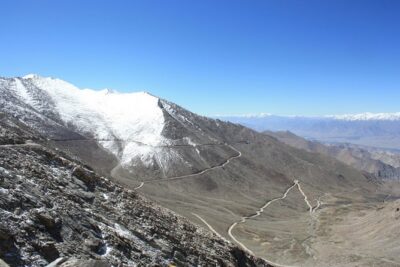
Day 9 is the day everyone remembers. You trek from Thorong Phedi to Muktinath (3,802m) via Thorong La (5,416m) for about 7–8 hours. The route climbs to the pass, then continues down to Muktinath. Your first task is to treat the ascent like an endurance event, not a sprint. Your second task is to prepare mentally for the altitude shift once you’re over the high point.
Muktinath is a strong finish to the day. It’s not only the satisfaction of completing Thorong La—it’s also the spiritual center feeling that makes the arrival land with meaning.
Muktinath to Jomsom: the Kali Gandaki side of the story
Day 10 goes from Muktinath to Jomsom (2,743m) in about 5–6 hours. This is a big altitude drop, and that can feel like a relief after the pass day. Still, you’ll likely feel fatigue in your legs from the earlier ascent and descent, so take downhill sections seriously.
Jomsom sits in the Kali Gandaki Valley system. This is where the trekking vibe shifts again—windier, and often more exposed. You’re still moving through a dramatic mountain corridor, but the “feel” changes from the higher, colder pass zone.
Day 11 then transitions out of pure trekking mode. You drive from Jomsom to Tatopani (1,290m) for about 4–5 hours. Tatopani is known for natural hot springs, and this is your chance to loosen up after several days of altitude work. If your feet and calves feel tight, this day is a big quality-of-life moment.
Tatopani to Ghorepani to Poon Hill: finishing with a classic sunrise
Day 12 is back on the trail: Tatopani to Ghorepani (2,750m) for about 7–8 hours. This day matters because you’re climbing back up after a long drop. It can feel like a second workout, but it sets you up for the final highlight.
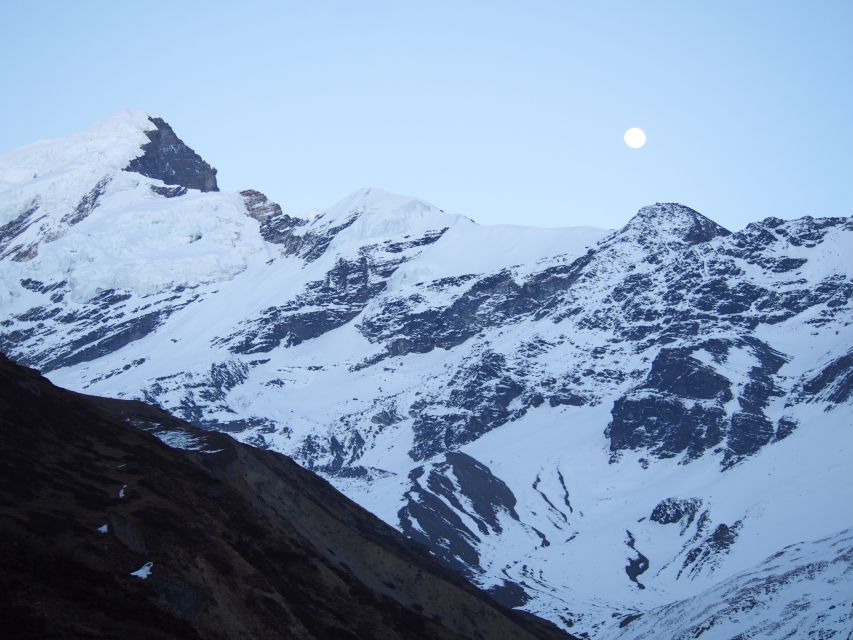
Day 13 starts early with the hike up to Poon Hill viewpoint (3,210m). Then you trek down to Nayapul (2,070m) and taxi to Pokhara. Since the hike is early morning, plan on cold start discomfort, then a satisfying payoff once you reach the viewpoint.
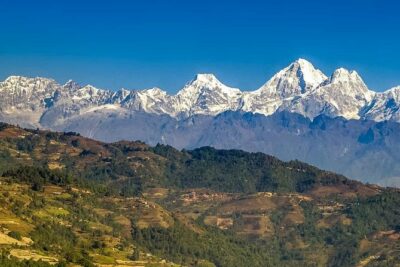
Poon Hill is popular because it rewards effort. It’s not the only place with mountain views on this trek, but it’s one of the best-feeling “finish lines.” After that, you’ll shift from mountains to comfort quickly in Pokhara.
Guides and service: why this company’s small-group setup matters
One of the best parts of this trek package is the human support around it. Adventure Bound runs with a government-licensed, experienced, friendly guide. The guide’s food, accommodation, salary, equipment, and insurance are included. That’s not just paperwork; it’s practical peace of mind when conditions change and your body asks for adjustments.
The names that come up matter too. Laxman is noted as being proactive—answering questions and handling formalities well before the trip begins. That pre-departure responsiveness helps you feel set when you’re still in Kathmandu with last-minute worries.
On-trail, guide Ganesh is highlighted for attention to detail, patience, and adapting when needed. Another guide name that’s recommended is Rabin. If you can request a guide, I’d ask directly during booking. A good guide does more than lead you to the next tea house—they help you keep your plan realistic when altitude and fatigue play mind games.
You also benefit from the small group size: limited to 12 participants. On a trek like this, that size helps keep the day manageable. You’re not stuck waiting behind a huge line of people when you’re trying to breathe.
What you’ll likely feel at each altitude zone
Even with a good itinerary, you still need to listen to your body. Higher days bring higher breathing cost. That’s true on the approach to Thorong La and even on the climb back up toward Ghorepani late in the trek.
Tea house nights also shape your experience. You’re getting basic accommodation on 12 nights, twin sharing. It’s functional, not luxury. Expect to manage cold and simple bedding arrangements, and use your provided sleeping bag if you’re the type to get chilled easily.
One more thing: meals. You’re eating three times daily during the trek, which is great. Food keeps you strong, but it also helps you acclimatize. The route also notes continental kitchen options at local lodges, which can be a relief if you get bored of the same staples.
How to prep smartly (not obsessively) for this circuit
This trek is built around a clear logic: go up step by step, include an acclimatization day at Manang, and then commit to the pass crossing when your body is better primed. That said, you still need to show up fit and ready to slow down.
I’d prepare for:
- Consistent uphill walking for 6–8 hours on many days
- Cold nights and likely gusty conditions at higher elevations
- A long day on Day 9 crossing Thorong La
Gear-wise, don’t assume you’re covered for everything. This trip includes key items if you need them (sleeping bag, down jacket, duffel bag). But you’ll still want your own essentials—footwear you trust, layers that fit you, and a small daypack you can comfortably carry.
Finally, remember that this circuit doesn’t just test lungs. It tests pacing and decision-making. Start early when you’re told to start early. Drink water. Eat when you can. The high pass is the goal, but your calm attitude is what gets you there.
Should you book Adventure Bound’s Annapurna Circuit trek?
If you want a well-structured trek with a licensed guide, included permits, and practical support, I’d say yes—especially if you like small groups. The value is strong because the price covers the big “admin and gear” pieces: meals during the trek, 12 tea house nights, Pokhara lodging with breakfast, an Oximeter in the kit, and transportation back and forth.
You should think twice if you hate basic accommodations or you’re not comfortable with altitude challenges. This route includes Thorong La at 5,416m and multiple long walking days. Even with an acclimatization day, you’ll need patience and steady effort.
My best advice: book it if you’re excited to walk, not just to “see.” This trek pays off when you treat it like a slow-moving climb through culture, valleys, wind, and spiritual stops—ending with the clean hit of Poon Hill at dawn.
FAQ
What is the highest point on this trek?
Thorong La Pass is the highest point, at 5,416 meters.
How many days is the Annapurna Circuit trek?
It runs for 13 days.
What meals are included during the trek?
Breakfast, lunch, and dinner are included during the trek.
What accommodation style is provided?
You’ll stay in basic tea houses for 12 nights on a twin-sharing basis, plus 1 night in a hotel in Pokhara with breakfast.
Is a porter included?
A porter is not included. If you want one, the extra cost listed is $250.
What gear is provided?
Sleeping bags, down jackets, and duffel bags are provided if you need them (and returned after the trip).
Which seasons are best to go?
Spring and autumn are the best seasons for this trek.