REVIEW · KATHMANDU
Everest Base Camp Trek with Helicopter Return from Gorakshep to Lukla
Book on Viator →Operated by Ace the Himalaya · Bookable on Viator
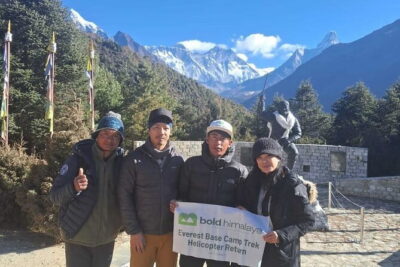
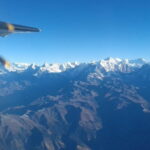
Helicopter return turns EBC into a smarter trek. You get the classic Khumbu route—suspension bridges, prayer flags, glacier scenery—plus a shared helicopter ride from Gorakshep back to Lukla that trims the long, grueling end of the journey. What I like most is that the plan balances big-mountain drama with real schedule value, so you’re not just surviving the last miles.
Second, I like the human setup. With a licensed, English-speaking guide and a porter system (one porter per every two guests), the trip feels built for pacing and sanity, not just fitness tests. Guides you may see named include Raj and Ram in past groups, and the porter support looks consistently strong.
One thing to consider: this itinerary runs on weather. Flights and the helicopter segment depend on conditions, and high-altitude days are genuinely demanding even with acclimatization breaks.
In This Review
- Key Highlights You’ll Actually Feel
- Helicopter Return From Gorakshep: The Real Value
- Getting to Lukla: Two Flights and One Big Reality Check
- Day 1 in Kathmandu: Pre-Trip Meeting That Saves Confusion
- Day 2: Phakding and the Start of Khumbu Rhythm
- Day 3: Phakding to Namche Bazaar and the Bridge-Heavy Middle
- Day 4: Everest View Point Acclimatization Day (Namche Area)
- Day 5: Tengboche and the Monastery Stop at 3,860 m
- Day 6: Dingboche via Debuche and the Imja Khola Bridge
- Day 7: Nangkartshang Peak Acclimatization Without Base Camp Pressure
- Day 8: Lobuche and the Khumbu Glacier Lateral Moraine
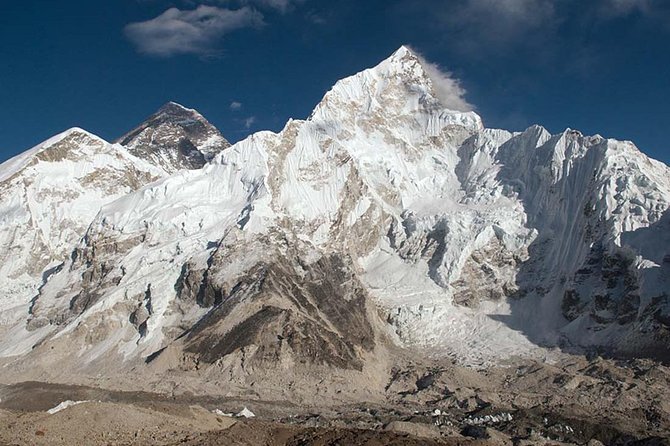
- Day 9: Everest Base Camp at 5,365 m (Big and Difficult)
- Day 10: Kala Pattar (5,555 m) and the Most Demanding Climb
- Day 11: Gorakshep to Lukla by Helicopter, Then Back to Kathmandu
- Day 12: Airport Day With Fewer Decisions
- Price and Logistics: What $3,000 Really Buys
- Who This Trek Fits Best (and Who Should Rethink It)
- Safety and Pacing: How the Plan Tries to Look After You
- Should You Book This Everest Base Camp with Heli Return?
- FAQ
- How many days is the Everest Base Camp trek with helicopter return?
- Where does the trip start in Kathmandu?
- How do you get from Kathmandu to Lukla?
- How does the helicopter return work from Gorakshep?
- What altitude milestones are part of the trek?
- What kind of accommodation is included during the trek?
- Are meals included on the trek?
- Are guides and porters included?
- Is travel insurance included, and what about cancellation?
Key Highlights You’ll Actually Feel
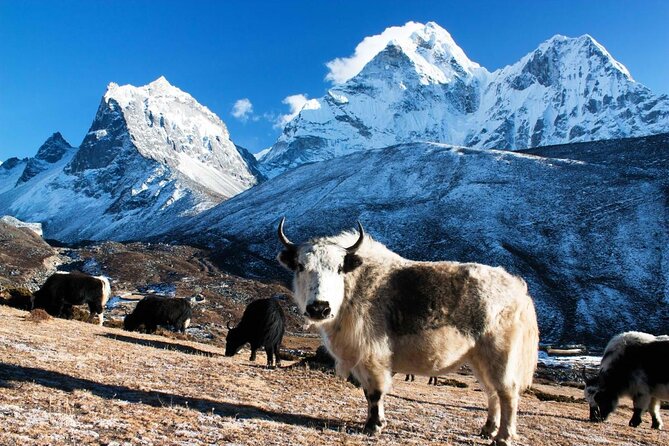
- 20-minute helicopter return from Gorakshep to Lukla, saving major downhill time
- Built-in acclimatization (Everest View Point and a Nangkartshang Peak day before Base Camp)
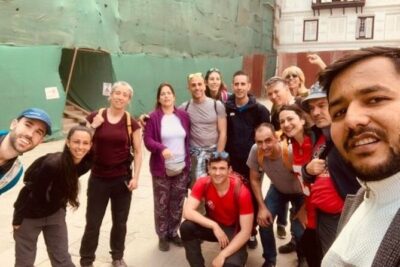
- Small group size up to 14 people for a less chaotic trek feel
- Strong support ratio: licensed guide plus porters (1 per 2 guests)
- Altitude safety tools: first-aid kit with an oxymeter to check oxygen saturation
- Practical trail basics included: filtered water (Katadyn Pocket), maps, sun hat, and full trek meals
Helicopter Return From Gorakshep: The Real Value
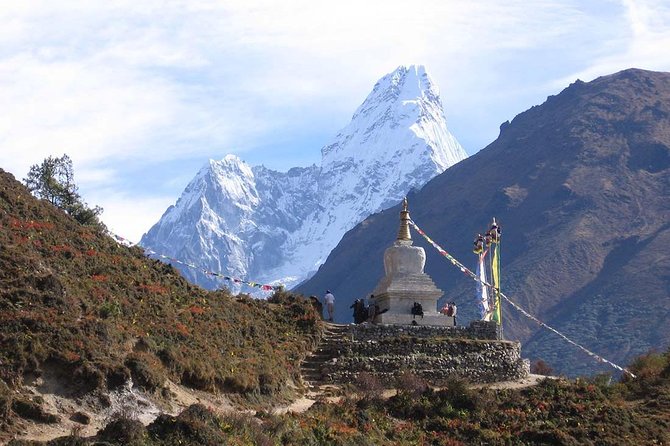
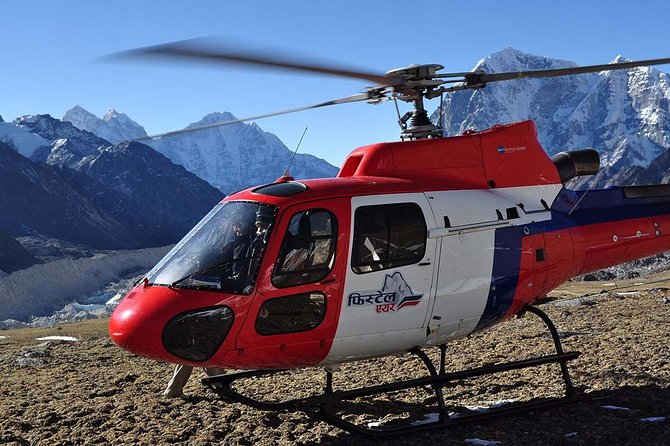
The headline isn’t Everest Base Camp itself—it’s how the trip manages the hard parts. The helicopter from Gorakshep to Lukla is about 20 minutes, which means you avoid a long, tiring return trail while still getting that last high-stakes night in the Everest zone. If you’re aiming for the Base Camp experience without spending extra days grinding back down, this is the key trade.
It also changes how you think about Day 10. Kala Pattar (5,555 m) is described as demanding but rewarding, and then you’re not forced to walk every step back. You still earn the views, but you don’t have to pay for them with an extra week of legs.
And since it’s a shared helicopter ride, you’re not buying a private charter experience. You’re buying a cut in time and fatigue—then accepting that the final say still depends on weather.
You can also read our reviews of more hiking tours in Kathmandu
Getting to Lukla: Two Flights and One Big Reality Check
This trek doesn’t start with a bus ride and a long drive. It starts with air. You fly from Kathmandu to Lukla (around 35 minutes) to begin trekking at Lukla’s altitude (2,804 m). Then, at the end, you fly Lukla back to Kathmandu for another scenic 35 minutes.
That’s why this plan comes with pickup and drop via private tourist vehicle in Kathmandu—it’s trying to remove the random friction. You land, someone greets you, and you move to a hotel without navigating the city alone.
The practical reality check: small-airport operations in Nepal can be weather-sensitive. This itinerary is designed so you’re not trying to handle logistics yourself, but you still want to build flexibility into your travel mindset.
Day 1 in Kathmandu: Pre-Trip Meeting That Saves Confusion
Day 1 is Kathmandu time with airport pickup, hotel transfer, and a pre-trip meeting where you meet your trekking guide. This matters more than it sounds. A good guide meeting helps you understand pacing, what to pack, and how the group will move—especially on an itinerary that includes both trekking days and air/heli days.
The hotel is a three-star setup in Kathmandu with twin-sharing rooms and breakfast included for two nights. That’s a nice buffer before your body meets oxygen that feels thinner.
Day 2: Phakding and the Start of Khumbu Rhythm
After the flight into Lukla, the trek moves to Phakding. The hike is usually your body’s first real conversation with the Khumbu Valley—wide views, steady movement, and lots of suspension bridges along the way.
The trek here isn’t described as the toughest day, which is good. You’re building rhythm: walking properly, drinking consistently, and not racing your breath just because the scenery looks exciting.
A small but useful detail: your itinerary includes standard meals during the trek (breakfast, lunch, dinner). That means you’re not forced into constant decisions about where to eat—one less stress item while adjusting.
Day 3: Phakding to Namche Bazaar and the Bridge-Heavy Middle
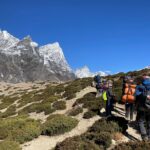
Day 3 goes from Phakding to Namche Bazaar and is listed as about 6 hours total hiking. You follow the Dudh Koshi river corridor and cross multiple suspension bridges, many decorated with prayer flags. For many people, this is where the trek stops feeling like a hike and starts feeling like a Himalayan journey.
This is also the day where patience pays off. Even if you feel strong, don’t treat Namche like a finish line. You want steady effort because the elevation is starting to stack.
You can also read our reviews of more tours and experiences in Kathmandu
Day 4: Everest View Point Acclimatization Day (Namche Area)
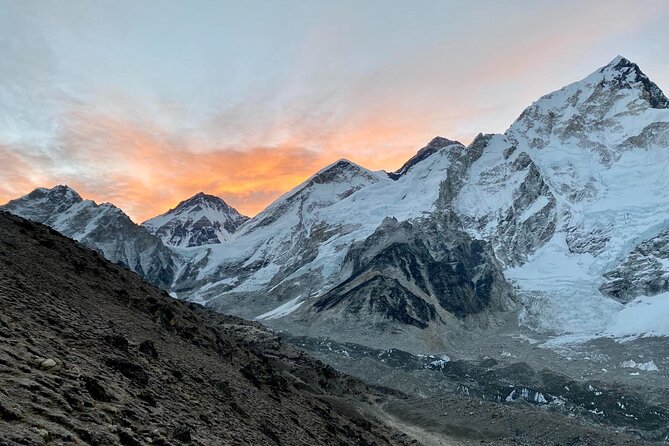
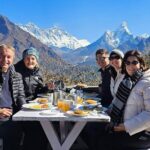
You spend a day in the Namche area for acclimatization, including Everest View Point. This is where the trek gets both practical and poetic. The day includes a short trek around Namche and rewards you with Himalayan views, including sunrise chances.
Altitude-wise, acclimatization isn’t a “nice-to-do.” It’s your safety tool. You’re giving your body a chance to adjust before pushing higher toward places like Tengboche and Dingboche.
One more benefit: this day gives you a moment to observe the real pace of the group. In a trek that later includes Base Camp and Kala Pattar, learning how to move calmly early is a big advantage.
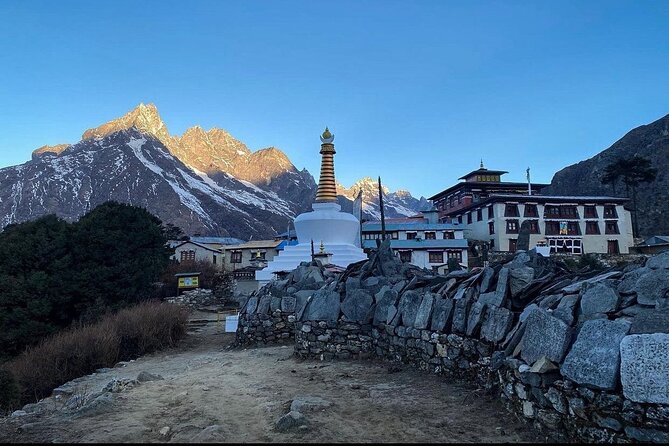
Day 5: Tengboche and the Monastery Stop at 3,860 m
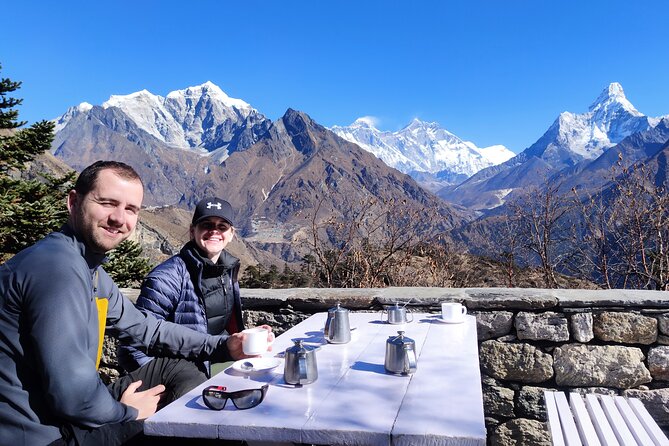
Day 5 brings you to Tengboche, with the altitude noted at 3,860 m. The route continues alongside the Dudh Kosi glacial waters and keeps mountain views in the frame.
Tengboche includes a monastery visit. That’s not just sightseeing. In the Khumbu, monasteries are quiet anchors—places where the trekking culture is part of the experience, not separate from it.
The trade-off: you’re climbing and that air feels different. If you tend to rush when you see views, practice slowing down here. Your legs will thank you later.
Day 6: Dingboche via Debuche and the Imja Khola Bridge
From Tengboche you head onward with a route that drops to Debuche, crosses the Imja Khola suspension bridge, and climbs through areas like Pangboche with thousands of mani stones. Then you reach Dingboche.
This day highlights the “stagecraft” of the Khumbu route: the trail doesn’t just go up. It plays with rhythm—down, bridge, up again—so your body never settles into a single pace.
One consideration: you’ll likely feel tired by the end simply because the days keep stacking. This is where having a porter can help mentally and physically. You’re still walking, but you’re not carrying your whole system.
Day 7: Nangkartshang Peak Acclimatization Without Base Camp Pressure
Day 7 is an acclimatization day. You hike to Nangkartshang Peak just above Dingboche, with the goal of improving your adjustment to altitude. The itinerary notes it as a great viewpoint.
Here’s why this day matters: you are explicitly told not to make progress toward Everest Base Camp on Day 7. That’s good planning. It means you earn your higher days with rest and altitude training rather than stubbornly pushing forward every day.
This is also a day where you can practice good high-altitude habits: slow steps, steady breathing, and drinking even when you don’t feel thirsty.
Day 8: Lobuche and the Khumbu Glacier Lateral Moraine
Day 8 heads to Lobuche, trekking along the lateral moraine of the Khumbu Glacier and passing stone memorials for climbers who perished on nearby summits. This part of the trek hits differently than the earlier bridge-and-view days.
It’s a sober reminder. You’re not just touring mountains—you’re walking through history that includes risk.
From a planning standpoint, this is also a step closer to Base Camp terrain. You’re moving from villages toward the glacier’s world, and that means your walking feels less cushioned and more demanding.
Day 9: Everest Base Camp at 5,365 m (Big and Difficult)
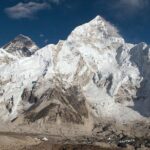
Day 9 is Everest Base Camp at 5,365 m. The itinerary describes it as a big and difficult day walk along the Khumbu Glacier.
This is the day most people remember most clearly, but not because it’s easy. It’s memorable because it’s long and exposed in a way that makes you respect distance. You’ll be focused on breathing, footing, and timing breaks.
If you’re tempted to treat it like a photo mission, don’t. Base Camp works best when you move steadily and allow your body to do what it needs to do at altitude.
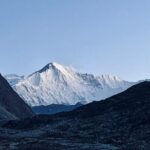
The payoff is real: you reach the closest point most trekkers get without mountaineering equipment.
Day 10: Kala Pattar (5,555 m) and the Most Demanding Climb
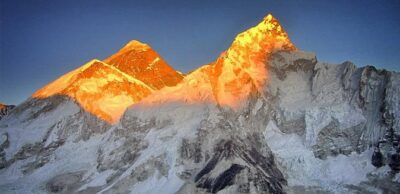
Day 10 is Kala Pattar at 5,555 m. The climb is described as one of the most difficult yet rewarding days of the trek. That fits the reality: you’re going up high, fast enough to feel it, but slow enough to keep oxygen and energy under control.
If you like big views and you can handle steep, this is a great day to lean into effort. But keep your expectations realistic: your pace might slow, and your breathing might become the main soundtrack.
The route here tends to be about payoff—views that feel worth the strain—then you move onward knowing the end is closer than it used to be.
Day 11: Gorakshep to Lukla by Helicopter, Then Back to Kathmandu
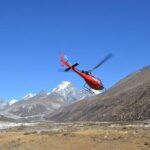
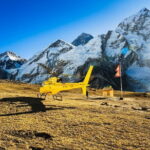
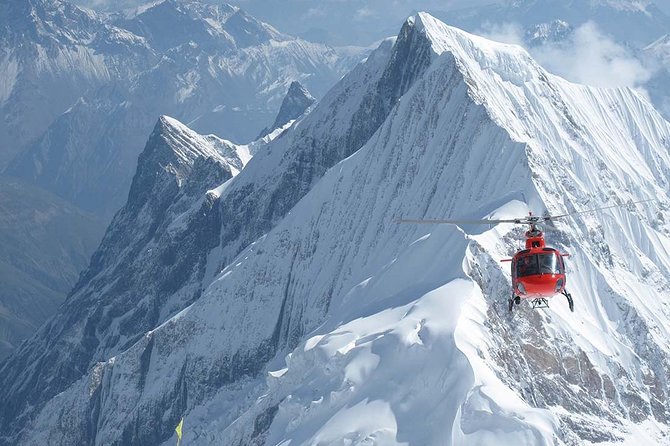
This is the day where the itinerary’s title really pays off. The helicopter ride is from Gorakshep to Lukla, and it’s described as a scenic ride of about 20 minutes.
After that, you enjoy the last glimpses of the mountains before flying back to Kathmandu (about 35 minutes). Once you land, you’re met and transferred back to your hotel.
In practical terms, this is how you turn a high-altitude trek into a shorter recovery arc. You still did the work. You just avoid extra days of walking when your body is already earned-out on effort.
Day 12: Airport Day With Fewer Decisions
Day 12 is transfer to Tribhuvan International Airport for departure. The itinerary keeps it simple: you’re not adding extra city activities. It’s a good way to end a demanding journey without turning travel fatigue into a logistics problem.
Price and Logistics: What $3,000 Really Buys
At $3,000 per person, this isn’t a budget trek. But it also isn’t just paying for trail days. Your price includes the big cost items:
- Airfare Kathmandu–Lukla–Kathmandu
- Shared helicopter return from Gorakshep to Lukla
- Permits (Everest National Park permits and TIMS)
- Guiding by a licensed English-speaking trekking guide
- Porters (1 per two guests)
- Kathmandu lodging in a three-star twin room with breakfast (two nights)
- Trek meals (standard breakfast/lunch/dinner during the trekking period)
- Filtered water using a Katadyn Pocket water filter
- Gear extras like a duffel/kit bag, trekking map, and sun hat
- Safety support: oxymeter included in the first-aid kit
The best way to judge value: ask what you’d spend to recreate it yourself. The helicopter and the guided logistics are hard to replicate cheaply—especially when you’re trying to avoid mistakes in permits, flight coordination, and safety planning.
Just remember what’s not included:
- Your travel insurance that covers rescue and evacuation (important in Nepal)
- Nepal entry visa
- Personal gear
- Drinks and alcohol
- Tips for trekking staff and driver (tipping is expected)
- Meals in Kathmandu (lunch and dinner)
Who This Trek Fits Best (and Who Should Rethink It)
You should strongly consider this itinerary if you want:
- Classic Everest Base Camp access with a smarter finish
- A plan that includes acclimatization days rather than constant ascent
- A guided, supported experience with porters and included meals
- The helicopter return as a time-and-energy saver
This may be a tough match if:
- You don’t handle altitude pressure well, because Day 9 and Day 10 are specifically described as big/difficult and difficult/rewarding.
- You need tightly fixed travel timing with zero flexibility, because weather can affect air and helicopter operations.
Safety and Pacing: How the Plan Tries to Look After You
You’re not just relying on willpower. The trip includes a first-aid kit with oxymeter for measuring oxygen saturation, and your guide is listed as first-aid trained and locally licensed.
Also, the route doesn’t ignore acclimatization. You’re given a Namche day with Everest View Point, then a Dingboche day with Nangkartshang Peak before heading to Base Camp.
That doesn’t eliminate risk, but it’s the kind of planning that helps you manage the mountain instead of getting surprised by it.
Should You Book This Everest Base Camp with Heli Return?
I’d book it if you want the Everest Base Camp dream with a finish that respects your legs. The helicopter return is the clear advantage, and the price looks more reasonable when you account for included flights, permits, meals, guide/porter support, and the safety tools like the oxymeter.
I wouldn’t book it if you’re counting on perfect weather and zero schedule risk, or if you’re not comfortable with genuinely difficult high-altitude days. If you can bring a calm pace mindset and travel with flexibility, this is one of the more practical ways to do EBC.
FAQ
How many days is the Everest Base Camp trek with helicopter return?
The trek is listed as 12 days (approx.).
Where does the trip start in Kathmandu?
On arrival at Tribhuvan International Airport, an official greets you, then you’re taken to your hotel by private tourist vehicle. The start time noted is 8:00 am.
How do you get from Kathmandu to Lukla?
You take a 35-minute scenic flight from Tribhuvan Domestic Airport in Kathmandu to Tenzing and Hillary Airport at Lukla.
How does the helicopter return work from Gorakshep?
You take a shared helicopter ride from Gorakshep back to Lukla, and it’s described as about 20 minutes.
What altitude milestones are part of the trek?
The itinerary specifically mentions Tengboche at 3,860 m, Everest Base Camp at 5,365 m, and Kala Pattar at 5,555 m.
What kind of accommodation is included during the trek?
Kathmandu includes twin-sharing rooms in a three-star hotel with breakfast (two nights). During the trek, you stay in guesthouses, and Lukla, Phakding, and Namche are noted as having attached toilets.
Are meals included on the trek?
Yes. The tour includes all standard meals during the trek (breakfast, lunch, and dinner), plus a farewell dinner on the last night.
Are guides and porters included?
Yes. You get a licensed English-speaking trekking guide and porters, with a porter assignment of one porter for every two guests.
Is travel insurance included, and what about cancellation?
Travel insurance that covers emergency rescue and evacuation is not included. For cancellations, you can cancel up to 6 days in advance for a full refund, and if the experience is canceled due to poor weather, you’ll be offered another date or a full refund.