REVIEW · KATHMANDU
UNESCO Five World Heritage Tour in Kathmandu
Book on Viator →Operated by Himalayan Advisor Pvt. Ltd. · Bookable on Viator
One day, five UNESCO stops, zero taxi roulette. This private Kathmandu Valley tour is built for people who want the big-name World Heritage sights plus the smaller details that make them click. You’ll cover Swayambhunath, the Kathmandu and Patan Durbar Squares, Pashupatinath, and Boudhanath, with a guide connecting the Hindu-Buddhist blend across the city.
I love that you get hotel transfers inside the Ring Road area, including the Bouddha zone, so you start with less hassle and more time for photos. I also love that entry fees are included, meaning you’re not pausing the day to figure out tickets and lines. The main drawback to consider is simple: this is a long, stop-packed 7–8 hour day with walking and stairs, and food isn’t included, so you’ll want to plan for water and a lunch break.
In This Review
- Key points at a glance
- Price and what you actually get for $130
- How this 9:00am plan works in real time (7–8 hours)
- Swayambhunath and Amideva Buddha Park: the viewpoint-and-meaning start
- Kathmandu Durbar Square: royal courtyards, Taleju, and Kumari Chowk
- Patan Royal Palace and Patan Durbar Square: Newari craft in high resolution
- Pashupatinath and Boudhanath: Hindu heart and Buddhist dome
- Best way to use this day if you only have one Kathmandu afternoon
- Who this tour fits best
- Should you book this UNESCO Five-World-Heritage tour?
- FAQ
- What UNESCO World Heritage sites are included?
- How long is the tour?
- What time does the tour start?
- Is hotel pickup included?
- Are entrance fees included?
- Is food included in the price?
- Is this a private tour?
- How far in advance should I book?
- What if I need to cancel?
Key points at a glance
- Five UNESCO World Heritage sites in one day plus extra cultural stops that explain what you’re looking at
- Ring Road hotel pickup and drop-off, including Bouddha area convenience
- Entrance fees covered for the sites and museum stops
- Kathmandu Durbar Square + Patan Durbar Square side-by-side for Newari architecture context
- Guides with strong on-the-spot answers, often mentioned as flexible and service-minded (Shanti, Sarita, Tej, Rabina show up in feedback)
Price and what you actually get for $130
At $130 per person for a 7–8 hour private day, the value comes from the things that usually cost you time and stress in Kathmandu: transport logistics and ticketing. Here, you’re paying for private car service and a professional guide, plus entry fees for the Heritage sites. That combo matters because these areas often mean short walks, uneven steps, and lots of small gates and courtyards—if you’re winging it, the day can turn into admin work.
Food and drinks are not included, so budget a bit for lunch and water. I’d also treat the price as a “time-saver” fee: one guided route that hits the key stops without you bargaining with taxi drivers between each site. If you only have a short stay in Kathmandu and want the UNESCO highlights without turning the day into a scramble, this price can feel pretty fair.
You can also read our reviews of more historical tours in Kathmandu

How this 9:00am plan works in real time (7–8 hours)
This tour starts at 9:00am and typically runs 7 to 8 hours. You’ll ride in a private vehicle, then switch to foot for each clustered area, with scheduled time for the main monuments and smaller stops. It’s designed as a “full-day circuit” rather than a slow stroll, so expect a steady pace.
A nice perk: it’s private and only your group participates. That matters because you can ask questions at each temple or square without the tour feeling like a conveyor belt. Based on guide feedback (names like Shanti, Sarita, and Tej pop up), the service style tends to be polite, attentive, and focused on making the day feel stress-free.
Swayambhunath and Amideva Buddha Park: the viewpoint-and-meaning start
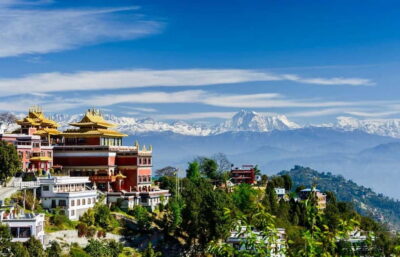
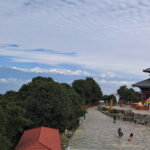
You begin with Swayambhunath, a UNESCO World Heritage Site that’s important to both Buddhists and Hindus. You’ll spend about 1 hour here, which is enough time to take in the views, notice the religious symbolism, and understand what you’re seeing beyond the obvious photo angles.
Swayambhunath is often the “first wow” stop because it’s both spiritual and visually dramatic. Even if you’ve seen Buddhist stupa forms before, this one carries Kathmandu’s flavor—mixed traditions, layered meanings, and a place where visitors and worshippers move with purpose.
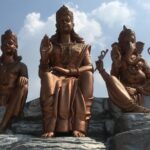
Right near the hill, you’ll also visit Amideva Buddha Park for about 15 minutes. This stop adds a calmer breather: you can see three large statues of Shakyamuni Buddha in a small park-like setting. It’s short, but I like it because it gives you a visual rhythm after the main stupa area—less crowd pressure, more time to look at details.
Practical note: start the day with a light layer and comfy shoes. This area can involve stairs and changing viewpoints, so you’ll be grateful you didn’t plan for a day of flip-flops.
Kathmandu Durbar Square: royal courtyards, Taleju, and Kumari Chowk
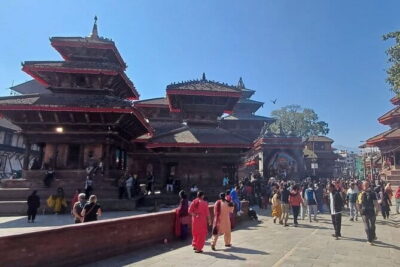
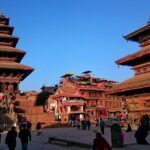
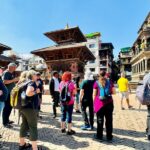
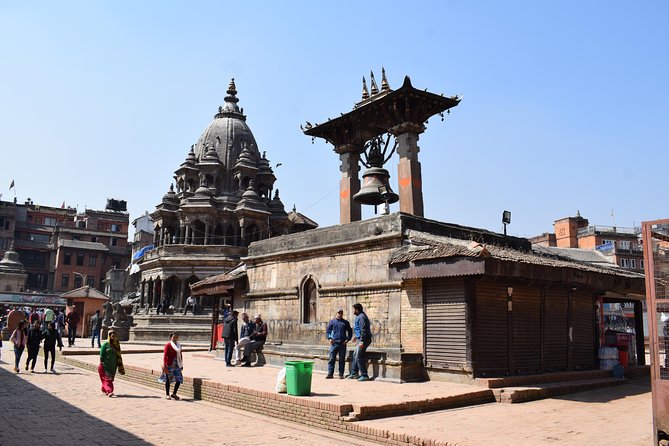
Next comes Kathmandu Durbar Square, about 1 hour. This is one of the royal squares of the Kathmandu Valley, and it’s also the place where the city’s architecture tells a story of power, craft, and faith. Expect religious and historic structures in reconstruction, which can change what you see from one visit to the next, but it also makes the site feel alive rather than frozen.
Inside the Durbar Square complex, you’ll hit a tight set of stops:
- Basantapur Tower (about 30 minutes): A landmark you’ll associate with the Durbar Square skyline. Even without climbing, the tower helps you orient yourself and understand how the square’s layout was designed for visibility and ritual space.
- Degu Taleju Temple (about 10 minutes): Taleju is central to the royal-temple tradition, and this temple was built in 1564. That date gives you a real anchor—this isn’t just decorative old stone, it’s tied to specific reigns.
- Kumari Chowk (about 10 minutes): This courtyard is connected to the Kumari, a girl chosen as the living goddess until puberty. The value here isn’t spectacle; it’s the way the city treats sacred tradition as a living social system.
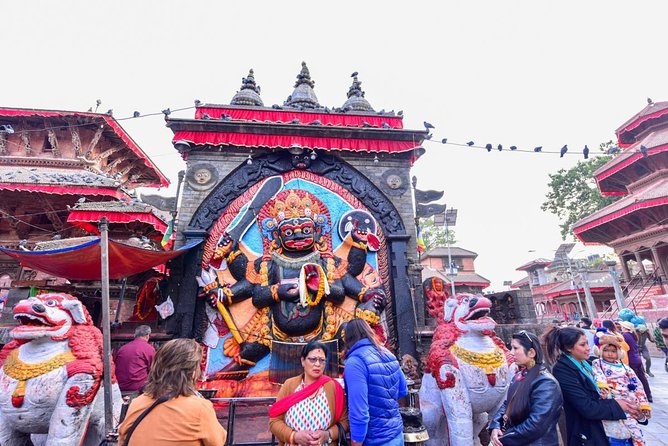
- Kaal Bhairab (about 5 minutes): A statue of Bhairav that adds the “street-level” energy of protective, active divinity in the Durbar Square world.
If you’re wondering why this stop cluster matters, it’s because Kathmandu Durbar Square isn’t one monument. It’s a whole grid of meanings—royal temple authority, living-goddess tradition, and protective deity symbolism, all within walking distance.
The drawback is time pressure. In one hour, you can’t read everything, so focus on a few moments: the Taleju connection, the Kumari courtyard, and the way the tower and courtyards shape the flow of worship.
Patan Royal Palace and Patan Durbar Square: Newari craft in high resolution
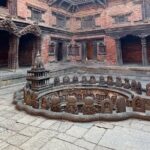
After Kathmandu’s royal courtyard, the tour shifts to Patan, also known as Lalitpur. You’ll start with Patan Royal Palace for about 1 hour. The area around Durbar Square here is tied to Patan’s oldest royal palaces, with nearby highlights such as the Krishna Temple and the Tulaja Devi Temples. Even if you’re not an architecture nerd, the palace-court layout helps you see why Patan developed a reputation for fine craftsmanship.
Then you move into Patan Durbar Square for about 45 minutes. This is another UNESCO World Heritage Site and a great contrast to Kathmandu Durbar Square because it’s described as a home for Newari architecture. You’ll see temples and artistic creations associated with the Newar community, and the square feels like a dense workshop of carved stone and ritual space.
From there, the itinerary keeps momentum with focused micro-stops:
- Taleju Mandir Temple (about 15 minutes): After a fire in 1676, the temple was rebuilt by Srinivasa Malla. That history matters because it reminds you that these sites are maintained through generations of change, not just preserved behind glass.
- Patan Museum (about 15 minutes): This is worth your time if you like carvings and old artifacts. You can observe things like old statues and carved windows and wooden pillars. It’s the best “pause from walking” moment in the Patan section.
- Golden Temple (Hiranya Varna Mahavihar) (about 10 minutes): A 12th-century temple with bronze statues and a pagoda-style form. It’s described as covered in silver and golden decorations, with a golden image connected to Lord Buddha. Even in a short visit, it gives you a strong visual payoff and a sense of why Patan earned its shine.
- Vishwanath Mandir Temple (about 5 minutes): Built during the reign of Siddhi Narsingh Malla and dedicated to Shiva.
- Bhimsen Temple (about 15 minutes): Built in 1680 by Srinivasa Malla, and worshipped as a god of business and trade by the Newar community. I like this stop because it ties religion to everyday city life and work—faith you can point to, not just ideas in a book.
Patan can feel like a lot because there are many related stops packed into one circuit. My advice: treat it like a guided “architecture reading session.” Let the guide point out what to look for, then pick a couple of specific details to remember, like the Golden Temple’s shine and the Bhimsen trade connection.

Pashupatinath and Boudhanath: Hindu heart and Buddhist dome
The tour then heads to Pashupatinath Temple for about 1 hour. It’s a Hindu temple complex with over 500 shrines and temples, and it’s described as the main temple for Shiva devotees. This is one of those places where you can feel the scale through movement and routine rather than through a single dramatic structure. The complex includes many pagoda structures as you enter, so expect a strong visual rhythm.
If you’re visiting with a guide, this is where interpretation pays off. Even if you don’t know the theology ahead of time, you’ll likely start to see how Shiva devotion is expressed through the layout and the sheer number of sacred spaces.
Finally, you finish with Boudhanath Stupa for about 1 hour. This UNESCO World Heritage Site is a Buddhist symbol in Nepal’s religious landscape. The stupa is described as 36 meters high, dome-shaped, and surrounded by prayer wheels and picture carvings connected to Buddha.
This ending stop works well because it changes the tone. You go from the dense Hindu temple complex energy to the wide, steady Buddhist stupa presence. It’s also a good moment to regroup before your drop-off.
Practical tip: in both Pashupatinath and Boudhanath, plan for changing crowd conditions and lots of people moving in different directions. A guide who keeps you oriented makes these visits feel organized instead of chaotic.
Best way to use this day if you only have one Kathmandu afternoon
If you only have a single full day, you’ll probably love this tour format. You’re not forced to guess how to stitch together distant areas or negotiate each leg. You’ll get the UNESCO pillars plus the extra stops that explain cultural layers: the living goddess tradition at Kumari Chowk, the Taleju rebuilding history in Patan, and the direct link between Newar community life and trade worship via Bhimsen.
This also suits first-timers who want context fast. One piece of feedback you’ll see in the guide names—Shanti, Sarita, Tej, Rabina—is that they’re praised for answering questions and keeping the day flowing. That’s exactly what you need on a day like this: your questions aren’t a disruption; they’re part of the experience.
And if you’re the type who hates standing in ticket lines, you’ll appreciate the “no admin surprises” setup. Entrance fees are included, and the route is organized so you can keep moving from stop to stop.
Who this tour fits best
This is a strong match for:
- People who want UNESCO World Heritage sites in Kathmandu Valley without DIY headaches
- Travelers interested in how Hindu and Buddhist traditions coexist in visible ways
- Short-stay visitors who can handle a busy 9:00am start and a long walking day
- Small groups who value a guide’s explanations and timing
It may be less ideal if you want a slow, flexible day with lots of downtime, or if you struggle with stairs and temple-courtyard walking. The schedule is tight by design.
Should you book this UNESCO Five-World-Heritage tour?
I’d book it if your goal is clear: see the main UNESCO sites and understand what you’re looking at, without spending your day managing logistics. At $130, the biggest “win” is the package deal: private transport, guide, and entry fees bundled into one route that saves you time.
I wouldn’t book it if you’re hoping for a relaxed, linger-and-learn pace with free-form stops. This is a structured circuit, and the value comes from staying on the path.
If you’re choosing between “DIY UNESCO sightseeing” and “one guided day that covers the essentials,” this tour leans hard toward the second option. Bring comfy shoes, plan for lunch on your own, and use your guide’s explanations to turn scattered monuments into a connected story of Kathmandu.
FAQ
What UNESCO World Heritage sites are included?
The tour includes Swayambhunath, Kathmandu Durbar Square, Patan Durbar Square, Pashupatinath, and Boudhanath Stupa.
How long is the tour?
It typically lasts about 7 to 8 hours.
What time does the tour start?
The start time is 9:00am.
Is hotel pickup included?
Yes. Hotel pickup and drop-off are included inside the Ring Road area, including the Bouddha area.
Are entrance fees included?
Yes. Entry fees for the Heritage sites are included.
Is food included in the price?
No. Food and drinks are not included.
Is this a private tour?
Yes. It’s private, and only your group will participate.
How far in advance should I book?
The experience is often booked about 55 days in advance on average.
What if I need to cancel?
You can cancel for a full refund if you cancel up to 24 hours in advance of the experience’s start time. If you cancel less than 24 hours before, you won’t get a refund.