REVIEW · KATHMANDU
Oldest Local Market Walking Tour with Living Goddess Kumari
Book on Viator →Operated by Mount Glory Treks & Expedition Pvt.Ltd. · Bookable on Viator
A first glimpse of Kumari changes everything. This 2-hour walk pairs Kumari Chowk with Kathmandu’s classic old-market streets, so you get both a spiritual moment and real local shopping life. I also love how it gives you Ason Bazaar context fast, which helps you understand where you are and what you’re seeing.
I’m a fan of the pacing here: you spend real time at Kathmandu Durbar Square and you’re guided by an experienced, well English-speaking guide who can connect the dots between temples, courtyards, and the Kumari tradition. One thing to watch is that monument entrance fees are extra, and the Kumari viewing moment is brief—about 10 minutes—so show up ready to focus.
In This Review
- Key things to know before you go
- Kumari Gaze Meets Old-Market Walking in Kathmandu
- From Chhaya Devi Complex to Thamel and Ason Bazar
- Ason Bazaar in 30 Minutes: Spices, Textiles, Instruments, and Food
- Kathmandu Durbar Square: UNESCO Temples, Courtyards, and the Kumari House Area
- Kumari Chowk: Your About-10-Minute Living Goddess Moment
- Price and Logistics: What $40 Covers and What Adds Up
- How the English-Speaking Guide Makes the Whole Tour Click
- Who Should Book This Walking Tour (and Who Might Skip It)
- Should You Book This Living Goddess and Old Market Tour?
- FAQ
- Where is the meeting point for the tour?
- How long does the walking tour take?
- What stops are included?
- What is included in the $40 price?
- Are monument entrance fees included?
- Is there an admission fee to see Kumari at Kumari Chowk?
- How much is the group size?
- Is the ticket mobile?
- Can I cancel for a full refund?
Key things to know before you go
- Kumari Chowk is free and timed: about 10 minutes to witness Kumari during the tour.
- UNESCO Kathmandu Durbar Square is part of the route: you’ll see the palace-temple-courtyard complex and the Kumari House area.
- Ason Bazaar is the quick local market hit: roughly 30 minutes to understand the market vibe and browse for everyday goods.
- $40 covers the guide and service/tax: monument entrance fees are not included.
- Small group size (max 20): easier to hear your guide and move through tight streets.
- Mobile ticket and English support: practical if you don’t want ticket-hunting on your own.
Kumari Gaze Meets Old-Market Walking in Kathmandu
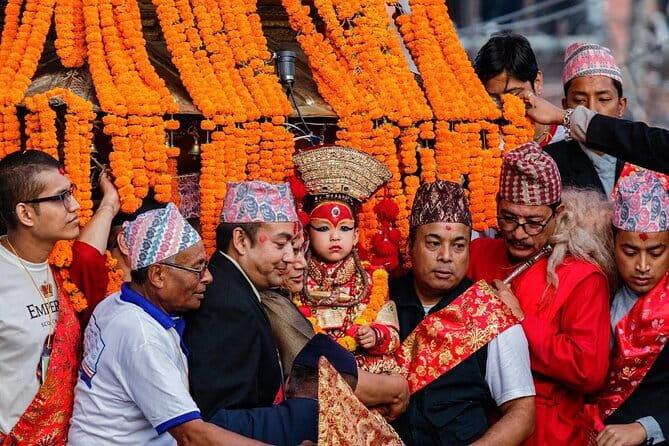
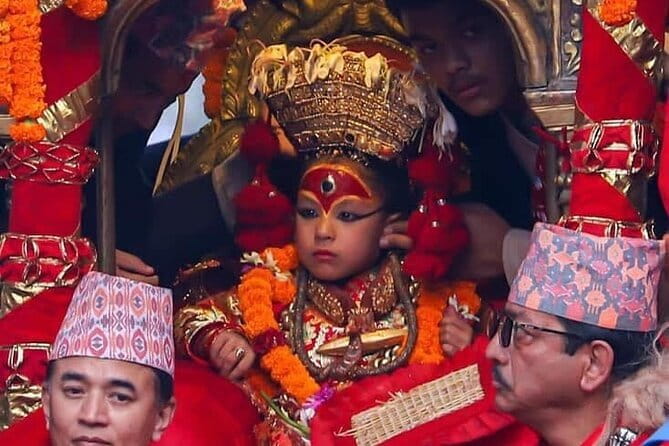
The big draw here is simple: you’ll have a chance to see Kathmandu’s living goddess, Kumari, associated with the goddess Taleju. Kumari is a pre-pubescent girl who is believed to be the living incarnation of that deity, and her role is rooted in tradition and religious belief, with her residence in the Kumari Ghar.
What makes this tour feel different from a standard sightseeing loop is that it’s built around everyday Kathmandu movement. You’re not just hopping between monuments from far away. You walk through market streets, then shift into a space where the Kumari tradition is taken seriously—and that change in atmosphere is part of the experience.
If your goal is to see Kumari and also get your bearings in Kathmandu, this format works well. You get a guided orientation to the places people actually go, plus the spiritual highlight.
You can also read our reviews of more walking tours in Kathmandu

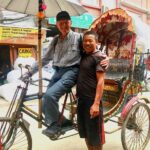
From Chhaya Devi Complex to Thamel and Ason Bazar
You start at the main gate of Chhaya Devi Complex (Chhaya Center), located at Amrit Marg in Kathmandu. From there, you walk through Thamel Market before entering Ason Bazar, Kathmandu’s well-known old market area.
This approach matters because it eases you into the city. Thamel can feel like a travel hub, and then the streets gradually shift into the older commercial lanes around Ason. Going with a guide helps because you’re not decoding every storefront on your own—you’re learning how the area fits together as you move.
It’s also a practical tour length. With about 2 hours total, you can slot it early in a trip without it taking over your whole day. And because the group is capped at 20, you won’t feel like you’re in a giant crowd puzzle.
Ason Bazaar in 30 Minutes: Spices, Textiles, Instruments, and Food
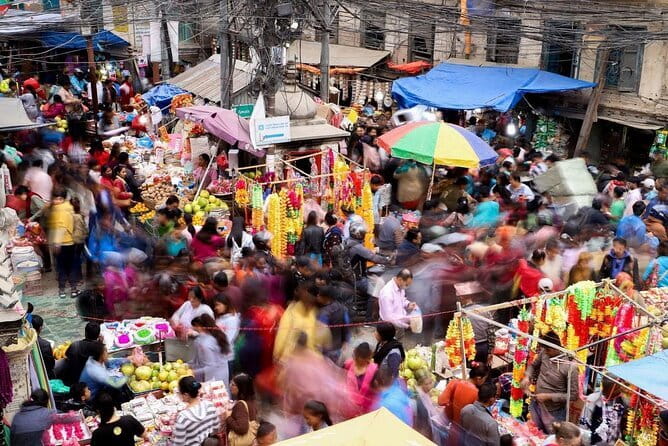
Ason Bazar is where the senses go to work. You’ll walk around the market known for shopping for goods like spices, textiles, instruments, plus food and clothes. Even if you don’t buy much, the value is in seeing how Kathmandu commerce actually looks up close.
You get about 30 minutes at this stop. That’s enough time to notice patterns—what people pick up quickly, what stalls are concentrated, and how the market layout supports different kinds of shopping. It’s also enough time to grab a small snack or souvenir if you want, without turning this tour into a long shopping spree.
There’s no monument ticket required for this stop, so you can focus on wandering. Just keep expectations realistic: 30 minutes is a taste, not a full market marathon. If you want deeper browsing, use the time at the end of the tour to keep walking on your own.
Kathmandu Durbar Square: UNESCO Temples, Courtyards, and the Kumari House Area

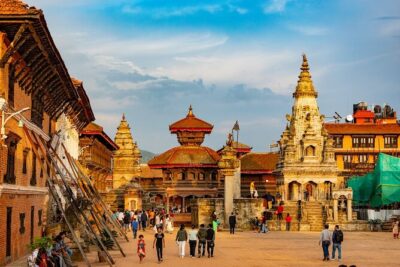
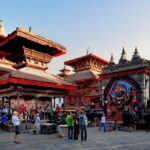
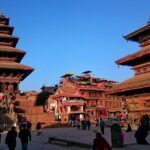
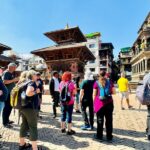
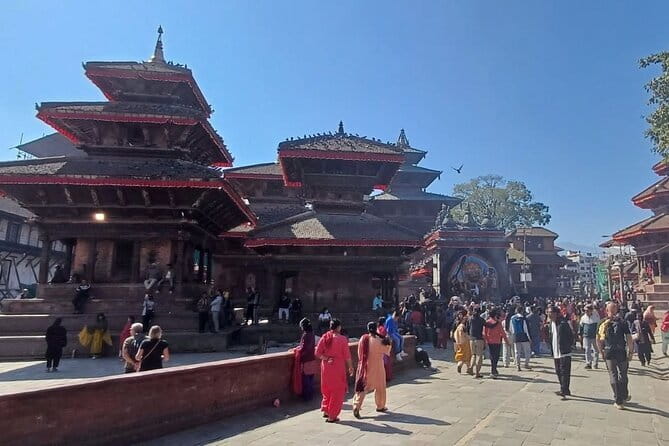
Next comes Kathmandu Durbar Square, a UNESCO World Heritage site. This palace complex sits in the heart of Kathmandu and is known for intricate architecture, temples, and courtyards.
Why it fits so well after Ason is that the city’s logic becomes clearer. Markets show you everyday life and trade. Durbar Square shows you the ceremonial and historic center that shaped how that life developed. You’ll also be moving within the larger setting that includes the Kumari House area, since the Kumari tradition is closely connected to this part of the complex.
This stop runs about 1 hour, which is a solid window for a guided look. You’re not just snapping a couple of photos and rushing out. You have time to understand what you’re looking at—temple forms, courtyards, and the overall layout—before you head to Kumari Chowk.
One important note: monument entrance fees are not included in your $40 price. The tour lists NPR 1000 per person for these entrance fees, so plan for that extra cost. It’s one of those details that can surprise people if they only budget for the base ticket.
Kumari Chowk: Your About-10-Minute Living Goddess Moment
The Kumari portion happens at Kumari Chowk. This is where you can witness the living goddess Kumari during the tour, and the admission here is free. The time window is short—about 10 minutes—so the trick is to go in with the right mindset.
Think of it as a moment of attention, not a prolonged viewing. The most memorable part tends to be the feeling of presence. One of the best-known reactions people describe is the impact of Kumari’s direct gaze—something that can stop you mid-thought. Even if you’re not religious, you’re witnessing a tradition with real weight for local people.
Because the viewing window is brief, your guide’s job is crucial: they help you arrive at the right place and understand when to focus. So listen closely during this phase and keep your position steady when you’re told to.
This is also where you’ll notice the tour shifts from sightseeing mode into respect mode. The tone changes fast, and that’s exactly how you’ll want to experience it.
You can also read our reviews of more shopping tours in Kathmandu




Price and Logistics: What $40 Covers and What Adds Up

At $40 per person, this tour is priced for a guided, two-hour hit that combines a major spiritual landmark with a market orientation. What you’re paying for is the experienced well English-speaking guide plus the company service charge and tax.
What’s not covered is the part many people miss: monument entrance fees. The listed amount is NPR 1000 per person. On top of that, the tour doesn’t include tips for the guide, and it doesn’t include food or beverages.
So is it good value? Usually, yes—if your priorities match the route. You’re paying to avoid doing this all alone, and you’re getting guided context at Durbar Square plus the Kumari viewing experience. If you’re the type who likes self-guided wandering, you could technically piece it together on your own, but you’d lose the benefit of having someone explain what you’re seeing while you’re on the move.
You’ll also get a mobile ticket, which makes check-in simpler. And the tour offers group discounts, which can help if you’re coming with others.
Finally, remember the practical trade-off: the tour is short. That’s good for many schedules, but it does mean limited time at each key site—especially the Kumari stop.
How the English-Speaking Guide Makes the Whole Tour Click
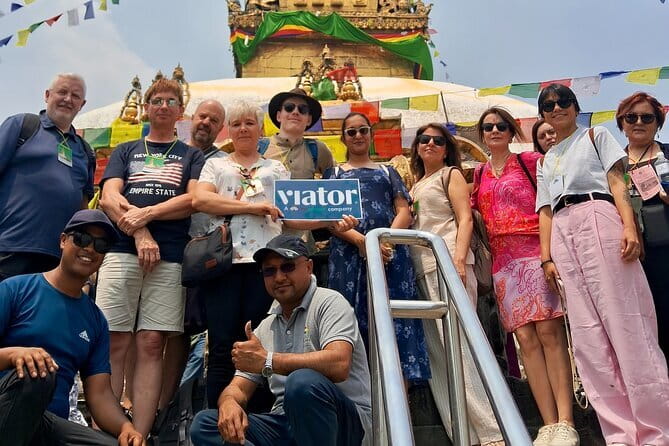
This tour’s structure depends on your guide doing more than pointing. The stops connect, and the guide’s explanation is what turns a list of places into a coherent Kathmandu picture.
At Ason, you’re walking through stalls for spices, textiles, instruments, food, and clothes. The guide helps you make sense of what you’re seeing and how people use these goods in daily life. At Durbar Square, the same guide helps you translate the architecture and the courtyard layout into something less confusing. And at Kumari Chowk, they help you keep your attention where it matters most.
If you like learning on foot, this is the right pace. You won’t feel trapped in a long lecture. You get quick guidance tied directly to what’s in front of you.
One practical tip: if you’re arriving with questions, jot one down before the tour starts—something like what a specific area is known for, or what the Kumari tradition means in this setting. Then ask at a natural break. You’ll get more out of the time you have, especially since the Kumari viewing window is only about 10 minutes.
Who Should Book This Walking Tour (and Who Might Skip It)
Book this tour if you want:
- Kumari as the headline and you’d like a guided, respectful way to see it
- A quick introduction to Kathmandu’s Ason Bazar market area
- Time at Kathmandu Durbar Square with a guide instead of trying to decode it alone
- A small-group walk (max 20) that fits into a short schedule
You might think twice if:
- You’re on a tight budget and don’t want to add the NPR 1000 monument entrance fees
- You prefer long, self-paced market browsing rather than a guided taste
- You’re expecting a long viewing experience at Kumari Chowk (the window is brief)
For most people, it lands well as either a first-orientation tour or a focused cultural add-on early in your trip.
Should You Book This Living Goddess and Old Market Tour?
If your list includes both Kumari and Kathmandu’s older market streets, this is an efficient way to do it. You’ll get the emotional highlight at Kumari Chowk, plus meaningful context at Kathmandu Durbar Square, and a quick on-the-ground sense of Ason Bazar.
My main advice is to budget for the monument entrance fees and mentally prepare for short site timings. Do that, and you’ll end up with a tour that feels like Kathmandu on multiple levels: everyday commerce, sacred tradition, and a historic center all in one smooth walk.
If you can, book ahead. The tour is commonly reserved about 21 days in advance on average, and with a max group size of 20, earlier planning helps you lock in a spot that fits your schedule.
FAQ
Where is the meeting point for the tour?
You meet at the main gate of Chhaya Devi Complex (Chhaya Center), Amrit Marg, Kathmandu 44600, Nepal.
How long does the walking tour take?
It runs for about 2 hours.
What stops are included?
You’ll visit Ason Bazar, Kathmandu Durbar Square, and Kumari Chowk, then return toward Thamel / the meeting area.
What is included in the $40 price?
An experienced well English-speaking tour guide and the company service charge and tax are included.
Are monument entrance fees included?
No. Monument entrance fees are not included and are listed as NPR 1000 per person.
Is there an admission fee to see Kumari at Kumari Chowk?
No. Admission at the Kumari Chowk stop is listed as free.
How much is the group size?
The tour has a maximum of 20 travelers.
Is the ticket mobile?
Yes, the tour includes a mobile ticket.
Can I cancel for a full refund?
Yes. You can cancel up to 24 hours in advance for a full refund.