REVIEW · KATHMANDU
Kathmandu Food Crawl & Market Tour
Book on GetYourGuide →Operated by Santosh Pandey · Bookable on GetYourGuide
Street food in Kathmandu, but with a map. I love the way the walk centers on Ason Bazar and turns it into a food history lesson, and I love that you get Newari classics like yomari and samay baji as you move through the market. One possible drawback: the tastings move fast in 2 hours, so if you’re sensitive to heat or you hate walking, you’ll need to slow down and be ready to plan your pace.
I also like that the tour is guided by Santosh Pandey, an English speaker who explains what you’re eating and connects dishes to religion and everyday life. The format includes all foods and beverages (minimum five items with drinks), and the vibe stays local rather than turning into a staged restaurant stop.
You meet at the main gate of Chhaya Devi Complex and you’re back there after the crawl, which makes it easy to plug into your day. If your idea of a food tour is mostly sitting down and ordering a single meal, this may feel like too much movement and too much sampling at once.
In This Review
- Key highlights you’ll feel on this Kathmandu food crawl
- Ason Bazar and the feeling of eating inside Kathmandu’s daily rhythm
- Chhaya Devi Complex meetup: simple timing for a 2-hour tasting walk
- Newari cuisine tastings: yomari and samay baji as more than just food
- Street-food stops: momo, chatamari, and laphing for contrast
- What you actually learn on the market walk with Santosh Pandey
- How the $28 price works out: guide, taxes, and plenty of food
- Who this Kathmandu market tour fits best (and who should think twice)
- Should you book this Kathmandu Food Crawl at Ason Bazar?
- FAQ
- Where is the meeting point for the Kathmandu Food Crawl?
- How long is the Kathmandu Food Crawl & Market Tour?
- What is the price per person?
- Is the tour guide available in English?
- What food and drinks are included?
- Does the tour return to the starting area?
- What market does the tour focus on?
- Are personal expenses included?
- Is there free cancellation?
- Can I reserve without paying today?
Key highlights you’ll feel on this Kathmandu food crawl
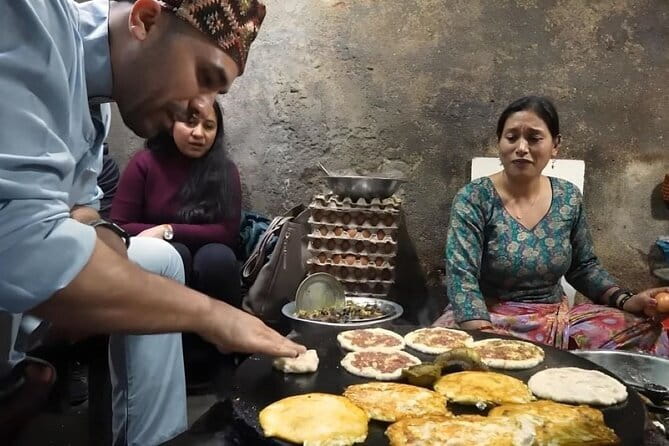
- Ason Bazar, Kathmandu’s oldest local market as the main stage for the day
- Newari cuisine tastings like yomari and ceremonial samay baji
- At least five food and drink samples included with enough quantity to feel like a real meal
- Street-food flavors with clear Nepali–Tibetan–Indian influence in every bite
- Momo, chatamari, and laphing for spice and texture comparisons, not just random snacks
- A guide who talks life in Nepal, plus market history, culture, and food preferences
Ason Bazar and the feeling of eating inside Kathmandu’s daily rhythm
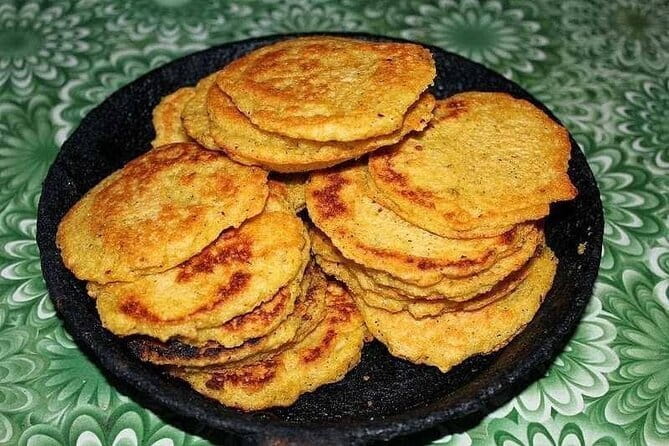
If you’ve ever wished you could taste Kathmandu without guessing what’s safe, this tour’s structure helps. Your route is anchored around Ason Bazar, described here as the oldest local market in Kathmandu, so your snacks come with context while the city keeps moving around you.
Markets in Kathmandu are more than food stands. They’re where crafts, traditions, and daily errands overlap. As you walk, you’re not just chasing dishes—you’re watching how people live, buy, and socialize in the same lanes where the food is being prepared.
What I like about using a market like Ason Bazar as the core is that you can actually compare flavors and styles side by side. You’ll try things that feel Newari, things that feel street-style, and things that reflect broader influences—without needing to research each one first.
You can also read our reviews of more food & drink experiences in Kathmandu
Chhaya Devi Complex meetup: simple timing for a 2-hour tasting walk
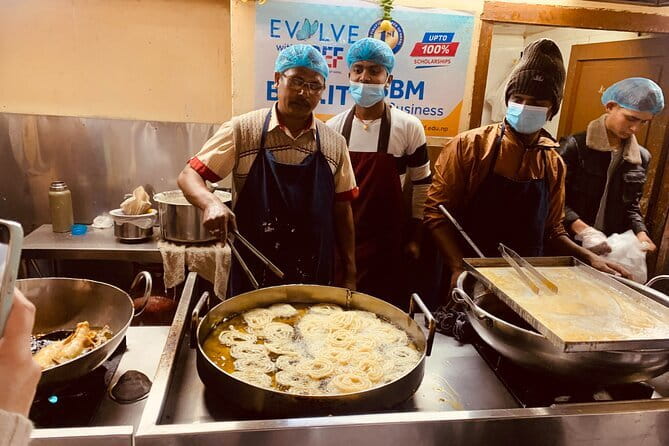
This is a tight, practical format: about 2 hours, meeting and returning to the Chhaya Devi Complex area. You meet at the main gate of Chhaya Devi Complex, then the tour stays focused on the market area and food stops, so you don’t waste time figuring out logistics.
Because everything is included—an experienced English-speaking guide, taxes, and foods and beverages—you can treat it like a pre-planned meal. That matters in Kathmandu, where finding the right place can take trial and error. With a guided crawl, you’re getting direction without having to hunt.
The main thing to consider is your appetite and your spice tolerance. The menu includes dishes that are specifically described as spicy (like laphing and many momo variations), and you’ll be tasting multiple items in a short window. If you like a slow dinner afterward, you may need to adjust expectations—this tour can fill you up.
Newari cuisine tastings: yomari and samay baji as more than just food
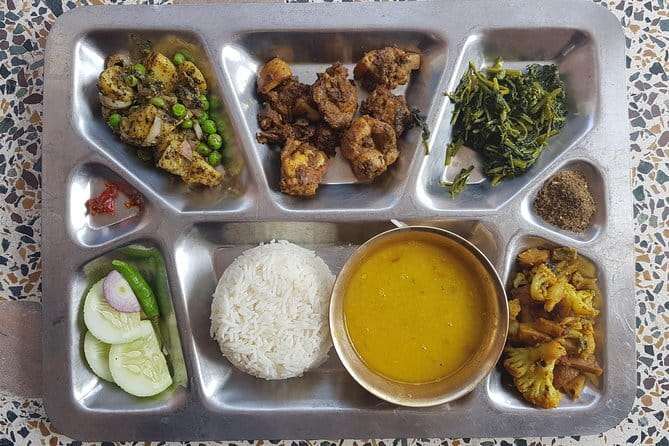
A big reason people love this tour is the Newari focus. Newari cuisine is presented as a key part of Kathmandu’s food culture, and you’ll see that in the specific dishes that are chosen.
Yomari is one highlight you’ll want to pay attention to. It’s described as a sweet steamed dumpling filled with molasses and sesame seeds. That combo is unusual if you’re used to savory street food only, and it gives you a sweet-to-savory balance as you move through the market.
Then there’s samay baji, framed as a ceremonial platter. You’re told what’s in it: beaten rice, spiced buffalo meat, and a variety of pickles. That’s not just a random sample—it’s a dish category that carries a sense of occasion, even when you’re eating it on the go. The pickles also matter because they help cut through the richness and make each bite feel more distinct.
I like how these two Newari items set a tone for the entire crawl. Yomari helps you notice texture and sweetness, while samay baji shows how Kathmandu food culture can be structured like a set meal with multiple components that work together.
Street-food stops: momo, chatamari, and laphing for contrast
After the Newari anchors, the crawl moves into classic street-food territory—where variety is the point. Kathmandu street food is described here as reflecting a blend of Nepali, Tibetan, and Indian influences, and you can taste that variety through the items offered.
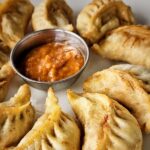
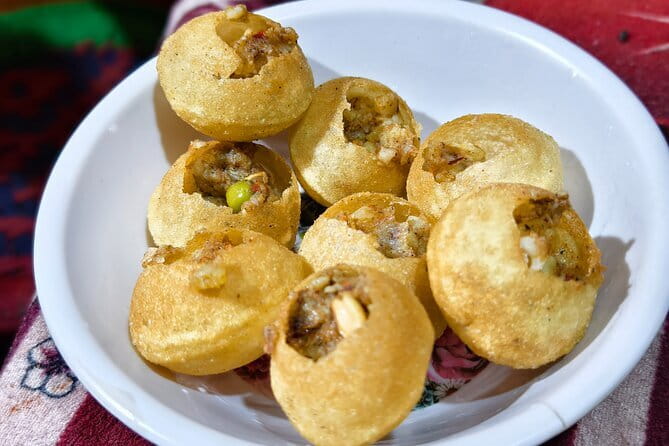
Momo is one of the most recognizable picks. You’ll see it described as spicy and available in countless variations. That’s a good choice for a tour because it lets you compare styles: different fillings, different sauces, and different levels of heat, all within one “family” of dumplings.
Chatamari is another standout. It’s often referred to as Newari pizza, which is a helpful mental shortcut. Rather than being a one-note snack, it’s typically something you can recognize and then see how the market’s version differs from what you might expect.
And then there’s laphing, described as a cold, spicy mung bean noodle dish that’s particularly popular among locals. Cold noodles with spice can sound strange until you taste them. It’s also a smart palate reset during a walk like this, because you’re not only getting hot, heavy items—you’re also getting something chilled and sharp.
If you’re food-curious, this street-food trio is what makes the crawl feel like more than a single meal. You get contrast in heat, texture, and temperature, all while you’re surrounded by market life.
What you actually learn on the market walk with Santosh Pandey
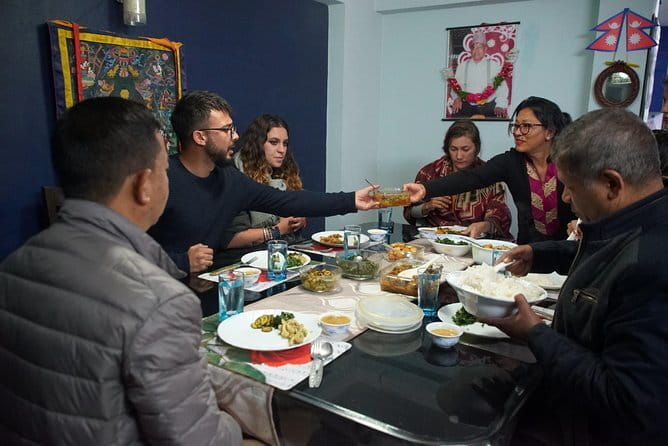
A food tour is only as good as the “why” behind the “what.” This one credits that to the guide, Santosh Pandey, who’s described as friendly and easy to talk to, with explanations that connect food to Kathmandu and Nepal.
One of the most praised parts is the mix of practical and cultural context. You’ll get history along the way, plus information on religion and on food preferences of Nepali people. That helps you eat with awareness instead of eating on autopilot.
The other thing I’d highlight is conversation. Guides here are described as getting into real life topics, like aspects of life in Nepal, not just reciting facts. If you like asking questions—about ingredients, habits, or what locals order—this is a tour that supports that.
And because the tour is centered on market lanes (not a single storefront), you also get a better sense of how crafts and local traditions show up around the food. It’s the difference between learning about culture and simply tasting it once and moving on.
You can also read our reviews of more tours and experiences in Kathmandu
How the $28 price works out: guide, taxes, and plenty of food
At $28 per person for a 2-hour experience, the value mostly comes from what’s included. You get an English-speaking tour guide, all government taxes and official expenses, and foods and beverages, with a stated minimum of five items with drinks.
The reviews also point to quantity. People describe the portion size as surprisingly large, with the combined samples adding up to nearly two full meals. That’s not a guarantee, but it tells you what the tour is designed to do: it’s meant to be a full tasting experience, not a few bites.
So if you’re thinking about whether it’s “worth it,” consider the cost of a guided walk + multiple tastings + drinks in a place where you might otherwise spend time figuring out where to go. This tour removes that guessing and wraps it into a single price.
The tradeoff is that it can be hard to treat it like a light snack tour. If you already have a big dinner planned right after, you may want to adjust your schedule and let this be your main meal.
Who this Kathmandu market tour fits best (and who should think twice)
This is a strong match if you:
- Want to taste Newari cuisine alongside Kathmandu street food like momo, chatamari, and laphing
- Like walking through active markets and understanding what you’re eating as you go
- Prefer an English guide who can explain history and culture in plain terms
It may be less ideal if you:
- Don’t like walking or want a mostly seated experience
- Prefer mild flavors only, since the menu includes spicy dishes (laphing and spicy momo variations are specifically called out)
- Avoid meat, since samay baji here includes spiced buffalo meat
If you’re a first-time visitor, this kind of guided tasting is also helpful because it focuses on local market energy instead of pulling you away from what’s normal for Kathmandu. You get a concentrated sample of what people actually eat in and around the market.
Should you book this Kathmandu Food Crawl at Ason Bazar?
I’d book it if you want a guided, high-value way to eat your way through Kathmandu’s market culture in just two hours. The big strengths are the Newari anchors (yomari and samay baji), the street-food contrast (momo, chatamari, laphing), and the fact that you’re walking a real market center like Ason Bazar with an English-speaking guide who explains the food and the context.
I’d think twice if you’re after a quiet, low-spice sit-down meal, or if you can’t handle multiple tastings in a short time window. But if you’re hungry for variety and you like learning while you eat, this is an efficient way to make Kathmandu feel personal fast.
FAQ
Where is the meeting point for the Kathmandu Food Crawl?
You meet at the main gate of Chhaya Devi Complex.
How long is the Kathmandu Food Crawl & Market Tour?
The duration is 2 hours.
What is the price per person?
The price is $28 per person.
Is the tour guide available in English?
Yes, the tour includes a live English-speaking guide.
What food and drinks are included?
All foods and beverages are included, with a minimum of 5 items plus drinks.
Does the tour return to the starting area?
Yes, you arrive back at Chhaya Center.
What market does the tour focus on?
It includes a visit to Ason Bazar, described here as the famous oldest local market in Kathmandu.
Are personal expenses included?
No, personal expenses are not included.
Is there free cancellation?
Yes, you can cancel up to 24 hours in advance for a full refund.
Can I reserve without paying today?
Yes, reserve now & pay later is available.