REVIEW · KATHMANDU
Seven World Heritage Day Tour in Kathmandu Nepal
Book on Viator →Operated by Himalayan Planet Adventures · Bookable on Viator
Seven UNESCO stops. One long, satisfying Kathmandu day. This tour strings together major landmarks and quieter sites across the Kathmandu Valley, with a private vehicle and local guide so you spend more time seeing and less time figuring out transit. You also get flexible morning start times and a mobile ticket for a smoother day.
I especially like the way it mixes the headline attractions (like Pashupatinath and Boudhanath) with smaller stops such as Amideva Buddha Park and Changu Narayan, which makes the day feel more than a checklist. A smart heads-up: it’s a full 10–12 hour push, and many heritage entrances are not included—plus you’ll likely handle some stairs along the way, even though guides can slow down when needed (I’ve seen guides like Shanti Karki and Pankaj adjust pace to suit walkers).
In This Review
- Key Highlights You’ll Feel Immediately
- Value for Money: What $65 Buys You in Kathmandu
- Private Pickup, Morning Start Times, and How the Day Actually Moves
- Swayambhunath to Amideva Buddha Park: Where Kathmandu’s Views Start
- Kathmandu Durbar Square and Kumari Chowk: The Old City in Person
- Patan Durbar Square, the Krishna Temple, and Hiranya Varna Mahavihar
- Patan Museum: Short, but Helpful Context
- Bhaktapur Durbar Square: The Day’s Biggest Courtyard Moment
- Nyatapola, Dattatraya, 55-Window Palace, and Siddha Pokhari
- Changu Narayan, Pashupatinath, and Boudhanath: Finishing With Power
- Tickets, Entrances, Food, and What to Budget Realistically
- How This Tour Compares for Different Types of Travelers
- Should You Book the Seven World Heritage Day Tour?
- FAQ
- How long is the Seven World Heritage Day Tour?
- What’s the price per person?
- Is pickup included, and where does it pick up from?
- Does the tour include food and drinks?
- Are entrance fees included for the heritage sites?
- How is the ticket delivered?
- Is this tour private or shared with other people?
- Which UNESCO sites are visited?
- What is the cancellation policy?
Key Highlights You’ll Feel Immediately
- Seven UNESCO World Heritage Sites in one day, covering Kathmandu, Patan, Bhaktapur, and the key religious complexes
- Private pickup and drop-off inside Kathmandu’s Ring Road, plus transport by private vehicle
- A route that blends big names with quieter culture, including Amideva Buddha Park and Changu Narayan
- Guide-driven pacing, with examples of slowing down for stair climbing (Pankaj) when guests need it
- Mobile ticket and group-only tour, so it’s just your group in the same day rhythm
Value for Money: What $65 Buys You in Kathmandu
At $65 per person, this is priced like a true one-day “solve the problem” tour. The key value isn’t just the sites—it’s that the day runs on private vehicle transport with hotel pickup and drop-off inside the Ring Road. That matters in Kathmandu, where traffic and navigation can turn a good plan into a tiring one.
Also, you’re not just being taken from A to B. You get a professional tour guide, and the route is built to cover the Kathmandu Valley’s UNESCO core in a tight window. If you’re short on days, this is one of the easiest ways to get a lot of context without spending your evening trying to line up drivers, tickets, and timing.
One caution: the price does not include food and drinks, and heritage entrance fees are not included for all sites. So the real cost is your $65 plus your food budget plus any paid entrances you choose.
You can also read our reviews of more historical tours in Kathmandu

Private Pickup, Morning Start Times, and How the Day Actually Moves
This is designed to start in the morning, with multiple morning start times so you can match it to your schedule. Once you’re picked up (inside the Ring Road), you stay in the same private-vehicle flow through the day. That means fewer breaks to re-group and fewer chances to lose time at each location.
Typical pacing is realistic: some stops are 5 to 15 minutes, others are 30 minutes to 2 hours. The idea is to give you a chance to see key details without turning every stop into a long hike. That works especially well if you want variety—religious architecture, palace courtyards, and temple complexes—rather than spending the whole day in one neighborhood.
Swayambhunath to Amideva Buddha Park: Where Kathmandu’s Views Start
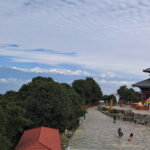
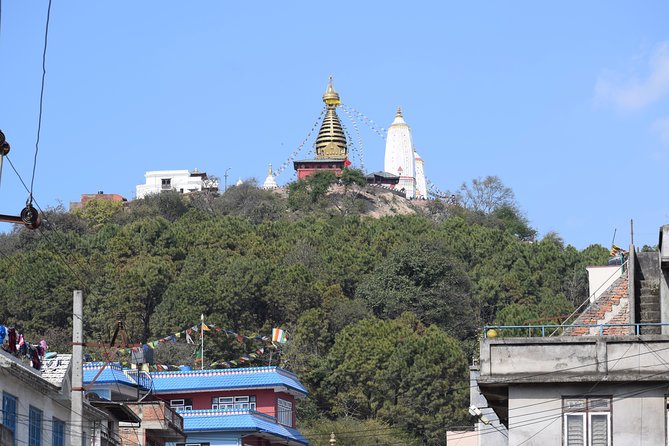
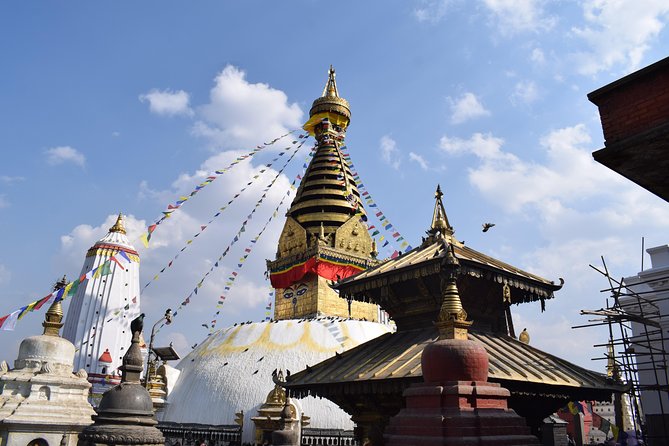
You begin at Swayambhunath, a UNESCO Buddhist pilgrimage site known for its temple setting and iconic presence over the city. Expect a short stop that still feels meaningful. There are two ways up: an inclined walk to reach the top, or another entrance route depending on how your guide plans the approach.
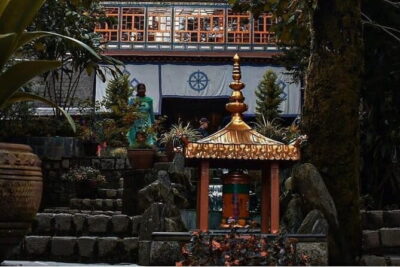
After Swayambhunath, you move to Amideva Buddha Park. This is one of those stops that’s easy to overlook if you only chase the biggest names, but it adds texture. You’ll see large Shakyamuni Buddha statues, along with smaller religious and architectural pieces. Admission here is listed as free, and the stop is short—about 30 minutes—so it’s a low-stress way to keep your momentum.
Practical tip: wear shoes you’re comfortable in. Even “short” temple walks can turn into slippery stone, steps, and uneven ground.
Kathmandu Durbar Square and Kumari Chowk: The Old City in Person
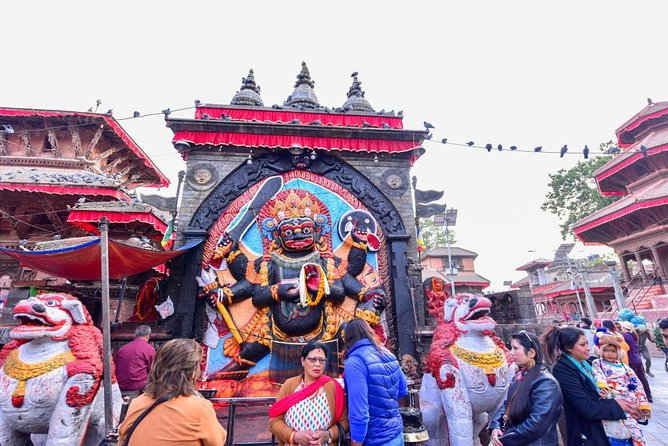
Next up is Kathmandu Durbar Square, another UNESCO site and one of the places where you see how living culture and history overlap. The highlight is the historical and architectural buildings around the square. You may notice ongoing construction at points, which can change what’s visible on the day—so treat it as part of Kathmandu’s reality, not a flaw.
Then comes Kumari Chowk, a quick stop with a strong cultural role. Kumari is the living goddess position in the Newari tradition, held by a selected Newari girl until puberty. The stop is brief—around 5 minutes—and it works as a sharp snapshot between larger courtyards.
If you like your travel to feel human (people, rituals, living traditions), these two stops are a nice pairing. They’re also efficient: you get big symbolism without spending hours.
Patan Durbar Square, the Krishna Temple, and Hiranya Varna Mahavihar
Patan is where Kathmandu’s craft traditions start showing in a different way, and this tour uses Patan to keep variety high.
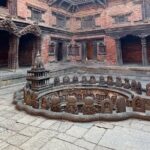
At Patan Durbar Square, you’ll walk through the courtyard of the historic Malla palace in Lalitpur, with Newari architecture all around. The square is described as layered with crimson bricks, and that color detail really helps you understand how design shapes atmosphere here. The stop is about an hour, giving you enough time to look around without feeling rushed.
A highlight in this area is the stone architecture connected with the Krishna temple, including 21 shrines and carvings tied to the Ramayana and Mahabharat. There’s also mention of a large bell near the Krishna temple area. This is the kind of detail your guide can point out, and it’s exactly why a guided stop helps: you don’t just see shapes—you learn what they’re telling you.
Then you visit Golden Temple (Hiranya Varna Mahavihar), a 12th-century pagoda-style temple with bronze statues and silver and gold decorations. The stop is short—around 15 minutes—which is good because the real value is a clear first look at the temple style and materials rather than trying to do everything at once.

Patan Museum: Short, but Helpful Context
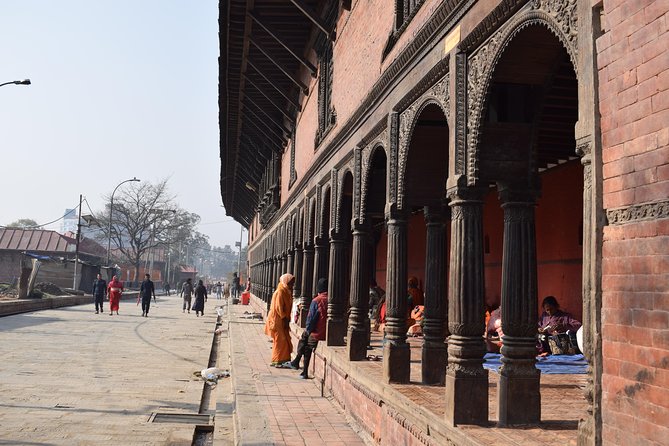
After the temples and squares, you head to Patan Museum, located at Keshav Narayan Chowk within the Patan Durbar Square area. The stop is around 30 minutes and focuses on records about ancestors’ lifestyles and artifacts.
This is a smart pause in the middle of a long day. Religious sites can be sensory overload—sound, stone, crowds, and meaning all at once. A museum stop gives your brain a little structure, so when you see temples and carvings later, you have a bit more context for what you’re looking at.
Bhaktapur Durbar Square: The Day’s Biggest Courtyard Moment
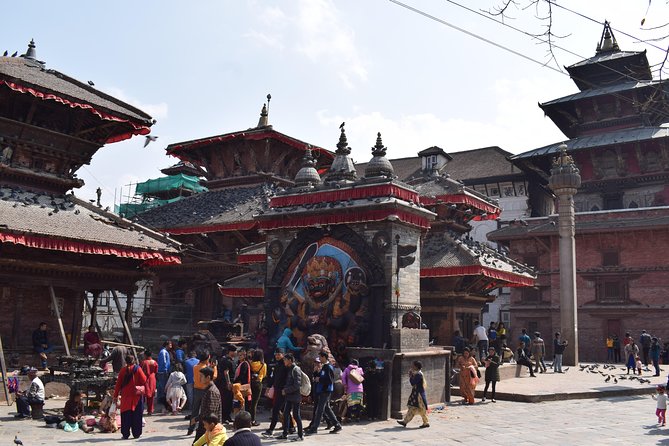
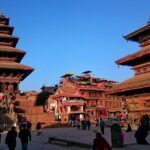
Then the itinerary pivots to Bhaktapur Durbar Square, UNESCO-listed and associated with the “City of Devotees.” This is one of the longer stops on the day—about 2 hours—and it feels like a place designed for lingering.
The square is tied to indigenous Newari culture and architecture. You’ll also get a set of major highlights inside and around Bhaktapur’s durbar area, including the 55-window palace.
If you’re worried about how a 10–12 hour day can still feel rewarding, this is where it happens. In a single afternoon, you get architectural scale and a sense of place that’s hard to replicate in a quick photo stop.
Nyatapola, Dattatraya, 55-Window Palace, and Siddha Pokhari
Within Bhaktapur, you’ll hit a cluster of smaller but striking stops:
- Nyatapola Temple: a five-leveled pagoda-style temple with impressive scale, listed as over 30 meters tall. Admission is noted as free and the stop is brief (around 10 minutes), so you focus on form and details.
- Dattatraya Temple: connected to a belief that it used the stem of a single tree. You get about 15 minutes here, and it’s another quick architectural moment that adds to your sense of craft.
- 55 Window Palace: a specific palace known for exactly 55 carved windows, built across connected courtyards. Again, about 15 minutes, but it’s the kind of detail you remember because it’s so specific.
- Siddha Pokhari: a human-made pond, 171 meters long and 3 meters deep, described as a local hangout with a relaxed atmosphere. This is about 15 minutes and is a welcome breather—less “temple intensity,” more downtime.
These are mostly short stops, but together they create variety: tall pagoda geometry, carved windows, and then a local-life pause at the pond.
Changu Narayan, Pashupatinath, and Boudhanath: Finishing With Power
The last stretch shifts from palace courtyards to major religious complexes—big meaning, lots of symbolism, and places that feel central to Nepal’s faith landscape.
First is Changu Narayan Temple, described as the least visited of the UNESCO World Heritage Sites, which matters if you’re the type who likes breathing room. The stop is about 30 minutes. You’ll see traditional Newari carvings and crafts, which makes this a good place to look closely at workmanship rather than just admire the structure.
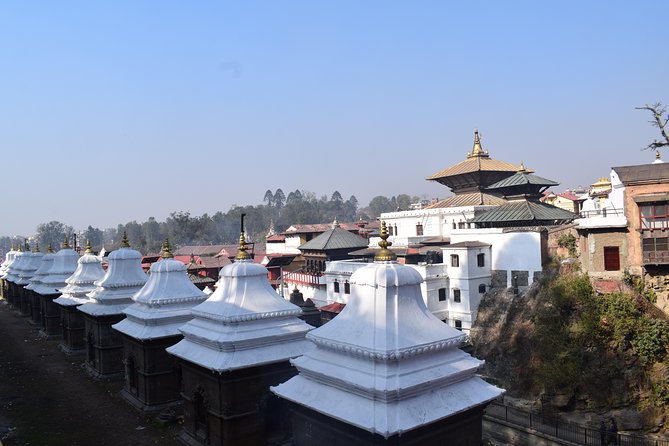
Next comes Pashupatinath Temple, one of Nepal’s most significant Hindu temple complexes. It’s described as home to over 500 temples and shrines and covers about 0.64 hectares. The stop is about an hour. This is a long enough window to take in the scale and understand that it’s not a single temple photo-op—it’s a whole sacred zone.
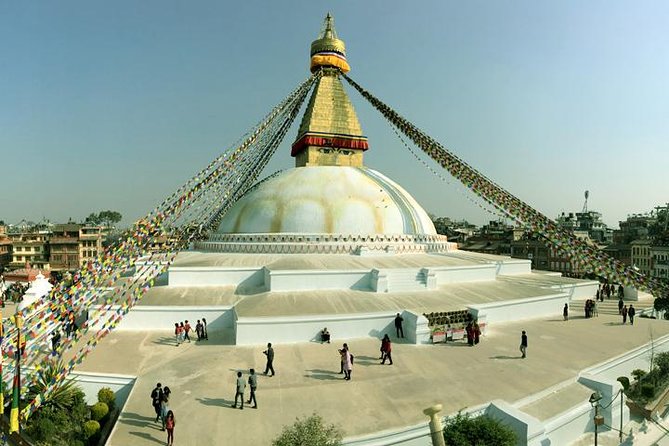
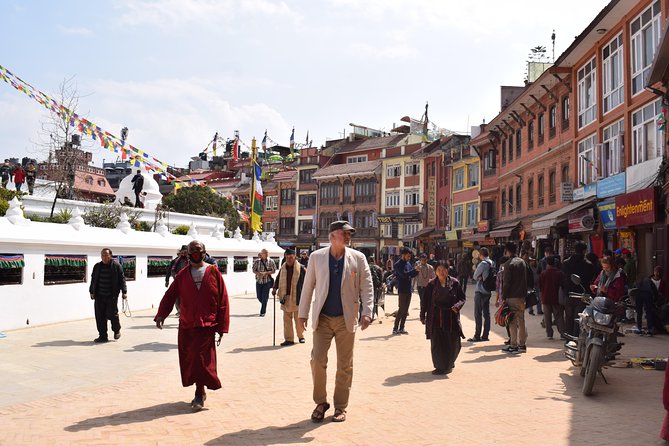
Finally, you end at Boudhanath Stupa, a major Buddhist pilgrimage destination. The stupa is listed as 36 meters tall, with over 50 gompas constructed around its vicinity. The stop is about an hour and is often the perfect ending because the site’s scale and layout give you something steady to absorb while the day winds down.
Tickets, Entrances, Food, and What to Budget Realistically
Here’s the practical part. The tour includes pickup/drop-off, private transport, and a guide. It does not include food and drinks, and it does not list entrance fees as included for heritage sites across the route.
You’ll notice the itinerary flags some stops as admission ticket free (for example, places like Amideva Buddha Park and Kumari Chowk), while other stops say admission tickets are not included (like Swayambhunath, Kathmandu Durbar Square, and others). Since the paid sites can vary by what you enter, plan a little extra cash for entrances and keep some time flexibility for where lines might be.
For food, the simplest approach is to eat once you’re between the heavier stops. This tour is busy, so trying to snack constantly can slow you down. Better to have one real meal break and treat the rest as grazing.
How This Tour Compares for Different Types of Travelers
This is a strong fit if:
- you’re on a tight schedule and want maximum UNESCO coverage
- you like guided interpretation, especially for carvings and architectural details
- you’re comfortable with a long day (10–12 hours)
- you want a private vehicle, not a patchwork of taxis
It may be less ideal if:
- you’re hoping for a relaxed pace all day
- you dislike stairs and uneven stone (though guides can slow down, and a flexible guide can make a big difference)
- you want lots of free time to wander without a set route
One smart way to think about it: if you’re the type who enjoys structure, you’ll like this. If you like wandering more than looking, you may prefer fewer sites.
Should You Book the Seven World Heritage Day Tour?
Book it if you want a single, efficient day that hits the core UNESCO sites of the Kathmandu Valley and pairs them with helpful context. I’d especially recommend it if you’re traveling with limited time, because the private pickup within the Ring Road plus private-vehicle transport reduces planning stress more than most value tours.
I’d hesitate only if your top priority is slow travel and long sits. This itinerary is built for movement, and even though some stops are short, the full day is still a commitment. If you’re good with that, this tour is one of the best ways to get an authentic sense of Kathmandu Valley’s sacred and civic architecture without turning your vacation into logistics homework.
FAQ
How long is the Seven World Heritage Day Tour?
It runs about 10 to 12 hours.
What’s the price per person?
The price is listed at $65.00 per person.
Is pickup included, and where does it pick up from?
Hotel pickup and drop-off are included for locations inside Kathmandu’s Ring Road.
Does the tour include food and drinks?
No. Food and drinks are not included, but you can buy them at each site.
Are entrance fees included for the heritage sites?
Entrance fees are not included for heritage sites according to the choices. Some stops are listed as free, while others are listed as admission not included.
How is the ticket delivered?
You’ll receive a mobile ticket.
Is this tour private or shared with other people?
This is a private tour/activity, meaning only your group participates.
Which UNESCO sites are visited?
The route includes Swayambhunath, Kathmandu Durbar Square, Patan Durbar Square, Bhaktapur Durbar Square, Changu Narayan Temple, Pashupatinath Temple, and Boudhanath Stupa.
What is the cancellation policy?
You can cancel for free up to 24 hours in advance for a full refund. Changes within 24 hours are not accepted and refunds are not provided if you cancel less than 24 hours before the start time.
If you tell me your travel dates and where you’re staying (within or outside the Ring Road), I can help you sanity-check whether a 10–12 hour day fits your energy level.