REVIEW · KATHMANDU
Knife (Khukuri) Making Workshop- Forge of the Gurkhas
Book on Viator →Operated by I. Experience Nepal · Bookable on Viator
A knife starts as scrap metal and sweat. In Kathmandu, the Forge of the Gurkhas workshop turns that into a 6-inch khukuri with hands-on forging steps and lots of cultural context behind the blade.
I really like two things about this experience: first, it’s small (max 5 people) and you get pickup so the day stays easy. Second, you’re not just watching—part of the work is yours, including hammering and the final buffing/polishing that brings the blade to a usable shine.
One thing to consider: the most spark-heavy blade grinding is handled by the host for safety, so you won’t be doing the dangerous part yourself.
In This Review
- Key Points Before You Go
- What a Khukuri Workshop Really Teaches You
- Enter the Forge of the Gurkhas in Kathmandu
- The 4-Hour Flow: What Happens Step by Step
- Hammering the Iron (Your First Hands-On Moment)
- The First Grinding (Still Interactive, Still Controlled)
- Buffing and Polishing (Where Your Knife Looks Finished)
- Safety and the Sparks: What You Should Know
- The Khukuri Details You’ll Learn Along the Way
- Will Your Knife Be Good or Just Decorative?
- Price and Value: Why $68 Can Make Sense
- Timing Tips for a Smooth Workshop Day
- Who Should Book This Workshop (and Who Might Not)
- Final Verdict: Should You Book the Forge of the Gurkhas?
- FAQ
- Where is the Knife (Khukuri) Making Workshop located?
- How much does the workshop cost?
- How long is the experience?
- Do they pick me up from my hotel?
- What size khukuri will I make?
- Is there a group size limit?
- What parts of the process will I do myself?
- Will I handle the blade grinding?
- Do I get a mobile ticket and confirmation?
- Can I cancel for a refund?
Key Points Before You Go
- Small-group setup (max 5) keeps the focus on you and your knife.
- Hotel pickup + mobile ticket makes the logistics simple in Kathmandu.
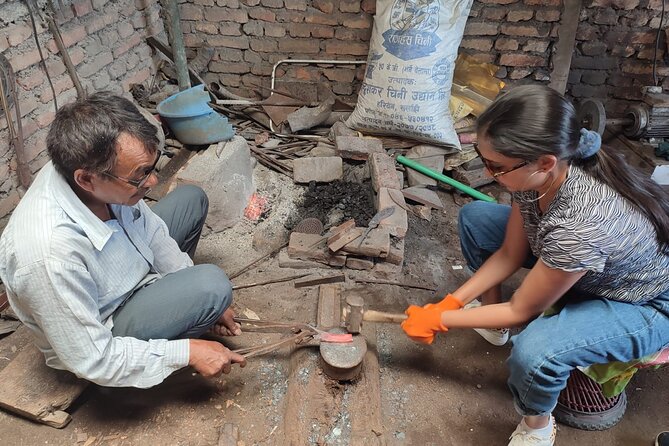
- You hammer and do finishing work, so the khukuri actually feels like your project.
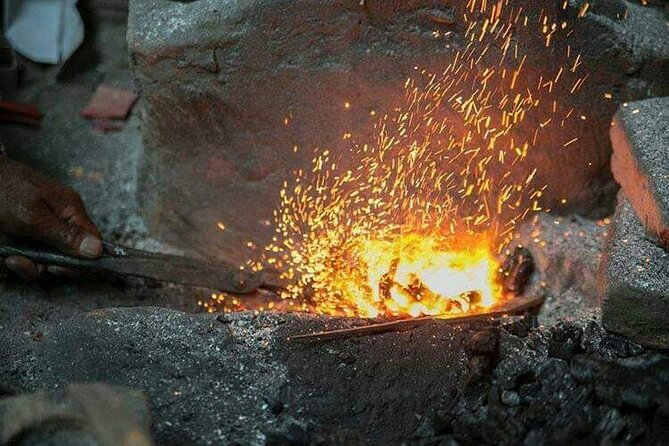
- Safety first with sparks: the host manages the blade grinding step.
- You take home the finished souvenir, a real, sharp khukuri (not a decorative knockoff).
- Friendly, chatty experts: the blacksmith Indra and guide Swoyam are often highlighted for skill and conversation.
What a Khukuri Workshop Really Teaches You
The khukuri is more than a cool knife shape. In Nepal, it’s tied to Gurkha identity and is also seen across hill tribes, where it’s historically been practical for daily tasks. You’ll hear about how the blade is tempered steel—slightly curved and made to stay sharp—and how the handle is often wood or buffalo horn.
The workshop also explains the small design details that come with big symbolism. For example, there’s a nick near the blade close to the handle that’s said to help stop blood from reaching the handle, and it’s connected to Hindu Trinity symbolism (Brahma, Vishnu, and Shiva). If you’ve ever wondered why craft traditions look so specific, this is where it clicks: every part of the khukuri is there for a reason, not just aesthetics.
And because you’re working with a forge rhythm—heat, hammer, grind, cool, repeat—you also learn something practical: making steel sharp is slow work. The class gives you that respect, fast.
You can also read our reviews of more tours and experiences in Kathmandu


Enter the Forge of the Gurkhas in Kathmandu
This workshop is in Kathmandu, and you’ll start with simple coordination from the organizer. You should expect confirmation at booking time, and you’ll receive a mobile ticket you can show on the day. Pickup is offered, which matters because you’ll be traveling from the city to where the blacksmith works—often described as more rustic and away from the busy tourist streets.
Once you arrive, the atmosphere is part workshop and part family space. People repeatedly mention how the blacksmith’s home and craft setting feel casual, welcoming, and not staged. That’s a big part of the value here: you get a real look at how a traditional craft is kept alive by skilled hands, not a factory vibe.
One more practical note: because this is real metalwork, expect a functional environment—coal/forge setup, dust, and tools. If you’re only comfortable in very polished, modern spaces, you might need to mentally adjust. If you want the real deal, you’ll probably love it.
The 4-Hour Flow: What Happens Step by Step
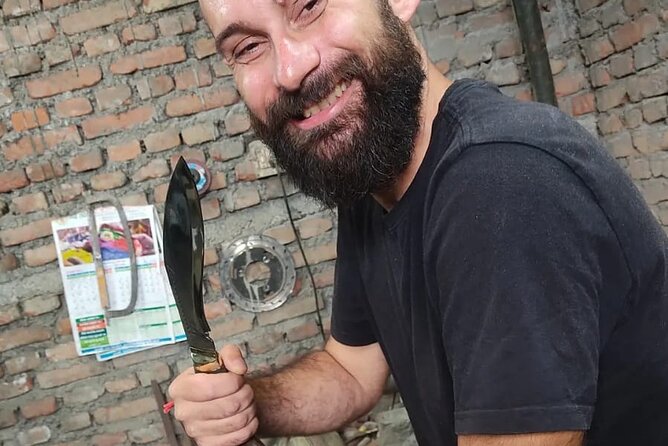
The workshop runs about 4 hours (approx.), and the flow is built around the core stages of forging a small khukuri blade.
Hammering the Iron (Your First Hands-On Moment)
You begin with the raw material and start shaping the early blade form. This is where the workshop feels most like a craft class and least like a demo. Hammering teaches you the basics of controlled force: too light and nothing changes, too hard and you can distort the metal before it’s ready.
This part is also one reason the experience scores so well for people who feared it would feel like a toy. You’re not clicking a button. You’re actively forming the blade shape.
The First Grinding (Still Interactive, Still Controlled)
After the forging shape takes form, you move into grinding. The workshop description notes that blade grinding is managed by the host for safety, but it also lists the first grinding as part of what you participate in.
Translation for your expectations: you’ll likely do a safer, guided grinding step rather than the full spark-heavy stage. Either way, you’ll see how grinding defines the blade’s profile and brings you closer to the final geometry.





Buffing and Polishing (Where Your Knife Looks Finished)
In the last phase, you get into finishing: buffing and polishing the knife at the end. This is satisfying because you’re not just making something functional—you’re shaping the surface so it looks sharp and clean.
Several past participants specifically loved this “turning point” stage because it feels like you finally see the finished product taking over. It also helps the knife feel personal, since you’re physically involved in the final look.
Safety and the Sparks: What You Should Know
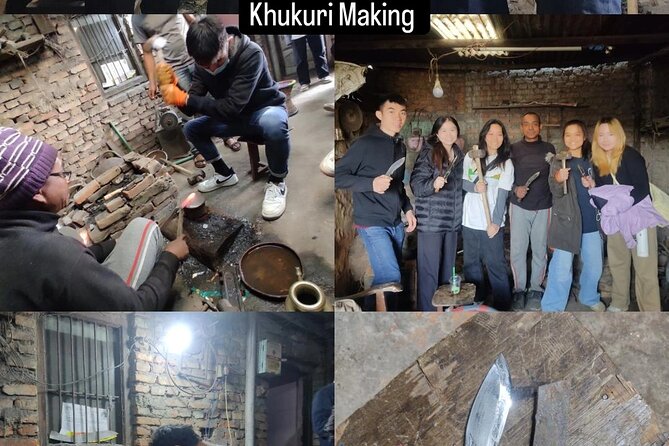
Metalwork has one unavoidable truth: heat and sparks come with the job. That’s why the workshop is designed so the host handles the most dangerous blade grinding steps.
Here’s the practical takeaway for you: even if you want to do as much as possible, you should listen to the safety instruction and stay clear of sparks during the host’s grinding. Don’t try to hover, record up close, or “help” in a way that blocks the workflow.
Also, watch your pacing. Hammering and finishing take hand control and attention. If you have shaky wrists or you’re prone to rushing, ask for a slower pace. The value of this class is quality work, not speed.
The Khukuri Details You’ll Learn Along the Way
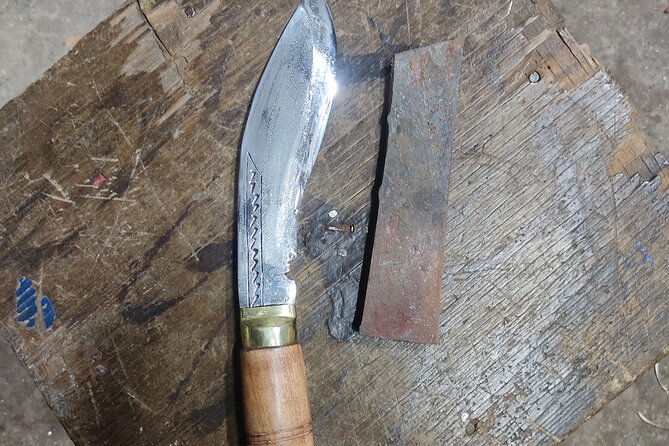
This workshop doesn’t treat the khukuri like a generic souvenir. You’ll get explanations tied to actual traditional form and function.
You’ll hear that the blade is typically:
- Tempered steel
- Slightly curved
- Exceedingly sharp when completed
You’ll also learn that the handle is often made from:
- Wood or buffalo horn
And you’ll hear how the blade is traditionally stored in a wood-and-leather scabbard. That matters because a khukuri isn’t just the blade. The scabbard, the handle, the curvature—everything is part of how the knife is used and carried.
One of the coolest cultural angles is the symbolism behind the nick near the handle. The workshop ties it to the idea that the design helps manage blood flow away from the handle and also connects to the Hindu Trinity of Brahma, Vishnu, and Shiva. Whether you’re religious or not, it helps you understand why craftsmanship and belief systems can shape physical objects.
Will Your Knife Be Good or Just Decorative?
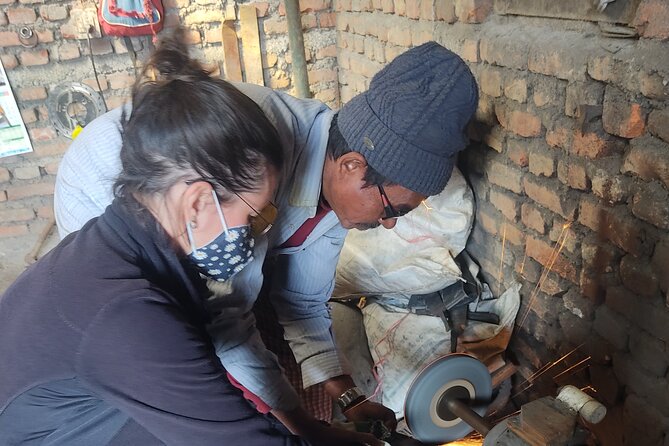
The biggest trust-building point here is simple: the end result is meant to be a real khukuri you take home, not a novelty.
People highlight that the workshop feels better than buying from the usual Kathmandu souvenir stalls—because you’re involved in creating something higher quality and you end the day with a sharp blade that has personal meaning. One review specifically notes being surprised by how sharp the edge turned out.
That personal connection is the real value. You leave with a souvenir you understand: why it’s curved, how the cutting edge is formed, and how finishing changes the feel and appearance.
One small caution: a previous participant mentioned a finished knife had cracks during the process. The organizer responded with an apology and explained that cracks sometimes don’t show right away and can appear later. They also indicated a replacement and delivery option in those cases. So if you’re sensitive to perfectionism, know that hand-forged metal can still have surprises—and that the team’s approach is to fix the outcome.
Price and Value: Why $68 Can Make Sense
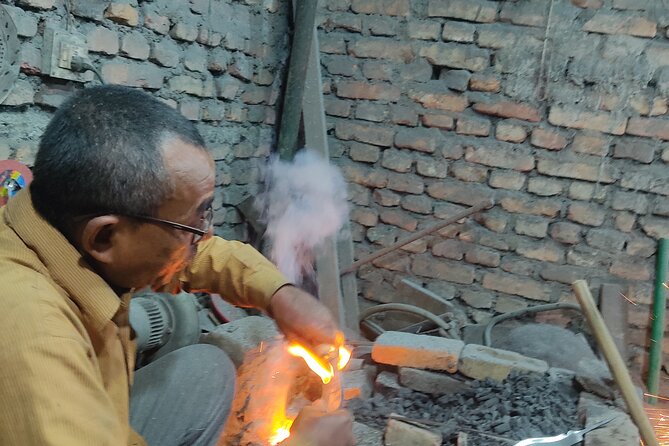
At $68 per person, this workshop looks “small money” on paper. But the value comes from what you get at the end.
You’re paying for:
- A skilled blacksmith’s time and setup
- Real forge work with steel
- Guided participation in multiple stages (hammering, grinding, finishing)
- A completed 6-inch khukuri souvenir
If you compare this to buying a khukuri in a shop, you’re paying for two things: the object and the story you’ll carry with it every time you see it on a shelf. The class also includes transportation support via pickup, which lowers your hidden costs and stress.
One detail worth knowing: there’s mention of an option for a larger 10-inch knife for an additional fee. If you’re deciding between sizes, that’s the only time the price question changes—because the base workshop is designed around the 6-inch blade.
Timing Tips for a Smooth Workshop Day
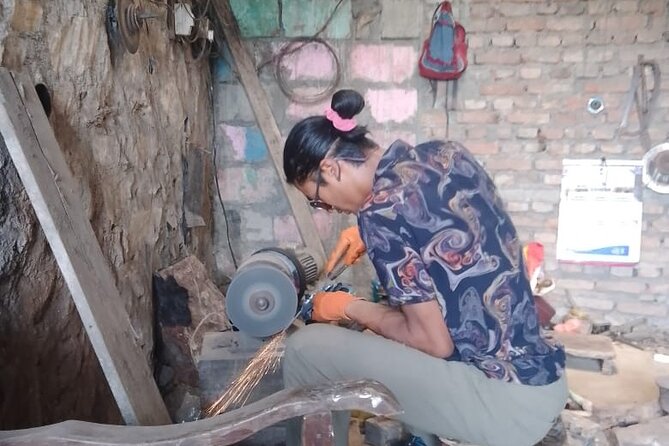
Because the session is around 4 hours, you’ll want to plan your day like you mean it. Don’t stack heavy sightseeing right before, especially if you’ll be traveling from a hotel in central Kathmandu.
A few practical tips:
- Wear clothes you don’t mind getting dusty or warm.
- Bring water, especially if you’re sensitive to long sessions.
- If you’re coming with kids, note that hands-on forging can take focus. One family-run experience mentioned their young kids ran out of patience. If you bring children, bring distractions.
Also, plan to arrive on time. When forging starts, it doesn’t pause for your schedule.
Who Should Book This Workshop (and Who Might Not)
This is a great fit if you:
- Want a hands-on craft day, not a lecture
- Love making something with your own hands
- Want a Kathmandu souvenir that isn’t mass-produced
- Like cultural context tied to a real craft process
It’s a less perfect fit if you:
- Want to do every step yourself, including the spark-heavy blade grinding (the host manages that)
- Have limited time and need a very fast activity
- Bring small kids who may struggle with 4 hours of concentrated work
If you want the best balance—watch, do, learn, then take home a finished tool—this workshop delivers.
Final Verdict: Should You Book the Forge of the Gurkhas?
I’d book this if you’re the type of person who values skill and process over quick photos. The small group size (max 5), hotel pickup, and the fact that you participate in real forging stages make it feel fair-priced at $68.
Also, the workshop has a strong “real craft” vibe: the blacksmith Indra is repeatedly praised for skill and pride in the craft, and the guide Swoyam (and sometimes Namrata coordinating) is often mentioned for friendly translation and conversation.
If your main goal is a polished souvenir shop experience, you may be disappointed. But if your goal is a memorable day making a 6-inch khukuri—and learning why it looks the way it does—this is one of the better craft workshops you can choose in Kathmandu.
FAQ
Where is the Knife (Khukuri) Making Workshop located?
The workshop takes place in Kathmandu, Nepal.
How much does the workshop cost?
It costs $68.00 per person.
How long is the experience?
It lasts about 4 hours (approximately).
Do they pick me up from my hotel?
Pickup is offered.
What size khukuri will I make?
For this workshop, you make a small 6-inch blade.
Is there a group size limit?
Yes. The maximum group size is 5 travelers/participants.
What parts of the process will I do myself?
You’ll participate in hammering the iron, the first grinding, and the final buffing and polishing.
Will I handle the blade grinding?
For safety reasons, blade grinding is done by the host, and you’re advised to stay clear of sparks during that part.
Do I get a mobile ticket and confirmation?
You receive confirmation at booking time, and the tour uses a mobile ticket.
Can I cancel for a refund?
Yes. Free cancellation is allowed up to 24 hours in advance for a full refund. If you cancel less than 24 hours before the start time, the amount paid is not refunded.
If you want, tell me your travel dates and whether you’re doing other Kathmandu activities the same day—I’ll help you place this workshop so it fits your schedule with minimal stress.