REVIEW · KATHMANDU
Private Half-Day Tour of Kathmandu Durbar Square and Swayambhunath Temple
Book on Viator →Operated by Pigeon Travel And Tours Pvt Ltd · Bookable on Viator
Kathmandu can feel like ten cities stacked on top of each other, and this tour helps you sort the best clues fast. I like how it combines Durbar Square and Swayambhunath in one tight half-day plan, so you get royal-palace history and hilltop temple views without wasting time. My favorite part is the private setup with hotel pickup, plus a guide who can steer the day at your pace. One thing to consider: the sites are active and you’ll be walking uphill at Swayambhunath, so wear shoes that handle uneven stone.
You’ll also appreciate the included admission tickets at both stops and the simple, practical tour rhythm—about two hours per place—so you’re not guessing how long anything will take. The only real drawback is that food isn’t included, so plan around it if you get hungry during the climb and temple time.
In This Review
- Key highlights to look for
- Two top sights, one efficient half-day plan
- Getting there: pickup, transport, and how the day stays easy
- Stop 1: Kathmandu Durbar Square (Hanuman Dhoka) and the feel of royal power
- What you’re seeing: palaces, courtyards, and carved authority
- Why Durbar Square is worth your time (even if you’ve seen palace ruins before)
- A realistic heads-up
- Stop 2: Swayambhunath Temple and the hilltop view test
- The story behind the stupa complex
- Why the climb feels different with a guide
- The view check: what to expect from the Kathmandu Valley perspective
- What’s included (and what you should plan on)
- Guides: the difference between a tour and a meaningful walk
- Price and value: is $47 a good deal for a private half-day?
- Who this tour fits best
- Small tips that make a difference on this route
- Should you book this Kathmandu combo tour?
Key highlights to look for
- Private half-day flow: hotel/airport pickup and drop-off, with your group only
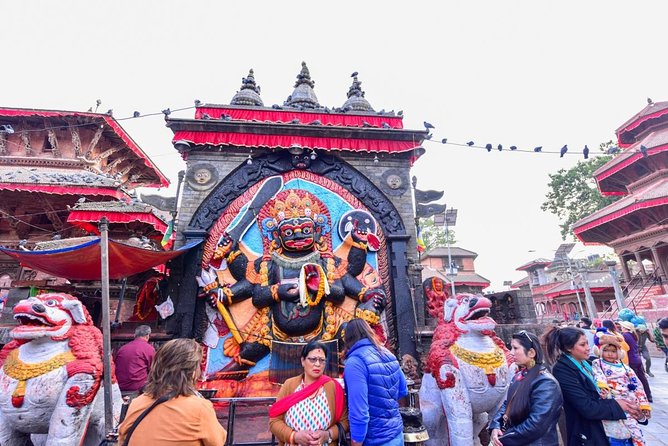
- Durbar Square context: courtyards, temples, and the mix of Malla and Shah royal power
- Swayambhunath climb: hilltop stupa views over Kathmandu Valley and classic monkey-temple energy
- Admission handled: tickets are included at both major stops
- Guide who explains what you’re seeing: architecture, culture, religion, and history in plain language
- Small touches: mineral water bottles help you stay comfortable on a busy day
Two top sights, one efficient half-day plan
If you only have a short window in Kathmandu, this is a smart way to spend it. Instead of bouncing around all day, you focus on two places that basically define the city’s “layers”:
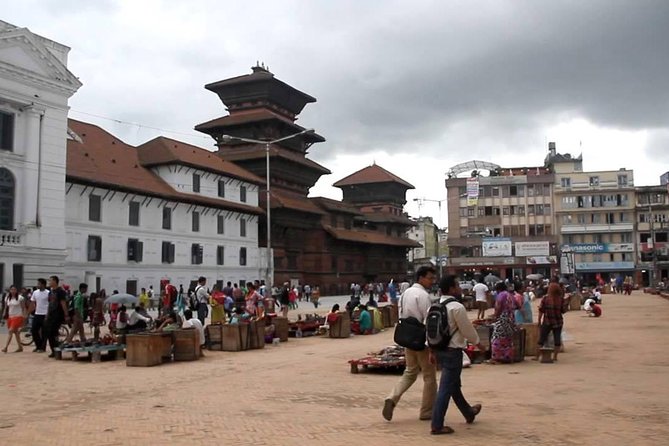
1) Kathmandu Durbar Square (Hanuman Dhoka Durbar Square), tied to the old palace complex and the rulers of the Kathmandu Kingdom.
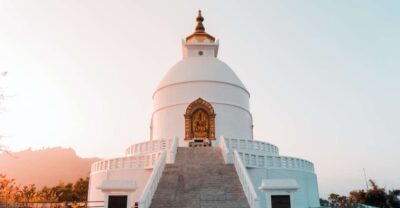
2) Swayambhunath Temple, a hilltop stupa complex that feels spiritual, photogenic, and very alive.
The time plan is clean: start at 10:00 am and expect around 4 hours total. Each stop is allotted about 2 hours, which is enough for a proper look, a bit of wandering, and time for questions—without turning your day into a marathon.
And because it’s private, you’re not stuck with a rigid group pace. If you’re slower on stairs, want to linger at a carving, or want to skip one side courtyard, your guide can adjust on the fly. That flexibility matters in Durbar Square, where the layout can pull you in different directions.
You can also read our reviews of more private tours in Kathmandu

Getting there: pickup, transport, and how the day stays easy
Practical tours win in Kathmandu, where traffic and timing can be unpredictable. Here, pickup and drop-off are included from your hotel or the airport, and you travel by private vehicle.
That’s a big deal for a half-day. You’re not spending your limited hours figuring out transport, negotiating rides, or lining up buses. You get dropped right where you need to be and moved along when it makes sense.
Also note the small comfort items: two mineral water bottles per person are included. It’s not a luxury perk, but Kathmandu can be a warm, dusty place during the day, and having water ready keeps the tour from feeling like work.
Stop 1: Kathmandu Durbar Square (Hanuman Dhoka) and the feel of royal power
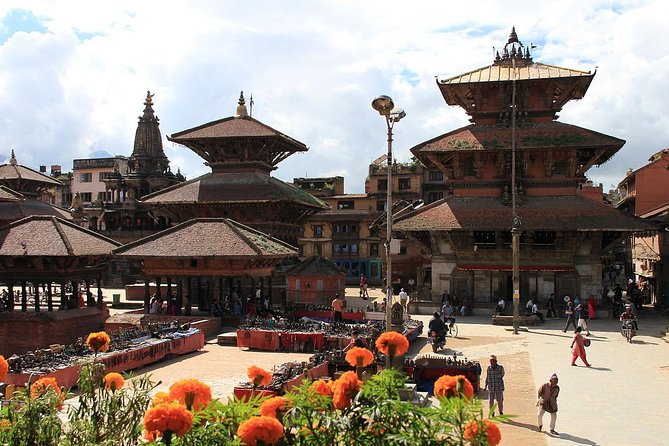
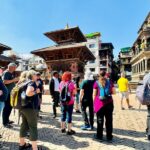
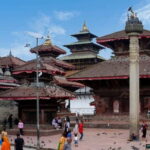
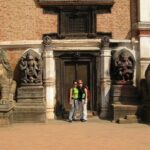
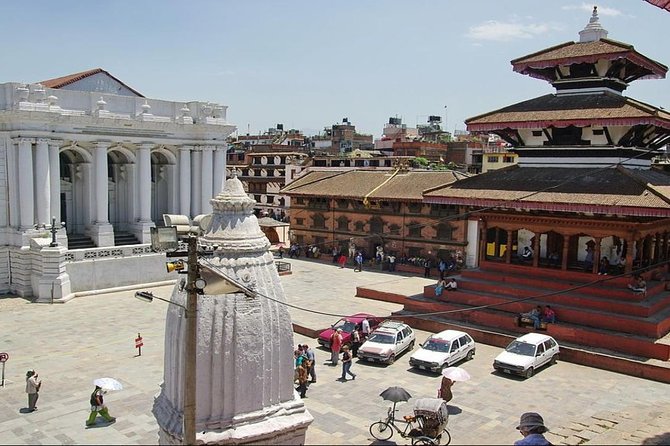
Kathmandu Durbar Square—also called Hanuman Dhoka Durbar Square—is the plaza in front of the former old royal palace area of the Kathmandu Kingdom. You’ll notice you’re not just looking at one building; you’re reading a palace complex spread out across courtyards and temples.
This is one of three Durbar squares in the Kathmandu Valley that are UNESCO World Heritage sites, and it helps to approach it like an outdoor museum you can walk through. The square surrounds quadrangles, revealing internal courtyards and temple areas you might miss if you speed straight to the “main” spots.
What you’re seeing: palaces, courtyards, and carved authority
The core story is the monarchy. The square holds the palaces of the Malla and Shah Kings who ruled the city. If you pay attention to the details, it becomes clear that power here wasn’t only political—it was also artistic. The space is built to impress: entrances, temple forms, and carvings all signal importance.
You may also hear the explanation behind the name Hanuman Dhoka. It comes from a statue of Hanuman, the monkey devotee of Lord Ram, positioned at the entrance of the palace area. It’s a reminder that Hindu stories and royal spaces are tightly connected in Kathmandu’s public life.
Why Durbar Square is worth your time (even if you’ve seen palace ruins before)
Durbar Square can feel chaotic at first glance—people, streets, and side alleys nearby. But the UNESCO setting and the palace layout keep it grounded. You’re not dealing with random ruins; you’re dealing with an organized compound.
A good guide makes the difference. When you understand the layout—what the courtyards are for, why certain temple forms appear where they do—you start to see the city as planned rather than accidental. That’s the value of having an English-speaking local guide here, especially if you want to know how Newar artists shaped the architecture you’re walking past.
You can also read our reviews of more tours and experiences in Kathmandu
A realistic heads-up
Durbar Square is active, uneven, and full of things to look at. That’s great for discovery, but it also means you may do more walking than you expect. If you have mobility issues, you’ll want shoes with grip and a calm pace.
Stop 2: Swayambhunath Temple and the hilltop view test
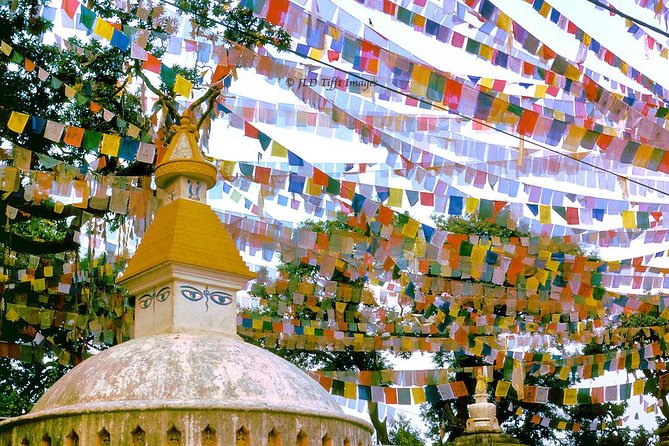
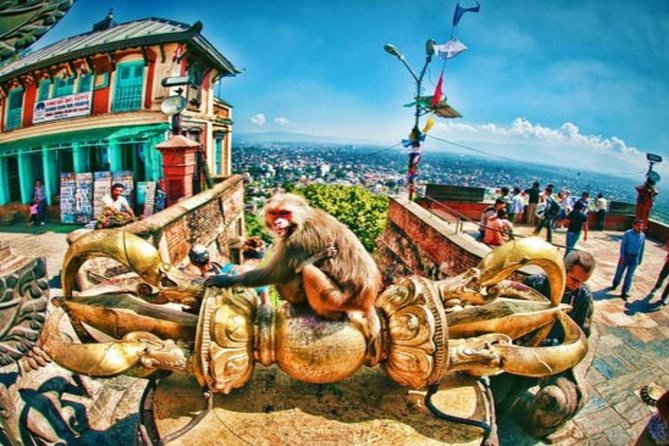
After Durbar Square, you head to Swayambhunath, one of Kathmandu’s most recognizable temple complexes. You’ll hear it called the monkey temple for a reason: a large group of roaming monkeys lives around the area and acts like part of the scenery.
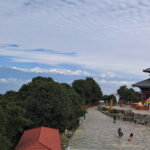
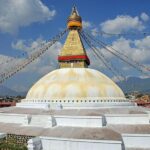
The key feature is location. Swayambhunath sits on a hill, so you’ll climb. The payoff is big: the stupa complex provides excellent views of the Kathmandu Valley, and it’s the kind of view that helps you “connect the dots” between neighborhoods.
The story behind the stupa complex
Swayambhunath has a deep origin story. It’s said to have evolved spontaneously when the Kathmandu Valley was created from a primordial lake more than 2,000 years ago. That’s the kind of mythic timeline that makes Nepal feel older than its maps.
And the complex isn’t tied to just one tradition. Worshipers come from diverse ethical backgrounds, and you’ll see Buddhist imagery throughout the monasteries. Big prayer wheels, fine Buddhist paintings, and the largest Buddha statue in the country are part of what you can encounter as you explore.
Why the climb feels different with a guide
A hilltop temple can become just steps and photos if you don’t have context. With a guide, it’s more like a guided reading of the site: where to look first, what symbols mean, and what to notice as you move between different temple corners.
This is also where your flexible timing matters. If the monkeys are especially active or you’re stuck waiting for a clear photo angle, your guide can help you keep moving without getting frustrated.
The view check: what to expect from the Kathmandu Valley perspective
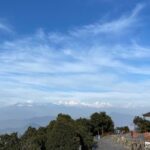
The valley view is the moment your brain finally understands Kathmandu’s geometry: different rooftops, hills in the distance, and the way the city spreads along valleys and ridgelines. Even if you’re not a “big view person,” Swayambhunath is one of those places where the view helps you orient yourself for the rest of your trip.
What’s included (and what you should plan on)
This tour is built to reduce friction. Here’s what’s covered:
- Pickup and drop-off from hotel or airport
- Private transportation by vehicle
- English-speaking local guide
- Admission tickets included for both Durbar Square and Swayambhunath
- 2 mineral water bottles per person
What’s not included is food and drinks. So if you’re the type who needs fuel before temple walking, plan on grabbing something beforehand or be ready to find a snack afterward.
In a half-day format, food timing matters. Durbar Square can draw you in, and Swayambhunath’s hill climb can work up an appetite. I’d rather you plan for hunger than hope it doesn’t happen.
Guides: the difference between a tour and a meaningful walk
One of the strongest signals from past groups is the guide factor. A Kathmandu-grown guide named Bishnu is mentioned in a strong, positive way—picked up at a hotel, then guided through Durbar Square and Swayambhunath in two clear segments. That kind of local background helps, because you’re not just hearing facts. You’re hearing how those places function in daily cultural life.
If you’re in a different language, there’s also evidence that French-speaking guidance may be possible (since a francophone guide is referenced). Still, the included description emphasizes English, so if language matters a lot to you, confirm the language you’ll receive at booking.
Price and value: is $47 a good deal for a private half-day?
At $47 per person, the value comes from how the tour handles the hardest parts of a short visit: logistics and guided context.
Here’s the value logic:
- You get private transport and pickup/drop-off, which can be hard to arrange cheaply on your own for just a few hours.
- Admission tickets are included at both major stops.
- You’re paying for time with a guide who can explain what you’re seeing—architecture, culture, religion, and history—so the walk becomes more than sightseeing.
The only cost you’ll likely still handle is food/drinks. If you were to pay separately for a driver, guides, and tickets, you’d likely spend similar or more—and you’d lose the clean, half-day structure.
So for many visitors, this price feels like a reasonable shortcut to both access and understanding.
Who this tour fits best
This is a great fit if you:
- Have limited time in Kathmandu and want two of the top sights in one go
- Like a private pace instead of a fixed group schedule
- Enjoy learning how architecture and religion connect in everyday space
- Want hilltop views without planning a full day
It’s also a smart choice for solo travelers who don’t want to spend the first days figuring out transport and priorities. With a private guide and driver, you get a built-in orientation for the city.
If you hate walking or you have limited mobility, you’ll want to think carefully about the Durbar Square uneven surfaces and the climb up to Swayambhunath. The tour is described as suitable for most people, but the physical reality of stairs and hilltop temples still applies.
Small tips that make a difference on this route
A few practical ideas to help you enjoy this tour more:
- Wear grippy shoes for stone and stairs, especially at Swayambhunath.
- Bring a small bag for personal items. Monkey areas can mean you’ll need to keep your belongings controlled.
- If you want good photos at Swayambhunath, go with a calm plan and let your guide steer you toward comfortable angles.
- Since food isn’t included, think about a light snack before you start or plan to eat right after you’re dropped back.
Should you book this Kathmandu combo tour?
If your goal is a smart first pass at Kathmandu’s biggest “must-see” symbols—royal palace courtyards at Hanuman Dhoka and the hilltop stupa and Kathmandu Valley views at Swayambhunath—then yes, I’d book it.
Do it if you value private convenience, included tickets, and a guide who explains what you’re actually looking at. Skip it only if you already know you want to spend more time in one place than the half-day structure allows, or if walking the hilltop is a dealbreaker for you.
Bottom line: this is a tightly planned half-day that helps you get the meaning of Kathmandu faster, without turning it into a rushed checklist.