REVIEW · KATHMANDU
Kathmandu Full Day Tour
Book on Viator →Operated by Himalayanwalkers · Bookable on Viator
Seven UNESCO stops in a single day is a sprint.
This Kathmandu heritage tour packs major spiritual sights like Swayambhunath and Pashupatinath into one organized day, with an English-speaking guide and air-conditioned private pickup that keeps your time from melting away in traffic. The trade-off: the headline price is only part of the cost, since site permits and entrance fees are often extra unless you choose the all-inclusive option (and cash helps).
What I like most is that you can choose the pace: go for all seven UNESCO World Heritage Sites or trim it to four when you want less rushing. You also get practical extras like bottled water, parking fees, and a mobile ticket, which matters when you’re moving from place to place in Kathmandu.
One thing to consider: it runs about 6 to 10 hours, and it’s weather-dependent. If you hate long walking days or you want lots of free time to wander without a schedule, this kind of packed route can feel like a workout.
In This Review
- Key highlights to know before you go
- How the 7-site Kathmandu day plan actually works
- Getting picked up and staying on time in Kathmandu traffic
- Stop 1: Swayambhunath for first-day views and temple energy
- Stop 2: Kathmandu Durbar Square and the feel of royal power
- Stop 3: Patan Durbar Square and the art of palace craftsmanship
- Stop 4: Pashupatinath Temple and Hindu pilgrimage atmosphere
- Stop 5: Boudhanath Stupa for Buddhist scale and calm rituals
- Stop 6: Changunarayan Temple for an older, quieter pause
- Stop 7: Bhaktapur Durbar Square for medieval architecture in the open air
- Price and logistics: what $35 really buys you
- The guide makes or breaks the day
- Who should choose the 4-site option vs the 7-site option
- Should you book this Kathmandu full-day heritage tour?
- FAQ
- What sites are included on this full-day tour?
- How long does the tour take?
- Is pickup and drop-off included?
- Are admission tickets included in the tour price?
- What are the cultural site permit costs?
- Is lunch included?
- What happens if weather is bad?
Key highlights to know before you go
- Seven or four UNESCO sites: Pick the pace that fits your time and energy
- Pickup in a private air-conditioned vehicle: Fewer logistics headaches on a full-day plan
- Guide quality matters: Professional, friendly guides such as Suresh are noted for excellent English and local insight
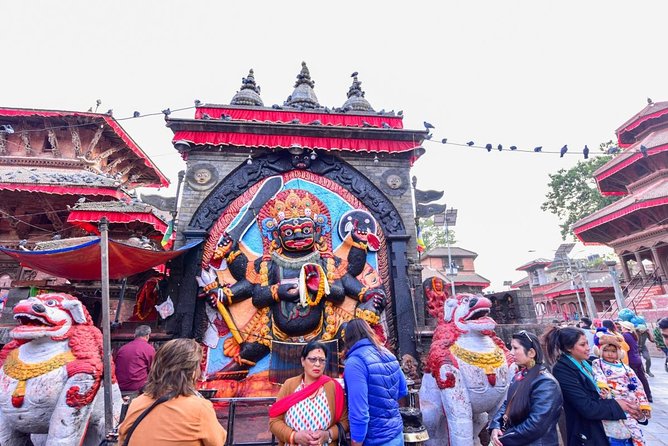
- Spiritual stops across religions: Hindu temples plus Buddhist stupas in one day
- Cash is your friend: Entrance fees may require paying on-site, so come prepared
How the 7-site Kathmandu day plan actually works
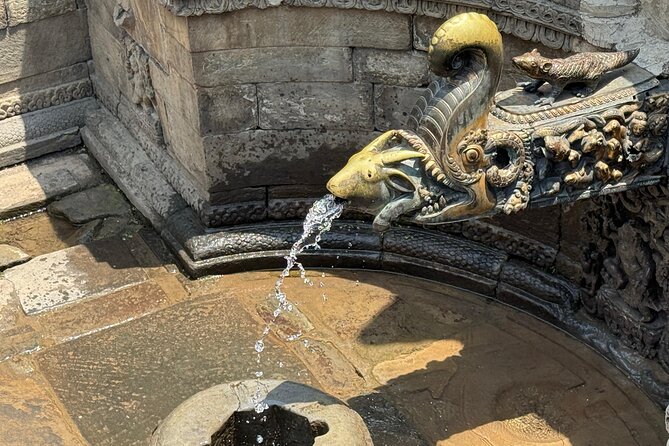
The big idea here is simple: in one day, you cover some of the most important UNESCO-listed cultural sites in Kathmandu Valley. You can do the full sweep of seven sites for a “see a lot” day, or choose four for a slower route that still hits the big names.
This setup is ideal if you’re in Kathmandu for a short time. It’s also a good match if you’re the type who likes context. Your guide can connect the dots between royal palaces, sacred pilgrimage sites, and the city’s older layers of culture—things you’d miss if you just hopped between stops on your own.
The main drawback is pacing. Even with a guide and vehicle, you’re still traveling between different areas, then entering sites that may have steps, crowds, or quiet moments that take time. The tour is designed to fit into a full working day, so it’s not meant to be a slow stroll with zero structure.
You can also read our reviews of more tours and experiences in Kathmandu

Getting picked up and staying on time in Kathmandu traffic
You’ll start with pickup and end with drop-off, using an air-conditioned private luxury vehicle. That sounds fancy, but the real win is practical: you avoid spending your day figuring out routes, negotiating transport, or losing time to delays you can’t control.
The tour also includes bottled water, parking fees, and government fees. That might sound like small stuff, but it reduces the number of stops you have to plan for. And since it’s listed as a private tour/activity, only your group participates, so the day stays coordinated around your timing rather than merging into other travelers’ schedules.
There’s also a mobile ticket. That’s helpful in a city where you might otherwise be juggling papers or trying to find the right booth while everyone else lines up at the same moment.
Stop 1: Swayambhunath for first-day views and temple energy
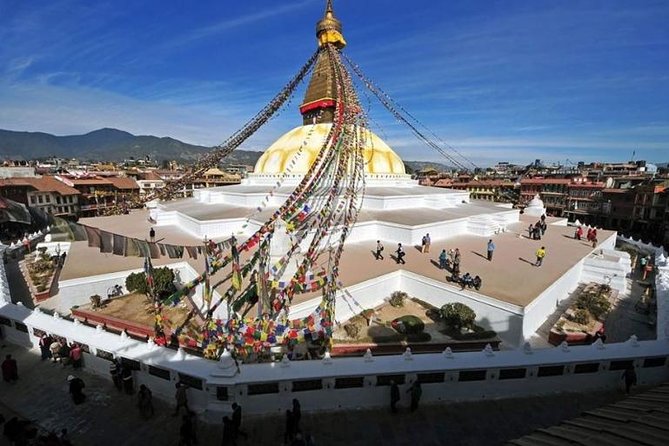
Swayambhunath is a strong start. Expect a visit of about 45 minutes, with an admission ticket not included. This is one of those places where the setting helps you understand Kathmandu. You’re not just looking at buildings. You’re seeing why people treat this site as more than just sightseeing.
If you’re early in the day, I like starting here because it gives you a sense of the city’s layout. The spiritual atmosphere is part of the experience, but so is the way the temple complex works as a living, changing place. Bring sunglasses and keep an eye on your footing as you move through the temple areas—sites like this tend to have uneven surfaces and busy walkways.
Drawback to plan for: a 45-minute visit is enough to absorb the scene, but not enough for deep, unhurried wandering. If you’re the type who needs 90 minutes minimum to feel satisfied, you might prefer the four-site option.
Stop 2: Kathmandu Durbar Square and the feel of royal power
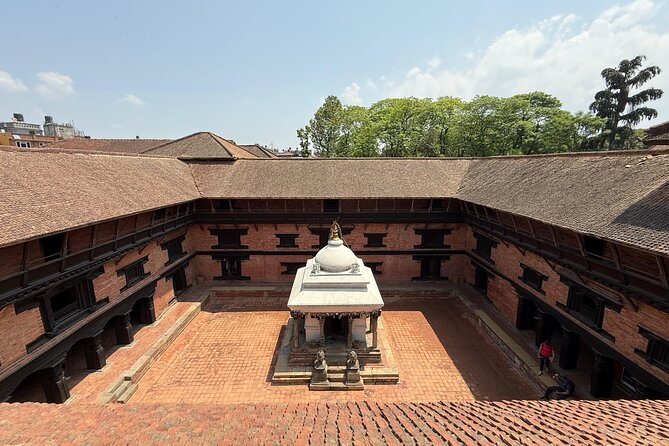
Next up is Kathmandu Durbar Square, usually around one hour. This palace complex once served as a royal residence for the Malla kings and later the Shah dynasty. In other words, you’re not only visiting an old square—you’re seeing how political power shaped art and architecture.
Admission is not included here either. So this is one of the moments when cash preparation matters. You’ll want to have your money accessible, since it’s the kind of stop where lines and on-site ticket counters can move slowly.
Durbar Squares also tend to reward you if your guide explains what you’re looking at. You’ll likely hear what the different courtyards, temples, and carvings represented in their time. Without that context, it can still be stunning, but you might miss why certain details matter.
Stop 3: Patan Durbar Square and the art of palace craftsmanship
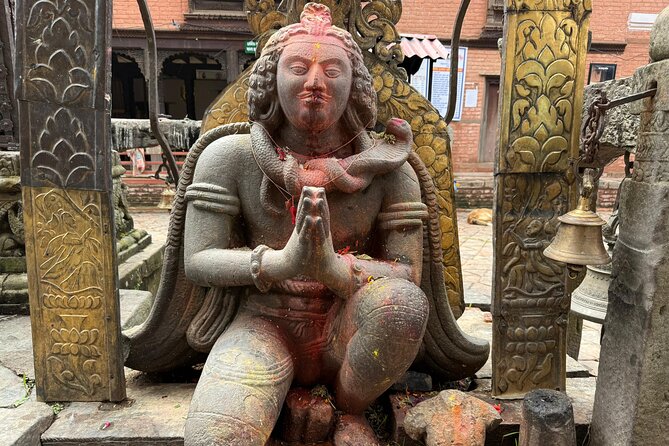
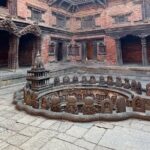
After Kathmandu, you head to Patan Durbar Square for about one hour. Patan is famous for its artistic craftsmanship, and this stop is meant to keep the theme going: architecture and sculpture that reflect how royalty wanted their world to look.
Again, admission is not included. In practice, that means you should budget time to pay at the site and then settle into the area. Even when a stop is “one hour,” ticket lines can steal a portion of that time if you arrive during peak hours.
What makes Patan special in this kind of day tour is that it gives you a second palace complex without doubling your stress. The vehicle transport helps. The guide helps more. And because you’re still in the same general theme of power and culture, the day feels cohesive rather than random.
Stop 4: Pashupatinath Temple and Hindu pilgrimage atmosphere
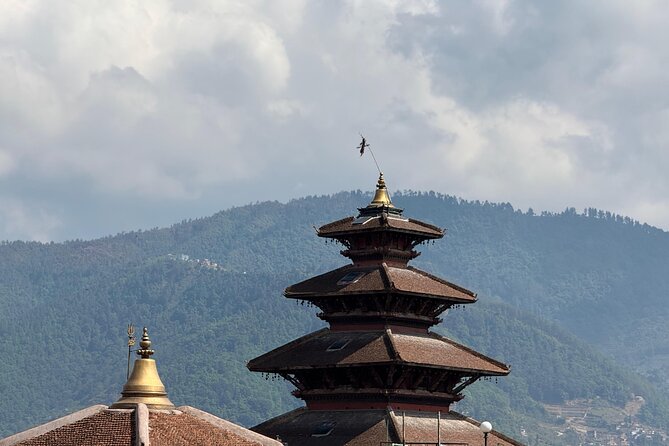
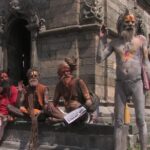
Pashupatinath Temple is a major Hindu pilgrimage site and also UNESCO-listed, with a visit time of about 45 minutes. Admission is not included.
This stop changes the mood from palace squares to active spiritual practice. Even if you’re not visiting for religious reasons, you’ll feel the significance in how people move through the space. It’s also one of those sites where behavior matters: you’ll want to dress and act respectfully, and follow your guide’s instructions about where you can go and how to observe.
Because it’s a sacred site, crowds can be part of the experience. That’s not a deal-breaker. Just don’t expect a quiet, private museum vibe. This is a living religious place.
Stop 5: Boudhanath Stupa for Buddhist scale and calm rituals
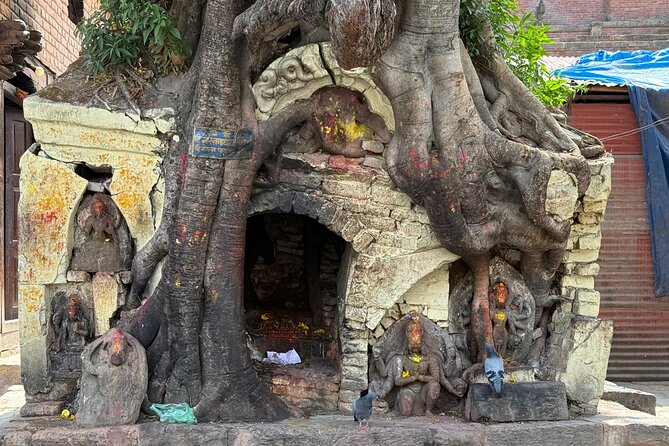
Then you reach Boudhanath Stupa, one of the largest and most sacred Buddhist stupas in the world. The visit time here is about 45 minutes, and admission is not included.
If you want a mental reset after the more intense energy of pilgrimage and palace areas, this is a great time for it. The white dome and golden spire create a striking visual, and the stupa’s scale makes it feel serious in a good way. It’s not just decoration; it’s a focal point for devotion.
Practical tip: take a moment to watch how people interact with the stupa. Whether they’re walking around, sitting quietly, or simply observing, it tells you how the place is meant to be experienced—less like a checklist stop and more like a shared ritual space.
Stop 6: Changunarayan Temple for an older, quieter pause
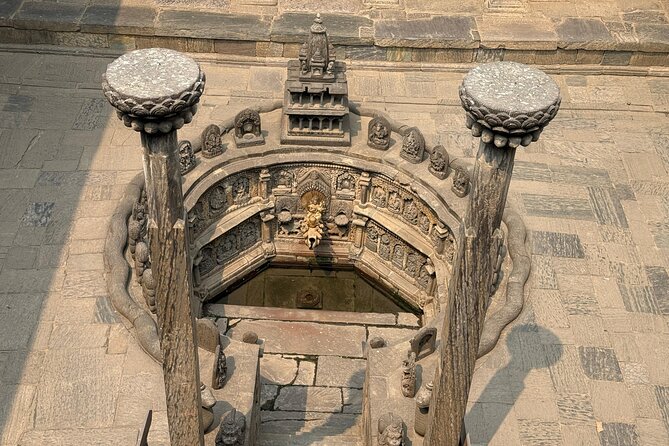
Next is Changunarayan Temple, about 30 minutes. Admission is listed as free for this stop.
This is a nice breather. The tour moves from major landmarks to a more peaceful hilltop setting. Since it’s free, it also helps with your budget and cash flow during the day.
Because this stop is shorter, it works best as a “taste” rather than a full exploration. Think of it like a chapter break. You’ll appreciate the age and continuity of temple worship if your guide gives context, but you won’t feel trapped there for hours.
Stop 7: Bhaktapur Durbar Square for medieval architecture in the open air
The final stop is Bhaktapur Durbar Square, about one hour. Admission is not included.
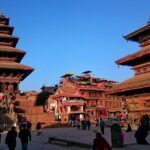
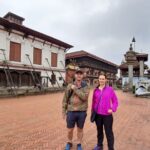
Bhaktapur’s Durbar Square is an open-air museum of medieval art and architecture, and it has a different feel than the Kathmandu and Patan squares. Here, the experience can feel more like stepping into a preserved city core rather than viewing separate structures.
Admission is not included here either, with a listed fee of Nrs 1800 (about $15) per person. Since this is the last stop, you’ll want to be sure you’re still comfortable with the day’s walking and paying process. If you saved your energy and cash, this ending lands well: you finish with a place that feels made for slow looking.
Price and logistics: what $35 really buys you
The tour price starts at $35 per person, but the total cost depends heavily on which option you choose.
Here’s the clean way to think about it:
- The base tour includes pickup and drop-off by air-conditioned private vehicle, an English-speaking professional live guide, bottled water, parking fees, and government fees.
- There are optional add-ons. The all-inclusive option is the one that includes entrance ticket fees and lunch.
- If you’re not using the all-inclusive option, you’ll need to plan for the cultural site entry permit and separate entrance fees.
The cultural site entry permit is listed as:
- For seven sites: Nrs 5800 or $45
- For four sites: Nrs 2600 or $20
And then specific entrances not included include:
- Swayambhunath Stupa: Nrs 200 ($2)
- Kathmandu Durbar Square: Nrs 1000 ($9)
- Patan Durbar Square: Nrs 1000 ($9)
- Pashupatinath Temple: Nrs 1000 ($9)
- Boudhanath Stupa: $4
- Changunarayan Temple: listed as free
- Bhaktapur Durbar Square: Nrs 1800 ($15)
So is $35 “cheap”? It can be a great value because you’re buying private transport, a guide, and a day plan that covers multiple major UNESCO sites. But the real budget question is whether you’ll pay entrance fees separately or choose the all-inclusive option.
One more reality check: bring enough cash. Some sites may not accept card payments, so plan to pay on-site without scrambling.
The guide makes or breaks the day
In a day tour like this, the guide is the difference between seeing objects and understanding places. This tour is set up with an English-speaking professional live guide, and that matters because Kathmandu’s sacred art can feel like visual noise if nobody explains what you’re looking at.
The name that comes up often is Suresh, praised for being both professional and personally friendly, with excellent English and a local store of knowledge. Even if you never meet him, use that as a benchmark for what to look for: clear explanations, good pacing, and the ability to answer questions without rushing.
Also, good guides help you act appropriately at religious sites. When you’re at Pashupatinath and Boudhanath, you don’t want to be the person who accidentally treats a sacred place like a photo booth. A guide who understands local norms keeps the experience smooth.
Who should choose the 4-site option vs the 7-site option
If you’re short on time and want maximum UNESCO coverage, the seven-site plan is the obvious choice. It’s also great for first-timers who want a big-picture understanding of Kathmandu Valley in one go.
Pick the four-site option if you:
- prefer fewer entrance payments and a slightly simpler budget day
- want more time to sit, watch, and take photos without the constant “next stop” feeling
- are more sensitive to long days (the tour runs 6 to 10 hours)
A good rule: if you’re the type who likes to linger at viewpoints and read details, four sites will feel satisfying. If you’re more of a quick-sampler, seven sites can still work well.
Should you book this Kathmandu full-day heritage tour?
Book it if you want an organized day that hits the main spiritual and architectural landmarks—especially if this is your first trip and you want context from a strong English-speaking guide.
Skip or consider the shorter four-site option if you:
- hate long days and want more unstructured time
- want slow museum-style visits at each stop
- don’t want to deal with entrance fees and permits on a tight schedule
If you do book, do two things that make the experience easier: bring enough cash for on-site fees, and plan to go with the flow at sacred sites. This is one of those Kathmandu days where the pace is intense, but the places you see carry real meaning.
FAQ
What sites are included on this full-day tour?
You’ll visit major UNESCO World Heritage Sites in Kathmandu Valley, including Swayambhunath, Kathmandu Durbar Square, Patan Durbar Square, Pashupatinath Temple, Boudhanath Stupa, Changunarayan Temple, and Bhaktapur Durbar Square. The tour can be done as a 7-site route or a 4-site route.
How long does the tour take?
The tour runs about 6 to 10 hours.
Is pickup and drop-off included?
Yes. Pickup and drop-off are included by air-conditioned private luxury vehicle.
Are admission tickets included in the tour price?
Entrance ticket fees are not included by default. There is an all-inclusive option that includes entrance ticket fees and lunch.
What are the cultural site permit costs?
The cultural site entry permit is listed as Nrs 5800 (about $45) for 7 sites, or Nrs 2600 (about $20) for 4 sites.
Is lunch included?
Lunch is included only with the all-inclusive option. Otherwise, lunch is listed as not included.
What happens if weather is bad?
The tour requires good weather. If it’s canceled due to poor weather, you’ll be offered a different date or a full refund.