REVIEW · KATHMANDU
Kathmandu: Full Day 7 UNESCO Tour with Lunch – Private/Group
Book on Viator →Operated by Relax Getaways · Bookable on Viator
Seven UNESCO sites in one day in Kathmandu.
This full-day tour strings together major Hindu and Buddhist landmarks, from the hilltop Swayambhunath to the Malla-era squares of Patan, Kathmandu, and Bhaktapur. You’ll also get big contrast in atmosphere: temple bustle, stupa rituals, and quieter corners like Changu Narayan.
What I like most is the way the day is managed. You have hotel pickup and drop-off by air-conditioned private vehicle, plus an English-speaking professional guide who keeps the story clear as you move site to site. I also like that your lunch is handled for you with a lunch box of water and snacks, so you’re not stuck hunting food between monuments.
One thing to plan for: it’s a long day, about 9 to 10 hours, with real walking including uphill and downhill sections. And entrance fees for monuments are not included in the base option, so check whether you’re choosing the all-inclusive plan.
In This Review
- Key highlights to know before you go
- A 9–10 hour UNESCO sprint through Kathmandu Valley
- Stop 1: Swayambhunath, the Monkey Temple viewpoint stop
- Patan Durbar Square: Malla-era details and palace courtyards
- Boudhanath Stupa: Tibetan ritual watching with big scale
- Pashupatinath Temple: a Hindu landmark on the Bagmati River
- Kathmandu Durbar Square and Bhaktapur Durbar Square in one long arc
- Changu Narayan Temple: the quieter finish with ancient roots
- Price and logistics: what you’re really paying for
- How to make this day tour feel easier (and more enjoyable)
- Who this tour is best for
- Should you book this 7-stop UNESCO day tour?
- FAQ
- How long is the Kathmandu Full Day 7 UNESCO Tour?
- Which stops are included in the tour?
- Is hotel pickup and drop-off included?
- What does the lunch box include?
- Are entrance fees included?
- Do I need to buy a ticket for Swayambhunath?
- Will I have an English-speaking guide?
- Can I cancel for a full refund?
Key highlights to know before you go
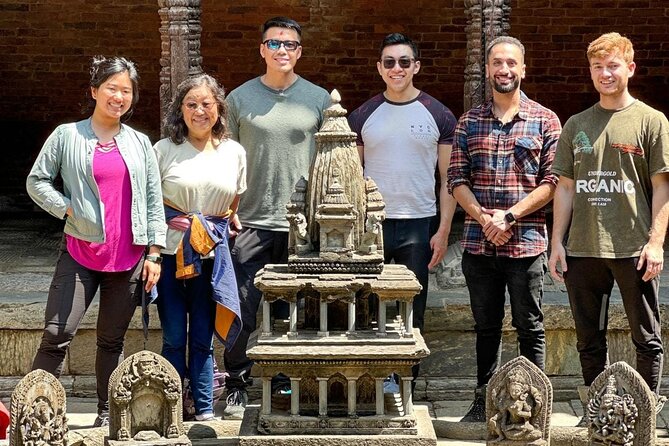
- A full day covering 7 UNESCO-linked sites with guided time built into each stop
- Swayambhunath admission is free and it includes a strong viewpoint moment
- English-speaking professional guide, with stops paced for photos and browsing
- Lunch box included, with bottled water plus fruit and sweet snacks
- Entrance fees may add cost, unless you select the all-inclusive option
A 9–10 hour UNESCO sprint through Kathmandu Valley
This is the kind of day tour you book when you want maximum culture with minimal planning. You’re out for roughly 9 to 10 hours, and the itinerary hits seven major sites spread around the Kathmandu Valley area. That means a lot of movement, but also a smooth structure so you don’t waste time figuring out what’s where.
You’ll be using an air-conditioned vehicle with private transport and hotel pickup/drop-off. That matters in Kathmandu, where traffic and distances can turn a simple sightseeing day into a slog. Having the driver and guide handle the route lets you focus on the temples, the architecture, and the little things you’ll otherwise miss.
The pacing is generally practical: you get time to look closely and take photos, without turning the day into a stop-and-go nightmare. Still, you should go in with realistic expectations. This is not a relaxed stroll; it’s a structured day that trades downtime for variety.
You can also read our reviews of more private tours in Kathmandu

Stop 1: Swayambhunath, the Monkey Temple viewpoint stop
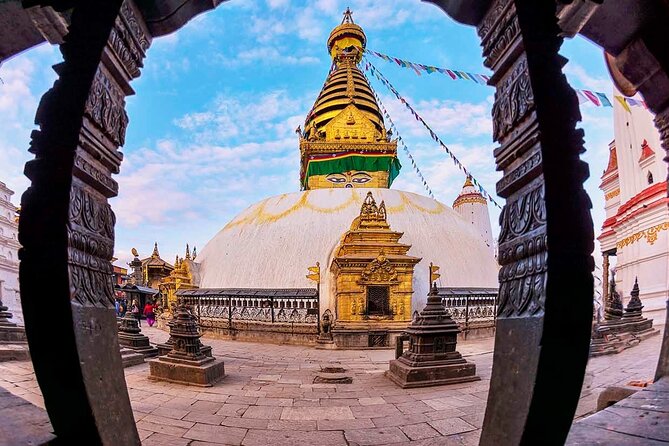
You start at Swayambhunath, often called the Monkey Temple, set on a hill above the city. The admission ticket here is listed as free, which is a nice early win. Plan for about 45 minutes for this first stop.
The main payoff is the combination of Buddhist stupa sights and city views. Even in shorter time, the hilltop location gives you that quick sense of scale—Kathmandu Valley laid out below you. You’ll also likely see the everyday rhythm of temple visitors moving in and out, taking photos, and pausing to watch.
Good shoes help here. Hilltop sites in this area can involve uneven stones and uphill steps. Also, if you’re bringing a camera, consider a strap you can trust. This is a place where monkeys are part of the scene, so keep your grip tight and your pockets zipped.
Patan Durbar Square: Malla-era details and palace courtyards
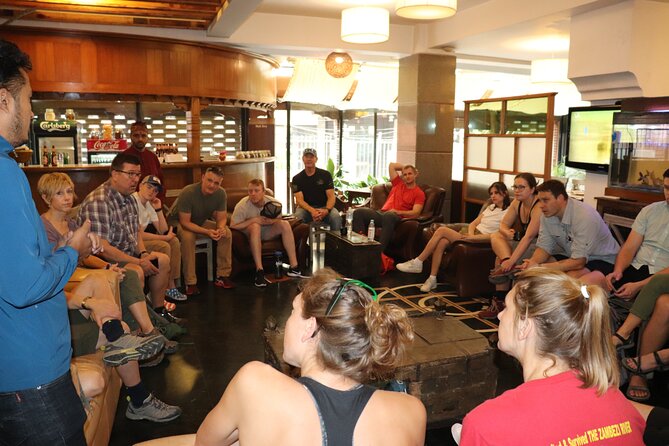
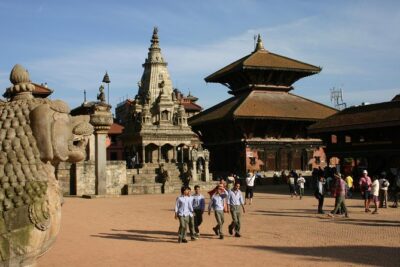
Next you move to Patan Durbar Square, a UNESCO World Heritage Site. Your time here is about 1 hour, and admission is listed as not included.
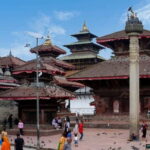
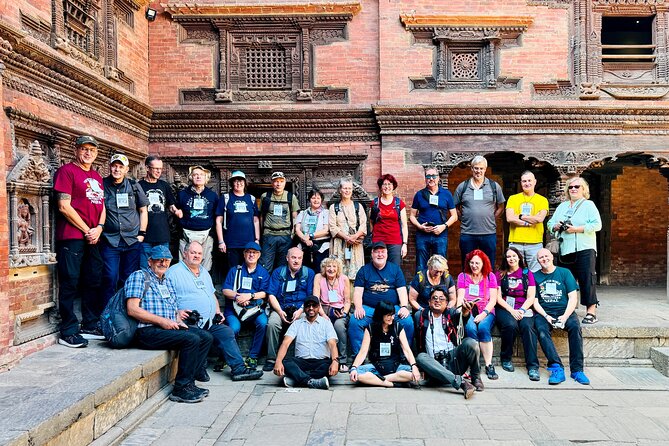
Patan’s appeal is the craft work: carved wood, stone details, and the feeling that you’re walking through layered centuries of architecture. Durbar Squares are not just postcard backdrops. They’re historical civic spaces, so the layout makes you understand how power, worship, and daily life used to intersect.
A small strategy that helps: don’t just look straight ahead at the biggest buildings. Tilt your attention down to door frames, window carvings, and the smaller temples dotting the square. With a guide who can connect details to the Malla dynasty era, those carvings become easier to read.
One practical note: Patan can feel busy, and the walking is on uneven surfaces. If you’re sensitive to crowds or have limited mobility, this is the day you’ll feel it most. You’ll have a guide to help you navigate, but it’s still an active sightseeing environment.
Boudhanath Stupa: Tibetan ritual watching with big scale
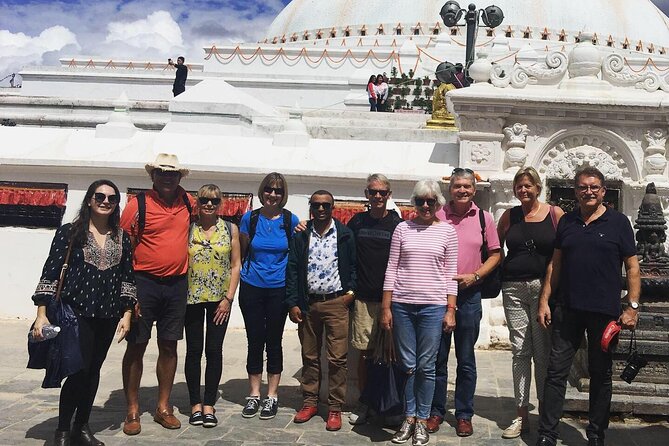
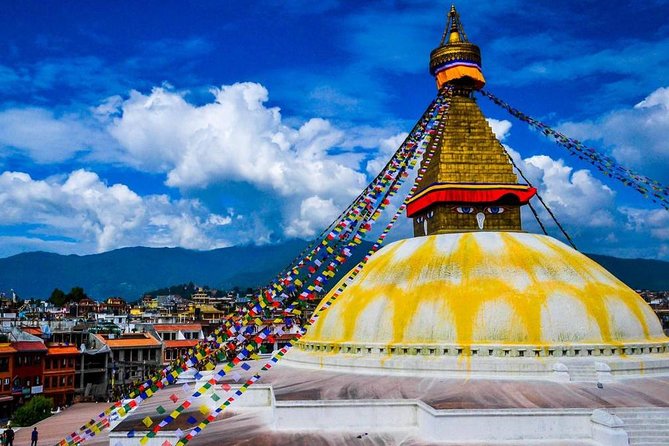
After Patan, you head to Boudhanath Stupa, one of the best-known Buddhist sites in the world. The stop is about 1 hour, and admission is listed as not included.
Here, scale is the story. Boudhanath isn’t subtle; it’s designed to draw you in and keep you there. You’ll likely notice pilgrims doing regular rituals around the stupa and visitors taking in the color, the prayers, and the repeating patterns that make the place feel alive.
What makes this stop valuable is the contrast with the Hindu sites later in the day. You’ll see a different set of devotional behaviors, different sacred objects, and a different pace of attention—more observation, less spectacle. If you’re the type who likes to understand how religion shapes a city, this is a strong “spot the differences” moment.
Photography is usually part of the experience, but be respectful. Move when people need to pass and avoid blocking paths around the stupa. Your guide can help you position yourself without turning it into a traffic jam.
Pashupatinath Temple: a Hindu landmark on the Bagmati River
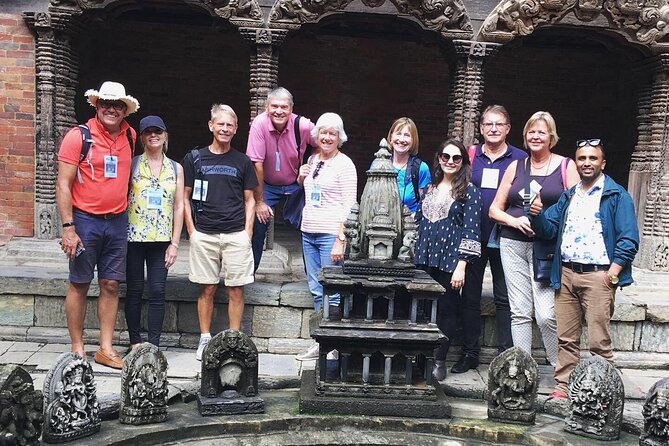
Next comes Pashupatinath Temple, dedicated to Lord Shiva. This is listed as about 1 hour, and admission is not included.
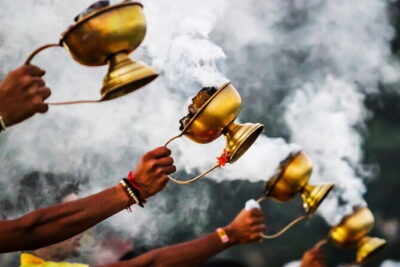
This temple complex is revered and ancient, and it’s also very much part of daily life. The Bagmati River setting creates a special kind of atmosphere—sight, sound, and movement all in one place. You’ll want to pay attention to the space around you: where people gather, what they carry, and how worship happens in practical, repeated ways.
A guide who can explain what you’re seeing makes a difference here. Otherwise it can feel like a blur of activity. With context, the details start lining up: what elements are sacred, why certain areas matter, and what the rituals symbolize.
One consideration: this stop can be emotionally and visually intense, especially if you’re not used to large religious gatherings. If you get overwhelmed, step back for a minute, let your senses reset, and come back. The goal is to observe without forcing yourself to take in everything at once.
You can also read our reviews of more tours and experiences in Kathmandu

Kathmandu Durbar Square and Bhaktapur Durbar Square in one long arc
The day doesn’t slow down after Pashupatinath. You go on to Kathmandu Durbar Square for about 1 hour, then later to Bhaktapur Durbar Square for about 1 hour 20 minutes. Both have admission listed as not included.
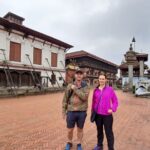
These squares work well as a pair because they show how different parts of the valley preserved their artistic identity. Kathmandu Durbar Square focuses on palaces, temples, courtyards, and shrines tied to the Malla dynasty and later periods. Bhaktapur adds a heavier focus on craftsmanship: woodcarvings, stone sculptures, and iconic structures like the 55-Window Palace and the Golden Gate.
This is where your guide’s storytelling helps most. When someone connects the carvings and layouts to the era they came from, you start noticing patterns. You might also use this time for photo stops and light shopping breaks, since your schedule typically leaves room for that kind of wandering.
Practical tip: if your legs are already tired, Bhaktapur is the moment you’ll feel it. It’s longer at 1 hour 20 minutes, and Durbar Square walking is rarely flat. Pace yourself, take small rests, and keep water accessible.
Changu Narayan Temple: the quieter finish with ancient roots
Near the end you visit Changu Narayan Temple, dedicated to Vishnu. Your time here is about 30 minutes, and admission is not included.
This stop can feel like a palate cleanser. With a shorter time block, it’s easier to focus on specific architecture and craftsmanship rather than trying to absorb everything in a long sweep. The temple is listed as very old—dating back to the 4th century—and tied to Newari architectural style.
If you want a meaningful end to the day, this is one of the best choices on the route. The site’s age and design give you a grounded feeling after the busier city squares and riverbank energy. Take your time with details even if the clock feels tight.
Price and logistics: what you’re really paying for
The listed price is $5.00 per person, which sounds like a bargain. The catch is that entrance fees are not included in the base sightseeing-monuments plan for group and private options. Those monument entrance fees are listed as $44.00 per person.
That means your real total depends on which option you choose. There’s also an all-inclusive option that includes food, soft drinks, entrance fees, and a set meal (Khana set) or dish choice. If you hate the hassle of paying multiple fees on the spot, the all-inclusive route can be better value than trying to piece together costs during a long day.
Your lunch is included either way as a boxed set: 500ml bottled water, a muffin, donut, banana, seasonal fruit, and juice. In a full day like this, that’s not a small thing. It reduces decision fatigue and keeps your energy steady between stops.
One more practical point: you’ll want to factor in any personal expenses and tips. Tips aren’t included, and since you’re on a private vehicle schedule, gratuities are often part of how you show appreciation for the guide and driver who keep everything running.
How to make this day tour feel easier (and more enjoyable)
Because this itinerary is packed, your comfort choices matter more than usual.
Wear shoes you trust on uneven stone and steps. The day includes uphill and downhill walking, and you’ll cover multiple temple complexes and courtyards. If you bring something with good grip, you’ll enjoy the sites more because you’re not thinking about your footing.
Bring a small amount of cash and keep a simple plan for payments. Entrance fees can apply depending on your option, and you may be asked to pay at certain points. If you’re doing the non-all-inclusive route, this matters even more.
Finally, give your guide permission to set the pace. The strongest experience tends to come when you follow their timing. The guide can manage lines, transitions between stops, and the small decisions that keep the day from turning into stress.
Who this tour is best for
This is a great fit if you have limited time in Kathmandu Valley and you want the big-ticket cultural sites. It’s also a good match if you like structure and context rather than wandering alone.
If you’re the type who wants a slower pace, longer rest breaks, or deep time at one site, you might prefer fewer stops. The route is built for breadth, not lingering.
Solo travelers can do well here, and couples often like it because it’s a practical way to see a lot without language headaches. Families can consider it too, but you’ll want to judge the walking intensity realistically.
Should you book this 7-stop UNESCO day tour?
Yes, if you want a high-value, guided overview of Kathmandu Valley that hits the major spiritual and historical landmarks in one organized day. The combination of hotel pickup/drop-off, an English-speaking guide, and a lunch box makes the experience feel planned rather than chaotic.
I’d only hesitate if you’re sensitive to a long day with uneven walking. Also, check your option carefully so you’re not surprised by monument entrance fees. If you choose the all-inclusive plan, the day becomes simpler: pay once, eat without hunting, and focus on the sites.
If your goal is to understand Nepal’s cultural mix—Hindu temples, Buddhist stupas, and world-class craftsmanship—this route gives you a lot of answers fast.
FAQ
How long is the Kathmandu Full Day 7 UNESCO Tour?
The tour runs about 9 to 10 hours.
Which stops are included in the tour?
The route includes Swayambhunath (Monkey Temple), Patan Durbar Square, Boudhanath Stupa, Pashupatinath Temple, Kathmandu Durbar Square, Bhaktapur Durbar Square, and Changu Narayan Temple.
Is hotel pickup and drop-off included?
Yes. The tour includes pickup from and drop-off to your hotel by private vehicle.
What does the lunch box include?
Lunch box includes water (500ml bottled), a muffin, donut, banana, seasonal fruit, and juice.
Are entrance fees included?
Entrance fees to sightseeing monuments are listed as not included for the standard group/private option, at $44.00 per person. There is also an all-inclusive option that includes entrance fees.
Do I need to buy a ticket for Swayambhunath?
No. Swayambhunath admission is listed as free.
Will I have an English-speaking guide?
Yes. The tour includes an English-speaking professional tour guide.
Can I cancel for a full refund?
Yes. You can cancel up to 24 hours in advance for a full refund.