REVIEW · KATHMANDU
Kathmandu and Bhaktapur Cities Guided Tour
Book on Viator →Operated by Sabbatical Explore Nepal · Bookable on Viator
Four hours in Kathmandu, and you feel the valley. This short guided loop is built for real everyday Kathmandu Valley vibes, starting with Boudhanath Stupa at its most iconic and then shifting to quieter corners of Bhaktapur. I especially like how the route hits an UNESCO landmark first, then keeps going to lesser-seen places that many itineraries skip.
Two things I really like: first, the Boudhanath stop is timed so you can take in the scale (and the famous Buddha eyes painted on the stupa). Second, the day adds a human, local pace with stops like Navatandham and a riverside pause at Sankhamul Park, so you’re not stuck in temple mode the whole time. One drawback to consider: because it’s only about 4 to 5 hours, you won’t get “slow stroll” depth at every site—think highlights and context, not full-day wandering.
In This Review
- Key things to know before you go
- The best start: seeing Boudhanath in UNESCO-scale form
- Navatandham (Shree Krishna Pranami Temple): Kathmandu’s quieter spiritual layer
- Nagadesh Buddha Vihar in Bhaktapur: ancient values with a local tempo
- Sankhamul Park by the Bagmati: your one-hour reset
- Price and value: what $70 really buys you
- Pickup, mobile ticket, and a private format that keeps the pace sane
- Who this tour fits best (and who might want more time)
- Weather and timing: plan for a smooth day, not surprises
- Should you book this Kathmandu and Bhaktapur loop?
- FAQ
- Is pickup included for this Kathmandu and Bhaktapur guided tour?
- How long does the tour last?
- Are there admission fees for the stops?
- What’s included in the $70 price?
- Is this a private tour or shared group?
- What happens if the weather is poor or I need to cancel?
Key things to know before you go
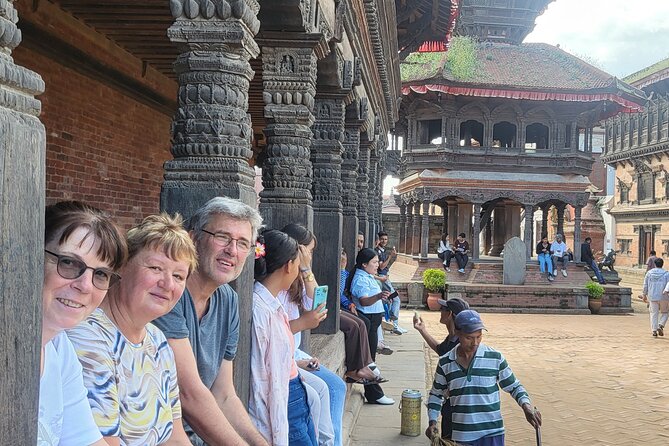
- Private transportation included: you spend your energy looking around, not figuring out routes.
- Free entry at each stop: Boudhanath, Navatandham, Nagadesh Buddha Vihar, and Sankhamul Park are all listed as no admission charges.
- A balanced mix of big-and-small: UNESCO megastructure first, then smaller religious and neighborhood sites.
- Sankhamul Park gives you a reset: you get a full hour by the river side to breathe.
- Good weather matters: the tour requires good weather, so have a flexible mindset.
- Coffee and tea plus bottled water: small comfort touches that matter when you’re on your feet.
The best start: seeing Boudhanath in UNESCO-scale form
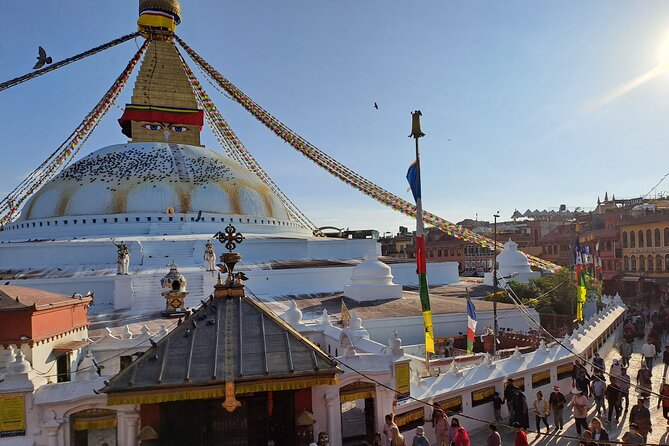
If Kathmandu has a “slow-breath” monument, it’s Boudhanath. This 14th-century stupa is described as one of the biggest in South Asia, and the best part is how it changes as you move around it. Up close, you feel the mass of it. From above, it’s said to resemble a giant mandala. That top-down design matters because it’s tied to how the stupa functions spiritually—as a kind of horizon marker between earth and sky.
I like starting here for one reason: the tour doesn’t just tell you it’s famous. It frames what you’re looking at. For example, the Buddha eyes painted on the stupa are commonly described in different ways—mysterious, impassive, empathetic, even shrewd. Whether you read them one way or another, you’ll notice people tend to pause and look back at the artwork as much as they look at the monument itself.
Time-wise, you get about 45 minutes at Boudhanath, and that’s a realistic window for photos plus a calm look without rushing. The admission is listed as free, so you can focus on the viewing experience rather than ticket logistics.
Practical tip: wear shoes you can stand in. Even if you’re not doing long walking, stupa areas encourage circling, repositioning for photos, and lingering at viewpoints.
You can also read our reviews of more guided tours in Kathmandu
Navatandham (Shree Krishna Pranami Temple): Kathmandu’s quieter spiritual layer
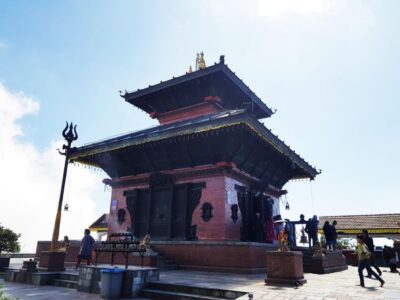
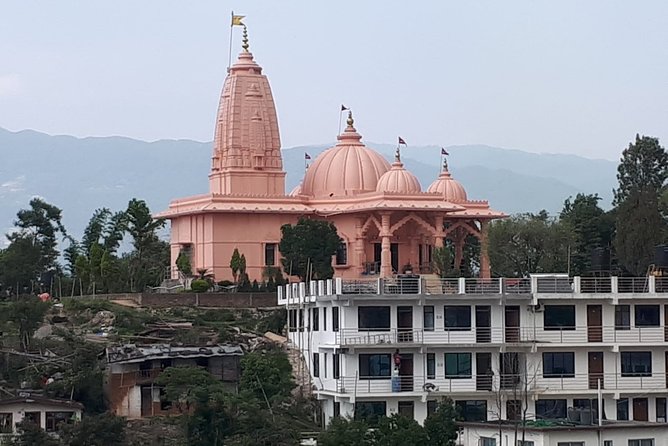
After the big UNESCO hit, the tour switches gears to something less “on the map” and more local in feel. Navatandham—listed as the Shree Krishna Pranami Temple—gets described as less explored, yet rich in cultural value. It’s also framed as a holy shrine of Hindus, which helps you interpret the energy in the space: you’re not just observing architecture, you’re seeing an active part of community belief.
You only have about 30 minutes here, so it’s not a long sit-and-stare stop. Instead, it works like an orientation window. You’ll likely pick up how worship and daily life share the same streets and rhythms. This is the kind of place that can feel easy to miss if you’re only chasing the most famous sites.
Good to know: admission here is also listed as free. So again, you’re not paying extra to see a spiritual stop that adds contrast to your day.
Practical tip: keep your expectations matched to the time. This is a short cultural stop, not a full temple tour—go for atmosphere, details, and context.
Nagadesh Buddha Vihar in Bhaktapur: ancient values with a local tempo
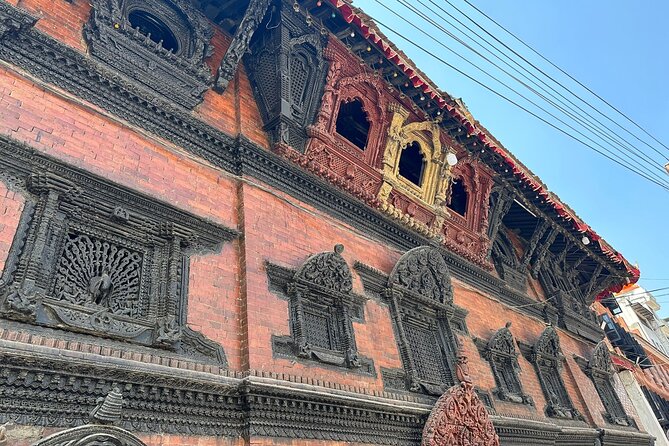
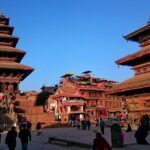
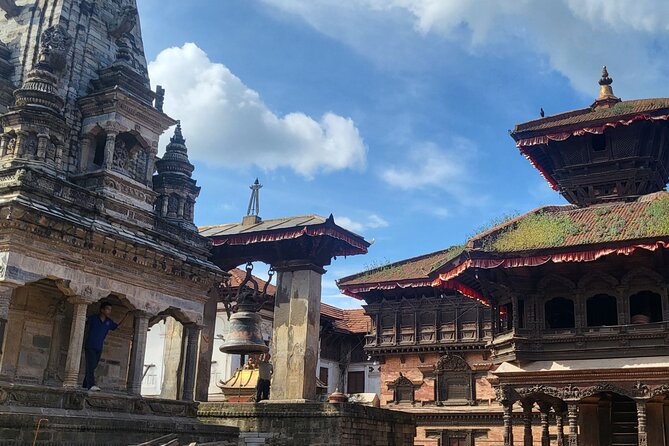
Bhaktapur is the kind of city where history doesn’t feel behind glass. The Nagadesh Buddha Vihar stop is set right in that context: it’s described as a local attraction in Bhaktapur, an ancient town that still carries old values.
This is your “Bhaktapur moment” on a tight schedule. You get about 30 minutes at Nagadesh Buddha Vihar, and the value here is contrast. Boudhanath is a major stupa with valley-scale attention; Bhaktapur’s Nagadesh is more about neighborhood-level meaning, where the site feels embedded in the city’s living fabric.
The phrase ancient values matters because it hints at how these places work. You’re not just looking at what was built—you’re looking at what continues. Even with a short visit, you can often tell when a site is respected day-to-day versus visited only as a checklist.
Admission is listed as free, so you’re getting a cultural and spiritual stop without extra cost. That makes the overall $70 feel more justified because you’re not stacking paid entrances on top of your guide and transport.
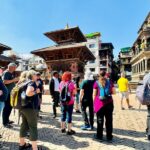
Practical tip: bring a little patience for crowds and local movement. Bhaktapur areas can have steady foot traffic, and part of the experience is sharing space respectfully.
Sankhamul Park by the Bagmati: your one-hour reset
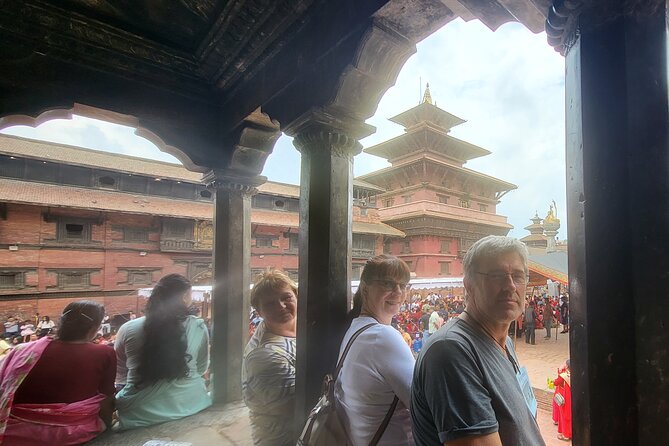
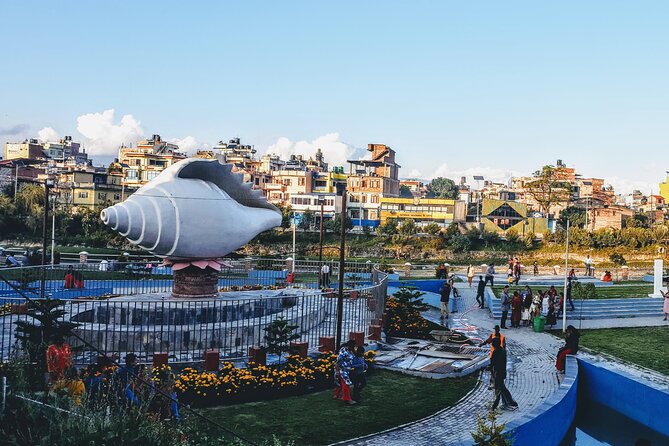
After temples and sacred stops, you’ll likely appreciate the tour’s most “human” break: Sankhamul Park on the river side. It’s described as a beautiful local park near the Bagmati river, with time for a slower pace. You get about one hour here, and that matters because it breaks the rhythm of looking at stone, carvings, and religious sites back-to-back.
This hour isn’t random downtime. It’s the breathing space that turns the day from a tour into a real experience of the city. You’ll get to see how people spend time outdoors, how the river area feels, and how your body resets after walking around monuments.
If you care about photos, parks by rivers usually reward you with easy angles and more natural lighting than inside crowded temple zones. Just don’t expect a silent “postcard moment.” This is a local park, so plan for real life in motion.
Admission is listed as free, and there’s no extra ticket cost to enjoy this part of the itinerary.
Practical tip: pack a light layer. River areas can feel cooler near the water even when the rest of the city is warm.
Price and value: what $70 really buys you
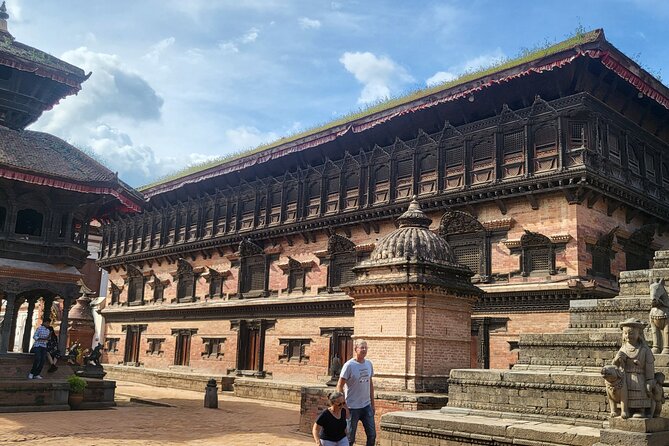
At $70 for a 4 to 5 hour private guided outing, this isn’t a cheap-by-default deal, but it’s a strong value if you want convenience plus guidance without buying a long, multi-stop mega-tour.
Here’s what you get that makes the price easier to swallow:
- Private transportation so you’re not coordinating between neighborhoods on your own.
- Bottled water plus coffee and/or tea, which is actually useful in Kathmandu Valley where “quick” breaks aren’t always quick.
- All fees and taxes are included.
- Admission is listed as free for each stop, so your day stays predictable.
What you don’t get:
- Lunch (so plan to eat before or after).
- Travel insurance (you’ll want your own coverage, especially for any trip that involves time in busy city areas).
- Any personal expenses.
Why this matters: for many travelers, the real cost isn’t the entrance ticket—it’s time. A private setup saves you the mental load of finding local transport, guessing routes, and bargaining your way through transit. When the schedule is short, that convenience becomes part of the value.
If you’re traveling with a small group or prefer not to move on your own, this format can feel like good money spent.

Pickup, mobile ticket, and a private format that keeps the pace sane
This tour includes pickup offered and uses a mobile ticket. That combo tends to reduce the classic first-day friction: you arrive, you settle, and you don’t have to hunt for paper tickets or meetups.
It’s also explicitly private—only your group participates. That changes the experience in a practical way:
- You can ask more questions without competing for attention.
- You can keep a pace that matches your comfort level during the stops.
- You can spend a bit longer where you’re most interested (as long as you stay within the overall time window).
One detail worth mentioning from the way the tour is described: the experience is designed to help you explore local lifestyle across Kathmandu Valley, with less-explored sites mixed in. That sort of “story” approach works better in a private setting because the guide can shape the pacing around what you respond to.
Practical tip: if you hate feeling rushed, this tour’s structure can still feel quick—so ask to focus more time on the site that matters most to you.
Who this tour fits best (and who might want more time)
This tour is a good fit if you:
- Want a highlights-first introduction to Kathmandu Valley and Bhaktapur in one outing.
- Prefer a guided approach that explains what you’re seeing, especially at Boudhanath and the smaller spiritual stops.
- Like the idea of mixing major monuments with quieter local places instead of only doing the biggest names.
It may feel less ideal if you:
- Want a deep dive at multiple major UNESCO-style sites in a single day.
- Are the type who needs hours at each stop for slow, detailed exploration.
- Are traveling with very little stamina for walking and standing, since temple areas naturally require some repositioning and lingering.
If you’re okay with a thoughtful, time-efficient route, you’ll likely appreciate how the itinerary builds variety.
Weather and timing: plan for a smooth day, not surprises
The experience notes that it requires good weather. That’s not a minor footnote. In a city tour that includes outdoor river-side time and walking near stupa and temple surroundings, rain can change the feel fast.
So do the boring but effective prep:
- Bring a light rain layer if you’re visiting during uncertain weather.
- Keep an eye on sky conditions the day of your tour.
- Be ready to reschedule if the day gets canceled due to poor weather.
Time on the ground is about 4 to 5 hours, and the stop durations suggest a steady flow: 45 minutes at Boudhanath, then 30 minutes each at Navatandham and Nagadesh, plus a full hour at Sankhamul Park. That rhythm is ideal for keeping momentum without exhausting you completely.
Should you book this Kathmandu and Bhaktapur loop?
Yes, if your goal is a short, private, value-focused tour that mixes a UNESCO landmark with lesser-seen cultural stops and finishes with a calm riverside break. You’ll get a coherent route, free admissions at the listed stops, and practical comfort touches like water and tea.
Consider booking something longer or adding extra time if you know you want more hours in Bhaktapur or you want multiple major Kathmandu icons in one day. This outing is built for an efficient sampler, not a full “do everything” itinerary.
If you’re deciding between DIY and guided: if you’d rather spend your time looking at stupa details and temple scenes than figuring out local logistics, this private setup is a smart way to use a half-day.
FAQ
Is pickup included for this Kathmandu and Bhaktapur guided tour?
Pickup is offered as part of the experience, and you’ll get the tour ticket via mobile.
How long does the tour last?
The tour duration is approximately 4 to 5 hours.
Are there admission fees for the stops?
Admission tickets are listed as free for the stops included in the itinerary.
What’s included in the $70 price?
Included are private transportation, bottled water, coffee and/or tea, and all fees and taxes.
Is this a private tour or shared group?
It’s a private tour/activity, so only your group will participate.
What happens if the weather is poor or I need to cancel?
The experience requires good weather. If it’s canceled due to poor weather, you’ll be offered a different date or a full refund. You can cancel for a full refund up to 24 hours in advance.