REVIEW · KATHMANDU
Buddhist Pilgrimage Tour In Nepal
Book on Viator →Operated by Third Rock Adventures · Bookable on Viator
Three Buddhist stops, one peaceful Kathmandu day. I love how this tour combines hotel pickup by private vehicle with a small group that keeps the day from feeling rushed, and I also like that you get to chant with monks while your guide explains the basics of Buddhism in Nepal. It’s a focused way to see how Buddhist practice lives alongside Nepal’s mostly Hindu culture, and why Buddha’s birthplace makes this valley feel spiritually layered.
My other big win: the guide’s English explanations are made for real questions, not just a script. One possible drawback is the pace—this is a tight 1-day circuit—so wear shoes you don’t mind using on temple steps and busy footpaths.
In This Review
- Key highlights worth aiming for
- Why Kathmandu Valley works so well for a first Buddhist day
- Price and value: what $150 gets you in a single day
- Small-group pacing: how the max-10 limit changes the vibe
- Stop 1: Boudhanath Stupa and that “big scale” feeling
- Stop 2: Kopan (Kapan) Monastery and Gelug Tibetan practice
- Stop 3: Swayambhunath (Monkey Temple) and a strong closing note
- Lunch in Thamel: The Ship Restaurant and bar break
- What you’ll learn about Buddhism in Nepal (and how it helps you watch better)
- Transport, timing, and what to plan for your day
- Nepal visa and money notes you shouldn’t skip
- Who this tour fits best
- Should you book this Buddhist pilgrimage tour in Kathmandu?
- FAQ
- What time does the tour start?
- How long is the tour?
- Where does the tour start and where does it end?
- How many people are in the group?
- Which sites are included in the itinerary?
- Are admission tickets included?
- Are meals included?
- What about the Nepal visa and required items?
- Is transportation included?
- What is the cancellation policy?
Key highlights worth aiming for
- Small group size (max 10) for a more personal feel.
- Three major Kathmandu Valley pilgrimage sites in one day: Boudhanath, Kopan/Kapan Monastery, and Swayambhunath.
- Admission tickets included for the stops you visit.
- A guide who can answer culture and Buddhism questions in clear, practical ways.
- Thamel lunch reservation at The Ship Restaurant and bar (a break built into the route).
Why Kathmandu Valley works so well for a first Buddhist day
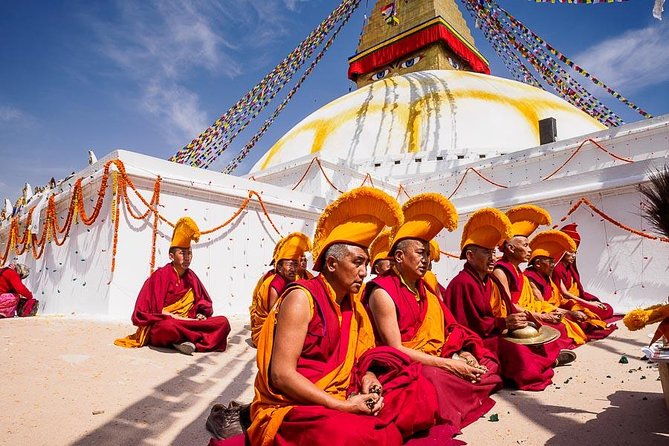
If this is your first taste of Buddhism in Nepal, Kathmandu Valley is the easiest place to start. You’ll see how Buddhism isn’t tucked away—it’s woven through daily life and major sacred landmarks, even though the country’s population is mostly Hindu.
The tour’s focus is also refreshingly direct. You’ll be learning the rudiments of Buddhism in Nepal while visiting three headline sites tied to pilgrimage. That combo matters: you’re not just taking photos, you’re getting a framework that helps you make sense of what you’re seeing.
And because the day includes chanting with monks, it’s not only visual. It’s participatory. The point isn’t to “perform spirituality,” it’s to experience the rhythm of practice and understand what visitors and locals come for.
You can also read our reviews of more tours and experiences in Kathmandu.
Price and value: what $150 gets you in a single day
At $150 per person for a 1-day tour, the value depends on what you’d otherwise pay and plan yourself. Here, most of the heavy lifting is bundled: private ground transportation, an English-speaking professional guide, and admission tickets for the included stops.
What I like about this pricing is that it feels built for convenience. You’re not hunting for directions across the valley, or trying to coordinate separate entry tickets and transport. For many people, that’s the real cost savings—time and stress.
Group size is also a hidden value lever. With a maximum of 10 people, you’re less likely to feel like part of a loud bus crowd, while still getting the benefits of group discounts. The tour also uses a mobile ticket, which is handy if your phone works and you like not carrying extra paperwork.
Small-group pacing: how the max-10 limit changes the vibe
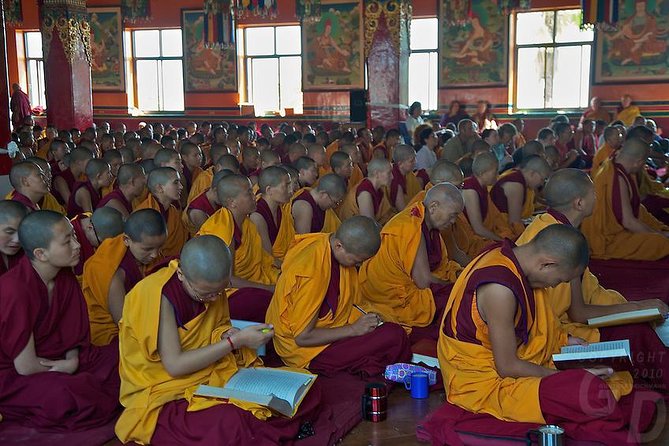
A max of 10 travelers can sound like a detail until you’re in it. In practice, smaller groups tend to move more smoothly and give you more chances to ask questions when something doesn’t make sense.
This tour also has clear timing: it starts at 9:15 am, and you return back to the meeting point at the end. That structure helps you plan the rest of your day in Kathmandu, whether you want downtime or you plan to explore on your own.
Another pacing win: for the Kopan/Kapan Monastery stop, the plan includes cutting across daytime traffic. That means the itinerary tries to respect real-world road conditions instead of assuming the city runs on schedule.
Stop 1: Boudhanath Stupa and that “big scale” feeling
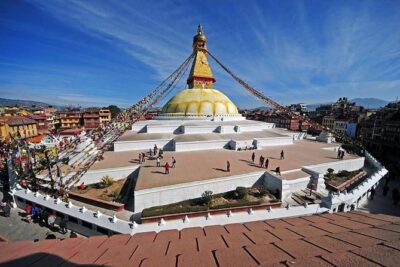
Boudhanath Stupa is around 4 miles from central Kathmandu, so you get a quick change of scenery without losing most of your morning to logistics. The stupa itself is described as one of the largest in the world, and the tour frames it as a major center for Buddhist pilgrimage.
What I like about starting here is the immediate sense of place. You’re arriving at a landmark that’s famous for a reason, and you’re given a guide-led context rather than standing there wondering what you’re supposed to notice first.
A practical upside: admission is included for this stop. That matters because it prevents a common headache—show up at a sacred site, then realize entry costs weren’t covered and you have to renegotiate the day.
The main consideration is that you’ll want to be ready for typical pilgrimage-site foot traffic. Go slow, keep your footing, and give your eyes time to adjust to the scale.
Stop 2: Kopan (Kapan) Monastery and Gelug Tibetan practice
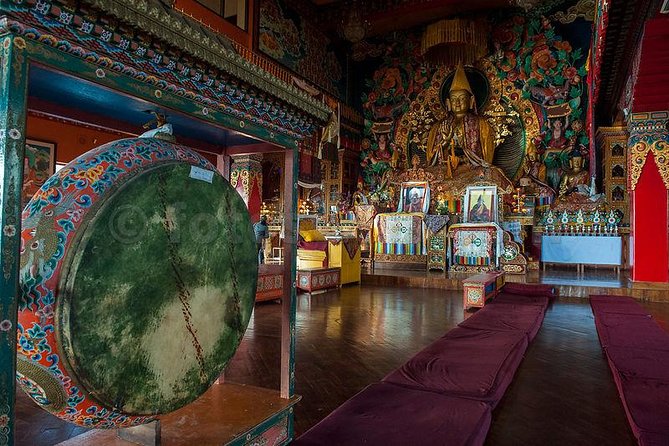
After Boudhanath, you head to Kopan (spelled as Kapan in some references, but the tour targets the well-known monastery area). This stop is specifically tied to the Gelug tradition of Tibetan Buddhism, which helps you understand that Buddhism in the Kathmandu Valley includes different lineages and styles of practice.
The tour also notes you’ll be chanting along with monks as part of the experience. Even if you don’t know the words, participating in the rhythm is often the fastest way to feel what locals mean by devotion. It’s not about memorizing anything on the spot.
This stop is scheduled for about 1 hour, which is a good length. Long enough to take in the setting with guidance, short enough that you’re not drained before the day’s final highlight.
One thing to keep in mind: monasteries can feel calmer than the stupa areas, so your experience will depend on timing and day-of conditions. If you tend to get impatient, treat this stop like a mental reset—not a checklist box.
Stop 3: Swayambhunath (Monkey Temple) and a strong closing note
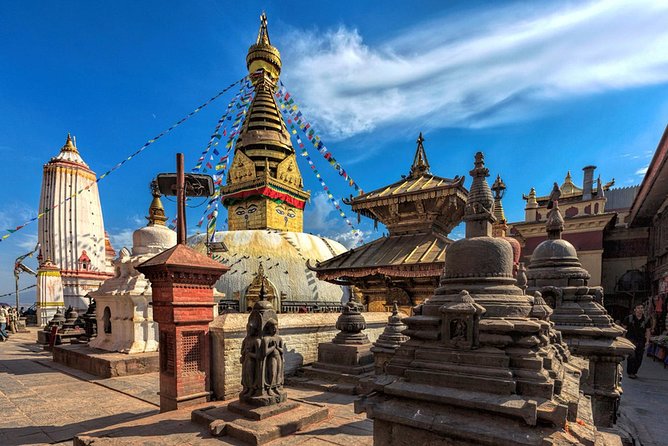
Next comes Swayambhunath, popularly referred to as the Monkey Temple. That nickname alone helps you recognize the site quickly, and it also tells you what kind of place this is: a major temple area where daily life and pilgrimage overlap.
From Kopan/Kapan, the itinerary routes you toward Thamel for lunch. That’s a smart flow. You get a final spiritual stop, then you get a structured pause rather than sending you straight into sightseeing fatigue.
Swayambhunath is included with admission as part of the tour, which keeps the day consistent. At this stage, I like that you can shift from “learning and chanting” into “observing and reflecting,” supported by the guide’s earlier context.
If you’re thinking ahead: plan your energy. The last temple visit tends to land when the morning has already taken some out of you. Pace yourself and keep water in mind.
Lunch in Thamel: The Ship Restaurant and bar break
The plan includes lunch in Thamel at The Ship Restaurant and bar, with a table reserved for you. This is a useful detail because Thamel can be busy, and having lunch arranged removes one more decision during a packed morning.
The itinerary also mentions a traditional dal-bhat style meal. I’d treat this as your built-in Kathmandu comfort food moment after temple walking and guided explanations.
One practical thing: the tour data lists meals as not included, so don’t assume the restaurant bill is covered. Still, the reservation is real value—less waiting, fewer questions, less time lost.
What you’ll learn about Buddhism in Nepal (and how it helps you watch better)
This is not marketed as a dry lecture. The tour is designed to show you “the rudiments of Buddhism in Nepal” while you visit major pilgrimage sites across the valley.
That approach matters because these places can look similar if you don’t have context. With the guide’s explanations, you’ll start noticing differences in how practice shows up—how monasteries function, what pilgrimage means in everyday terms, and why certain sites are treated as important destinations.
One of the most praised parts of this experience is the guide’s ability to answer questions about culture and Buddhism. I’d take that seriously when you book. If you like learning on the fly—asking why something matters, not just what something is—this format is built for you.
A small-but-important tip: write down 2–3 questions before you go. Even if you don’t use all of them, you’ll feel more confident asking during the stops.
Transport, timing, and what to plan for your day
The schedule starts at 9:15 am, and you’ll be picked up from your hotel for the first stop. The day uses private comfortable vehicles, which is a big deal in Kathmandu because traffic and travel time can be unpredictable.
The itinerary also hints at timing tactics, like cutting across daytime traffic on the way to Kopan/Kapan Monastery. That’s exactly what you want from a guide: not just routes, but real strategies for moving efficiently.
Because it’s a 1-day tour, you should plan to keep your afternoon lighter. Even with good transport, you’ll spend time walking, standing, and moving between sacred sites. If you pack your next activity too tightly, you’ll feel it.
Nepal visa and money notes you shouldn’t skip
This tour doesn’t include Nepal visa fees. The guidance given is to bring accurate USD cash and two passport photographs. That’s easy to forget until you’re at the point of entry—so get it squared away before you head out for the day.
Also, tips are not included for staff. If you feel the guide earned a bit extra, plan to carry some cash for that purpose.
Who this tour fits best
This tour is a strong match if you:
- want an organized introduction to Buddhism in Kathmandu Valley
- like learning from an English-speaking guide who can answer culture and religion questions
- prefer a small group over a large bus day
- want a one-day itinerary that hits the major pilgrimage sites without complicated planning
If you’re the type who needs complete freedom all day, you might find a guided circuit constraining. And if you dislike walking around religious sites, plan to take it slow and bring comfortable footwear.
Should you book this Buddhist pilgrimage tour in Kathmandu?
I think this is an easy yes for first-timers to the valley—especially if you care about more than sightseeing and you want actual context. The combination of admission included, private vehicle transport, and a guide who can handle questions makes the $150 price feel grounded in practical value.
Book it if you want a calm, structured day that connects chanting and learning to major pilgrimage landmarks. Skip it only if you’re looking for a long, slow itinerary or if you strongly prefer unguided time.
If you do book, bring solid shoes, keep a couple of questions ready for your guide, and treat the day as an experience you’ll understand more with your eyes open—not just your camera charged.
FAQ
What time does the tour start?
It starts at 9:15 am.
How long is the tour?
It runs for about 1 day (approximately).
Where does the tour start and where does it end?
It starts in Kathmandu, Kathmandu Valley (Bagmati Zone, Central Region) and ends back at the meeting point.
How many people are in the group?
The tour has a maximum of 10 travelers.
Which sites are included in the itinerary?
The included stops are Boudhanath Stupa, Kopan (Kapan) Monastery, and Swayambhunath (Monkey Temple). Lunch is reserved in Thamel after the monastery stop.
Are admission tickets included?
Yes, admission tickets are included for the listed stops.
Are meals included?
Meals and accommodations are listed as not included. The itinerary includes a lunch stop with a reserved table, but meal costs are not stated as included.
What about the Nepal visa and required items?
Nepal visa fees are not included. You should bring accurate USD cash and two passport photographs.
Is transportation included?
Yes. You get all ground transportation in private comfortable vehicles.
What is the cancellation policy?
You can cancel for a full refund if you cancel up to 24 hours in advance of the start time. Free cancellation applies with that timing.