REVIEW · KATHMANDU
Kathmandu: 3 hours night Pashupatinath Aarti Tour
Book on GetYourGuide →Operated by Dream Noble Adventure Pvt. Ltd. · Bookable on GetYourGuide
Pashupatinath at night hits different. In 3 hours, you get Pashupatinath Temple’s evening Aarti atmosphere with a licensed English-speaking guide pointing out what you’re actually seeing. The main caution: pickup timing can be touchy in Kathmandu traffic, and if communication fails, you may end up doing the complex on your own.
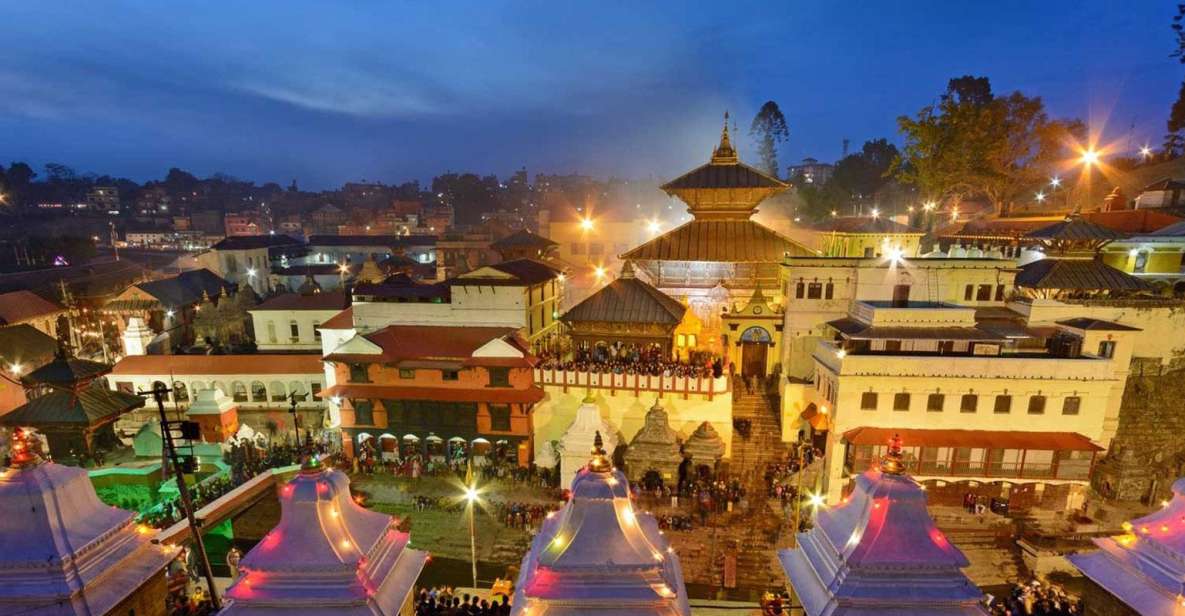
What makes this experience worth considering is how the temple complex sits along the Bagmati River, with the pagoda-style shrine and carved doors you can’t really appreciate from a quick glance. You’ll also see the cremation setting at Arya Ghat, which is part of the site’s religious purpose—this isn’t a theme-park stop.
For value, the price lands at $35 per person and includes transport, entry, and hotel pickup/drop-off, so you’re mostly paying for time saved. Just plan for the fact that food and drinks are not included, and you’ll want to wear comfortable clothes for a night visit.
In This Review
- Key things that make this tour work
- Night Aarti at Pashupatinath: the moment you came for
- The Bagmati River setting: why the view is part of the religion
- Temple details you can actually notice (with a guide’s help)
- Arya Ghat at night: the cremation side of the story
- How the 3-hour plan feels on the ground
- Pickups, Thamel routing, and why timing matters
- What’s included (and what you should plan to cover)
- Language and communication: getting answers in your preferred tongue
- Price value: why $35 can be fair here
- Who should book this night Aarti tour (and who might skip it)
- A quick, respectful checklist before you go
- Should you book the Kathmandu 3-hour night Pashupatinath Aarti tour?
- FAQ
- How long is the Kathmandu night Pashupatinath Aarti tour?
- What does the tour cost?
- What’s included in the price?
- Where can I be picked up?
- Where will I be dropped off?
- What languages does the guide speak?
- Is the tour wheelchair accessible?
- Do I need to bring anything?
Key things that make this tour work
- Night Aarti at a major Shiva pilgrimage site: You’re there for the ritual, not just photos.
- Guided time-saving: A licensed English-speaking guide helps you understand what the complex means.
- Bagmati River setting: The river-side layout changes the feel of every stop.
- Arya Ghat cremation context: It’s part of the religious landscape, so knowing what it is matters.
- Simple logistics with set pickup/drop-off options: Thamel and Pashupatinath are on the routing list.
Night Aarti at Pashupatinath: the moment you came for
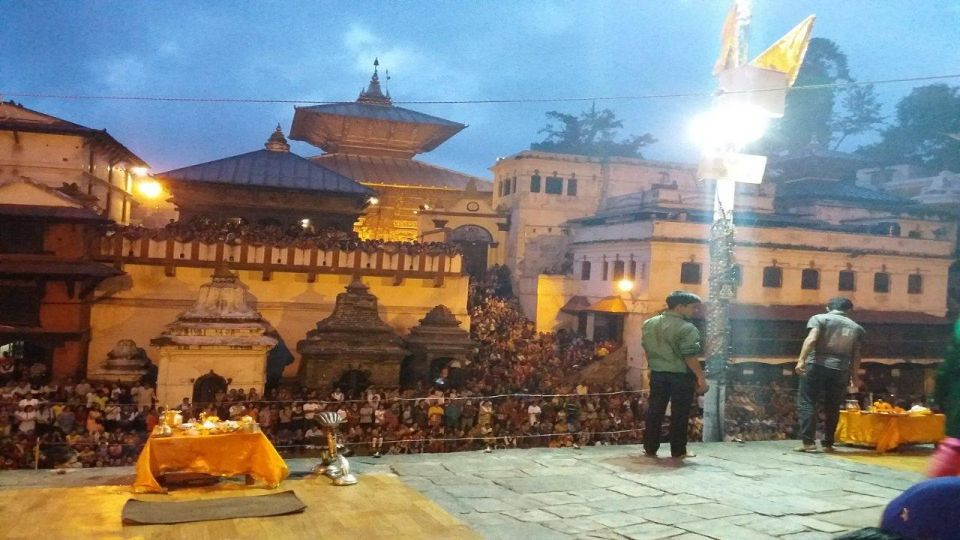
Pashupatinath is one of Kathmandu’s most important Hindu sites, dedicated to Lord Pashupatinath, an incarnation of Shiva. A night Aarti here isn’t just a ceremony you watch—it’s the rhythm of the place. The guide’s job matters, because without context it’s easy to miss what’s going on and why people are so focused.
In a short 3-hour format, you typically get enough time to feel the atmosphere and still see the key parts of the complex. The visit time is around 2.5 hours with guiding at the temple site, so you’re not spending the whole evening trapped in transport. That balance is the core idea of this tour.
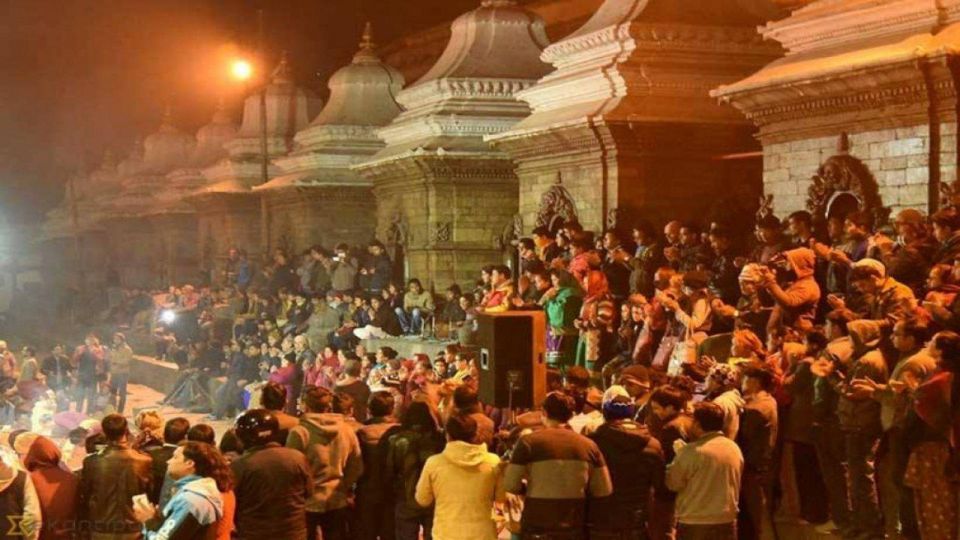
One more practical note: Aarti is sensory. Expect crowds at peak moments, smoke from offerings, and lots of people moving in different directions. Your best move is to go in with flexible expectations and let the guide help you position yourself.
You can also read our reviews of more evening experiences in Kathmandu



The Bagmati River setting: why the view is part of the religion
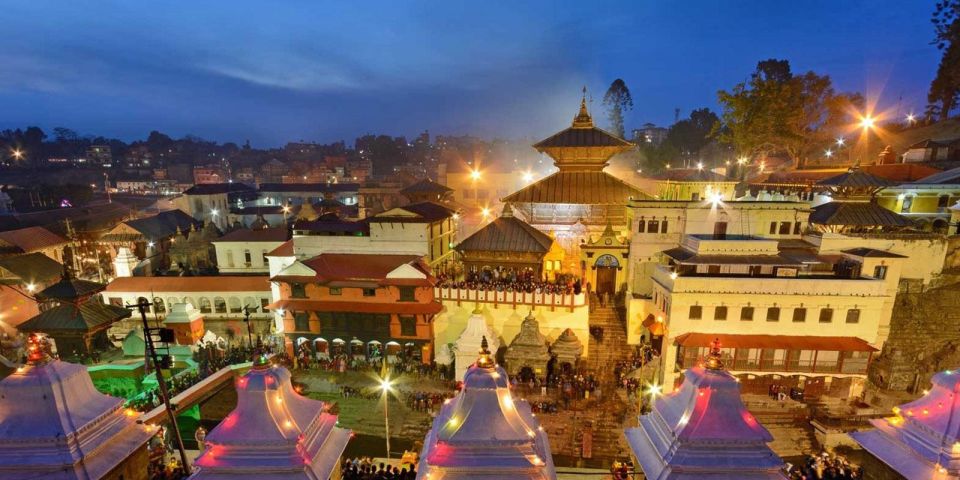
Pashupatinath spreads across both banks of the Bagmati River, and that geography is not decoration. The river is part of how the site functions spiritually and visually. At night, the water and surrounding activity create a different mood than daytime sightseeing—more ritual, more movement, more immediacy.
The temple complex is also recognized as a UNESCO World Heritage Site, so the architecture and layout are protected and documented. That matters because you’re not just looking at a single building. You’re looking at a whole religious system: temples, smaller shrines, and the cremation area all within the same sacred zone.
What you’ll like about this experience is how it turns Kathmandu’s city time into something slower for an evening. It’s a break from traffic and shopping streets—and it helps you understand why people consider this a pilgrimage, not a stop.
Temple details you can actually notice (with a guide’s help)
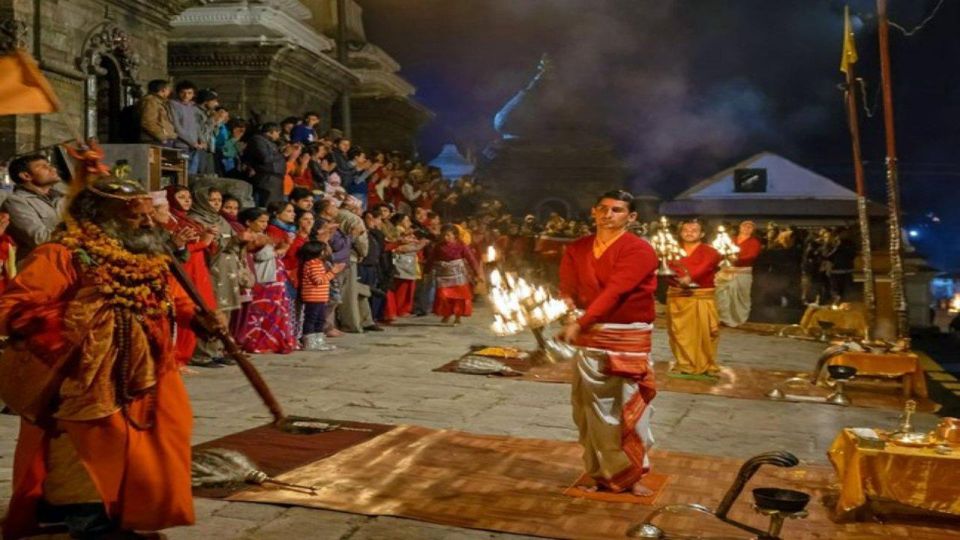
The main shrine is described as pagoda-style, with a golden roof and intricately carved silver doors. Even if you don’t know the architectural terms, you can still spot why these details matter: they’re designed to draw attention to the sacred core.
You’ll also hear about the timeline. Tradition places early origins as far back as the 5th century, though the structure you see today reflects major reconstructions, with the current form dating to the 17th century. That mix of deep tradition plus rebuilding is common at major religious sites, but here it’s especially relevant because Kathmandu has seen many cycles of repair over time.
This is where a good guide earns their keep. When someone explains what you’re looking at—main shrine function, surrounding temples, and how ceremonies fit into the space—you get far more meaning than you would from walking alone with only a phone map.
Arya Ghat at night: the cremation side of the story
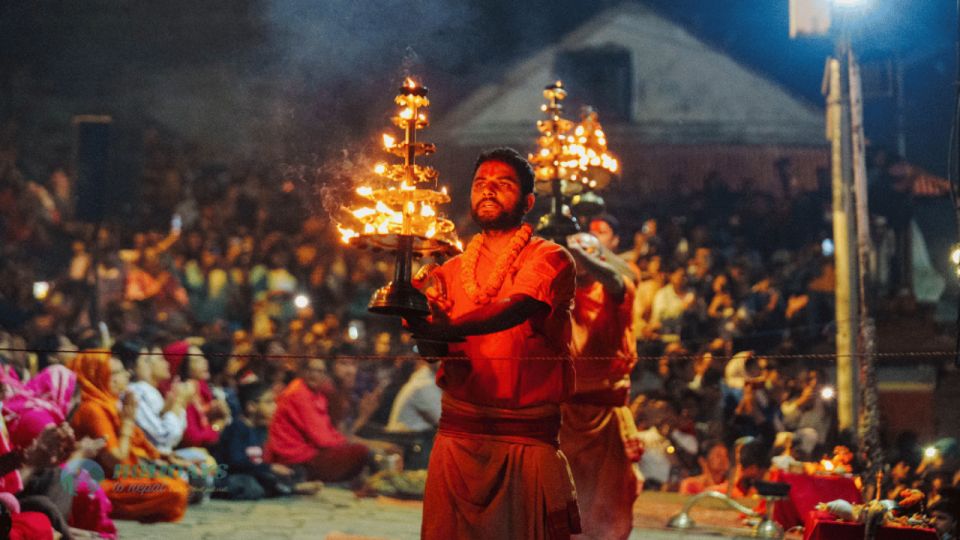
One of the highlights listed for this tour is cremation. That sounds intense, and it is. Arya Ghat is the cremation site on the Bagmati River bank and is an important location for Hindu cremations. The belief is that cremation there helps the soul attain moksha, liberation from the cycle of rebirth.
Here’s the key point for your expectations: this is not a “viewpoint.” It’s a working part of the religious tradition. You’ll likely notice the solemn atmosphere and the way people conduct rituals with purpose.
If you’re sensitive to religious mourning scenes, decide ahead of time how you want to handle it. Keep your distance, follow the guide’s direction, and treat the area with extra respect. You can be moved without turning it into a spectacle.
How the 3-hour plan feels on the ground
This experience is designed for evenings: about 3 hours total, with hotel pickup and drop-off and guided time at the site. That short window is both a strength and a limitation.
Strength: you get the Aarti moment and core sights without turning the day into a full-day mission. With Kathmandu traffic, that time-saving can be real value.
Limitation: you won’t have hours to wander every corner slowly. If you’re the kind of traveler who wants to linger in every side shrine, this may feel brief. In that case, consider whether you’d rather do a longer self-paced visit on another evening.
Also, note the tour includes entry to Pashupatinath. That’s money and hassle you don’t have to handle on your own, which helps a lot when your time window is small.
You can also read our reviews of more tours and experiences in Kathmandu




Pickups, Thamel routing, and why timing matters
The tour offers pickup options around Thamel and also at Pashupatinath Temple, depending on what you select. Drop-off is similarly flexible: Thamel or Pashupatinath. Hotel pickup or airport pickup is included.
In Kathmandu, traffic and events can affect schedules. One downside shows up in real-world experience: a missed or delayed pickup can ruin the evening plan. One reported case involved waiting about an hour without contact, and the group ended up visiting on their own instead.
So here’s my practical advice before you go:
- Confirm your pickup time and exact pickup point the day before.
- Keep your phone ready and charged for quick coordination.
- Build a small buffer in your evening plan, even if the tour is only 3 hours.
If everything runs smoothly, you’ll feel the benefit immediately: less navigating, less bargaining, less guessing where the right entrance and viewing spots are.
What’s included (and what you should plan to cover)
The included items are straightforward and helpful:
- Hotel pickup and drop-off
- Transportation to and from Pashupatinath
- Licensed English speaking guide
- Entry ticket to Pashupatinath
- All taxes
Not included:
- Food and drinks
That last point matters because you’re doing a night ritual visit. If you skip dinner, you may find yourself hungry during quieter moments. A simple solution: eat earlier, or bring a light snack if you’re the type who needs something on the go—just follow site expectations and don’t treat sacred space like a picnic.
Also bring:
- Passport or ID card
- Comfortable clothes
- Cash
Comfort matters because you may do short walks, stand during Aarti, and move around the complex. Dress for respectful evening temple conditions—comfortable shoes help more than you’d think.
Language and communication: getting answers in your preferred tongue
The tour guide works in Hindi, English, and Nepali. That’s valuable because Pashupatinath is full of meaning-heavy details: names, beliefs, and the way rituals connect to the architecture.
If you want the most out of the evening, show up ready with a couple of questions. Good topics are:
- What specific part of the complex you’re seeing
- What the Aarti ceremony is for
- How Arya Ghat fits into the wider religious setting
One reason this tour earns positive marks is that guides who are comfortable answering questions make the visit feel clear instead of confusing.
Price value: why $35 can be fair here
At $35 per person for about 3 hours, you’re paying for more than a seat in a vehicle. You’re paying for:
- Entry access (so you don’t handle ticketing)
- A licensed guide (so you understand the site)
- Transport and pickup/drop-off (so you don’t spend your night navigating)
For Kathmandu, where getting to major sites can eat time, the package format is usually good value if you actually stick to the schedule. If pickup goes wrong, the value evaporates fast—which is why timing and communication are the biggest variables.
If you’re short on time in Kathmandu or you prefer a guided structure to avoid decision fatigue, this pricing is reasonable for what you get.
Who should book this night Aarti tour (and who might skip it)
This tour fits best if you:
- Want to experience Pashupatinath Aarti without planning the route and ticket details yourself
- Appreciate context, especially around Hindu rituals and sacred architecture
- Prefer a short evening outing instead of a long day
It may be less ideal if you:
- Hate schedule risk and need a rock-solid pickup experience
- Want hours of free wandering without a time box
- Are uncomfortable with the cremation setting and prefer a tour focused only on temples
If you’re flexible and respectful, the guided format can make a huge difference in how you interpret what you’re seeing.
A quick, respectful checklist before you go
- Bring your ID (passport or ID card)
- Wear comfortable clothes for standing and moving at night
- Bring cash
- Leave drones and alcohol at home
- Avoid drugs, and be ready to follow on-site rules
- If you use a wheelchair: the tour is listed as wheelchair accessible, but stick to the allowed equipment rules
These are small things, but they prevent avoidable stress when you arrive at a tightly managed sacred space.
Should you book the Kathmandu 3-hour night Pashupatinath Aarti tour?
My take: book it if you want a guided evening focused on the Aarti and you value convenience—pickup, entry, and transport bundled into one short 3-hour outing. The site’s scale and meaning make a guide feel worth it, especially when you’re trying to understand the temple complex’s architecture and the role of Arya Ghat.
But I’d be cautious if you’re relying on a flawless pickup with no buffer. In Kathmandu, delays and missed meetings can happen, and one real example showed that poor contact can derail the plan. If you do book, confirm your pickup point clearly and keep your phone ready.
If you get there smoothly, this is one of those experiences where you leave with more than photos—you leave with a clearer sense of why people come here again and again.
FAQ
How long is the Kathmandu night Pashupatinath Aarti tour?
It lasts about 3 hours total.
What does the tour cost?
The price is listed as $35 per person.
What’s included in the price?
Hotel pickup and drop-off, transportation to and from Pashupatinath, a licensed English speaking guide, entry ticket, and all taxes are included.
Where can I be picked up?
Pickup is available from Thamel and from Pashupatinath Temple (depending on the option you choose). Pickup from your hotel or airport is also listed as included.
Where will I be dropped off?
Drop-off is available at Thamel and at Pashupatinath Temple.
What languages does the guide speak?
The guide speaks Hindi, English, and Nepali.
Is the tour wheelchair accessible?
The tour is listed as wheelchair accessible, with rules about not using non-folding wheelchairs.
Do I need to bring anything?
Bring a passport or ID card, comfortable clothes, and cash.