REVIEW · KATHMANDU
Kathmandu: Pashupatinath Temple Aarti Night Tour
Book on GetYourGuide →Operated by Fewa Trail Treks and Expedition Pvt Ltd · Bookable on GetYourGuide
Pashupatinath at night hits differently. This 3-hour tour brings you to one of Nepal’s most important Hindu pilgrimage sites, with the chance to see the pagoda-style temple’s golden roof and the glow of a traditional aarti ceremony near the Bagmati River. Two things I especially like: the tour includes hotel pickup and drop-off plus a licensed English-speaking guide, so you’re not piecing together logistics in Kathmandu. Another big plus is the focus on meaning—your guide connects what you’re seeing to Lord Shiva and the temple’s role in major festivals. One consideration: timing matters, since missing the very start of the ceremony can happen if the driver runs late.
If you’re curious about how faith shapes daily life in Nepal, this is a strong fit. The Pashupatinath complex spans both banks of the Bagmati River, and it’s also a UNESCO World Heritage Site, so you’re not just watching a ritual—you’re stepping into a living religious landscape with centuries of continued use. Still, the cremation area (Arya Ghat) is part of the setting, so if you’re sensitive to intense spiritual scenes, keep your expectations grounded.
In This Review
- Quick Hits
- Why Pashupatinath Night Aarti Feels More Than Sightseeing
- Temple Details You Can Actually Look For: Golden Roof, Silver Doors, Pagoda Style
- Your English-Speaking Guide: What You Gain Beyond the Ticket
- Bagmati River Grounds: How to Move Through the Complex Without Feeling Lost
- Arya Ghat and the Cremation Area: Powerful to See, Not for Everyone
- The Aarti Ceremony: What Night Adds and What to Watch For
- It’s Only 3 Hours—So Make It Count
- Price and Value: Is $71 a Fair Deal for Pashupatinath at Night?
- Who Should Book This Night Tour
- What to Bring (And the One Thing People Forget)
- Should You Book This Night Aarti Tour?
- FAQ
- How long is the Kathmandu Pashupatinath Temple Aarti Night Tour?
- Is hotel pickup and drop-off included?
- What’s included in the price?
- Is food and drinks included?
- Do I need to pay for entry separately?
- What do I need to bring with me?
- Is this tour wheelchair accessible?
Quick Hits
- Golden roof and silver doors at Pashupatinath—an iconic look you’ll understand more with a guide.
- Bagmati River setting—the rituals make more sense when you see the complex on both banks.
- Licensed English-speaking guide—expect clear context, including historical background.
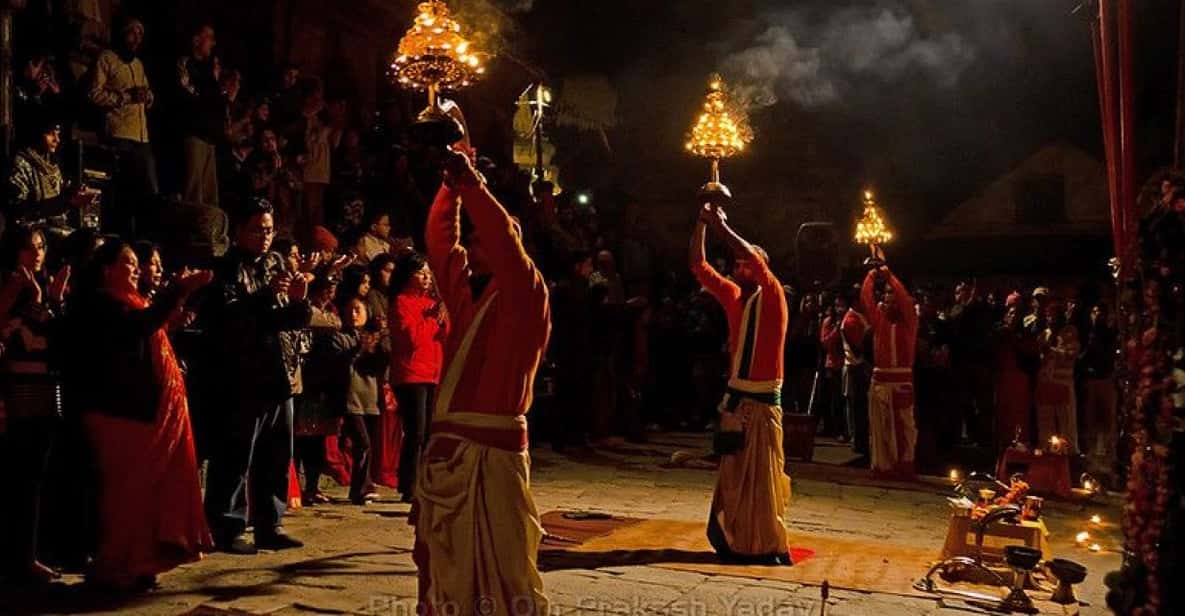
- Aarti night ceremony—you get the lights, sounds, and devotion that define the temple’s atmosphere.
- Arya Ghat nearby—a powerful section of the complex that adds weight to what you witness.
Why Pashupatinath Night Aarti Feels More Than Sightseeing
I get a kick out of tours that do more than point. This one works because Pashupatinath isn’t a museum stop. It’s a place where worship continues, especially for Hindu devotees of Lord Shiva.
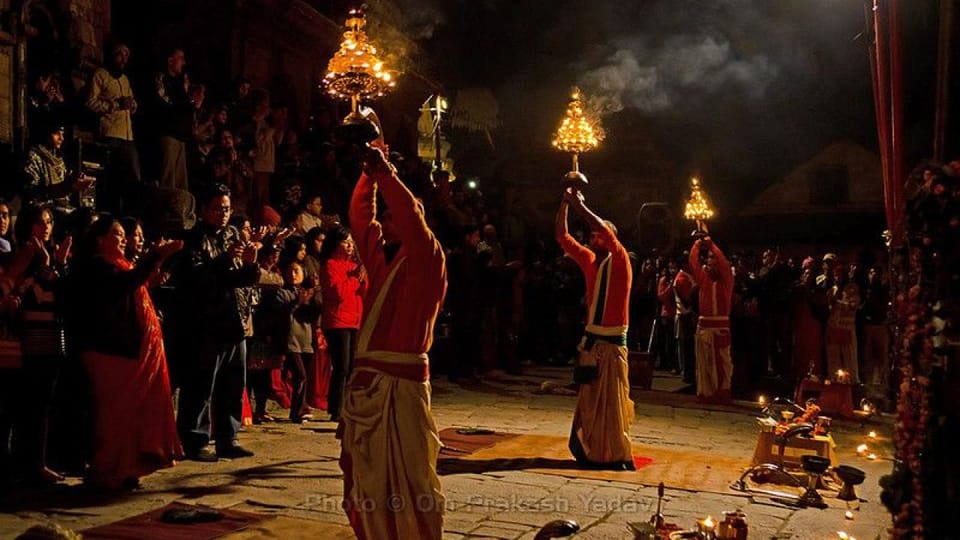
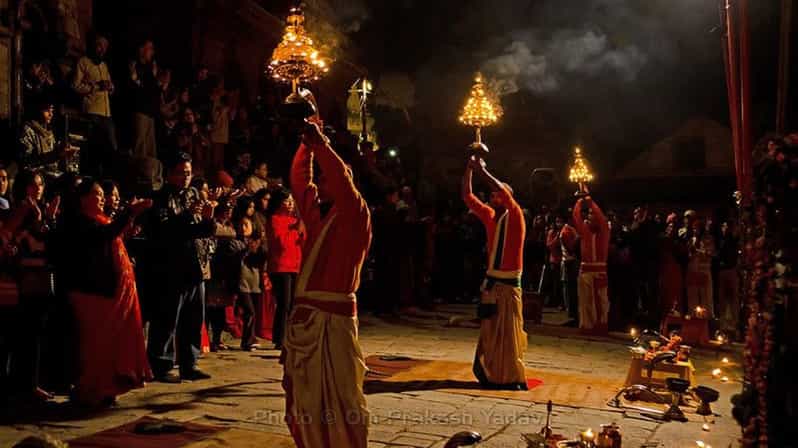
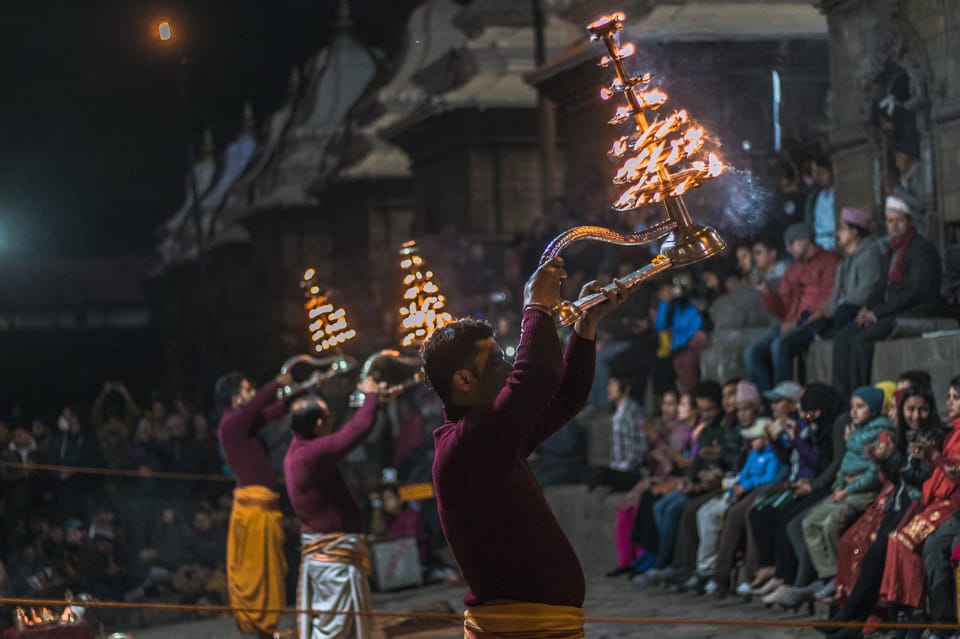
At night, the temple complex shifts. The aarti ceremony brings movement and light, and you can feel how the Bagmati River setting shapes the rhythm of the rituals. If you like travel moments where you can actually read the culture on people’s faces, this is the kind of experience that stays with you.
The other “why it’s worth it” angle is the guide. The tour is built around explanation, not just standing in a crowd. One guide named Madhu is described as enthusiastic and big on historical stories, and that kind of framing can turn a fast visit into real understanding.
You can also read our reviews of more evening experiences in Kathmandu



Temple Details You Can Actually Look For: Golden Roof, Silver Doors, Pagoda Style
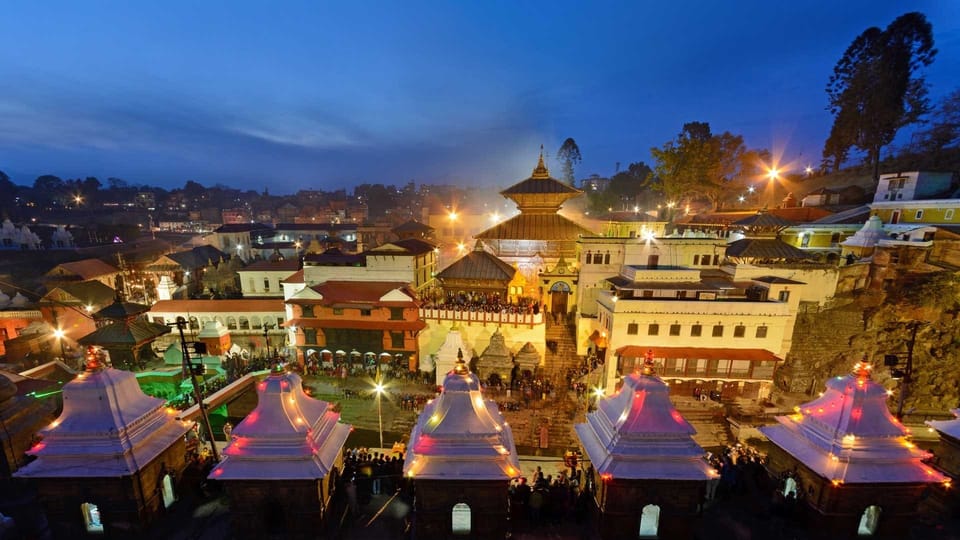
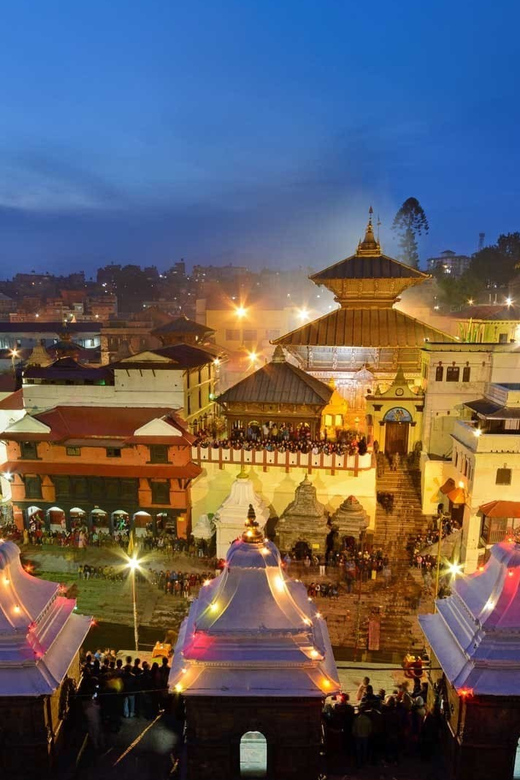
Pashupatinath is dedicated to Lord Pashupatinath, an incarnation of Lord Shiva. Even if you’re not a specialist in Hindu temple architecture, the complex gives you visual anchors fast.
Here’s what you should keep an eye out for:
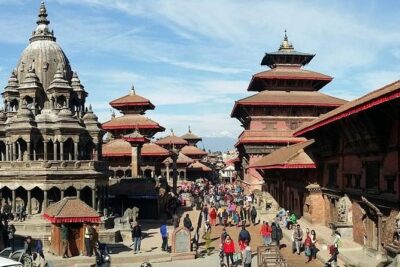
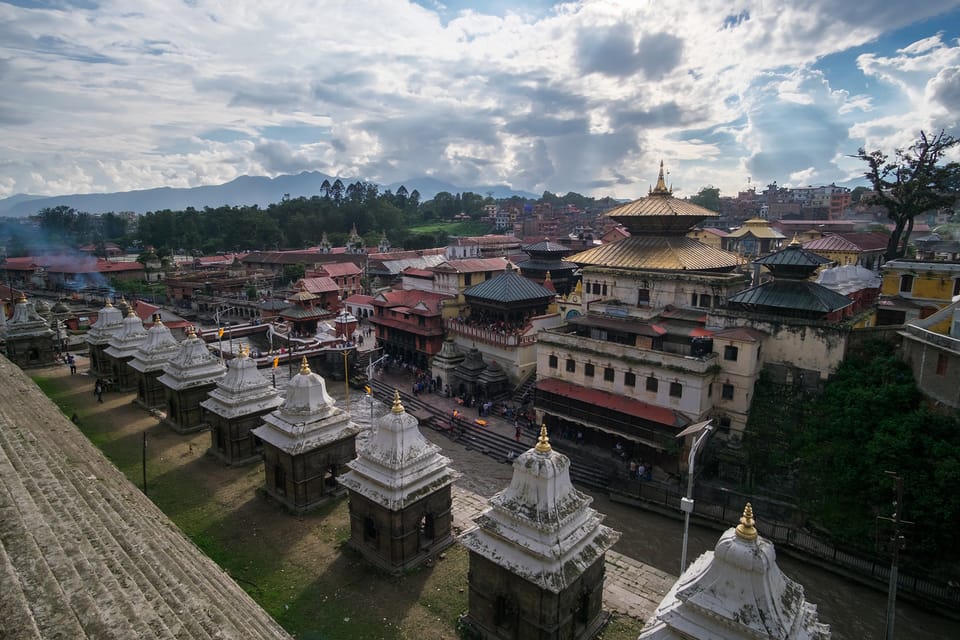
- The main temple is pagoda-style, capped with a golden roof.
- The doors are silver, and they’re part of what makes Pashupatinath so recognizable from a distance.
- The complex sits along the Bagmati River, stretching across both banks.
You’ll also want the timeline in your head while you’re there. The temple is believed to have early origins in the 5th century, but the structure you see today dates back to the 17th century, shaped by reconstructions. That’s the kind of detail that makes the place feel less like a fixed postcard and more like a continuing project—religion, community, and architecture moving through time.
And yes, it’s UNESCO-listed. That matters because UNESCO recognition usually means the site isn’t just beautiful—it’s significant in a way that has to be preserved. You’ll feel that when you’re guided through the complex with care.
Your English-Speaking Guide: What You Gain Beyond the Ticket
This tour includes a licensed English-speaking guide, and that’s not a minor perk. At a site like Pashupatinath, you’re surrounded by ritual action that follows rules and meaning you might not catch on your own.
A good guide does three practical things:
- Helps you orient quickly in a complex that stretches across riverbanks.
- Explains who people are worshipping and why the aarti matters in the bigger religious calendar.
- Gives enough history so the visuals stop being random.
One guide name you might hear is Madhu—described as on-time, enthusiastic, and focused on sharing temple-area knowledge. That lines up with how I’d judge a night tour: you want someone who can make the ceremony understandable without turning it into a lecture.
Bagmati River Grounds: How to Move Through the Complex Without Feeling Lost
The Pashupatinath complex runs on both sides of the Bagmati River, and that can confuse you if you’re showing up cold. This is exactly where a guided tour earns its keep.
Even though the tour is only 3 hours, you should expect time to walk through the temple area and grounds rather than just do a quick peek. The idea is to see the temple and feel the devotional atmosphere, with context from the guide while you’re there.
Practical advice for the day:
- Wear something comfortable enough for walking on uneven ground near a river setting.
- Keep your pace unhurried. If you rush, you’ll miss the explanations that turn the experience from pretty to meaningful.
- Don’t worry if you can’t catch every angle perfectly; what matters is understanding the layout and what each part represents.
One important consideration: because this is a night aarti, your best “buffer” is arriving on time for pickup and showing up ready so you don’t feel rushed at the ceremony start.
Arya Ghat and the Cremation Area: Powerful to See, Not for Everyone
The Pashupatinath complex includes Arya Ghat, the cremation site on the Bagmati River bank. In Hindu belief, cremation there is associated with moksha, liberation from the cycle of rebirth.
That’s big meaning, and it’s also a big emotional reality. Some visitors will find it deeply spiritual and moving in a serious, reflective way. Others may feel uncomfortable because cremation is not “tourist drama”—it’s a sacred life-and-death practice.
A review also notes watching a live cremation alongside an aarti light celebration, which gives you a sense of how intensely spiritual the setting can be. If you’re going into this expecting a gentle cultural show, you may be surprised. If you’re okay with solemnity, it can make the whole tour feel more honest.
So here’s my balanced takeaway: go with respect, keep your distance, and be prepared for the fact that this is a working religious site, not a controlled performance.






The Aarti Ceremony: What Night Adds and What to Watch For
The headline is the special aarti ceremony. Aarti, in simple terms, is worship through ritual offerings and light. At Pashupatinath, the aarti takes place in a setting that’s already heavy with devotion, so the ceremony feels connected to the place instead of pasted onto it.
A few things to keep in mind:
- You’ll be brought to Pashupatinath after hotel pickup, so you can focus on arriving rather than navigating the city.
- The night timing gives you light and atmosphere in a way daylight visits can’t.
- The ceremony is time-sensitive. One person mentioned that if the driver is late, you might miss the beginning—but the visit can still be strong.
That last point is your reality check. It’s not that a delay ruins everything. It’s just that the best part is the start of a live ceremony. Your best move is simple: be ready in the lobby early and keep pickup time in your head.
It’s Only 3 Hours—So Make It Count
The tour duration is 3 hours, which is actually a good length for Kathmandu. It’s long enough to get context and see key areas, but short enough that you won’t feel like you’re spending your whole evening in transit and waiting.
What’s included in that window:
- Hotel pickup and drop-off
- Transportation to and from Pashupatinath
- A licensed English-speaking guide
- Entry ticket to Pashupatinath
- All taxes
- A private group setup
The private group angle matters because you can ask questions without feeling like you’re interrupting a crowded schedule. It also tends to make pacing smoother.
Food and drinks are not included, so plan around it. If you’ll get hungry, grab a light snack before you head out. You’ll want your energy for the walking and for keeping your attention on the ritual.
Price and Value: Is $71 a Fair Deal for Pashupatinath at Night?
At $71 per person, you’re paying for more than a temple ticket. You’re getting:
- Door-to-door convenience via hotel pickup and drop-off
- Transportation
- A licensed English-speaking guide
- Entry and taxes included
For Kathmandu, that combination can be the difference between a smooth cultural evening and a frustrating one—especially at a site where it helps to have someone explain what you’re seeing while you’re standing in the middle of it.
So is it “cheap”? No. But it’s also not paying just for entry. You’re buying time, guidance, and logistics. If you value understanding and hate last-minute scrambling, it looks like good value for a short night window.
If you’re traveling on a tight budget, compare what you’d spend doing it on your own once you factor in transport and the cost of paying for a guide separately. For most people, the math lands in favor of this kind of organized format.
Who Should Book This Night Tour
This is a great match if you:
- Want a night-focused look at one of Nepal’s most significant Shiva-related pilgrimage places
- Prefer a guide to explain the temple, the rituals, and the meaning behind what you see
- Like experiences that are cultural and spiritual, not just visual
It also seems to work well for solo visitors. One solo woman said she felt safe and well informed throughout, which is exactly what you want from a guided evening tour—especially when you’re not sure how the complex is laid out.
If you’re not comfortable around cremation areas, be extra cautious. Arya Ghat is part of the complex, and the setting can involve live cremation depending on the circumstances.
What to Bring (And the One Thing People Forget)
Bring your passport. A copy is accepted. Also bring patience: at active pilgrimage sites, you’re not controlling the pace.
Beyond paperwork, keep your essentials simple: comfortable shoes, a layer if Kathmandu’s night air cools down, and a small bag you can manage while walking.
Should You Book This Night Aarti Tour?
Book it if you want a structured evening at Pashupatinath with pickup, a licensed English guide, entry included, and time to actually understand what’s happening. The golden roof, silver doors, and aarti ceremony are the headline, but the real value is the guide framing—plus the convenience of not spending your limited evening figuring out logistics.
Skip it or go with caution if you’re strongly uncomfortable with death rituals. This site includes Arya Ghat, and that adds weight to the experience.
If you’re flexible on timing and you show up ready for pickup, this tour is a practical, respectful way to see a living religious center in the way it’s meant to be seen: at night, with light, devotion, and context.
FAQ
How long is the Kathmandu Pashupatinath Temple Aarti Night Tour?
The tour lasts 3 hours.
Is hotel pickup and drop-off included?
Yes. You’re picked up from your hotel and dropped back after the tour. You should wait in the hotel lobby about 15 minutes before pickup.
What’s included in the price?
The tour includes hotel pickup and drop-off, transportation to and from Pashupatinath, a licensed English-speaking guide, entry ticket, and all taxes.
Is food and drinks included?
No. Food and drinks are not included.
Do I need to pay for entry separately?
No. The entry ticket to Pashupatinath is included.
What do I need to bring with me?
A passport is required. A copy is accepted.
Is this tour wheelchair accessible?
Yes, it’s listed as wheelchair accessible.