REVIEW · KATHMANDU
Evening Photography Tour of Kathmandu
Book on Viator →Operated by Third Rock Adventures · Bookable on Viator
Evening Kathmandu turns your camera into a passport. In just 3 to 4 hours, you’ll move between Boudhanath and Pashupatinath to photograph real ritual life, not staged scenes. I especially like that the guide helps you find the exact angles and moments to capture.
My second favorite part is the practical setup: private transportation from central Kathmandu and an English-speaking licensed city guide keep the evening flowing. The only real drawback to consider is that this is low-light photography, so if you are new to night settings, you may need a little patience and experimentation.
In This Review
- Key Points You’ll Care About
- Why Kathmandu Nights Are Made for Photos
- Getting There: Private Pickup and a Tight 3–4 Hour Rhythm
- Stop 1: Boudhanath Stupa’s Butter-Lamp Prayer and Parikrama Flow
- Stop 1 Details: Where to Stand for Real Movement (Not Static Crowds)
- Stop 2: Pashupatinath Arati Fire Ritual and Chanting on the Bagmati River Edge
- How the Guide Context Changes Your Photos (and Your Understanding)
- Price and Logistics Value: What $102 Buys You
- What to Bring for a Night Shoot (Practical, Not Fancy)
- The Best Fit: Who Will Love This Tour
- Should You Book This Evening Photo Tour?
- FAQ
- FAQ
- How long is the evening photography tour?
- What places does the tour include?
- Is transportation included?
- Are entrance tickets included?
- What is not included in the price?
- Is the tour private?
- Does the tour depend on weather?
- What is the cancellation window for a full refund?
Key Points You’ll Care About
- Two major religious landmarks, timed for evening light instead of a daytime sightseeing shuffle
- Guide direction for framing and timing so you are not guessing where to stand
- Private transportation from central Kathmandu with less logistics stress
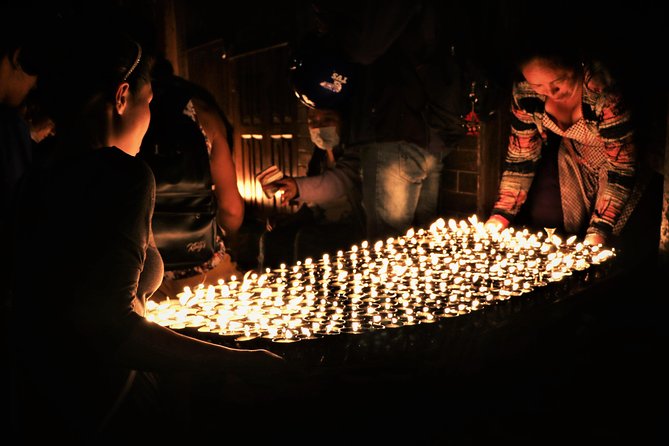
- Boudhanath parikrama moments and butter-lamp prayer scenes for strong visual storytelling
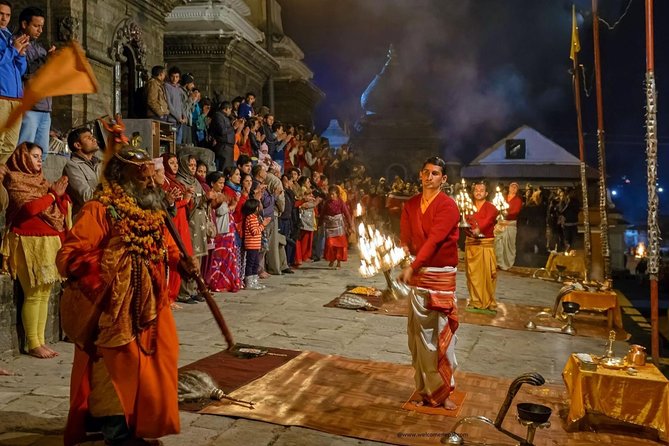
- Pashupatinath arati with chanting and fire rituals for dramatic, moving footage-style photos
Why Kathmandu Nights Are Made for Photos
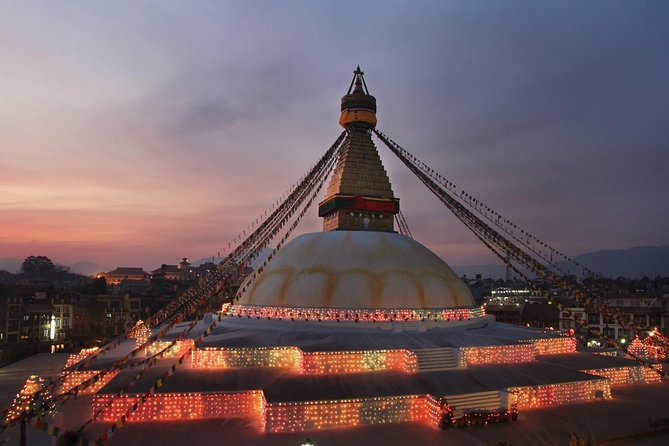
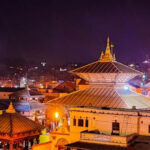
Kathmandu after dark is not just darker streets. It is a different rhythm. At Boudhanath, the stupa glows and people move in a slow loop around it. At Pashupatinath, the air fills with chanting, singing, and flame-based worship.
This is the kind of tour where your camera becomes the main tool for understanding what you’re seeing. A good portion of the value is not the landmarks themselves (you can read about them anytime). It is getting placed for the moments when devotion turns into motion: hands lifting lamps, incense and fire rituals, and devotees reacting in real time.
If you have already seen these sites in daylight, this tour still makes sense. Evening changes colors, shadows, and the pace of ceremonies. You are capturing the spiritual atmosphere, not just architecture.
You can also read our reviews of more evening experiences in Kathmandu
Getting There: Private Pickup and a Tight 3–4 Hour Rhythm
This is a private, half-day evening tour, typically around 3 to 4 hours. That matters because religious ceremonies are time-bound. You want to arrive when the atmosphere is building, not after the best moments have already passed.
You also get transportation from central Kathmandu. That is a big deal in a city where evening traffic and route choices can steal time from the very thing you booked for: the ritual moments.
Another small but helpful detail is the guide role. Between stops, you do not just sit quietly. The guide shares context about what you are about to photograph and what you are seeing as you watch. If you want your photos to tell a clearer story, this added narration helps.
Stop 1: Boudhanath Stupa’s Butter-Lamp Prayer and Parikrama Flow
Your evening starts at Boudhanath Stupa, one of Kathmandu’s most important pilgrimage centers for Tibetan Buddhism. The visual setup is strong right away: a white domed stupa that is beautifully lighted up, with devotees and monks moving around it.
The key activity here is parikrama, the circumambulation. People walk the route around the stupa in a steady rhythm. For photography, that walking loop gives you natural direction and repeated patterns in your frame, which is exactly what you want in low light.
You’ll also watch butter lamps being lit and prayers being offered. The focus is well-being and peace, which gives the scene an emotional center. The best images usually come when you capture both motion (people walking) and meaning (lamps raised, faces turned toward prayer).
The practical upside: you have about an hour here. That is long enough to get your bearings, reposition a bit, and still be present when the atmosphere peaks. The downside is simple: you cannot chase every angle like you would on a full-day shoot. You’ll want to commit to a couple of compositions and let the crowd movement do the work.
Stop 1 Details: Where to Stand for Real Movement (Not Static Crowds)
At Boudhanath, you are photographing more than architecture. You are photographing a living ritual. Parikrama creates a repeating movement cycle, and that helps you predict what will happen next.
I like how the tour is built around knowing just where to go. Without direction, you often end up filming from the wrong spot: too far for faces, or too close where you block someone’s path. With the guide’s help, you can aim for frames that include the stupa glow while still showing the human element.
This is also where your camera technique matters most. A lot of the action is quick: a lamp lifted, a moment of prayer, a glance upward. If you have a camera that handles high ISO well, you’ll feel more confident. If not, you’ll still get results, but plan for shorter bursts and a steadier hand.
And yes, it is okay to photograph quietly. The atmosphere is devotional, not entertainment. Your best strategy is to stay attentive, keep your distance when needed, and wait for the ritual moment to unfold in front of you.
Stop 2: Pashupatinath Arati Fire Ritual and Chanting on the Bagmati River Edge
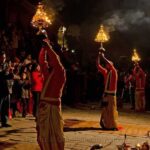
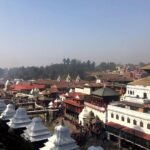
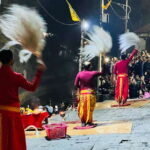
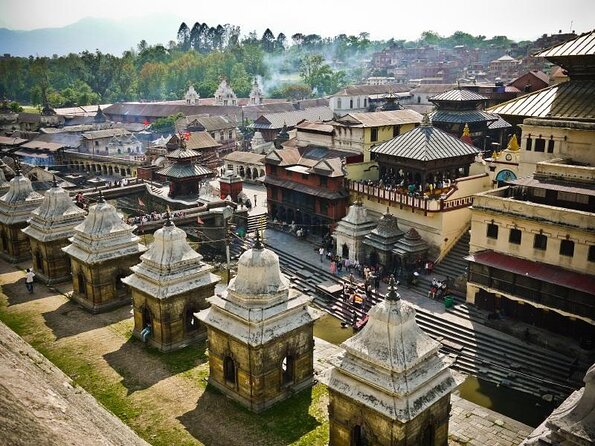
Next comes Pashupatinath Temple, one of the most important Hindu shrines dedicated to Lord Shiva. In the evening, the site transforms. Chanting and Vedic hymns fill the air, and priests conduct an arati ritual that centers on flame offered to the gods.
This is the stop that tends to feel the most cinematic. You’ll see devotees reacting to the ceremony, including moments of trance-like dancing when the arati is offered. The priests’ movements and the fire itself give you natural highlights, which is a huge advantage for photography at night.
Also, the cultural context matters. The guide explains what is happening as you watch, so you are not just photographing fire and movement without understanding why it is meaningful. That’s how you end up with stronger images: your camera captures what your brain recognizes.
You’ll spend about an hour at Pashupatinath. That is enough time to watch the ritual sequence and get a few clean sets of photos. Again, you are not running a marathon of locations. You are building a focused story with two major religious landmarks.
How the Guide Context Changes Your Photos (and Your Understanding)
The tour is built around context from your guide. That sounds like a nice extra, but it changes everything in practice.
When someone tells you what to look for, you stop wandering. You start anticipating. You learn the rhythm: when lamps appear, when chanting intensifies, when movement concentrates around the ritual action. That timing helps your shutter speed decisions, too.
The guide is also part of the pacing. In one of the write-ups tied to this experience, Mr Bikash was praised for having a huge amount of knowledge and for being professional and polite. Another highlighted guide experience was with Deepa, appreciated for clear information and for helping make the night ritual feel understandable.
You do not need a museum-level lecture to get value. You just need enough context to know what is important in the scene. That is what you get here, and that is why the tour works even if you are not a hardcore photographer.
Price and Logistics Value: What $102 Buys You
At $102 per person, this isn’t a budget add-on. It is a focused evening experience with real value in three places:
First, you get private transportation from central Kathmandu. That saves time and hassle, and it protects your schedule for ceremonies that happen at specific hours.
Second, you get a licensed English-speaking city guide. Guides here are not just translators. They help you stand in the right places and interpret what you are seeing while you photograph.
Third, admission tickets for both stops are included. That matters because it reduces the small annoyances that can break your flow in the evening.
If you compare this to doing the trip on your own, the savings are not in money so much as energy. For many people, the value is that you walk into the ritual moments already positioned to capture them without extra planning. For photography in Kathmandu at night, that is worth a lot.
What to Bring for a Night Shoot (Practical, Not Fancy)
The tour says all you need is your camera. I’d still treat it like a real night photography session.
Bring:
- A fully charged battery (night use can drain faster)
- A lens or settings you already know how to use
- If you have one, a way to stabilize your camera for slower shutter speeds
- A light layer for evening cool-down
You should also plan for crowd movement and changing conditions. Religious sites can be busy, and scenes unfold differently each evening. Your best photos will come from flexibility, not force.
One more practical point: if you want crisp faces, you’ll likely rely on higher ISO or faster shutter speeds. If you want flame detail and motion, you can experiment the other way. The guide context helps you choose what matters most for your style.
The Best Fit: Who Will Love This Tour
This tour suits you if you want your Kathmandu evening to be purposeful. You like photography that captures people and practice, not just empty monuments.
It also suits you if you have already done daytime sightseeing and want a second angle on the same landmarks. Evening brings ceremonies, flame, chanting, and a completely different visual mood.
It is also a good choice for people who do not want to handle the logistics of moving between Boudhanath and Pashupatinath while trying to time religious rituals.
If your expectation is a wide tour with lots of different neighborhoods and many different stops, you might feel the focus is narrow. This experience is about two places and the rituals happening there.
Should You Book This Evening Photo Tour?
Book it if you want a guided, focused way to photograph Kathmandu’s major spiritual landmarks at night. You are paying for timing, positioning, and interpretation, not for a long checklist of stops.
Skip it only if you dislike low-light work or you want a more general sightseeing evening. This is a photography-first tour, and the main action is the rituals. If that is what you came for, you’ll likely walk away with photos that feel alive, not just pretty.
FAQ
FAQ
How long is the evening photography tour?
The tour runs about 3 to 4 hours.
What places does the tour include?
It covers Boudhanath Stupa and Pashupatinath Temple.
Is transportation included?
Yes. Private transportation from central Kathmandu is included, and pickup is offered.
Are entrance tickets included?
Yes. Admission tickets are included for both stops.
What is not included in the price?
Dinner and bottled water are not included, and alcoholic beverages are not included.
Is the tour private?
Yes. It is a private tour/activity, and only your group participates.
Does the tour depend on weather?
Yes. The experience requires good weather, and if it is canceled due to poor weather, you’ll be offered a different date or a full refund.
What is the cancellation window for a full refund?
You can cancel up to 24 hours in advance for a full refund.
If you tell me what camera you’ll use and whether you prefer night portraits or more wide storytelling shots, I can suggest a simple shot plan for this exact two-stop evening.