REVIEW · KATHMANDU
Monkey Temple – Swayambhunath Tour – Private/Small Group
Book on Viator →Operated by Amazing Kathmandu Tours · Bookable on Viator
Tiny monkeys, huge stories above Kathmandu.
This small-group Swayambhunath walk (max 5 people) trades bus rides for a guided stroll through hilltop temples and surrounding neighborhoods. I like how the tour ties together myths and Kathmandu’s origin story while you’re actually looking at the places tied to those legends, and I also like that the pace is kept manageable by a local guide like Santosh who talks through what you’re seeing as ceremonies happen. One thing to consider: the walking is real, including a long climb up from Bhagwan Pau toward the main stupa.
My favorite part is the mix of sites around Swayambhunath, not just one famous stop. You’ll get a guided look at the Swayambhunath stupa itself, plus surrounding temples like Harati Ajima, Manjushree, and Amideva Buddha Park, which gives you a fuller picture of how Buddhist and Hindu traditions share this hill. The only drawback is cost clarity: the main Swayambhunath entrance fee is not included and needs cash (200 Rupees) paid directly to temple authorities.
In This Review
- Key Highlights You’ll Actually Feel on the Walk
- Entering Kathmandu’s Hilltop Legends in 3 Hours
- Thamel to Bhagwan Pau: Start Here, Not in the Clouds
- The 365 Stairs Reality Check (And How to Handle It)
- Swayambhunath Stupa: The Main Stop With Big Stories
- Harati Ajima: Pagoda-Style Temple and Mother Harati
- Manjushree Temple and the Valley-as-a-Lake Story
- Amideva Buddha Park: Giant Idols and Multiple Traditions
- World Peace Pond and Shova Bhagawati: Small Stops, Clear Meaning
- Price and Value: What Costs $15, What Costs Extra
- Who This Tour Fits Best (And Who Should Skip It)
- Practical Tips That Make the Difference
- Should You Book This Monkey Temple and Swayambhunath Tour?
- FAQ
- How long is the Monkey Temple – Swayambhunath tour?
- What’s the maximum group size?
- Where do I meet for the tour?
- How do I get back at the end of the tour?
- Is the Swayambhunath entrance fee included?
- Does the tour include an English-speaking guide?
- Are any other entrance fees included?
- Is there a youth/student price?
- What fitness level is needed?
- Are service animals allowed?
Key Highlights You’ll Actually Feel on the Walk
- Small group size (up to 5) makes it easy to ask questions and move at a comfortable pace.
- Santosh-style story guidance connects myths with the physical places you’re walking past.
- Swayambhunath hilltop views plus multiple temple stops, so 3 hours feels like more than one attraction.
- Practical mix of included and extra fees, with Swayambhunath paid in cash on-site.
- A calm, organized route that starts in Thamel and returns you to the meeting area.
Entering Kathmandu’s Hilltop Legends in 3 Hours
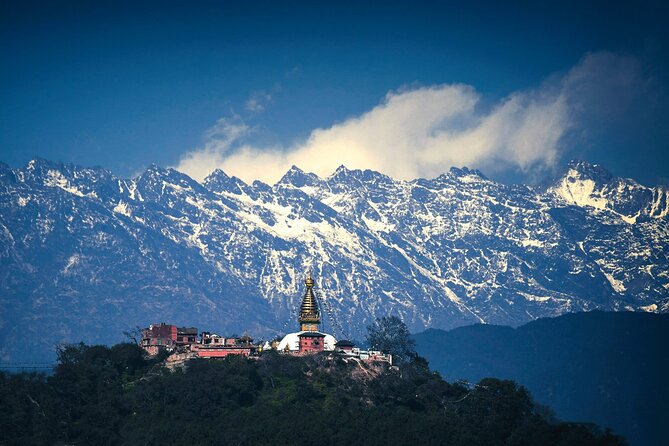
If Kathmandu is your “first big move” after arriving, Swayambhunath is one of the easiest places to get your bearings fast. This tour is built for that moment. You start in Thamel at Pumpernickel Bakery and then head uphill on foot, stopping along the way to understand what you’re seeing and why it matters to local worship.
What I like about the format is its focus. It’s not a checklist of random buildings. It’s a guided thread through the myths and legends tied to this hill, with the Swayambhunath stupa as the centerpiece. You also pass neighborhoods around Swayambhunath and Saraswotithan, so you see more of daily life than a pure “look-and-leave” monument stop.
The tour runs about 3 hours, so it works well even if you’re juggling sightseeing with jet lag or you’re trying to fit in a major spiritual site without losing half a day.
You can also read our reviews of more private tours in Kathmandu

Thamel to Bhagwan Pau: Start Here, Not in the Clouds
You’ll meet at Pumpernickel Bakery on Paryatan Marg in Thamel. That’s a useful detail because Thamel is where most visitors are staying, and it means you’re not scrambling across town for a pickup. From there, you head toward Bhagwan Pau, the area linked to the feet of Lord Buddha, before you begin the long walk up to the main entrance.
One practical win: the plan includes a short stop at Bhagwan Pau to take a breather, drink water, and prepare for the climb. It’s the kind of small pacing decision that makes a difference when you’re walking in heat or on uneven temple paths.
And yes, the stairs are a big part of the experience. The main entrance begins with 365 stairs from the Bhagwan Pau area. The number is part of the story you’ll hear, but the main point for you is physical reality: even a good walker will feel it.
The 365 Stairs Reality Check (And How to Handle It)
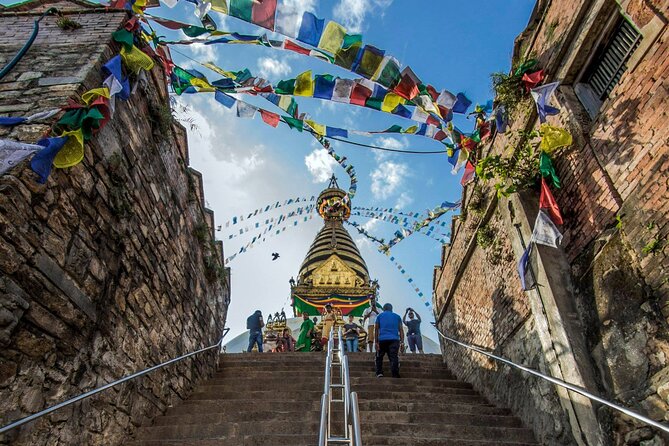
Here’s the honest trade-off: Swayambhunath is on a hilltop, so you’ll earn those views. The route includes walking up from the base, and you’ll also be moving between several temples once you’re up there.
If you have severe asthma or knee problems, this is the kind of walking that may be a bad fit, especially with the stairs. If you’re generally steady on your feet and just want a thoughtful sightseeing walk, it’s workable—but wear shoes you trust.
My practical advice:
- Take the climb slow and steady. Don’t try to “power through” early.
- Bring a refillable water bottle if you can. The tour includes a water break at the start, but you’ll still appreciate having more on hand.
- Wear something you can move in on steep paths.
Swayambhunath Stupa: The Main Stop With Big Stories
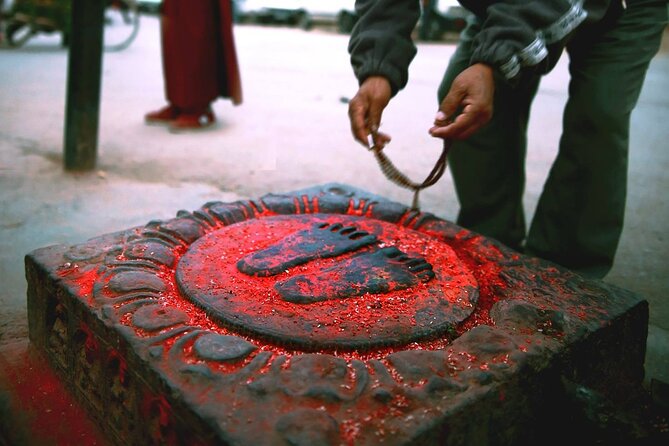
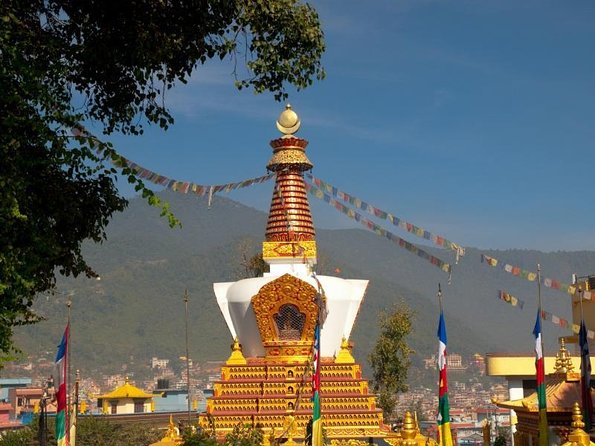
Once you reach Swayambhunath, this is where the tour’s focus clicks. Swayambhunath is described as a self-originated one, and the guide’s job is to connect that belief to what you see around you. You’re not just taking photos; you’re learning how the hill’s religious meaning is explained through stories and how those stories affect worship.
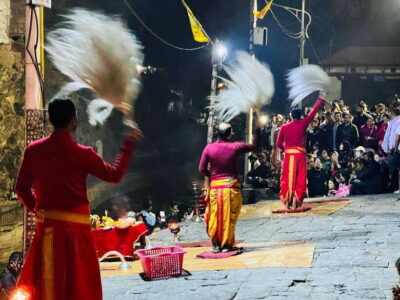
This is also the point where timing matters. The guide gives you context for what’s happening when religious ceremonies are taking place, so you can understand the scene instead of just watching it like a spectacle.
If you’re hoping for a “spiritual site plus viewpoint” kind of stop, this delivers. The overall layout makes it easy to notice details while you climb, rest, look around, and then refocus on the main stupa area.
One more useful detail: the Swayambhunath entrance fee is not included in the tour price. It’s 200 Rupees (about US$1.50) in cash paid directly to temple authorities. If you want the day to feel smooth, plan to have that cash ready.
Harati Ajima: Pagoda-Style Temple and Mother Harati
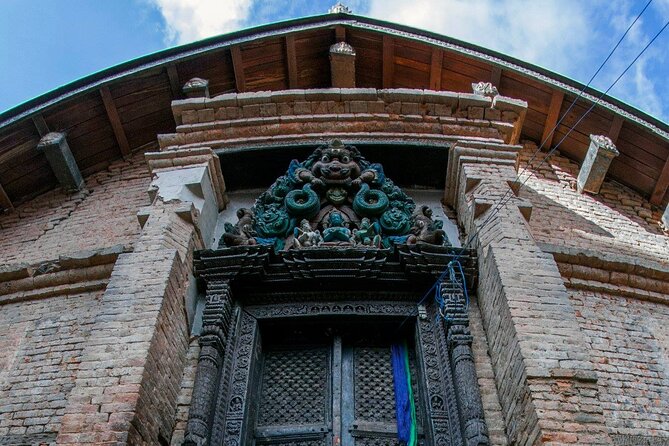
Not every major temple tour in Kathmandu gives you a reason to pay attention beyond the main landmark. This one does. You’ll visit Harati Ajima Temple, which stands out for its Nepalese pagoda-style architecture.
More importantly, the guide explains the story behind Harati Ajima and how the demon Harati became Mother Harati, which is why people worship her around the valley. That myth connection is the difference between “I saw a temple” and “I understand why locals treat this place with seriousness.”
This stop is short on paper—about 5 minutes—but it’s the kind of quick hit that changes how you interpret everything else on the hill. You notice symbolism more, and you stop treating the temples as separate objects.



Manjushree Temple and the Valley-as-a-Lake Story
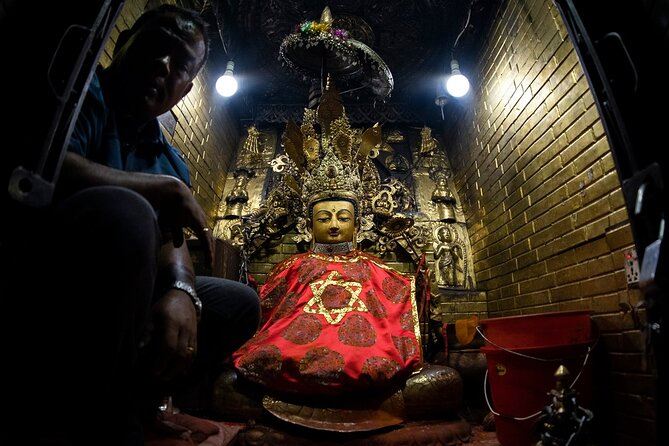
Then you move to Manjushree Temple, a smaller shrine on the Swayambhu hill dedicated to Maha Manjushree. Here, the legends shift toward how Kathmandu itself is described: the story of how the Kathmandu valley became a city from a great lake.
You also get a chance to enjoy the panoramic view of the western side from this area. Even if you don’t love heights, the viewpoint helps lock the geography into your brain. Kathmandu feels less like a grid and more like a basin when you can see the hill lines from up here.
The best part is that the view and the story support each other. You’re not just looking outward; you’re learning how people have explained that outward world for generations.
Amideva Buddha Park: Giant Idols and Multiple Traditions
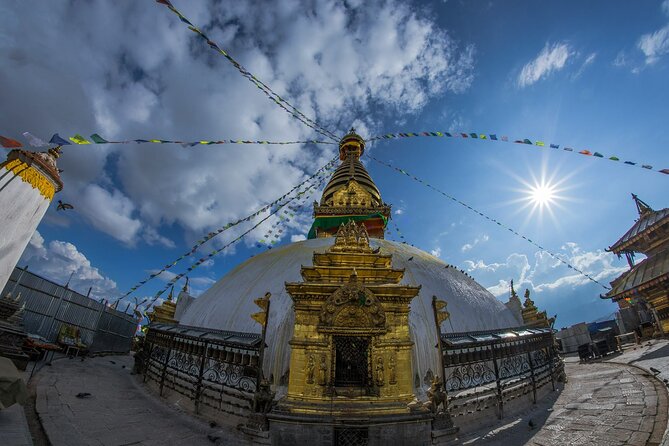
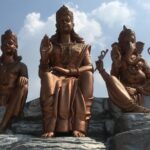
Next up is Amideva Buddha Park, notable for the giant idols of Amitabha Buddha (Amideva) and other figures represented there. The park features three large idols—67 feet in the center and 64 feet on each side—plus a guided walk around the area.
Even if you’re not a sculpture superfan, this stop is worth your attention because it shows how Swayambhu isn’t only about one stupa. It’s a hill where different forms of devotion and different traditions exist in close proximity.
The guide shares stories connected to these figures, helping you connect what you see to the meaning behind it. This part of the tour is a good “breather” too, since you’re outdoors and walking at a slower pace compared to the staircase climb.
World Peace Pond and Shova Bhagawati: Small Stops, Clear Meaning
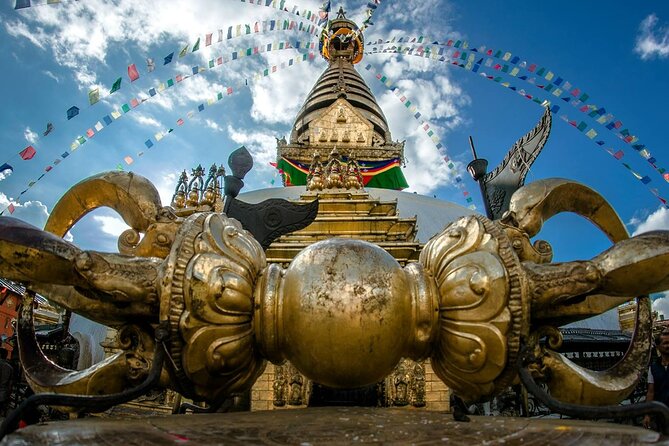
On the way through the Swayambhunath area, you’ll also see the World Peace Pond on the western side. A brass statue of a Buddha standing on a lotus flower sits in the middle, and there are words on the wall written in English.
That English detail is a quiet convenience for you if you’re trying to understand the place quickly without hunting for translations. It’s one of those small moments where you feel like the tour team wants visitors to get something meaningful, not just pass through.
After that, you’ll go to Shova Bhagawati, a shrine devoted to the goddess Bhagwati on the bank of the Bishnumati River. The tour notes that it’s one of the four major Bhagwati temples in Kathmandu. Again, you get a story connection and a sense of how this place fits into the broader religious landscape around Kathmandu.
Price and Value: What Costs $15, What Costs Extra
At $15 per person, this tour is priced like a budget-friendly way to see a major hilltop site with a guide and multiple temple stops. The big value is that you’re not just paying for entry tickets; you’re paying for interpretation. The guide helps you connect the myths to the physical places so you leave with more than photos.
Here’s the cost reality check:
- The tour includes an English-speaking guide.
- Some admission fees are included at certain stops along the route.
- The Swayambhunath entrance fee is not included: 200 Rupees (about US$1.50), paid in cash to temple authorities.
If you’re budgeting tightly, that extra cash is easy to plan for. If you’re not into paying surprise on-site fees, this is still a small amount compared with how much you’re getting: multiple meaningful stops plus a guided walk for about 3 hours.
Also, the tour mentions mobile ticket and group discounts, though the exact discount level isn’t spelled out here. Still, it’s a sign the provider is thinking about convenience.
Who This Tour Fits Best (And Who Should Skip It)
This tour is a great fit if:
- You want a short guided outing with a clear theme (Swayambhunath myths and Kathmandu origins).
- You like walking and you’re okay with a hilltop climb.
- You’re traveling solo and want a guided route that feels organized and safe.
- You want a mixture of Buddhist and Hindu religious context, not just one.
This tour may be a poor fit if:
- You have severe asthma or knee problems, because of the stairs and overall walking.
- You want a mostly flat, low-step experience.
Good news for solo travelers: the experience is set up for small groups, and that tends to make the day feel less crowded and more personal.
Practical Tips That Make the Difference
A few details can make your morning smoother.
First, start with the right shoes. Temple stairs and uneven paths aren’t the place for slick soles or sandals.
Second, carry that small amount of cash for Swayambhunath. The fee is 200 Rupees, paid directly to temple authorities, and it’s not included in the main price.
Third, plan for a real walk. It’s not a sit-down museum tour. You’ll move between spots like Harati Ajima, Manjushree Temple, Amideva Buddha Park, and World Peace Pond area before heading back toward Thamel.
Finally, show up ready to listen. The tour is built around stories—origin legends, religious meanings, and what ceremonies look like when they’re happening.
Should You Book This Monkey Temple and Swayambhunath Tour?
If you’re trying to do Swayambhunath with context—myths, legends, and how the hill’s religious life actually works—this is a strong choice. The small group max 5 and the guide-led story format make it feel like a thoughtful morning walk rather than a rushed sightseeing line.
I’d book it if you’re comfortable climbing stairs and want more than one temple stop while keeping the time to about 3 hours. I’d skip it if stairs and longer walking are a deal-breaker for you, especially with severe asthma or knee issues.
If you like a guided plan that’s easy to join, hits the major spiritual points, and leaves you with a clearer mental map of Kathmandu, this one is worth your $15—and plan for the small cash fee at the main stupa.
FAQ
How long is the Monkey Temple – Swayambhunath tour?
The tour lasts about 3 hours.
What’s the maximum group size?
It’s limited to a maximum of 5 travelers.
Where do I meet for the tour?
You meet at Pumpernickel Bakery on Paryatan Marg in Kathmandu, Nepal.
How do I get back at the end of the tour?
The tour ends back at the meeting point in Thamel (Pumpernickel Bakery).
Is the Swayambhunath entrance fee included?
No. The Swayambhunath entrance fee is 200 Rupees (about US$1.50) and is paid in cash directly to temple authorities.
Does the tour include an English-speaking guide?
Yes, the tour includes an English speaking guide.
Are any other entrance fees included?
Some stops along the way include admission, while others are listed as not included—so not every site is paid separately by you.
Is there a youth/student price?
Yes. The tour notes a youth price for students with a student card.
What fitness level is needed?
It calls for travelers with a moderate physical fitness level.
Are service animals allowed?
Yes, service animals are allowed.