REVIEW · KATHMANDU
Kathmandu Valley City Day Tour
Book on Viator →Operated by Pariwar Holidays Pvt Ltd · Bookable on Viator
Five sacred stops. One well-run day.
This Kathmandu Valley city tour is interesting because it strings together major UNESCO World Heritage Sites with the convenience of a private vehicle and a real guide. I like that you get context for what you’re seeing, not just a drop-off. I also like the pacing: several standout sites, each about an hour, so the day feels full but not frantic. One thing to plan for: entrance fees are not included, so you’ll want to budget extra on-site.
You’ll start at A1 Business complex (Kathmandu 44600, Nepal) and end back there, with the tour arranged as a private group just for you. Tickets are handled via a mobile ticket, and the itinerary is built around a practical flow through the Kathmandu Valley’s most famous religious landmarks.
In This Review
- Key highlights worth your attention
- Why this Kathmandu Valley day tour works for first-timers
- The $60 price tag: what you’re really paying for
- Private vehicle flow and the pacing of a 5–7 hour day
- Kathmandu Durbar Square: where Kathmandu’s story turns political
- Swayambhunath (Monkey Temple): hilltop stupa views and living symbolism
- Pashupatinath Temple: Hindu sacred space on the Bagmati River
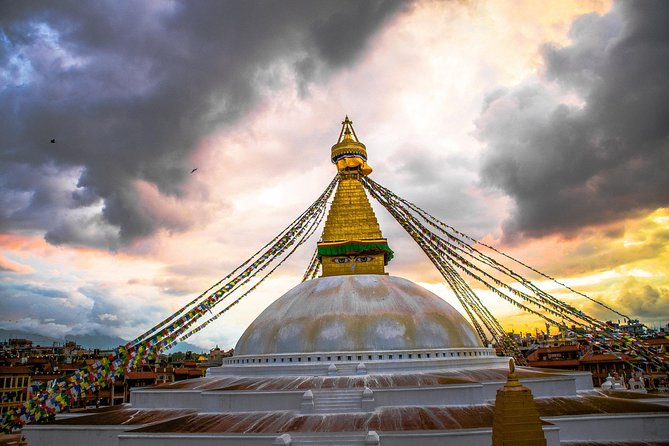
- Boudhanath Stupa: big Buddhist center with a scale you can feel
- Guides like Padam, Rita, Manoj, and Santosh make it land
- What’s included, what’s not, and how to plan your day
- Who should book this Kathmandu Valley tour
- Should you book it? My straight take
- FAQ
- What is the price for the Kathmandu Valley City Day Tour?
- How long is the tour?
- Is this tour private?
- What does the tour include?
- Are entrance fees included for the sights?
- Does the tour include lunch or drinks?
- What is the meeting point and where does the tour end?
Key highlights worth your attention
- UNESCO sites in a single day with minimal logistics stress
- Private vehicle + driver for comfortable, door-to-door travel
- Guide-led explanations of Hindu and Buddhist traditions
- Hilltop and riverbank contrast across the temples and stupas
- Most entry costs are extra, so budget ahead
- Full-day structure (about 5–7 hours) with roughly an hour per major stop
Why this Kathmandu Valley day tour works for first-timers
If it’s your first time in Kathmandu, the hard part isn’t seeing temples. It’s figuring out how to see the right ones without wasting the day on directions, timing, and figuring out who to pay.
This tour is built for getting your bearings fast while still feeling like more than a checklist. You’ll visit Kathmandu Durbar Square, then move up to Swayambhunath (Monkey Temple), and continue to the sacred Pashupatinath temple complex on the Bagmati River. Finally, you’ll reach Boudhanath Stupa, one of Kathmandu’s most important Buddhist sites.
The private setup matters. With a driver and a guide included, you can focus on the experience instead of the grind. And because the stops are spaced out (about an hour each at the main sites), you’re not stuck in one place too long, or rushed through everything.
One more smart detail: the tour is designed so you return to your starting point. For a first day, that reduces the risk of ending up with an annoying logistics knot late in the afternoon.
You can also read our reviews of more city tours in Kathmandu
The $60 price tag: what you’re really paying for
At $60 per person, this tour is priced like a value option rather than a premium luxury day. The best way to think about it is not just the base cost, but what’s included.
You get:
- Driver and private transportation
- Fuel surcharge
- Parking fees
- Tour guide
- A day structured across major sites (with a total duration of about 5–7 hours)
What’s not included:
- Entrance fees for sightseeing points
- Lunch and drinks
So you’re paying for time saved and friction reduced. You’re also paying for guidance. Several guests specifically praise guides for making the cultural and religious side easier to understand (including explanations around Hinduism and Buddhism). When you’re seeing places like Swayambhunath, Pashupatinath, and Boudhanath—each with its own traditions—having an interpreter for what you’re looking at changes the day from seeing to understanding.
The main “cost surprise” to plan for is entrance fees. Since they’re not included, your final spending depends on what you choose to pay for at each site. If you show up expecting the tour price to cover everything, you might feel nicked later. If you show up expecting extra on-site fees, it feels straightforward.
Private vehicle flow and the pacing of a 5–7 hour day
This is listed as a private tour/activity, meaning only your group will participate. That’s a big deal in Kathmandu, where timing can get messy. You’re not sharing a van with strangers who want different stops or different speeds.
You’ll spend a short period at the start point (a brief check-in around Pariwar Holidays). Then the tour moves site to site, with about:
- ~1 hour at Kathmandu Durbar Square
- ~1 hour at Swayambhu Mahachaitya
- ~1 hour at Pashupatinath
- ~1 hour at Boudhanath Stupa
That schedule is not too short and not too long. It gives you enough time to walk around, look up and down, and take in the feel without feeling trapped. It also helps you manage energy. Temple and stupa areas can involve steps and uneven ground, and even if you don’t mind walking, a full day adds up.
Another practical win: the tour is near public transportation, so even if you want to hop out and explore later on your own, you’re not stranded.
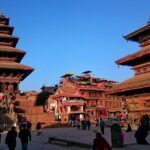
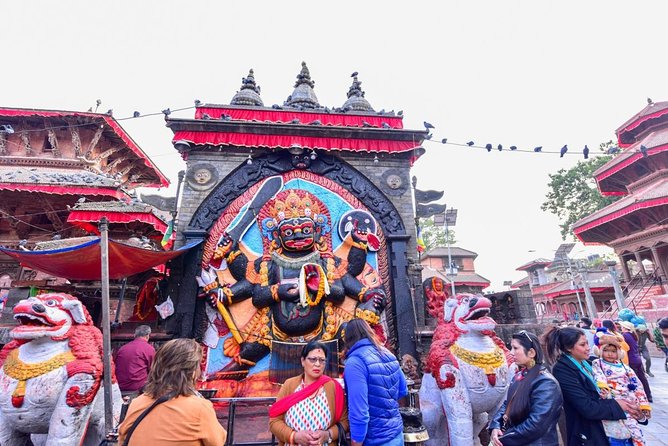
Kathmandu Durbar Square: where Kathmandu’s story turns political
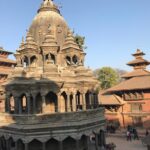
Your first major stop is Kathmandu Durbar Square, set up as a historical place in the tour plan. This is one of those spots where the atmosphere feels older and more layered than a typical modern square.
What I like about starting here is how it sets context before the religious sites. Durbar Square gives you a sense of Kathmandu’s past power centers and heritage, which makes the rest of the day more meaningful. When you later see sacred spaces, you’ll be noticing not just the religion, but the way Kathmandu’s identity has been shaped over time.
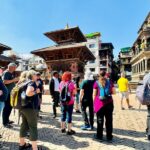
Because entrance fees are not included, you’ll want to expect a separate payment on-site if you decide to go inside specific areas. Also, because this stop is about one hour, it’s worth choosing what you want most: a broad walk-through or a slower focus on details. With a guide, you can ask quick questions and cut through confusion fast.
Potential drawback? The “historical square” style means you may spend time weaving through moving crowds and people selling small items. The tour’s private vehicle doesn’t eliminate that reality, but your guide can help you keep the day on track so it doesn’t turn into an accidental detour day.
Swayambhunath (Monkey Temple): hilltop stupa views and living symbolism
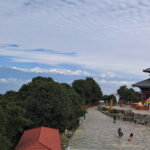
Next comes the Swoyambhu Mahachaitya, commonly called Swayambhunath or the Monkey Temple. The tour description makes its key feature simple: it’s an old stupa at the top of the hill.
This is the kind of site where arriving changes your mood. You’re not just moving from one building to another; you’re climbing toward a religious landmark with a long timeline. The stupa sits high enough that you get better sightlines over the Kathmandu Valley, so you can connect the physical space with what the site means spiritually.
Swayambhu is also a classic place for symbolism. Buddhist iconography and temple architecture are meant to communicate belief through form—rings, steps, and shrine elements that you can slowly notice as you walk. With a guide, you can ask what the elements represent rather than guessing.
One practical note: the tour keeps this stop to about one hour. If you love photography or want extra time to wander the surrounding areas, plan for a quick “main circuit” during the tour, then consider returning later if you want a longer personal loop. Entrance fees aren’t included here either, so again, budget separately if you plan to pay.
Pashupatinath Temple: Hindu sacred space on the Bagmati River
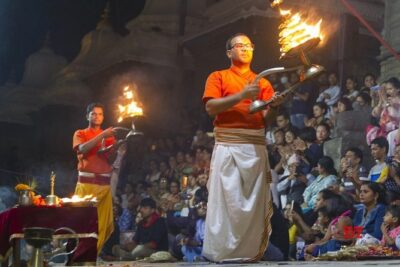
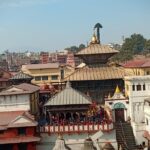
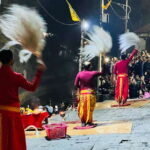
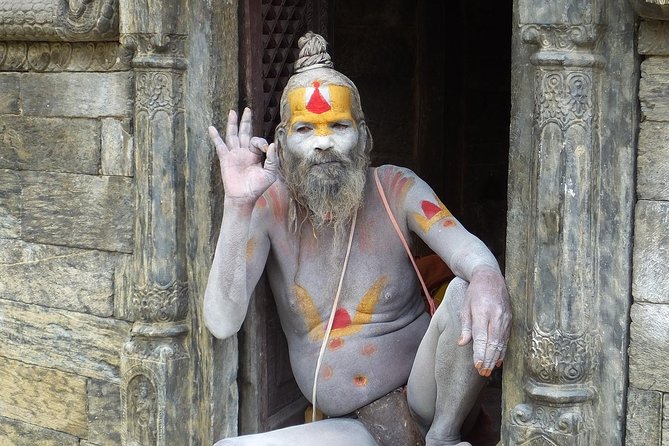
Then you move to Pashupatinath Temple, described as a sacred Hindu temple complex on the banks of the Bagmati River.
This stop is the most setting-driven of the day. The river location isn’t a background detail—it’s part of the spiritual character of the place. Even if you’re not deeply familiar with Hindu ritual, you’ll quickly sense that the riverbank is central to how the site functions and why it’s respected.
What I like about including Pashupatinath on a day that also covers Buddhist sites is the contrast. You’re not only moving between neighborhoods. You’re seeing two major religious worldviews in one packed window, and the guide can help you understand differences in how sacred space is arranged and used.
The tour gives you about one hour here. That can feel tight if you stop to watch activity for a while. If you’re the kind of person who likes to pause and observe, let your guide know early so your time stays comfortable. And as with other stops, entrance fees are extra, so your “hour inside” choices may depend on what you pay for.
Boudhanath Stupa: big Buddhist center with a scale you can feel
Your final major stop is Boudhanath Stupa, described as the biggest Boudha stupa and one of the holiest Buddhist sites in Kathmandu.
If Swayambhu is about hilltop and history, Boudhanath is about scale. Stupas like this are designed to be seen from many angles, and the space around them encourages slow movement and repeated attention. When you’re standing near something that’s a major pilgrimage center, it changes your tempo. You start looking for patterns: how people orient themselves, how the architecture frames worship, and how the area feels communal even when you’re not participating in the exact same way.
This stop is also about one hour on the tour schedule. That’s enough to walk the perimeter, notice details in the design, and absorb the atmosphere with guidance. But if you’re the type who could spend hours reading the scene, treat this as the primer visit and plan a return another day if you have time.
Entrance fees are not included here either, so the guide can’t bundle everything into the base price. Still, the tour’s structure means you’ll get the essentials in one day without needing to organize transportation between sites yourself.
Guides like Padam, Rita, Manoj, and Santosh make it land
A strong city tour lives and dies on the guide. Here, the pattern in guest praise is consistent: people highlight guides by name for making the culture clear and the day easy.
In the feedback you provided, you’ll see mentions of guides such as Padam, Rita, Manoj, and Santosh. Multiple comments describe guides as friendly and giving explanations that connect what you’re seeing to Nepali culture, Hinduism, and Buddhism.
That’s exactly what you want on a day like this, because the sites can be overwhelming if you treat them as just sightseeing. With a guide, you’re not stuck asking the same questions yourself at each stop. You can also get small “what to notice” prompts that help you spend your time well inside the hour.
There’s also praise for the overall team and driver effort—basically, they keep things running smoothly so you spend less time waiting and more time looking.
What’s included, what’s not, and how to plan your day
Let’s talk practical expectations so you don’t get surprised.
Included:
- Driver + private vehicle
- Tour guide
- Fuel surcharge and parking fees
Not included:
- Entrance fees
- Lunch and drinks
- Alcoholic drinks are available to purchase (but not included)
So how do you make this work well in real life?
- Plan to eat separately. Since lunch isn’t included, you’ll want to either grab something before you start, eat after the tour, or factor in that you may need a quick stop for food on your own.
- Bring a water plan. Drinks aren’t included, so you’ll likely want your own water strategy.
- Decide how you want to handle entrance fees. Because fees are extra, your “what you can enter” choices may depend on how much you want to spend on-site. If you want maximum access, set aside extra.
A small scheduling note: the tour is often booked about 12 days in advance on average. If your Kathmandu dates are tight, it’s smart to reserve early so you’re not hunting for a last-minute guide.
Who should book this Kathmandu Valley tour
This tour fits best if you:
- Are a first-time visitor and want the big UNESCO highlights without doing the planning yourself
- Prefer a private day over a shared-group bus experience
- Want a guide to explain the religious and cultural context behind each major site
- Are comfortable with a full day (about 5–7 hours) and multiple short walks
It also says most travelers can participate, and it’s private—so the vibe should be easier than some packed sightseeing days.
If you’re traveling with kids, the tour notes that children must be accompanied by an adult, and the child rate applies only when sharing with 2 paying adults. So check how your group is arranged before booking.
Should you book it? My straight take
Yes, I’d book this tour if your priority is a high-value first pass through the Kathmandu Valley’s most famous religious landmarks. The combination of private transport, an included tour guide, and a schedule that hits Durbar Square, Swayambhunath, Pashupatinath, and Boudhanath makes it a solid “get oriented” day.
Skip or reconsider if you:
- Want a tour where all entrance fees and meals are fully bundled into the price (this one isn’t)
- Hate paying extra on-site and prefer a completely fixed-cost plan
- Have very limited time for walking between sites and can’t handle a 5–7 hour day
If you book, do it with one mindset: this is about seeing Kathmandu’s sacred core with help from a guide, not about a strict all-inclusive package. Plan for entrances and food on your own, and you’ll get a memorable, meaning-heavy day without the headache.
FAQ
What is the price for the Kathmandu Valley City Day Tour?
The price is $60.00 per person.
How long is the tour?
The duration is approximately 5 to 7 hours.
Is this tour private?
Yes. It’s a private tour/activity, so only your group will participate.
What does the tour include?
It includes a driver, transport by private vehicle, fuel surcharge, parking fees, and a tour guide.
Are entrance fees included for the sights?
No. Entrance fee for the sightseeing points is not included in the price.
Does the tour include lunch or drinks?
No. Lunch and drinks are not included (alcoholic drinks are available to purchase).
What is the meeting point and where does the tour end?
The tour starts at A1 Business complex, Kathmandu 44600, Nepal, and ends back at the meeting point.