REVIEW · KATHMANDU
Full Day Sightseeing Tour of Kathmandu
Book on Viator →Operated by Shepherd Holidays · Bookable on Viator
One day, seven UNESCO sites, zero stress. This Kathmandu Valley tour is a smart way to hit the big spiritual stops with hotel pickup and 7 UNESCO sites on one timeline. The trade-off: it’s a long day, and entrance fees are extra.
I also like the small group feel and the way the plan is guided by an expert local guide, so you spend less time figuring out buses and more time seeing what matters. The route is packed enough that you’ll want good shoes and patience between stops.
In This Review
- Key highlights you’ll actually care about
- Why Kathmandu Valley makes sense in a single day
- Price and logistics: what $40 really buys
- Your route across the valley: 7 stops in a 7-hour rhythm
- Stop 1: Swayambhunath (Monkey Temple)
- Stop 2: Boudhanath Stupa
- Stop 3: Pashupatinath Temple (Shiva on the Bagmati River)
- Stop 4: Kathmandu Durbar Square
- Stop 5: Patan Durbar Square
- Stop 6: Bhaktapur Durbar Square
- Stop 7: Changunarayan (Changu Narayan)
- The guide and small-group format: why it feels easier
- Timing and pacing: the long day trade-off
- Entrance fees: plan for them, and don’t let it waste your day
- What’s included vs. what you must manage yourself
- Who should book this tour (and who should skip it)
- Should I book this full-day Kathmandu Valley tour?
- FAQ
- What is the duration of the Full Day Sightseeing Tour of Kathmandu?
- How much does the tour cost per person?
- Is hotel pickup and drop-off included?
- Are entrance fees included in the $40 price?
- Which stops are included on the full comprehensive route?
- Is food included during the tour?
- How many people are in the group?
Key highlights you’ll actually care about
- Hotel pickup and drop-off keeps logistics from eating your day
- Choose 4 sites or all 7 UNESCO stops depending on time and energy
- Small group (max 15) means fewer bottlenecks at temples and squares
- About an hour per site gives steady pacing without racing nonstop
- Entrance fees vary by nationality so bring a plan (and some cash)
Why Kathmandu Valley makes sense in a single day
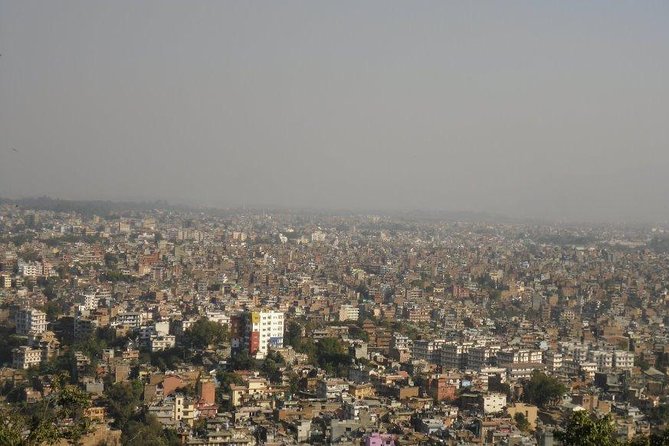
Kathmandu Valley is the kind of place where “one more stop” turns into “suddenly it’s dark.” This full-day format works because it turns the valley’s major landmarks into a single, guided circuit with transport handled for you. You’re not just collecting photos—you’re moving through the religious and civic story of the Kathmandu area, from Buddhist stupa worship to Hindu temple life to historic palace squares.
If you’re only in Kathmandu for a short window, this is one of the most efficient ways to get orientation fast. Even if you return later on your own, you’ll understand where everything sits and why people care about each site.
You can also read our reviews of more tours and experiences in Kathmandu

Price and logistics: what $40 really buys
At $40 per person for a 7-hour shared tour, the headline price is only part of the story. Here’s what you’re getting that you’d otherwise have to pay for in your own time: hotel pickup and drop-off, bottled water, parking, and private transportation if you book private (otherwise it’s shared group transport). You also get a paid guide and driver time, which is a big deal when you’re navigating multiple neighborhoods.
The part that can surprise people: food isn’t included, and entrance tickets are not included. The tour lists maximum entrance fee rates by nationality for most stops. If you’re planning your total budget, assume you’ll pay extra at several sites. For example, the maximum fees listed include Swayambhunath, Boudhanath, Pashupatinath, Kathmandu Durbar Square, Patan Durbar Square, Bhaktapur Durbar Square, and Changu Narayan (with some notes about free or nationality-based pricing).
Still, even with entrance fees added, the value is strong if you hate transit hassle. You’re buying time, route design, and someone who knows how to guide you through a place that can feel confusing if you’re doing it solo.
Your route across the valley: 7 stops in a 7-hour rhythm
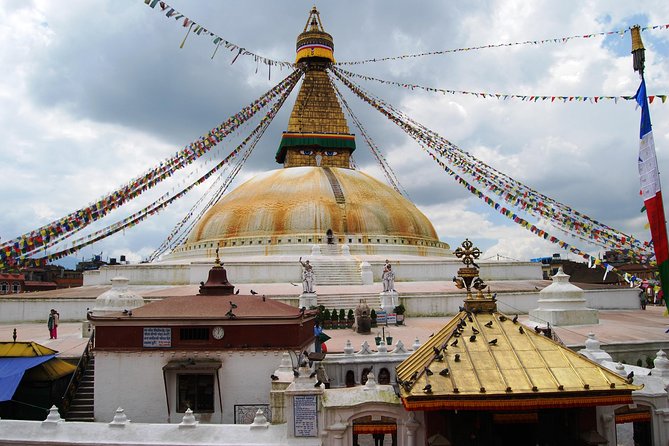
The itinerary is built around roughly an hour at each major stop, plus travel time between them. That means you’ll see a lot, but you won’t have hours to linger at every corner. Think of this as a “see it all once, understand what you’re looking at” day.
Stop 1: Swayambhunath (Monkey Temple)
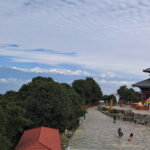
Swayambhunath sits on a hilltop to the west of the valley. It’s one of Kathmandu’s best-known Buddhist sites, with a white-domed stupa and the ever-watchful feel people associate with the Monkey Temple name. The setting is a reminder that a lot of Kathmandu worship is tied to place—elevated points, visible shrines, and ritual routes that locals return to again and again.
How this stop plays in a group tour: it can be busy, and the hilltop approach requires some steady walking. If you’re prone to getting slowed down by crowds, give yourself mental space here. The upside is that once you reach the core stupa area, the symbolism clicks quickly.
Stop 2: Boudhanath Stupa
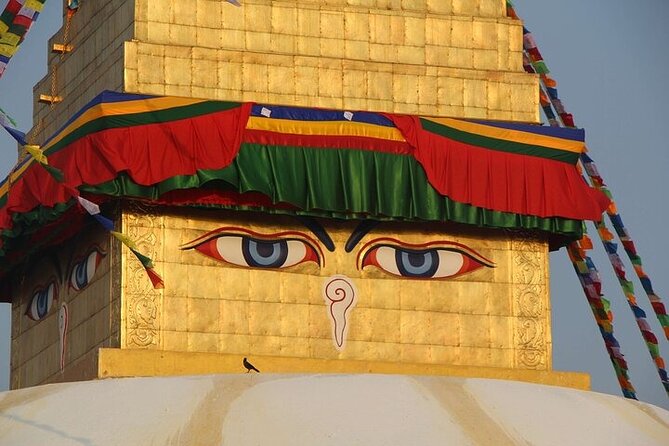
Boudhanath is a major center for Tibetan Buddhism in Kathmandu. You’ll notice the scale right away—this is one of the largest stupas in Nepal—and the design is wrapped in colorful prayer flags and Tibetan-style religious art. People come here to pray and to move around the stupa as part of ritual practice, so you’ll feel the site more than you might at a museum.
Group-tours benefit at Boudhanath because the guide can help you understand what you’re seeing and why the mandala-style details matter. The main practical point: it’s a longer-feeling stop because you’ll want to watch what people do, not just look at the structure.

Stop 3: Pashupatinath Temple (Shiva on the Bagmati River)
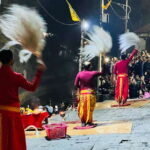
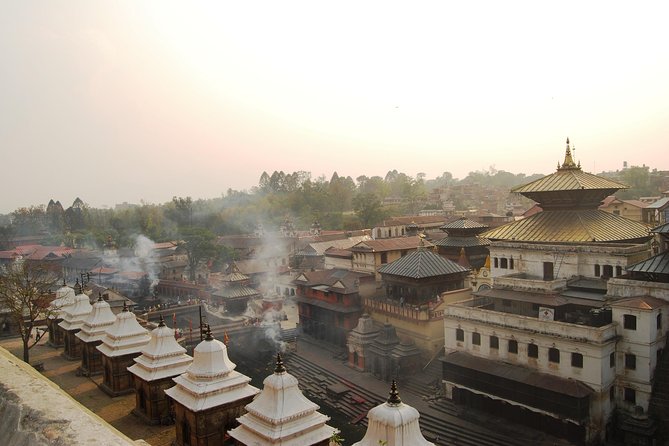
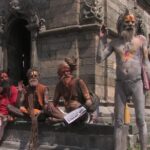
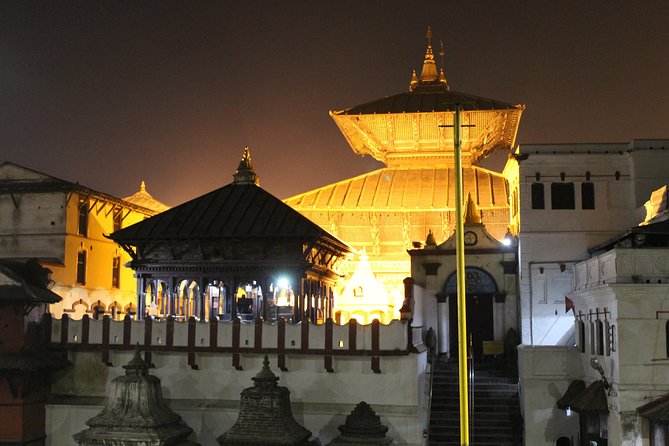
Pashupatinath is the Nepalese Hindu center dedicated to Lord Shiva, set on the banks of the Bagmati River. It’s known for ornate architecture and for the cremation ghats along the river—so it’s sacred space in a very real, lived-in way. This stop can be emotionally intense, even if you’re not religious. Plan to be respectful and ready for scenes that are part of everyday spiritual practice in Kathmandu.
In a guided format, your guide’s role matters here. You’ll get context for the symbols and the geography of how the river, temple, and daily rituals relate. If you’re uncomfortable with intense scenes, this is the stop where it’s worth deciding ahead of time how you want to experience it.
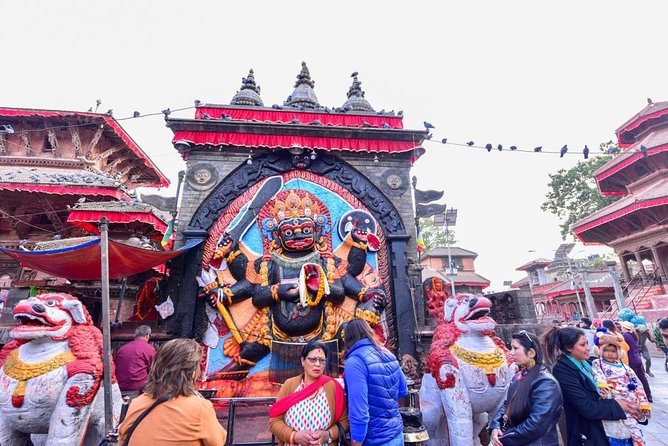
Stop 4: Kathmandu Durbar Square
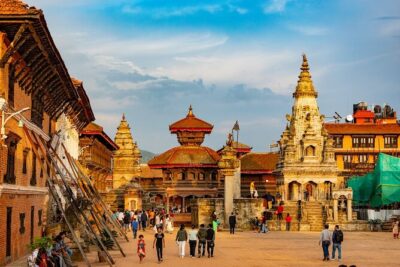
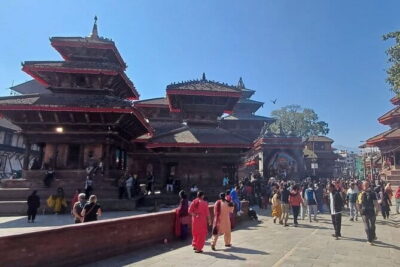
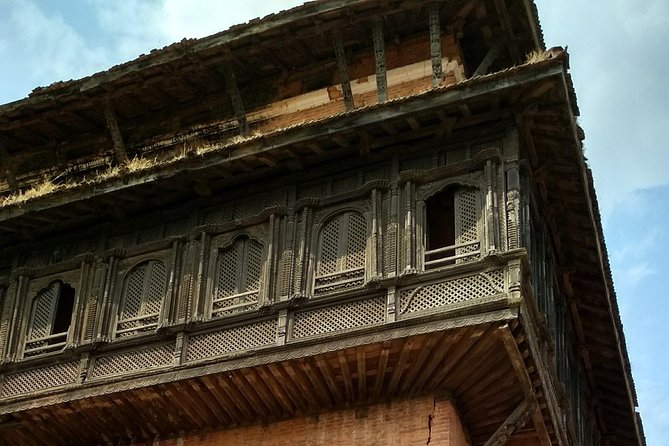
Kathmandu Durbar Square is a historic royal palace complex in the heart of Kathmandu. Expect carved wooden buildings and a dense mix of cultural meaning, because palace squares in Nepal weren’t just residences—they were political and religious stages.
What you’ll likely appreciate on this kind of tour: you see why the square is treated like a living heritage site. The guide helps connect the details you might otherwise miss, like the architectural emphasis on craftsmanship and the way public religious life and old royal power share the same physical ground.
Stop 5: Patan Durbar Square
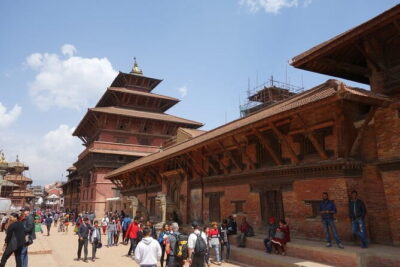
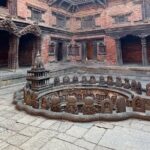
Patan Durbar Square is about 8 kilometers from Kathmandu city and is another royal palace complex. This is where you’ll see a stronger Newar architecture emphasis—courtyards, temples, and artistry that feels closely tied to craft traditions.
Patan is also a helpful contrast to Kathmandu Durbar Square. On a single day, your brain starts comparing materials, layouts, and ornamentation. That comparison is one of the quiet benefits of a multi-stop tour: you don’t just see monuments; you learn how style varies by city.
Stop 6: Bhaktapur Durbar Square
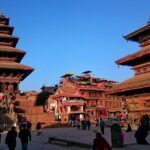
Bhaktapur Durbar Square is known for medieval charm and excellent preservation. It’s a neighborhood of old-world streets and square life, and the Durbar Square area is packed with temples and stonework.
This is the stop where you might feel you’re getting more than “a photo stop.” Even with a one-hour limit, the layout makes it easier to understand why people describe Bhaktapur as special. The key consideration: it can be slower-moving than you expect due to crowds and narrow areas, so don’t plan to sprint through this one.
Stop 7: Changunarayan (Changu Narayan)
Changunarayan is a hilltop temple near Bhaktapur and is described as one of the oldest Hindu temples in Nepal. It’s especially known for stone inscriptions and intricate woodwork.
The practical thing I like about ending here: by the time you reach Changunarayan, you’ve already processed enough religious sites that the details start to feel more meaningful. Even if you only get a short look, inscriptions and craftsmanship tend to reward your attention.
The guide and small-group format: why it feels easier
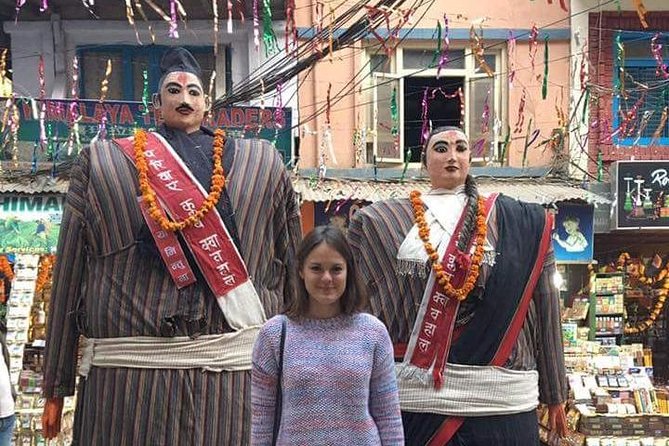
This tour caps at a maximum of 15 travelers, which matters more than it sounds. At major heritage sites, crowds and queueing can wreck your mood fast. A smaller group tends to move more smoothly and lets your guide steer you toward the key viewpoints and meaningful areas.
One guide name that stood out in reviews is Sumit. The praise wasn’t vague either—it focused on how well he guided the day and how worthwhile the full seven-site route felt despite the length. That lines up with what you want from this kind of day: clear explanations, good pacing, and the calm that keeps a group from turning into a stampede.
Also, the tour is designed so you can meet like-minded explorers without going full hostel-buddy mode. You’re sharing a route and timing, but you’re still getting the benefit of expert guidance.
Timing and pacing: the long day trade-off
The tour runs about 7 hours. The itinerary structure—around an hour at each stop—means your day feels busy but not chaotic. Still, it’s not a slow wander.
Here’s how to think about it:
- You’ll likely need breaks even if you don’t plan to sit down much.
- You’ll want water handy (bottled water is included).
- You should wear shoes that handle uneven ground and temple-area walking.
Another consideration: the operator notes the experience depends on good weather. If conditions are poor, you may be offered a different date or a full refund. That’s standard for outdoor heritage circuits, and it’s smart to keep your Kathmandu schedule flexible if you can.
Entrance fees: plan for them, and don’t let it waste your day
Entrance fees are not included. The tour lists maximum rates by nationality for multiple sites, and it also notes that different prices apply depending on where you’re from. Some items can be free for certain nationalities; for example, Pashupatinath is listed as free for Indian nationals in the fee notes.
Practical advice that saves time:
- Bring cash for entrance fees and any small purchases.
- Keep a buffer in your budget for the total of multiple sites.
- Expect fees to vary based on your nationality, since the tour provides maximum rates rather than a single flat total.
From a budgeting angle, the entrance fees listed across the stops can add up. Even so, the tour still works well if you value the route design and the transport logistics. Without a guide and pickup, you’d likely spend time arranging transport across several cities or neighborhoods—plus you’d still be paying entrance fees individually.
What’s included vs. what you must manage yourself
Included:
- Hotel pickup and drop-off
- Bottled water and parking
- Transportation (shared group; private is mentioned if private is booked)
- Guide and driver salary
Not included:
- Food and drinks
- Entrance fees for multiple sites (varies by nationality and sometimes national eligibility)
This matters because you’ll want to handle meals and snacks on your own. If you’re the kind of person who gets cranky when hungry, pack a simple plan. Also, because the tour is a single day circuit, it helps to avoid scheduling another big activity right after—your legs may be doing a post-tour protest.
Who should book this tour (and who should skip it)
This is a great fit if:
- You have limited time and want a clear overview of Kathmandu Valley’s major heritage sites.
- You prefer a structured day with transport taken care of.
- You like learning from a guide and moving through religious and historic areas in context.
You might want to skip or choose a different pace if:
- You hate long travel days or you’re easily overwhelmed by crowds at iconic temples and squares.
- You want deep, slow time at one or two places instead of covering everything.
- You’re on a tight budget and entrance fees would strain you, since they’re not included.
Should I book this full-day Kathmandu Valley tour?
If your priority is efficiency—seeing the key UNESCO sites without worrying about logistics—this is an easy yes. The value comes from the pickup, transport, guided context, and the fact you can cover either four highlights or all seven sites depending on your energy.
Just go in with eyes open: it’s a packed schedule, food isn’t included, and entrance tickets add cost. If you bring a bit of cash for site fees, wear comfortable shoes, and accept that it’s a “see a lot” day, you’ll get a strong, well-rounded Kathmandu introduction.
FAQ
What is the duration of the Full Day Sightseeing Tour of Kathmandu?
It lasts about 7 hours.
How much does the tour cost per person?
The price is $40.00 per person.
Is hotel pickup and drop-off included?
Yes. The tour includes hotel pick up & drop off.
Are entrance fees included in the $40 price?
No. Entrance fees for the listed sites are not included, and fees vary by nationality.
Which stops are included on the full comprehensive route?
The full route includes Swayambhunath, Boudhanath Stupa, Pashupatinath Temple, Kathmandu Durbar Square, Patan Durbar Square, Bhaktapur Durbar Square, and Changunarayan.
Is food included during the tour?
No. Food and drinks are not included.
How many people are in the group?
The tour is limited to a maximum of 15 travelers.