REVIEW · PARO
Bhutan Family Vacation With Cultural Tour
Book on Viator →Operated by Bhutan Best InBound Tour · Bookable on Viator
Seven days in Bhutan, built for families. This private trip in and around Paro strings together big spiritual sights and calmer nature moments, with an English-speaking guide helping you make sense of what you’re seeing (from chortens to dzongs). It’s a good fit if you want culture that feels explained, not rushed.
What I like most is the way it handles the practical stuff. All meals and mineral water are included, and the tour also covers ground transportation, so you spend less time planning and more time looking around and asking questions. Guides on similar departures have included Namgay and Tin, with drivers like Jamyang and Jigme who keep the day running smoothly.
One thing to consider: this plan includes hikes and long temple visits, including a four-hour stop at Paro Taktsang. Three-star accommodation is included (with an upgrade option), so if you’re expecting luxury comfort, you may want to budget for the upgrade or bring extra patience for basic rooms.
In This Review
- Key highlights worth your attention
- Value and the real cost: what $2,156 buys you
- Starting in Paro: Tachogang Lhakhang’s swinging bridge moment
- Thimphu’s central circuit: Memorial Chorten and Tashichho Dzong
- Thimphu Chorten (Memorial Chorten)
- Tashichho Dzong (Thimphu Dzong)
- Buddha Dordenma and Bhutan Post: quick stops that work with kids
- Buddha Dordenma
- Bhutan Post
- Creative culture days: Zorig Chusum and the National Folk Heritage Museum
- National Institute for Zorig Chusum
- National Folk Heritage Museum
- Ludrong Memorial Garden and the calm in-between
- Sangaygang to Wangditse monastery: a forest walk with payoff
- Dochula Pass (3,088m) and Chimi Lhakhang: viewpoint day and rice-field temple hike
- Dochula Pass
- Chimi Lhakhang Temple hike
- Punakha Dzong and the Suspension Bridge: two rivers, one dramatic scene
- Punakha Suspension Bridge
- Phobjikha Valley and Gangtey Monastery: quieter Bhutan time
- Phobjikha Valley exploration
- Gangtey Monastery
- Kyichu Lhakhang and Paro Taktsang: a big spiritual day in Paro
- Kyichu Lhakhang
- Paro Taktsang
- Paro Penlop Heritage Home Museum: see daily life, not just temples
- Who this Bhutan family tour is best for
- Should you book it?
- FAQ
- What’s included in the Bhutan family cultural tour price?
- Where does the tour start?
- Are flights included in the price?
- Does the tour include admission tickets and activities?
- Is there an English-speaking guide?
- Can I cancel and get a full refund?
Key highlights worth your attention
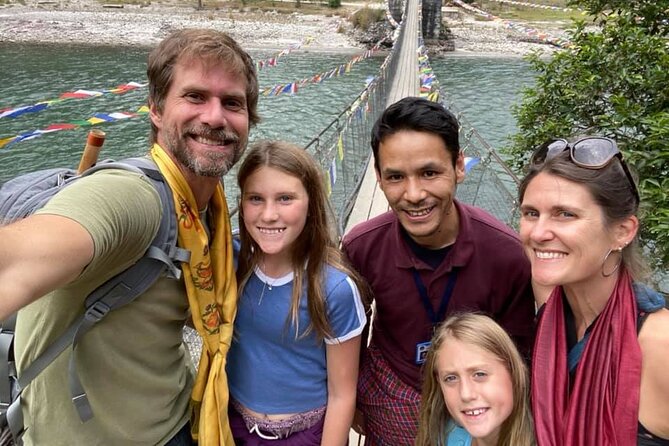
- Private family setup with an English-speaking guide traveling with you the whole time
- All meals + mineral water included, which keeps daily pacing easier with kids
- Transport is handled, so you’re not juggling rides between towns and viewpoints
- Family-friendly culture stops, from Zorig Chusum crafts to the National Folk Heritage Museum
- Scenic viewpoints at altitude, including Dochu-la Pass (3,088m) when skies are clear
- Major religious icons plus shorter breaks, from chortens and gardens to Paro Taktsang
Value and the real cost: what $2,156 buys you
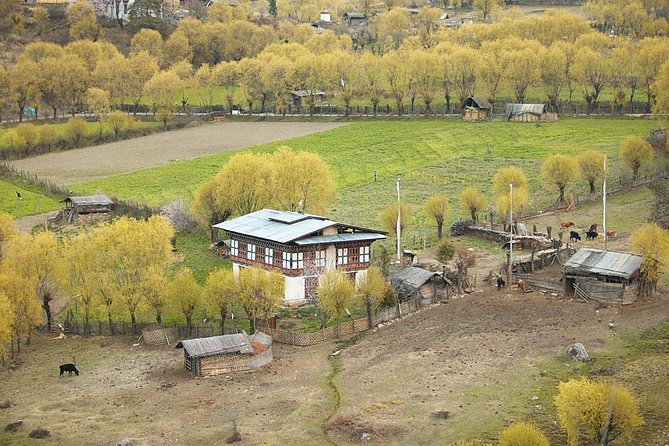
At $2,156 per person for about seven days, this tour sits in the “you’re paying for everything” category. That can be a win, especially in Bhutan, where schedules, entry permissions, and internal logistics can be time-consuming to sort out on your own.
Here’s what’s doing the heavy lifting for value:
- 3-star lodging is included, with an option to upgrade for a fee if you want more comfort.
- Meals and mineral water are included, which reduces the number of decisions you have to make each day.
- All transportation is included, so you’re not coordinating multiple drivers or hopping between bus and private car setups.
- A certified English-speaking guide is included, which matters in Bhutan where religious terms, architecture, and local customs are easier to appreciate when someone can explain them clearly.
- Government SDF of USD 100 per person per night is included in the total. Even if you know what that fee is, seeing it baked into the package makes budgeting simpler.
Two practical notes for your planning. First, the tour is typically booked far in advance (an average of 314 days), so if your dates matter, don’t wait. Second, flights aren’t included, so you’ll still need international and domestic travel into Bhutan handled separately.
You can also read our reviews of more tours and experiences in Paro.
Starting in Paro: Tachogang Lhakhang’s swinging bridge moment
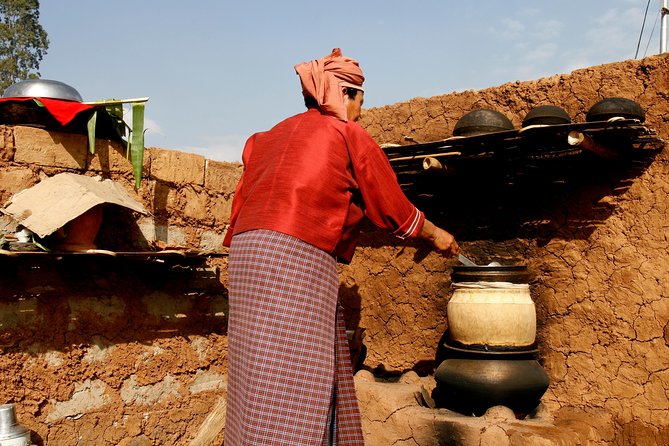
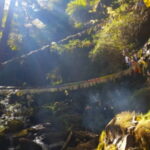
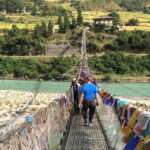
Most Bhutan trips run on a rhythm of temples, views, and gentle “now look at this” explanations. This one starts with Tachogang Lhakhang Bridge, where you get a fast, memorable taste of local devotion and engineering at the same time.
You’ll visit a temple tied to the bridge, then cross the span over the river. It’s timed for about 45 minutes, so it doesn’t swallow your day. The bridge is the kind of stop kids usually remember, because it’s active and fun without turning into a long slog.
Tip: wear grippy shoes even for short crossings. Bhutan roads and walkways can be slick, and the point here is to enjoy the experience, not worry about footing.
Thimphu’s central circuit: Memorial Chorten and Tashichho Dzong
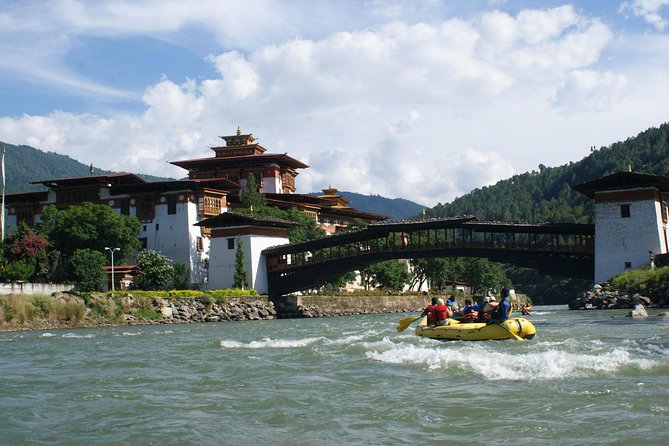
Once you move into Thimphu, the tour keeps giving you a mix of “religion you can read” and “buildings you can feel.”
Thimphu Chorten (Memorial Chorten)
This is the memorial chorten in the Thimphu Valley, and it’s built for daily devotion. You spend about an hour here, watching people turn prayer wheels and move through the area like it’s part of their everyday rhythm.
Why this works for families: the scene is easy to observe. Kids can watch the wheels, while you get a better sense of how Buddhism functions day-to-day rather than only as a sightseeing object.
Tashichho Dzong (Thimphu Dzong)
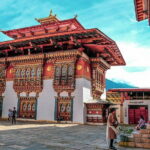
Then comes Tashichho Dzong, a fortress complex with major government roles tied to it. Plan for about 1.5 hours. It’s impressive in a practical way: thick walls, clear purpose, and a sense of authority.
A possible drawback: it’s not a “hands-on for kids” stop. If your family gets restless during long indoor segments, ask your guide about the parts you can focus on quickly—throne room context and the dzong’s function are often what makes the time worth it.
Buddha Dordenma and Bhutan Post: quick stops that work with kids
After heavier architecture, the tour gives you pauses that feel lighter.
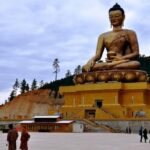
Buddha Dordenma
The Buddha Dordenma visit is about 45 minutes. It sits high enough to give you sweeping views of Thimphu, and the time on site is short enough to keep attention from fading.
If you’re traveling with kids, this is one of those stops where you can say, Look with your eyes first. The “view” is a reward that doesn’t require a long explanation.
Bhutan Post
Bhutan Post is a fun 45-minute break that turns a museum-style visit into a personal keepsake. You can make a postage stamp with your own picture and post it within Bhutan.
This is one of those practical “why this tour is family-friendly” touches. It gives kids a task, not just a label to read.
Creative culture days: Zorig Chusum and the National Folk Heritage Museum
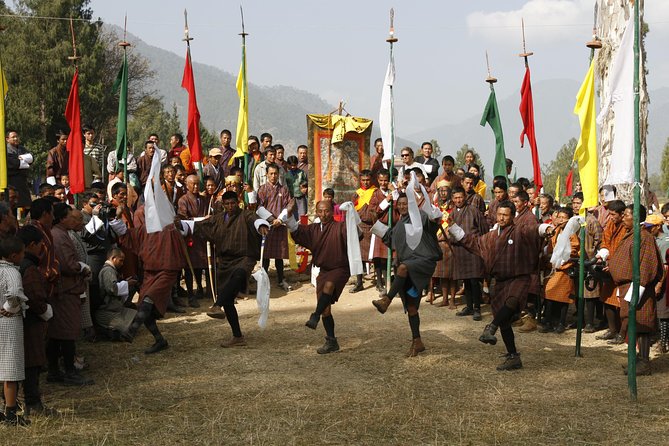
If you want to understand Bhutan beyond monuments, this part of the trip pays off.
National Institute for Zorig Chusum
This stop is about 1 hour. It’s focused on traditional arts—painting, embroidery, woodcraft, masonry, sculpting, and carpentry—and students work on skills you can actually see.
The best family angle here is that if kids are interested, they can take part in the activity (based on what’s available on the day). Even when kids don’t participate, watching hands at work is often easier than sitting through a lecture.
National Folk Heritage Museum
Then you move to the National Folk Heritage Museum for about 45 minutes. It’s designed to connect people to rural history and folk heritage through exhibits, demonstrations, educational programs, and documentation of rural life.
This museum stop helps you connect dots between what you see in towns (dzongs and chortens) and what life looked like farther from the main roads. It’s also the kind of indoor option that can be helpful if weather turns.
Ludrong Memorial Garden and the calm in-between
Not every day has to be a sprint. Ludrong Memorial Garden is included as a 1.5-hour break that’s more about atmosphere than ticking boxes.
You’ll spend time near ponds and varied plants, with the spiritual sound of activity tied to Tashichodzong in the background. The walking pace is gentle, and it’s one of the better places on the trip for families who need a breather between busier sites.
Sangaygang to Wangditse monastery: a forest walk with payoff
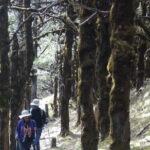
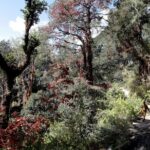
Sangaygang is where the tour gives you a nature stretch—about 1.5 hours. The hike runs through forest with pines and broadleaf, then heads toward Wangditse monastery.
Why I like this for families: it’s a defined walk with a cultural destination at the end. It’s not a “walk for walking” situation. You’re moving through a cooler, shaded environment, and you end near something meaningful.
Practical tip: bring a light layer. Even when days start warm, Bhutan forest shade can cool you down fast.
Dochula Pass (3,088m) and Chimi Lhakhang: viewpoint day and rice-field temple hike
This is a big spiritual day paired with a physical one.
Dochula Pass
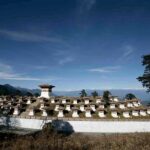
You drive up to Dochu-la pass at 3,088m/10,130ft. The tour includes time to take in views along with 108 chortens, mani walls, and prayer flags decorating the highest point on the road.
The phrase if skies are clear shows up for a reason: at altitude, visibility can change. Plan on the viewpoint as the prize, but don’t be shocked if you get clouds.
Chimi Lhakhang Temple hike
Then you hike to Chimi Lhakhang, about 1 hour. The route is described as walking through rice fields and farm houses, so it feels like a countryside stroll rather than a mountaineering plan.
The temple connects to a well-known Bhutanese story involving Lama Nawang Chogyel and Drukpa Kunley. Your guide can help you place the legend in context so it doesn’t just feel like a name on a sign.
Family tip: this is a good moment to slow down and let kids look around. Fields and farmhouses give you more “visual breaks” than a straight uphill trail.
Punakha Dzong and the Suspension Bridge: two rivers, one dramatic scene
Punakha Dzong is a standout stop, with about 45 minutes on site. It’s described as a massive structure at the junction of two rivers. Punakha served as Bhutan’s capital until 1955, and today the dzong still plays a role as a winter residence for the central monk body.
Why this works: you get a strong sense of scale and geography at once. Dzongs aren’t just pretty buildings; they’re placed where people can see what matters.
Punakha Suspension Bridge
After that, you cross or view the Pho Chhu Suspension Bridge, known as the longest suspension bridge in Bhutan at about 160 metres. The stop is about 1 hour, and it’s a rare chance to see Punakha Dzong and the Pho Chhu valley from a different angle.
This is a stop where pace matters. If someone in your family gets anxious about heights, talk to your guide before you cross and take your time.
Phobjikha Valley and Gangtey Monastery: quieter Bhutan time
Then the tour shifts into “slow down and breathe” territory.
Phobjikha Valley exploration
You get about 1.5 hours in Phobjikha Valley. The trail is described as one of the shortest nature trails in Bhutan, starting near a Mani (stone wall) and ending in the area of Khe… (the final name isn’t fully shown in the details). Even without the fine print, the point is clear: it’s nature walking with a cultural backdrop.
Gangtey Monastery
You also visit Gangtey Monastery for about 30 minutes. It’s described as the main seat of the Pema Lingpa tradition, with opportunities for light butter lamp offerings, incense, and prayer flags, plus interaction with monks.
For families, the short time slot is good. You can get the meaning without committing to a long silent stretch.
Kyichu Lhakhang and Paro Taktsang: a big spiritual day in Paro
Paro is where many Bhutan trips “peak,” and this one includes two serious religious stops.
Kyichu Lhakhang
Kyichu Lhakhang takes about 30 minutes and is tied to the 7th century, associated with Tibetan king Songtsen Gampo. It’s a shorter stop, but shorter here often means you can take it in without fatigue.
Paro Taktsang
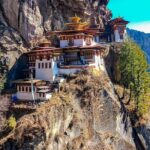
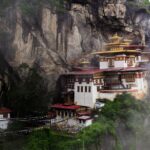
Then you get Paro Taktsang, often considered one of Bhutan’s holiest and most beautiful sites, with about 4 hours allocated. The details mention the tiger’s lair legend and Guru Rimpoche, who is widely revered as the second Buddha.
This is the long stop on the schedule, so think of it as your “set expectations” day. Bring patience for the hike and time on site, and plan snacks/water strategy even though meals and mineral water are included overall. You want to keep everyone comfortable.
If your family includes younger kids, this is where you’ll feel the altitude and walking demands the most. Comfortable shoes and layers matter.
Paro Penlop Heritage Home Museum: see daily life, not just temples
After Taktsang, the mood can shift toward home life. Paro Penlop Heritage Home Museum is included for about 2 hours.
This is described as a historical farmhouse where you can experience real Bhutanese lifestyle. It can be a great follow-up to religious sites, because it gives your brain a different reference point: how people lived, not just what they worshipped.
If your family likes practical history, this is one of the best balancing acts on the trip.
Who this Bhutan family tour is best for
This tour is built for families that want structure and explanations. If you appreciate scheduled time at major sites (rather than wandering and figuring it out), you’ll like the flow.
It also suits families with kids who can handle:
- about 1-hour and 1.5-hour walks
- temple visits ranging from 30 minutes to longer blocks
- one heavier day at Paro Taktsang (around 4 hours)
If your kids are very small or if your group has limited mobility, this might still work, but you’ll want to think carefully about hiking days and the long Taktsang visit.
On the guide side, past departures have featured English-speaking guides such as Namgay and Tin, and drivers such as Jamyang and Jigme. Those name checks matter because they signal the tour’s focus on clear communication and steady driving, not just passing through sights.
Should you book it?
I’d book this tour if you want a family-friendly Bhutan plan that includes the practical pieces—meals, mineral water, transportation, and an English-speaking guide—so you can focus on the culture. The combination of major dzongs and chortens plus craft and museum stops gives you more variety than a purely temple-heavy trip.
Skip—or at least consider upgrading—if your family expects luxury comfort in every room or if hiking fatigue is a big concern. The route includes real walking, including the Paro Taktsang day and the temple hike at Chimi Lhakhang.
If your group values organized time, clear explanations, and meaningful stops like Bhutan Post crafts, Zorig Chusum arts, and the quiet moments in Phobjikha, this itinerary has the right ingredients.
FAQ
What’s included in the Bhutan family cultural tour price?
The tour includes 3-star accommodation (with an option to upgrade), all ground transportation, all meals, mineral water, a certified English-speaking guide, and a government SDF of USD 100 per person per night.
Where does the tour start?
The meeting point is Paro Airport, Paro Bhutan.
Are flights included in the price?
No. International and domestic flights are not included.
Does the tour include admission tickets and activities?
Many stops include admission tickets, and the tour details list which ones are included versus free. Meals and major activities are part of the overall package.
Is there an English-speaking guide?
Yes. The tour includes a certified English-speaking guide who will join you every step of the way.
Can I cancel and get a full refund?
Yes. You can cancel for free up to 24 hours before the experience start time for a full refund. If you cancel less than 24 hours before, the amount paid is not refunded.
If you tell me your kids’ ages (and whether you’re thinking 3-star or the upgrade), I can help you judge which days will feel easy and which ones might need pacing tricks.