REVIEW · PARO
Marvels of Bhutan-A Bespoke Travel Experience
Book on Viator →Operated by Bhutan Best InBound Tour · Bookable on Viator
A few hours in and Bhutan already feels unreal. This private 3-day plan links Paro and Thimphu with a real focus on religious sights, local culture, and one of the country’s best hikes, Tiger’s Nest. I like that the trip is structured but not rushed, and I also like the guide-led flow through big-name monuments like the Memorial Chorten and Buddha Dordenma (including the takin preserve stop).
One consideration: the main hike days depend on weather, so build your trip mindset around flexible timing if conditions aren’t ideal.
In This Review
- Marvels of Bhutan at a Glance: Who It’s For and What You’ll See
- Key Highlights You’ll Feel Right Away
- Arriving in Paro: Easy Start, Big Mountain Energy
- Tachog Lhakhang and the Iron Bridge Stop: The Kind of Detour Bhutan Does Best
- Thimphu Power Tour: Memorial Chorten, Buddha Dordenma, and the Takin Preserve
- National Memorial Chorten: The Crowd Is Smaller Than You Think
- Buddha Dordenma: A 51.5-Meter Way to Understand Faith
- Motithang Takin Preserve: The Most Unexpected Cultural Stop
- Centenary Farmers Market: Real Life Between Temples
- Tiger’s Nest Morning: The Hike Day That Defines Bhutan Trips
- What to expect physically
- What to expect emotionally
- Paro District and a Traditional Farmhouse Visit: Seeing Bhutan Beyond Icons
- The Little Included Extras: Hot Stone Bath and Local Archery
- Price and Value: Is $895 a Smart Short Bhutan Trip?
- Guides and How the Trip Runs Day to Day
- Who Should Book This Bhutan 3-Day Plan
- Planning Tips Before You Go
- Should You Book Marvels of Bhutan-A Bespoke Travel Experience?
- FAQ
- What are the dates and duration of the tour?
- Where does the tour start?
- Is this a private tour?
- What’s included in the price?
- Do I need to pay for Tiger’s Nest or temple admissions?
- What fitness level is required?
- What if the weather is bad?
- Is there a single supplement?
Marvels of Bhutan at a Glance: Who It’s For and What You’ll See
This is a 3-day, private, door-to-door style experience based in Paro, with daily drives into Thimphu and back. You start at Paro Airport at 8:00 am, and you’ll get around with a certified English-speaking guide plus a driver. The tour includes Bhutan visa coverage (for 2 nights / 3 days), plus a full set of meals—3 breakfasts, 2 lunches, and 2 dinners—so you’re not hunting food between sights.
If you want a short Bhutan trip that still hits the essentials—temples, chortens, monasteries, and a farmhouse taste of daily life—this itinerary has the right shape. And if you take comfort in having a plan, this one delivers: several stops include admissions (and some are listed as free), so cash and tickets aren’t a constant worry.
The biggest potential drawback is fitness. You should have moderate physical ability, especially for the Tiger’s Nest hike.
Key Highlights You’ll Feel Right Away
- Tiger’s Nest early-morning timing sets you up for the monastery day when conditions tend to be best
- Thimphu’s top landmarks include the 51.5-meter Buddha Dordenma and the National Memorial Chorten
- Motithang Takin Preserve gives you a clear Bhutan-only animal moment (yes, the takin is real)
- A traditional farmhouse visit adds context beyond temples and monuments
- Included extras: a traditional hot stone bath and a local archery game (as company compliments)
You can also read our reviews of more tours and experiences in Paro.
Arriving in Paro: Easy Start, Big Mountain Energy
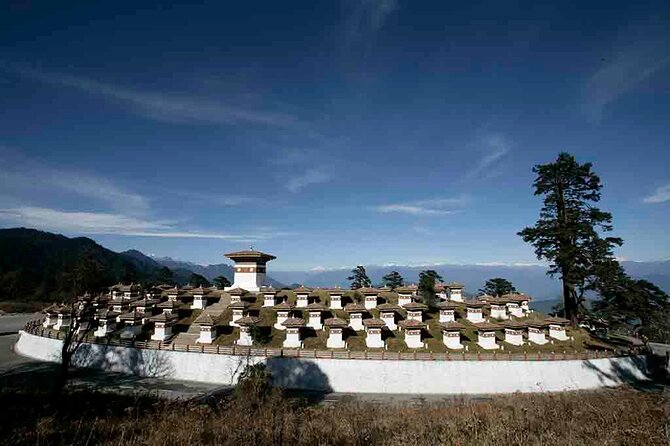
Most Bhutan trips start with nerves—visa, timing, logistics. This one keeps that stress low. You’re met at Paro Airport (meeting point), and the tour runs as a private experience, so you’re not sharing your schedule with strangers.
On the first day, you’ll be up and moving into the heart of Bhutan’s culture before the day gets too long. The drives matter here. Paro to Thimphu isn’t just transit; it’s part of the Bhutan feel—valleys, ridgelines, and prayer flags appearing like visual breadcrumbs.
You’ll also notice how the tour is built around practical pacing: you’re guided from stop to stop with time to absorb what you’re seeing, rather than snapping from one photo to the next.
Tachog Lhakhang and the Iron Bridge Stop: The Kind of Detour Bhutan Does Best
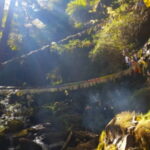
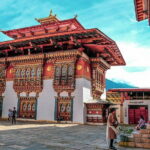
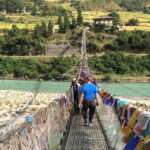
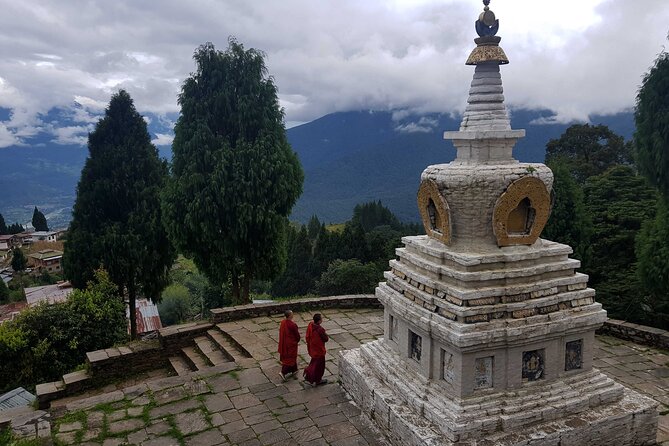
One of the smartest choices on the plan is that it doesn’t treat the road like dead time. En route to Thimphu, there’s a stop at Tachog Lhakhang, tied to an iron bridge with colorful prayer flags.
Why this matters: in Bhutan, the small religious sites often explain the big religious sites later. Bridges with prayer flags aren’t random decorations; they’re part of how everyday movement and sacred meaning overlap. Even if you only spend about an hour here, you get a quick hit of the country’s spiritual visual language.
Also, this kind of stop can be a win for photo timing. If the monastery hike on day two is your big physical moment, this bridge-and-temple pause helps you warm up without exhausting you.
Thimphu Power Tour: Memorial Chorten, Buddha Dordenma, and the Takin Preserve
Thimphu is where many first-time Bhutan visitors start to feel the scale of the country’s modern identity meeting deep tradition. Your day of sightseeing is concentrated, but it’s not chaotic.
National Memorial Chorten: The Crowd Is Smaller Than You Think
You’ll visit the National Memorial Chorten, a landmark in Thimphu that many people remember because it’s both visually strong and easy to slow down in front of. It’s one of those places where you can stand, watch locals, and feel how religious practice is embedded in the rhythm of the day.

Buddha Dordenma: A 51.5-Meter Way to Understand Faith
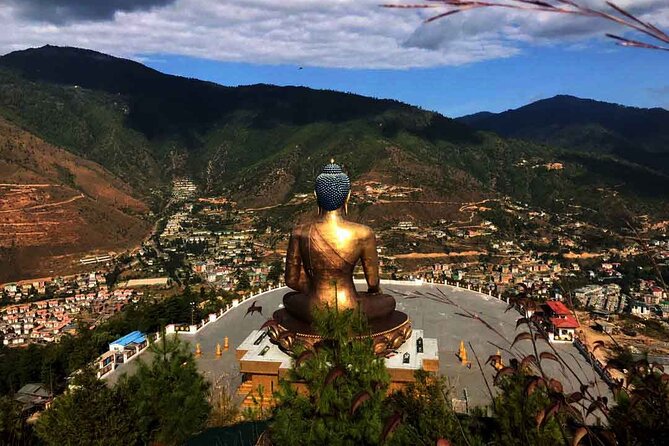
Next comes Buddha Dordenma, a towering 51.5-meter-tall Shakyamuni Buddha statue adorned with a large number of smaller Buddha figures. This is the stop that gives you a clear sense of Bhutan’s devotion expressed through monumental art.
A practical tip: give yourself time to look from different angles. Even with a limited schedule, you’ll understand the design better when you step back and then approach again rather than only looking at it from one viewing point.
Motithang Takin Preserve: The Most Unexpected Cultural Stop
Then you hit the Motithang Takin Preserve, where you can see Bhutan’s national animal, the takin. It’s a short visit on paper, but it’s often the kind of stop people end up talking about afterward because it feels uniquely Bhutan.
If you’re traveling with kids or anyone who wants something besides temples, this is a solid balance point—animal viewing can break up a heavy day of religious architecture.
Centenary Farmers Market: Real Life Between Temples
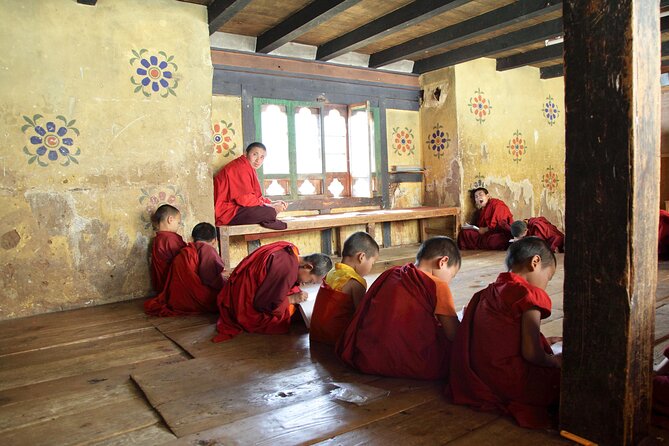
In the evening, the plan includes the Centenary Farmers’ Market. This isn’t a craft bazaar meant for tourists to feel busy. It’s a local social and commerce space, and that makes a difference.
What I like about adding this stop: it gives you a chance to see what everyday Bhutan looks like after the statues and monasteries. Even if you don’t shop much, walking the market helps you connect the cultural dots. You also get interaction with locals in traditional clothing, which is one of the easiest ways to learn without needing a lecture.
Tiger’s Nest Morning: The Hike Day That Defines Bhutan Trips
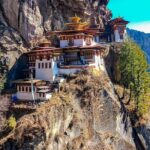
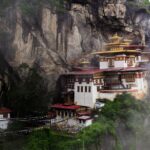
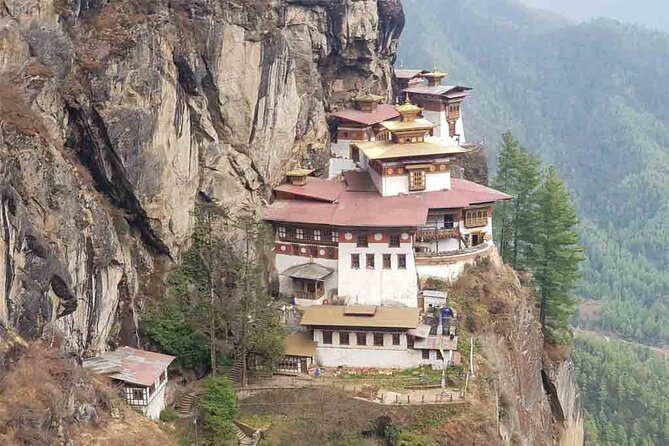
Day two is built around Paro Taktsang, the legendary Tiger’s Nest Monastery. You’ll start early, then drive from Thimphu back toward Paro for the morning hike.
This is the star moment of most Bhutan itineraries for a reason: the monastery sits above steep terrain, and getting there makes you earn the view. The plan gives you a roughly half-day window for the hike experience, including time on the mountain path.
What to expect physically
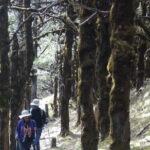
You should have moderate physical fitness. Even if you’re not an athlete, you’ll want good shoes and a mindset for uneven paths and stairs. If you know you’re sensitive to altitude or steep climbs, talk to your guide about pace options before you start.
What to expect emotionally
Tiger’s Nest often works because it’s not just a view. It’s a setting. When you’re walking up toward a monastery that’s part of Bhutan’s religious imagination, the climb feels meaningful in a way a museum stop rarely does.
Also, remember the tour is weather-dependent. If conditions are poor, you may see changes to timing or scheduling so you can stay safe.
Paro District and a Traditional Farmhouse Visit: Seeing Bhutan Beyond Icons
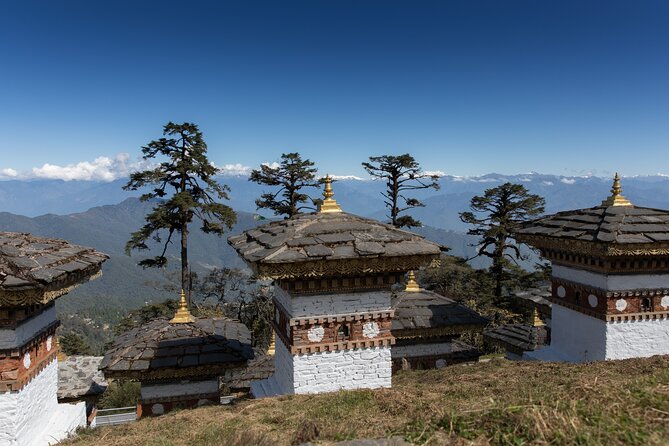
The day after Tiger’s Nest includes a stop in Paro District with a visit to a traditional farmhouse. This is one of those add-ons that turns a sightseeing trip into a cultural experience.
Why it’s valuable: temples and monasteries tell you what Bhutan believes. A farmhouse tells you how Bhutan lives with those beliefs—practical routines, family life, and daily rhythms. Even with a limited time window, this kind of visit helps you understand the background behind what you’re seeing in the religious sites.
If you like conversations more than checklists, this is the moment to ask questions. Your guide can translate what you’re seeing into context.
The Little Included Extras: Hot Stone Bath and Local Archery
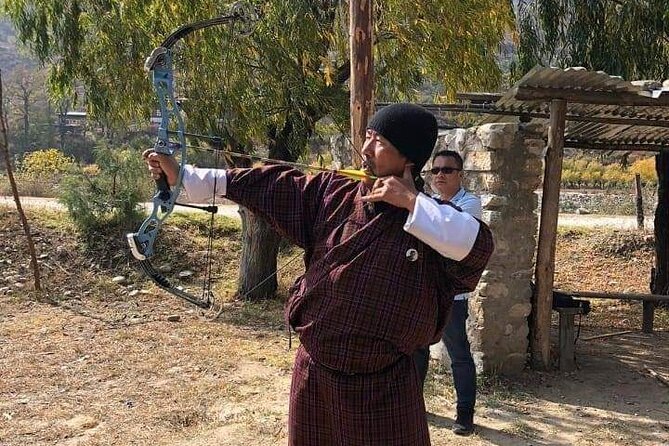
Two company compliments are part of the package: a traditional hot stone bath and a local archery game.
These are great because they’re not just random add-ons. They’re Bhutan’s way of balancing body and spirit. After a hike day, the hot stone bath can feel like a reset button. And archery isn’t a modern novelty in Bhutan—it’s a traditional sport, so it connects to the country’s living culture rather than only its monuments.
I also like that these extras are included. In Bhutan, small cultural experiences can add up fast if you’re paying for each one separately.
Price and Value: Is $895 a Smart Short Bhutan Trip?
At $895 per person, this 3-day private experience is built around included essentials that typically cost money in Bhutan: visa coverage, certified English-speaking guide, all ground transportation, and a large chunk of meals (3 breakfasts, 2 lunches, 2 dinners). It also includes the Government SDF of USD 100 per person per night of stay.
That matters because Bhutan’s costs aren’t only hotels and tours. Fees, planning time, and regulated components can change the math quickly. By bundling the major items, the tour reduces decision fatigue and lets you spend your attention on the sights.
You’ll still want to budget for what’s not included: travel insurance, drinks/alcohol/optional laundry, and the single supplement of USD 175 if you need your own room.
One more value point: being private helps in a short trip. In 3 days, small timing differences matter. A private schedule means your guide can adjust for comfort, pace, and weather.
Guides and How the Trip Runs Day to Day
In the feedback, specific guide names come up. I’ve seen praise for TD, also known as Tshewang Dorji, and for a driver named Tshe Wang, described as meeting travelers at Paro Airport and keeping the next few days running smoothly. Other guide names—Random and Choedra—also show up in positive comments tied to knowledge and organization.
Even without naming every person behind the curtain, the pattern is consistent: the trip works because you’re not left to figure things out alone. A good guide in Bhutan isn’t just a translator. They help you connect what you’re seeing to why it matters, and they help keep your day moving at a human pace.
Who Should Book This Bhutan 3-Day Plan
This tour fits best if you want:
- A tight 3-day introduction to Paro and Thimphu
- The Tiger’s Nest hike as your main physical goal
- Temples and chortens plus at least one non-temple cultural moment (the farmhouse)
- A package that includes major regulated costs and most meals
If you prefer a slow travel pace, you might find the schedule concentrated, especially with the hike day. But if you’d rather see a lot in a short window with guidance and structure, this is a strong match.
Planning Tips Before You Go
- Pack for stairs and uneven paths if you’re doing Tiger’s Nest. Good traction shoes are worth their weight.
- Expect that the itinerary is weather-dependent. Keep your schedule mindset flexible.
- Bring a simple layer strategy. Mountain weather can shift, even when plans are stable.
- If you’re traveling solo, confirm whether you’ll pay the single supplement ($175).
Should You Book Marvels of Bhutan-A Bespoke Travel Experience?
Yes, if your goal is a short but meaningful Bhutan hit: Paro, Thimphu, Tiger’s Nest, key monuments like Memorial Chorten and Buddha Dordenma, plus a takin preserve moment and a farmhouse visit. The pricing makes sense because the big-ticket items—visa, guide, ground transport, meals, and government SDF—are already wrapped in.
Skip it or consider alternatives if you want lots of free time, or if you’re not comfortable with a steep, weather-sensitive hike day.
FAQ
What are the dates and duration of the tour?
This is a 3-day tour in Bhutan, based in Paro and with a drop to Paro Airport on the third day. The visa coverage is stated as valid for 2 nights / 3 days.
Where does the tour start?
The meeting point is Paro Airport, with a start time of 8:00 am.
Is this a private tour?
Yes. It’s listed as a private tour/activity, meaning only your group participates.
What’s included in the price?
Included items are Bhutan visa, all ground transportation, a certified English-speaking guide, compliments from the company (traditional hot stone bath and local archery game), government SDF (USD 100 per person per night of stay), and meals (3 breakfasts, 2 lunches, 2 dinners).
Do I need to pay for Tiger’s Nest or temple admissions?
Admission is listed as included for the Tiger’s Nest stop, and some other stops show admission included or free. The tour is set up so admissions aren’t something you should constantly pay separately at each location.
What fitness level is required?
The tour notes a moderate physical fitness level. That matters most for the Tiger’s Nest hike.
What if the weather is bad?
The experience requires good weather. If it’s canceled due to poor weather, you’ll be offered a different date or a full refund.
Is there a single supplement?
Yes. A single supplement of USD 175 is listed as not included if you need a single room.