REVIEW · PARO
8 Day Cultural Immersion
Book on Viator →Operated by OMSHA Travel - Travel Guide to Bhutan · Bookable on Viator
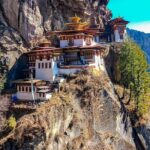
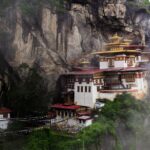
Tiger’s Nest makes the whole trip feel cinematic. This 8-day cultural tour ties together monasteries, dzongs, museums, and mountain hikes with smooth English-speaking guiding and meals taken care of. I love the hands-on stops like Jungshi Handmade Paper Factory and Chencho’s weaving work, where you see old skills still in use. I also like the balance between major sacred sites and quieter places such as Thangthong Dewachen Nunnery and Tango Cheri.
One consideration: you will walk. Between the Tiger’s Nest day (listed as about 6 hours) and multiple shorter trails, this is not a sit-behind-the-window only kind of trip.
In This Review
- Key Highlights You’ll Actually Feel
- Getting Oriented in Paro and Thimphu on Day 1
- Thimphu’s Monasteries, Museums, Archery, and the Dzong Wall on Day 2
- Buddha Dordenma, Dochula Pass, and the Walk Toward Phobjikha on Day 3
- Punakha’s Dzong, Chimi Lhakhang, and a Suspension Bridge That Sways
- Khamsum Yulley Chorten, Farmhouse Lunch, and Hilltop Nunnery Views
- Back to Paro: Rinpung Dzong, Zuri Hike Views, Weaving, and a Brewery Stop
- Tiger’s Nest (Paro Taktsang) and Tshering Farmhouse Hospitality on Day 7
- Day 8: Smooth Finish Back to Paro Airport
- Price and Value: What $1,500 Covers, and What You Still Pay
- Should You Book This Cultural Tour?
- FAQ
- What city does the tour focus on?
- Where does the tour start and end?
- Is pickup included?
- What’s included in the price for food?
- Are entrance fees for temples, dzongs, and museums included?
- What additional fees should I budget beyond the $1,500 tour price?
- What type of accommodation is included?
- Is this a private tour?
- How much hiking is involved?
- Can I cancel for a full refund?
Key Highlights You’ll Actually Feel
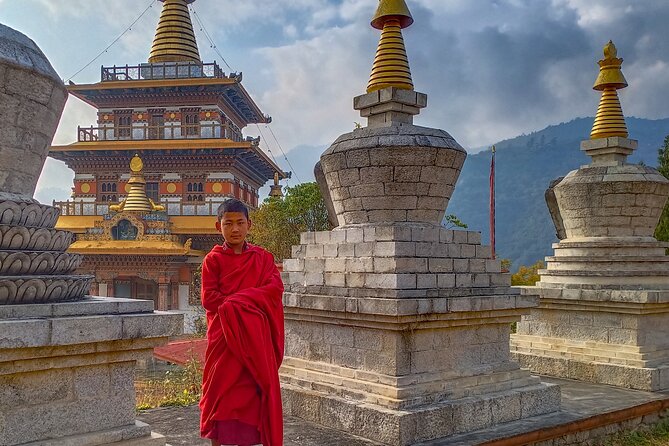
- Tiger’s Nest at the cliff edge: a long outing with big payoff for views and sacred atmosphere
- Old crafts on purpose: handmade paper at Jungshi and weaving at Chencho
- Punakha’s classic combo: Punakha Dzong plus the 160m Punakha suspension bridge
- Nature that matches the culture: Phobjikha Valley walking and the Black-necked Crane Center info
- A real taste of local life: farmhouse lunch and Tshering Farmhouse hospitality
- Fewer logistics headaches: licensed Bhutanese guide, private transport, and covered monument/museum fees
Getting Oriented in Paro and Thimphu on Day 1
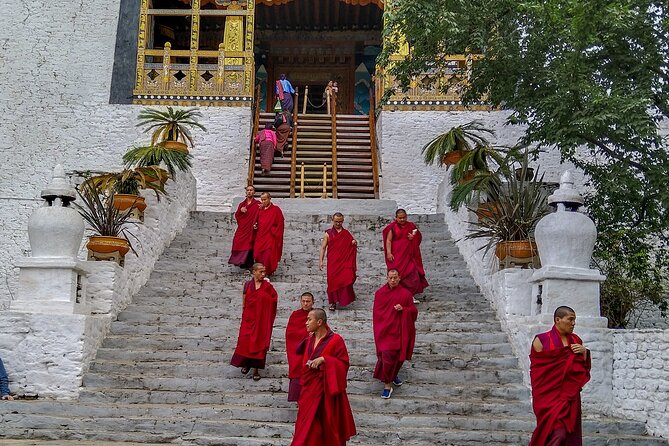
You arrive in Paro, get greeted by the English-speaking guide, then head toward Thimphu by car. The drive takes about 1.5 hours, and it sets the tone: Bhutan travel is slow enough to look around, fast enough to keep momentum.
Day 1 mixes sacred stops with everyday Thimphu life. You’ll visit Tamchog Lhakhang, then later Tachogang Lhakhang Bridge, where the ridge location gives you scenic breaks between sites. You’ll also spend time at the Thimphu Memorial Chorten, built in 1974 to honor Bhutan’s third king, and it’s a good first taste of how religious architecture functions as both devotion and public space.
A big reason I like this day is the variety of “learning modes.” Motithang Takin Preserve lets you meet Bhutan’s national animal, the takin, in a small natural preserve. Jungshi Handmade Paper Factory shows traditional paper-making methods, which is the kind of detail you usually only hear about later, not see in action. And then you shift into local rhythm at the Centenary Farmers Market and around Clock Tower Square, where you can pick up souvenirs and just watch the city move.
Practical tip: temples and monasteries often mean you’ll be standing longer than you expect. Wear shoes you trust and dress in layers so you can handle changes in mountain air.
You can also read our reviews of more tours and experiences in Paro.
Thimphu’s Monasteries, Museums, Archery, and the Dzong Wall on Day 2
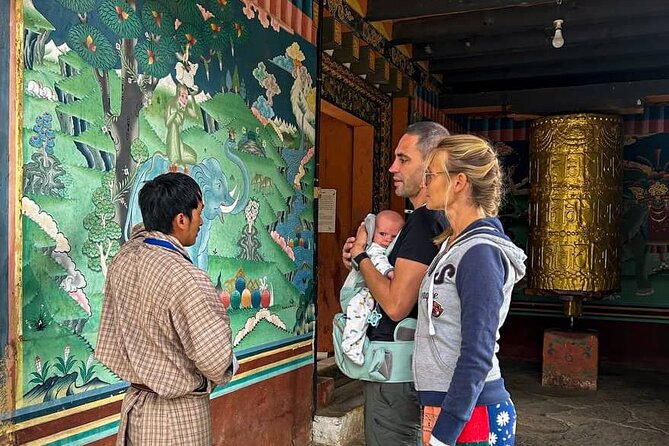
Day 2 is built like a cultural sampler platter, with a clear arc: monasteries first, then learning, then Bhutan’s signature traditions, ending at the Tashichho Dzong area.
You start with Tango Buddhist Institute (Tango Cheri Monastery), a prominent monastery about 14 kilometers north of Thimphu. Next is Pangri Zampa Monastery, one of the older monasteries dating back to the 16th century, which helps you feel the depth of Buddhist presence beyond just the most famous sites.
Then you get a more modern angle with the Bhutan Postal Museum. It’s included with admission, and it’s a good reminder that culture is not only statues and stone walls. You also stop at the Thimphu Handicrafts Market, where you can look for authentic items without turning your day into a shopping mission.
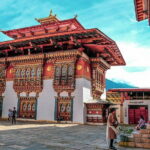
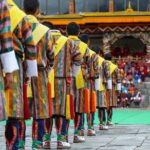
Two stops make Bhutan’s living identity easy to spot. Changlimithang Stadium and Archery Ground gives you context for archery, Bhutan’s national sport, and the chance to see it as an event and a social space. After that, you visit Tashichho Dzong (Thimpu Dzong), and the admission is included—this is where the trip shifts back toward power centers of religion and governance.
A drawback to plan for: Thimphu days can feel “scheduled full.” If you like breathing room, treat market time as optional slow browsing rather than a must-do checklist.
Buddha Dordenma, Dochula Pass, and the Walk Toward Phobjikha on Day 3
Day 3 is where the tour starts feeling more like a mountain expedition. You go to Buddha Dordenma, also called Buddha Point, a massive Buddha statue overlooking Thimphu from Kuensel Phodrang Nature Park. It’s a quick stop with a strong sense of scale.
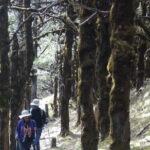
Then you reach Dochula Pass, listed around 3,100 meters. It’s a classic viewpoint stop, and even if you’re not chasing photos, you’ll enjoy the pause for fresh air and wide views. After the pass, you walk the Gangtey Nature Trail for about 1.5 hours (listed as about 2 hours in the plan), crossing toward the Phobjikha Valley views.
The day’s nature education is anchored by the Black Necked Crane Center. The center gives you information about Phobjikha Valley as the winter home of black-necked cranes migrating from the Tibetan plateau. Even if you do not see cranes on the day you visit, this stop helps you understand what you are looking at and why the valley matters.
Who Day 3 suits best: people who like a mix of sacred sights and outdoor time, without needing to sign up for a multi-day trek. It’s still active, though, so good shoes and a calm pace are your friends.
Punakha’s Dzong, Chimi Lhakhang, and a Suspension Bridge That Sways
By Day 4 you’re in Punakha, and the itinerary leans into Bhutan’s “best hits” without losing its cultural purpose. You start at Gangtey Monastery, a prominent Tibetan Buddhist monastery in the Wangdue Phodrang District. Then you visit Chimi Lhakhang, also known as the Fertility Temple near Sopsokha in Punakha Valley, which is especially popular among couples.
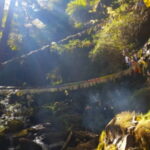
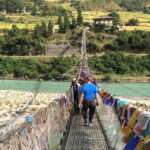
Next is Punakha Dzong, one of Bhutan’s most important dzongs, located at the confluence of the Pho River and the Mo Chu River. It’s included with admission, and it’s the kind of place where the architecture and setting work together. After that, you cross to the Punakha Suspension Bridge, spanning about 160 meters over the Phochu River. The plan notes that it gently sways in the wind, which turns a simple crossing into a small thrill.
This day is ideal if you like “place-specific” travel. Dzongs don’t feel like generic monuments here. The river setting and the bridge make the area feel like a living route, not a museum display.
Watch-outs: the bridge can feel windy. Hold steady and take it slow if your balance is less than perfect.
Khamsum Yulley Chorten, Farmhouse Lunch, and Hilltop Nunnery Views
Day 5 keeps the Punakha Valley energy going, but changes the tone from major landmarks to ridges, villages, and lived-in scenery.
You visit Khamsum Yulley Namgyal Chorten, perched on a ridge above the valley. The trail time listed is about 2 hours, and the point here is the panoramic payoff: you’re walking specifically to see the valley in context. After that, lunch is at Leki Farm House at Lapsakha with Punakha Valley views. This is one of the stronger “value for money” choices on the whole route because you get both a meal and a setting that would cost extra time (and effort) if you tried to schedule it alone.
Then you move through the Punakha district, with time at Talo Village and a hilltop nunnery stop at Sangchhen Dorji Lhuendrup Nunnery. The nunnery is described as perched on a hilltop overlooking Punakha Valley and Wangduephodrang Valley, which matches the theme of the day: walking just enough to reach viewpoints and meaningful stops.
If you want the tour to feel less rushed, Day 5 is one of the best days to let the group rhythm work for you. The itinerary gives you time for scenery without pulling you into constant museum interiors.
Back to Paro: Rinpung Dzong, Zuri Hike Views, Weaving, and a Brewery Stop
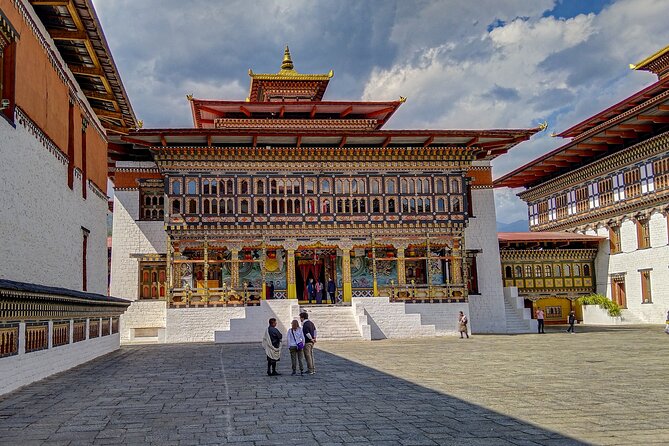
Day 6 shifts you back to Paro, and it’s a nice contrast. The fortress energy comes early with Rinpung Dzong, a striking monastery-fortress located on the banks of the Paro River. The dzong is described as originally built in the 15th century, which helps you connect the dots between Bhutan’s older spiritual sites and its still-functioning institutions.
After lunch, you get a short hike to Zuri Dzong, listed as about 1 hour, and it’s framed as rewarding with panoramic Paro Valley views. It’s not a long trek day, but it’s enough movement to feel like you earned the scenery.
The day keeps cultural hands-on elements moving with Chencho Handicrafts at a locally-run weaving center. This is a straightforward stop, but it’s exactly the type of detail that makes Bhutan feel real. Then you have time in Paro town for a leisurely stroll, where you can browse shops and pick up souvenirs at your own pace.
One playful add-on is Namgay Artisanal Brewery in Paro Valley. The itinerary lists it as a stop, which suggests the day isn’t only incense and stone. If you’re not into beer, you can still treat it as a chance to learn how locals do leisure, not only ritual.
Best way to enjoy Day 6: keep your schedule open-minded. This is one of those days where the “small stops” may become your favorites later.
Tiger’s Nest (Paro Taktsang) and Tshering Farmhouse Hospitality on Day 7
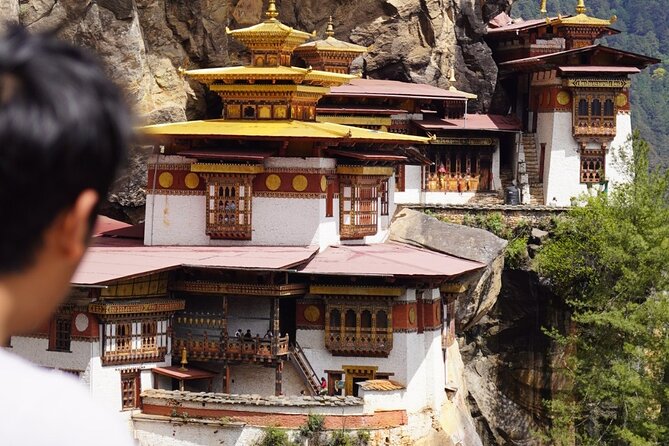
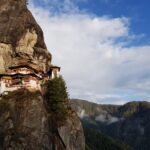
Day 7 is the day most people remember. Paro Taktsang, also called Tiger’s Nest, is described as a wooden structure on a cliff, with a tradition that Guru Rinpoche flew there on the back of a tigress and established the monastery. The time listed is about 6 hours and admission is included, so treat it like a full outing rather than a quick side trip.
This is the part where you feel Bhutan’s balance of challenge and devotion. The route works as a long climb toward a sacred destination, with the setting doing half the storytelling for you. If weather is clear, you’ll get the wide views that make the effort feel worth it. If clouds roll in, you might still enjoy the mood and light shifting around the cliffs.
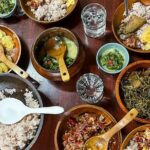
After Tiger’s Nest, you return to Paro for more town time. Then you close with Tshering Farmhouse, a traditional Bhutanese farmhouse where you can experience rural life and hospitality, and the plan notes a cultural chance to try traditional Bhutanese cuisine as part of the broader farmhouse experience.
This combo is smart: it gives you both the famous cliff monastery and the quieter “what life is actually like” ending. That’s a rare pairing in a single week.
Day 8: Smooth Finish Back to Paro Airport
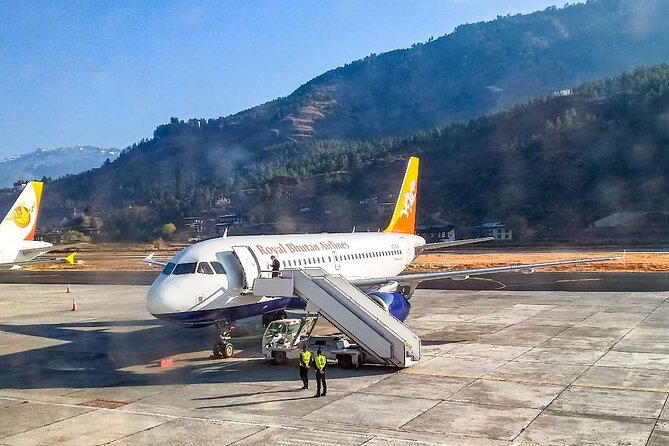
On Day 8, you drive to the airport for your onward flight. The plan lists the airport transfer as about 30 minutes.
It’s a gentle ending after a day that can be intense. If you’re connecting flights later in the day, you’ll probably appreciate having this short, low-stress final drive.
Price and Value: What $1,500 Covers, and What You Still Pay
At $1,500 per person, the base tour price is not just “a few sightseeing stops.” It includes a minimum of 3-star accommodations certified by Bhutan’s Department of Tourism, plus breakfasts, lunches, and dinners (listed as 7 of each across the trip), and all transport by private vehicle for transfers and sightseeing with pickup and drop-off in Paro. It also covers monument and museum fees and includes a licensed Bhutanese tour guide for the extent of the stay.
Now the part you need to budget carefully: the listing states you’ll pay the Sustainable Development Fee (SDF) of $700 per person and a Visa Fee of $40 per person separately. It also says flights, travel insurance, drinks, and personal expenses like laundry and tips are not included.
So your realistic “tour package” number often looks more like:
- $1,500 tour price
- + $700 SDF
- + $40 visa
= $2,240 per person before your flights and insurance.
Also note the itinerary is described as pickup offered and private transportation, while the feature list mentions group discounts. In practice, you should expect this to behave like a private guided experience for your party, with the discount structure depending on how the operator prices your booking.
Should You Book This Cultural Tour?
Book it if you want Bhutan in a balanced mix: dzongs, monasteries, museums, craft workshops, and multiple hikes that stay within day-trip reality. This tour is a strong fit for first-timers who want a clear route that connects sacred sites to daily life, especially with stops like Jungshi Handmade Paper Factory, Chencho weaving, and Tshering Farmhouse.
Skip it or adjust expectations if you dislike walking. Between the 6-hour Tiger’s Nest day and other trails like Gangtey Nature Trail and Zuri Dzong, you should be prepared for active sightseeing. Also, confirm your budget early because the SDF and visa sit outside the listed $1,500.
If you like travel that feels grounded in people and places, this route has the right ingredients.
FAQ
What city does the tour focus on?
The tour is based around Paro, with multiple days that include major visits in Thimphu and Punakha.
Where does the tour start and end?
It starts at Paro Airport, Paro, Bhutan and ends back at the same meeting point.
Is pickup included?
Yes. Pickup is offered, and the plan includes pickup and drop-off in Paro.
What’s included in the price for food?
Dinner (7), lunch (7), and breakfast (7) are included during the tour.
Are entrance fees for temples, dzongs, and museums included?
Yes. Monument fees for dzongs and temples and museum fees are included.
What additional fees should I budget beyond the $1,500 tour price?
You’ll need to budget the Sustainable Development Fee (SDF) of $700 per person and the Visa Fee of $40 per person. Flights and travel insurance are also not included.
What type of accommodation is included?
Accommodation is described as a minimum of 3-star and certified by the Department of Tourism.
Is this a private tour?
Yes. It’s listed as private, meaning only your group will participate.
How much hiking is involved?
There’s a major Tiger’s Nest (Paro Taktsang) outing listed at about 6 hours, plus other hiking stops like Gangtey Nature Trail and a short hike to Zuri Dzong.
Can I cancel for a full refund?
Free cancellation is available up to 24 hours in advance of the experience start time for a full refund.