REVIEW · PARO
7 Days Private Guided Tour of Bhutan
Book on Viator →Operated by Druk Asia - Bhutan Travel Specialist · Bookable on Viator
Seven days feels long, but this one moves with purpose. What makes it interesting is the mix: Thimphu, Punakha, and Paro, paired with both famous monuments and smaller cultural stops that explain how Bhutan thinks and lives. I love the private guide-and-driver setup that keeps visits organized and explanations grounded in what you’re seeing. I also love that your week includes more than just temples—like the Motithang Takin Preserve and hands-on cultural sites—so the trip feels human, not just scenic.
The only real consideration: expect some walking and uphill bits. Bhutan’s highlights here include longer hikes and temple climbs, so moderate fitness will make the week feel fun instead of punishing.
In This Review
- Key highlights that make this tour work
- 7 Days Through Thimphu, Punakha, and Paro: The real value of the route
- Paro arrival and Thimphu orientation: easing into altitude and pace
- Thimphu’s unusual “first hits”: takins, prayer wheels, and an art school
- Motithang Takin Preserve
- Changangkha Lhakhang and its prayer wheels
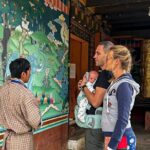
- National Institute for Zorig Chusum (the school of painting)
- Buddha Dordenma and the Farmers Market: Bhutan beyond monuments
- Buddha Dordenma at Buddha Point
- Centenary Farmers Market and local craft bargaining
- Simply Bhutan Museum and Thimphu Dzong: learning the story while you walk
- Simply Bhutan Museum
- Tashichho Dzong
- Simtokha Dzong and Dochula Pass: when the road becomes a viewpoint
- Simtokha Dzong
- Dochula Pass panoramas and the 108 chortens
- Punakha Dzong and the suspension bridge: the photo spot that also matters
- Punakha Dzong
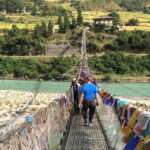
- Punakha Suspension Bridge
- Punakha monastery and chorten climbs: where the week starts asking for effort
- Druk Wangyel Monastery
- Khamsum Yulley Namgyal Chorten
- Sangchhen Dorji Lhuendrup nunnery
- Chorten Nyingpo Lhakhang
- Kyichu Lhakhang and Paro’s historic stack: old temples, older meanings
- Kyichu Lhakhang
- Rinpung Dzong
- National Museum of Bhutan (Ta-dzong)
- Drugyel Dzong
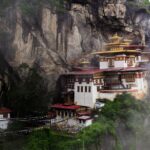
- Paro Taktsang (Tiger’s Nest): the hike that defines the week
- Price and hotels at $2,900 per person: is it good value?
- Who should book this private Bhutan tour
- Tips to make the week easier (and more enjoyable)
- Should you book this 7 Days Private Guided Tour of Bhutan?
- FAQ
- How long is the Bhutan private guided tour?
- What does the tour price of $2,900 per person include?
- What’s the physical requirement for this tour?
- Where does the tour start and when?
- Is this a private tour?
- What isn’t included in the tour?
- FAQ
- Can I cancel for a full refund?
Key highlights that make this tour work
- A licensed English-speaking guide plus an experienced driver, so you’re not figuring things out on the fly
- Classic Bhutan anchor stops, from Dzongs to the Tiger’s Nest climb
- Real variety in the Bhutan “day mix”: monasteries, markets, museums, and viewpoints
- Multiple chances for short culture stops (art school, prayer wheels, museum moments)
- Hikes that match the week pace, including one big push up to Paro Taktsang
7 Days Through Thimphu, Punakha, and Paro: The real value of the route
This tour’s biggest strength is simple: it strings together Bhutan’s best “mood settings.” You start in Thimphu, where the day-to-day energy of the capital shows up in markets, museums, and working institutions. Then you shift to Punakha, which feels quieter and more temple-centered, with river views and ridge temples. Finally, you land back in Paro, where the valley’s monasteries lead naturally to the trip’s signature climb.
Because it’s private, the pacing is less rigid than group tours. If you’re the type who likes to ask questions, the guide can slow down where you care. If you prefer efficient sightseeing, you can keep things moving without feeling rushed.
Also, the structure is smart for first-timers. You’re not just hopping between famous places—you’re building context. You learn what the symbols mean, then you see them again in different settings: prayer wheels in Thimphu, royal-era Dzongs in both regions, and the devotional architecture that rises above the valleys.
And yes, there’s a clear outdoors component. But it’s not all endurance sports. You get hikes like Paro Taktsang (Tiger’s Nest), plus shorter temple walks that still give you that “I’m in the Himalayas” feeling.
You can also read our reviews of more guided tours in Paro
Paro arrival and Thimphu orientation: easing into altitude and pace
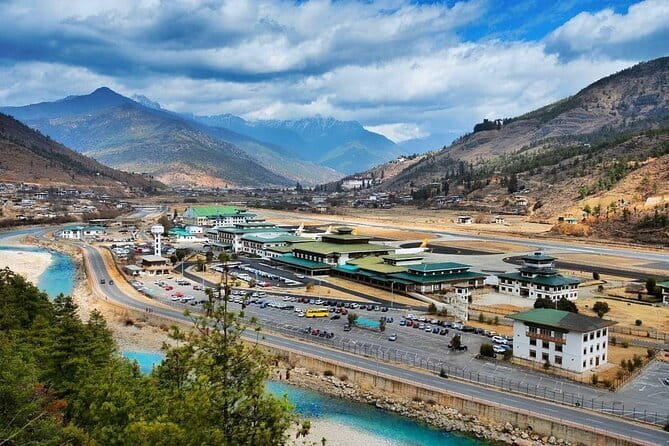
Your week begins at Paro International Airport, with pickup/greeting when you exit the arrival hall. The first day matters more than people think. Bhutan moves slower than you expect, and altitude can nudge how you feel even when you’re not doing heavy climbs yet.
The plan gives you an acclimatization day vibe—nothing intense immediately—then starts layering in Thimphu culture. That’s a practical way to avoid the classic mistake: trying to power through temples and overlooks while your body is still adjusting.
In Thimphu, you’ll spend time around the most visible parts of Bhutan’s spiritual and educational culture. That includes temples you can visit without long detours, plus one wildlife preserve that’s genuinely different from the stone-and-scroll routine.
If you come in from a long flight, I’d treat that first Thimphu day as your “reset.” Hydrate, take the first half day easy, and let the rest of the week build from there.
Thimphu’s unusual “first hits”: takins, prayer wheels, and an art school
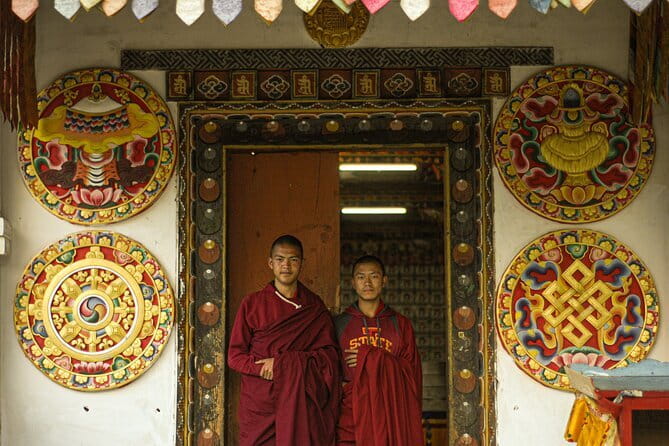
Thimphu can be very temple-heavy on other itineraries, but this one uses variety early.
Motithang Takin Preserve
This reserve is for the takin, Bhutan’s national animal. It’s located in the Motithang district and started as a mini-zoo before becoming a preserve. That little history shift matters: you’re seeing an animal-centered site that also reflects how Bhutan manages rare wildlife with care.
Why I like this stop: it breaks the pattern. After a day of flight time and orientation, takins give you something fresh to focus on—plus it’s a strong “getting-to-know-Bhutan” contrast against the next stops.
Changangkha Lhakhang and its prayer wheels
Then you go straight into sacred symbolism at Changangkha Lhakhang, one of the ancient temples of the Thimphu valley. The standout here is its enormous prayer wheels and sacred objects, including a sculpted figure of Thousand-armed Avalokitesvara.
Practical tip: plan a few minutes to just watch how the space works. Prayer wheels and temple art aren’t designed for quick snap-and-go. Slow down a bit and you’ll get more meaning from the same walls and carvings.
You can also read our reviews of more private tours in Paro
National Institute for Zorig Chusum (the school of painting)
This stop is one of the more useful “value add” choices. The institute is known as the school of painting and runs programs in the traditional arts Bhutan is famous for. If you care about craft, you’ll appreciate how education and culture sit side by side here.
Even if you don’t paint, this gives you a real sense of continuity: these arts aren’t souvenirs. They’re taught.
Buddha Dordenma and the Farmers Market: Bhutan beyond monuments
A lot of Bhutan itineraries hit temples and call it a day. This one balances the sacred with everyday life.
Buddha Dordenma at Buddha Point
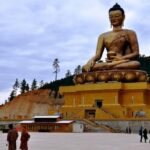
You’ll take a scenic drive up to Buddha Point in Kuenselphodrang Nature Park to see the 169-foot bronze statue of Buddha Dordenma. This is a big, visible landmark—useful for first-time orientation because it gives you a sense of scale and devotion that you can’t miss.
The visit is short, about 30 minutes, but it works. It’s not a long “photo stop.” It’s a quick moment of awe that sets the tone for the days that follow.
Centenary Farmers Market and local craft bargaining
Then comes Centenary Farmers’ Market, where farmers sell things like vegetables, cheeses, and grains. The market description also hints at the occasional oddball find—which is exactly the point. Markets are where you see how a country eats, trades, and builds community.
Across the street, there’s Kundeyling Baazam, a place where you can bargain for local handicrafts. It’s the kind of stop that makes your trip feel grounded, especially after a morning of temples.
A small strategy: don’t treat the market as a shopping mission. Treat it as research. You’ll notice what people actually buy, and that tells you more than a brochure.
Simply Bhutan Museum and Thimphu Dzong: learning the story while you walk
Two Thimphu stops give you culture from different angles: one modern and interactive, the other deeply official.
Simply Bhutan Museum
This is described as a living museum and photo studio, aimed at preservation and promotion of culture. It involves youth and ties to Bhutan’s Gross National Happiness pillars.
Even if you skip photos, this stop helps you understand a key Bhutan theme: culture is not only protected by tradition. It’s supported through people, training, and contemporary initiatives.
Tashichho Dzong
Tashichho Dzong (Thimphu Dzong) is the fortress of the glorious religion. It was first constructed in 1641 and restored in the 1960s. Today, it houses offices of ministries and the monarchy’s religious seat.
A Dzong like this is more than architecture. It’s governance plus faith in one package. Expect to feel that the building is still part of active life, not just a museum shell.
Simtokha Dzong and Dochula Pass: when the road becomes a viewpoint
On the way from Thimphu toward Punakha, the tour adds two stops that make the travel time feel meaningful.
Simtokha Dzong
Simtokha Dzong is an ancient fortress built in 1629 by Zhabdrung Ngawang Namgyal. It sits about 5 km south of Thimphu along the old road from Paro to Phuentsholing. The description highlights its strategic placement.
This is a classic “quick but worthwhile” stop: you get a strong sense of how Dzongs were positioned, literally watching over movement through valleys and roads.
Dochula Pass panoramas and the 108 chortens
At 3,100 meters, Dochula Pass provides stunning 360-degree views of the Himalayas. You’ll also see 108 chortens built by Her Majesty (the description doesn’t name her, but the count and purpose are clear).
This is one of the best moments for photo lighting and emotional payoff. It’s also a place to pause and read your body. If you feel winded, that’s normal at altitude. Take it slow, sip water, and enjoy the view without pushing.
Punakha Dzong and the suspension bridge: the photo spot that also matters
Once you reach Punakha, you move into river-and-religion country.
Punakha Dzong
Punakha Dzong sits at the junction of the Pho Chu and Mo Chu rivers. Built in 1637 by the Great Unifier of Bhutan, it served as the religious and administrative seat of the region. The dual system element is part of what makes Punakha feel historic in a real way.
This is a stop where you’ll notice how the site is arranged around water. Even if you’ve never studied Bhutanese architecture, you’ll feel why this location works: rivers bring life, and Dzongs anchor it with authority.
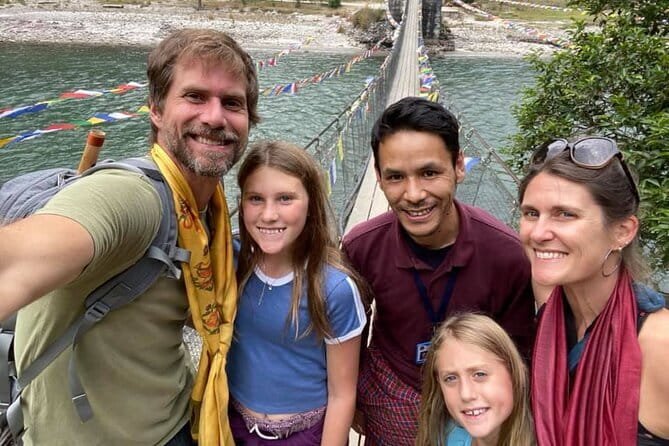
Punakha Suspension Bridge
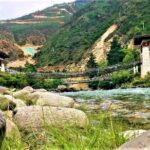
Then there’s the 160-meter-long suspension bridge, described as the longest in Bhutan. The big benefit is the view—especially Punakha Dzong and the Pho Chhu Valley.
Don’t rush this. A bridge crossing is a chance to reset your pace after temple walking. It’s also the kind of vantage point that helps you visualize the valley you’ve been driving through.
Punakha monastery and chorten climbs: where the week starts asking for effort
After the big architectural hits, the tour adds several religious sites that involve either uphill walking or ridge views.
Druk Wangyel Monastery
The Druk Wangyal Lhakhang honors His Majesty the fourth Druk Gyalpo, Jigme Singye Wangchuck. You’re told the temple details merge past and future, which is a clue to how to look here: don’t just scan for the main statue. Notice the fine ornamentation if you can.
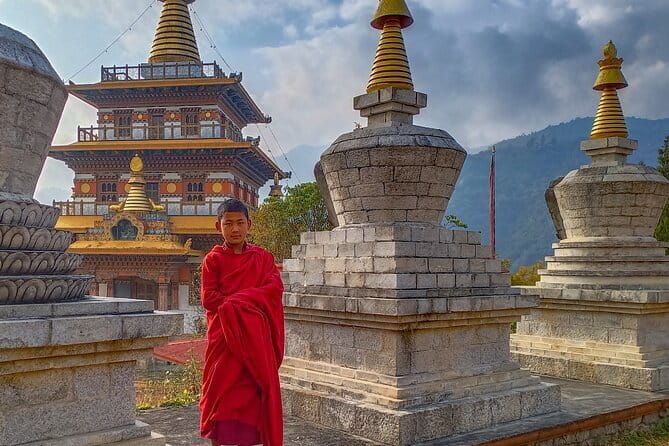
Khamsum Yulley Namgyal Chorten
This stop is built around a hike rhythm: about 1 hour up and 1 hour down, with a total listed duration of 2 hours (plus time for viewing). The chorten was built by the Queen Mother of the 5th King to bring universal peace.
What makes it worth your time: the climb gives you a changing perspective, and by the time you reach the structure, you understand it in context—on a hill, with the valley spread out underneath.
Sangchhen Dorji Lhuendrup nunnery
The nunnery sits on a ridge overlooking the Toebesa, Punakha, and Wangduephodrang valleys. You’ll likely feel the view first, then the stillness. The description also notes it’s consecrated by His Holiness and attended by the king and the fourth Druk Gyalpo.
This kind of site often has a quieter energy than the biggest temples. Keep your voice low, move slowly, and let the ridge air do its job.
Chorten Nyingpo Lhakhang
This is the hike that takes a bit of planning. It’s not a chorten but a temple on a hill. It takes about 45 minutes on foot to access, located in Chumey above Kakaling or Yamtrak.
Consider your energy here. If you’re feeling tired from earlier climbs, treat this as a “go steady” moment, not a test. Even then, it should feel rewarding because the effort is directly rewarded with a quieter, more removed feel.
Kyichu Lhakhang and Paro’s historic stack: old temples, older meanings
By the time you reach Paro, the trip shifts again: less valley-river drama, more monastery density in a beautiful setting.
Kyichu Lhakhang
One of the oldest temples: Kyichu Lhakhang, listed as about 1,300 years old. The description ties it to Songtsen Gampo and the building of 108 temples to subdue an ogress. Whether you’re into the legend or just the architecture, the age tag changes how you look. You’re not visiting a modern structure. You’re stepping into a long timeline.
Rinpung Dzong
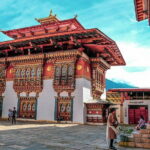
Rinpung Dzong in Paro is locally called the fortress of a heap of jewels. Built in 1646 by Zhabdrung Ngawang Namgyal, it sits on a hill above Paro Township and is linked by a traditional cantilever bridge.
This is one of those stops where you appreciate why hilltop architecture keeps showing up. The elevation gives it presence, and you see it from different angles as you move through Paro.
National Museum of Bhutan (Ta-dzong)
The National Museum, established in 1968, sits in a renovated ancient Ta-dzong building above Rinpung Dzong. It’s a cultural museum, so it’s a useful “brain match” for everything you’ve been seeing.
If you’re trying to remember the trip later, this museum helps you organize the story.
Drugyel Dzong
Drugyel Dzong is highlighted for its history and the fact that it suffered a massive fire in the 1950s. Even with the mention of damage, the focus is on the site’s importance in the area.
In other words: you’re not only seeing what was preserved. You’re also seeing how places survive and remain meaningful after disruption.
Paro Taktsang (Tiger’s Nest): the hike that defines the week
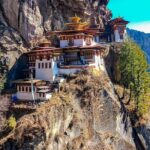
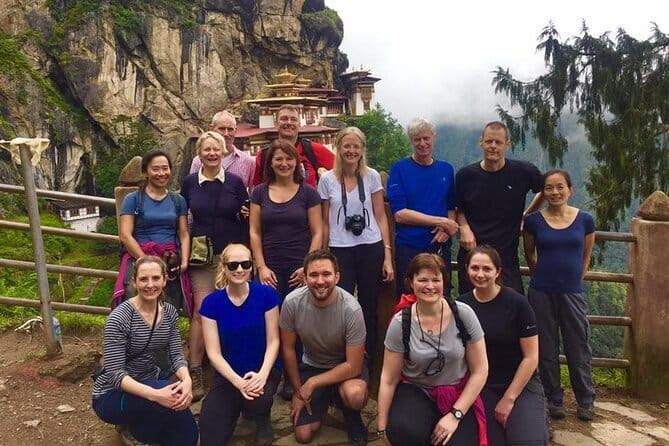
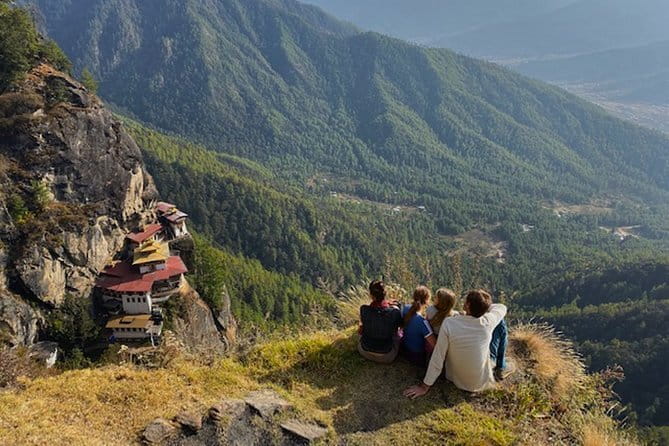
If you do only one big thing in Bhutan, it’s often the hike up to Paro Taktsang, also called Tiger’s Nest. Here, it’s listed as a 6-hour visit, with admission included.
This is the practical reality: plan for a long day. Your legs will feel it, and the path has its own rhythm. Take it step-by-step. Don’t sprint to the top. The reward grows as you climb.
What makes it memorable isn’t just the view. It’s the way the monastery is set on the cliffs. You get a sense of the relationship between spirituality and geography—how devotion takes shape where the land is dramatic.
If you want to do the hike comfortably, pack for changing conditions. Even within one day, you can feel temperature swings and wind exposure near lookouts.
Also: if you’re worried about stamina, talk to your guide about pacing options. In a private format, adjustments can be more realistic than you’d think.
Price and hotels at $2,900 per person: is it good value?
At $2,900 per person for about 7 days, you’re not buying a bargain. You are buying structure, included logistics, and a lot of guided access.
Here’s what that price covers in the data:
- Qualified licensed English-speaking guide and an experienced driver
- 3-star hotel accommodations
- Visa, taxes, surcharges, plus government contribution and Tourism Development funds
What’s not included:
- Hot stone bath for USD 25 per person
From a value angle, this is the key tradeoff. You pay more than a DIY plan, but you don’t spend your time juggling paperwork, getting transport right between regions, and figuring out which places are worth your limited hours. For a country like Bhutan—where driving distances, route planning, and cultural context matter—the “included” piece is a big part of why the week runs smoothly.
If you want the comfort of being looked after, and you’d rather use your energy on temples, viewpoints, and hikes, this price starts to make sense. If you’re trying to squeeze every dollar and you don’t mind a lot of coordination, you might feel it’s expensive. That’s the simple reality.
Who should book this private Bhutan tour
This fits best if you:
- want private guiding instead of group herding
- like a mix of culture + outdoor time, not one or the other
- are comfortable with moderate physical fitness, including longer hikes like the 6-hour Tiger’s Nest day
- enjoy learning traditions through places like the National Institute for Zorig Chusum and the Dzongs
It’s also a good match for travelers who care about respect and context. This trip is clearly designed around Bhutan’s spiritual sites and cultural institutions, not just checklists.
Tips to make the week easier (and more enjoyable)
- Bring footwear you trust for uneven ground. Temple paths and the Tiger’s Nest trail don’t reward flimsy shoes.
- Plan a slower morning if you’re sensitive to altitude. Dochula Pass sits at 3,100 meters, and the day-by-day climbing adds up.
- Keep a small patience buffer. Even short visits like the 30-minute viewpoints work best when you’re not rushing for the next stop.
- If you’re picky about photos, wake up with energy. The best moments on this route often happen at scenic passes and hilltop viewpoints.
Should you book this 7 Days Private Guided Tour of Bhutan?
I’d book it if you want a guided week where the focus stays on real Bhutan: sacred sites, Bhutanese arts, local markets, and the big Paro highlight. The price isn’t low, but the inclusion of guide + driver + 3-star lodging + visa and fees adds up fast in time saved and stress avoided.
I would hesitate if you don’t like walking. Between the Tiger’s Nest hike and multiple hilltop climbs (including the 45-minute temple access option), your comfort level matters. If you’re on the fence, think less about whether you can physically do it, and more about whether you’ll enjoy doing it.
FAQ
How long is the Bhutan private guided tour?
It’s listed as 7 days (approx.) and starts in Paro with activities across Thimphu, Punakha, and Paro, finishing with an early flight back to Singapore.
What does the tour price of $2,900 per person include?
The included items listed are a qualified licensed English-speaking guide, an experienced driver with tour vehicle, accommodations at 3-star hotels, and visa plus taxes/surcharges including government contribution and Tourism Development funds.
What’s the physical requirement for this tour?
The tour info says you should have moderate physical fitness. The schedule includes longer hikes and uphill temple access, including a Tiger’s Nest hike listed at about 6 hours.
Where does the tour start and when?
The meeting point is Paro Airport, Bhutan, with a start time of 9:00 am.
Is this a private tour?
Yes. It’s described as a private tour/activity with only your group participating.
What isn’t included in the tour?
The hot stone bath is listed as not included, at USD 25 per person.
FAQ
Can I cancel for a full refund?
Yes, the policy states free cancellation with a full refund if you cancel up to 24 hours in advance of the experience’s start time.