REVIEW · KATHMANDU
KATHMANDU FULL DAY SIGHTSEEING TOUR (6-hrs)
Book on Viator →Operated by Vyas Treks & Expedition · Bookable on Viator
Four sacred stops, one smooth plan. This half-day circuit mixes major Hindu and Buddhist landmarks, with a guide who explains what the buildings and rituals mean. You’ll also ride in private air-conditioned transport while Kathmandu traffic does its thing.
I especially like the combination of private transport for the full day and an English-speaking guide who turns sightseeing into real understanding. I also like that you’re given a clear rhythm: temples first, then the stupa views, then back out into the city.
One thing to plan for: entrance fees are extra, so the $40 price isn’t the full cost if you want in at every site. Also, the tour data notes there’s no restroom on board, so plan your breaks.
In This Review
- Key things to know before you go
- Why This Half-Day Kathmandu Loop Works
- Price and Value: $40 for a Real Guide + Ride
- The Day’s Flow: From Pashupatinath’s Temple Courtyard
- Swayambhunath: 365 Steps, Monkeys, and a Stupa Loop
- Patan Durbar Square: Working Your Way Deeper Into the Temples
- Boudhanath Stupa: A Buddhist Mandala View You Can Feel
- Transport, Timing, and Kathmandu Traffic Reality
- Entrance Fees: Plan for the Extra Cost Up Front
- Meals and Breaks: What You’ll Need to Handle Yourself
- The Company Side: What Seems Strong, What to Double-Check
- Who This Tour Suits Best
- Should You Book This Tour?
- FAQ
- What is the tour duration?
- What time does the tour start?
- Is pickup included?
- Is the tour private?
- Are entrance fees included in the price?
- What entrance fees should I expect?
- Is lunch included?
- Is there air-conditioned transportation?
- Is free cancellation available?
Key things to know before you go
- Air-conditioned private vehicle keeps you comfortable through Kathmandu’s traffic.
- A focused 6-hour route hits four big spiritual landmarks without feeling rushed.
- Hindu and Buddhist mix: Pashupatinath, Swayambhunath, Patan Durbar Square, and Boudhanath together.
- Swayambhunath’s 365 steps plus monkeys and small stupas along the way.
- Entrance fees are not included, with a rough total listed (you’ll want cash or cards ready).
- Mobile ticket + group discounts, plus pickup is offered.
Why This Half-Day Kathmandu Loop Works
Kathmandu can feel like a puzzle at first: roads, crowds, and temples competing for your attention. This tour helps you solve it by setting a tight route and giving you private transport the whole time. That means you spend less energy figuring out logistics and more time looking closely at what’s in front of you.
The other smart part is the balance of sites. You don’t just do one religion or one style of monument. You move from the temple grounds at Pashupatinath to the hilltop climb at Swayambhu (Swayambhunath), then into Patan’s Durbar Square, and finish at the large stupa at Boudhanath.
You can also read our reviews of more tours and experiences in Kathmandu
Price and Value: $40 for a Real Guide + Ride
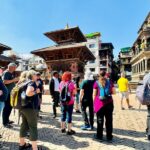
At $40 per person for about 6 hours, the value mostly comes from two things: a guide and an air-conditioned private vehicle. Entrance fees are extra, but the tour covers the core experience—getting you from place to place with an English-speaking interpreter who can explain significance, not just point.
There’s also a practical advantage if you’re traveling with family or friends: it’s described as private for your group, not a crowded free-for-all. That usually makes the day easier, especially when you’re hopping between sacred sites that have different rules about where you can stand, how you move, and what you can photograph.
One small reality check: the tour itself doesn’t include lunch or dinner, and there’s no restroom on board. So you’ll want to budget for meals and plan your stops.
The Day’s Flow: From Pashupatinath’s Temple Courtyard
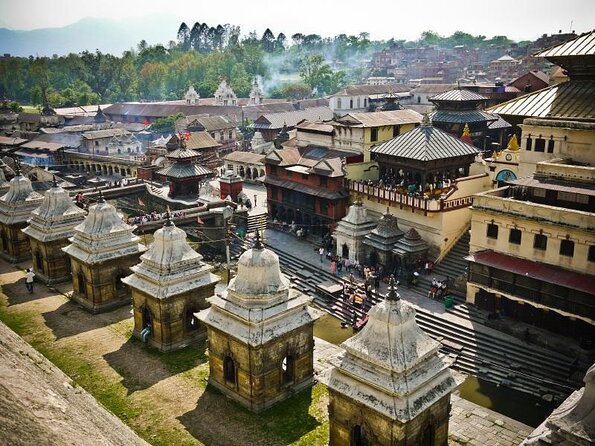
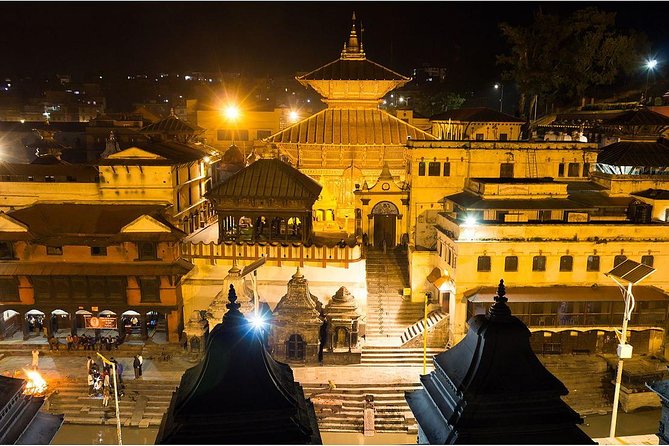
You’ll start at 9:30 am and spend the first stretch at Pashupatinath Temple. This stop is set in Deopatan, in the center of town, within an open courtyard. The temple is described as a square, two-tiered pagoda built on a single-tier plinth—details that matter because they explain why the structure feels so intentional and ceremonial.
You’ll likely use most of your time here just watching the space work. Sacred areas often have layers: where people gather, how sightlines open up, and how the architecture frames devotion. With an English-speaking guide, you’re not stuck guessing what you’re seeing.
What to watch for
- The setting: an open courtyard that gives you a clear sense of the temple’s layout.
- The architecture cues: square base, two-tiered pagoda form, and the plinth under it.
A practical consideration
Pashupatinath can take real focus time. The tour gives you about 2 hours here, which is good—if you try to rush, you’ll miss the parts that make it meaningful.
Swayambhunath: 365 Steps, Monkeys, and a Stupa Loop
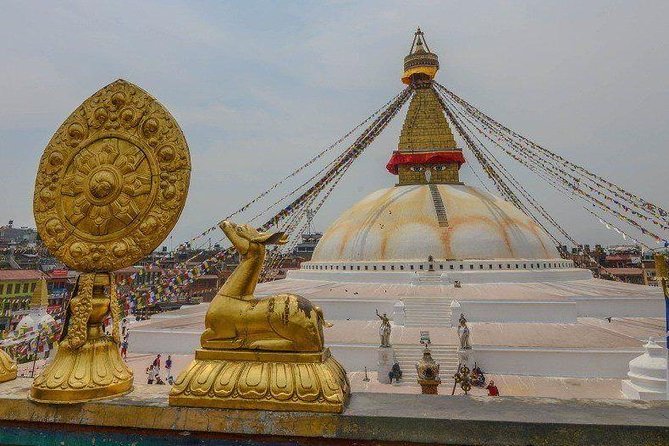
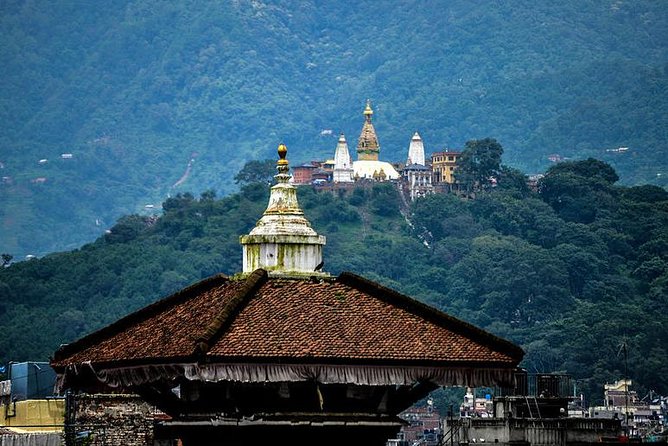
Next comes Swayambhu Mahachaitya (Swayambhunath Stupa), with time set at about 1 hour. This is the stop with the clearest physical payoff: you climb the full 365 steps to the top. Along the way, you can pause at small stupas and watch the motion of vendors, plus yes, monkeys.
At the summit, you’ll be guided to circle the stupa clockwise. That direction matters in religious spaces, and doing it correctly helps you feel like you’re participating rather than just observing. There’s also instruction to visit the small temples around the top area, which often turns a quick view into a more rewarding visit.
Why this stop is worth it
Even if you’re not a huge temple person, the hilltop layout changes everything. The climb breaks the day into two modes—city bustle below, panoramic calm above—so you come out with a different kind of memory than the flat, courtyard-based sites.
The drawback to keep in mind
That 365-step climb is real. If your legs need a lighter day, wear shoes you trust and take your pace early, before you feel winded.
Patan Durbar Square: Working Your Way Deeper Into the Temples
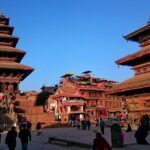
After the climb and the hilltop stupa area, you shift into Patan Durbar Square, scheduled for about 2 hours. The route has a clear approach: you start from the left side of Patan and move deeper toward the city. That matters because Durbar Squares can feel like they blend together unless you follow a path.
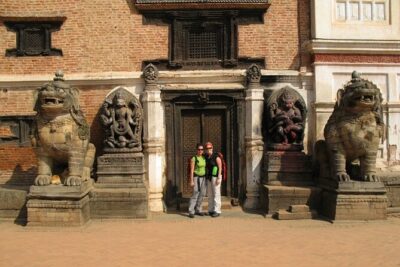
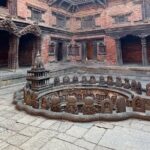
The main attractions you’ll see include Chyasin Dewal as the first temple mentioned. From there, the visit continues through the cluster of temples inside the square, where you can compare details in stonework and layout. A good guide’s job here is to help you connect the dots—what makes one temple distinct from another, and how the whole square functions as a cultural stage.
What you’ll get out of two hours
This isn’t a “walk-by and photo” stop. Two hours lets you look up, then look closer, then step back and take in how the space holds visitors and ceremonies.
A practical tip
Wear something you can stand in for a while. Even with transport between stops, Durbar Square days are spent on your feet.
Boudhanath Stupa: A Buddhist Mandala View You Can Feel
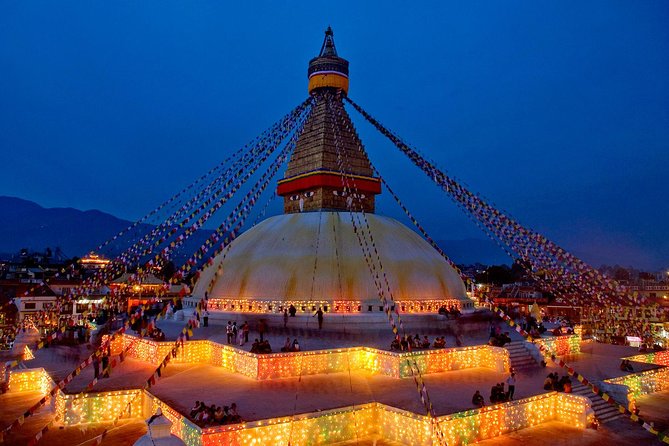
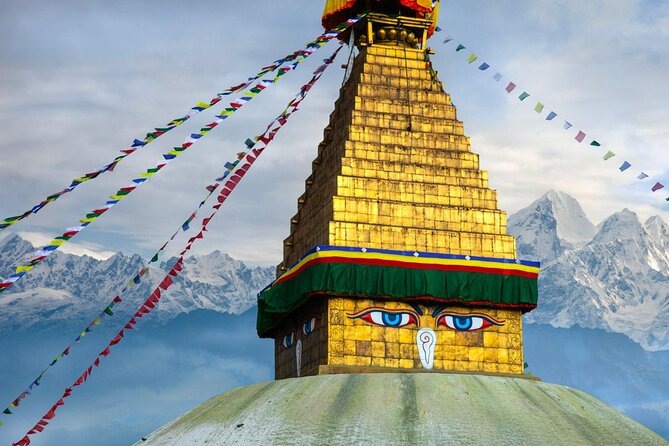
Your final major stop is Boudhanath Stupa (the tour description calls it “Buddha Stupa,” but the landmark is the famous Boudhanath stupa). You get about 1 hour here.
From above, Boudhanath is described as looking like a giant mandala, or diagram of the Buddhist cosmos. Four Dhyani Buddhas mark the cardinal points. Even if you don’t catch every symbolic detail, that framing helps you see the stupa not just as a big monument, but as a map of meaning.
A stupa visit also has a rhythm. People often move in a respectful loop, and there’s a meditative quality when you’re surrounded by walls, prayer wheels, and steady human motion. With the guide in your ear, you’re more likely to notice why the design is meant to draw attention in circles.
What to watch for
- The “mandala” idea: thinking about orientation and the four cardinal markers makes your viewing more intentional.
- The scale: the description points out that the stupa’s shape reads like a diagram from above, so if you find a higher angle, take it.
Transport, Timing, and Kathmandu Traffic Reality
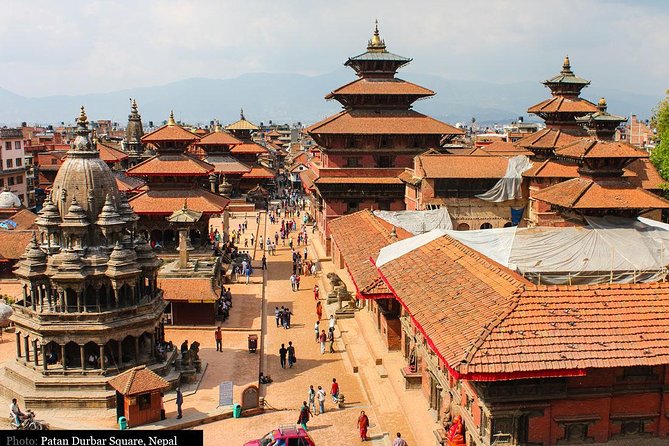
One of the strongest reasons to book a guided route in Kathmandu is simple: time. You’re planning around 6 hours, starting at 9:30 am, and you’re moving between four major landmarks. The tour includes a private vehicle and air-conditioning, which is a big deal when the city heats up and traffic slows down.
In the experience feedback you shared, the driver’s role comes up for a reason: safe navigation through traffic and smooth handling of the day. That kind of driving reduces stress, and it lets you stay focused on the sights instead of the commute.
Also, the tour is described as private for your group, and it includes an English-speaking guide. In a day like this, that pair helps you do two things at once: keep your bearings and understand what you’re looking at.
Entrance Fees: Plan for the Extra Cost Up Front
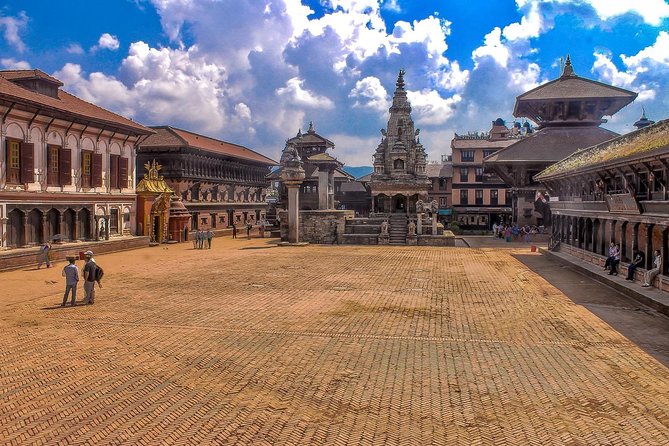
Entrance fees are explicitly not included. The data lists an approximate set of site fees totaling about $10 + $10 + $4 + $2. If you add those up, you’re looking at a rough total of around $26 in entrance costs, though you should confirm on the day because prices can vary.
This matters for budgeting. A $40 tour can accidentally become $70+ if you arrive unprepared and then can’t pay quickly at each stop. I recommend you carry small bills and keep a little extra buffer for any add-on fees or site-specific rules.
Also, remember: the tour does not list a restroom on board. If you need a bathroom break, use site facilities when you can, rather than trying to solve it during transit.
Meals and Breaks: What You’ll Need to Handle Yourself
Lunch and dinner are not included. The tour data gives a ballpark of $3 to $6 per meal, depending on what and where you prefer to eat. That’s helpful because it means you can plan a simple sit-down option without blowing your budget.
In the feedback you provided, one person even mentioned having lunch with their guide. That’s not something you should expect as a guarantee, but it’s a good reminder that your guide can help you pick an easy, reasonable place to eat nearby.
If you want minimal hassle, plan to eat close to where your day already puts you. When you’re on a route like this, the quickest meal is usually the one that doesn’t require an extra detour.
The Company Side: What Seems Strong, What to Double-Check
Most of the positive feedback points to the guide-and-driver team doing their jobs well. People praised a day that felt organized, with a driver who handled the roads safely and a guide who explained things with energy. One guide name that comes up is Dip, described as engaging and doing a strong job communicating.
There’s also feedback about the company checking in after booking and helping the trip feel easier from the start. That matters in Kathmandu, where good communication can save you from confusion when plans shift.
One caution from the lower-rating experience: there can be communication breakdowns around cancellations. If you book, I’d treat confirmation emails and payment details as your anchor. Screenshot or save anything time-sensitive, and if anything looks off, ask quickly before the tour date.
Who This Tour Suits Best
This is a great fit if you want:
- A guided day focused on big-name sites without wrestling with directions.
- A balanced route that mixes Hindu and Buddhist landmarks.
- A comfortable ride in air-conditioned transport for the full day.
It’s also a decent choice if you care about understanding symbolism, not just collecting photos. Stops like Swayambhunath and Boudhanath are easier to appreciate when someone explains the meaning behind the design and the correct way to circle a stupa.
If your legs are sensitive, the main concern is the 365-step climb. You can still do it at a slower pace, but you’ll want comfortable shoes and some patience.
Should You Book This Tour?
I’d book this if you want a straightforward Kathmandu “best of” day with minimal planning stress. The value is strongest when you factor in the private AC transport, the English-speaking guide, and the tight timing that hits four major religious landmarks in about 6 hours.
I’d think twice if entrance fees and extra meal costs would make you uncomfortable, or if you’re likely to skip paid entries because you didn’t budget for them. Also, if you want lots of time at a single monument for deep wandering, the schedule is designed more for coverage than for slow drifting.
If you do book, plan ahead: bring money for the listed entrance fees, wear good walking shoes for the steps, and keep your day’s pace calm. Do that, and this route gives you a very clear picture of Kathmandu’s spiritual architecture and how people move through it.
FAQ
What is the tour duration?
The Kathmandu full day sightseeing tour is about 6 hours.
What time does the tour start?
The start time listed is 9:30 am.
Is pickup included?
Yes, pickup is offered.
Is the tour private?
This is described as a private tour/activity, meaning only your group participates.
Are entrance fees included in the price?
No. Entrance fees are extra.
What entrance fees should I expect?
The tour data lists fees roughly as $10 + $10 + $4 + $2.
Is lunch included?
No. Lunch and dinner are not included, and the cost is estimated at about $3 to $6 per meal.
Is there air-conditioned transportation?
Yes. You’ll have private air-conditioned transport for the entire time.
Is free cancellation available?
Yes. You can cancel up to 24 hours in advance for a full refund.