REVIEW · KATHMANDU
Private Manaslu Circuit Trek at Himalayas
Book on Viator →Operated by Himalayas On Foot - Day Tours · Bookable on Viator
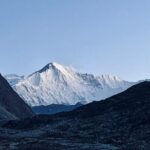
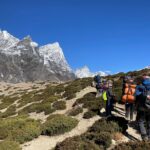
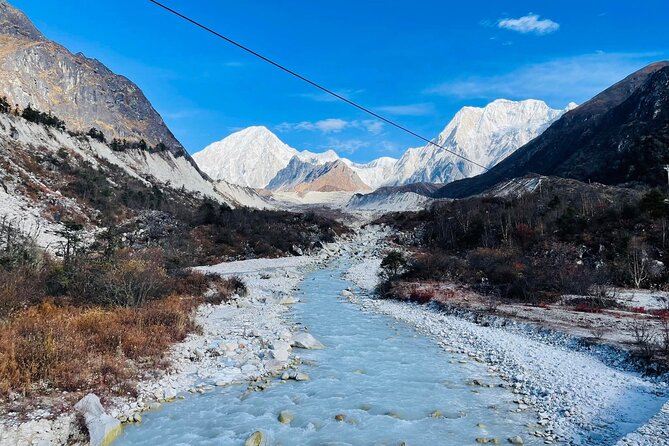
There’s a special kind of quiet on Manaslu. This private Manaslu Circuit Trek threads through high Himalayan villages, glacier country, and big views of the Manaslu range, with a licensed guide and permits handled for you. I especially like the off-the-main-track feel and the way the itinerary builds in acclimatization days so you don’t just rush uphill. One thing to consider: you’ll be near high altitude long enough that you should take the schedule seriously and pack for cold, even if the days start mild.
I like that this is truly a private setup: it’s just your group, not a giant cattle-line trek. I also like the practical safety and comfort details that come standard, like a first aid kit with an oximeter and a guide who’s insured, plus lodge stays in the tea-house style along the trail. On the people side, names that came up with real praise include guides like Yaka, Laxman, and Raj for caring guidance and pace matching.
If you’re hoping for a luxury trip, this isn’t it. You sleep in tea house/lodge accommodation and you’ll be mostly on the trail’s basic rhythm, with drinks costing extra. Also, the Manaslu area is restricted, and the operator requires at least two people to book the trek.
In This Review
- Key takeaways before you go
- Why the Manaslu Circuit feels quieter than the big-name treks
- Price and logistics: what $1,500 really buys you
- Your day-by-day plan: from Machha Khola to Dharapani
- Day 1: Kathmandu to Machha Khola start zone (about 7–8 hours)
- Day 2: Jagat, narrow trail, and a hot spring stop
- Day 3: Jagat to Pewa (about 7 hours walking; up to ~1,860 m)
- Day 4: Pewa to Namrung (about 6 hours; up to ~2,630 m)
- Day 5: Namrung to Lho (short day feel; up to ~3,180 m)
- Day 6: Lho to Sama Gaon (about 7 hours; up to ~3,530 m)
- Day 7: Manaslu Base Camp area acclimatization (~4,400 m max)
- Day 8: Toward Samdo (about 4–5 hours; ~3,690 m max)
- Day 9: Samdo acclimatization and an optional hike (~3,690 m max)
- Day 10: Samdo to Larkya Phedi / Larkya Base Camp (4–5 hours; ~4,460 m max)
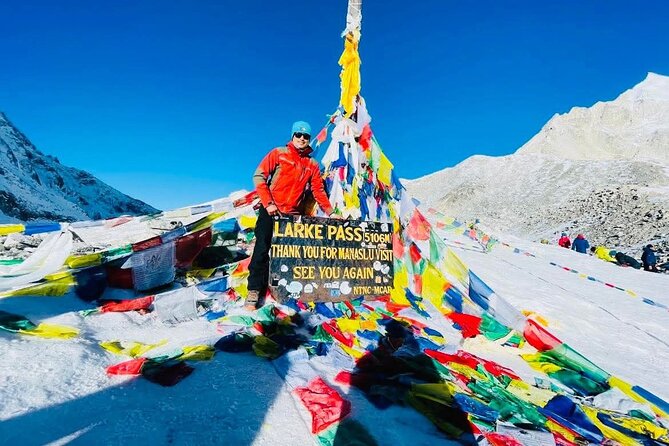
- Day 11: Larkya La pass day (7–8 hours; ~5,160 m max)
- Day 12: Descent toward Bimthang (~3,720 m max)
- Day 13: Bimthang / region to Dharapani (8–10 hours travel; ~1,963 m max)
- Permits and the restricted-area feel (why it matters for your trip)
- Altitude game plan: acclimatization days that actually do their job
- Lodges, meals, and comfort: the tea-house reality check
- Guide, safety, and pace: what makes a private trek feel easy
- Who this Manaslu Circuit trek suits best
- Quick FAQ for deciding on the Manaslu Circuit
- FAQ
- How long is the Manaslu Circuit trek?
- What’s the highest altitude on this itinerary?
- Do I get pickup in Kathmandu?
- What permits are included?
- Are meals included during the trek?
- What kind of accommodation do you use on the trail?
- Is a porter included for carrying bags?
- Is this a private tour?
- Is travel insurance included, and what about rescue?
- What if I book close to my travel date?
- Should you book this private Manaslu Circuit Trek?
Key takeaways before you go
- Private group trekking in a restricted region, with a government-licensed guide and guide insurance included
- Permits handled: Manaslu Restricted Permit, MCAP, and ACAP are all included
- Big altitude moments planned: Manaslu Base Camp area acclimatization, Samdo exploration, then Larkya La pass
- Lodges on the route (tea house style) with breakfasts, lunches, and most dinners provided during the trek
- Road transfers by bus to Machha Khola and from Dharapani back to Kathmandu, with a long, scenic day-to-day rhythm
- Extra cold planning matters: you may be issued a sleeping bag/down jacket/duffle if needed (then return it)
Why the Manaslu Circuit feels quieter than the big-name treks
The Manaslu Circuit is known for being less crowded than the most famous trekking corridors, and you feel that right away in the villages. Instead of constant foot traffic, you get time to slow down, watch prayer wheels turn, and notice the Tibetan-influenced Buddhist details that show up in small ways across the route.
I also like the way the trek mixes “wow” views with real, lived-in places. You’ll pass through settlements where mani walls and monasteries are part of the backdrop, not a staged stop for photos. It’s not just about summit drama; it’s about walking through a region that still feels like it belongs to local life.
You can also read our reviews of more private tours in Kathmandu
Price and logistics: what $1,500 really buys you
At $1,500 per person for roughly 13 days, the value comes from what’s included rather than just the trek days. Your costs cover the core “hard parts” that often catch people by surprise on Himalayan treks: permits (Manaslu Restricted Permit plus conservation-area permits), a licensed guide with insurance, and the lodge framework on the trail.
You also get the big logistics solved for you:
- Kathmandu to Machha Khola by bus
- Dharapani back to Kathmandu by bus
- Tea-house/lodge accommodation during the trek
- All government taxes/VAT/service charges
- A farewell dinner in Kathmandu on the last night
What’s not included matters too. Drinks during trekking cost extra, and porter service is not included—so if you like a lighter load, plan to either travel with your own strategy or budget for carrying help separately. Plus, international airfare, visa fee/tax, and personal travel insurance are on you.
Your day-by-day plan: from Machha Khola to Dharapani
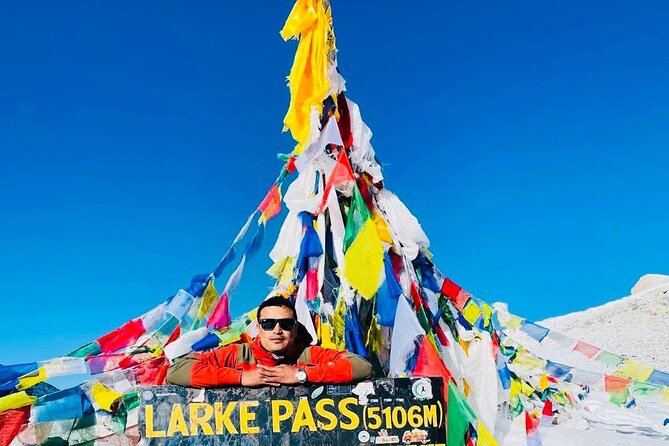
This route is built around steady climbing days, then a couple of “stay and adjust” days, then a big pass crossing. The maximum altitudes listed each day are your clue to where effort concentrates.
Day 1: Kathmandu to Machha Khola start zone (about 7–8 hours)
You start with a long drive, not a long walk. The max altitude is listed around 1,400 m, so you’re mostly settling in and getting your bearings. This is the day to focus on hydration, easy movement, and making sure your gear works—because the next days will not care if your boots are pinching.
Day 2: Jagat, narrow trail, and a hot spring stop
Walking is about 6–7 hours, with max altitude around 1,410 m. The trail is described as narrow with river crossings, including a crossing over the Tharo Khola. One standout detail here: there’s a hot spring along the way, which is a nice mid-trek treat after a day on your feet.
You can also read our reviews of more hiking tours in Kathmandu
Day 3: Jagat to Pewa (about 7 hours walking; up to ~1,860 m)
You leave Jagat behind and head toward Pewa, walking about 6–7 hours. The listed max altitude is 1,860 m, a “turn the crank” day—enough altitude to feel it, but still reasonable. If your legs feel heavy, that’s normal. The trick is to keep your pace calm so you don’t start your trek with a sprint habit.
Day 4: Pewa to Namrung (about 6 hours; up to ~2,630 m)
This is another scenic walking day, around 6 hours, with a max altitude near 2,630 m. In practical terms, these mid-altitude days are where your body learns the rhythm: small steps, steady breathing, and lots of water breaks. Namrung is a useful stop because it keeps you moving toward higher villages without jumping too quickly.
Day 5: Namrung to Lho (short day feel; up to ~3,180 m)
Day 5 is described as rather short, with walking around 4 hours, and max altitude 3,180 m. Shorter walk days aren’t a free day off, but they are a pressure release. They give your body time to recover and help you arrive at higher country with less fatigue.
Day 6: Lho to Sama Gaon (about 7 hours; up to ~3,530 m)
Walking is about 7 hours, rising to around 3,530 m. This is where the air starts to feel different. The villages around this belt are part of the reason the Manaslu Circuit is special—Buddhist details and mountain life sit side-by-side with hard trekking.
Day 7: Manaslu Base Camp area acclimatization (~4,400 m max)
Day 7 is your acclimatization day, with max altitude listed around 4,400 m. You’re meant to go slow and let your body adjust. This is a good day to take seriously: don’t “earn altitude” by hiking fast. Spend time at the new height, keep warm, and eat enough to help recovery.
Day 8: Toward Samdo (about 4–5 hours; ~3,690 m max)
You trek roughly 4–5 hours to Samdo, and the route involves descending toward the Budhi Gandaki River, then heading toward the Manaslu Base Camp area again. The max altitude given is 3,690 m. Expect big scenery and changing weather. Even when you drop in altitude, you can still feel cold at higher elevations.
Day 9: Samdo acclimatization and an optional hike (~3,690 m max)
You spend the day in Samdo to acclimatize, with a possible hike into the valley to one of the trade passes to Tibet for excellent views. This is the day that rewards calm curiosity. If you’re feeling good, this is where you get to explore beyond just walking forward.
Day 10: Samdo to Larkya Phedi / Larkya Base Camp (4–5 hours; ~4,460 m max)
Walking is about 4–5 hours, rising to around 4,460 m. You cross a wooden bridge over the Budi Gandaki and cross two streams along the way. These details matter because they affect your pace. Bridges and stream crossings demand careful footing, especially when you’re tired.
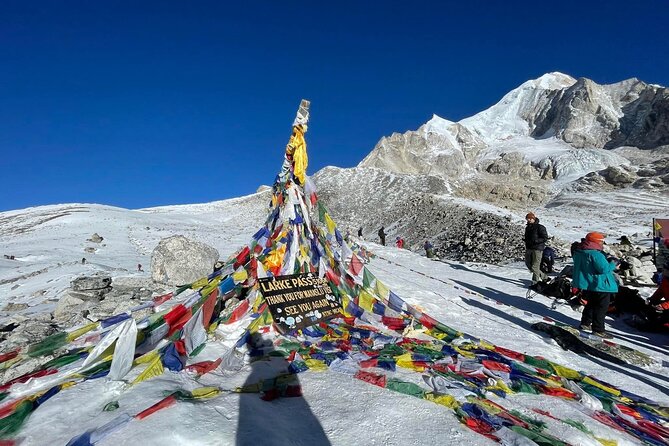
Day 11: Larkya La pass day (7–8 hours; ~5,160 m max)
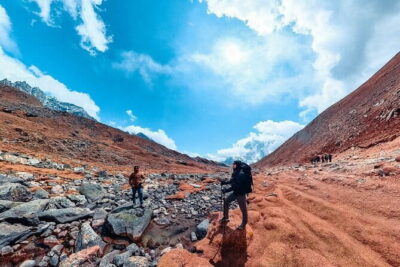
This is the long, high-effort day: about 7–8 hours and up to the pass area around 5,160 m. After reaching a valley with views of Cho Danda and Larkya Peak, the trail goes through moraines of the glacier. It can feel stark, and you’ll want to move with steady control—less talking, more breathing and watching your footing.
Day 12: Descent toward Bimthang (~3,720 m max)
You descend along your return route, with max altitude around 3,720 m. Travel time listed here is about 9 hours. Even though you’re “going down,” it’s still a workday for your knees. Take short steps, and don’t let the relief of descending make you sloppy.
Day 13: Bimthang / region to Dharapani (8–10 hours travel; ~1,963 m max)
The last day mixes a long walk and/or travel time back to the road, with max altitude around 1,963 m. This is the day to keep it simple: focus on getting to Dharapani, then into the Kathmandu-bound bus plan. You’ll be tired, but it’s also the day where you get to feel the whole circuit in one glance.
Permits and the restricted-area feel (why it matters for your trip)
Manaslu is a restricted trek. That’s not just paperwork; it shapes the experience. The trek includes the Manaslu Restricted Permit plus the conservation area permits (MCAP and ACAP), and that helps keep the region protected while still allowing visitors through a planned route.
For you, that means:
- fewer random deviations from established trekking zones
- a more managed flow through villages and checkpoints
- the chance to walk in a place that hasn’t turned into a theme park
It also explains the “minimum two people” rule. If you’re a solo traveler, you’ll likely need to find a compatible partner group. Private doesn’t mean solo.
Altitude game plan: acclimatization days that actually do their job
Manaslu Circuit altitude isn’t a one-day problem; it’s a sequence. Your listed max altitudes show a gradual climb, then built-in adjustment points, then the pass.
The key moments to plan around:
- Day 7 acclimatization around the Manaslu Base Camp area (~4,400 m max)
- Day 9 acclimatization in Samdo (~3,690 m max), with an optional hike
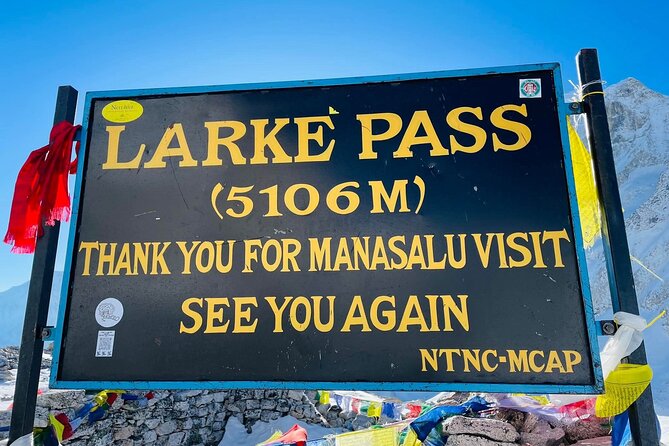
- Day 11 the big pass crossing, reaching Larkya La around 5,160 m
I like that the itinerary doesn’t pretend you can “push through altitude.” The days that slow down (and the ones where you explore rather than clock distance) help you arrive for the pass with a better chance of feeling steady.
Lodges, meals, and comfort: the tea-house reality check
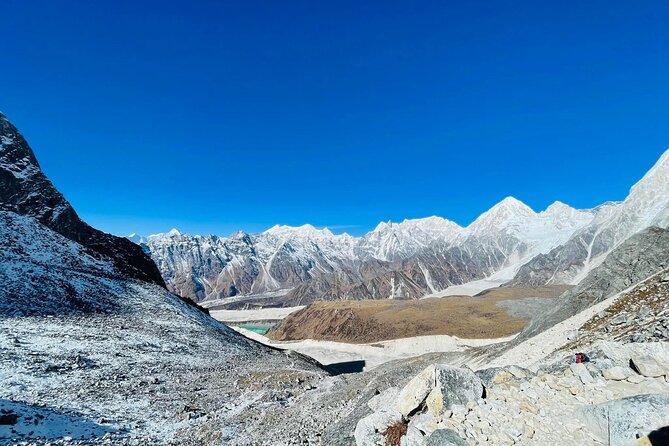
Accommodation is tea house/lodge style. That’s practical and part of the local trekking experience. It also means your comfort depends on basic mountain standards: warmth, layering, and how cold the rooms get when the sun drops.
Meals are included during the trek:
- Breakfast (13)
- Lunch (13)
- Dinner (12)
Kathmandu meals aren’t included, and drinks during trekking aren’t included either. So, plan to budget for hot drinks, water, and any extras along the way.
Packing tip from a value angle: the trek includes a sleeping bag, down jackets, and a duffle bag if necessary (and you return them after). That can save you money and bulk—just don’t count on it for every scenario. If you run cold easily, bringing your own gear you trust can still be worth it.
Guide, safety, and pace: what makes a private trek feel easy
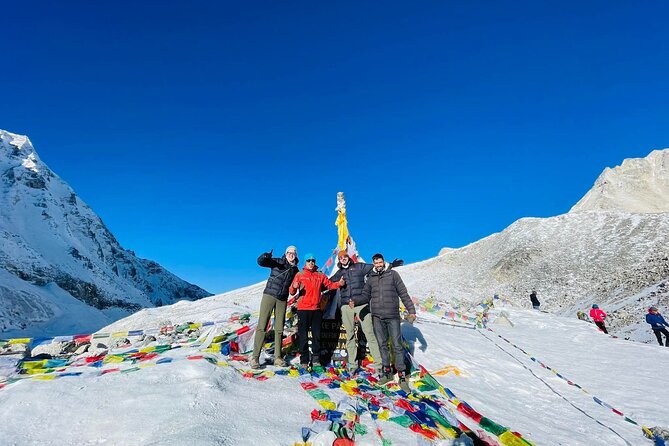
A private trek is only as good as the person guiding it. This one includes a professional trekking guide with a government license, plus guide insurance and food. That matters because trekking in restricted terrain isn’t just about directions; it’s about judging pace, timing, and altitude behavior.
The safety kit isn’t vague. You get a well-equipped first aid kit and an oximeter. In an emergency, the operator says a helicopter service can be arranged and the cost is paid through your travel insurance. That’s the kind of plan you hope you never use, but you’ll sleep better knowing it’s at least in the framework.
Pace also matters. Names that came up with strong praise include Raj for matching a faster pace while keeping the journey comfortable and safe, and Yaka plus Laxman for being caring, knowledgeable, and good company while carrying bags. Even if you don’t hire a porter, a steady guide can still make the difference between trekking and suffering.
Who this Manaslu Circuit trek suits best
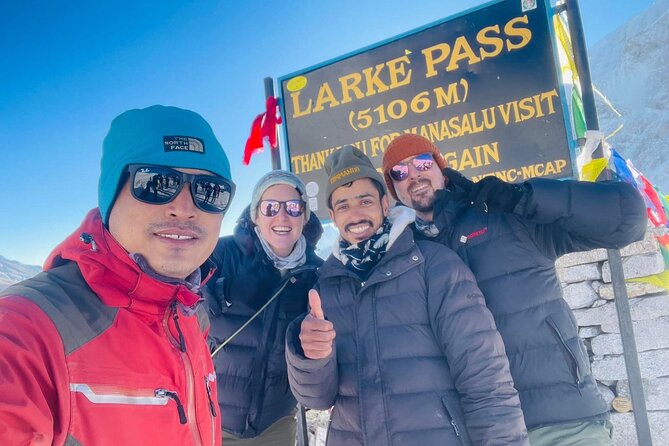
This trek fits best if you:
- want a private experience with just your group
- like cultural details in the villages, not only peak photos
- can handle moderate physical fitness demands
- are comfortable with tea-house lodging and basic mountain living
- take altitude seriously and follow acclimatization days
It may not fit if you want lots of luxury in lodging, all-inclusive drinks, or a trip with minimal travel time on buses. Also, if you’re very sensitive to cold or you’re new to trekking, you’ll want to train first and pack smart.
Quick FAQ for deciding on the Manaslu Circuit
FAQ
How long is the Manaslu Circuit trek?
The trek is listed as 13 days (approx.), with road travel in Kathmandu and then back from Dharapani to Kathmandu.
What’s the highest altitude on this itinerary?
The highest altitude listed is about 5,160 m on Day 11 at Larkya La Pass.
Do I get pickup in Kathmandu?
Yes, pickup is offered.
What permits are included?
The tour includes a Manaslu Restricted Permit, Manaslu Conservation Area Permit (MCAP), and Annapurna Conservation Area Permit (ACAP).
Are meals included during the trek?
Yes. The itinerary includes breakfast (13), lunch (13), and dinner (12). Meals in Kathmandu are not included, and drinks during trekking are not included.
What kind of accommodation do you use on the trail?
You stay in tea house/lodge accommodation during the trek.
Is a porter included for carrying bags?
No. porter service is not included.
Is this a private tour?
Yes. It’s a private tour/activity, so only your group participates. The trek also requires at least two people to book due to the restricted-area setup.
Is travel insurance included, and what about rescue?
Personal travel insurance is not included. For emergencies, a helicopter service can be arranged and paid through your travel insurance.
What if I book close to my travel date?
Confirmation is received at booking unless you book within 1 hour of travel, in which case confirmation is provided as soon as possible based on availability.
Should you book this private Manaslu Circuit Trek?
If you want a Manaslu experience that feels organized, quieter than the biggest trekking routes, and built around altitude reality, this is a strong choice. The best “yes” signal is that permits, guide, lodge structure, and key safety items are included in the price, so you’re not scrambling mid-trip.
I’d lean toward booking if you’re comfortable with tea-house style lodging and you’re the type who likes small villages, prayer wheels, and long mountain walking days. If you need all-in-one comfort, unlimited drinks, or porter support included, you’ll probably want to plan for those add-ons before you go.