REVIEW · KATHMANDU
Private Day Tour: Patan and Bhaktapur from Kathmandu
Book on Viator →Operated by Pigeon Travel And Tours Pvt Ltd · Bookable on Viator
Newari courtyards and palace squares, all in one day. This private tour links Patan Durbar Square and Bhaktapur Durbar Square with a guide who explains what you’re actually looking at. You also get vehicle support, so the day stays focused on history instead of traffic.
I especially like how the tour turns stone, carvings, and courtyards into a clear story about the Kathmandu Valley. My other favorite part is the pacing: two guided walking blocks, plus a real break to grab lunch in Bhaktapur and feel the place at ground level. The only trade-off is that it is still a walking day, with a couple of hours in each Durbar Square, so plan on stairs and uneven surfaces.
You’ll start around 10:00 am, head first across to Patan, then continue to Bhaktapur, and finish back at your hotel after about 7 hours.
In This Review
- Key points worth knowing before you go
- Patan and Bhaktapur Day Tour: What makes this combo work
- Timing, pickup, and what a 7-hour private day means in practice
- Patan Durbar Square: Mul Chowk, Sundari Chowk, and Krishna Mandir
- Jawalakhel Tibetan Handicraft Center: Watch carpet weaving, then keep moving
- Bhaktapur Durbar Square: Golden Gate, Lion Gate, and the 55-Window Palace
- Lunch time in Bhaktapur: Use the square atmosphere
- What you’re really paying for: $105 value check
- The kind of traveler this fits best
- How to get more out of each square
- Should you book this Patan and Bhaktapur private day tour?
- FAQ
- What time does the tour start?
- How long is the private tour?
- Is hotel pickup and drop-off included?
- Is this tour private?
- Are entrance fees included?
- Is lunch included?
- What’s included besides the guide and transport?
- What is the cancellation policy?
Key points worth knowing before you go
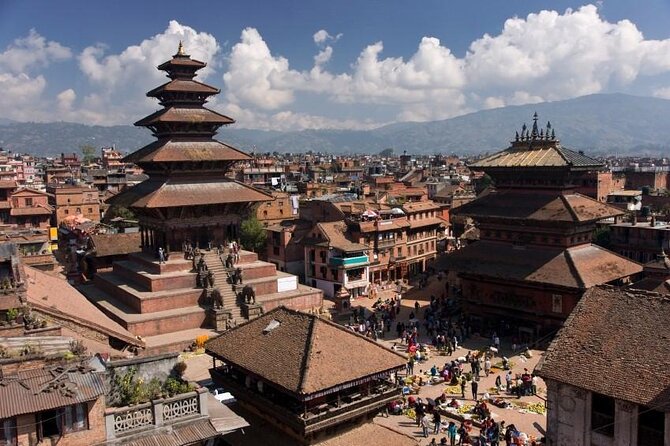
- Two UNESCO Durbar Squares in one outing: Patan and Bhaktapur, both big-ticket stops.
- Architecture explained in plain language: the guide points out what makes Newari design distinctive.
- A focused cultural stop in Jawalakhel: a Tibetan handicraft center where you can watch carpet weaving.
- Bhaktapur highlights without a rush: Golden Gate, Lion Gate, Potter’s Square, National Art Gallery, and the 55-Window Palace.
- Lunch time is built in: you have time to purchase food right in Bhaktapur.
- Value is strong for a private format: hotel pickup/drop-off, private vehicle, entrance fees, and a licensed guide are included.
Patan and Bhaktapur Day Tour: What makes this combo work
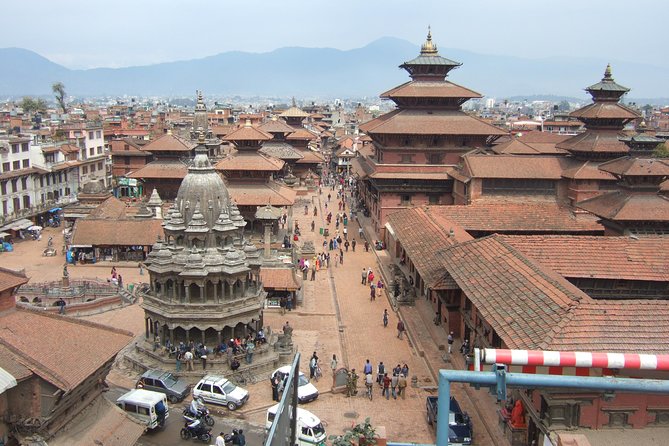
Patan and Bhaktapur are often called sister cities for a reason. They sit in the Kathmandu Valley, they share a lot of the same artistic roots, and yet they each have their own “feel” once you’re inside the Durbar Square complexes.
What I like about doing them together is the contrast. Patan Durbar Square leans into royal palace space, Hindu temples, and metalwork-focused artistry. Bhaktapur Durbar Square, on the other hand, feels more like a living old-city center where you can see gates, palace windows, and craft-related spaces all in the same walking flow. With this private day format, you’re not stuck doing these stops at random times; you follow a sequence that makes the architecture easier to compare.
Also, your guide shares the Kathmandu Valley’s history and specifically talks about the impact of the 2015 earthquake. That adds context you won’t get if you’re just snapping photos and moving on.
You can also read our reviews of more private tours in Kathmandu
Timing, pickup, and what a 7-hour private day means in practice
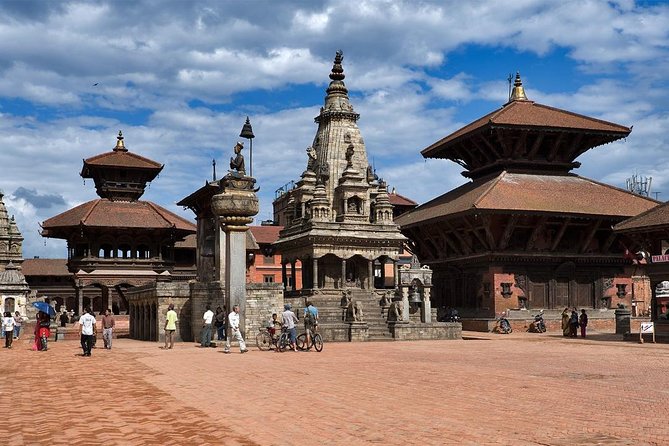
This tour starts at 10:00 am, and it runs about 7 hours total. You’ll get hotel pickup and drop-off, plus a private vehicle for the drives between stops. In a city like Kathmandu, that’s not a small detail. The roads can be slow, and losing time to commuting would drain the day fast. Having transport built in keeps the walking time concentrated on the squares where it matters.
Once you’re in Patan, you get about 2 hours at Patan Durbar Square. Then you go onward to Bhaktapur for another 2 hours at Bhaktapur Durbar Square, with a lunch window in the square area. Between the walking blocks, the drive time is your buffer. It’s the kind of structure that works well if you want depth but still want to be back in Kathmandu at a reasonable hour.
If you’re the type who hates feeling rushed, the private setup helps. You’re not sharing your guide’s attention with strangers, so it’s easier to ask questions while you’re standing in front of the carving or the gate.
Patan Durbar Square: Mul Chowk, Sundari Chowk, and Krishna Mandir
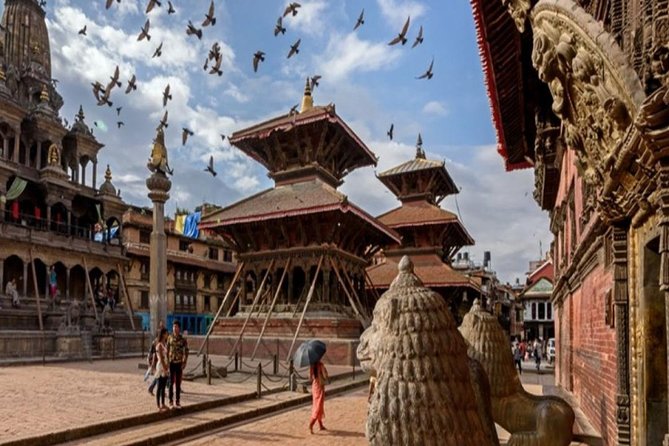
Patan Durbar Square is in Lalitpur (Patan), across the Bagmati River from Kathmandu. This matters because it helps you understand why the Kathmandu Valley cities feel connected but distinct: you’re not just leaving one neighborhood, you’re switching cultural space.
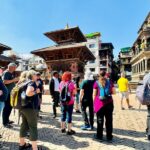
Your walk starts in the Durbar Square courtyards, including Mul Chowk, Sundari Chowk, and Keshav Narayan Chowk. This is where a good guide earns their keep. Instead of pointing out things randomly, the tour focuses on the Newari architecture features that made the square famous.
You’ll also see Krishna Mandir (Temple), a major stop in the complex. The tour highlights that it was built in 1637 by King Siddhi Narsingh Malla, and that the entire temple is constructed of stone. The guide’s explanation is key here: when you know what to look for, those stacked details stop looking like decoration and start looking like craftsmanship with purpose.
If you care about Hindu temple design, royal palace history, and the “city of fine arts” reputation of Patan, this stop delivers. If you prefer only the biggest landmarks and you dislike smaller side courtyards, you might want to pace yourself and ask your guide to prioritize the highlights first—then you can linger where you’re curious.
Jawalakhel Tibetan Handicraft Center: Watch carpet weaving, then keep moving
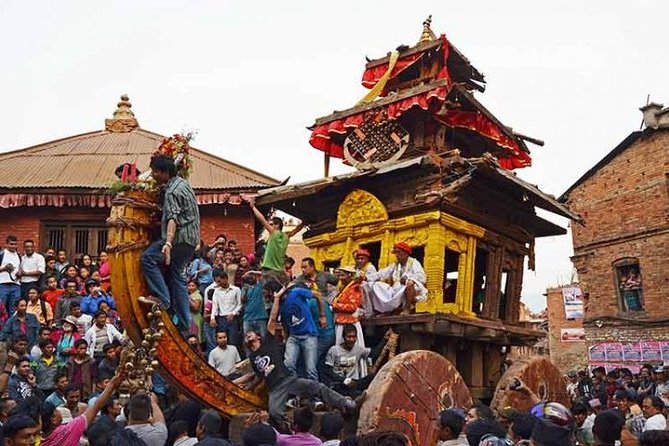
A stop at a Tibetan handicraft center in Jawalakhel is included, and it’s not just a break in the schedule. The tour specifically includes a demonstration of carpet weaving at the center.
Even if you’re not buying anything, this can be a useful “pattern reset” after the temple architecture. It shifts you from stone and metal detail to textile craft, and it’s a good reminder that the Kathmandu Valley isn’t only about ancient monuments. It’s also about living skills.
One practical note: demonstrations can move quickly, depending on how the center schedules them that day. If you see something you want to understand better, this is a great moment to ask your guide what you’re seeing and how that craft is typically done. Since your guide is already walking you through architecture, they’re also likely to connect the craft side to broader cultural history.
Bhaktapur Durbar Square: Golden Gate, Lion Gate, and the 55-Window Palace
After Patan, you head to Bhaktapur, locally known as Bhadgaon. Bhaktapur is about 14 km east of Kathmandu, and it sits at roughly 1401 meters above sea level. Those numbers don’t change your shoes, but they help explain why Bhaktapur feels a touch different once you arrive.
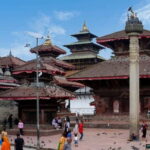
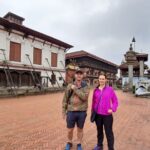
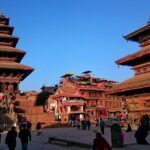
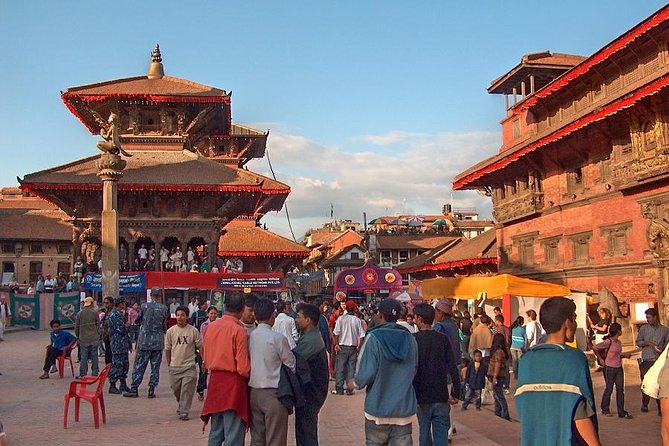
Bhaktapur Durbar Square is the palace plaza of the old Bhaktapur Kingdom and is another UNESCO World Heritage Site. The area is informally known as Bhaktapur Durbar Square, even though it includes several distinct squares. Your tour keeps it manageable by focusing on the highlights most people come to see.
Here’s what you can expect to find on this route:
- Golden Gate
- Lion Gate
- Potter’s Square
- National Art Gallery
- 55-Window Palace
The 55-Window Palace is often the headliner because of its scale and the way the palace façade reads like a grid of detail rather than a simple building wall. Your guide ties these features to royal life and to how the city’s power was expressed through architecture.
Also, this is where the tour’s “look closer” approach pays off. If you tend to speed through big-ticket sites, Bhaktapur can trick you into missing the small stuff that actually makes it special. The guide helps you notice gates and icon details in relation to the palace and the square.
The only drawback to keep in mind: Bhaktapur’s Durbar Square area involves lots of uneven stone and stairs. Even with a guide and a planned walking route, you’ll still want good grip on your footwear.

Lunch time in Bhaktapur: Use the square atmosphere
One of the best parts of this tour structure is that you’re given time to buy lunch in Bhaktapur and slow down in the atmosphere. The tour doesn’t package a specific restaurant meal, so your lunch is more flexible. That can be a plus: you can choose what looks good to you and eat at a pace that matches your energy.
Because the tour is private and the guide is with you, you can also ask for quick advice on what’s convenient and what fits the location. The goal is simple: eat, recharge, and get back to the squares without turning lunch into a logistical problem.
If you’re sensitive to crowds, Bhaktapur can still feel busy during peak hours. The timing of your tour gives you some structure, but it won’t make Bhaktapur empty. You’ll likely enjoy lunch more if you go in expecting local life rather than a quiet café vibe.
What you’re really paying for: $105 value check
At $105 per person, the price is not “cheap,” but it is built around a private format with real inclusions. Here’s what matters for value:
You get:
- Hotel pickup and drop-off
- A licensed tour guide
- Transport by private vehicle
- Entrance fees for temples and monuments
- Current taxes
- Bottled water
- Free WiFi
- Mobile ticket
Food and drinks are not included, so you’ll still budget for lunch. But by bundling guide time, entry fees, and transport, the tour removes the usual add-on chaos that can push day tours over budget.
So the value comes down to this: you’re paying to get both UNESCO sites done properly in one day, with someone guiding you through the architectural meaning, not just the sight list. If you’d otherwise rent a taxi plus buy tickets plus hunt for explanations, the private package starts to look fair fast.
One more thing: the tour advertises group discounts, even though it’s a private experience for your group. That can help if you’re booking with friends and you want the cost to soften.
The kind of traveler this fits best
This tour is a strong match if you like:
- Architecture and religious art you can actually understand
- History that connects to real places, not just dates
- Learning about how Newari design shows up in courtyards, gates, and temples
- A private guide who can answer questions on the spot
It’s also a good choice if you don’t want to manage logistics yourself. With private vehicle transport and hotel pickup and drop-off, you’re free to focus on enjoying the day.
If you’re a complete novice to Kathmandu Valley history, you’ll still be fine. The tour includes context, like the earthquake impact, and it frames what you see without requiring you to already know the names of every palace king.
If you hate walking days, you might want to consider whether the two Durbar Square blocks (about 2 hours each) will feel too long. You can take breaks, but you can’t remove the basic structure of the visit.
How to get more out of each square
A few practical tips can make this day feel smoother:
- Wear shoes with grip. You’ll be on stone floors and steps in both Patan and Bhaktapur.
- Bring a light layer. Morning and shaded courtyards can feel cooler, and you’ll be outside for long stretches.
- Use your guide’s attention. When you see a gate or a temple detail, ask what makes it distinctive. That’s where the tour shines.
- Plan your lunch decision early. Once you’re in Bhaktapur, the square area gives choices, but your easiest win is eating something convenient so you don’t lose time.
And yes, it’s a good day for photos. Just don’t let the camera replace the looking. The best moments often happen when you stop and compare two buildings in your mind—Patan’s palace-temple rhythm versus Bhaktapur’s gate-and-palace plaza rhythm.
Should you book this Patan and Bhaktapur private day tour?
Book it if you want a well-paced, guide-led day that tackles two UNESCO Durbar Squares with transport, entry fees, and context built in. The private format is especially worth it if you care about understanding architecture, or if you want to ask questions without feeling rushed.
Skip it or reconsider if you’re trying to keep walking to a minimum, because the day includes two guided walking blocks at major sites. Also, if you’re the kind of traveler who prefers to wander independently without a structured route, you might feel boxed in by the planned sequence.
If your ideal Kathmandu day is: see key heritage sites, learn what you’re looking at, and still have time to experience Bhaktapur’s square life, this tour is a solid call.
FAQ
What time does the tour start?
The tour starts at 10:00 am.
How long is the private tour?
It runs for about 7 hours (approx.).
Is hotel pickup and drop-off included?
Yes. Hotel pickup and drop-off are included.
Is this tour private?
Yes. It’s a private tour/activity, so only your group participates.
Are entrance fees included?
Yes. Temple and monuments entry fees are included.
Is lunch included?
Food and drinks are not included. You do have time to purchase lunch in Bhaktapur.
What’s included besides the guide and transport?
It includes a licensed tour guide, private vehicle transport, current taxes, bottled water, and free WiFi.
What is the cancellation policy?
You can cancel for free up to 24 hours in advance for a full refund. If you cancel less than 24 hours before the start time, the amount you paid is not refunded.