REVIEW · POKHARA
Pokhara: 5-Day Ghorepani and Poon Hill Private Trek
Book on GetYourGuide →Operated by Linkage Tour & Travel · Bookable on GetYourGuide
Five days to the Himalaya lights.
This Pokhara-based trek is built around one big moment: the Poon Hill sunrise over the Annapurnas and beyond. I like that it’s a relatively easy route that still feels like a proper mountain journey, with days paced through villages and forests rather than long, punishing slogs. And if you want a bit of help fine-tuning the pace, the experience here has a track record of guides like Bidur or Paras customizing the day to your needs.
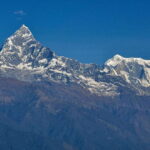
Two things I really value: the walk through Gurung culture in Ghandruk and the satisfaction of waking early for summit views that include Mt. Dhaulagiri, Annapurna South, Hiunchuli, and Machhapuchhre. One realistic consideration: be prepared for a lot of stairs, especially around Tikhedhunga, and for early starts tied to sunrise timing.
In This Review
- Key highlights worth planning for
- Pokhara’s starting point: why this trek begins in style
- Price and value: what you’re really paying for at $187
- The day-by-day plan (with real altitude numbers)
- Day 1: Pokhara (820 m) to Nayapul (1,070 m) to Tikhedhunga (1,570 m)
- Day 2: Tikhedhunga (1,570 m) to Ghorepani (2,850 m)
- Day 3: Ghorepani (2,850 m) to Poon Hill (3,210 m) at sunrise, then to Tadapani (2,610 m)
- Day 4: Tadapani (2,610 m) to Ghandruk (1,940 m)
- Day 5: Ghandruk (1,940 m) to Nayapul (1,070 m) to Pokhara (820 m)
- Early mornings and stairs: the realistic side of Poon Hill trekking
- Why the guide matters more than you think
- Who this 5-day Ghorepani and Poon Hill trek is best for
- Should you book this Pokhara to Poon Hill private trek?
- FAQ
- How high do you go on the Ghorepani and Poon Hill trek?
- What is the total duration of the trek?
- Is this trek suitable for beginners?
- What is included in the price?
- Are meals included?
- Do you provide pickup from Pokhara?
- Is this a private group trek?
- What languages does the guide speak?
- What is the cancellation policy?
Key highlights worth planning for
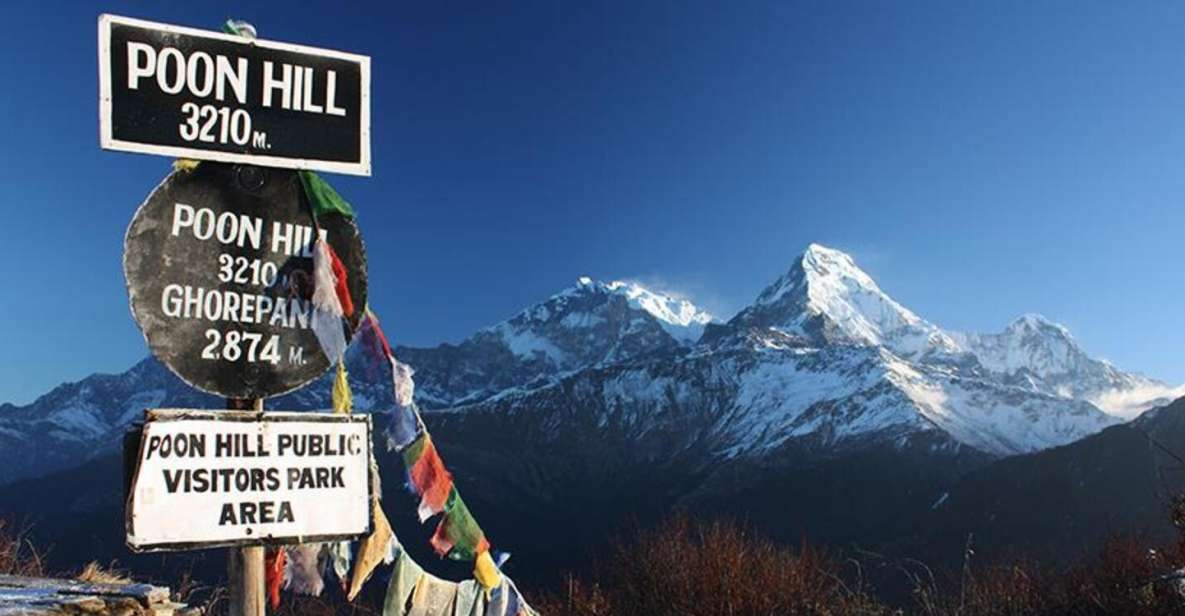
- Poon Hill at 3,210 m for sunrise with a wide Himalayan panorama
- Ghandruk at 1,940 m, a classic Gurung village with traditional architecture
- Rhododendron forest walking with mountain views breaking through the trees
- Well-paced altitudes across 5 days (from 820 m in Pokhara up to the 3,210 m viewpoint)
- Private guidance in English or Hindi, with help ordering food and keeping things smooth
- Pokhara to Nayapul scenic drive, plus a return at the end
Pokhara’s starting point: why this trek begins in style
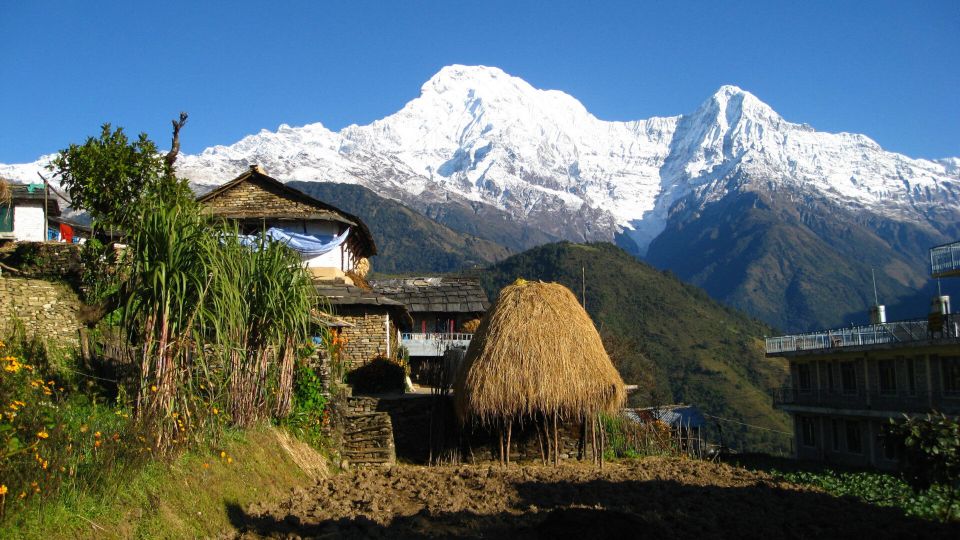
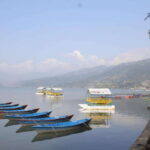
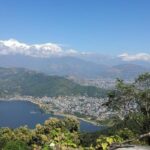
Your trip kicks off in Pokhara, at about 820 meters above sea level. Pokhara is the perfect warm-up zone: lakeside, easy to reach, and far less stressful than launching straight into steep trail work from Kathmandu.
You’ll take a scenic drive to Nayapul, which is at roughly 1,070 meters, and this matters more than it sounds. It puts you on the trail without wasting a whole day “getting started,” and it helps keep the five-day structure actually enjoyable. Then the trek begins to thread you through terraced farmland and local villages before the higher viewpoints arrive.
And because this is a private group with pickup included from your hotel or even the airport area in Pokhara, you’re not wrestling with meeting points or transport on your own.
You can also read our reviews of more private tours in Pokhara
Price and value: what you’re really paying for at $187
At $187 per person for 5 days, the value here is in organized logistics plus a guide who can handle the practical stuff.
What you’re getting included:
- TIMS and permit entrance fees
- An English-speaking experienced trekking guide (English and Hindi support)
- 4 nights of accommodation in a guest house
- Round-trip transportation (Pokhara to Nayapul and back)
- All taxes and service charges
- Pickup from any hotel / airport in Pokhara
What costs extra:
- Meals (you’ll purchase them on the route)
- Rescue costs in an emergency
For many people, the money is less about the beds and more about removing decision fatigue. You’ll know where you’re sleeping each night, you’ll have a guide who can help you navigate menus and options, and you won’t spend daylight time bargaining for transport or figuring out permits. That said, bring a realistic budget for food purchases daily.
The day-by-day plan (with real altitude numbers)
This route is designed as a straightforward five-day loop with gradual climbing and a payoff day centered on Poon Hill sunrise. Here’s what the trek looks like, day by day, with the key altitude points.
Day 1: Pokhara (820 m) to Nayapul (1,070 m) to Tikhedhunga (1,570 m)
Start with the drive from Pokhara to Nayapul. Once you reach the trailhead, the walking begins through villages and terraced farmland with views that open toward the Annapurna and Dhaulagiri mountain ranges.
You end the day in Tikhedhunga at about 1,570 meters. This is where the “stairs factor” starts to show up for many hikers. Even if today feels manageable, it sets expectations: the trek isn’t just scenic strolling—it includes work, and your legs will notice.
Practical tip: keep your first day calm. Enjoy the village rhythm, but don’t chase speed. It makes the next climb feel easier.
Day 2: Tikhedhunga (1,570 m) to Ghorepani (2,850 m)
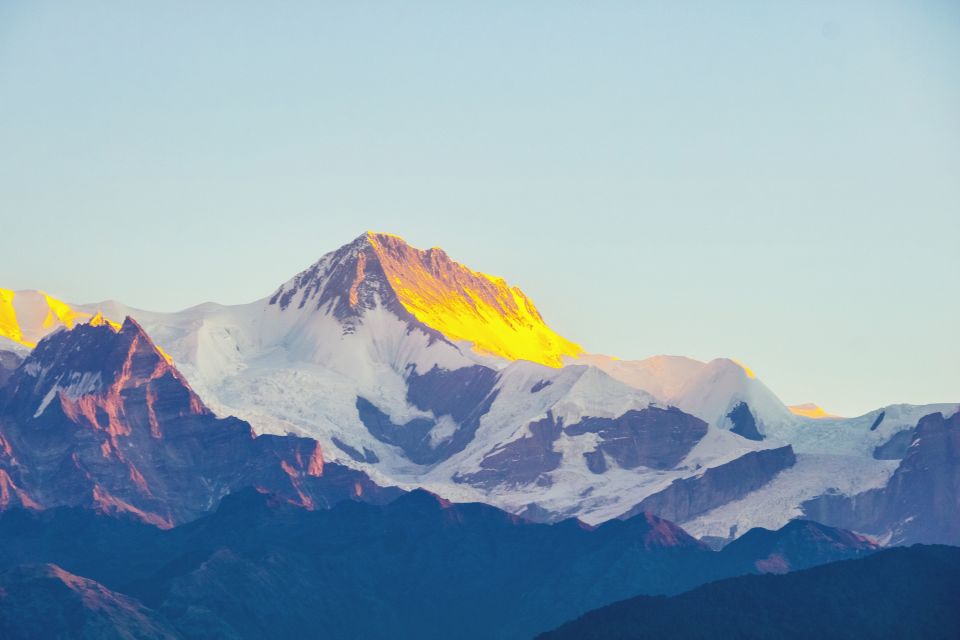
Today is your main altitude step. You’ll climb to Ghorepani at roughly 2,850 meters, a classic teahouse area where the trail life is real: hikers coming and going, local facilities, and plenty of places to pause.
This is also an acclimatization day in practice, even if you’re not doing a formal science-style adjustment schedule. Ghorepani gives you time to settle before the early morning push.
What I like about this section: it transitions you from farming village scenery into a more forest-and-view mix. You’re no longer just seeing peaks from far away—you start seeing them more often between trees and ridgelines.
You can also read our reviews of more hiking tours in Pokhara
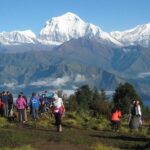
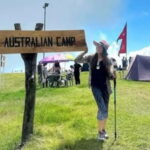
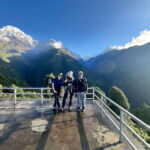
Day 3: Ghorepani (2,850 m) to Poon Hill (3,210 m) at sunrise, then to Tadapani (2,610 m)
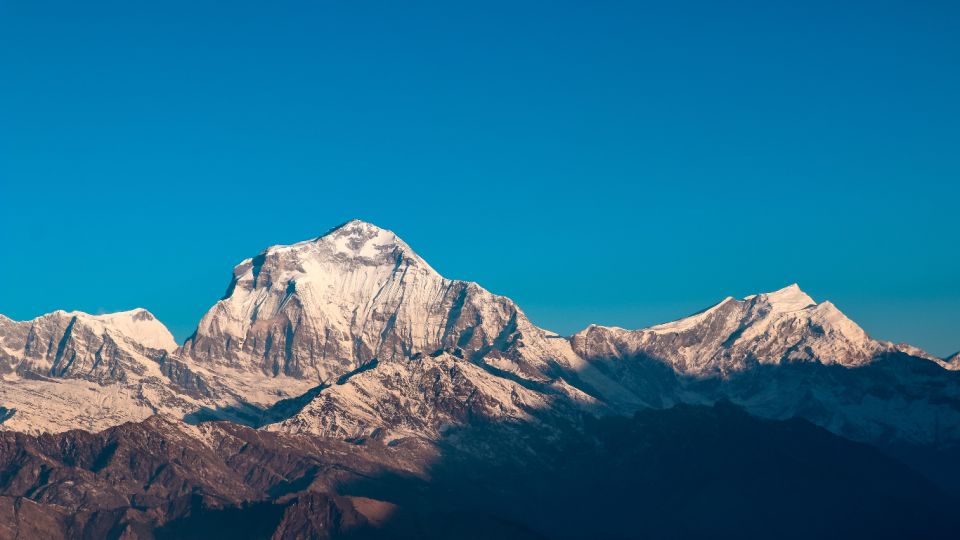
This is the centerpiece day.
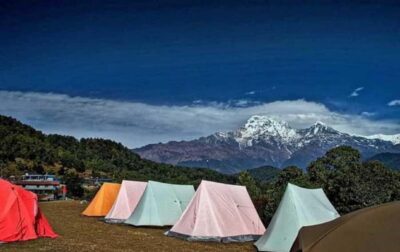
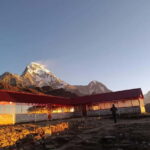
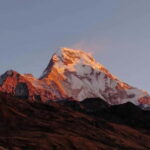
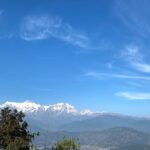
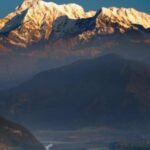
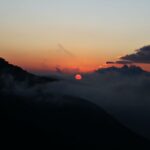
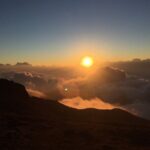
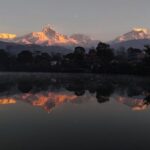
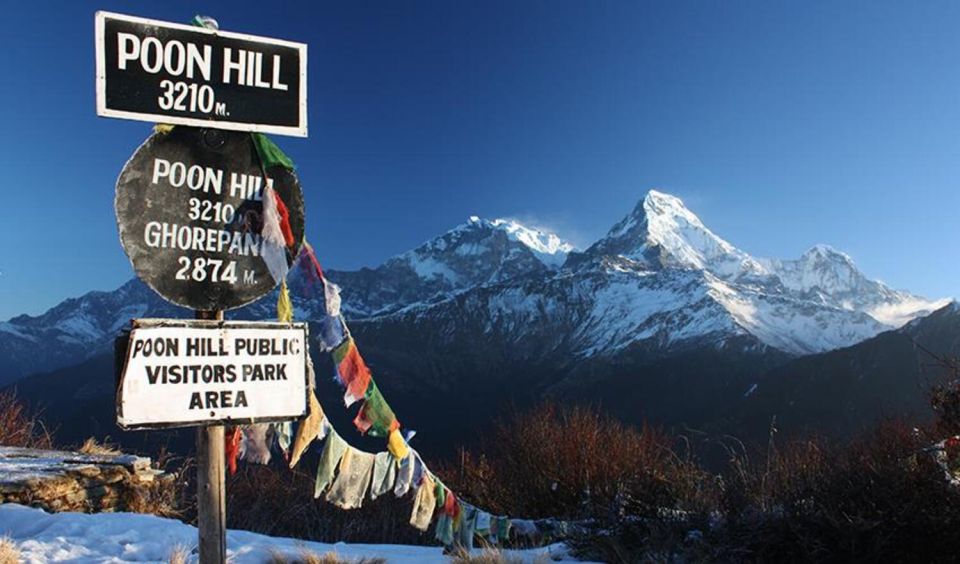
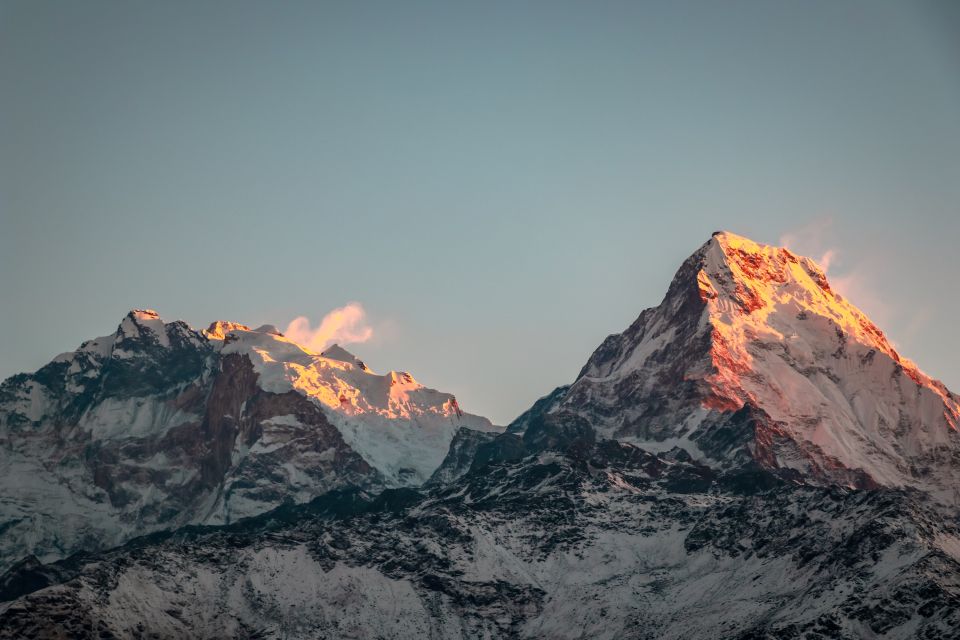
You wake up early and hike to Poon Hill at about 3,210 meters for sunrise. The view is timed for maximum drama: a morning panorama that can include Mt. Dhaulagiri, Annapurna South, Hiunchuli, and Machhapuchhre. The goal is simple—watch the light change across big peaks—yet it’s one of the most memorable things you can do in Nepal’s Annapurna region.
After sunrise, you return to Ghorepani for breakfast, then continue to Tadapani at around 2,610 meters. This drop from Poon Hill altitude to Tadapani is part of why the trek still feels doable within five days: it offsets the early climb with a more relaxed downhill-ish day compared to what you might expect.
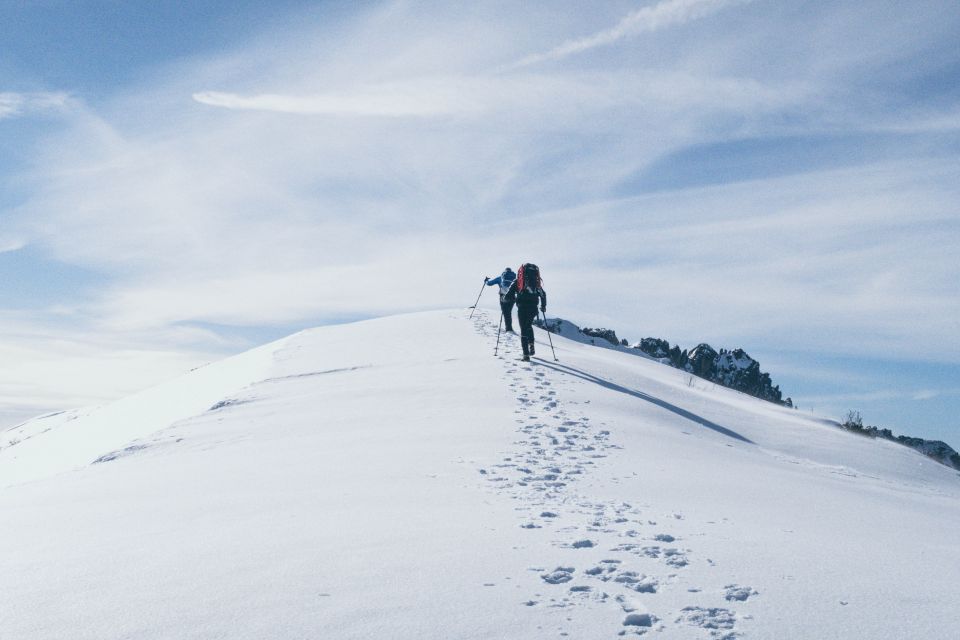
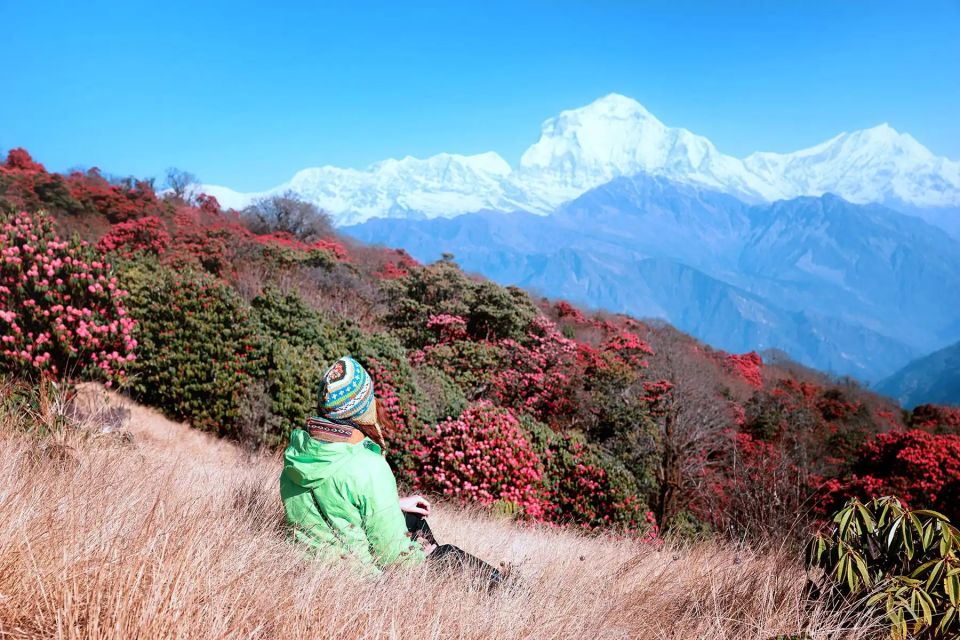
Tadapani brings in another major theme: rhododendron forests. The trees don’t guarantee a view every minute, but when the peaks show through, it feels like the mountains are revealing themselves in chapters rather than all at once.
Day 4: Tadapani (2,610 m) to Ghandruk (1,940 m)
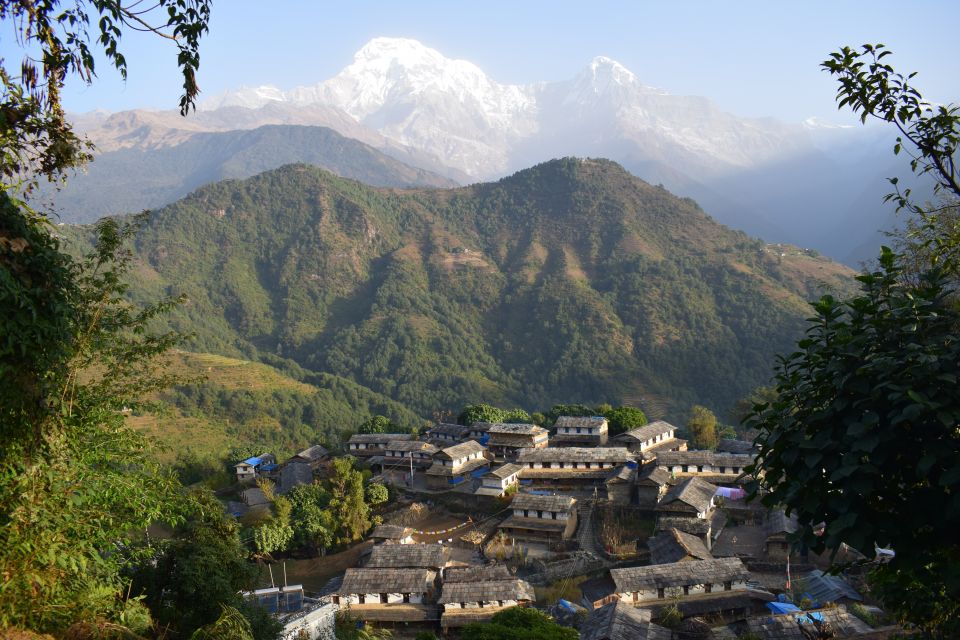
You’ll head toward Ghandruk, arriving at about 1,940 meters. This is where the trek turns into a cultural stop, not only a hiking one.
Ghandruk is known as a Gurung village, and the vibe is different from teahouse clusters. You’ll notice the traditional architecture and feel like you’re spending time in a community rather than just passing through. And with mountain views overhead—especially toward the Annapurna and Machhapuchhre areas—it feels like the village has a front-row seat to the Himalaya.
If you like photography, this is a strong day for it. If you like people-watching, it’s also great. The pace here suits lingering: short conversations, pauses to take in the architecture, and time to soak up the sense of place.
Day 5: Ghandruk (1,940 m) to Nayapul (1,070 m) to Pokhara (820 m)
Your final day is about returning. You hike down to Nayapul, then drive back to Pokhara (ending again near 820 meters).
This downhill day can feel like a victory lap, but don’t ignore your feet. When you’ve done stairs and climbs, descents need care too. Take breaks, keep steps short, and let your legs cool down.
Once you’re back in Pokhara, you’ll have time to relax and enjoy the lakeside city vibe—no pressure to immediately catch another vehicle or plan another trek. It’s the kind of finish that makes the whole route feel balanced.
Early mornings and stairs: the realistic side of Poon Hill trekking
Two practical notes help you enjoy this trek more.
First, the sunrise requires an early start. You’re hiking before the day gets warm, which means you’ll want to dress smartly for temperature changes. Even if it’s easy overall, mornings in the Annapurna foothills can feel chilly.
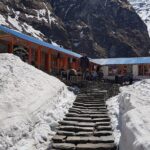
Second, the stairs are real. This route is often praised for its views and scenery, but one of the most common warnings is straightforward: prepare for a lot of stairs, especially around Tikhedhunga. If you don’t love stair sections, you’ll still be fine—just don’t assume it’s only gentle slopes.
The good news is that a capable English or Hindi guide can help you pace yourself so you don’t burn out. In past experiences, guides like Bidur have been described as letting hikers set the pace and supporting everything from sorting logistics to helping with ordering meals and even getting Wi-Fi when possible.
Why the guide matters more than you think
This is a private group, so you’re not just buying a route—you’re buying a smoother experience.
An experienced guide brings:
- Help navigating trail decisions and daily timing
- Assistance dealing with the practical side of teahouses (including ordering meals)
- On-the-ground context about place names and the mountains you’re seeing
- A pace that can match your stamina (including staying flexible if your legs need a slower day)
Based on the guide names associated with past trips—Bidur and Paras—you can reasonably expect an approach that’s not rigid. That flexibility is a big deal on a trek like this, where the “hard parts” come in small, concentrated bursts (stairs, early timing, short climbs), not in one continuous grind.
Who this 5-day Ghorepani and Poon Hill trek is best for
This trek is a strong fit if you want:
- A classic Annapurna introduction in a short timeframe (5 days)
- The iconic sunrise payoff from Poon Hill
- Village and cultural stops, not only scenery
- A relatively easy route with stunning moments that still feel earned
It may not be ideal if you:
- Hate stair-heavy trails
- Want a completely laid-back trek with zero early mornings
- Don’t want to manage your own meal purchases (meals aren’t included)
Should you book this Pokhara to Poon Hill private trek?
I’d book it if you want an efficient Nepal trek with a clear goal: sunrise views from Poon Hill, rhododendron forest walking, and a cultural day in Ghandruk. The private format plus English/Hindi guide support makes it less stressful, especially with pickup and transport handled for you.
If you’re the type who’s only happy when everything is gentle and steady, you should think twice about the stair reality. But if you can handle some stair climbing and you’re excited by early-morning mountain views, this five-day plan is one of the most satisfying ways to experience the Annapurna region without taking a huge time bite out of your schedule.
FAQ
How high do you go on the Ghorepani and Poon Hill trek?
You reach Poon Hill at about 3,210 meters. You also go through Ghorepani at about 2,850 meters, Tadapani at about 2,610 meters, and finish around Ghandruk at about 1,940 meters, with Pokhara starting near 820 meters.
What is the total duration of the trek?
The private trek runs for 5 days.
Is this trek suitable for beginners?
The route is described as relatively easy and can be done in five days, but you should be ready for a lot of stairs.
What is included in the price?
Included are taxes and service charges, TIMS and permit entrance fees, an English-speaking experienced trekking guide, 4 nights’ accommodation in a guest house, and round-trip transportation.
Are meals included?
No. Meals are not included, and you can purchase them along the trek.
Do you provide pickup from Pokhara?
Yes. Pickup is included from any hotel or airport in Pokhara.
Is this a private group trek?
Yes, the group type is a private group.
What languages does the guide speak?
The guide provides live support in English and Hindi.
What is the cancellation policy?
Free cancellation is available up to 24 hours in advance for a full refund.