REVIEW · KATHMANDU
Kathmandu: Wood Carving Workshop with Local Artisan (Thamel)
Book on GetYourGuide →Operated by Relax Getaways Pvt. Ltd · Bookable on GetYourGuide
Wood carving in Kathmandu, hands-on. In this 3-hour Thamel workshop, I love the practical guidance on real tools and the fact you take home a finished carved keepsake. One thing to keep in mind: with only a few hours, you’ll make a small, doable piece, not a huge temple-style panel.
What makes it especially appealing is the small-group feel and the human teaching style—English instruction, limited to 4 participants, and artisans like Hera (described as patient and encouraging) guiding you step by step. You’re not just watching. You’re learning how the cuts become detail.
In This Review
- Key things to know before you carve in Thamel
- Why this wood carving workshop feels different from a typical souvenir stop
- A quick reality check on what you’ll create
- The workshop start: tools, wood types, and how the cuts work
- Why this tools-first approach is a win for beginners
- Your first real carving: outlining, chiseling, and detailing on a block
- What you can expect the teacher to focus on
- The “meaning” part: motifs and symbolism you’ll recognize in Nepalese art
- A quick timeline you’ll hear during the class
- Why this context is useful (not just trivia)
- Wood carving as a real skill: what you’ll actually learn to do
- Taking home your carved souvenir: the payoff and the limits
- The limit you should plan for
- Price and value for a 3-hour, hands-on class in Kathmandu
- Who should book this workshop in Thamel?
- Practical tips so you enjoy the session more
- Should you book the Kathmandu wood carving class?
- FAQ
- How long is the Kathmandu wood carving workshop?
- Where does the workshop take place?
- How much does it cost?
- Is the class taught in English?
- How big is the group?
- What should I bring?
- Are tools and materials provided?
- Can I smoke during the workshop?
- What is included in the price?
- Is there free cancellation?
Key things to know before you carve in Thamel
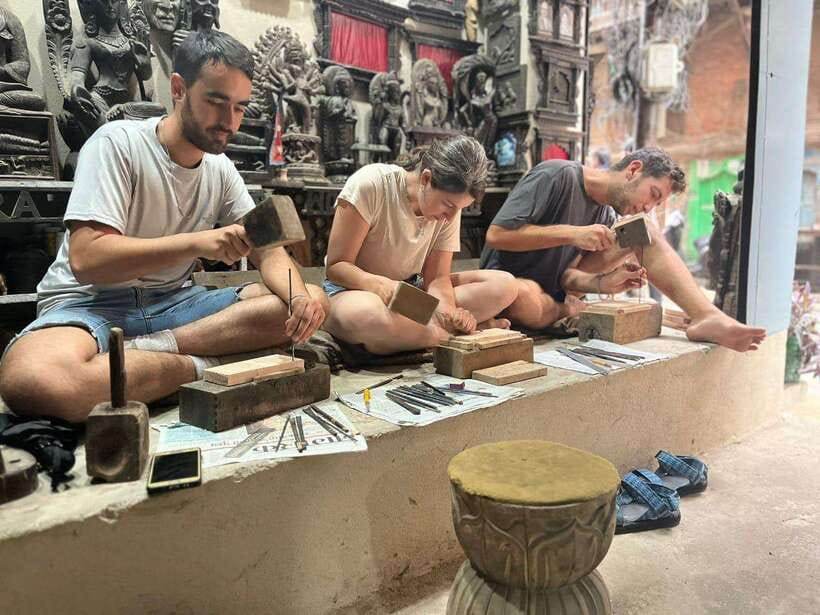
- Small group (max 4): more hands-on time and easier help when your line gets off.
- English instruction: you can actually follow what the artisan is saying while you work.
- You start with a pre-cut wooden block: easier for beginners, faster progress.
- Techniques you’ll practice: outlining, chiseling, and detailing in a guided sequence.
- Cultural context included: motifs and symbolism often drawn from Hindu and Buddhist iconography.
- Tools and materials are provided: you just show up in comfortable clothes.
Why this wood carving workshop feels different from a typical souvenir stop
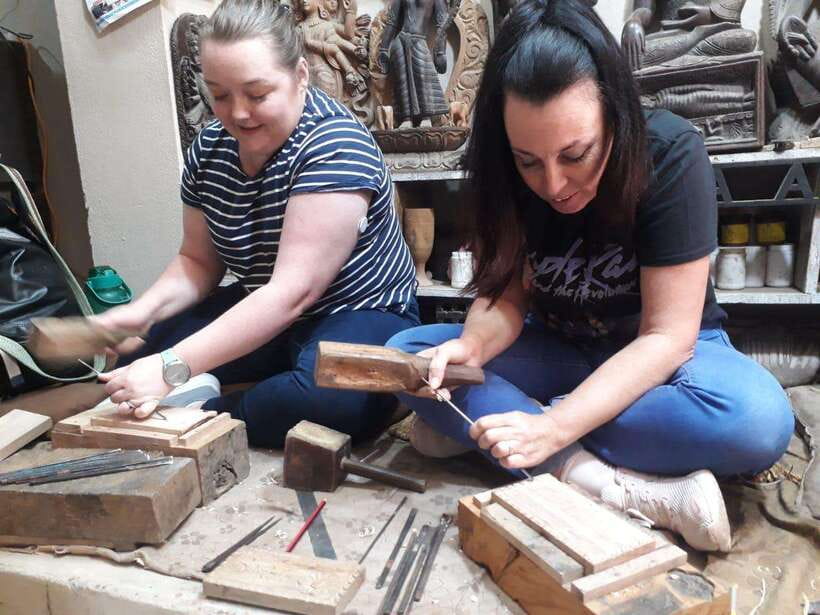
Kathmandu has plenty of shops selling woodwork. This class is the opposite. You get to understand the craft at the speed of a real beginner: make a line, feel the tool, adjust, try again, and slowly turn a flat block into something with character.
The vibe is practical and grounded. You’re in a workshop setting, learning from a skilled local artisan and getting correction while you carve. That matters because wood has its own stubborn personality. If your angle or pressure is off, the surface tells you right away. A good teacher helps you read what the wood is doing.
Also, the final piece is yours. It’s not a mass-made item you pick off a shelf. It’s a souvenir with your decisions inside it—how deep you went, which motifs you leaned toward, and how tidy your outlining ended up.
You can also read our reviews of more tours and experiences in Kathmandu



A quick reality check on what you’ll create
Plan on a compact project. The class runs 3 hours, and the focus is technique: outlines, chiseling, and detailing. That’s perfect if you want a meaningful keepsake without needing professional training, days of carving, or a giant final product.
The workshop start: tools, wood types, and how the cuts work
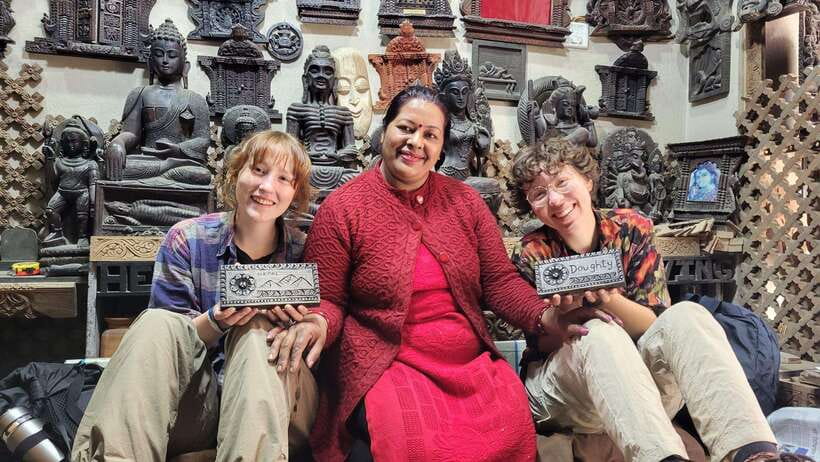
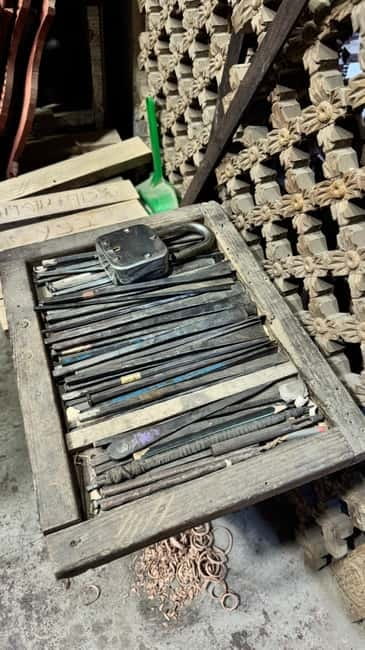
The session begins with an overview—tools and materials first, then technique. You’ll be introduced to traditional chisels and hammers (and the other instruments used to shape wood), plus the wood types commonly used in Nepal such as sal and teak.
Even if you’ve never held a chisel before, the teacher’s job is to get you thinking like a carver, not like a painter. Wood carving isn’t about coloring inside lines. It’s about removing material in a controlled way, then refining what’s left.
You’ll also get insight into patterns and where they show up in Nepalese craftsmanship. That’s one reason the class is more satisfying than a craft demo. You’re not only making shapes. You’re learning what shapes mean and why certain designs are repeated in temple and architectural woodwork.
Why this tools-first approach is a win for beginners
Beginner classes sometimes skip the “why” and jump straight into cutting. Here, you’re eased into it: tools, materials, then your first carving steps. If you’re traveling with limited time, that matters. You don’t want to spend half the class still trying to figure out how to hold the tool.
Your first real carving: outlining, chiseling, and detailing on a block
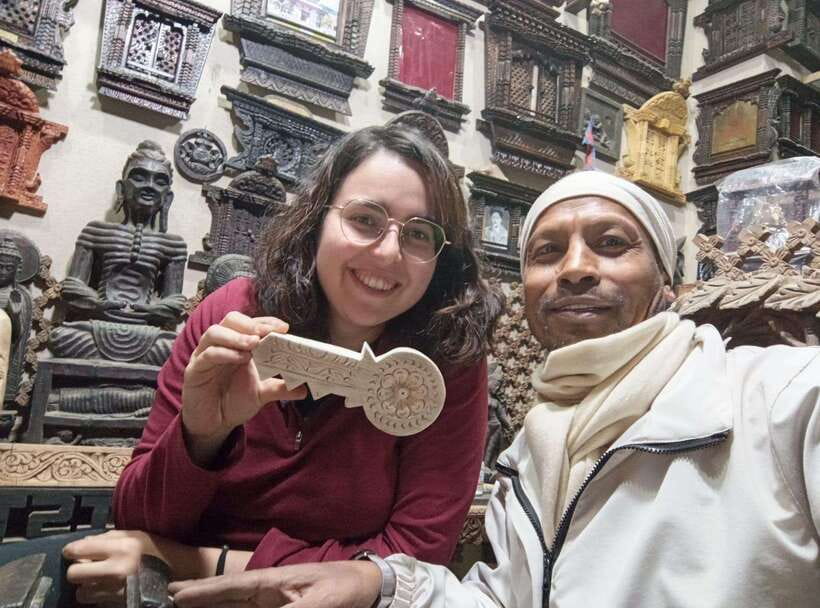
After the intro, you start carving on a pre-cut wooden block. The workflow is simple and repeatable:
- Outlining: you set the main lines so you know where the design lives.
- Chiseling: you remove wood to shape the forms and create depth.
- Detailing: you refine edges and add smaller features so it stops looking flat.
The artisan gives step-by-step guidance, with tips and corrections as you go. This is where the small group size really helps. With up to 4 participants, you can get direct feedback instead of waiting your turn.
If you’re doing this for the first time, you’ll likely discover two things quickly:
- Clean outlining is harder than it looks, and that’s normal.
- Small, patient cuts create better detail than forcing a tool to do everything in one pass.





What you can expect the teacher to focus on
From the way the class is described, the instructor isn’t just checking if you finish. They’re guiding your technique and helping you avoid common mistakes while you’re still able to correct them. That’s a big part of the high ratings: people leave with something they’re proud to carry home.
The “meaning” part: motifs and symbolism you’ll recognize in Nepalese art
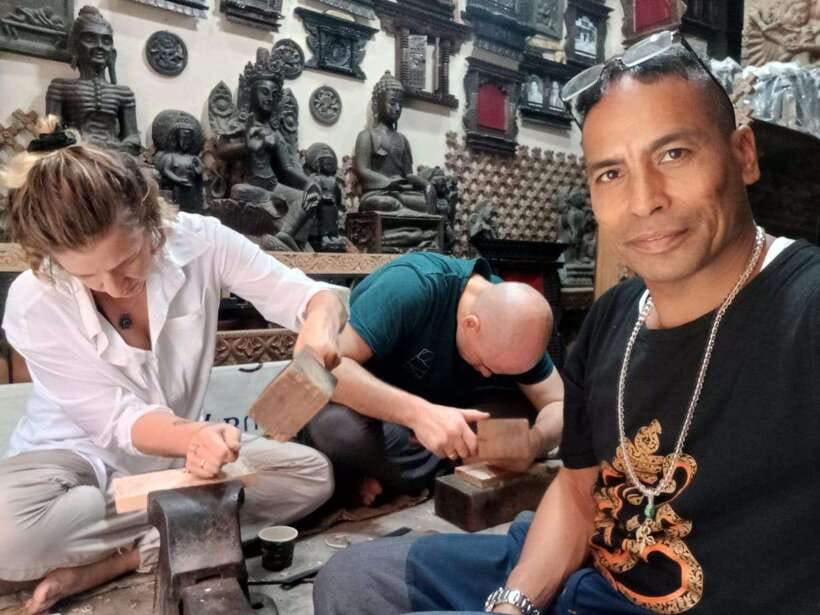
This is not just woodwork as decoration. Nepalese wood carving often takes inspiration from Hindu and Buddhist iconography, so motifs can carry spiritual and cultural weight.
In the class, you’ll be introduced to common motifs and symbolic patterns. Examples mentioned include:
- lotus flowers
- mandalas
- mythical creatures
- symbolic motifs tied to the broader tradition
You might not turn your block into a full scene like you’d see on a palace or temple door, but you can still learn how artisans think in repeating shapes and meaningful forms.
A quick timeline you’ll hear during the class
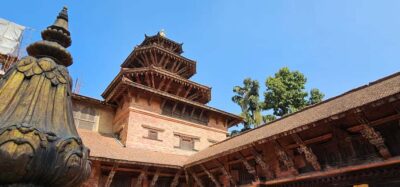
If the artisan shares the craft background, you’ll hear that wood carving in Nepal stretches back to earlier periods—artisans were adorning temples and palaces with intricate wooden designs as far back as the Licchavi period (4th–9th century). The craft later flourished during the Malla dynasty (12th–18th century), and you’ll keep seeing its influence in iconic examples across the Kathmandu Valley.
It’s also tied to community traditions. The Newar community, native to the Kathmandu Valley, is credited with preserving and mastering the art. Landmarks sometimes referenced include the Kasthamandap (House of Wood), the 55-Window Palace in Bhaktapur, and the Peacock Window.
Why this context is useful (not just trivia)
Knowing that carvings often reflect iconography changes how you view your own work. When you carve a lotus or arrange a mandala-like pattern, you understand it as part of a long-running visual language—not a random design choice. Even if you’re not religious, it gives your souvenir meaning.
Wood carving as a real skill: what you’ll actually learn to do
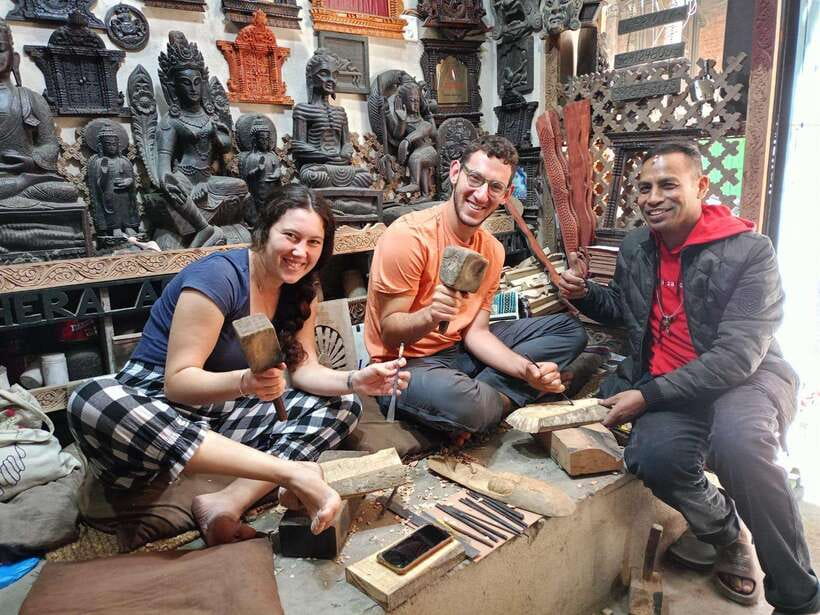
By the end of the session, you’ll have carved your own piece of wooden artwork. The class framing suggests you might choose a small figurine, a decorative panel, or a symbolic motif—whatever fits the session structure and your comfort level.
The real value isn’t only the outcome. It’s the micro-skills you practice during those 3 hours:
- how to plan the outline before you cut deeply
- how chisels work when you control depth
- how detailing changes the look more than you expect
That’s why people tend to rate this workshop highly. You leave with something you made, and you also leave feeling like you learned a process that could make sense even if you had to carve again later.
Taking home your carved souvenir: the payoff and the limits
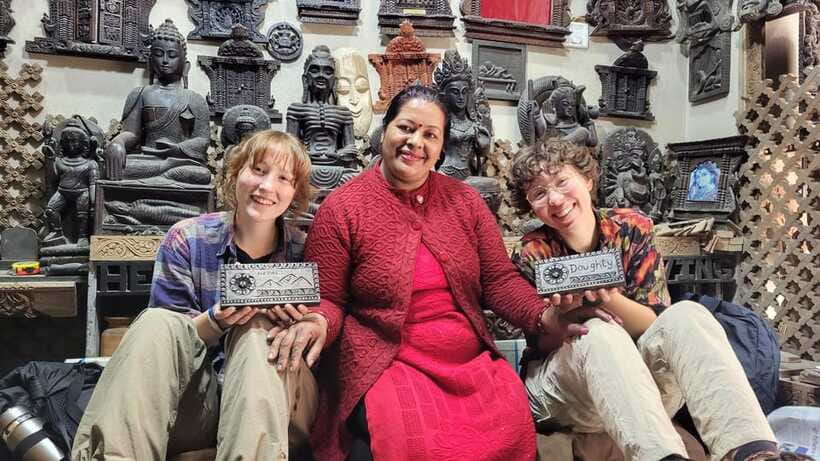
Your finished piece is the souvenir. That sounds obvious, but it’s worth saying because many “classes” end with something that feels too light or too generic to feel personal.
Here, the intent is that your work reflects your choices and your practice. Even if your first attempt isn’t perfect, you’ll recognize your own decisions when you look at it at home.
The limit you should plan for
Because the workshop is 3 hours, you should expect a modest project size. You’ll focus on a technique-based outcome rather than a massive, ultra-detailed sculpture. That’s a good thing if you’re on a Nepal itinerary and juggling travel days.
Price and value for a 3-hour, hands-on class in Kathmandu
The price is $42 per person for a 3-hour workshop in Thamel, and it includes tools and materials, plus all government taxes and VAT. That’s an important part of the value story.
Here’s why it’s not just “cheap craft”:
- You’re paying for guided instruction from a skilled artisan.
- The tools and wood are provided, so you’re not doing an extra shopping run.
- You get a take-home piece made during the session, not later as an outsourced item.
If you compare it to a museum-like activity, this is far more active. If you compare it to DIY carving classes elsewhere, the cultural element plus small-group limit (up to 4 people) makes the time feel more personal.
Who should book this workshop in Thamel?
This class fits best if you want a hands-on Nepal experience that isn’t about sightseeing alone.
It’s especially good for:
- beginners who want step-by-step technique without feeling lost
- art lovers who enjoy craft and design detail
- travelers who want a meaningful souvenir rather than another purchase
- families with older kids who can focus for about 3 hours (a 10-year-old was able to participate well, based on the guidance style described)
If you’re the type who gets impatient with slow, careful work, you might find it a bit too “hands and patience” for your taste. But if you enjoy making something slowly and getting feedback, this is a solid match.
Practical tips so you enjoy the session more
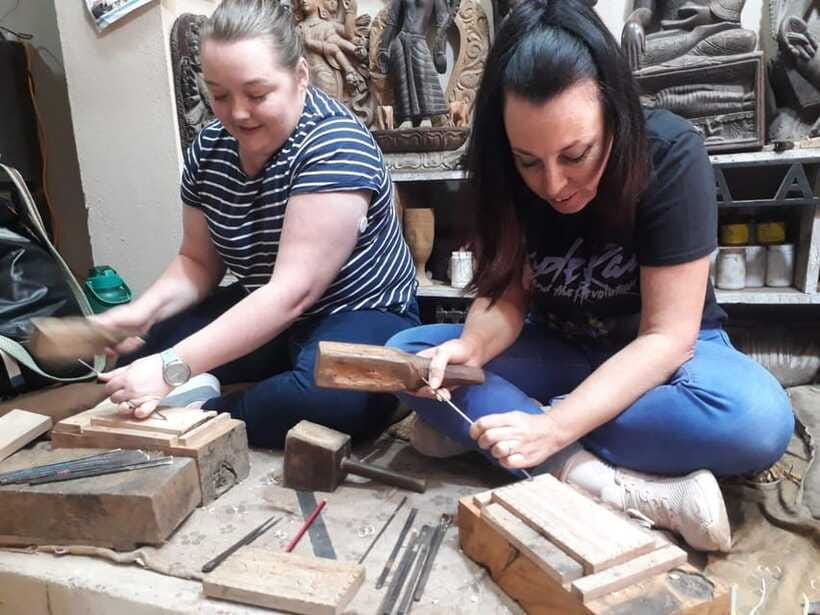
The workshop asks for comfortable clothes. That’s the right call for any carving class because you’ll want freedom of movement while you’re working with tools.
A couple of additional rules matter:
- Smoking is not allowed during the workshop.
- Instruction is in English, which helps if you’re not fluent in Nepali.
Also, because it’s a small group, arriving on time is extra important. You’ll lose carving time fast if you’re late, and the best part is the guided practice.
Should you book the Kathmandu wood carving class?
Yes—if you want a meaningful, hands-on souvenir and you like learning a real craft instead of just watching it.
Book it when:
- you’re in Kathmandu and want a break from big walking days
- you’re open to starting simple with outlining and basic detailing
- you want a cultural connection to Nepal’s temple and architectural wood carving traditions
Skip or reconsider if:
- you need something highly social and lively the whole time (this is focused craft work)
- you’re expecting a full-day deep carving project with heavy complexity
If you fall somewhere in the middle—curious, but not an expert—this is exactly the sweet spot.
FAQ
How long is the Kathmandu wood carving workshop?
The workshop lasts 3 hours.
Where does the workshop take place?
It’s in Kathmandu, specifically in the Thamel area. The exact meeting point is listed as please meet us at your meeting.
How much does it cost?
The price is $42 per person.
Is the class taught in English?
Yes, the instructor provides instruction in English.
How big is the group?
The group is limited to 4 participants.
What should I bring?
Wear comfortable clothes.
Are tools and materials provided?
Yes. All necessary tools and materials are provided.
Can I smoke during the workshop?
No, smoking is not allowed.
What is included in the price?
The package includes guidance by skilled local artisans, tools and materials, your own handcrafted wooden piece to take home, and all government taxes and VAT.
Is there free cancellation?
Yes. You can cancel up to 24 hours in advance for a full refund.