REVIEW · LALITPUR NEPAL
Patan and Bhaktapur City Full Day Tour
Book on GetYourGuide →Operated by Himalayan Travel Consultant · Bookable on GetYourGuide
Two royal squares, one unforgettable day. This full-day run ties together Patan Durbar Square and Bhaktapur Durbar Square with a real sense of Nepal’s Newari heritage, not just photo stops. I love the craftsmanship you can see up close in the temples and metalwork, and I love the palace-courtyard storytelling that makes the old royal world feel practical and human.
There is one catch: monument entrance fees are not included, so plan for extra cash on the spot and build that into your budget.
In This Review
- Key highlights worth planning for
- Two UNESCO squares in one day: Patan and Bhaktapur
- Price and logistics: what you pay, what you skip
- Bhaktapur Durbar Square: medieval streets you can actually walk
- Taumadhi Square and Dattatraya Square: two names that tell you where to look
- Patan Durbar Square: temples and palaces in a city of artisans
- Golden Temple (Hiranyavarna Mahabihar): why the metalwork grabs you
- The palace complex at Patan: three courtyards, three kinds of meaning
- Temple standouts in Patan: Bhimsen, Krishna, Vishnu, and the lucky octagon
- How the 6-hour pacing works in real life
- Shopping and craft: wood and metal in your line of sight
- Who this tour suits best
- Should you book this Patan and Bhaktapur full-day tour?
- FAQ
- How long is the Patan and Bhaktapur full day tour?
- Where is pickup included?
- Is this tour private?
- What languages does the live tour guide speak?
- What is included in the price?
- Are monument entrance fees included?
Key highlights worth planning for
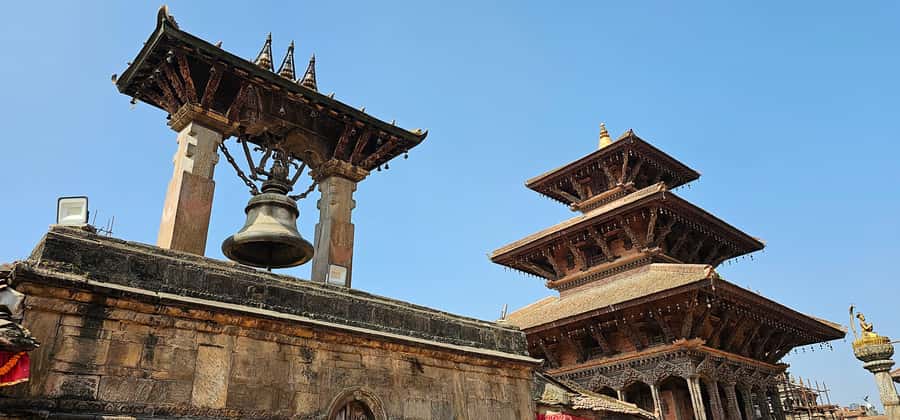
- Golden Temple (Hiranyavarna Mahabihar): a glittering example of Newari metalwork
- Bhaktapur’s Durbar Square area: medieval-town atmosphere with iconic temples and squares
- Patan palace complex courtyards: Sundarichok, Mulchok, and Keshavnarayan Chok each explain a different royal function
- Temple details that turn into stories: household items hanging in the Bhimsen temple, Garuda in front of the Krishna temple
- Guide-led pacing with time to breathe: room for questions, photo stops, and optional browsing
Two UNESCO squares in one day: Patan and Bhaktapur
This tour is built around a simple idea: Kathmandu Valley is packed with heritage, so don’t just drive past it. You’ll focus on two UNESCO-listed heartlands—Patan (Lalitpur) and Bhaktapur—both known for temple squares, palace architecture, and that very Kathmandu-Valley mix of religious life and daily street activity.
Patan is sometimes described as a kingdom-within-the-valley, and it shows. You’ll move through temple lanes and square edges where bahals and bahis (traditional monastery and resting-place spaces) create a dense cultural rhythm. Bhaktapur feels more like a medieval town you can walk into, with Durbar Square functioning like a civic center—more than a single monument.
The day is short enough that you need a good guide, but structured enough that you don’t waste time hunting for what matters. In practice, the experience works best when you let the guide set the route and you use the free time to follow your own interests—temple details, craft shops, or a quiet corner for photos.
You can also read our reviews of more tours and experiences in Lalitpur Nepal.
Price and logistics: what you pay, what you skip
At $50 per person for a 6-hour private tour, the value comes from the combination of a live guide plus door-to-door transport. You’re not just getting a bus ride; you get interpretation while you’re in the squares and palaces, plus hotel pickup and drop-off in Kathmandu.
Included:
- Hotel pickup and drop-off
- Live tour guide (English or Spanish)
- Air-conditioned transport
Not included:
- Monument entrance fees
That last point matters. Kathmandu Valley sites often require tickets for certain areas, so you’ll want to carry some cash just in case. If you’re cost-conscious, ask your guide which specific paid areas you’re entering before you commit.
Also note the timing. The plan lists time blocks that suggest more than one deep-dive window, but the overall duration is listed as 6 hours. So expect smart pacing: guided time where it counts, plus brief open slots to wander, shop, or reset.
Bhaktapur Durbar Square: medieval streets you can actually walk
Your Bhaktapur portion centers on Bhaktapur Durbar Square, with guided sightseeing plus free time and walking. What makes Bhaktapur special is how the square isn’t just a backdrop. It’s part of the town’s lived-in layout—so even when you’re standing in a heritage zone, you still sense everyday movement around you.
Here’s how I’d use your time in Bhaktapur:
- Start with the main square view, then let the guide point out how the spaces connect (temple zones, courtyards, and side squares).
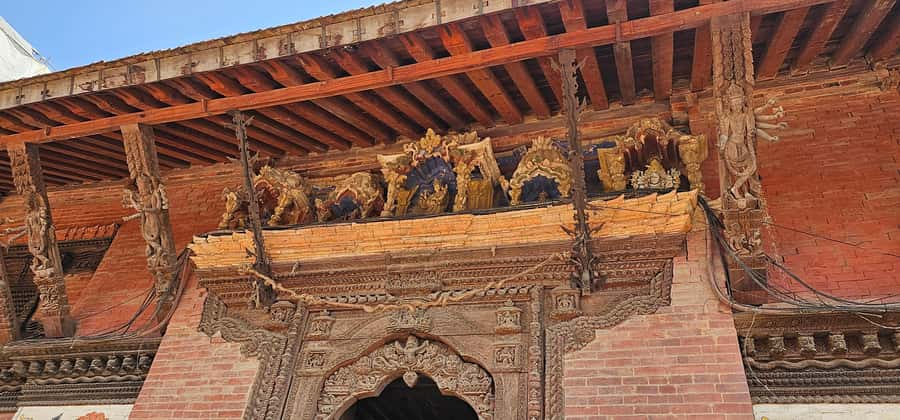
- Slow down for craftsmanship clues. One thing that can sharpen your enjoyment is paying attention to material and style—Bhaktapur is closely associated with wood carving skills, and you’ll feel that in doorways, trim, and temple features.
- Use free time to step into the quieter edges rather than staying only at the most obvious angles for photos. That’s where you’ll get a better feel for the town’s texture.
If your feet are sensitive to uneven stone, wear sturdy footwear. Bhaktapur rewards walking, but it can also punish sloppy shoes.
Potential drawback to keep in mind: if the day gets crowded, the square can feel busy fast. A private guide helps here because they can shift you to angles and side lanes where you can still see details without constant stopping and starting.
Taumadhi Square and Dattatraya Square: two names that tell you where to look
Within Bhaktapur’s broader heritage area, two stops help you understand the town’s temple geography:
Taumadhi Square (Nyatpole Temple area) is a standout because the Nyatpole Temple is the tallest temple in town. When you stand near it, the view becomes a map. You start noticing sightlines—how smaller structures relate to the temple’s vertical presence.
Dattatraya Square carries a different kind of meaning. It’s described as the first square used by royalties. That matters because it frames your visit as more than religious sightseeing. You’re seeing how authority and ceremony were spatially organized—where power gathered, where ritual played out.
If you like architecture with a narrative, these squares give you that. If you only want the fastest highlights, you’ll still get value, because each place is directly tied to something you can see and explain in seconds.
Patan Durbar Square: temples and palaces in a city of artisans
Patan is the other big half of the day, led through guided sightseeing and walking around Patan Durbar Square. Patan’s classical name, Lalitpur, ties directly to what you’re actually seeing: fine arts, exquisite temples, and an urban architecture tradition associated with the Newari people.
What I like about Patan as a destination is that it rewards attention. You can walk the same path twice and come away with different impressions because the details are dense: window carvings, small niches, metalwork accents, and temple silhouettes.
If you’re the type who enjoys stopping for a reason—because you want to know what something represents—Patan’s temple cluster will keep you engaged. And if you’re more of a “just show me the best parts” visitor, the Durbar Square area still works, because the top highlights are close enough that you don’t feel rushed.
Golden Temple (Hiranyavarna Mahabihar): why the metalwork grabs you
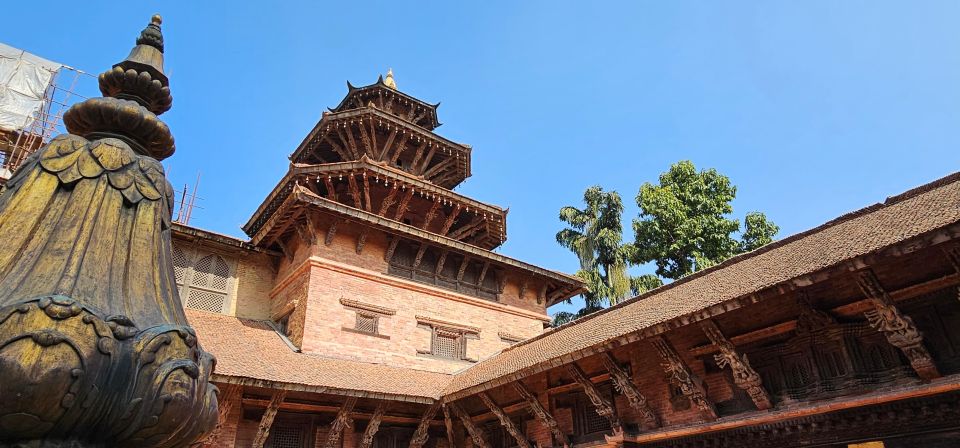
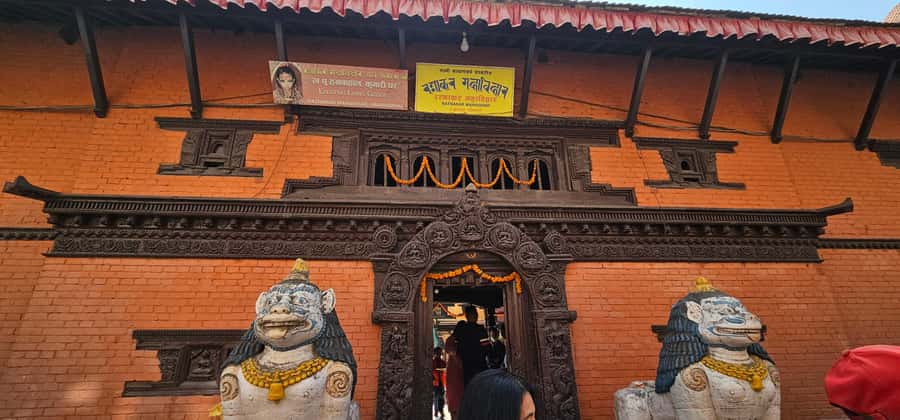
After the Durbar Square area, the tour moves you toward Hiranyavarna Mahabihar, known to visitors as the Golden Temple. The big appeal here is simple: it’s one of the richest monasteries in Patan and a striking example of Newari metalwork.
This is one of those stops where the guide makes a difference. Metalwork can look beautiful but vague if nobody explains what you’re looking at. With a good guide, you start to notice the patterns and the craft logic: how surfaces are shaped, how decorative elements fit the religious context, and why this monastery earned its famous nickname.
Timing tip from the way the day is structured: treat this as your visual reset. After Bhaktapur’s medieval feel, the Golden Temple gives you a different texture—shimmering detail and a more concentrated sense of artistic mastery.
Possible drawback: if you’re tired from walking, this stop can still require steady focus. Bring water, and don’t feel bad taking a moment before you climb into the details.
The palace complex at Patan: three courtyards, three kinds of meaning
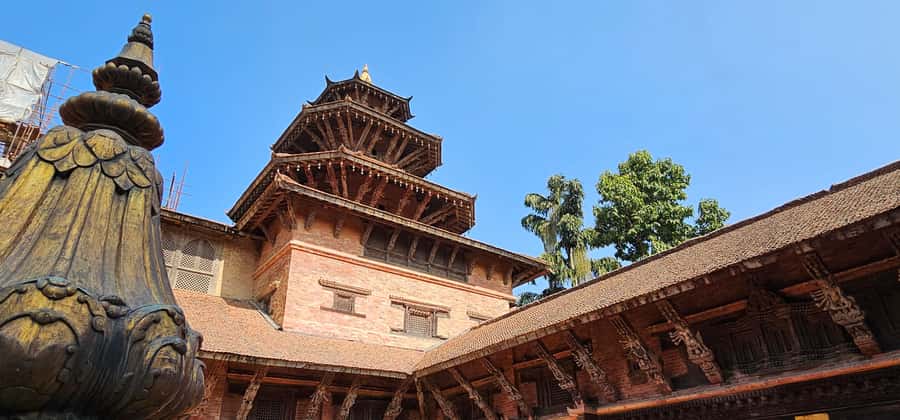
Patan’s royal palace complex is one of the most educational parts of the day, because it’s explained as function, not just decoration. You’ll hear about three courtyards—each with a different story tied to the royal family’s daily and ceremonial life.
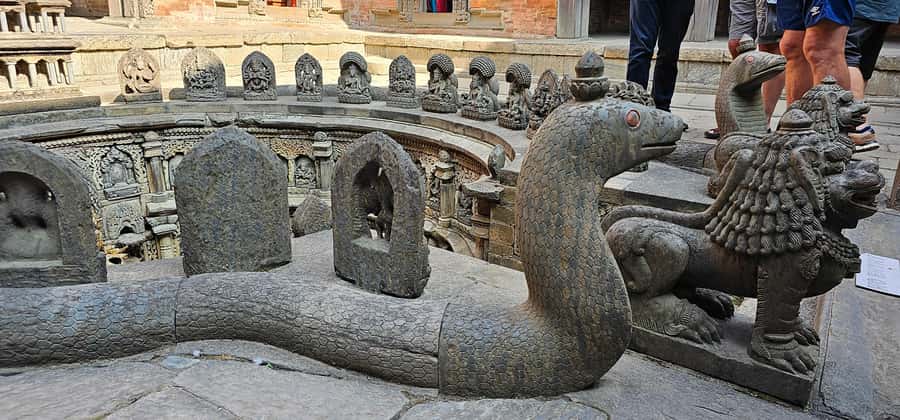
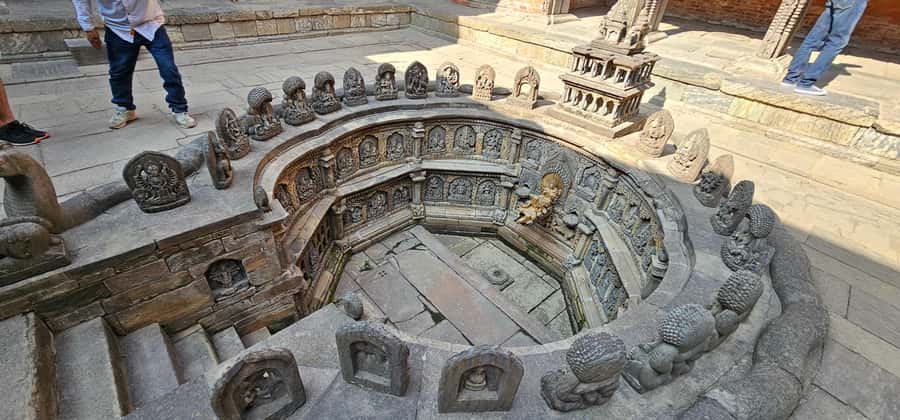
- Sundarichok (the most beautiful courtyard): it was once a royal bath. That detail changes how you see the space. It’s not only for display; it had a practical role in court life.
- Mulchok (main courtyard): a gathering place for social and religious occasions. It also houses a temple for Taleju, the tutelary deity of the royal family. So this courtyard becomes a key to how religion and governance overlapped.
- Keshavnarayan Chok: includes a small Vishnu temple, with images of Vishnu, his wife Laxmi, and Garuda. This is also described as the main part where the king and queen lived, and it now houses the best preserved museum in Nepal.
That museum element is a big deal for me as a traveler. A palace is easy to look at. A palace that also contains a museum helps you anchor the visual experience to objects and preservation.
If your guide has time, you might also get a moment around the royal garden area behind the palace, described as having a small restaurant. You may also hear about Bhandarkhal Tank—a water feature linked with the palace’s water supply and described as a treasure store idea, with a fountain that served as a major water source.
Temple standouts in Patan: Bhimsen, Krishna, Vishnu, and the lucky octagon
Patan’s temple cluster isn’t only about big names. It’s about what the details mean.
Bhimsen Temple is especially interesting because it’s associated with the business community and represents bravery. The temple is a richly ornamented three-story pagoda, and one detail that really changes the way you picture it: hanging household items like pots, pans, brooms, and wooden slippers. That turns the temple into something personal—faith expressed through everyday objects, not only formal ritual.
Krishna Temple is described as a masterpiece of shikhar architecture. You’ll also hear about Garuda placed in front of the temple, which gives you a strong visual orientation as you stand nearby.
Next to Krishna is a Vishnu temple, keeping the storyline of reincarnation and devotion close together so you don’t have to piece it together yourself.
And if you want a quick symbol to anchor the visit, the octagonal temple representing eight symbols of good luck for Hindu people is a major attraction. It’s the kind of structure that you can recognize even without perfect language skills—shape and purpose doing the heavy lifting.
How the 6-hour pacing works in real life
The tour is designed to be intensive but not chaotic: private group, a live guide, and a route that connects major sites without you getting lost. That matters in Kathmandu Valley where every lane can lead to something interesting, and getting distracted can eat your time.
Here’s how I’d approach it so you get the most out of the half-day rhythm:
- Ask questions at the start, not at the end. A strong guide can steer you toward what to notice as you walk.
- Treat free time like navigation time, not an extra long break. Use it to check shops near the squares, take photos, or pick a lunch stop that fits your style.
- Plan for rest in the gaps. Even if the itinerary is full, you’ll want a short pause to reset your eyes and feet.
Guide style can make a noticeable difference. I’ve seen patterns of two names in this experience: Siri is praised for knowledge and for being flexible with photo stops and questions, and Rajendra is known for combining main sights with side streets that show daily life and ongoing traditional clothing. If you’re lucky enough to get either, you’ll likely get more than just dates and names.
Also: lunch. One visitor noted that the day ended with food on a rooftop restaurant with great views, and another felt a dedicated international-tasting lunch spot wasn’t their ideal. The practical takeaway: if you care about eating like locals, tell your guide what you prefer early, and let them adjust.
Shopping and craft: wood and metal in your line of sight
One of the reasons Patan and Bhaktapur feel so alive is the craft connection. Bhaktapur is closely tied to wood carving, while Patan stands out for metalwork. Even if you don’t buy anything, those craft skills influence the way doors, temple ornaments, and market details look around you.
In a good guided day, shopping isn’t random—it’s tied to what you just saw:
- If you noticed metalwork textures at the Golden Temple, you’ll be more alert to metal crafts nearby.
- If you focused on carved temple woodwork in Bhaktapur, you’ll recognize the style logic as you walk past artisans.
If you do buy something, keep expectations realistic. Small souvenirs are common; complex items can take more time and care. Your guide can help you avoid confusion and point you to places that match the quality you’re after.
Who this tour suits best
This is a good match if you:
- Want UNESCO World Heritage sites without spending the whole day mapping on your own
- Like a guided explanation for temple symbolism and palace layout
- Prefer a private setup where you can set your own pace within the route
It’s also ideal if you’re short on time in Kathmandu but want more than one heritage “box.” Patan and Bhaktapur each have their own feel, and combining them gives you a stronger comparison: how medieval town planning looks versus artisan city palace architecture.
If you’re hard on walking, you can still enjoy it, but you should bring footwear that handles uneven stone and plan to slow down when you hit crowded areas.
Should you book this Patan and Bhaktapur full-day tour?
If you want a fast, focused day that connects the dots between Durbar Squares, major temples, and Patan’s palace-courtyard storytelling, this tour makes sense. The private guide format and air-conditioned transport help you cover a lot while keeping the day organized, and the guide-led interpretation is the difference between seeing temples and understanding what you’re looking at.
Book it if:
- You’re paying for meaning, not just movement
- You like craft details like Newari metalwork and temple symbolism
- You want a day-trip structure that doesn’t turn into a logistics puzzle
Think twice if:
- You’re on a tight budget and don’t want any extra entrance fee add-ons
- You hate walking on uneven surfaces (this day is built around walking)
If you do book, give your guide two priorities before you start—one for temples and one for food or shopping—and you’ll steer the day toward what you care about most.
FAQ
How long is the Patan and Bhaktapur full day tour?
The duration is 6 hours.
Where is pickup included?
Pickup and drop-off are included from your hotel in Kathmandu.
Is this tour private?
Yes, it’s a private group.
What languages does the live tour guide speak?
The guide is available in English and Spanish.
What is included in the price?
The tour includes hotel pickup and drop-off, a live tour guide, and air-conditioned transport.
Are monument entrance fees included?
No, monument entrance fees are not included.