REVIEW · KATHMANDU
From Kathmandu: 3 Major Durbar Square Guided Tour
Book on GetYourGuide →Operated by Nepal Adventure Guide · Bookable on GetYourGuide
Three Durbar Squares, one perfect history walk. This guided loop strings together UNESCO Durbar Squares in Kathmandu Valley into a single, easy-to-follow look at royal power and sacred art. I love how the stops are clearly themed by place, and I really like that the tour is led by a polished English-speaking guide (recent groups have mentioned fluent, friendly experts like Pranav and Aneel, also known as Karma). One drawback to plan for: entrance fees are not included, so the trip cost can creep a bit above the $86 once you add tickets.
I also like the pacing. You get a focused 1.5 hours in Kathmandu, then 2 hours in Bhaktapur, then 2 hours in Patan, with private transportation between sites and hotel pick-up and drop-off in Thamel. Skip-the-ticket-line is included, so you spend less time standing around and more time looking closely at carvings, temples, and palace courtyards.
In This Review
- Key Highlights You’ll Actually Feel
- Why Three Durbar Squares Beats Picking Just One
- Thamel Pickup to a Smooth 5-Hour Circuit
- Kathmandu Durbar Square (Hanuman Dhoka): Where Royal Space Meets Living Tradition
- Hanuman Dhoka Palace: The story is carved into the doorway
- Taleju Temple: A royal temple focus
- Kumari’s residence: A living goddess tradition
- A quick consideration
- Bhaktapur Durbar Square: Newari Royal Details and Nyatapola’s Full-Height Drama
- The 55-Window Palace: A palace you can read at a glance
- Vatsala Temple and the Golden Gate
- Nyatapola Temple: The tallest pagoda presence
- Patan Durbar Square (Lalitpur): Krishna Mandir and Craft-Focused Royal Art
- Krishna Mandir: The stone temple highlight
- Palace complex and the Patan Museum
- A practical note
- Price and Value: Is $86 a Fair Deal for This Loop?
- The Real Secret Sauce: The Guide Makes the Stones Make Sense
- How to Plan Your Day (Without Overthinking It)
- Who This Tour Fits Best (and Who Might Reconsider)
- Should You Book This Kathmandu Valley Durbar Squares Tour?
- FAQ
- How long is the Kathmandu Valley 3 Durbar Square guided tour?
- What is the price per person?
- Where does the tour pick you up and drop you off?
- Which Durbar Squares are included?
- Is there a guided tour and professional English support?
- Are entrance fees included?
- Is the tour wheelchair accessible?
Key Highlights You’ll Actually Feel
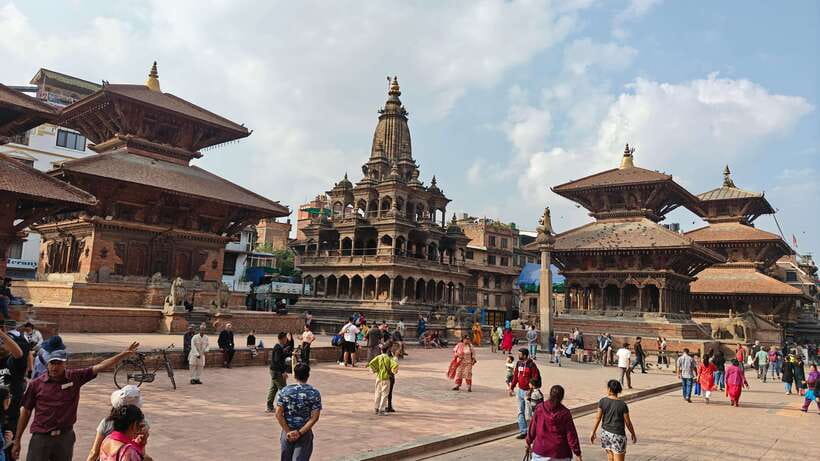
- Hanuman Dhoka + Kumari residence at Kathmandu Durbar Square, mixing palace politics with living tradition
- Krishna Mandir in Patan Durbar Square, a standout stone temple you can’t really miss once you’re there
- Bhaktapur’s Nyatapola Temple and its dramatic, tall pagoda shape as the visual anchor of the square
- Three cities in one day, made simpler by private transport and a tight 5-hour schedule
- Pro English guide storytelling, with guides praised for clear history and friendly explanations
- Private group format, which usually means you’re not rushed and you can ask practical questions
Why Three Durbar Squares Beats Picking Just One
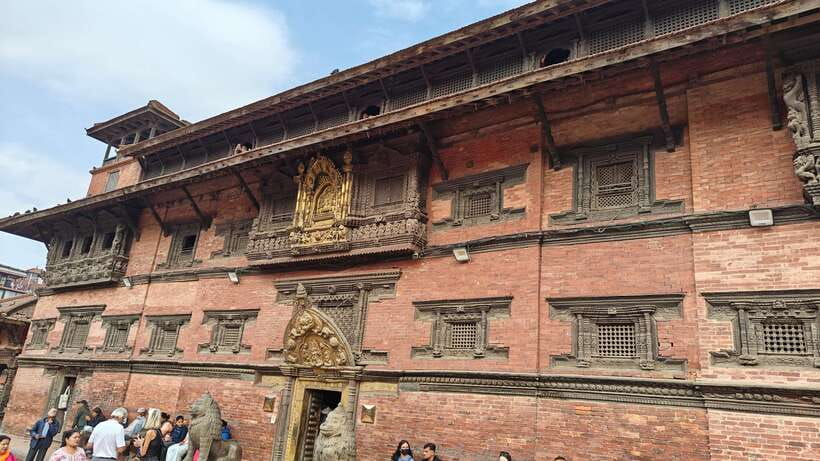
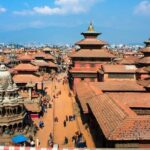
Kathmandu Valley’s Durbar Squares are not just “pretty places.” Each one works like a different chapter in the region’s royal and religious story. Putting all three together helps you notice patterns. You start to see how palace space, temple space, and public space overlap—often under the same roofline, courtyard wall, or carved doorway.
You also get variety without chaos. Kathmandu Durbar Square feels like the center of old power. Patan leans hard into fine arts and stone craftsmanship. Bhaktapur slows everything down with a stronger sense of daily continuity and Newari architecture.
With a guided format, you won’t just see monuments. You’ll get the why behind them—especially around who lived where, what temples were used for, and why certain figures, like the living goddess tradition at Kathmandu’s Kumari palace, matter in real life (not just on a plaque).
You can also read our reviews of more guided tours in Kathmandu
Thamel Pickup to a Smooth 5-Hour Circuit
This is built for convenience from the moment you start. Your pickup point is Thamel, and the tour returns you there at the end. That matters because Durbar Squares are spread across the valley. Trying to stitch this together on your own can turn into a day of waiting, changing plans, and losing time to traffic and unclear routes.
The timing is also smart: 5 hours total. You’re not trying to “see everything forever.” You’re doing a focused hit on the three UNESCO sites in a way that’s realistic even if you arrive in Kathmandu only with limited free time.
Another practical win: the tour includes private transportation between sites and a professional English-speaking guide. So you’re not stuck figuring out what you’re looking at while you juggle transit.
Kathmandu Durbar Square (Hanuman Dhoka): Where Royal Space Meets Living Tradition
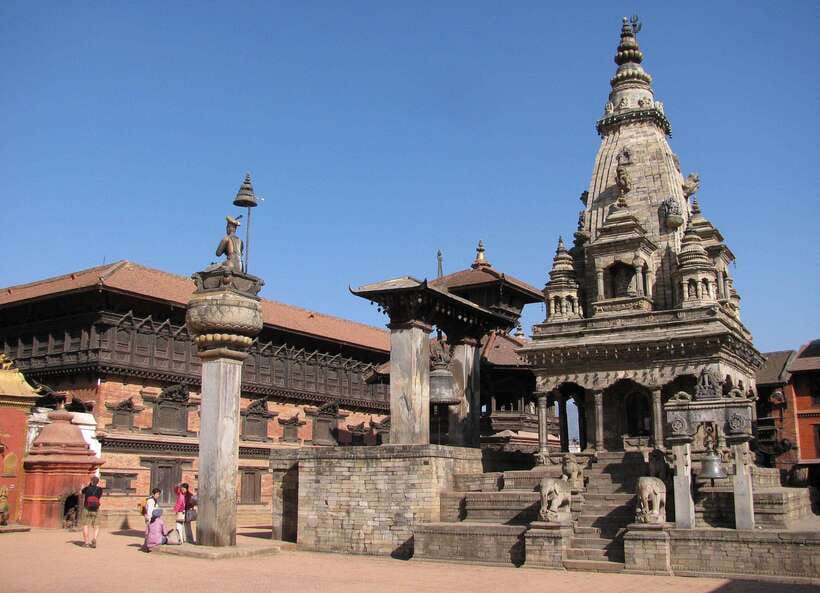
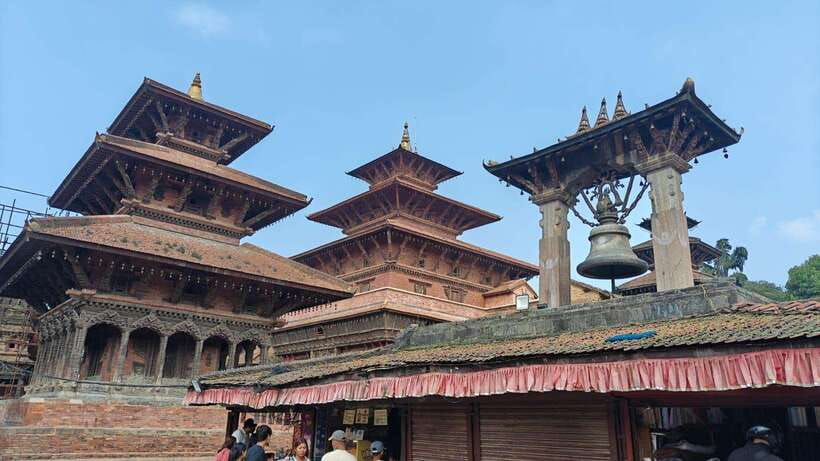
Kathmandu Durbar Square is the kind of place where the architecture does some of the talking. The whole area reads like a layered palace complex—courtyards, temples, and built-in symbolism left by centuries of rulers.
Your guided stop here runs about 1.5 hours. That’s a good amount of time for getting oriented without feeling like you’re rushing through sacred spaces.
Hanuman Dhoka Palace: The story is carved into the doorway
Inside Kathmandu Durbar Square, the Hanuman Dhoka Palace is the big anchor. It’s dedicated to Hanuman, the Hindu monkey god. That religious connection isn’t a random detail—it helps explain why the palace complex feels more than “royal office space.”
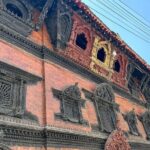
You’ll get to see intricately carved wooden structures. Those carvings are not just decoration. They’re part of how authority and belief were displayed for generations.
Taleju Temple: A royal temple focus
The Taleju Temple is one of the highlights you’ll hear about on the tour. In a palace setting, temples like this aren’t “off to the side.” They’re the religious backbone of the royal world.


Kumari’s residence: A living goddess tradition
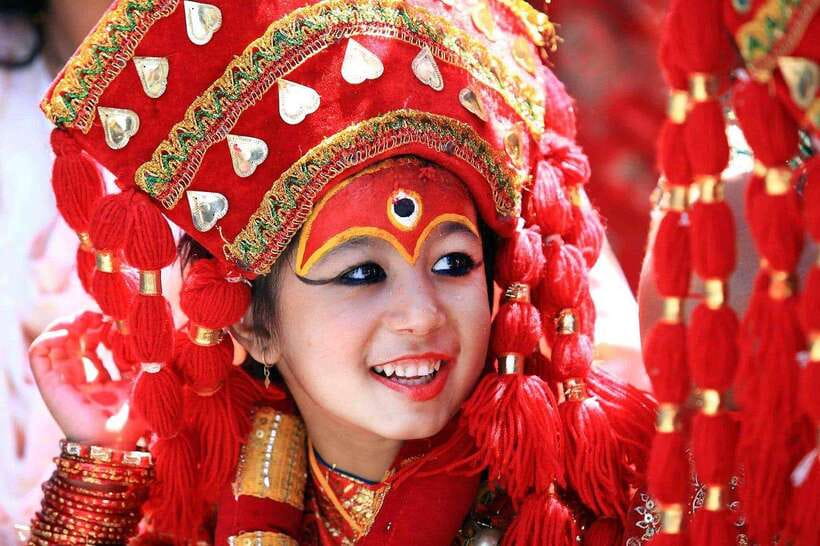
One of the most memorable moments in Kathmandu Durbar Square is Kumari’s residence. The Kumari is described as the living goddess, and that adds a special dimension to the visit. It’s not only historical; it’s a tradition that is still part of how the city performs its faith.
This is also where having a guide really pays off. You’re seeing an active cultural institution tied to the royal past, so you’ll want context for what you’re looking at and why it’s respected.
A quick consideration
This stop is packed with details, so if you’re the type who wants a long, slow wander on your own, you may feel time pressure. The upside is that the guided time keeps you from getting lost in the maze and missing the most meaningful pieces.
Bhaktapur Durbar Square: Newari Royal Details and Nyatapola’s Full-Height Drama
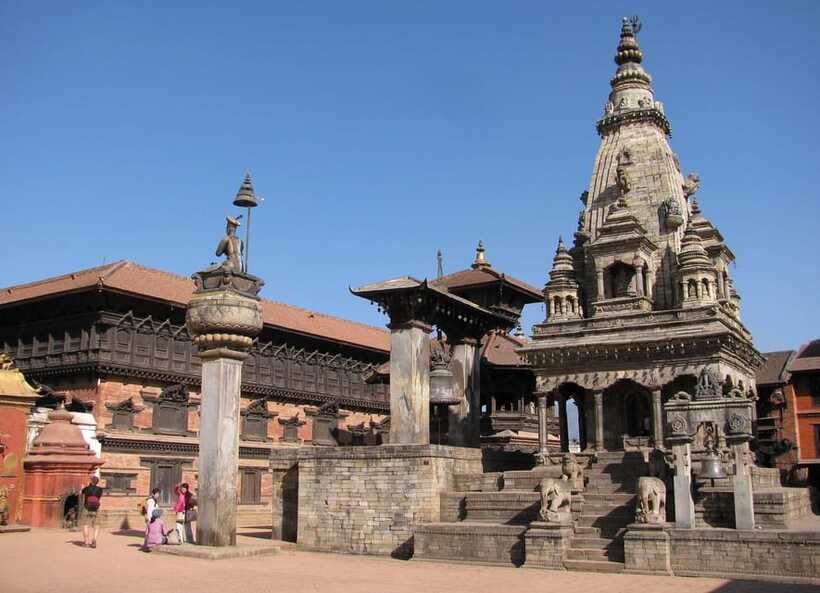
Bhaktapur Durbar Square is a different mood. It feels less like a monument stop and more like a still-functioning historic city center. The square’s strength comes from Newari architecture and the sense that the royal past has remained readable in the streets and palace structures.
You’ll spend about 2 hours here, and that extra time helps. Bhaktapur rewards patience.
The 55-Window Palace: A palace you can read at a glance
One of the headliners is the 55-Window Palace. The name alone tells you it’s designed for visual impact, but what makes it interesting is how it signals craftsmanship and status. When you’re guided, you’ll understand how palace design communicates power—both to the elite and to the public who move through shared space.
Vatsala Temple and the Golden Gate
Bhaktapur’s highlights also include the Vatsala Temple and the Golden Gate. These aren’t random “look at this” objects. In a Durbar Square setting, each major temple or gate acts like a landmark in the story of movement—where people enter, where rituals happen, and where royal authority was expressed.
Nyatapola Temple: The tallest pagoda presence
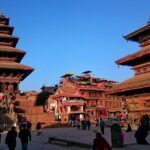
Then there’s Nyatapola Temple, described as the tallest pagoda in Nepal. Even if you’re not a hardcore architecture person, this is the kind of sight that grabs you. Pagodas have a rhythm—tiered roofs, vertical repetition, and structural confidence—and Nyatapola turns that into a dramatic focal point in the square.
I like that the itinerary doesn’t treat Bhaktapur as a “speed bump.” Two hours gives you enough room to take in major monuments without turning it into a checklist sprint.
Patan Durbar Square (Lalitpur): Krishna Mandir and Craft-Focused Royal Art
Patan is where the tour shifts toward fine craftsmanship and art-heavy temple focus. The Patan Durbar Square, also known as Lalitpur Durbar Square, is celebrated for its temples, statues, and courtyards, with the central palace tied to the former royal residence.
You get about 2 hours here, which feels right. Patan has enough detail that it’s easy to get stuck staring at carvings. More time here can be wonderful, but the structure of the tour keeps you moving so you don’t miss the main sights.
Krishna Mandir: The stone temple highlight
The Krishna Mandir is described as the square’s crowning glory. It’s dedicated to Lord Krishna, and it’s the sort of temple that helps you connect religion with artistry. When a destination is built around stonework like this, you can see how beliefs were expressed through shape, ornament, and sacred design.
Palace complex and the Patan Museum
The central palace complex includes the Patan Museum. The museum is positioned as a deep dive into the valley’s history, culture, and religious art.
Even if you don’t want to spend forever reading captions, museums inside historic complexes act like a decoder ring. They help you translate what you saw outside into something more meaningful—like how the valley’s religious art evolved and why certain styles look the way they do.
A practical note
Because entrances and museum fees are not included, you’ll want to plan for extra ticket costs if you intend to go into indoor spaces. If you’re trying to keep costs tight, the guide can help you prioritize what matters most.
Price and Value: Is $86 a Fair Deal for This Loop?
At $86 per person for a 5-hour private guided tour, the value looks solid—mainly because of what’s included.
Here’s what you get as part of the price:
- Professional English-speaking guide
- Private transportation between Kathmandu, Bhaktapur, and Patan
- Hotel pick-up and drop-off within Kathmandu (including Thamel)
- Guided tours at the three Durbar Squares
- Skip-the-ticket-line
- Private group format
What’s not included:
- Meals
- Entrance fees
- Travel insurance
- Any extra entry fees beyond what’s covered
So the math isn’t just “$86 is cheap.” It’s that you’re paying for time saved and context added. Without a guide and private transport, this could easily turn into a longer day with more uncertainty.
If you already planned to hire a guide for one Durbar Square and then figure out transport to the other two, the price feels more like a bundle than a basic walking tour.
The Real Secret Sauce: The Guide Makes the Stones Make Sense
This is where the strongest praise lands. In recent feedback, guides like Pranav and Aneel (Karma) have been singled out for being fluent, friendly, and strongly focused on explaining the history and architecture in a way that’s easy to follow.
That’s not a small detail in Kathmandu Valley. Durbar Squares can be visually overwhelming. A good guide does two things:
- Helps you spot the key landmarks fast
- Explains what they meant to the people who used them
When you’re standing in a palace courtyard, seeing a temple complex, or looking toward Kumari’s residence, the story changes depending on context. A guide’s job is to give you that context without turning it into a lecture.
You’ll also get a more satisfying experience with the pacing—because a guide helps you spend time where it matters.
How to Plan Your Day (Without Overthinking It)
You’ll be out about 5 hours, starting from Thamel and returning there. That makes this a good choice when you want a structured cultural day but don’t want to burn your whole day chasing logistics.
A few planning tips that keep the day smooth:
- Budget for entrance fees, since they’re not included in the $86 price.
- Wear clothes you’re comfortable in for temple visits and respect the site rules; the tour notes that alcohol and drugs are not allowed.
- If you rely on a wheelchair, good news: the tour is wheelchair accessible, and the format is designed to accommodate this.
Also, it’s a private group tour. That usually means the experience stays focused on you and your group rather than being stretched across a big crowd.
Who This Tour Fits Best (and Who Might Reconsider)
This tour is a strong match if you want:
- A single guided route that covers Kathmandu, Bhaktapur, and Patan rather than picking just one
- An English-speaking guide to connect temples and palaces to their meaning
- A structured day with private transportation and pickup/drop-off centered on Thamel
It’s also good if you care about the specific highlights the itinerary is built around:
- Hanuman Dhoka Palace
- Kumari’s residence
- Krishna Mandir
- Nyatapola Temple
If you’re traveling with mobility needs, the tour is listed as wheelchair accessible, which is reassuring.
Two boundaries from the tour details:
- Not suitable for people over 95 years
- Alcohol and drugs are not allowed
Should You Book This Kathmandu Valley Durbar Squares Tour?
Yes, I’d book it if you want a guided, efficient, and culturally grounded way to see the valley’s three UNESCO Durbar Squares in one go. The combination of private transport, hotel pickup/drop-off in Thamel, and an English-speaking guide makes the day feel “handled,” not improvised.
I’d especially recommend it if you’re short on time and want the highlights: Kumari’s residence in Kathmandu, the Krishna Mandir in Patan, and Nyatapola Temple in Bhaktapur. Those are the kinds of places that reward context, not just sightseeing.
The only real “hold up” is cost creep from entrance fees. If you budget for tickets and keep expectations realistic about a 5-hour schedule, this tour delivers a lot of meaning per hour.
FAQ
How long is the Kathmandu Valley 3 Durbar Square guided tour?
It lasts 5 hours total.
What is the price per person?
The price is $86 per person.
Where does the tour pick you up and drop you off?
Pickup is in Thamel, and you return to Thamel at the end.
Which Durbar Squares are included?
Kathmandu Durbar Square (Hanuman Dhoka), Bhaktapur Durbar Square, and Patan Durbar Square are all included.
Is there a guided tour and professional English support?
Yes. It includes guided tours with a professional English-speaking guide.
Are entrance fees included?
No. Entrance fees are not included.
Is the tour wheelchair accessible?
Yes, it is wheelchair accessible, and it is offered as a private group.