REVIEW · KATHMANDU
Annapurna Circuit Trek with Tilicho Lake (16 Days)
Book on Viator →Operated by Sole Encounters Adventures · Bookable on Viator
Tilicho Lake makes this trek feel different from day one. This 16-day route links alpine forests, Tibetan-influenced villages in the Manang Valley, and the big-ticket crossing of Thorong La Pass.
I especially like the built-in acclimatization plan around Manang, including options your guide can tailor to your pace. The one real drawback to plan for: you’ll be at high altitude for long stretches, and teahouse life is basic, with trek meals and drinking water not included.
In This Review
- Key highlights you will feel day after day
- A route that strings together Tilicho, Thorong La, and Mustang
- Getting to Dharapani: the long Nepal road day
- Dharapani to Manang: steady climbs through forests and Tibetan-style villages
- Siri Kharka and Tilicho Base Camp: the high basin mood begins
- Tilicho Lake (4,919m): the day your camera can’t capture
- Yak Kharka and Thorong Phedi: building your pass mindset
- Thorong La Pass (5,416m): pre-dawn effort, classic circuit reward
- Kagbeni, Jomsom, Lower Mustang: walking the Kali Gandaki corridor
- Teahouses, porters, and group size: comfort that matters on hard days
- Permits, water, and meals: what’s on your plate after you pay
- Pokhara lakeside after 16 days: why this last step is smart
- Price and logistics: what you actually get for $1,800
- Should you book this Annapurna Circuit with Tilicho Lake?
- FAQ
- What is the highest point on this trek?
- Where does the trek start and end?
- What’s included in the price?
- What is not included?
- How do you handle accommodation during the trek?
- Are porters included, and what do they carry?
- How big is the group?
- How does the trek handle weather issues?
Key highlights you will feel day after day
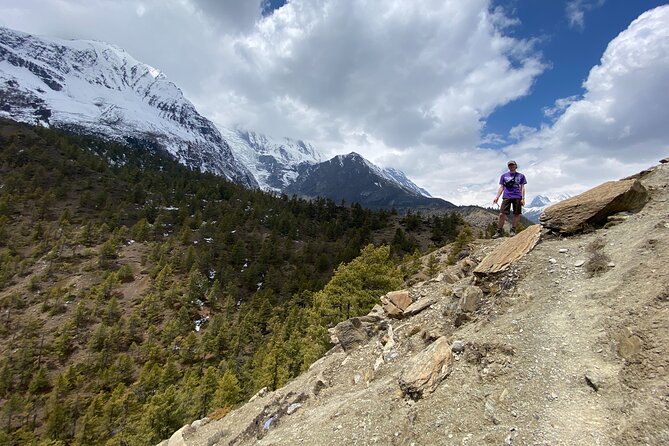
- Tilicho Lake at 4,919m: one of the highest lakes you can reach on foot
- Manang Valley acclimatization choices: get altitude gains that make Thorong La safer
- Thorong La Pass (5,416m): pre-dawn effort with the classic circuit payoff
- Lower Mustang feel: Kagbeni and Kali Gandaki desert-style walking in a drier world
- Teahouses + porter ratio: you carry less, so your legs stay for the climbs
- Pokhara lakeside unwind: real downtime after the hardest days
A route that strings together Tilicho, Thorong La, and Mustang
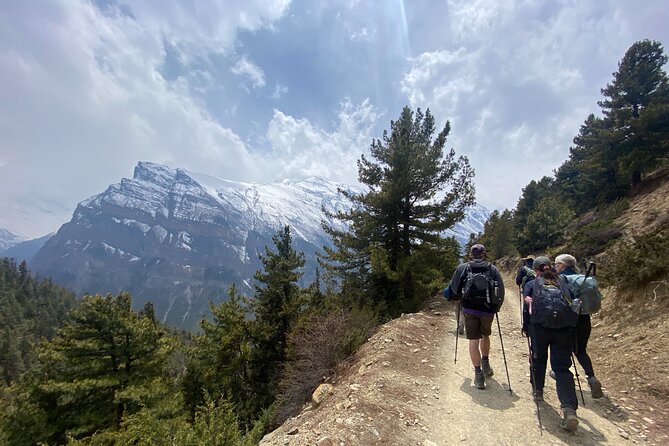
The Annapurna Circuit is already a legend. Add Tilicho Lake and Thorong La, and you get a trek that keeps changing its personality. One day you’re walking through pine and terraced village life. Next, you’re in higher, drier air with wide views and thinner trails. Then the route shifts again as you drop toward Muktinath and the windswept Kali Gandaki corridor into Lower Mustang.
What makes this itinerary interesting is the way it hits multiple “big” moments without feeling like a rushed checklist. You start with a long drive out of Kathmandu, then build gradually into higher country around Manang. The day for Tilicho Lake comes after a staging period that helps you handle the final pass crossing. After Thorong La, the descent is dramatic and fast enough to feel like a reset, but slow enough to keep the walking satisfying.
In practical terms, this is a guided teahouse trek with reliable logistics, not a self-planned adventure. That matters when you’re juggling altitude, food, rooms, and transport across multiple regions.
You can also read our reviews of more hiking tours in Kathmandu
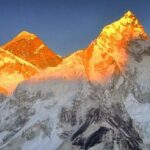
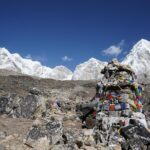
Getting to Dharapani: the long Nepal road day
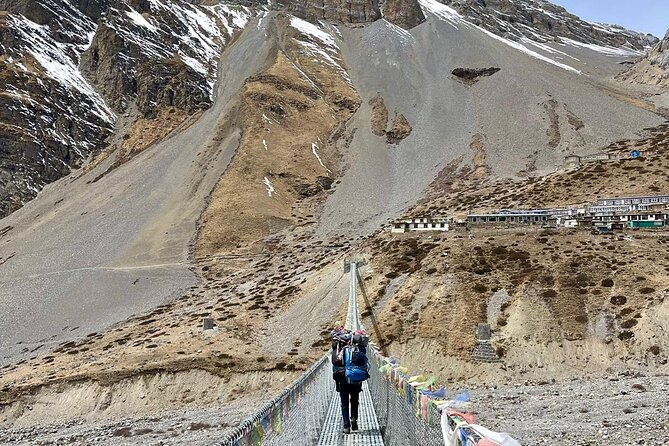
Day 1 is Kathmandu arrival and a transfer to a hotel in Thamel once you land at Tribhuvan International Airport. After check-in, the rest of the day is yours to get your bearings. It’s a useful setup because the real travel grind starts on Day 2.
Day 2 is your road-to-trail day. You’ll travel along the Prithvi Highway corridor with stops linked to local geography: the Trishuli River as it cuts through deep gorges, the highway junction town of Mugling, then Besisahar in Lamjung District, the classic launch point for the Annapurna Circuit. The day ends in Dharapani (1,960m), where the trekking season starts to feel real—pine forests, ridges, and the sense that you’ve crossed from road Nepal into trekking Nepal.
Consideration: this day is a lot of time in a vehicle. If you’re sensitive to motion or long sitting, pack for comfort and plan to treat the first night as recovery, not exploration.
Dharapani to Manang: steady climbs through forests and Tibetan-style villages
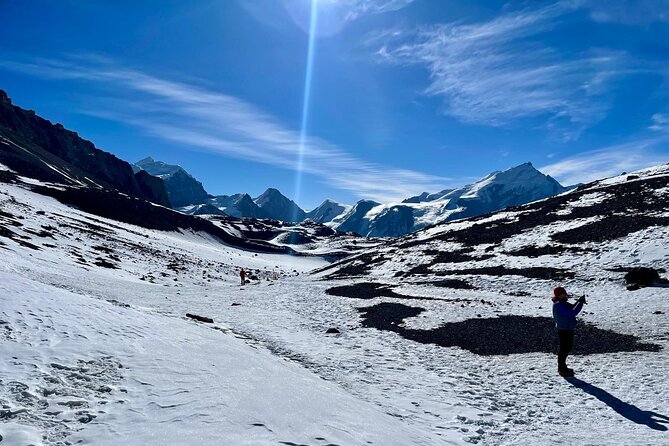
From Dharapani, the trek builds step by step.
- Day 3: Bagarchhap (2,160m) to Chame (2,670m)
You pass Bagarchhap with white-washed houses and Buddhist chortens, then continue to Chame, the administrative center of Manang District. Chame’s Tibetan-influenced architecture gives you an early taste of the Manang feel.
- Day 4: Bhratang (2,850m) to Upper Pisang (3,300m)
Bhratang is a narrow gorge stop known for apple orchards and small juice farms. That means you’re likely to see fresh fruit energy when you need it most. Then the trail rises to Upper Pisang, perched high above the Marsyangdi River with views toward Annapurna II and Pisang Peak, plus the Tibetan-style village character.
- Day 5: Manang (3,540m)
Today you reach Manang, the main hub of the region. The route ascends through stone village sections, including Ghyaru and Ngaw, and you arrive surrounded by major peaks rising around you.
- Day 6: Manang acclimatization day (optional hikes)
This is where the trek quietly earns its reputation for better pacing. Instead of pushing higher every day, you take a day in Manang (3,540m) for acclimatization, with your guide offering choices of short hikes. This is the day that helps your body handle the higher altitudes coming next.
Why this part matters: your biggest risk on high treks isn’t boredom—it’s altitude. A day like Day 6 can turn Thorong La from a painful grind into something you can actually manage with steady breathing and smart pacing.
Siri Kharka and Tilicho Base Camp: the high basin mood begins
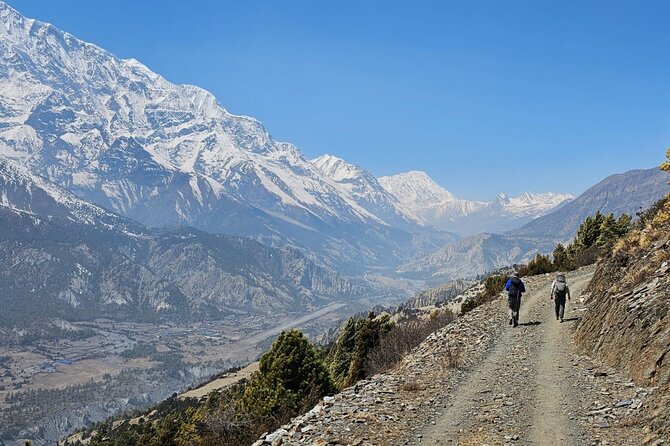
- Day 7: Shree Kharka / Siri Kharka (4,060m)
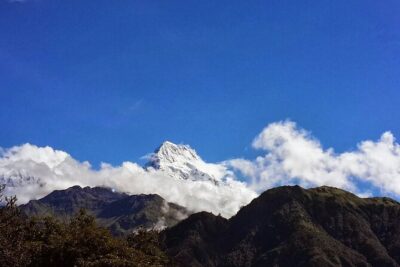
You rise from Manang into a more remote, ridge-top setting. Siri Kharka is known for broad views toward Gangapurna and the Chulu range. The trail climbs through juniper shrublands and winds along exposed sections, so your breathing and footwork both matter.
- Day 8: Tilicho Base Camp (4,150m)
Tilicho Base Camp sits under towering cliffs and glacier-carved slopes. The walk is described as short but intense, with narrow paths along landslide areas. Translation: you might cover less distance than some days, but you’ll work hard.
What you’ll want here: patience. The goal is to arrive for the Tilicho Lake day with energy, not to race the trail. If you tend to push when you see big views, remind yourself that Day 9 is the main event.
Tilicho Lake (4,919m): the day your camera can’t capture
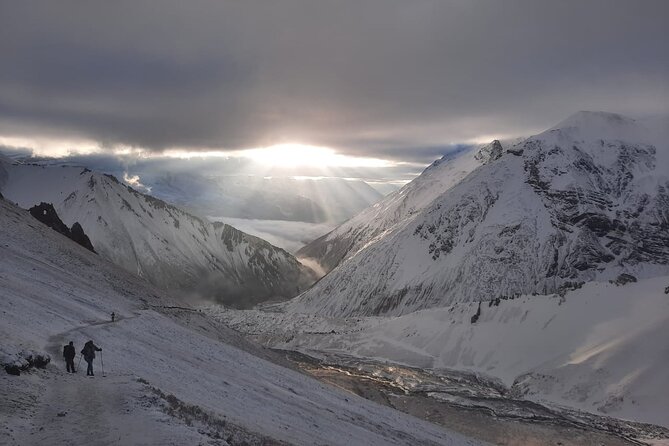
- Day 9: Tilicho Lake (4,919m)
Tilicho Lake is one of the highest alpine lakes accessible by foot, and it has spiritual importance in both Hindu and Buddhist traditions. On a clear day, the setting is the whole show: high glacial basin, snowy peaks around you, and a sense of scale that only really clicks when you’re standing there.
The itinerary indicates a shorter lake-focused day with a scheduled period that suggests a direct hike to the lake viewpoint area. You’ll come back to your higher trekking rhythm afterward.
Practical consideration: even if the day is shorter, it’s still high. If you get a headache, feel unusually nauseous, or your breathing feels out of sync with normal effort, tell your guide right away. High passes and lake basins respond the same way to slowdowns: the body likes gradual control.
Yak Kharka and Thorong Phedi: building your pass mindset
- Day 10: Yak Kharka (4,050m)
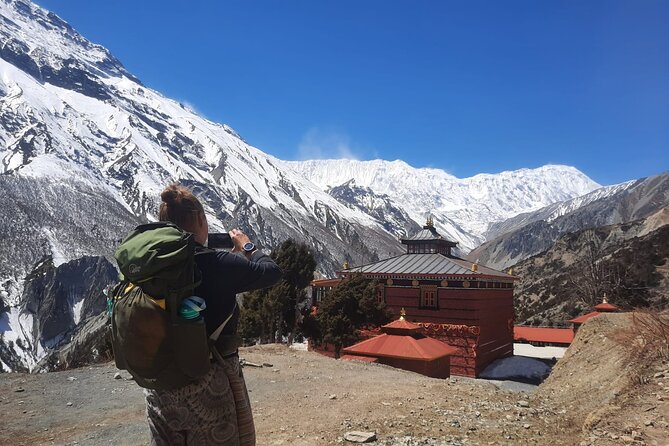
Yak Kharka functions as a staging and acclimatization point before Thorong La. The trek route begins with a descent from Siri Kharka toward Khangsar, then continues through high-altitude terrain. This day often feels like a reset before the heavier push.
- Day 11: Thorong Phedi (4,540m)
This is the final overnight before the pass. Thorong Phedi means base of the pass, and the walking here is about getting your legs ready for a tougher climb the next day. The day is described as gentler uphill along barren ridgelines.
Key idea: on pass days, your comfort beforehand affects everything. Sleep and water intake matter more than you think at 4,500m+. If you tend to run cold, pack layers for night and early morning.
Thorong La Pass (5,416m): pre-dawn effort, classic circuit reward
- Day 12: Thorong La Pass (5,416m) to Muktinath (3,760m)
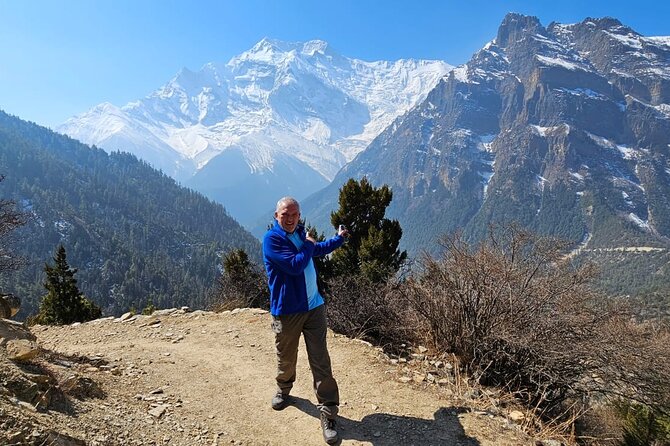
Thorong La is the headline. The pass is reached by a strenuous pre-dawn climb of over 900 meters from Thorong Phedi, then you descend around 1,600 meters toward Muktinath through rocky terrain and desert-like valleys.
This is the day most people remember. Not just for the height, but for how it reshapes the trek’s rhythm. You’re moving from high snow-and-wind intensity into a lower world where the air feels different.
At Muktinath (3,760m), you’re also stepping into a pilgrimage town atmosphere. That change of setting is one reason this part feels so satisfying after the pass.
Kagbeni, Jomsom, Lower Mustang: walking the Kali Gandaki corridor
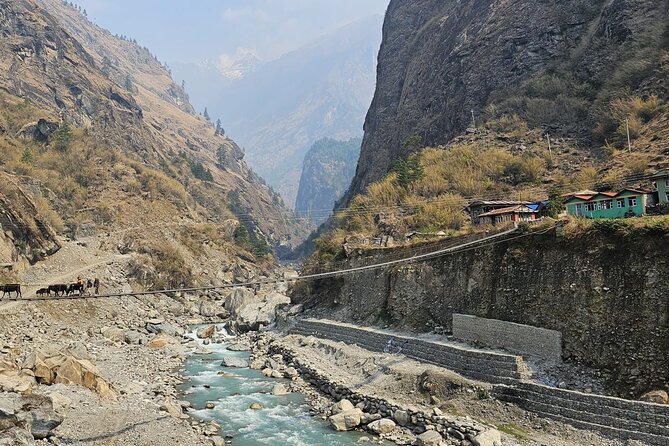
- Day 13: Kagbeni (2,810m) and Jomsom (2,720m)
You reach Kagbeni, a centuries-old village at the confluence of the Kali Gandaki and Jhong rivers. Kagbeni is often described through its ancient red-walled monastery and tight stone streets, and it serves as the gateway feel to Upper Mustang.
Then you continue to Jomsom, the administrative center of Mustang and a major stop on the lower circuit. The route follows the Kali Gandaki River, with a wind-exposed feel and a continuing descent.
- Day 14: Kalopani (2,530m), Beni (850m), then Pokhara (822m)
You stop in Kalopani, noted as one of the greener villages in Mustang, which creates a nice contrast to the arid terrain above. After that, the itinerary continues via descent toward Beni, a busy river valley market at the junction of the Kali Gandaki and Myagdi rivers.
Finally, you arrive in Pokhara Lakeside, your payoff city at 822m.
This is a major transition day. One reason it works: you end the “real trekking” effort and shift to transport enough that your body can recover.
Teahouses, porters, and group size: comfort that matters on hard days
This trek uses standard teahouses through the route. That usually means simple rooms, shared dining spaces, and fewer modern conveniences than a hotel. The itinerary also notes that hot showers, battery charging, and Wi‑Fi are available for extra fees at most teahouses.
Here’s what you should like about the structure: your overnight bag is carried by porters under a 2 trekkers to 1 porter ratio, and there’s an assistant guide per 5 trekkers for safety and support. That staffing approach matters at altitude, when small problems snowball if no one is watching.
Group size is capped at a maximum of 14 travelers, and you’ll trek as a group with an experienced government-licensed guide who is first-aid trained. In the past feedback for this operator, staff names such as Raj Rai and Suman have been mentioned for professional, safe guidance, and Pemba Sherpa is named in connection with support and guidance on Himalayan treks. You can treat those as signals of the team style: communication up front, and care on the trail.
One practical drawback: with group trekking, you may not always walk at your exact preferred speed. The guide can manage pacing, but you’ll still be part of a moving rhythm that serves the group and the itinerary.
Permits, water, and meals: what’s on your plate after you pay
The total price is $1,800 per person for the 16-day trek, and that’s best understood as a package covering many of the moving parts: transport segments, hotel nights in Kathmandu and Pokhara, standard teahouse nights, trek logistics, and the ACAP and TIMS permits are included.
Two important cost notes:
- Government fees ($50 per person) are listed as not included.
- Travel insurance is not included, and you’re expected to have coverage for emergency evacuation and the trek’s highest altitude reached.
Meals are another area where you should plan carefully. The package includes a limited set of meals: three breakfasts plus two dinners, but it specifically notes that meals during the trek are not included. In teahouse treks, this usually means you buy lunch and additional dinners at the stop you’re staying.
Water is also your responsibility. Drinking water is not included, and the recommendation is to bring a filter bottle or purification tablets. On a long high trek, this isn’t optional-fast thinking. It’s the difference between steady energy and a mid-trek health issue.
Pokhara lakeside after 16 days: why this last step is smart
After Thorong La and the Mustang corridor, Pokhara is not just a nice ending. It’s a health and sanity step. You arrive at Pokhara Lakeside, then you get a full day to enjoy the city’s calmer pace.
The itinerary also includes:
- A day 15 in Pokhara, with time for rest or activities.
- Day 16 travel back to Kathmandu by tourist bus (about 200 km), then airport transfer based on flight timing and time to explore Thamel.
This closing rhythm helps you avoid the common mistake: going straight from altitude exhaustion into travel stress. Here, you get a decompression window.
Price and logistics: what you actually get for $1,800
At $1,800 per person, this trek is positioned in the mid-to-up range for a guided circuit with Tilicho and Thorong La, mostly because you’re paying for the things that remove uncertainty: guides, porter support, permits, and structured transport between regions.
To judge value for your budget, compare what’s included vs not included:
- Included: Kathmandu and Pokhara hotel nights (3-star), teahouse nights, guide and assistant guide support, porter carry of your overnight bag, ACAP and TIMS permits, crew insurance, and some breakfasts/dinners.
- Not included: international airfare, government fees ($50), travel insurance, personal gear, and most trek meals and water.
If you’re the kind of traveler who wants to show up with your hiking boots and let a team handle the jigsaw pieces, the price makes sense. If you want maximum independence and you already have your own guide/porter plan, you might feel you’re paying for structure you don’t need.
Should you book this Annapurna Circuit with Tilicho Lake?
Book it if you want a classic high trek with a route that feels thought through: gradual build-up in Manang, an acclimatization day built into the schedule, a dedicated Tilicho Lake day, then Thorong La followed by a faster descent to Muktinath and the Mustang corridor. The mix of culture stops (Chame, Manang, Kagbeni, Muktinath) and the big altitude targets makes the days feel varied instead of repetitive.
I’d hesitate if you are new to high-altitude trekking or you’re not comfortable managing basic teahouse conditions plus buying most meals on the trail. Also remember: the trek requires good weather, and your highest altitude reached includes Thorong La at 5,416m—so your insurance and your physical preparation both need to be real.
If you’re fit, patient on steep days, and you like the idea of guided logistics in a place where nature can change plans fast, this is a strong bet.
FAQ
What is the highest point on this trek?
The itinerary lists Thorong La Pass at 5,416m as the highest trekking pass. It also includes Tilicho Lake at 4,919m as a major high-altitude highlight.
Where does the trek start and end?
The meeting point is Thamel, Kathmandu 44600, Nepal, and the activity ends back at the meeting point.
What’s included in the price?
The package includes private transportation for transfers in Kathmandu and Pokhara, shared jeep/public transportation for parts of the route, 3-star hotels in Kathmandu and Pokhara with breakfast, standard teahouses during the trek, a licensed first-aid trained trek guide plus an assistant guide, porter support, ACAP and TIMS permits, and crew insurance. It also includes three breakfasts and two dinners.
What is not included?
International airfare is not included. Government fees ($50 per person) are listed as not included. Travel insurance is not included, and you also need to cover meals during the trek, drinking water, personal trekking gear, and gratuities.
How do you handle accommodation during the trek?
You stay in standard teahouses during the trek. Before and after the trek, the itinerary includes 3-star hotels: one in Kathmandu (Thamel) and one in Pokhara (Lakeside).
Are porters included, and what do they carry?
Porters are included to carry your overnight bag, with a 2 trekkers to 1 porter ratio.
How big is the group?
This experience has a maximum of 14 travelers, and it is described as having group discounts.
How does the trek handle weather issues?
The experience requires good weather. If it’s canceled due to poor weather, you’ll be offered a different date or a full refund.