REVIEW · KATHMANDU
Annapurna Base Camp Trek – 10 Days
Book on Viator →Operated by Himalayan Recreation Treks & Expedition Pvt.Ltd · Bookable on Viator
Ten days, big mountains, and zero guesswork. What makes this trek work is the guided route through classic villages like Chhomrong and Sinuwa, plus the human support (people like Santosh and local porters show up in real reviews). I love the way the plan mixes city culture with real high-mountain hiking, and I love that your group stays small (max 12) for a more relaxed pace. The main drawback to consider: you’ll pay extra for lunch/dinner in Kathmandu and Pokhara, and the altitude still takes planning seriously even if you’re reasonably fit.
This is also a trip you can tailor with your own timing and effort. You’re walking to Annapurna Base Camp (ABC) at about 4,130m, where weather can change fast. The good news is that you’re not doing it alone: there’s a government-licensed trekking guide, first-aid support, and a crew that handles the moving parts so you can focus on breathing, walking, and enjoying the views—especially the well-loved viewpoint moments around the trek.
If you’re after a classic Annapurna experience that feels organized but not stiff, you’ll probably like this one. It’s also popular for couples, partly because the route has long, scenic pauses and lots of cozy tea-house evenings—no party vibe required.
In This Review
- Key highlights worth your attention
- Price and logistics: does $699 really buy anything here?
- The heart of the trip: Kathmandu, Pokhara, then the ABC trail
- Day 1: Land in Kathmandu and ease into Thamel
- Day 2: Morning travel toward Pokhara, with viewpoint options
- Day 3: Chhomrong direction, plus famous viewpoints
- Day 4: Sinuwa and the stone-steps day
- Day 5: Annapurna Base Camp and Machhapuchhre Base Camp area
- Day 6: Back down from ABC toward bamboo, with sanctuary-style walking
- Day 7: Jhinu Danda back toward Chhomrong Khola
- Day 8: Back toward Nayapul and Pokhara, plus Phewa Tal and Sarangkot
- Day 9: Drive to Kathmandu and a taste of Patan
- Day 10: Kathmandu wrap-up at Garden of Dreams and Narayanhiti
- What I’d watch for near 4,130m (and why it’s not just a warning)
- Tea houses, pacing, and the rhythm you’ll actually live
- Guides and porters: why this trek tends to go right
- Who this trek fits best (and who should think twice)
- Should you book this Annapurna Base Camp trek?
- FAQ
- How high will I be trekking on the Annapurna Base Camp route?
- What’s included in the $699 price, and what’s not?
- Is a professional guide included?
- Do I need travel insurance?
- What fitness level do I need?
- What documents do I need for the permits?
- How big is the group?
Key highlights worth your attention
- Government-licensed guide plus first-aid trained leadership
- Tea house lodging for 6 trek nights, then comfortable hotel time back in the cities
- Small group cap of 12, with private activity style for your party
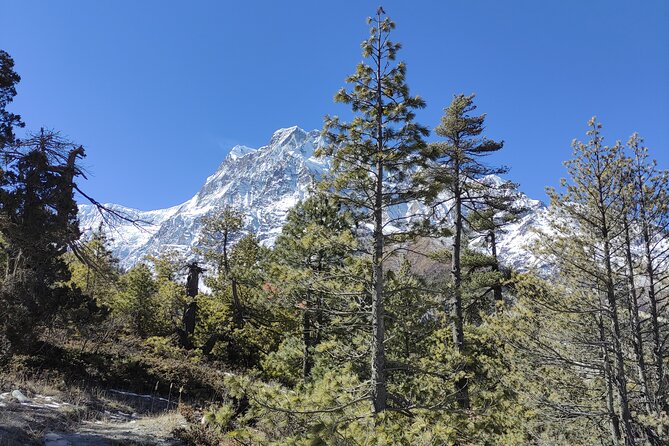
- ABC altitude goal around 4,130m, with clear altitude-health reminders
- City-to-trail flow: Kathmandu and Pokhara first, then Nayapul access for the trek
- Optional language support: English is assumed, and another language costs extra per group
Price and logistics: does $699 really buy anything here?
For $699 per person, this package is aiming to be a full trek framework, not just a ticket to a starting line. What’s included matters because the ABC trek isn’t hard only on your legs—it’s hard on your coordination. Here, a lot of that coordination is handled:
- Transfers from and to the airport
- 2 nights in Kathmandu and 2 nights in Pokhara with breakfast (3-star level with breakfast)
- 6 nights in tea houses during the trek
- Kathmandu–Pokhara–Kathmandu by tourist bus
- Pokhara–Nayapul–Pokhara by private car
- A government license holder trekking guide, plus the guide’s food/drinks, insurance, salary, equipment, transportation, and local tax
- A first-aid kit and a company t-shirt
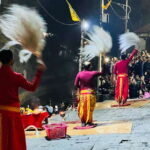
- A farewell dinner with cultural show
- Breakfast included 9 times (per the trip details)
So where does the $699 make sense? You’re paying for a complete “system”: lodging at both ends, the guiding and paperwork support, and the basic transportation chain that takes you from city comfort to trail life. If you tried to assemble all of that yourself, you’d spend time—and likely end up paying similar rates anyway, just with more uncertainty.
Two costs to note up front so you don’t get surprised:
- Lunch and dinner in Kathmandu and Pokhara aren’t included (listed as $150 per person).
- Gratuities are extra ($50 per person).
That’s pretty typical. The good part is that your trekking-side meals and tea house lodging are already part of the plan, so you aren’t doing daily expense math on the trail.
You can also read our reviews of more hiking tours in Kathmandu
The heart of the trip: Kathmandu, Pokhara, then the ABC trail
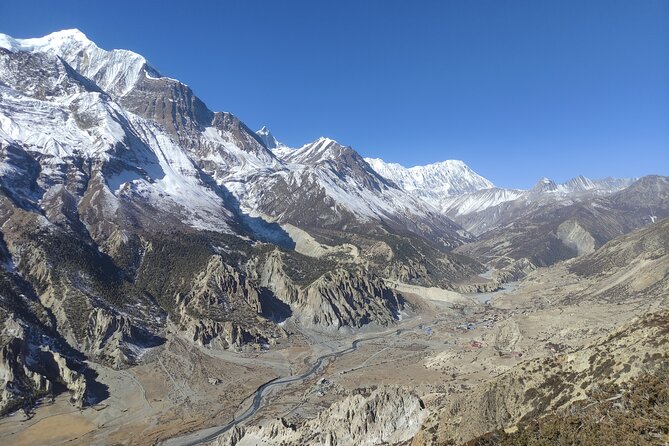
This itinerary is built like a two-part movie. Act one is about getting your footing in Nepal—language, streets, temples, and viewpoints. Act two is about the actual walking, with tea houses along the way and Annapurna Base Camp as the peak goal.
Day 1: Land in Kathmandu and ease into Thamel
After you arrive at Tribhuvan International Airport, you’ll be met and taken to your hotel in Kathmandu. Then you meet your guide and get an overnight in the city. The plan includes time around Thamel, a practical launch pad for trekking—shops, gear talk, and the kind of busy street energy that makes you feel like you’re in the right place.
There’s also scheduled sightseeing time such as Kathmandu Durbar Square and Pashupatinath Temple. Expect a full dose of cultural contrasts: old royal-town details, then the intensity of one of Nepal’s best-known religious sites. If you like starting trips with your brain awake and your legs still fresh, this day is a good fit.
Day 2: Morning travel toward Pokhara, with viewpoint options
You’ll head early toward Pokhara. The plan mentions taking a schedule bus drive route through Nayapul access, with scenery views along the ride. There’s also sightseeing listed around Swayambhunath and Chandragiri Hills.
Because timing can vary with the travel day, think of this day as a mix of “get to Pokhara” plus “snap in one or two viewpoint moments.” Either way, it’s a useful setup: you’re shifting from Kathmandu’s dense energy to Pokhara’s calmer lake-and-hill setting before trekking starts in earnest.
Day 3: Chhomrong direction, plus famous viewpoints
You begin trekking toward the Chhomrong area via routes that include Ghandruk and then a steady uphill-and-downhill day through woodlands and rhododendron trails. This is described as uneven, and it can be tough even before you feel truly “tuned” to the trail.
Chhomrong is an important stop because it’s high enough to feel Himalayan, but not so high that the day is miserable. It’s one of those village points where you’ll understand why this trek is so loved: you get village life, framed by big mountain views.
The itinerary also lists Poon Hill and Pokhara-related stops in the program. On this kind of trek schedule, Poon Hill is often the early “wow” moment people remember—especially if you time it for morning light—so if you’re a photo person, watch your timing and don’t treat that viewpoint lightly.
Day 4: Sinuwa and the stone-steps day
Day four pushes you toward Sinuwa. The route includes a river crossing and then an ascent up about 2,500 stone steps carved into the hillside. That’s the kind of detail that matters: steps can feel more exhausting than a gentle slope because they demand constant knee control and rhythm.
Sinuwa is useful because it’s a stepping-stone in altitude and effort. You’re still in trekking rhythm, not survival mode. You also get more time for mountain views, and the trail tends to feel like real Nepal—not a paved attraction.
Day 5: Annapurna Base Camp and Machhapuchhre Base Camp area
This is your big push day. The plan has you making your way toward Annapurna Base Camp, climbing gently alongside the riverbed and toward areas associated with Machhapuchhre Base Camp. It’s described as somewhat strenuous, and that tracks with how ABC treks are usually paced: the last stages are about endurance, not speed.
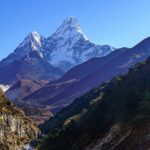
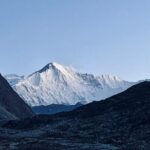
What to expect: thinner air, longer breaths, and moments where you’ll be glad you didn’t set a goal of “fast.” The payoff is that you’re walking into the heart of the Annapurna region—classic ridgelines, dramatic massifs, and that specific feeling of being close to your destination.
Day 6: Back down from ABC toward bamboo, with sanctuary-style walking
You’ll retrace your steps back toward bamboo, trekking through the sanctuary area. This isn’t a “wimpy day.” It’s still real hiking, but it often feels like a reset day because you’re moving away from the highest point.
You can also expect a different feel in the air and vegetation here—described as having a moist wetland-like sensation. On a trek like this, those shifts are part of what makes the days feel varied instead of copy-paste repeats.
Day 7: Jhinu Danda back toward Chhomrong Khola
This is another classic ABC structure day: uphill effort, then a descent, then another climb. The plan mentions moving from bamboo toward Kuldighar, then descending again toward the Chhomrong Khola, with stone-step climbing back toward Chhomrong.
If you’re smart, you’ll treat this as a day to keep steady and save your energy for the final trek-to-Pokhara section. If you’re tempted to race downhill because you’re tired, fight that urge—knees often pay the bill later.
Day 8: Back toward Nayapul and Pokhara, plus Phewa Tal and Sarangkot
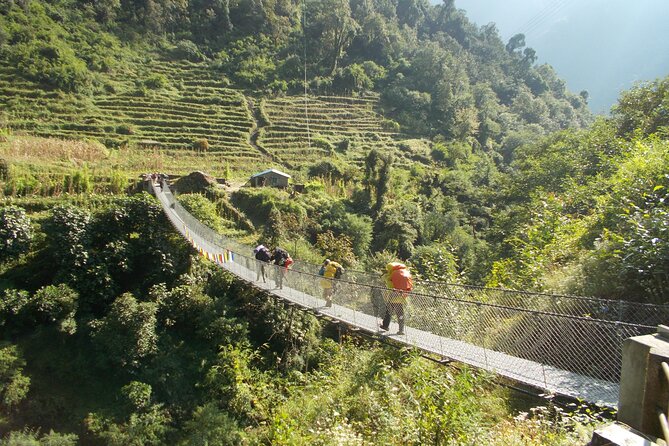
You trek from Jhinu toward Nayapul. The itinerary notes dramatic distant Annapurna views and wet farmland with rice plantations—again, not just scenery for scenery’s sake. These are the moments that help your brain accept that you’re on a journey with an ending.
Once you’re back around Pokhara, the plan includes time at Phewa Tal (the lake) and Sarangkot. Sarangkot is especially good if you like ridge-top views and sunsets, because Pokhara is built for that kind of postcard sky.
Day 9: Drive to Kathmandu and a taste of Patan
You’ll drive back to Kathmandu from Pokhara. Then the program includes Patan Durbar Square in the Kathmandu Valley. Patan is often less hectic than Kathmandu’s busiest core, and it’s a nice way to close the trip with more temples and craftsmanship before your flight day.
This day is also listed as flexible—if you want to stay longer in Nepal, you can. That’s a real benefit if you want a slower pace after the physical push of ABC.
Day 10: Kathmandu wrap-up at Garden of Dreams and Narayanhiti
On your last day, you’ll get help with last-minute preparations and then be dropped off at Tribhuvan International Airport. Sightseeing includes Garden of Dreams and Narayanhiti Palace Museum.
This kind of final-day plan is underrated. After trekking, you don’t want another intense day of logistics and walking. You want calm space to reset your body, gather your photos, and feel like the whole trip made sense.
What I’d watch for near 4,130m (and why it’s not just a warning)
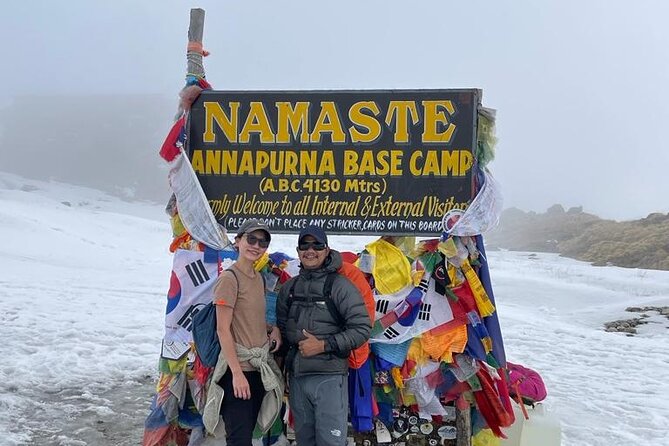
ABC treks are famous for their views. They’re also famous for altitude reality. The program explicitly notes that you’ll be walking at demanding altitudes around 4,130m, with potential extreme weather. It also warns that adverse health effects can happen regardless of age or gender.
So here’s the practical takeaway for you: plan the trek as if your pace matters more than your ambition. You can’t “push” altitude safely the same way you push flat-ground fitness. Even if the itinerary includes daytime trekking, your success depends on how well you manage breathing, hydration, and rest.
Also: the trip requires travel insurance that covers medical expenses and emergency repatriation, and you must show proof to the tour leader on day one. That’s not paperwork fluff. It’s the line between a manageable trek hiccup and a major problem.
Tea houses, pacing, and the rhythm you’ll actually live
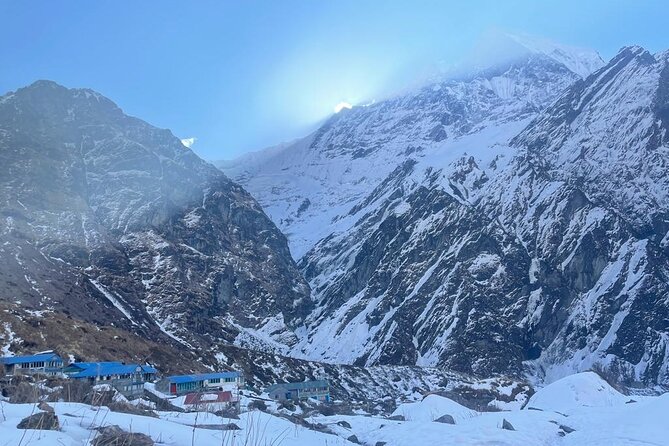
A lot of ABC treks blend two worlds: comfortable sleep in cities, then simple tea house lodging during the trek. Here you get both. The plan includes 2 nights in Kathmandu and 2 nights in Pokhara at hotel level (with breakfast), then 6 nights in tea houses on trek.
What you’ll feel on tea-house nights:
- You’ll likely eat with a mix of other trekkers on the same timeline.
- Your “morning routine” matters: warm clothes, quick breakfast, and a slow start.
- You’ll want to keep your day pack simple, because after the first few days, you’ll learn what annoys you most.
One more useful detail: extra luggage can be left at the office or hotel and picked up on return. That’s a comfort value. No one wants to drag unnecessary weight up a stone-step route.
Guides and porters: why this trek tends to go right
The most praised part in the feedback is the people. The support shows up again and again: friendly guidance, caring check-ins, and a crew that helps make the rough parts feel manageable.
Names you’ll see in the experience include:
- Santosh (mentioned in multiple reviews for professionalism and friendliness)
- Asok and Santosh together (noted for local support and guidance)
- Raju Simkhada, sometimes called Rash (mentioned for thoughtful, friendly support)
- Dibo and Varat (thanked for guidance and support)
Even with a good itinerary, trekking is where the human factor matters. A good guide helps you read the day—when to slow down, when to push slightly, when the weather is shifting, and how to handle the “I feel okay now, but not later” moments. This program specifically includes a government-licensed trekking guide and first-aid awareness in the leadership group, which is reassuring when the mountain is unpredictable.
If you care about a trip that feels personal—not just transactional—this crew-focused reputation is a strong signal.
Who this trek fits best (and who should think twice)
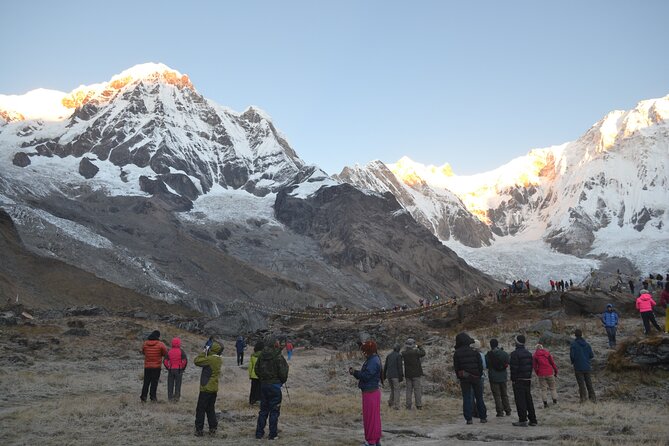
This is a strong match if you want:
- A classic Annapurna Base Camp trek with a structured plan
- A mix of culture (Kathmandu Valley highlights) and trekking days
- Reasonable comfort in the pre- and post-trek hotel days
- A small-group feel (max 12) with private activity style
It’s also a good pick for couples. The itinerary naturally builds in slower moments: viewpoint time and tea-house evenings. Add the fact that the route avoids a party vibe, and you get a romantic rhythm without trying too hard.
Think twice if:
- You’re not comfortable with altitude risk and variable weather. The plan is clear that you should discuss it with your doctor first.
- You hate trekking logistics and prefer full board meals everywhere. Lunch/dinner in Kathmandu and Pokhara are extra, and you’ll likely plan for gratuities too.
Should you book this Annapurna Base Camp trek?
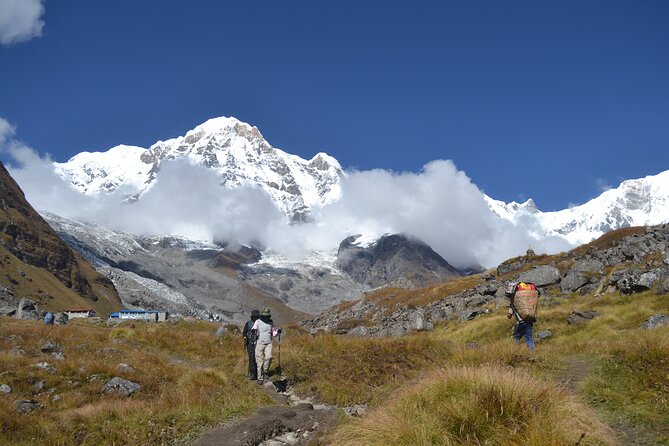
Yes, I’d consider booking it if you want a well-supported ABC trek that combines city sightseeing and tea-house nights, with strong emphasis on guidance and safety. The value is best when you like structure: transfers, hotels, tea houses, guide support, and the paperwork prep all handled in one package.
If you prefer maximum independence—arranging every bus and meal yourself—this might feel a bit too “managed.” But for most people, that’s exactly the point: you get to spend your energy on the trail.
My “book it” checklist for you:
- You’re comfortable paying the listed extras for meals in cities and gratuities.
- You can follow altitude-smart pacing and take weather seriously.
- You want a crew-driven trek where guides and porters are part of the experience, not background.
FAQ
How high will I be trekking on the Annapurna Base Camp route?
The trip is described as walking at demanding altitudes of approximately 4,130m (13,550 feet). It also notes the possibility of extreme variations in weather.
What’s included in the $699 price, and what’s not?
Included are airport transfers, hotel nights in Kathmandu and Pokhara with breakfast, tea house accommodation during the trek, guided trekking support, Kathmandu–Pokhara–Kathmandu by tourist bus, Pokhara–Nayapul–Pokhara by private car, and a farewell dinner with cultural show. Not included are lunch and dinner in Kathmandu and Pokhara (listed as $150 per person) and gratuities (listed as $50 per person).
Is a professional guide included?
Yes. The program includes a government license holder trekking guide, along with first-aid kit support and local tax coverage as part of the included services.
Do I need travel insurance?
Yes. Travel insurance that covers medical expenses and emergency repatriation is required, and you must show proof to the tour leader on the first day.
What fitness level do I need?
The trip states that travelers should have moderate physical fitness. It also warns you to discuss the trek with your doctor due to altitude and the potential for adverse health effects.
What documents do I need for the permits?
You’ll need a clear color passport photo copy (minimum 6 months validity), two passport size photos, plus occupation and home details address information.
How big is the group?
The maximum is 12 people per booking. The activity is described as private in the sense that only your group participates.