REVIEW · KATHMANDU
Local Women Led Nepali Cooking Class
Book on GetYourGuide →Operated by Namaste Cooking School · Bookable on GetYourGuide
This Nepali class comes with a purpose. In the middle of Thamel, Namaste Cooking School turns farm-to-table Nepali cooking into a women-led, culture-first experience with English instruction and a small group feel.
I love the women empowerment angle—this isn’t charity-flavored marketing; the instructors are women who are survivors of trafficking, presented as warriors and teachers. I also like that you cook for real (not just watch) and end up eating what you make, with lunch or dinner included.
The small group format is another plus: you’ll have time to ask questions and actually participate. One possible drawback to think about: this is a 3-hour class, so if you want a long, slow “learn every technique” experience, you may find the schedule a bit fast.
In This Review
- Key things I’d look for before you go
- Thamel Location: Why This Cooking Class Feels Easy to Fit In
- The Women-Led Mission: Cooking as Empowerment, Not a Side Story
- The 3-Hour Flow: What You’ll Do During the Class
- 1) Arrive and get set up for cooking
- 2) Choose from the Nepali menu options (entree, main, dessert)
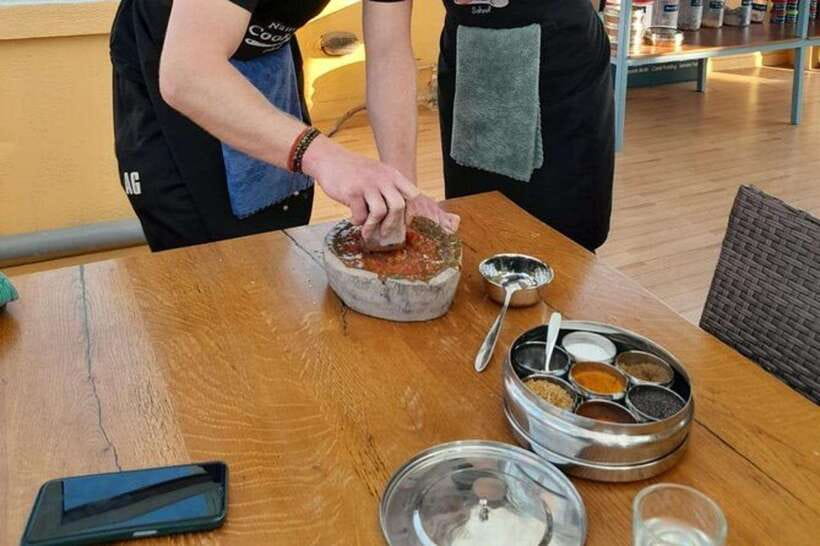
- 3) Cook together, hands-on
- 4) Sit down for lunch or dinner
- 5) Leave with written guidance
- 6) Get a participation certificate
- Farm-to-Table in Nepal: What It Means for the Flavor in Your Bowl
- Small Group of 8: The Difference Between Participating and Waiting
- Menu Building: How to Get the Most Out of Entree, Main, and Dessert
- Price and Value: Is $30 Worth 3 Hours and a Full Meal?
- English Instruction: Comfort Without Missing the Cultural Context
- What You Can Expect to Feel Like While Cooking
- Who Should Book Namaste Cooking School?
- Should You Book It?
- FAQ
- Is the class offered in English?
- How long is the cooking class?
- What is included in the $30 price?
- Do I get pickup and drop-off?
- How many people are in the group?
- Can I cancel for a full refund?
- Is lunch or dinner included?
- Do I need to pay right away?
Key things I’d look for before you go
- Women survivors lead the class, and the mission frames the cooking as part of empowerment and resilience
- Farm-to-table ingredients sourced directly from local farmers, so the flavors feel tied to place
- Small group (up to 8) means more hands-on time and less waiting around
- Menu choice across entrée, main, and dessert so you can build a full Nepali meal
- English instruction keeps things comfortable if you don’t speak Nepali
- All ingredients, meal, recipe booklet, and a participation certificate are included in the $30 price
Thamel Location: Why This Cooking Class Feels Easy to Fit In
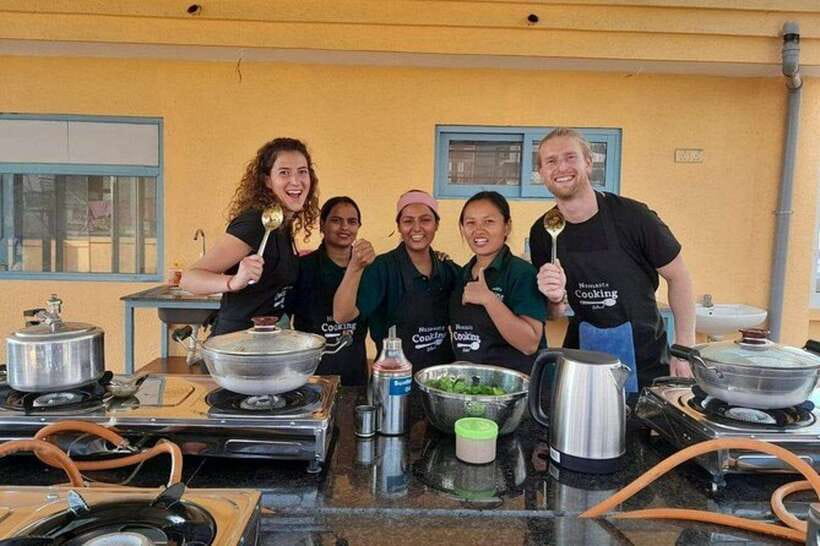
If you’re staying in Kathmandu, Thamel is where most first-timers end up by default. This class being right in the heart of the neighborhood matters more than it sounds. You don’t need a long commute to get into “serious food mode,” and you can time it around your sightseeing and restaurant meals.
With a 3-hour experience, you’ll be able to slot this in without turning your day into a production. It also helps that the school is set up for culinary enthusiasts—so you’re not walking into a random storefront kitchen where you’re unsure what’s going on. The vibe is built around doing.
And since pick-up service is available (even though it isn’t included), you still have options if you’d rather not navigate Thamel streets on foot. If you’re already in the area, though, I’d lean on the simple plan: arrive early-ish, get settled, and let the class set your pace.
You can also read our reviews of more cooking classes in Kathmandu
The Women-Led Mission: Cooking as Empowerment, Not a Side Story
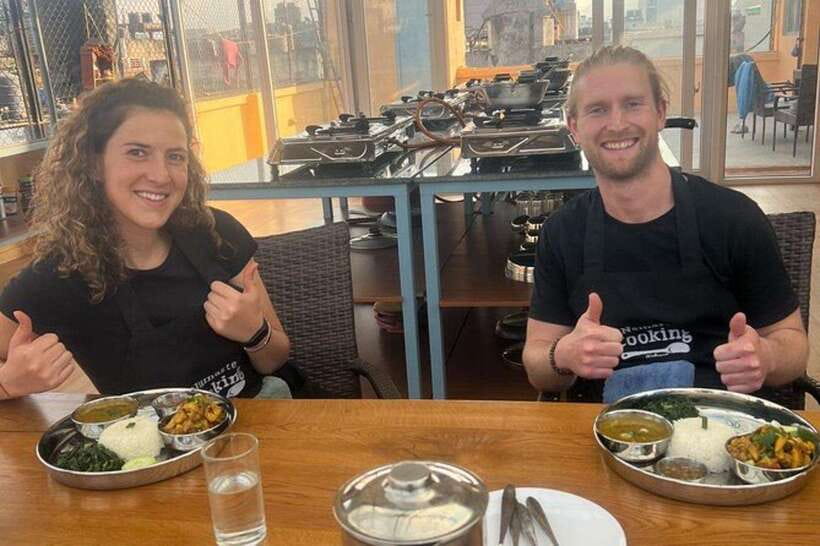
A lot of cooking classes in travel sound meaningful. This one ties meaning directly to who’s teaching.
Namaste Cooking School is run by women who are survivors of trafficking. The school is explicit that these women are not treated as passive subjects; they’re described as warriors with hope, courage, and a will to thrive. When that’s how the class is framed, it changes your role as the participant. You’re not “consuming” culture. You’re learning from it—and supporting a team that has fought to rebuild their lives.
For you, that means the cooking instruction likely comes with personality and perspective. The experience message is Cook for Culture, Empower for Change. You should expect a warm, human atmosphere, not a stiff demo.
One more practical note: the class is taught in English. That’s important here because the mission can be discussed clearly, and you’ll have the chance to ask questions about ingredients, techniques, and Nepali food traditions without language getting in the way.
The 3-Hour Flow: What You’ll Do During the Class
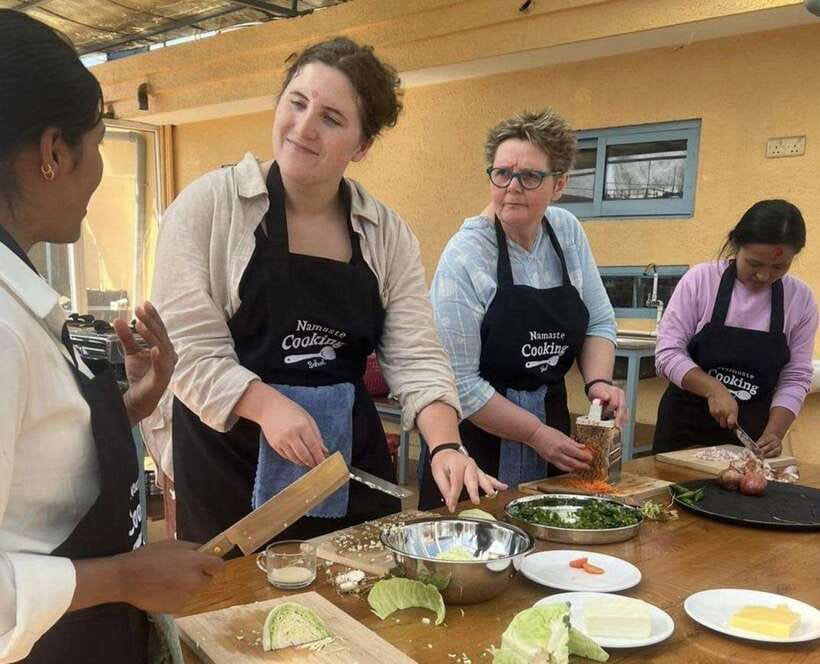
You’re looking at a compact meal-making session—3 hours total. Within that window, the experience is designed to cover the whole arc: choosing what you’ll cook, cooking it, and then eating it as lunch or dinner.
Here’s the structure you can plan around:
1) Arrive and get set up for cooking
You’ll be working with the ingredients provided by the school. That’s not a minor detail. In a cooking class, the “missing ingredients” problem is real—wrong substitutions or you realizing you forgot something at home ruins momentum. Here, you’re covered from the start.
2) Choose from the Nepali menu options (entree, main, dessert)
The class offers menu selection across multiple courses: entrée, main course, and dessert. This is great for a few reasons:
- You don’t have to commit to only one dish and hope it’s enough.
- You can build a full meal instead of leaving hungry.
- You get variety in skills and flavors, not just the same sauce repeated.
You can also read our reviews of more tours and experiences in Kathmandu

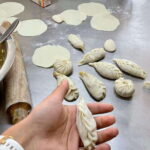
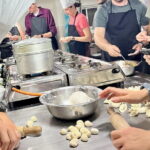
3) Cook together, hands-on
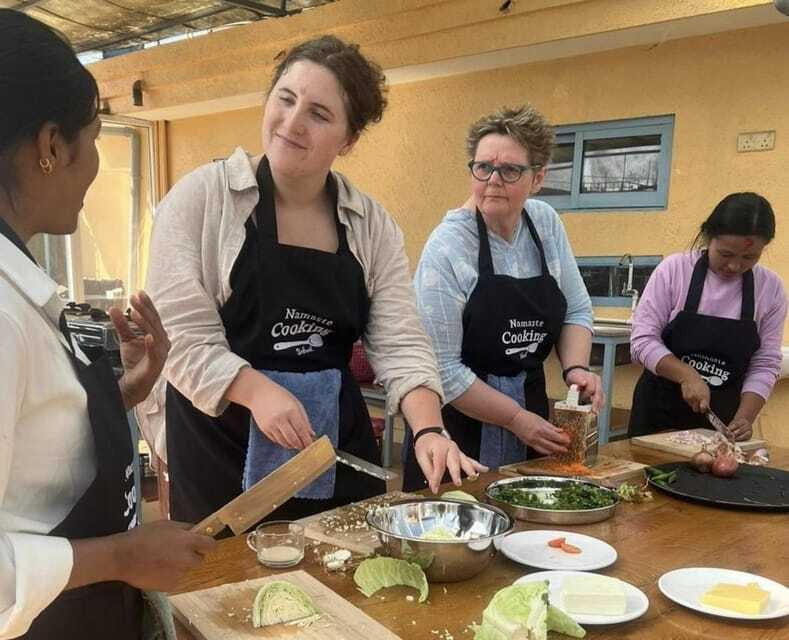
You’re not there to watch. You’re there to cook the dishes you’ll later eat. Because the group size is limited to 8, this is the kind of class where you can actually participate rather than standing to the side.
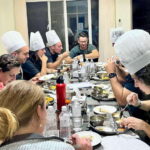
4) Sit down for lunch or dinner
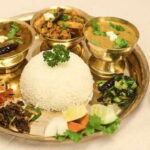
Your meal is included, and it’s made from the dishes you prepare. That matters because Nepali cuisine is often about balance—spice, herbs, texture, and comfort. If you only cook and never taste your results, you miss the point. Here, you’ll get the payoff.
5) Leave with written guidance
You’ll receive a recipe booklet. This is one of the best “value multipliers” in cooking classes. It helps you recreate at home without trying to remember every spoonful and timing trick.
6) Get a participation certificate
It’s small, but it’s also nice. A participation certificate gives the session a clean, official ending—useful if you’re collecting travel memories that aren’t just photos.
Farm-to-Table in Nepal: What It Means for the Flavor in Your Bowl
The school’s approach is described as farm-to-table, with ingredients sourced directly from local farmers. On paper, that sounds like a buzzword. In practice, the benefit is pretty straightforward: you’re cooking with ingredients that reflect local availability and food culture, not generic supplies shipped in to satisfy a menu.
For you, that usually translates to:
- More recognizable flavors
- Fewer weird substitutes
- A stronger sense of “this is what Nepali food tastes like”
Even if you’re not a hardcore food nerd, you’ll feel the difference in how dishes come together. Nepali cooking relies heavily on fresh herbs, spices used in specific ways, and the overall balance of a meal. Using local ingredients supports that logic.
And because you’re cooking in a group guided by English-speaking instructors, you’re not just eating—you’re learning what makes the flavors work. That’s the kind of lesson you can carry home, even if you can’t source the same farms.
Small Group of 8: The Difference Between Participating and Waiting
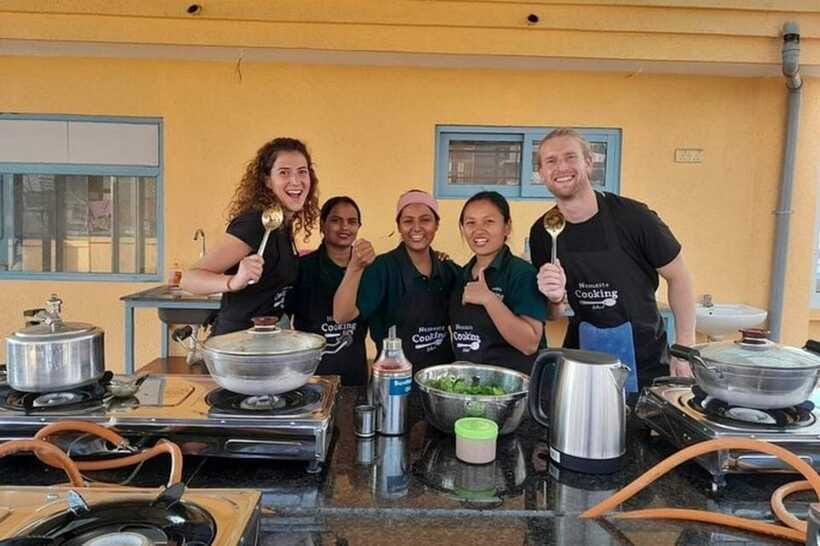
The class is limited to 8 participants. That’s the sweet spot for hands-on cooking: large enough that the energy stays lively, small enough that the instructors can actually see what you’re doing.
This matters for two reasons:
1) You’re more likely to get real attention when you’re chopping, mixing, or troubleshooting a step.
2) The teaching style can stay friendly and interactive instead of turning into a strict lecture.
Based on how the class is described in feedback, the women leading the session are friendly and make the experience feel fun. In a cooking class, that’s not fluff—it reduces performance anxiety. When you feel comfortable, you try more. You ask questions. You taste things during the process instead of waiting until the end.
Menu Building: How to Get the Most Out of Entree, Main, and Dessert
Because the school offers options across entrée, main course, and dessert, you can make choices based on your own appetite and cooking confidence.
Here’s how I’d think about it:
- If you’re new to Nepali food, pick a main you’re curious about and then use the entrée to try something lighter or different. The dessert is your safety net: you’ll end with something comforting.
- If you like cooking variety, choose dishes that don’t all depend on the same base sauce or technique. The point is learning multiple flavors and methods in one sitting.
- If you’re not sure what to pick, aim for a balanced plate: one dish that sounds savory and one that sounds sweet. Your taste experience will feel more complete.
The key benefit is that you don’t just leave with one recipe. You leave with a meal’s worth of ideas, plus a recipe booklet.
Price and Value: Is $30 Worth 3 Hours and a Full Meal?
At $30 per person for a 3-hour class, the value comes from what’s included. You’re getting:
- All cooking ingredients
- Lunch or dinner with the dishes you prepare
- A recipe booklet
- A certificate of participation
So you’re paying for instruction, materials, and the meal outcome. That’s different from a restaurant dinner where you pay mainly for food, not for skill-building.
In plain terms: this feels like “buy a lesson, get a meal” rather than “pay for a ticket and hope you eat.” If your goal is authentic Nepali flavor plus real participation, this price is easy to justify.
English Instruction: Comfort Without Missing the Cultural Context
The instructor is listed as English-speaking, and the program is built around immersive cultural sharing through food.
That means two things for you:
- You won’t have to translate every step yourself.
- You’re more likely to follow the why behind the dishes, not just the how.
When language is handled, it also helps the class mission land better. You can hear the story behind the school’s resilience and empowerment framing clearly, without relying on someone summarizing.
What You Can Expect to Feel Like While Cooking
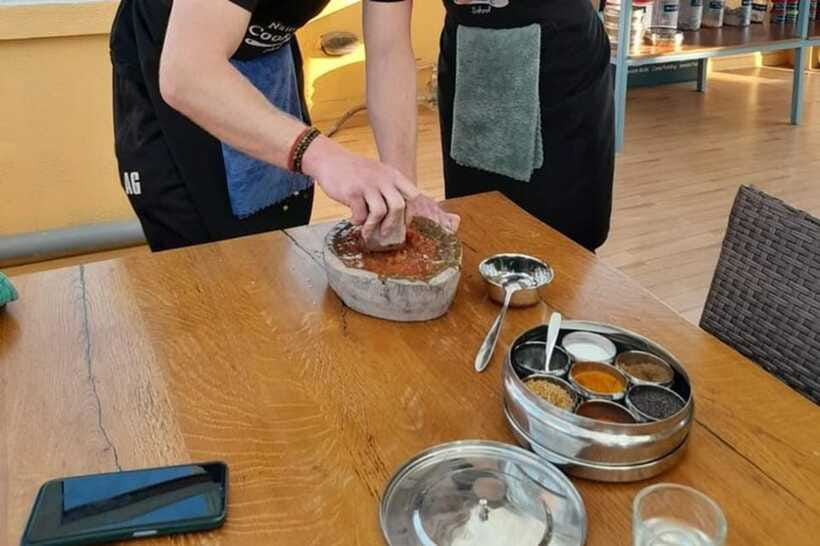
This class isn’t described as stiff. It’s described as an enjoyable group experience with laughing, hands-on cooking, and a tasty payoff.
That emotional tone matters. Cooking classes can feel intimidating if you’re the only person who doesn’t know what’s happening. Here, the setup is a small group and English instruction, and the women leading it are described as friendly. That combination usually means you’ll feel comfortable making mistakes and learning quickly.
And since the session ends with lunch or dinner you helped make, you’re not just “doing homework.” You’re creating a meal you get to enjoy right away.
Who Should Book Namaste Cooking School?
This is a good fit if you want:
- A Nepali cooking class in Thamel that’s easy to reach
- A small-group experience where you can actually cook
- English instruction
- A farm-to-table approach and a meal that reflects local flavors
- An experience with a real, people-centered purpose tied to empowerment
It may be less ideal if you’re craving a long, deep cooking course with advanced technique focus. This is time-limited by design, and you’ll get a broad experience rather than a multi-day skill ladder.
Should You Book It?
Yes—if you want hands-on Nepali food in a small setting, with ingredients that follow a farm-to-table approach and a women-led mission you can feel in the room. The price is reasonable for what you get: ingredients, cooking, a full lunch or dinner, a recipe booklet, and a certificate.
I’d especially book it if you’re staying in or near Thamel and you want a structured activity that still feels authentic. And because the session is in English and capped at 8 people, you’ll likely leave feeling like you learned something you can actually repeat at home, not just took photos.
FAQ
Is the class offered in English?
Yes. The instructor is listed as English.
How long is the cooking class?
The duration is 3 hours.
What is included in the $30 price?
All cooking ingredients, lunch or dinner with the dishes you prepare, a recipe booklet, and a certificate of participation are included.
Do I get pickup and drop-off?
Pickup service is available, but hotel pickup and drop-off are not included.
How many people are in the group?
It’s a small group limited to 8 participants.
Can I cancel for a full refund?
Yes. You can cancel up to 24 hours in advance for a full refund.
Is lunch or dinner included?
Yes. You’ll have lunch or dinner with the dishes you prepare.
Do I need to pay right away?
The experience offers reserve now & pay later, so you can book your spot and pay nothing today.