REVIEW · KATHMANDU
Kathmandu: Private Bhaktapur and Patan Sightseeing Tour
Book on GetYourGuide →Operated by Cordial Trek Pvt. Ltd. · Bookable on GetYourGuide
Two UNESCO squares in six hours sounds perfect. This private Kathmandu Valley loop is all about the Patan Durbar Square and Bhaktapur Durbar Square UNESCO sites—two former kingdoms, one tight itinerary, and a lot of old-stone drama in between.
What I really like is that you’re not just walking around temples. You’re learning how the carvings, courtyards, and legends connect to everyday Nepalese culture and religion, especially the Newari traditions you’ll hear about from a strong English-speaking guide.
One thing to plan for: you’ll need to bring cash for monument entrance fees, and meals aren’t included, so you may want to eat before you go (or plan a quick stop after).
In This Review
- Key highlights at a glance
- Two UNESCO durbar squares, one tight Kathmandu schedule
- Private AC pickup in Kathmandu: what the logistics get right
- Patan Durbar Square: stone temples, royal palace space, and the Krishna Mandir
- Transfer to Bhaktapur: use the ride to switch your mindset
- Bhaktapur Durbar Square: Golden Gate, 55 Jhyale Durbar wood carvings, and royal-era courtyards
- Nyātāpola Temple: the five-tier viewpoint and why 1702 matters
- Pottery Square: a practical stop for handicrafts
- Guide quality is the real upgrade: Nilakantha and Sharmila’s impact
- Money and access: cash for entrance fees, and what you skip
- Timing and pacing: how 6 hours can feel either easy or rushed
- What to bring (so you don’t suffer for your photos)
- Who this tour suits best
- Should you book this Kathmandu private Patan and Bhaktapur tour?
- FAQ
- How long is the Kathmandu Private Bhaktapur and Patan Sightseeing Tour?
- Where does the tour start and end?
- Which places does the tour visit?
- Is the tour guide available in English?
- What is included in the price?
- Do I need to pay monument entrance fees?
- Are meals included?
Key highlights at a glance
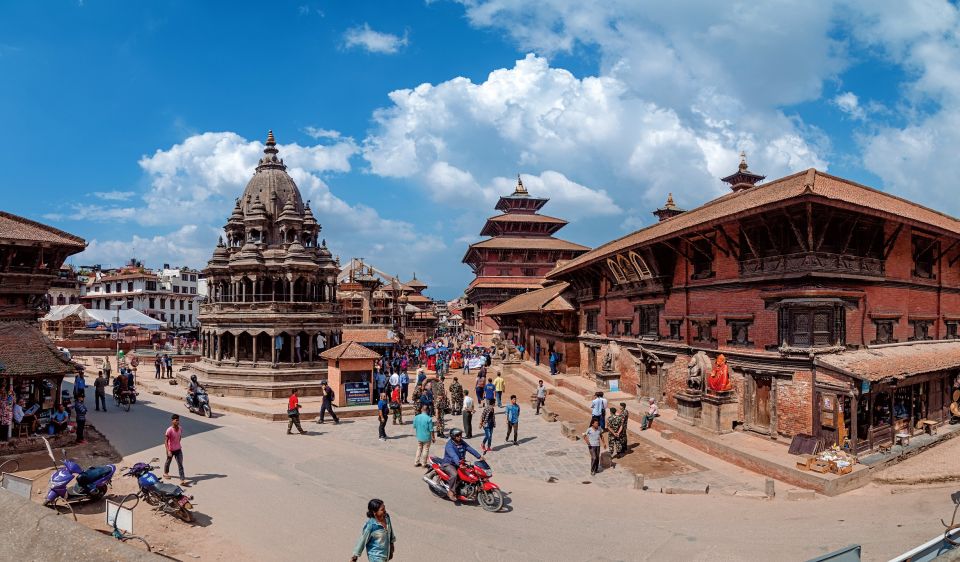
- Two UNESCO Durbar Squares in one focused 6-hour plan: Patan then Bhaktapur
- Newari culture and Hindu stories explained in clear English
- Patan Durbar Square temples and Krishna Mandir made of stone
- Bhaktapur’s Golden Gate area, plus the 55 Jhyale Durbar wood-carving stop
- Nyātāpola Temple (1702), the tallest temple in Nepal
- Pottery Square for handicraft shopping without turning it into a shopping chore
Two UNESCO durbar squares, one tight Kathmandu schedule
If you only have half a day in the Kathmandu Valley, this tour makes your time count. The logic is simple: you visit the two big “Durbar Square” complexes that define the Malla-era kingdoms of Patan and Bhaktapur, then you leave before the day gets heavy. It’s a good fit if you like architecture, religious sites, and the little details you’d normally miss wandering alone.
The value here is mostly in the structure. You get a private group with hotel pickup and drop-off, plus a guide who can point out what matters. That means you spend less time guessing, and more time looking at things like carved facades, temple layouts, and the way courtyards work as living space—not just museum pieces.
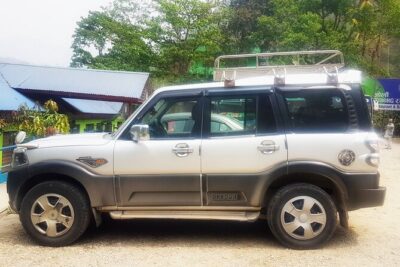
The tour is listed at $45 per person for 6 hours, and what you get is a full experience package: transport in a private AC vehicle, a live English guide, and bottled water. The one cost to remember is monument entrance fees, which you pay with cash on your side.
You can also read our reviews of more private tours in Kathmandu
Private AC pickup in Kathmandu: what the logistics get right
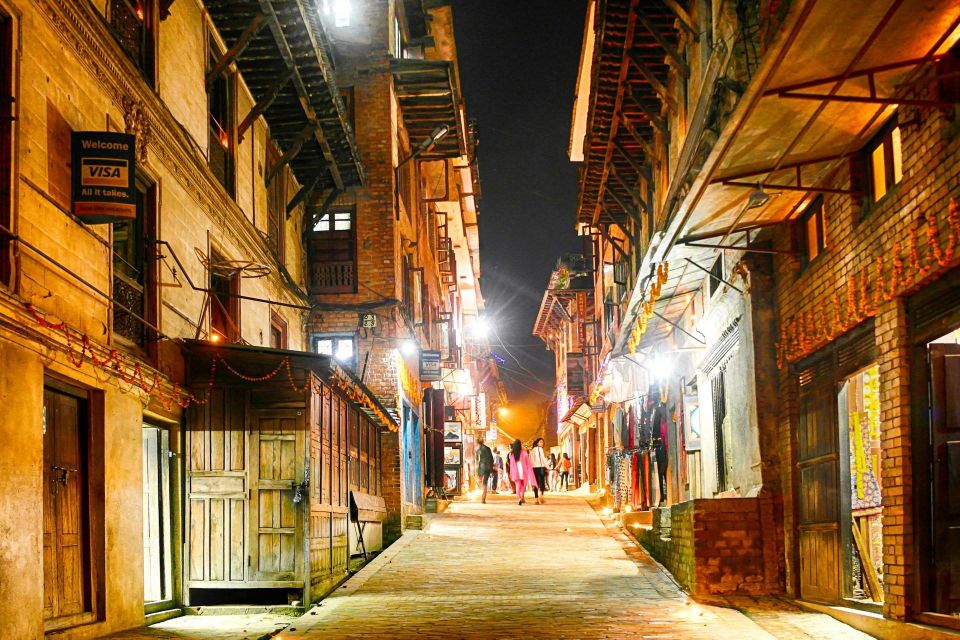
Your day starts with pickup from your hotel in Kathmandu. Then you’re driven into the valley—first toward Patan, then on to Bhaktapur. The itinerary is timed so you’re not constantly stuck in traffic for hours. Expect a short ride to Patan (about 30 minutes) and then a longer transfer to Bhaktapur (about 40 minutes), with the exact timing depending on roads and the pace of your group.
A private vehicle is a big deal in this kind of sightseeing day. You’re not waiting for a shared shuttle. You’re also not doing the “everyone stand in a circle, decide where we go next” routine. Instead, you move as one unit, and the guide keeps the flow.
Also worth noting: there’s an express security check so you don’t burn time at entry points. Small time-savers like that add up when your schedule is only 6 hours.
Patan Durbar Square: stone temples, royal palace space, and the Krishna Mandir
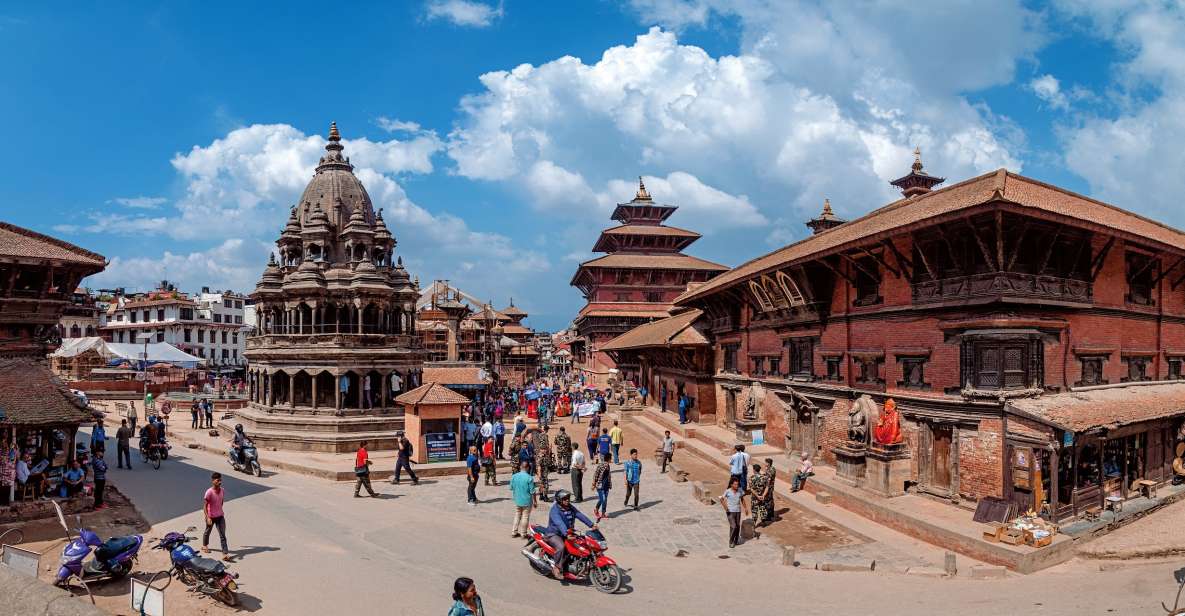
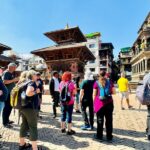
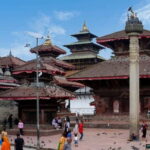
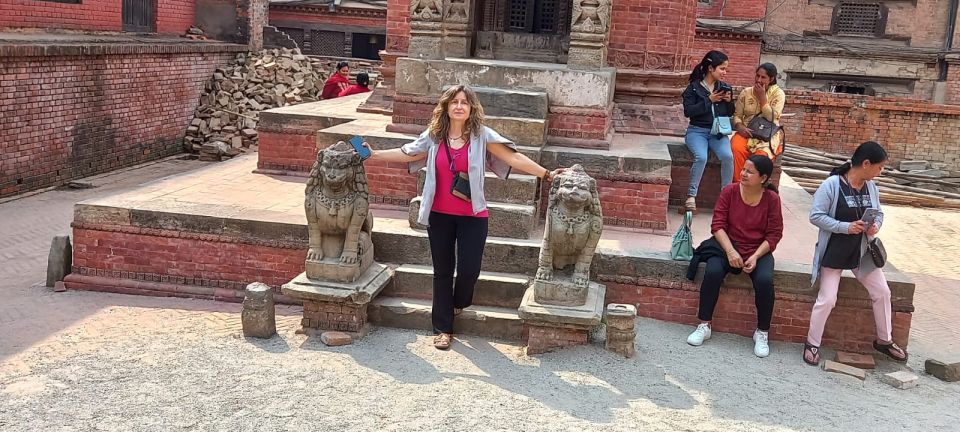
Patan Durbar Square is your first major stop. It’s in Lalitpur and centered on the old royal palace area where the Malla kings of Patan lived. This is where you’ll see the Newar architectural style doing what it does best: blending temple, craftsmanship, and civic space into one practical layout.
Start with the square itself. The floor is tiled with red bricks, and the geometry makes it feel like a working courtyard even when everything is quiet. As you look around, your guide should help you connect the structures—temples, statues, and carved elements—to how Patan’s royal power was displayed in stone.
One standout is the Krishna Mandir, built in stone. It’s the kind of temple detail that rewards slow looking: smaller sculptures, stonework lines, and the way the structure frames views from different angles. If you’re the sort of person who likes to photograph details instead of only taking wide shots, this is a strong opening act.
Possible drawback here: Patan is your first stop, so you’ll want comfortable shoes right away. The ground can be uneven in historic core areas, and you’ll be walking from temple to temple inside the square complex.
Transfer to Bhaktapur: use the ride to switch your mindset
Between Patan and Bhaktapur you have a drive of about 40 minutes. That transfer is not just downtime. It’s your chance to change gears.
Patan and Bhaktapur look similar on a map because they’re both Newar-influenced historic centers, but they don’t feel identical once you’re inside the squares. Bhaktapur tends to feel more compact and temple-heavy, and the carvings take center stage even more.
If you’re someone who gets mentally overloaded in big historic areas, use the ride to do two quick things:
- look at your photos from Patan and pick a theme (wood carving, stone temples, courtyards, gates)
- check you have cash ready for monument entrance fees
This tour includes transport and a guide, but you’re still responsible for being prepared when it’s time to pay entry.
Bhaktapur Durbar Square: Golden Gate, 55 Jhyale Durbar wood carvings, and royal-era courtyards
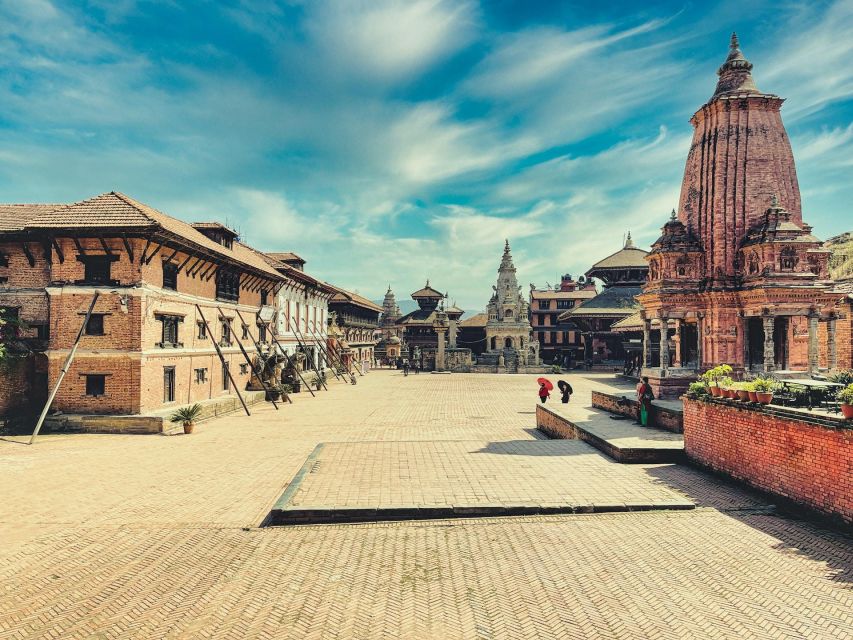
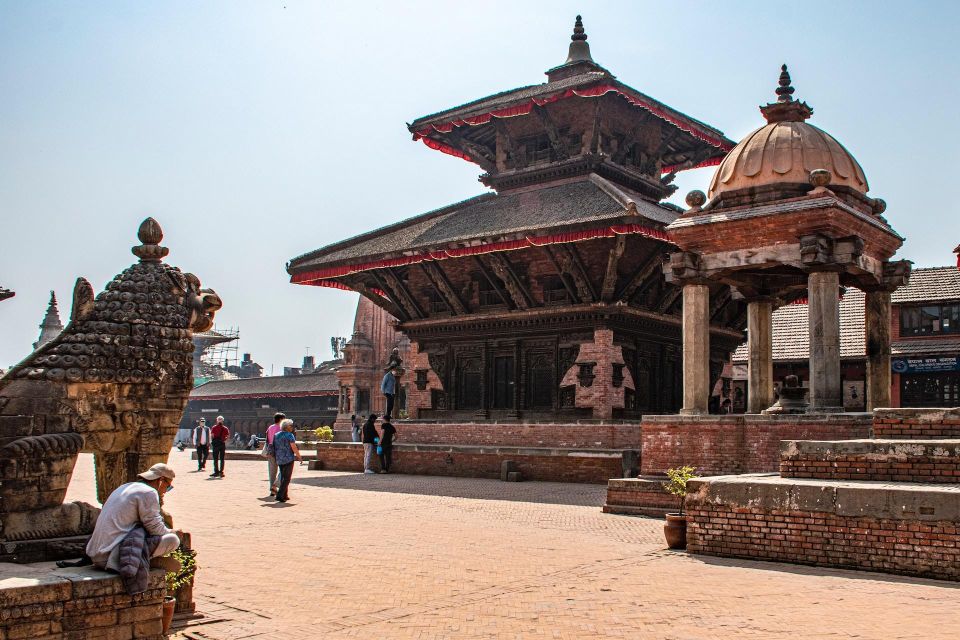
Bhaktapur Durbar Square is the main event, and it’s easy to see why. This palace complex served multiple phases of rule, from the Malla kings of Nepal (14th to 15th century) through later kings of Bhaktapur (15th century into the late 18th century). Even after conquest in 1769, parts of the palace grounds continued to function as government offices, schools, and private houses. That mix of old and still-used spaces gives you a more grounded feeling than a place that’s only preserved behind barriers.
As you enter, the Golden Gate area sets the tone. Right behind it, you can see the 55 Jhyale Durbar, famous for its preeminent illustration of Malla wood carving craft. This is the kind of stop where the guide’s explanation matters: if you understand what you’re looking at, you don’t treat the carvings as random decoration.
From there, you’ll move through the temple-and-courtyard layout that defines Bhaktapur’s style. The complex includes multiple temples, palaces, and courtyards built in traditional Nepalese architecture—so you get repeated chances to compare details from one area to the next. That repetition is good. It helps you train your eye.
Nyātāpola Temple: the five-tier viewpoint and why 1702 matters
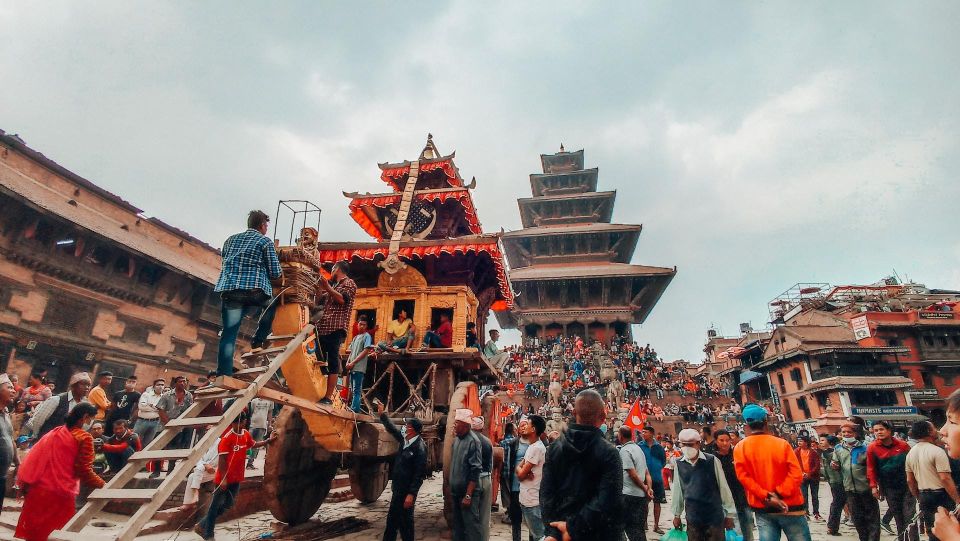
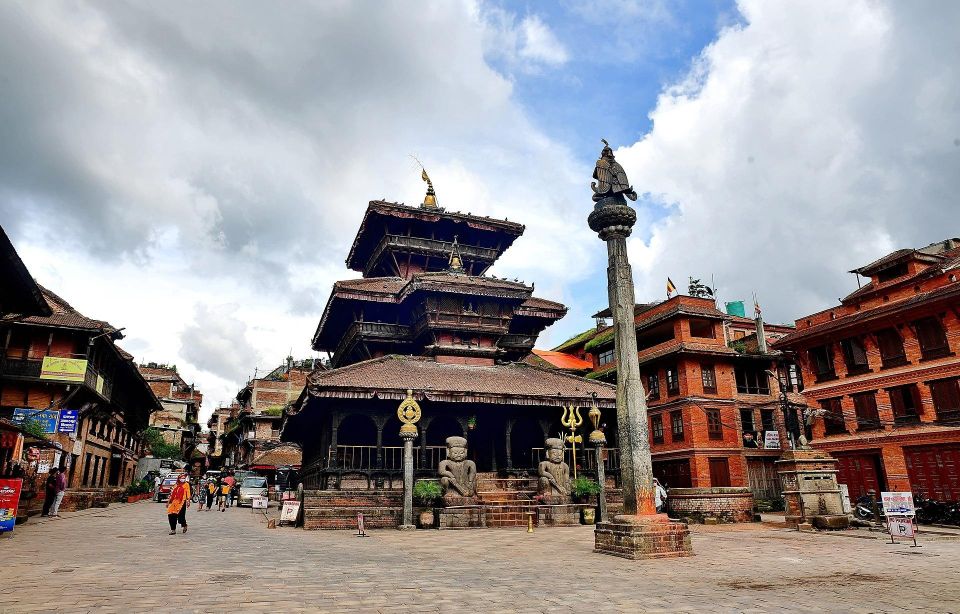
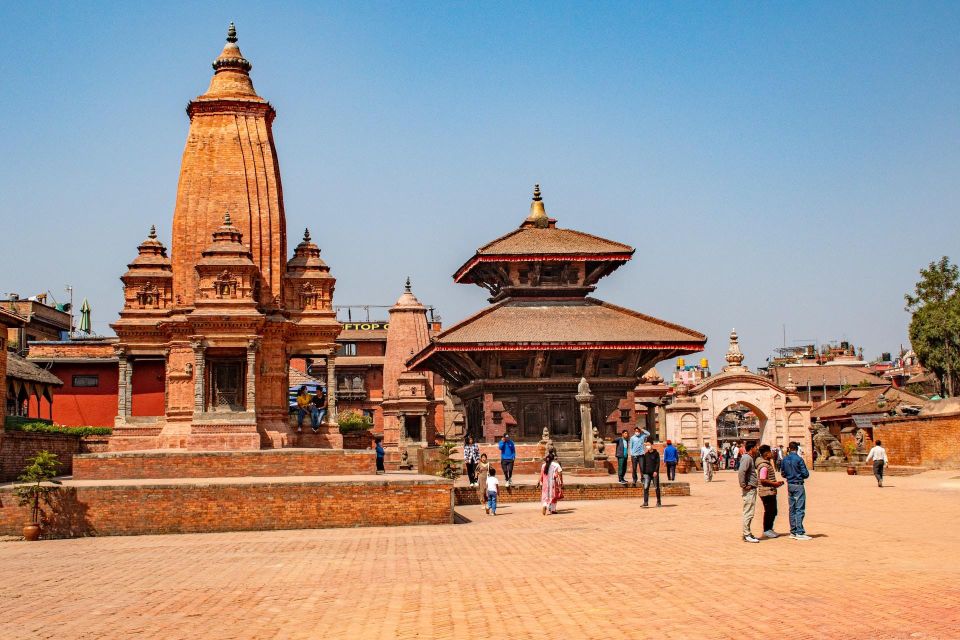
Nyātāpola Temple is a must-see on this route. It’s a five-tier temple located in the central part of Bhaktapur Durbar Square, and it’s described as the tallest monument within the city and the tallest temple of Nepal.
The construction detail you’ll hear—commissioned by King Bhupatindra Malla, completed in 1702—adds context. You start thinking less like a casual visitor and more like someone asking: why would a kingdom invest in height and visibility like this?
Nyātāpola is the kind of site where you’ll naturally look upward. The tiers give you multiple levels of texture, and you’ll likely get different views as you circle around. Even if you’re not a temple superfan, it’s hard not to appreciate the engineering and symbolism packed into that height.
Pottery Square: a practical stop for handicrafts
After the densest temple architecture, Pottery Square offers a more human pace. As the name suggests, it’s known for pottery work and serves as a hub for Nepalese handicrafts. It’s not described as an enormous area like the durbar squares, so it works well as a lighter break where you can browse without feeling like you’re losing the day.
This is also a good place to buy small items. You can look for pieces tied to local craft traditions rather than generic souvenirs.
If you’re worried about shopping time eating your sightseeing, this stop is built to stay focused. You’re not sent to a random marketplace labyrinth; you’re guided to a known craft area.
Guide quality is the real upgrade: Nilakantha and Sharmila’s impact
The difference between a decent tour and a great one is the guide. On this route, strong English explanations can turn stone temples into understandable stories.
One guide you might get is Nilakantha. He’s highlighted for teaching Nepalese and Hinduism history and culture in a way that connects to what you’re seeing. Another guide option is Sharmila, praised for knowing the history and religion and sharing it clearly.
What this means for you in practical terms: don’t just look up at the architecture. Listen for the links—why the palace complex was laid out a certain way, what certain temple elements symbolize, and how Newari culture shows up in both ritual and daily life.
If you care about culture but don’t want academic lectures, this tour format tends to work well. You get enough context to make the visuals click.
Money and access: cash for entrance fees, and what you skip
The tour includes hotel pickup and drop-off, a guided experience, private AC transport, and bottled water. It also notes an express security check so you can move through faster than you might on your own.
What’s not included is meals, and you need to bring cash to pay monument entrance fees. That’s important because it affects how smooth your day feels. If you show up without cash, you lose time and peace of mind. Plan ahead and carry enough.
Also note: oversize luggage isn’t allowed. So keep your bag compact, especially if you’re traveling with cameras, chargers, and possibly a daypack. This is a sightseeing day inside older city cores, not a rolling luggage marathon.
Timing and pacing: how 6 hours can feel either easy or rushed
Six hours sounds comfortable until you do two major UNESCO areas back to back. The good news is this itinerary is structured with guided time at each complex: Patan Durbar Square gets about 1.5 hours, and Bhaktapur Durbar Square gets about 2.25 hours.
That balanced split gives you enough time to:
- see the big landmarks without sprinting
- stop for photos and slower observation
- take in a few key temple and carving points
The transfer times are also built in. You’re not waiting forever between stops. Still, if you’re the type who wants to linger for long stretches inside every courtyard, you’ll need to manage expectations. This is a guided route with a schedule, not an all-day free roaming pass.
What to bring (so you don’t suffer for your photos)
This tour is straightforward, but the classic Kathmandu advice still applies. Bring:
- a camera (there’s plenty to photograph, from carved wood to temple tiers)
- cash for monument entrance fees
- comfortable shoes (durbar squares involve walking on uneven historic surfaces)
- sunglasses for brighter courtyard light
Also keep your luggage small. Oversize items aren’t allowed, and a compact setup makes it easier to move with your group.
If you’re sensitive to sun or heat, plan your hydration. Bottled water is included, but you’ll still want to drink regularly as you move between courtyard and temple areas.
Who this tour suits best
This is a strong choice if you:
- want two UNESCO sites without building a day from scratch
- care about architecture and religious context (not just surface-level sightseeing)
- prefer a private, guided setup with clear pacing
It also fits well if you’re staying in Kathmandu proper but want a focused valley day. A private AC vehicle helps you keep energy for walking once you arrive.
If you’re a hardcore shopper who wants long market wandering, you might find the Pottery Square time a bit short. But if you like buying a few craft items without losing the whole afternoon, it’s a good balance.
Should you book this Kathmandu private Patan and Bhaktapur tour?
I’d book it if your goal is efficient, guided sightseeing of two of the most important historic centers in the valley. The price feels reasonable for what’s included—transport, an English guide, and a private setup for a full half-day. The biggest practical gotchas are simple: bring cash for entrance fees and plan for no meals.
If you want to see more than just the big squares but still stay on schedule, this tour gives you a curated route with enough stopping points to make the day feel meaningful. Just show up with comfortable shoes, a charge-ready camera, and a willingness to look closely at carvings and temple layouts.
FAQ
How long is the Kathmandu Private Bhaktapur and Patan Sightseeing Tour?
The tour duration is 6 hours.
Where does the tour start and end?
Pickup is from your hotel in Kathmandu, and you’ll be dropped back at your hotel in the afternoon (around the mid-afternoon window on the schedule).
Which places does the tour visit?
It visits Patan Durbar Square and Bhaktapur Durbar Square.
Is the tour guide available in English?
Yes, the tour guide is English.
What is included in the price?
Included are hotel pickup and drop-off, a live experience tour guide, private AC car or van transportation, and bottled drinking water.
Do I need to pay monument entrance fees?
Yes. You’re asked to bring cash to pay monument entrance fees.
Are meals included?
No. Meals are not included.