REVIEW · KATHMANDU
Full Day Ticket Access around Kathmandu Valley
Book on Viator →Operated by Bodhi Tree Tours Travel and Treks · Bookable on Viator
Four holy stops, one smooth day. This full-day Kathmandu Valley ticket-style tour knits together Buddhist and Hindu landmarks so you can read Nepal’s religious life like a map, not a blur. I like that you get private transportation between sites, which keeps the day from turning into a taxi math problem.
I also like the way the tour leans on an English-speaking cultural guide to explain what you’re looking at while you’re still there—so the stupa shapes, temple symbolism, and local practices make more sense in the moment. One consideration: the tour price doesn’t clearly match the on-site note that admissions are listed as free for the monuments, while the operator also says you may need to pay about $20 per person for entrance fees—so it’s smart to confirm what you’ll actually pay that day.
In This Review
- Quick highlights
- What this Kathmandu Valley full-day tour is really for
- How the 7-hour flow works between four major sites
- Stop 1: Swayambhunath Monkey Temple hilltop stupa (about 2 hours)
- Stop 2: Patan Durbar Square and Newar craft culture (about 2 hours)
- Stop 3: Boudhanath Stupa, Tibetan spiritual heart and kora (about 2 hours)
- Stop 4: Pashupatinath Temple on the Bagmati River (about 1 hour)
- Price and value: $40 tour plus possible $20 entrance fees
- Your guide and the English setup (and why it matters)
- Who should book this Kathmandu Valley day ticket tour
- Should you book it?
- FAQ
- What time does the tour start?
- How long is the full-day Kathmandu Valley tour?
- Is pickup included?
- How much does it cost?
- Are entrance fees included?
- What is the cancellation policy and weather requirement?
Quick highlights
- A tight Kathmandu Valley loop hitting four landmark sites in about 7 hours
- English in-person guidance designed for culture, tradition, and meaning—not just directions
- Swayambhunath hill viewpoints with a centuries-old Buddhist stupa at the center
- Patan Durbar Square art-craft focus linked to Newar metal-casting and wood-carving guilds
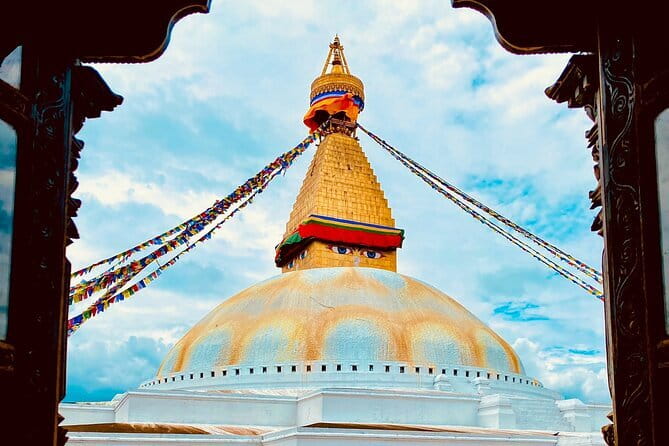
- Boudhanath kora atmosphere around one of the world’s largest spherical stupas
- Pashupatinath on the Bagmati River with a Hindu spiritual setting tied to life and afterlife ideas
What this Kathmandu Valley full-day tour is really for
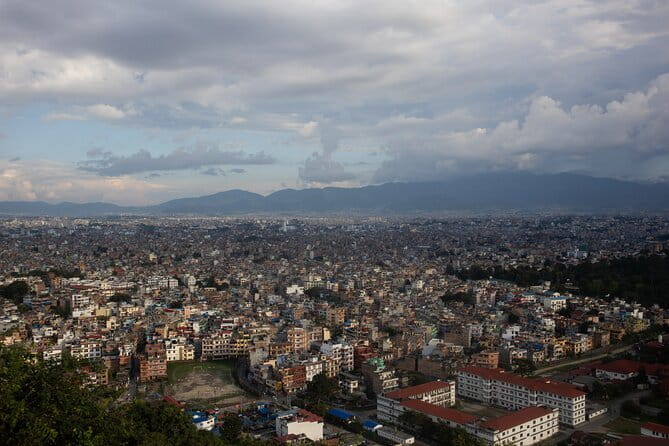
This tour is built for first-time Kathmandu visitors who want more than photos. You’re seeing a sequence of major religious and historic spaces, and the guide’s job is to help you connect the dots between them.
At $40 per person for roughly 7 hours, the value comes from the “glue”: a guide plus private transport. Without that, you’d be juggling timing, routes, and explanations on your own—especially in a busy city where traffic and detours can steal your day.
One more practical point: the tour includes pickup offered and runs with a 9:30 am start time. That matters. Late starts often mean you hit the hilltop and the stupas at the harshest part of the day; this itinerary gives you a better shot at a calmer rhythm.
You can also read our reviews of more tours and experiences in Kathmandu



How the 7-hour flow works between four major sites
Your day is structured around four stops, each with time to look, walk, and ask questions. You’ll spend about 2 hours at each of Swayambhu Mahachaitya (Swayambhunath), Patan Durbar Square, and Boudhanath Stupa, then about 1 hour at Pashupatinath Temple.
Because it’s private transportation, you’re not stuck waiting in a van with strangers for long transfers. You still need to expect walking time. Hilltop sites and stupa areas often mean stairs and uneven stone. Wear comfortable shoes and don’t plan tight museum-style timing.
Also, plan your food around the schedule. The tour info doesn’t mention a meal stop, so you’ll want to keep snacks and water in mind. Kathmandu can be warm, and your “breaks” here may be short and spontaneous.
Stop 1: Swayambhunath Monkey Temple hilltop stupa (about 2 hours)
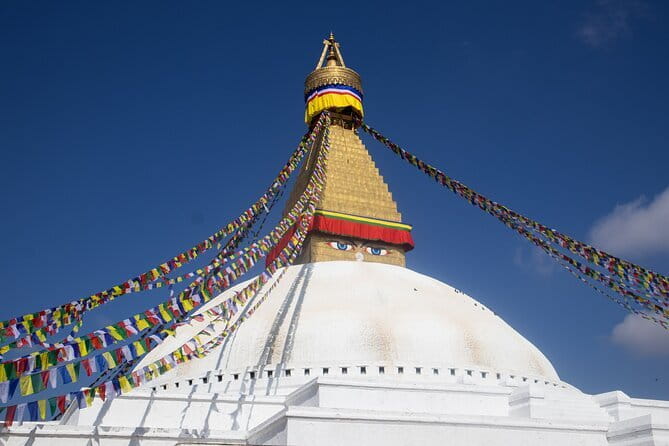
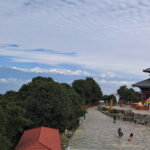
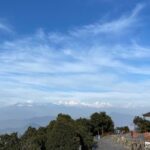
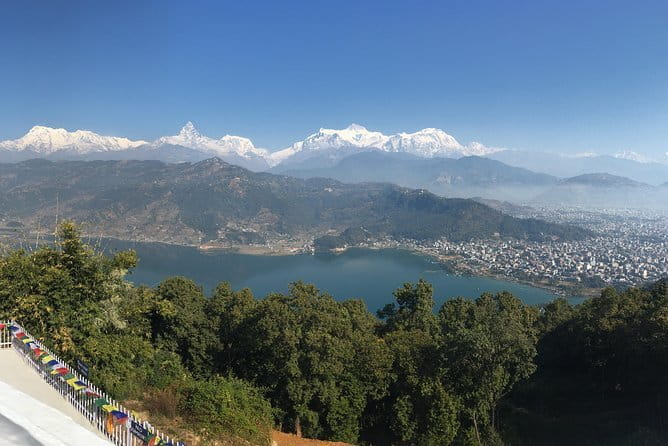
Swayambhunath is perched on a forested hill, crowned by a Buddhist stupa that’s described as more than 3000 years old. It’s one of the most sacred Buddhist sites in Nepal, and it’s easy to see why the location matters: the hill gives you big-sky views and a natural “arrival moment” as you climb.
What I like about starting here is the way it teaches you how Kathmandu’s religious geography works. Instead of dropping you into one temple and calling it a day, you begin at a place where the stupa dominates the skyline, making it feel like a north star for the rest of the route.
What to expect:
- A stupa-centered visit with time to look around the hilltop setting
- A slow chance to take in symbolism and the site’s spiritual importance
- A guided explanation delivered while the details are still in front of you
Possible drawback:
- Stairs and crowding. Hilltop sites can be busy and physically tiring. If you’re sensitive to crowds or leg strain, go steady and give yourself extra time for each viewpoint.
Admission note worth checking: the itinerary lists “admission ticket free” for this stop, but the overall tour also mentions a separate entrance-fee payment by the guest. Before you go, confirm whether the operator expects an on-site payment here or if the listed $20 covers a different set of fees.
Stop 2: Patan Durbar Square and Newar craft culture (about 2 hours)
Crossing into Patan’s historic core is one of the smartest shifts in this itinerary. Patan Durbar Square is a World Heritage Site, and it’s closely tied to the Newar kingdom—known for metal-casting and wood-carving guilds. That craft angle changes how you experience the square. You’re not just looking at buildings; you’re seeing how artistry and faith overlap.
Patan feels more like a place where the city makes objects, not just monuments. If you pause at the right moments, you start noticing patterns—door and window details, carving styles, and how the space is organized around worship.
What to expect:
- A compact plaza where centuries of local tradition show up in architecture
- Time (about 2 hours) to slow down and absorb the details
- A guide who can connect religious meaning with artisan tradition
Possible drawback:
- Durbar squares can feel dense. If you’re the type who hates sensory overload, pick a couple of “anchor” views and let the rest be background. You’ll get more out of two focused moments than trying to sprint through everything.
Again, double-check the entrance-fee situation. This stop is listed as free for admission in the schedule, but the operator’s general note about a guest-paid entrance fee still matters for planning.
Stop 3: Boudhanath Stupa, Tibetan spiritual heart and kora (about 2 hours)
Boudhanath is described as one of the world’s largest spherical stupas and the spiritual heart of Nepal’s Tibetan community. This is where the tour becomes more than sightseeing. The space invites you to move slowly, look up, and feel the rhythm of daily devotion.
You’ll have about 2 hours here, which is enough time to do more than a quick walk-around. The description specifically points to the kora (circumambulation) where you move around the stupa, with monks in crimson robes along the way. There’s also mention of juniper incense rising from rooftop monasteries, which adds atmosphere—plan for the smell in your clothes and for the fact that incense can be strong.
What to expect:
- A big-stupa experience with time to walk around (kora-style)
- A chance to see monastic life in the public spiritual setting
- A guided explanation that helps you understand why the stupa matters here
Possible drawback:
- Incense and crowd flow. If you’re sensitive to scent or prefer quiet corners, you may want to step aside occasionally during the busiest moments.
This stop is often the emotional highlight of Kathmandu Valley circuits because it’s both visually dramatic and actively lived in.
You can also read our reviews of more tours and experiences in Kathmandu

Stop 4: Pashupatinath Temple on the Bagmati River (about 1 hour)
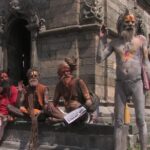
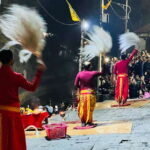
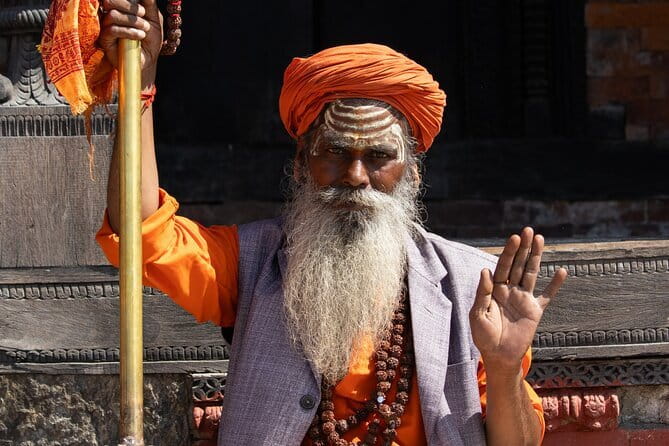
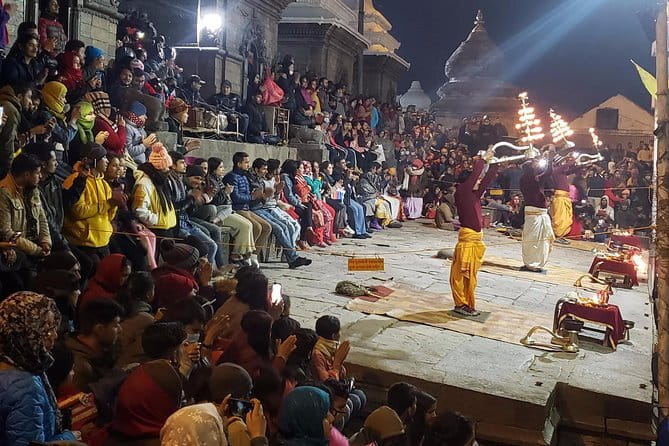
Pashupatinath is an ancient sacred Hindu site on the bank of the holy Bagmati River. The description highlights a unique blend of Nepali cultural practice that connects ideas of life and afterlife—soul and body treated as separate entities. Even if you don’t know Hindu philosophy, a good guide can translate what people believe into what you see.
You’ll have about 1 hour at Pashupatinath, which is a reasonable window. This isn’t a “stand at a museum sign” stop. It’s a place where meaning is visible through the setting and the daily spiritual focus.
What to expect:
- A riverfront temple experience with strong spiritual context
- Guided explanation tying the setting to Hindu beliefs about life and afterlife
- Enough time to observe quietly without rushing
Possible drawback:
- The riverfront setting can feel emotionally intense and busy. If you get overwhelmed easily, take short breaks and keep your pace respectful.
This stop pairs well after Boudhanath. You’ll see two different faith worlds occupying the same broader valley, each with its own rules of attention and reverence.
Price and value: $40 tour plus possible $20 entrance fees
The headline price is $40 per person, and that includes private transportation and an experienced cultural guide. For a route that hits four major sites in one day, I think this is the kind of deal that works when you care about context, not just checkmarks.
Here’s the part you should clarify before you book: the itinerary labels admission for each site as “ticket free,” yet the tour’s notes say entrance fees for monuments are payable by the guest at about $20 per person.
So what does that mean for your budget? Plan as if you might pay that extra amount unless the operator confirms otherwise for your dates. In other words, think of the “real cost” as roughly $40 + entrance fee estimate. That keeps you from reaching a site and feeling stuck.
If you’re traveling on a tight budget, this is the one line item that can swing the value. If the entrance fees end up being covered or not needed as stated for your specific stops, then you’re getting a very good deal for guided, private coverage.
Your guide and the English setup (and why it matters)
The tour includes a “highly experienced cultural guide” with in-person English and English audio. That combination is useful if you want explanations in real time but also like a backup method to catch details.
One review called out a guide named Manish for great knowledge about Nepal and its religions, plus an energetic, exciting delivery. That’s exactly what you want on this kind of itinerary: religion and culture can sound abstract until somebody makes it practical while you’re standing in front of the stupa or temple.
If you get the most out of tours when you can ask small questions, this setup is a strong match. You can use your guide time to clarify what each site emphasizes and how they relate across the valley.
Who should book this Kathmandu Valley day ticket tour
I’d point this tour at:
- First-timers who want a guided circuit of big spiritual landmarks
- Travelers who like learning how people practice religion, not just what monuments look like
- Anyone who appreciates Newar craft culture as part of the city’s identity
- People who prefer private transport over self-navigating in Kathmandu traffic
I’d think twice if:
- You have very limited mobility or hate stairs and walking, since hilltop and monument areas can require steady movement
- You strongly dislike incense environments, especially at Boudhanath where incense is explicitly part of the experience
Should you book it?
If you want a structured day that helps you understand Kathmandu Valley’s spiritual map, this is a solid choice. The guide support in English and the private transport make the $40 price feel fair, especially when you’re trying to connect four sites that would otherwise blur together.
Before you commit, do one small homework step: ask what the $20 entrance fee covers for your specific date and whether any of the stops truly require no payment. If the operator confirms that, you’ll have a simple budget and a day that’s mostly about learning and looking, not managing surprises.
FAQ
What time does the tour start?
It starts at 9:30 am.
How long is the full-day Kathmandu Valley tour?
It runs for about 7 hours.
Is pickup included?
Pickup is offered, and the tour includes private transportation.
How much does it cost?
The price is $40 per person.
Are entrance fees included?
No. Entrance fees for the monuments are paid by the guest, and the tour note mentions about $20 per person.
What is the cancellation policy and weather requirement?
You can cancel for a full refund up to 24 hours before the experience starts. The experience requires good weather; if it’s canceled due to poor weather, you’ll be offered another date or a full refund.