REVIEW · POKHARA
From Pokhara: Australian Camp & Dhampus 1, or 2-Day Trek
Book on GetYourGuide →Operated by Cordial Trek Pvt. Ltd. · Bookable on GetYourGuide
A sunrise over the Annapurnas feels too big for two days. This short trek trades Pokhara’s streets for Australian Camp’s 180° panoramas and the slow rhythm of Gurung village life. I like that the walk is “moderate” in effort, but the views feel like you worked for something special. One watch-out: the best light (sunrise) depends on weather, and in some cases clouds can steal it.
You get two ways to do it: a 1-day express option for a quick hit, or a 2-day overnight plan for the full sunset-and-sunrise experience. You also travel with a live English-speaking guide, plus private pickup and drop-off from your Pokhara hotel, so you spend more time outside and less time figuring stuff out.
At 2,060 m, Australian Camp isn’t a grind—still, it’s uphill and you’ll be on foot for hours. Rooms and meals are basic-in-the-mountains, not fancy, and one past guest noted a simple room setup with missing extras like toilet paper or towels, so pack small comforts if you care.
In This Review
- Key highlights worth centering your planning
- Australian Camp views: 180 degrees of Annapurna and Machhapuchhre
- Dhampus and Gurung villages: the real point of going
- 1-day express vs 2-day overnight: sunrise trade-offs you can actually feel
- The 1-day option: a quick escape with one big view window
- The 2-day option: you sleep in the mountains for better timing
- Walking to Australian Camp: the day-by-day rhythm that makes it doable
- Day 1 in the express plan (Pokhara → Kande → Australian Camp → Dhampus → Phedi)
- Day 1 in the overnight plan (Pokhara → Phedi → Dhampus → Australian Camp)
- Day 2 in the overnight plan (sunrise → slow descent → Kande → Pokhara)
- Lodges, meals, and the mountain basics you should plan for
- Guides matter here: Mr Raju, Prakash, and Pratip set the tone
- What’s included, what isn’t, and what to pack from Pokhara
- Included (the useful stuff)
- Not included (plan for these)
- What to bring (simple and specific)
- Who should do this trek (and who might not love it)
- Should you book the Dhampus and Australian Camp trek?
- FAQ
- How long is the trek?
- Where does the trek start for each option?
- Do you stay overnight on the 2-day trek?
- What meals are included?
- Is there an English-speaking guide?
- What trekking gear is provided or can be borrowed?
- What should I bring, and what’s not allowed?
Key highlights worth centering your planning
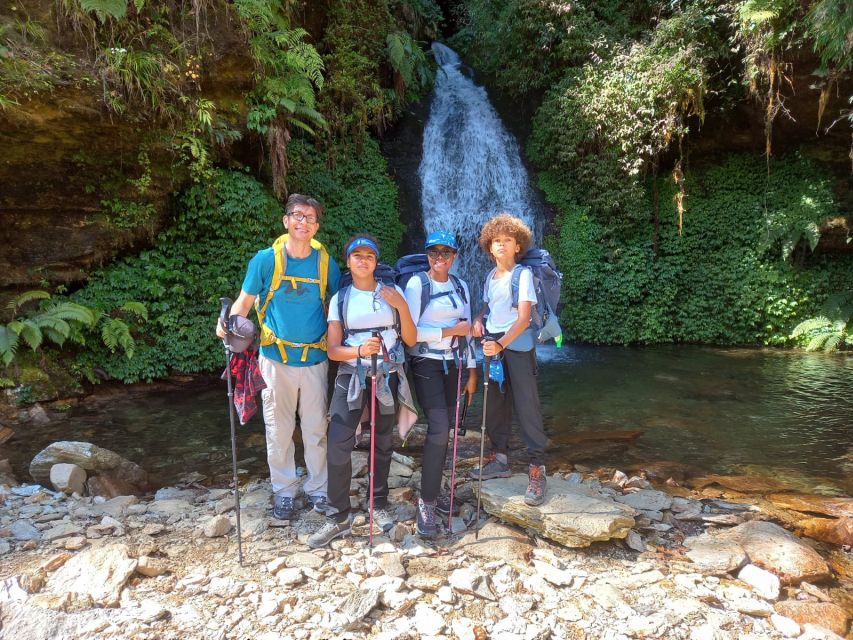
- 180° Himalayan viewpoint from Australian Camp, aimed straight at Annapurna South and Machhapuchhre
- Gurung villages (Dhampus and Pothana) with terraced fields and slate-roofed homes
- Sunset and sunrise timing that works if you choose the 2-day overnight option
- Effort-to-view ratio: a climb that’s manageable without weeks of trekking
- Guides who guide: English support, photo help, and a steady pace (with real names like Mr Raju, Prakash, and Pratip)
- Practical inclusions: guide, permits, full board meals (2-day), and loan gear like a down jacket
Australian Camp views: 180 degrees of Annapurna and Machhapuchhre
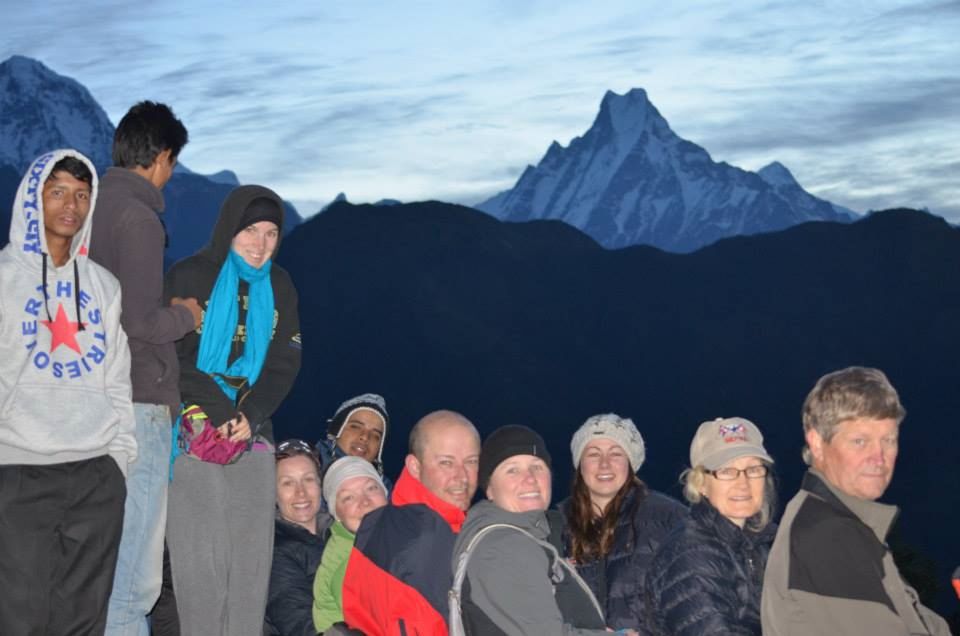
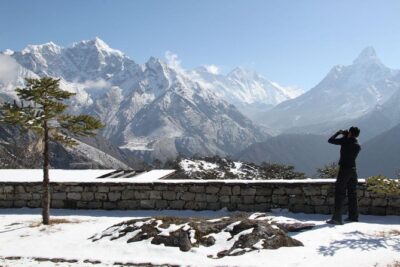
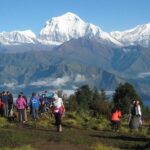
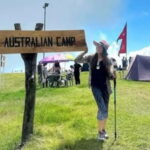
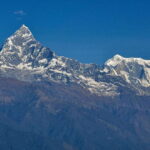
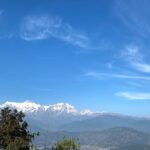
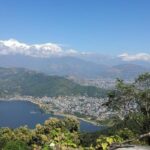
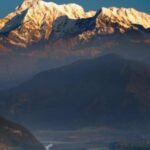
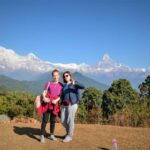
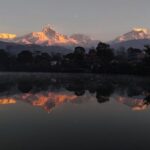
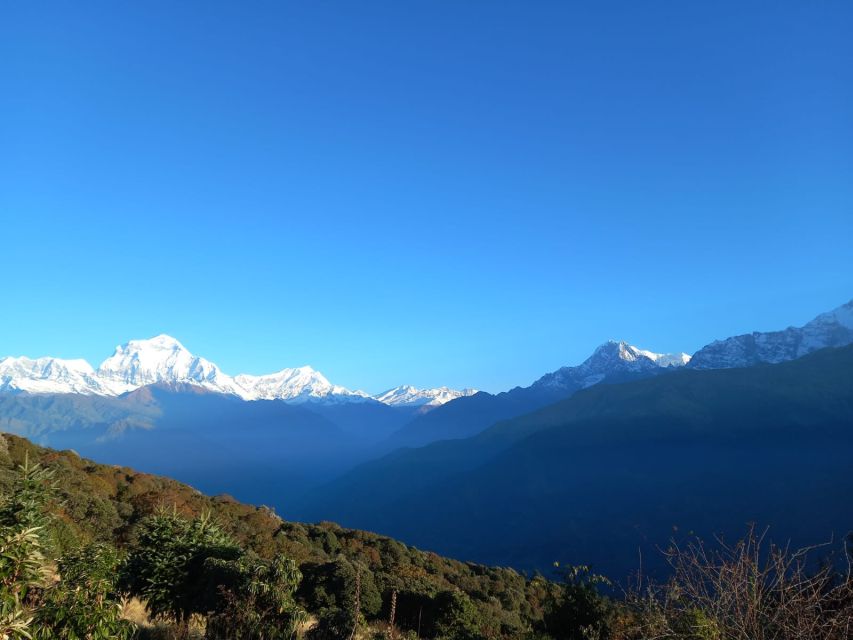
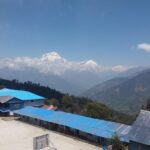
The real payoff here is the view at Australian Camp. You reach a wide grassy spot at about 2,060 m where the mountains open up in a big sweep—think Annapurna South, Hiunchuli, and the iconic Fishtail, or Machhapuchhre.
Why that matters: most trekking in the Annapurna region takes more time than you want if you’re visiting Pokhara with a tight schedule. This plan keeps the “big views” goal front and center. The climb is long enough to feel like a trek, but short enough that you can do it as a day trip—or comfortably as an overnight.
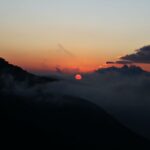
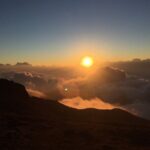
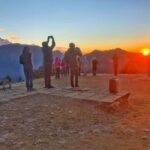
And the light is the second reason to care. If you pick the 2-day option, you’re set up to watch the sunset over the Annapurna range and then catch an early sunrise. One review shared that sunrise was not visible for them, but the mountains were still beautiful—so the message is simple: you’re going for the view, not only the perfect photo moment.
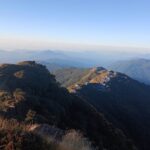
Also, you’re not just staring at peaks from a random spot. The route threads through forest trails and village paths, so the scenery changes as you walk. That makes the time feel earned, not wasted.
You can also read our reviews of more hiking tours in Pokhara
Dhampus and Gurung villages: the real point of going
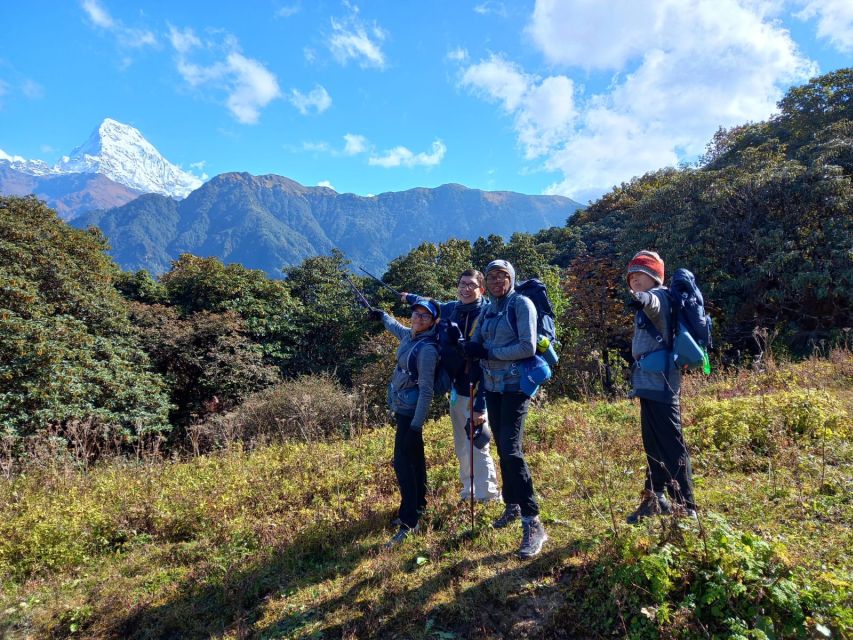
Yes, the Annapurnas are the headline. But what makes this trek feel authentic is how you walk through living community space.
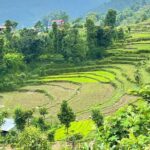
On the way up and back, you pass through Dhampus Village, described as a traditional Gurung settlement with terraced fields and slate-roofed houses. That’s the kind of place where the village rhythms show up in small details: farming, daily routines, and houses that look lived-in—not staged for tourists.
There’s also Pothana Village for a warm tea stop. That matters more than it sounds. Mid-trek tea is where you slow down, warm up, and reset your energy before the next stretch.
If you care about culture, this route doesn’t isolate you. It gives you time to move at a human pace through Gurung villages, and the stories you hear from your guide can connect local life to big regional history—like references to Gurkha soldiers and how British Gurkhas influenced family stories. Even when you’re just passing through, you’re not doing a cookie-cutter “viewing platform only” day.
One more small but important point: because this is short, you’re more likely to actually pay attention to what’s around you. Longer treks can blur into “move, eat, sleep.” Here, you get more moments to notice.
1-day express vs 2-day overnight: sunrise trade-offs you can actually feel
Choose based on one question: do you want the mountains at dawn badly enough to accept early mornings and an overnight stay?
The 1-day option: a quick escape with one big view window
In the express plan, you start with a drive from Pokhara to Kande, then hike up for around two hours through lush forest to Australian Camp. You’ll have time up top for lunch with the Himalayan panorama. After that, you descend via Dhampus Village and then stop in Pothana for tea before the drive back to Pokhara.
This option is best when:
- you want a mountain day without committing to a lodge night
- you’re traveling with limited time in Pokhara
- you still want a clear highlight (Australian Camp views + village walking)
One practical drawback: if clouds or mist show up early, you still get daytime views, but you won’t have the same shot at sunrise.
The 2-day option: you sleep in the mountains for better timing
In the overnight plan, you’re picked up from your hotel in Pokhara and driven to Phedi. You ascend through Dhampus Village, then reach Australian Camp by day’s end. You’re set up for the sunset and you sleep in a mountain lodge under the stars (the accommodation includes a private bathroom).
Day 2 is about patience and light. You wake early for sunrise, then descend slowly back toward Kande and drive back to Pokhara.
This option is best when:
- you want both sunset and sunrise chances
- you like the idea of moving more slowly between viewpoints
- you’re okay with mountain basics overnight
A reality check: sunrise visibility can’t be guaranteed. One guest couldn’t see it, but still had a good time with the scenery.
You can also read our reviews of more tours and experiences in Pokhara
Walking to Australian Camp: the day-by-day rhythm that makes it doable
Here’s what the walk feels like, broken into real movement blocks.
Day 1 in the express plan (Pokhara → Kande → Australian Camp → Dhampus → Phedi)
You begin with a drive to Kande and start hiking around 9:00. The main climb takes about two hours, and that’s the core “moderate effort” portion. You’ll be moving through forested sections, which can make the climb feel cooler and less exposed than open ridges.
Australian Camp at around 2,060 m is where you stop doing “work” and start doing “looking.” You’ll have lunch with those wide, iconic views. After that, you descend toward Dhampus Village. This downhill isn’t just a way to get back—it’s where you see village life more clearly as you drop in altitude and the scenery becomes more human-scale.
Then comes tea in Pothana Village. It’s a simple moment, but it’s useful: you refuel before the final descent to Phedi and your drive back to Pokhara.
Day 1 in the overnight plan (Pokhara → Phedi → Dhampus → Australian Camp)
For the 2-day plan, your day starts with pickup and a drive to Phedi. From there, you ascend via Dhampus Village. This route gives you time to absorb village scenes and forest trails without rushing.
You reach Australian Camp in the evening, then watch the sunset over the Annapurna range. You spend the night in a mountain lodge. This is the emotional difference between day trips and overnighters: the mountains feel like they belong to the day and night cycle, not just daylight hours.
Day 2 in the overnight plan (sunrise → slow descent → Kande → Pokhara)
You wake early to watch sunrise. Then you descend toward Kande at a slower pace, with more chances to enjoy changing angles of the peaks as the light shifts.
By late morning, you’ll be back at Kande and on your way to Pokhara.
If you’re a beginner, the structure helps. It’s not “hike all day, every day.” It’s hiking segments with clear stopping points, and that lowers decision stress on unfamiliar trails.
Lodges, meals, and the mountain basics you should plan for
This trek is built around comfortable simplicity.
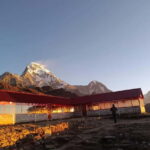
For the 2-day option, accommodation is a one-night guest house stay with a private bathroom. That’s a real plus compared with many mountain setups where you’re sharing facilities.
Meals come as full board for the 2-day plan: breakfast, lunch, and dinner. For the 1-day express option, you still get one lunch. In one review, a guest said the food at the accommodation was delicious and exceeded expectations given how basic mountain areas can be.
Now, the honest part: mountain lodging can be basic in small ways. One guest noted the room was very simple, and they didn’t find toilet paper or towels. I can’t generalize that across every stay, but it’s enough that you should pack tiny backup items if you want peace of mind—especially if you’re the kind of person who travels with a small pack of tissues.
Also keep an eye on what’s not included. Hot, cold, and alcoholic drinks aren’t part of the package, and extra snacks cost extra. You’ll likely drink tea along the way (like the warm tea stop), but it’s smart to assume you may still want extra water or small snacks.
On the practical side, you’ll be given water purification tablets as required. That’s useful for staying hydrated without turning your pack into a bottled-water storage unit.
Guides matter here: Mr Raju, Prakash, and Pratip set the tone
Short treks can go two ways: either you hike on autopilot, or you get help making it meaningful. This experience leans toward the second path because you have a guide and they can shape the whole day.
Some real examples from past bookings:
- A guest praised Mr Raju for excellent service and knowledge, and said he kept them motivated when they started the trek with low energy.
- Another guest highlighted Prakash as very friendly and attentive, including taking photos and answering questions while keeping a careful eye on them.
- For the overnight trek, Pratip was described as awesome and friendly, with lots of knowledge and a focus on making the experience the best it could be.
- One family trip also credited the guide with teaching kids and helping everyone have fun together.
What you should take from that: if you ask questions—about Gurung life, the Annapurna peaks, or what to look for as you climb—you’ll get more out of the day than just photos from the top.
Even better: the package is set up with private group time, so you’re not stuck matching your pace to strangers.
What’s included, what isn’t, and what to pack from Pokhara
You can travel light because quite a bit is already handled.
Included (the useful stuff)
- Hotel pickup and drop-off in Pokhara
- Private vehicle transfers
- Trekking guide (English)
- All necessary paperwork and travel permits
- Meals: 2-day plan includes full board; 1-day plan includes one lunch
- Equipment borrowing, including a down jacket, trekking poles, and a sleeping bag
- Water purification tablets (as required)
- For the porter add-on scenario, a duffel bag is included
- Express security check (skip the line through express security)
Not included (plan for these)
- Personal expenses
- Hot, cold, and alcoholic drinks
- Additional snacks
- Porter (only if you add it)
What to bring (simple and specific)
- Camera
- Hiking shoes
- Passport
One more packing note: you should plan for tight luggage rules. Oversize luggage isn’t allowed, and alcohol and drugs aren’t allowed. If you’re bringing extra layers, do it in a standard hiking-appropriate way, not as bulky luggage.
If you’re deciding between carrying everything yourself or using a porter, this trek gives you a choice. The trek is short enough that many people go without, but if you hate dealing with heavy bags at 2,060 m, adding porter support can make the experience feel smoother.
Who should do this trek (and who might not love it)
This is a good match if:
- you want an Annapurna-range taste without committing to weeks
- you like photography, especially sunset and sunrise angles
- you want culture through real village walking (Dhampus and Pothana)
- you prefer a moderate trek with clear payoff
- you travel as a family or group and want a private setup
A key detail from a family booking: kids ages 12 and 8 had fun, and the guide taught them things along the way. That doesn’t mean it’s a stroll, but it suggests the route can work when someone sets a pace and keeps the experience educational.
Who might struggle:
- if you need flat, low-effort walking only
- if sunrise is a non-negotiable and you get upset when weather steals it
- if you’re very sensitive to basic mountain lodging conditions (remember the simple-room note)
Should you book the Dhampus and Australian Camp trek?
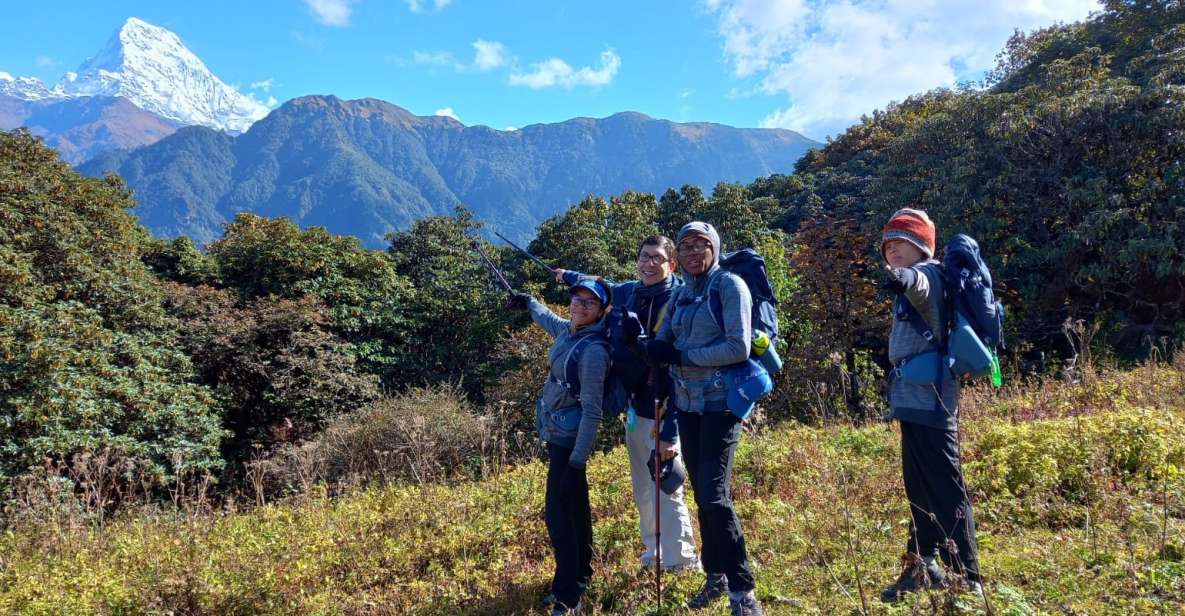
Book it if you want the Annapurna drama—Fishtail/Machhapuchhre views, wide panoramas, Gurung villages—and you only have a short window from Pokhara. The included guide, permits, and loan gear make it a smoother first trekking step than doing everything yourself.
Skip it (or switch plans) if you’re chasing only the easiest path up, or if you can’t handle the idea that sunrise might be blocked by clouds. In that case, you might still enjoy daytime views, but your expectations need to be realistic.
If you do book, do this to get the best day:
- bring a good camera and hiking shoes you trust
- plan for mountain lodging to be basic
- ask your guide questions as you walk; the route gets better when you understand what you’re seeing
If you want flexibility, the experience offers a reserve-now, pay-later style option and free cancellation up to 24 hours in advance, which helps when weather is uncertain.
FAQ
How long is the trek?
You can choose a 1-day express option (around 7 hours) or a 2-day overnight option.
Where does the trek start for each option?
For the 1-day option, the trek starts at Kande. For the 2-day option, the trek starts at Phedi.
Do you stay overnight on the 2-day trek?
Yes. The 2-day trek includes one night in a mountain guest house with a private bathroom.
What meals are included?
For the 2-day option you get full board meals: breakfast, lunch, and dinner. For the 1-day option you get one lunch (plus a warm tea stop along the way).
Is there an English-speaking guide?
Yes. You’ll have a live trekking guide in English.
What trekking gear is provided or can be borrowed?
The package includes borrowing equipment such as a down jacket, trekking poles, and a sleeping bag.
What should I bring, and what’s not allowed?
Bring a camera, hiking shoes, and a passport. Oversize luggage and alcohol/drugs are not allowed.