REVIEW · NEPAL
From Chitwan : Jeep Safari,Canoeing,Forest walk Day Tour
Book on GetYourGuide →Operated by Adventure in Nepal · Bookable on GetYourGuide
Rhinos and crocodiles share one half-day here. This Chitwan combo—jeep safari, canoeing on the Rapti River, and a short forest walk—keeps you moving through different habitats, so you’re not just hoping for one good sighting.
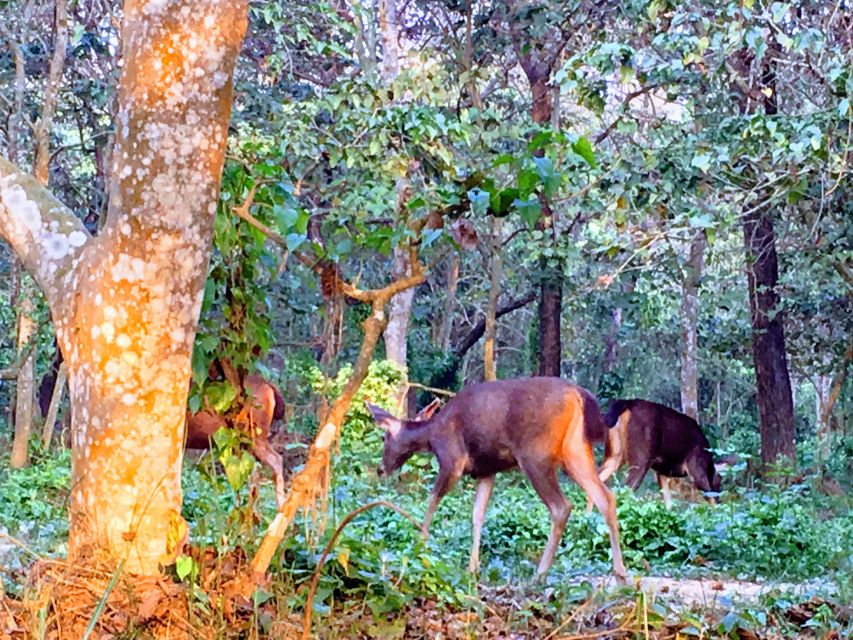
I especially like how the English-speaking guide turns each stop into something you can actually understand, from bird behavior to which plants matter. And when you’re lucky, you might see a mix like rhinos and deer in the jeep, then crocodiles and water birds along the river.
One heads-up: pickup and timing can be a little messy depending on where you’re staying, and you’ll want to confirm the meeting point and start time. It’s also not suitable for pregnant women, and you should bring your ID/passport.
In This Review
- Quick hits for your Chitwan half-day
- Why this Chitwan mix works in just 6 hours
- The jeep safari: 4×4 time, animal odds, and photo prep
- What you can realistically hope to see
- What makes the guide’s job matter
- Practical tips for the jeep
- Rapti River canoeing: the calm part where wildlife shows up differently
- What you’re looking for on the water
- How to enjoy it without turning it into a stress test
- Forest walk: medicinal plants, butterflies, and the “in-between” wildlife
- Why this stop is valuable even if you want only rhinos and tigers
- Timing, pickup, and what to verify before you go
- Price and value: what $70 buys (and what it doesn’t)
- Who should book this Chitwan tour?
- Should you book this Chitwan jeep + canoe + forest walk?
- FAQ
- How long is the tour?
- What does the tour include?
- Where is pickup available?
- What language is the guide?
- What should I bring?
- Are pets allowed?
- When is the best season to go?
Quick hits for your Chitwan half-day
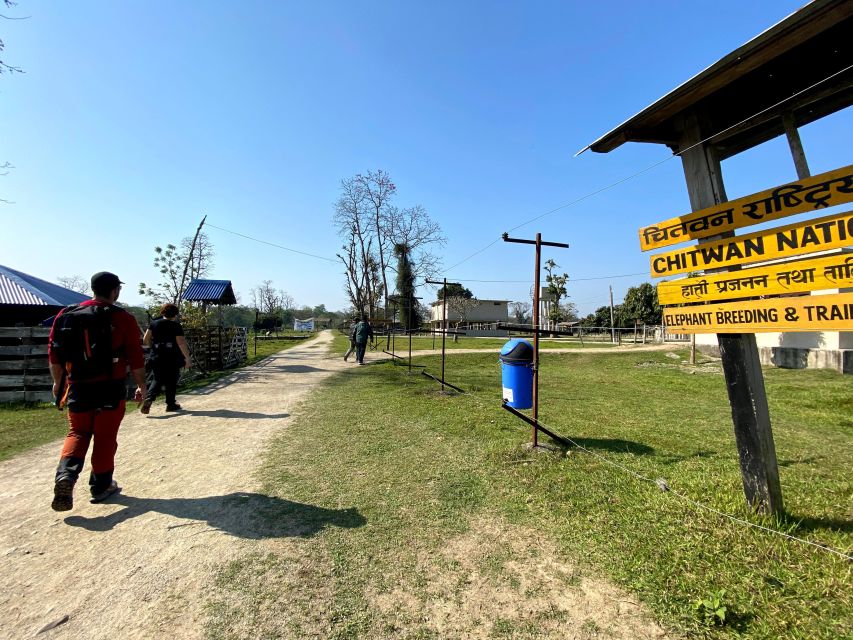
- 4×4 jeep safari (3 hours) through forest and grassland areas, led by an experienced guide
- Rapti River canoeing (45 minutes) with chances to spot crocodiles basking and lots of water birds
- Short forest walk focused on medicinal plants, butterflies, and smaller animals
- Sharing-group tour value at $70, with pickup and drop-off in Sauraha area
- Guide quality can be a highlight; one guide named Sagar stood out for clear explanations
- Best season is October to June, so plan around more comfortable wildlife-spotting conditions
Why this Chitwan mix works in just 6 hours
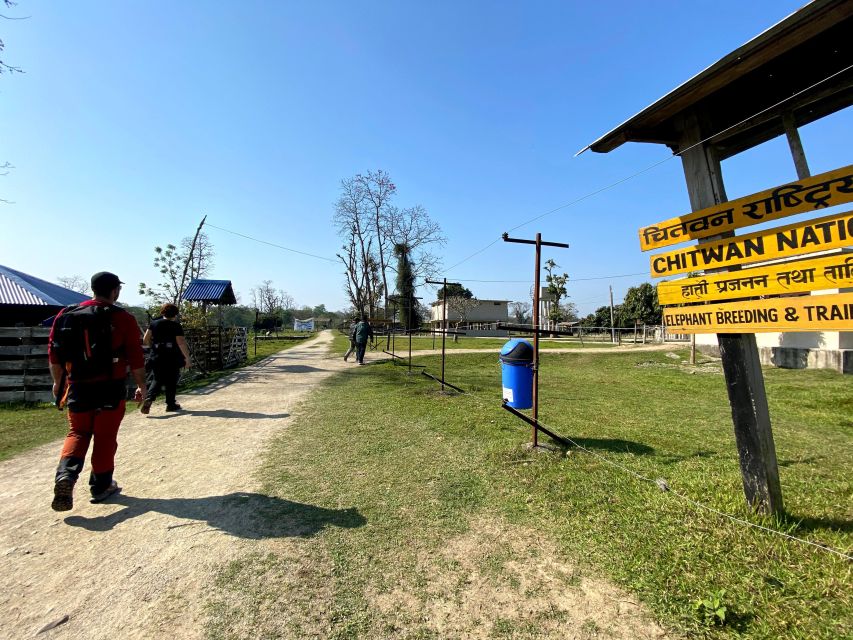
I like tours that respect how wildlife behaves. In Chitwan, animals don’t all show up in one place or one moment. This tour gives you three chances across three settings: jeep tracks in the park, quiet time on the Rapti River, and a slower walk where you notice plants and smaller creatures.
The payoff is not just big animals. You also get birds—king fishers, ibis, egrets, cormorants, ducks, cormorants again in a different light, plus peafowl—and reptiles like crocodiles. One review even listed an owl in its nest, which is a reminder that the “small stuff” is part of the experience here.
You’re also practical in how the day is paced. Jeep time is long enough to cover ground (3 hours), canoe time is short enough to stay comfortable and not drag (45 minutes), and the forest walk is brief but guided, so you don’t end up wandering without context.
You can also read our reviews of more tours and experiences in Nepal.
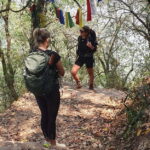
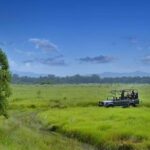
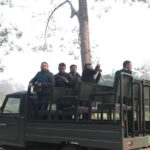
The jeep safari: 4×4 time, animal odds, and photo prep
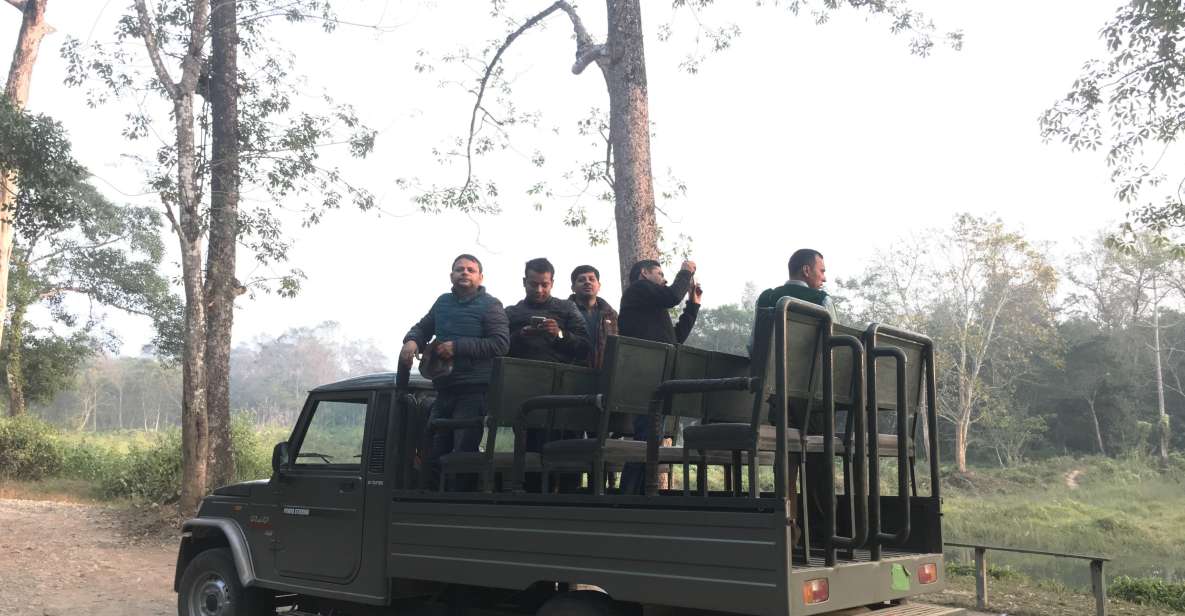
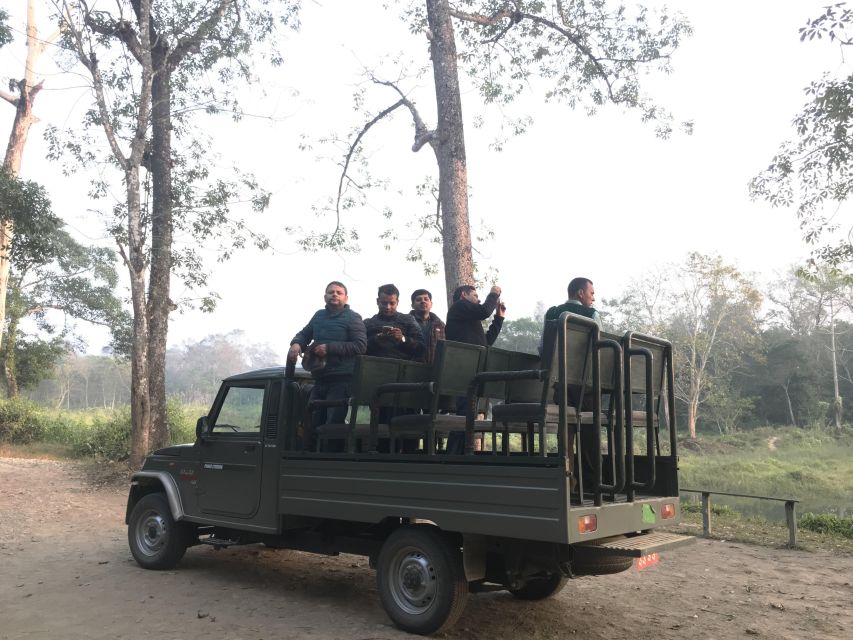
The jeep safari is the main event—half a day of bumping along in a rugged vehicle designed for off-road travel. You’re in a sharing group, so you’ll be riding with other people, and that matters for pace: the driver and guide will keep things efficient rather than slow down for every camera moment.
What I’d expect from the driving route is variety. The tour description points to forests, hills, and even areas that feel more like open terrain depending on where you’re starting. That variety is good for wildlife spotting because animals move differently between cover and open feeding grounds.
What you can realistically hope to see
You should think “chances,” not guarantees. The tour focuses on common sightings like:
- One-horned rhino
- Deer
- Monkeys and a range of birds
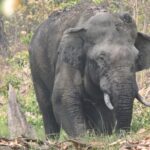
In real-world sightings from reviews, I saw a wider list that gives you a sense of what’s possible—alligators, rhinos, elephants, deer, and macaques, plus birds like fish eagle and king fishers. Another person reported rhinos, crocodiles, deer, and wild peacocks. Again, none of that is a promise, but it helps you calibrate expectations: this isn’t a sightseeing bus tour; it’s a real wildlife area.
What makes the guide’s job matter
A strong guide helps you see faster. One named Sagar was praised for being calm, friendly, and genuinely able to answer questions with clear explanations. Even when you don’t catch the “headline” animal, you’ll still come away with better pattern recognition: which birds stay near water, where you’re likely to spot reptiles, and how the vegetation connects to animal behavior.
Practical tips for the jeep
Bring what you’d bring for sun and dust:
- Sunscreen, hat, and sunglasses
- A water bottle
- Comfortable clothes you don’t mind getting a bit dusty
If you’re sensitive to early starts or bumpy rides, keep that in mind when you choose your energy level for the day.
You can also read our reviews of more tours and experiences in Nepal
Rapti River canoeing: the calm part where wildlife shows up differently
After the jeep, you switch gears to the Rapti River. Canoeing here is more than a scenic break. It changes what you notice because you’re lower, slower, and closer to the waterline than you are from land.
The canoe portion is listed as 45 minutes, and that short duration is actually helpful. You get time to watch the shoreline and scan for movement without feeling like you’re on the river all day.
What you’re looking for on the water
The tour highlights crocodiles as a key possibility, especially those that bask near the edges. You’ll also be watching for water birds—so your eyes aren’t locked on one “main target.” That matters because if crocodiles are quiet, birds might still be active, and the experience stays alive.
Reviews back up this mix. People reported crocodiles and a lot of birdlife during the overall tour experience, with multiple mentions of water-adjacent species like king fishers and egrets.
How to enjoy it without turning it into a stress test
Canoeing works best when you watch steadily. Don’t rush your scanning. I find it helps to pick three things:
- the shoreline vegetation
- open water near likely feeding spots
- anything that moves against darker banks
Also, you’ll get safety instructions and equipment from the guide, so you’re not improvising on a river you don’t know.
Forest walk: medicinal plants, butterflies, and the “in-between” wildlife
The forest walk is the third piece of the puzzle. This part is shorter than the jeep and canoe, but it adds depth because you slow down and look at details you miss from tracks and boats.
What I like most is the plant focus. The guide is expected to explain medicinal plants, and that transforms a walk in the woods into real learning. Instead of treating the forest as scenery, you start seeing it as a living pharmacy and a habitat network for insects, birds, and small reptiles.
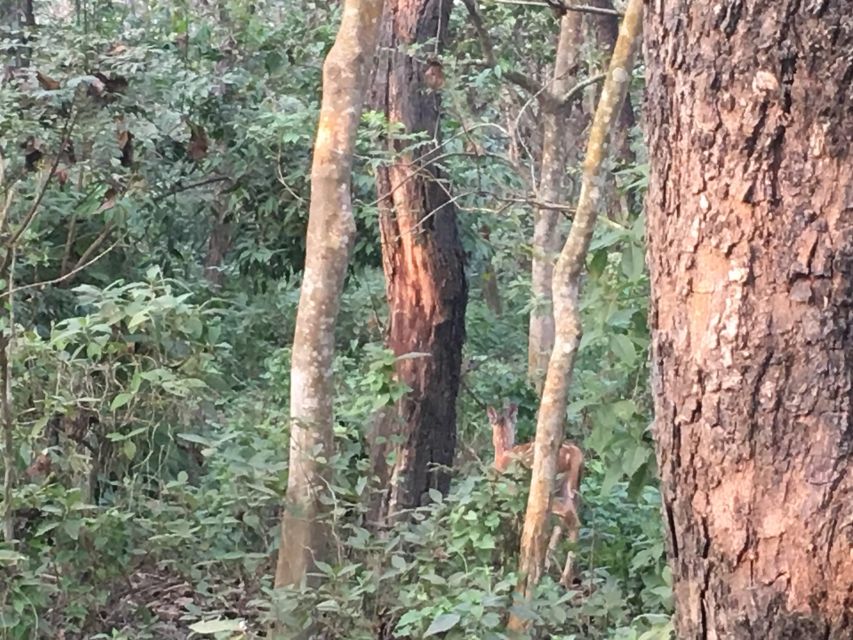
You might also spot butterflies and smaller animals. Even if you don’t catch a “big” creature, the forest walk gives you a different kind of wildlife satisfaction: movement in the understory, bird calls you can’t place until someone points them out, and flashes of color.
Why this stop is valuable even if you want only rhinos and tigers
People come to Chitwan for the famous species, but the best tours teach you how the system works. This forest walk helps you understand that the park isn’t just made of animals—it’s made of food, cover, and seasonal patterns. That’s where a lot of the bird and insect life comes from.
And yes, you can keep an eye out for larger wildlife. The overall tour notes possible tiger sightings, and one review mentioned they were just behind another jeep that was lucky enough to see a tiger. That kind of “tiger luck” is rare, so don’t build your entire day on it—but do keep your eyes open.
Timing, pickup, and what to verify before you go
This is the one area where I’d be a bit careful. Most reviews praise smooth organization and on-time pickup, but one booking complaint described a pickup and schedule mismatch and another mentioned not being told that pickup might not work at their exact hotel.
So here’s the practical approach:
- Confirm your pickup location in writing the day before.
- Ask what time pickup happens and how they’ll recognize you.
- If you’re staying outside the typical Sauraha area service, ask directly whether they can pick you up there.
Your tour info says pickup is for hotels in the Sauraha area using your name card. If your hotel is slightly outside that zone, don’t assume it’s covered. Also, the guides speak English, Nepali, and Hindi, which helps if you need to clarify details quickly.
One more “heads up” category: early timing can matter. There was a complaint about jeep timing not matching expectations and an unexpected request for extra payment to switch to a morning safari. I can’t tell you that will happen to you, but it’s a good reason to verify the exact plan for your day and what’s included before you arrive.
Price and value: what $70 buys (and what it doesn’t)
At $70 per person for about 6 hours, this sits in the “good value if you care about wildlife variety” category. You’re getting:
- Hotel pickup and drop-off
- A 3-hour shared jeep safari
- 45 minutes canoeing on the Rapti River
- A short forest walk
- An experienced guide (with English speaking listed)
What’s not included is food and drinks, though you can purchase them. That means you should plan to either buy lunch/snacks or bring some water and basic snacks if you can find a place to do so before the tour ends. (Just follow any rules the guide gives you once you’re on-site.)
Also think about what’s included that would cost more if you tried to DIY it: transport into the park area, a guide who can read the habitat, and the canoe setup.
So for me, the value depends on your travel style:
- If you want animals plus learning plus multiple habitats, this makes sense.
- If you only want one thing (like just jeep safari), you might find you’re paying for parts you won’t use.
Who should book this Chitwan tour?
I think this tour fits best if you:
- want a half-day format that still covers more than one wildlife setting
- like birds as much as mammals
- enjoy guided nature explanations, including medicinal plants
- are comfortable with a shared jeep and basic outdoor conditions
You should skip it if:
- you’re pregnant (explicitly listed as not suitable)
- you need very gentle pacing or a low-movement day
And if you love conservation-minded travel, I’d see this as a good kind of “watch, don’t chase” experience. The whole structure—jeep tracks, river scanning, and a guided walk—keeps you in observation mode rather than trying to rush wildlife behavior.
Should you book this Chitwan jeep + canoe + forest walk?
Yes, if you want the most wildlife variety you can fit into one day in Chitwan. The combination of jeep safari + Rapti River canoe + forest walk is exactly the kind of planning that improves your odds—especially for birds, reptiles near water, and the broader park ecosystem.
Before you book, do two simple things: confirm your pickup point and start time (especially if you’re not sure your exact hotel is in the pickup zone), and pack for sun and dust. If you do that, you’ll set yourself up for a day that’s active, guided, and genuinely Chitwan.
FAQ
How long is the tour?
The tour duration is 6 hours total. It includes 3 hours of jeep safari, 45 minutes of canoeing on the Rapti River, and a short forest walk.
What does the tour include?
It includes hotel pickup and drop-off, a sharing half-day jeep safari (3 hours), an experienced English-speaking tour guide, 45 minutes canoeing on the Rapti River, and a short forest walk.
Where is pickup available?
Pickup is included for hotels in the Sauraha area. You’ll be picked up using your name card.
What language is the guide?
The guide provides a live tour in English, Nepali, and Hindi.
What should I bring?
Bring your passport or ID card, plus comfortable clothing and essentials like sunscreen, a hat, sunglasses, and a water bottle.
Are pets allowed?
Pets are not allowed.
When is the best season to go?
The best season is October to June.