REVIEW · NEPAL
Kathmandu: Guided -Day Tour of World Heritage Sites
Book on GetYourGuide →Operated by Nepalaya Treks & Expedition · Bookable on GetYourGuide
Kathmandu’s UNESCO sites feel closer than you expect. In one day, you’ll cover major landmarks across the Kathmandu Valley, where temples and stupas act like an open-air museum. I like the hotel pickup and drop-off, because it removes the daily stress of finding the right roads and meeting points. I also like that you get a live English-speaking guide, so the sites make sense instead of turning into a checklist.
My favorite part is how the day mixes Hindu temple life, massive Buddhist monuments, and hilltop viewpoints in a single circuit. You’ll also get practical pacing and help reading what’s going on, with guides such as Ramesh and Sujan highlighted in past experiences. One thing to consider: this is a full-day run with walking, and food and entry fees aren’t included, so you’ll want comfy shoes and a simple budget plan.
In This Review
- Key things that make this Kathmandu Valley day tour work
- Why a guide matters in Kathmandu Valley’s UNESCO maze
- Pashupatinath Temple on the Bagmati: the day’s most intense stop
- Boudhanath Stupa: when “largest” actually means something
- Swayambhunath Monkey Temple: hill views plus good orientation
- Patan Durbar Square in Lalitpur: stone, wood, and the city of carvings
- How the schedule feels: private transfers, a full day, and smart pacing
- Price and value: what $37 includes, and what you’ll budget for
- Who should book this UNESCO day tour, and who might want something else
- Should you book this Kathmandu Valley UNESCO day tour?
- FAQ
- How long is the Kathmandu Valley World Heritage guided day tour?
- Which UNESCO sites are included?
- What’s included in the price?
- What’s not included?
- What languages does the live guide speak?
- Where does pickup and drop-off happen?
- Is cancellation free, and can I pay later?
Key things that make this Kathmandu Valley day tour work
- Private car with hotel transfers so you start and end without detours
- Four major UNESCO stops spread across the valley, with guided context at each one
- Pashupatinath Temple on the Bagmati River with time for photo stops and guided visiting
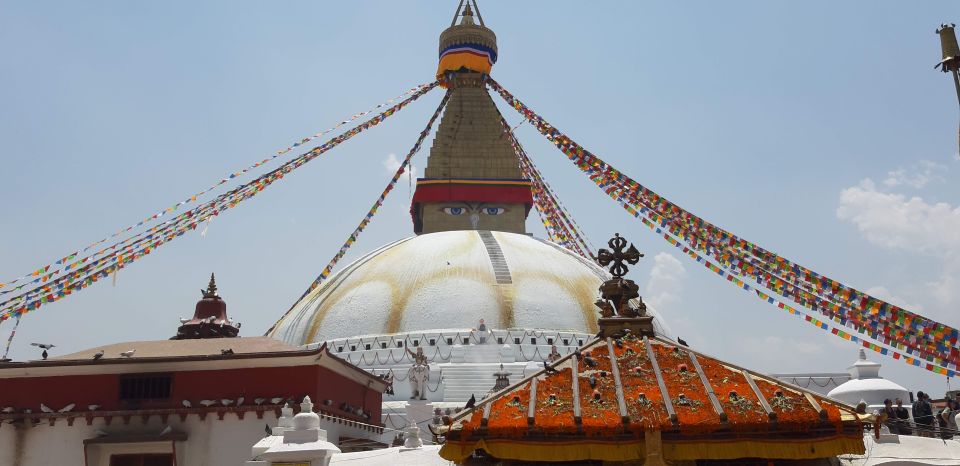
- Boudhanath Stupa’s scale (about 100 m wide and 40 m high) for big, skyline-dominating views
- Swayambhunath hilltop panoramas plus the Monkey Temple atmosphere
- One day means more walking than you think, especially around the temple areas
Why a guide matters in Kathmandu Valley’s UNESCO maze
Kathmandu Valley is compact, but the UNESCO sites are not grouped like a theme park. Instead, they’re spread across different parts of the valley, so it’s easy to lose time moving between neighborhoods, figuring out entrances, and interpreting what you’re looking at.
That’s where this tour earns its keep. You’re not just going from point A to point B. You’re getting an English-speaking guide who helps you understand what each site represents, which makes the architecture and religious customs feel connected rather than random. I also appreciate the structure: pickup at your hotel area, a private car, and a day built around walking and photo stops instead of long, unplanned waits.
One practical benefit: the past experiences tied to this company mention punctual pickup and professional driving. On a one-day schedule, that kind of reliability matters more than fancy extras.
You can also read our reviews of more guided tours in Nepal
Pashupatinath Temple on the Bagmati: the day’s most intense stop
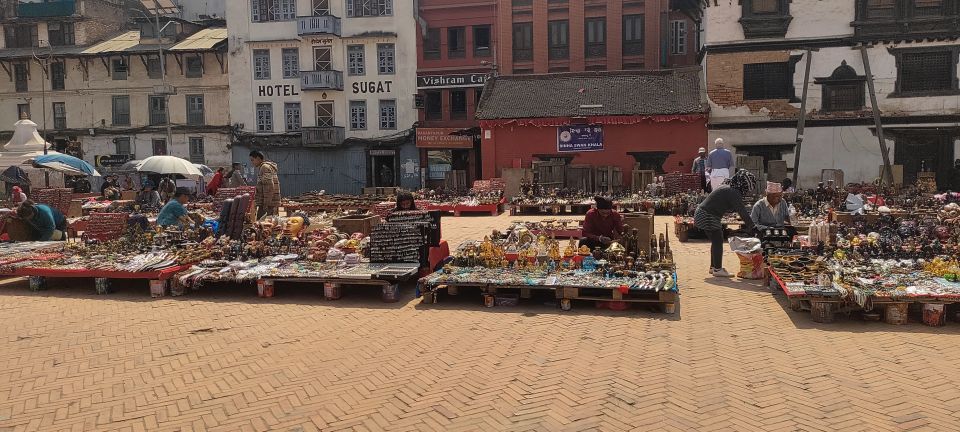
Pashupatinath is one of the best-known Hindu temples in the world, and it sits right on the banks of the Bagmati River. The main temple is described as two-storied and built in a pagoda style, and it was placed on the UNESCO World Heritage list in 1979.
Plan on time here that feels different from the other monuments. You’ll have a photo stop, guided visit time, and walking time, plus scenic driving as part of the larger route. The best approach is to slow down and watch the flow: how people move through the space, how the river edge functions during ceremonies, and how the temple’s setting shapes the atmosphere.
If timing lines up, you might get a glimpse of cremation activity along the river. One experience specifically called seeing a cremation ceremony at Pashupati extraordinary, so treat it as a real possibility rather than a rumor. The key is respectful behavior and following any local guidance on where you can stand.
What to watch for: this is an emotionally charged place, not just a photo opportunity. Wear comfortable shoes, keep your water handy, and don’t rush your time inside the temple zone.
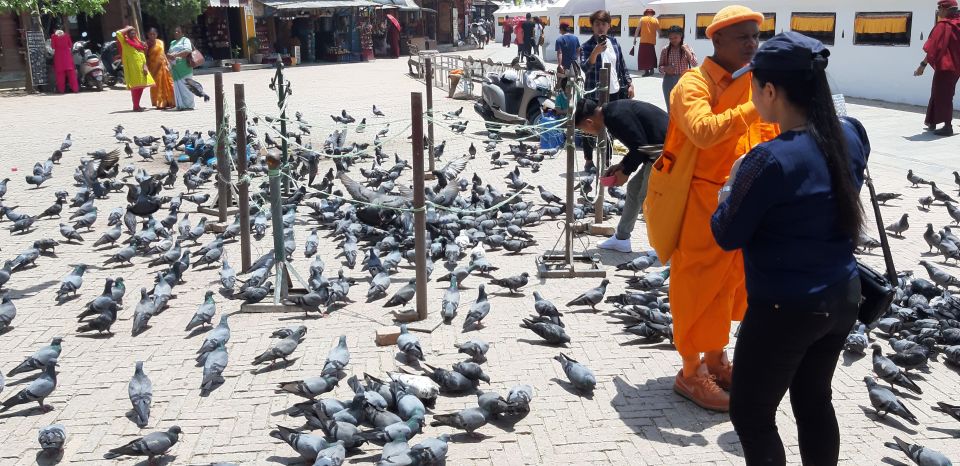
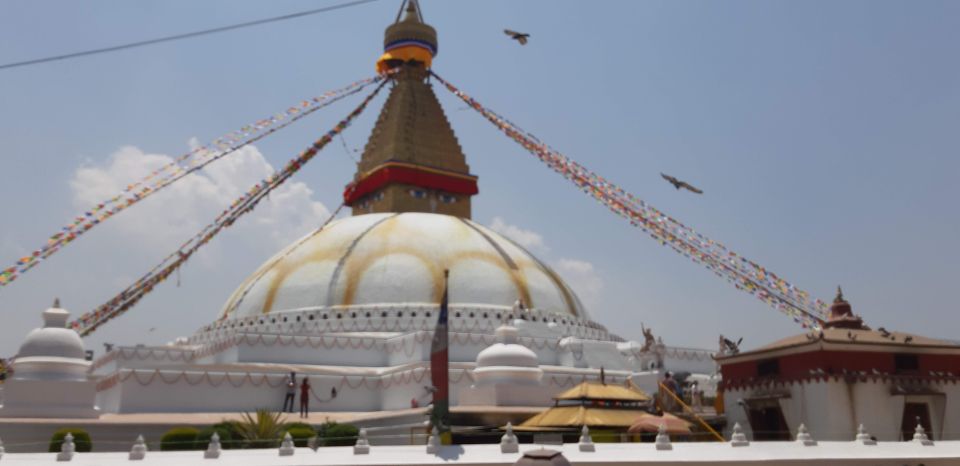
Boudhanath Stupa: when “largest” actually means something
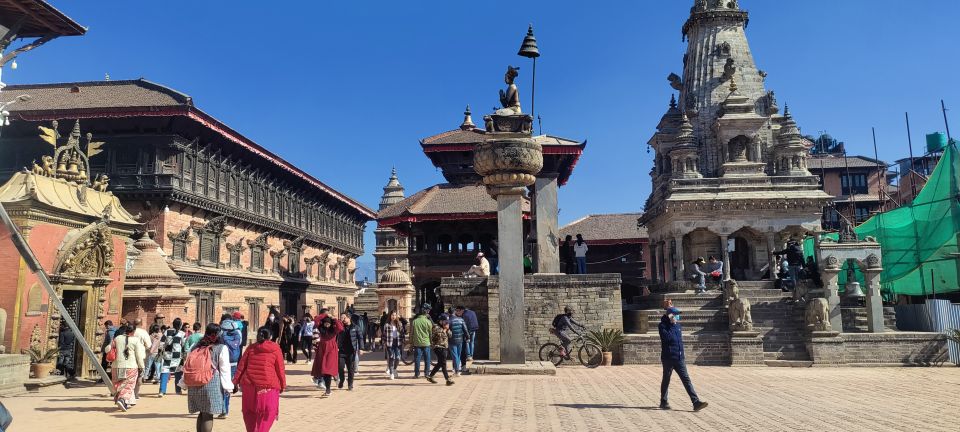
Next up is Boudhanath Stupa, often described as one of the largest stupas in the world. The scale here is the point: it’s listed with a diameter of about 100 meters and a height of about 40 meters. From the moment you spot it, it dominates the skyline and gives you a clear focal target for your day.
Boudhanath is important for both Hindus and Buddhists, and it’s a UNESCO World Heritage site. So instead of learning one tradition in isolation, you’ll see how this landmark fits into a broader religious landscape across cultures and visitors from far away.
Your time at Boudhanath is built into the guided day format, which matters because it helps you notice details you’d otherwise miss. Look for how people approach the stupa, how the monument’s size changes how you see it from different angles, and how the surrounding area supports a steady rhythm of devotion.
Possible drawback: this stop can be physically demanding depending on crowds and where you end up for photos. If you’re sensitive to noise or congestion, pace yourself and take breaks between sights rather than forcing every photo.
Swayambhunath Monkey Temple: hill views plus good orientation
Swayambhunath is the Monkey Temple you’ll hear about quickly after arriving in Kathmandu. It sits on a hillock northwest within the valley, and it’s one of the most useful “orientation” stops in the whole day.
Why? Because it gives you panoramic views over Kathmandu Valley, so after you climb up here, the valley’s layout starts to make sense. That mental map is helpful when you later look at other neighborhoods and realize how close the sites actually are.
The site is also tied to an origin story: it’s believed to have been built when the Kathmandu Valley was created as a lake more than 2,000 years ago. A guide can turn that myth into something you can picture, and that’s a big part of why the tour works for first-timers.
Expect the monkey atmosphere. Even if you’re not trying to photograph them, plan to manage your belongings and keep hands secure while you walk around. Hilltop areas can feel slower because of stairs and uneven ground, so bring patience and keep your pace steady.
My practical tip: if you want clear views, keep your camera ready and allow a little time to find an angle where the skyline and stupa backdrop both show well.
Patan Durbar Square in Lalitpur: stone, wood, and the city of carvings
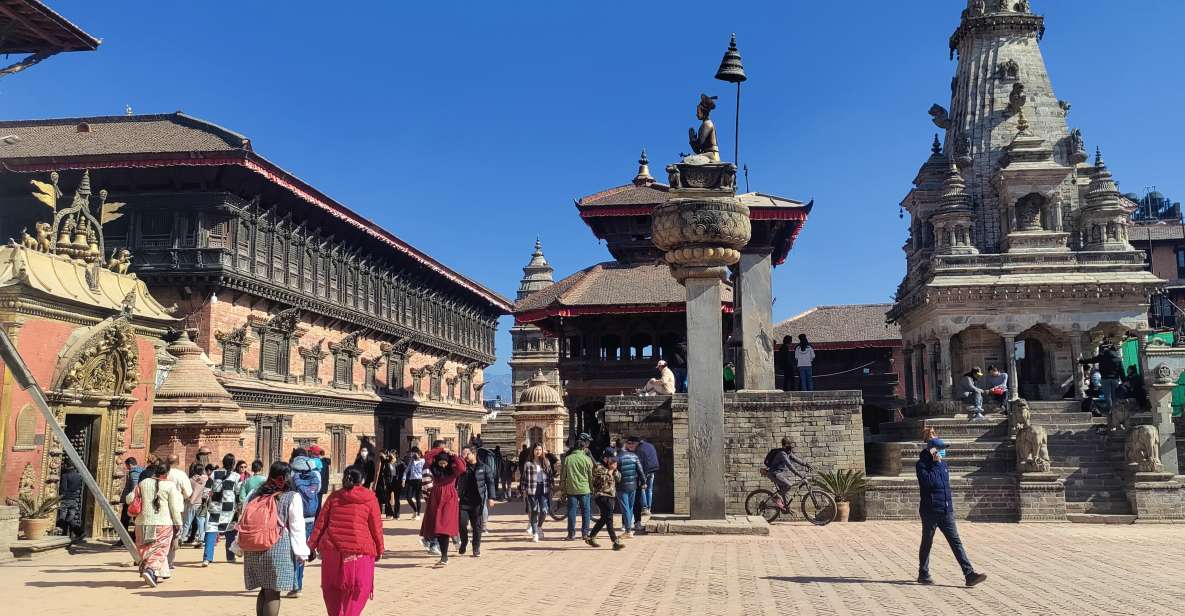
Patan is often called Lalitpur, and it’s described as the oldest of the three cities in Kathmandu Valley. Patan Durbar Square is a standout because it’s packed with ancient temples, palaces, and monuments, and the details are carved in wood and stone.
If you like architecture you can actually see up close, this is the stop that often feels most satisfying. Some of the biggest Kathmandu Valley monuments can be impressive from a distance. Patan rewards you for looking down into the details and appreciating how the craft shows up in doorways, facades, and ornamental elements across the square.
The good part of putting Patan into a one-day route is variety. After the river intensity at Pashupati and the stupa scale at Boudhanath, Patan offers a different kind of immersion through craftsmanship and layout. It’s also a chance to understand how Kathmandu Valley wasn’t a single culture center, but a set of connected city-states with their own styles.
Consideration: Durbar squares can involve more uneven walking around monuments and photo angles. If your legs are already tired, keep your time focused: pick a few core viewpoints, then use the rest of your time for slower detail viewing rather than chasing every corner.


How the schedule feels: private transfers, a full day, and smart pacing
This is a 1-day tour built for getting your bearings fast. Pickup options include Hotel Nepalaya and areas in Kathmandu/Thamel, and you’ll also get drop-off back in that same zone. The transport is a private car, which helps a lot when traffic and distances eat into your day.
You’ll also have a live guide who speaks English, Hindi, and Nepali. That language coverage matters if you want to ask quick questions on the spot, like what to expect before entering a temple zone or why one monument looks different from another.
In terms of timing, the day is structured around photo stops, guided visits, and walking, with scenic driving between clusters. Even without exact minute-by-minute details, the intent is clear: you’re not meant to spend your whole day stuck in transit. One stop is designed to give you time to absorb the atmosphere; the others balance viewing with quick, understandable guided context.
If you’re traveling solo, you’ll likely feel more comfortable with the predictable flow and the safety emphasis noted in prior experiences (including mention of careful driving from drivers such as Tirtha). Still, you should assume you’ll be out for most of the day, with breaks coming mostly through the natural movement between stops.
Price and value: what $37 includes, and what you’ll budget for
At $37 per person, the math is mostly about what’s included. This tour covers hotel pickup and drop-off, a private car, an English-speaking guide, and government tax and service charges.
That’s a strong base for a one-day orientation, especially if you’re not yet fluent in local directions or you’d otherwise lose time hiring transport and finding guides separately. The private car also matters because Kathmandu traffic can turn a simple ride into a slow one; you don’t want to start your sightseeing day late.
What’s not included is also important. Food and drinks are on you, and sightseeing entry fees are not listed as included. Personal expenses are extra as well.
So when you plan your budget, think: the $37 buys the structure and guidance, and you’ll add a lunch and any entry fees. If you like to travel light, bring water and plan for a simple meal break between sites rather than expecting snacks to be built into the day.
Who should book this UNESCO day tour, and who might want something else
This tour is ideal if you:
- want a first-time Kathmandu Valley orientation in one day
- care about seeing major UNESCO landmarks without getting lost between neighborhoods
- prefer a guided explanation so temples and stupas feel grounded in meaning
- appreciate a smooth, organized experience with punctual pickup and careful driving (names such as Ramesh, Sujan, and Tirtha show up in past feedback tied to this setup)
It may be less ideal if you:
- hate walking or have limited stamina for temple-area routes
- want lots of free time at each stop for wandering without a schedule
- don’t want to pay extra for entry fees and meals
If you’re the type who likes a tight itinerary with clear stops, you’ll likely enjoy this format. If you’d rather go slow, consider pairing this with another half-day in whichever neighborhood you liked most.
Should you book this Kathmandu Valley UNESCO day tour?
I’d book it if you want a practical, well-organized introduction to Kathmandu Valley’s UNESCO sites with hotel transfers and a guided route that makes the monuments easier to understand. At $37, the value is in the included transport, guide time, and the fact you don’t have to build the puzzle yourself across different parts of the valley.
Before you go, do two simple things: pack comfortable shoes and budget separately for entry fees and food. Also, remember the rules: drones are not allowed, and alcohol and drugs are prohibited. If you can handle a full day of walking and sightseeing, this is a smart way to get your bearings and start your Kathmandu trip on solid ground.
FAQ
How long is the Kathmandu Valley World Heritage guided day tour?
It runs for 1 day.
Which UNESCO sites are included?
The tour includes Pashupatinath Temple, Boudhanath Stupa, Swayambhu nath (Monkey Temple), and Patan Durbar Square.
What’s included in the price?
The price includes hotel pickup and drop-off, a private car, an English-speaking guide, and government tax and service charge.
What’s not included?
Food and drinks, sightseeing entry fees, and personal expenses are not included.
What languages does the live guide speak?
The live tour guide speaks English, Hindi, and Nepali.
Where does pickup and drop-off happen?
Pickup options include Hotel Nepalaya, Kathmandu, and Thamel, and drop-off is back at Kathmandu, Hotel Nepalaya, or Thamel.
Is cancellation free, and can I pay later?
Yes. You can cancel up to 24 hours in advance for a full refund, and the tour also offers a reserve now & pay later option.