REVIEW · KATHMANDU
Everest Base Camp Trek
Book on Viator →Operated by Himalayan Recreation Treks & Expedition Pvt.Ltd · Bookable on Viator
Everest feels real when your feet move. What I like about this Everest Base Camp trek is the included Lukla flights and the professional guide who helps keep you safe and on track through the Khumbu. You also get practical built-in comforts: tea-house accommodation during the trek and hotel time in Kathmandu, so you spend less energy organizing. The main drawback is altitude and the real possibility of Lukla flight delays, so you’ll want a plan for extra days and to talk with your doctor before you go.
This is a small-group setup (up to 8 people per booking) with private-tour feel, plus arrival and departure help by private car. You’ll move through famous stops like Namche Bazaar, Tengboche, and Kala Patar, with nights in basic tea houses where daily life is simple and predictable. With a rating of 4.9 from 97 reviews and 100% recommendation, it’s clearly a favorite for people who want a guided route without the guesswork.
In This Review
- Key reasons this Everest Base Camp trek is popular
- Everest Base Camp: why this trek still grabs your attention
- Price and what’s actually included in the $999 package
- Kathmandu pre-trek days: Thamel, temples, and an easy arrival flow
- The Lukla flight reality: included, but not predictable
- Day-by-day route: what you’ll feel at each stop
- Day 1: Kathmandu warm-up and orientation
- Day 2: Fly to Lukla, then walk into Phakding
- Day 3: Namche Bazaar and acclimatization start
- Day 4: Everest View Point and the Namche day trip
- Day 5: Tengboche, the gompa stop, and prayer-flag country
- Day 6: Dingboche and slow-up altitude pacing
- Day 7: Dingboche area, Chukhung, and the route toward higher ground
- Day 8: Lobuche and Khumbu Glacier terrain begins
- Day 9: Gorak Shep area with Mount Everest reaching your goal
- Day 10: Kala Patthar and the payoff day
- Day 11: Back to Namche Bazaar
- Day 12: Lukla and the final trekking step
- Day 13 and Day 14: Kathmandu wrap-up
- Tea houses: included lodging, simple life, and your budget reality
- Guide support and safety: what to expect (and what it can’t do)
- Packing smart with the 22 lb / 10 kg limit
- Who should book this Everest Base Camp trek
- Should you book it?
- FAQ
- How long is the Everest Base Camp trek?
- Where does the trek start?
- Are domestic flights included?
- What lodging is included on the trek?
- Is hotel lodging included in Kathmandu?
- Are meals included?
- What is the group size?
- What kind of guide do you get?
- Do I need travel insurance?
- What documents are needed for Nepal permits?
- What gear limits should I plan for?
- What about cancellation refunds?
Key reasons this Everest Base Camp trek is popular
- Kathmandu–Lukla round-trip flights included, including airport tax
- Tea-house accommodation included for about 10–11 nights on the trek
- 3-star Kathmandu hotel time included (verify whether it’s 2 or 3 nights—details conflict slightly)
- Licensed trekking guide with first-aid basics, plus a first aid kit and a company t-shirt
- A route built around acclimatization points like Namche Bazaar and Dingboche
Everest Base Camp: why this trek still grabs your attention
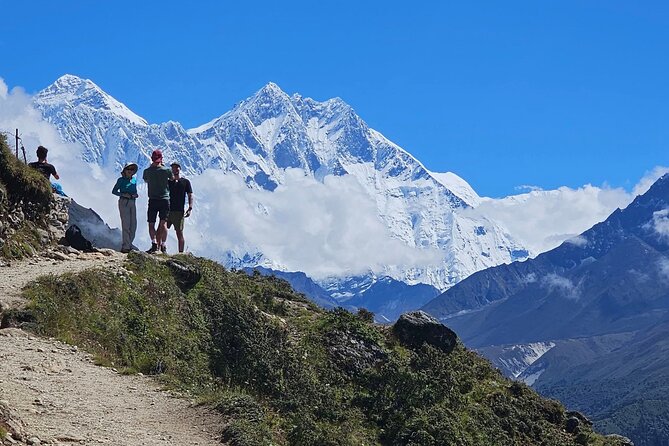
Even when you’ve seen photos, Everest Base Camp has a way of changing the vibe in your head. The “wow” isn’t just about reaching the base area—it’s how the whole journey strips away distractions. One day you’re in Nepal’s everyday rhythm; the next you’re walking with big glaciers and prayer flags everywhere you look.
I also like that this trip is designed around guidance and timing rather than just bragging rights. You don’t need to be a navigation expert to follow the route, and you get someone focused on safety and pacing. In past trips, the on-the-ground support has been highlighted by name—Bishnu for keeping details tight, and guide Basu for making sure people were moving correctly and staying on schedule.
The other reason it’s compelling: the trek is demanding at altitude, so the structure matters. This package is blunt about that—altitude around 5,364 meters is part of the reality—so you’re pushed toward doing the trip the right way, not the fastest way.
You can also read our reviews of more hiking tours in Kathmandu
Price and what’s actually included in the $999 package
$999 per person sounds like a bargain until you see what’s bundled. Here’s what you are getting that would cost real money if you booked it separately:
- Domestic airfare Kathmandu–Lukla–Kathmandu with airport tax included
- Accommodation in tea houses during the trek (11 nights listed)
- Hotel stays in Kathmandu (the description mentions three nights; the inclusions list 2 nights—confirm the exact count)
- Pickup and drop-off assistance by private car for arrival/departure
- A government license holder trekking guide, plus taxes/VAT/service charges
- First aid kit and a company t-shirt
- Breakfast is included (listed as 2 breakfasts) and dinner is also included
What’s not included matters for budgeting. Food and drinks are not included unless specified—plan for about $350 per person for that. Gratuities are listed at $150 per person, which is separate from the guide arrangement.
So, value-wise, this package is strongest if you want less planning work and more “ready to go.” You’re paying for logistics: flights, lodging, and an experienced guide system. If you already have those sorted on your own, the savings might shrink. But for most people, the included flights and lodging are the heavy lifting.
Kathmandu pre-trek days: Thamel, temples, and an easy arrival flow
You start in Kathmandu, and the tour gives you more than just a hotel bed. Day 1 and parts of Day 2 are built to reduce travel stress, with time in Thamel—the area that’s practical for trekking supplies and meeting the team.
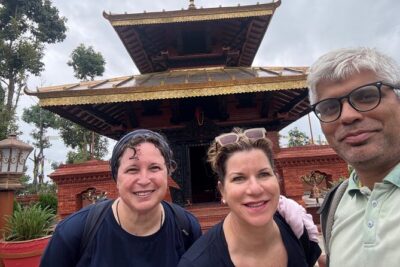
You also get classic cultural stops in a way that doesn’t hijack your energy. Swayambhunath Temple (often called the Monkey Temple area), Boudhanath Stupa, and Garden of Dreams appear in the schedule. Even if you’re not a museum person, these places help you get your bearings fast—altitude, language, and traffic feel less intense once you’ve walked a few familiar streets.
Practical bonus: you’re not left on your own for airport arrival. The package includes pickup and arrival/departure assistance by private car, guided by Himalayan Recreation. That’s one of those details you’ll appreciate more than you expect, especially if you’re arriving jet-lagged.
The Lukla flight reality: included, but not predictable
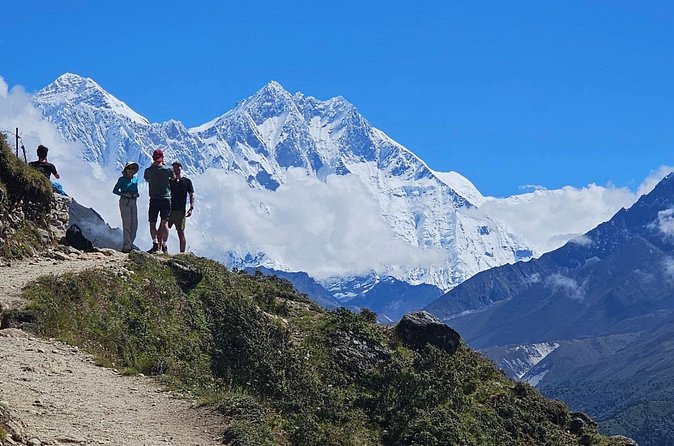
The biggest “gotcha” on Everest treks is never the view. It’s the flight timing. The package includes the domestic airfare Kathmandu to Lukla and back, and the flights are listed as part of the trip flow early on.
At the same time, the operator explicitly flags the real-world issue: you might face Lukla flight delays or cancellation, and they request you consider 1–2 extra days. That’s not small talk. On this kind of trek, one missed connection can snowball into lost trekking days.
If you want this trek to feel enjoyable instead of stressful, build flexibility into your schedule. Travel insurance is required anyway, so use that margin to protect your trip plan.
Day-by-day route: what you’ll feel at each stop
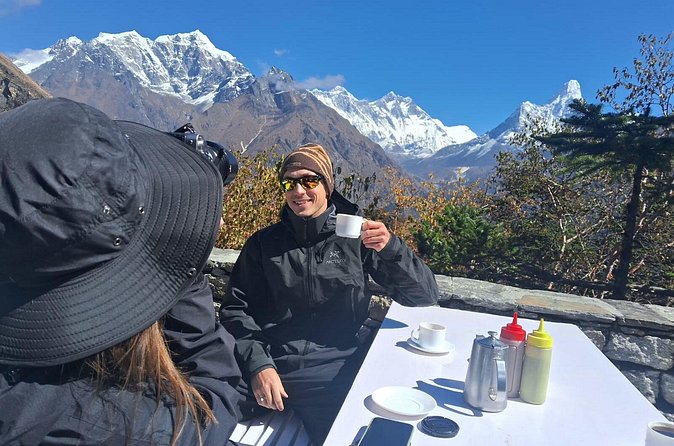
This route moves through the classic Khumbu rhythm: villages for reset, acclimatization towns for altitude management, and viewpoints to earn your rest.
Day 1: Kathmandu warm-up and orientation
You’ll be based in Kathmandu and connected with the trekking company (a recommended trekking company in Kathmandu is part of the setup). This is your time to check gear weight, confirm your packing list, and get ready for the flight days without rushing.
Day 2: Fly to Lukla, then walk into Phakding
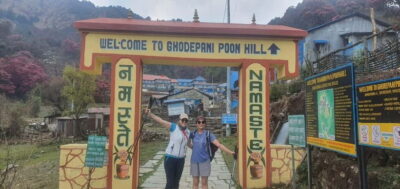
You catch flights to Lukla (about an hour, listed in the schedule). After landing, the trek begins with Phakding on the itinerary. Phakding is where you feel the shift from city life to mountain life: fewer distractions, smaller paths, and the slow realization that your legs will do most of the work.
In Kathmandu earlier that day, you’re also scheduled for the Swayambhunath and Boudhanath area visits. That’s a lot to fit in, but it can be a good trade if you like temples and want cultural grounding before the mountains take over.
Day 3: Namche Bazaar and acclimatization start
Today goes to Namche Bazaar and includes a crossing/river focus with the Dudh Koshi River mentioned. Namche is a key acclimatization hub, and it’s also where you’ll start seeing the infrastructure that supports trekking: tea-house options, shops, and a real sense of community among hikers.
The schedule also repeats Namche again later, which is exactly what you want—altitude needs time, not hero mode.
Day 4: Everest View Point and the Namche day trip
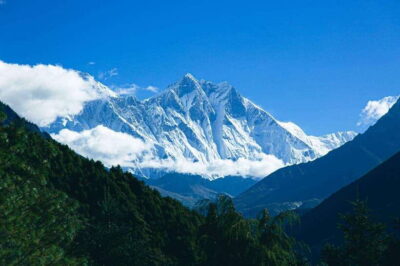
You’re back in the Namche Bazaar area, then you head to Everest View Point. This is a morale builder day. Even if your Base Camp dream is in your head, the viewpoint helps you understand what the landscape holds at altitude—without going so high that you lose your ability to adapt.
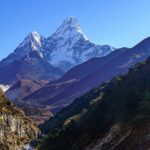
Ama Dablam is also referenced on Day 5, which hints at what you’ll be seeing as you climb into the Tengboche region: big peaks, clean air (when it’s clear), and a steady sense of scale.
Day 5: Tengboche, the gompa stop, and prayer-flag country
You continue on toward Tengboche, then include Tengboche Gompa. This is one of those stops that feels spiritual without needing a religious script. The gompa visit is also a natural pause in the day—handy when your body wants breaks.
The schedule includes views referencing Mt. Ama Dablam and Mt. Taboche within the broader day—so expect that iconic Khumbu feeling: sharp peaks, a valley full of ridgelines, and frequent chances to stop for photos and air.
A realistic note: this day involves a longer trekking push. Tea-house culture can’t replace proper rest, so if you feel off, tell your guide early.
Day 6: Dingboche and slow-up altitude pacing
Dingboche is your next major stop. This is another acclimatization point, and it’s where many trekkers start to feel the thin-air differences more clearly.
If you’ve never walked at altitude, keep your pace gentle. This is not the time to prove fitness. Your best strategy is consistent effort and early hydration.
Day 7: Dingboche area, Chukhung, and the route toward higher ground
The itinerary shows Dingboche again, plus a move toward Chukhung. There’s also a confusing line about getting away to island peak, but the important takeaway is that this is still an altitude-building day—training your body to handle higher elevations while giving you a reason to rest afterward.
Chukhung typically functions like a staging area for higher viewpoints and acclimatization. Treat it like that: steady steps, frequent pauses, and no surprise sprinting.
Day 8: Lobuche and Khumbu Glacier terrain begins
You move to Lobuche, then the schedule references Khumbu Glacier. This is where the trek feels more rugged. Even if you don’t need technical glacier gear, the environment changes: more seriousness underfoot, more wind, and a bigger sense of exposure.
This is also a good day to keep your layering strategy tight. Cold can build fast, especially when clouds roll in.
Day 9: Gorak Shep area with Mount Everest reaching your goal
The itinerary includes Mount Everest and then Gorak Shep. Gorak Shep is often a staging point for the highest-view pushes, and your days here tend to be shaped by weather.
When visibility is good, the “I get it now” moment can hit hard—Everest becomes not just an idea but a view you’re physically approaching. When visibility is bad, you’ll still earn the feeling of being in the high Khumbu zone, just with less clarity.
Day 10: Kala Patthar and the payoff day
You’re scheduled for Kala Pattar (often spelled Kala Patthar), plus more time around the Pheriche – Dughlha Road area and then Pangboche. Kala Patthar is the headline viewpoint on many EBC routes, and it’s where you often get a sweeping sense of the bigger “Everest block” as conditions allow.
Expect this day to feel like your summit-moment—mentally and physically. Going up at altitude is always work. The trick is to manage energy so you can enjoy the viewpoint without collapsing afterward.
Day 11: Back to Namche Bazaar
You return to Namche Bazaar. This is a relief day in the best way: you’re dropping elevation, walking familiar terrain again, and shifting from “go high” to “go home.”
Your knees may complain. Descents are harder than they look when you’re tired.
Day 12: Lukla and the final trekking step
You head to Lukla. For many people, this is the first day that feels like travel again—less remote, more atmosphere of flights and departures.
You’re still not done until you’re back in Kathmandu, so plan mentally for the travel transition.
Day 13 and Day 14: Kathmandu wrap-up
You return to Kathmandu and finish the experience. Day 14 is listed as Kathmandu, which suggests a buffer day or a final overnight before full departure.
If you’re trying to align flights with international schedules, this buffer can be helpful—especially with the Lukla delay warning on the table.
Tea houses: included lodging, simple life, and your budget reality
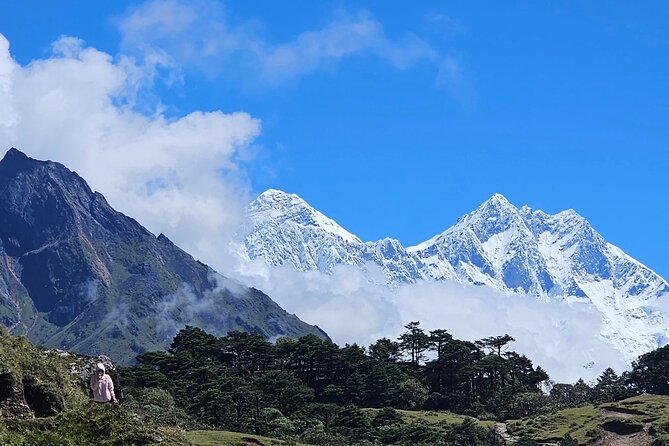
Tea houses are included for the bulk of your trek, which is a major convenience. But they’re not luxury lodges. Plan for straightforward rooms, basic bedding arrangements, and meals that are available when you need them—not when your tastebuds demand five-star service.
The tour doesn’t include food and drinks except what’s specified. The package lists dinner and breakfast (2) as included, and then points you to budgeting roughly $350 for the rest.
My practical advice: treat tea-house meals as a fuel system. Eat what you can, drink what you can tolerate, and don’t wait until you feel weak to start.
Guide support and safety: what to expect (and what it can’t do)
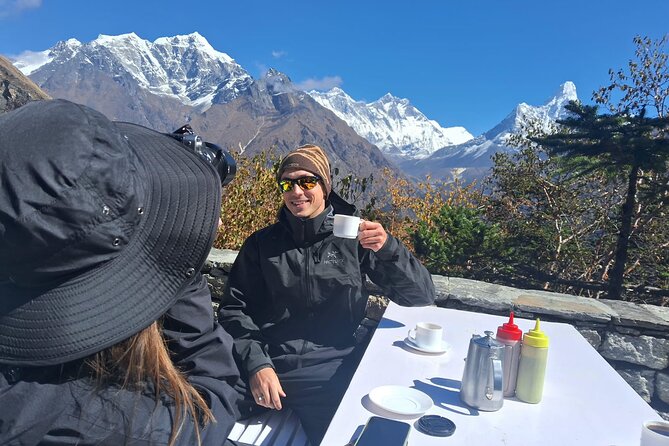
This trek runs with a government license holder trekking guide and basic first-aid support. The tour also states that leaders have first-aid training and know closest medical facilities. That matters because altitude is the real risk here, and timely decisions are everything.
In the same setup, the operator includes a first aid kit and asks you to meet medical responsibilities head-on. They clearly warn that altitude can cause adverse health effects regardless of age or gender. They recommend discussing the trip with your doctor before departure.
They also require travel insurance that covers medical costs and emergency repatriation, with proof shown to the tour leader on Day 1. That requirement isn’t bureaucracy—it’s what allows risky decisions to be handled properly if something goes wrong.
If you want the trek to feel smooth, listen to the guide early about pacing, hydration, and acclimatization stops. The “toughing it out” approach is common, and it’s also the one that gets people into trouble.
Packing smart with the 22 lb / 10 kg limit
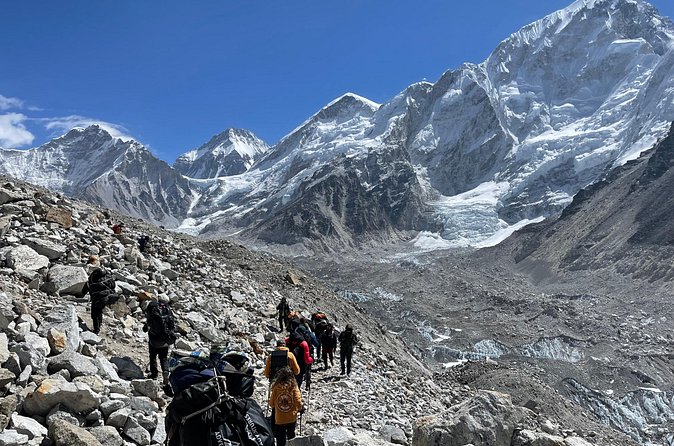
The tour asks you to pack lightly because you’re carrying your own luggage. The recommended weight cap is under 22 lbs (10 kg).
That limit affects how you think about gear. Choose layers you can manage in changing conditions, rather than heavy bulky items. Also, required trekking gear is available in Kathmandu to buy or rent, and the guide can help arrange that—handy if you don’t travel with the right setup.
One more helpful detail: extra luggage can be left at the office or hotel and picked up after your return. That takes pressure off your flight-day packing and helps you keep the trek load realistic.
Who should book this Everest Base Camp trek
This is a good match if you want:
- Included Lukla flights and trekking lodging built into the price
- A licensed guide and small group size (max 8 per booking)
- A route with planned acclimatization stops like Namche Bazaar and Dingboche
- A manageable length on paper (14 days approx.) with time for viewpoints like Everest View Point and Kala Pattar
It may not be the right fit if you don’t like high-altitude challenge. The tour explicitly calls for strong physical fitness, and it flags potential altitude sickness. There’s also a minimum age of 8 years, so this isn’t designed as an easy family stroll.
Should you book it?
I’d book this Everest Base Camp trek if you want a guided route that handles the big logistical pieces—flights to Lukla, tea-house lodging, and a licensed guide—and you’re ready for the altitude reality. The included items are where the value is: airfare plus lodging typically cost a lot when bought separately, and the guide system removes the guesswork of timing.
I’d hesitate only if you hate uncertainty around flight timing. Lukla delays/cancellations are real, and the operator asks you to consider adding 1–2 extra days. If you can’t flex your schedule, you might feel trapped by the calendar instead of enjoying the trek.
If you’re health-clear and schedule-flexible, this package looks like a solid, well-supported way to reach Everest Base Camp without turning your trip into logistics homework.
FAQ
How long is the Everest Base Camp trek?
The duration is listed as 14 days (approx.).
Where does the trek start?
The meeting point is Tribhuvan Airport, Kathmandu, Nepal.
Are domestic flights included?
Yes. Domestic airfare from Kathmandu to Lukla and back is included, and airport tax is included as part of that.
What lodging is included on the trek?
Accommodation in tea houses during the trek is included, with 11 nights listed.
Is hotel lodging included in Kathmandu?
Yes. The overview mentions three nights in a 3-star Kathmandu hotel, while the included section lists 2 nights in a 3-star hotel with breakfast on day 1 and day 13. You should confirm the exact number of hotel nights.
Are meals included?
Breakfast is included (listed as 2 breakfasts). Dinner is also included. Food and drinks are not included unless specified, with $350 per person suggested for those costs.
What is the group size?
The maximum is 8 people per booking. It is also described as private activity, meaning only your group participates.
What kind of guide do you get?
You get a government license holder trekking guide with full facilities, and the guide has basic first aid training. A first aid kit is included.
Do I need travel insurance?
Yes. Travel insurance that covers medical expenses and emergency repatriation is required, and proof must be shown to the tour leader on the first day.
What documents are needed for Nepal permits?
You’ll need a passport photo copy (clear color scan) with validity minimum 6 months, two passport-size photos, plus occupation and home details address.
What gear limits should I plan for?
You’re expected to carry your own luggage, with a recommended weight under 22 lbs (10 kg).
What about cancellation refunds?
Free cancellation is offered up to 24 hours in advance for a full refund. Within 24 hours of the start time, no refund is provided.