REVIEW · ANNAPURNA MASSIF
Pokhara: 2 & 3 Days Ghorepani Poon Hill Private Guided Trek
Book on GetYourGuide →Operated by Welcome Nepal Treks P.Ltd · Bookable on GetYourGuide
Sunrise over the Annapurnas takes planning, and time. This short, private guided Poon Hill trek links Pokhara with Ulleri and Ghorepani, so you get big mountain views without a long expedition. You’ll also travel by private jeep, which makes the whole thing feel easier from the start.
I love the way the day is built around the sunrise hike. If the weather is clear, you can see up to 32 peaks, including the 12 peaks of Bhara Shikhar from Poon Hill. I also like that the guides actively help with the details that matter—Tanka is described as checking conditions early (even at 2 a.m.) so you’re not guessing.
One drawback: it’s “easy” in length, not in effort. Expect steps on the approach and some altitude grind around Ulleri to Ghorepani, plus sunrise can be muted if cloud rolls in.
In This Review
- Key highlights at a glance
- A short Poon Hill trek that pays off fast from Pokhara
- Private jeep to Ulleri: the road-to-trail transition that makes it feel easy
- Day 1 up toward Ghorepani: Gurung villages and a steady climb
- What can feel tiring on Day 1
- Ghorepani overnight at 2,860m: mountain cottage life and why it matters
- The practical side: sleep, warm layers, and energy management
- Poon Hill sunrise at 3,210m: timing, views, and the Bhara Shikhar clue
- What the viewpoint experience actually feels like
- If the weather isn’t perfect
- The Annapurna view math: up to 32 peaks and why that detail matters
- Guides and the human touch: names like Tanka, Dhanapatir, Shiva, and more
- Why private guidance matters here
- Food, tea, and the rhythm of included meals
- After Poon Hill: breakfast and then the long descent
- Price and value at about $118 per person
- Is it good value for you?
- What to bring and how physically ready you need to be
- How hard is it, really?
- Not suitable for everyone
- Should you book this private Ghorepani and Poon Hill trek?
- FAQ
- How long is the Ghorepani and Poon Hill trek?
- Where does the trek start?
- Is transportation from Pokhara included?
- What time do you hike to Poon Hill for sunrise?
- How long is the trek each day?
- What views can you expect from Poon Hill?
- Are meals included?
- Do I need permits?
- What should I bring?
- Can I cancel and get a refund?
Key highlights at a glance
- Private jeep transport from Pokhara to the trekking area and back
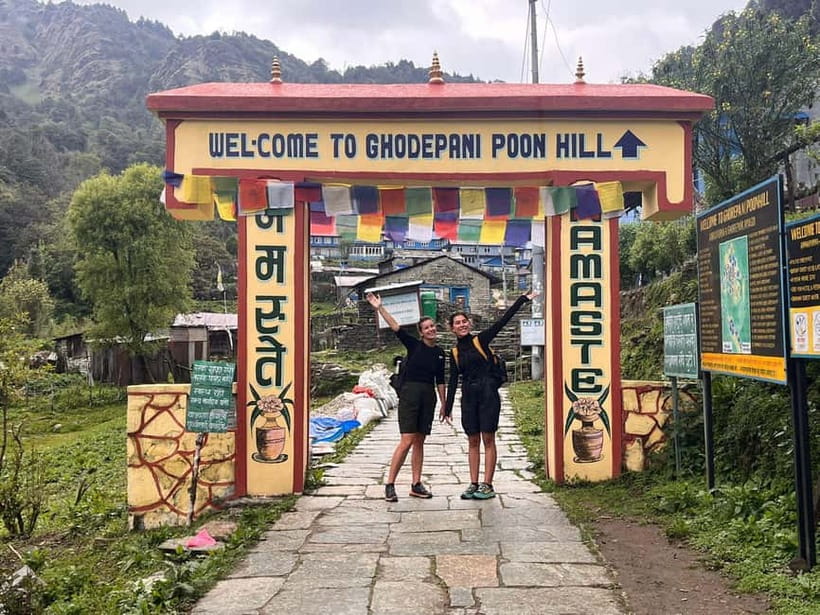
- Gurung village walking with a short, doable daily mileage
- Sunrise at Poon Hill (3,210m) with views up to 32 peaks
- Ghorepani lodge/cottage stay at about 2,860m for a real overnight feel
- Guide support that shows up early, including weather checks and photo help
A short Poon Hill trek that pays off fast from Pokhara
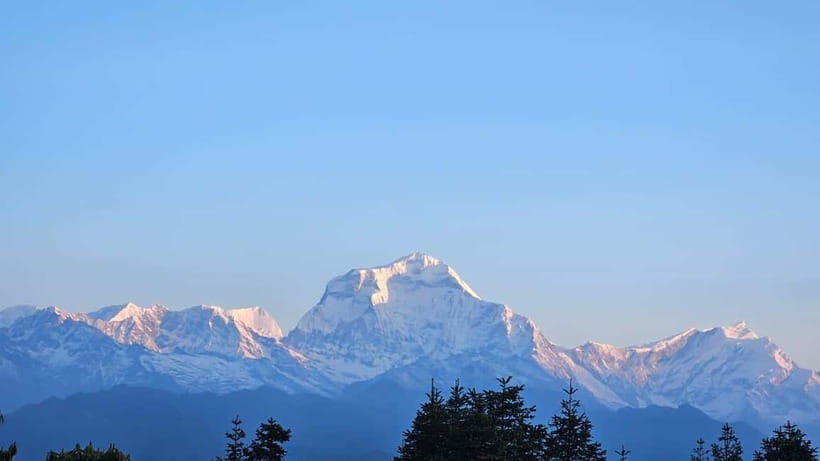
If you’re short on time, the Poon Hill trek is one of the smartest ways to get into the Annapurna region. You don’t need a week or two. You do need two things: an early start mindset and comfortable shoes.
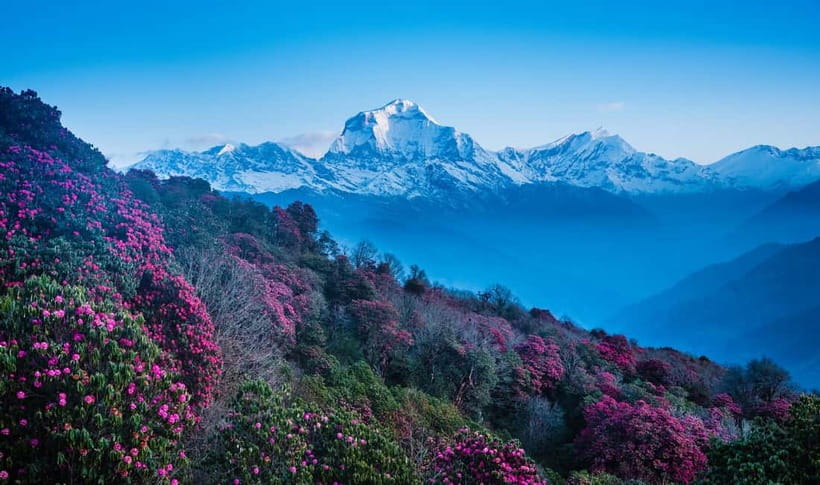
The value here is that the route is compact. You’ll drive from Pokhara into the trekking zone, then hike through villages and rhododendron-filled slopes, with one overnight at Ghorepani. From there, you’re positioned for sunrise at Poon Hill without adding extra days just to “get altitude.”
It’s also a very guide-driven experience. A good guide keeps the pace realistic, helps with photo stops, and handles the timing so you’re at the viewpoint before the best light fades.
You can also read our reviews of more tours and experiences in Annapurna Massif.
Private jeep to Ulleri: the road-to-trail transition that makes it feel easy
Most of the effort on this trek happens on foot, but the private transport matters more than you’d think. The day begins with breakfast in Pokhara, then a drive (often about an hour) to Nayapul before trekking toward Tikhedhunga and the climb up to Ulleri.
Ulleri sits around 2,070m and is where the character of the trek really starts to come alive. You’re walking through terraced fields and river-side trails, then hitting the famous stone staircase climb. That staircase is the kind of thing that can make you underestimate the trek. It’s not long in total time, but it’s steady, and you’ll feel it in your legs.
What you’ll like about the private jeep arrangement is flexibility and reduced stress. You’re not trying to line up shared rides or coordinate multiple transport transfers. In one case noted in the experience notes, the car ride can be bumpy, but the driver was described as knowledgeable about the area—exactly what you want on mountain roads.
Day 1 up toward Ghorepani: Gurung villages and a steady climb
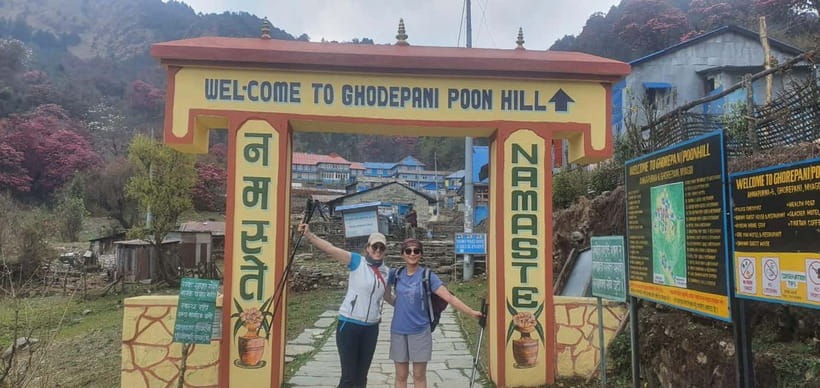
On the 2-day version, your trek begins after a drive to Upper Ulleari, around 2,090m. Then it’s the real walking portion: crossing villages such as Banthanti, Nangithanti, and Lower Ghorepani.
This part of the hike is short enough to feel manageable, but it still works your body. The terrain is village-to-village, so you’re constantly moving through small ups and downs rather than doing one flat stretch. It’s also where you get a sense of how the Annapurna foothills live—people, terraces, and paths that have been used for generations.
Lunch is flexible. You’ll stop for lunch in Banthanti or Nangithanti depending on timing. That small choice is practical: if your group is moving quickly, you can grab lunch earlier and arrive with energy; if you need a longer break, the itinerary doesn’t punish you.
By evening you’ll reach Ghorepani at about 2,860m, often described as a picturesque mountain village. You’ll have dinner and then sleep in a cottage/lodge—simple, warm enough, and set up for an early wake-up.
What can feel tiring on Day 1
Even on a “short” trek, Day 1 has two common traps:
- The staircase + steps early on (especially toward Ulleri)
- Altitude buildup even though the itinerary is not long
If you’re the type who races at first, I’d slow down right away. You’ll still make sunrise. You’ll just do it without feeling wrecked by breakfast.
Ghorepani overnight at 2,860m: mountain cottage life and why it matters
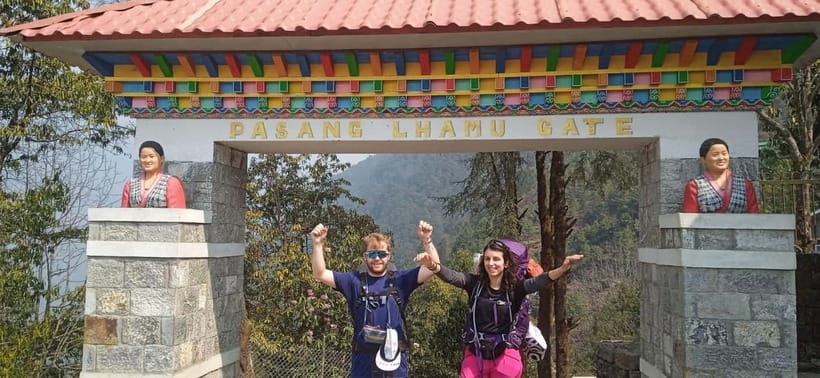
The overnight in Ghorepani is one of the best parts of this trek, mainly because it puts you in the Annapurna rhythm instead of doing a long day hike and calling it done. Ghorepani is at 2,860m, so nights feel cooler, and mornings hit with that crisp mountain air.
Your lodging is in a mountain cottage/lodge, and you’ll eat included meals during the trek (breakfast, lunch, dinner). This helps a lot if you don’t want to think about where to eat or whether a restaurant is open. The whole point of a short trek is to reduce decision fatigue.
You’ll also likely notice how much the village is built for hikers. Along the route, lodges and stops provide tea, food, and warm rooms. That means you’re not stuck in a “survive on snacks” situation.
The practical side: sleep, warm layers, and energy management
Because sunrise starts so early, your goal the night before is not comfort at all costs. It’s sleep and staying warm enough to wake up smoothly.
I’d pack with one simple idea: if you’ll be hiking before dawn, you need layers that work in cold air. Wear what you can, keep your daypack close, and plan to eat breakfast fast once you’re back from Poon Hill.
Poon Hill sunrise at 3,210m: timing, views, and the Bhara Shikhar clue
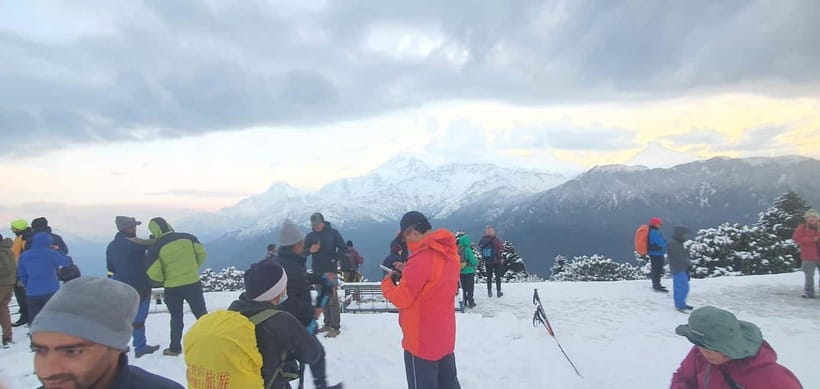
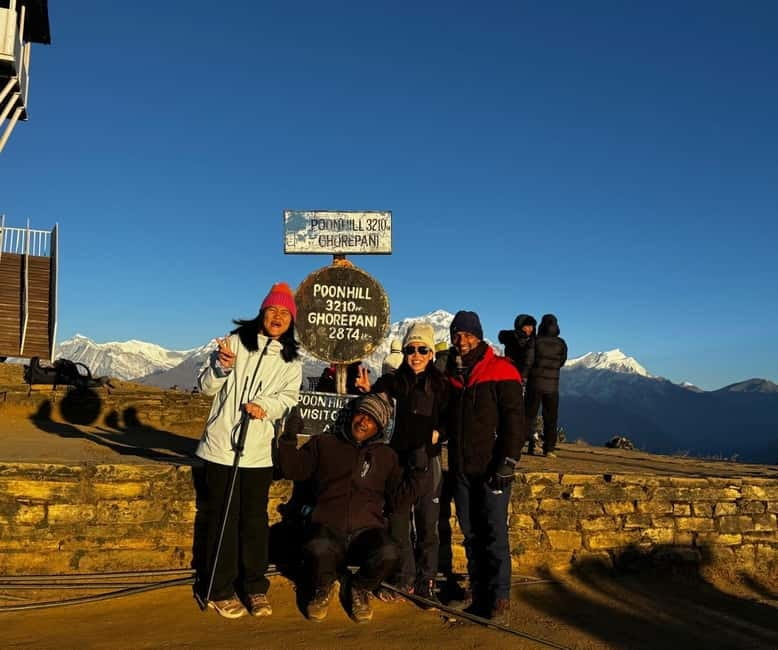
This is the reason you do the trek. The hike to Poon Hill is short and steep-feeling, and it’s timed for sunrise.
On the 2-day plan, you’ll hike from camp before sunrise, taking about 45–60 minutes to reach Poon Hill at 3,210m. On the 3-day plan, the sunrise hike from Ghorepani is longer—about 2–3 hours—because you’re building in more trekking time.
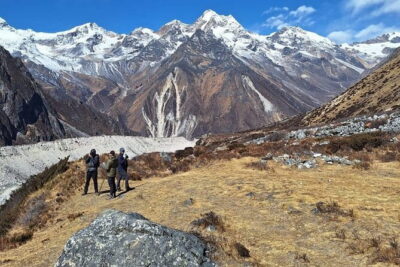
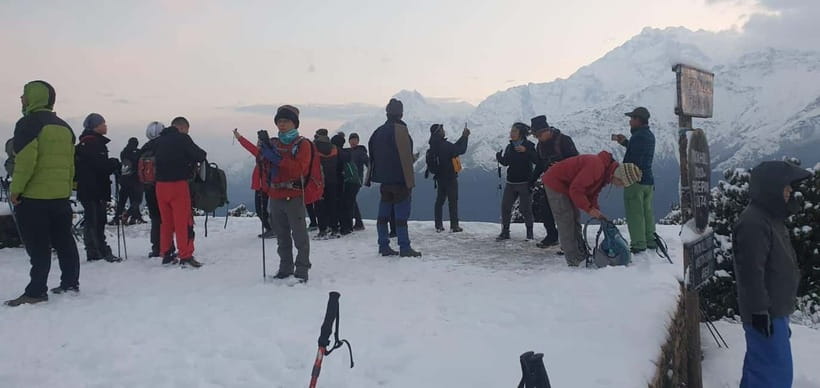
Either way, the mission is the same: reach Poon Hill before the sky lights up, then let the mountains do the talking. On clear days, you can see up to 32 peaks, including the 12 peaks of Bhara Shikhar. That detail is fun because it turns the viewpoint into something you can interpret, not just stare at.
What the viewpoint experience actually feels like
Expect the classic sunrise rhythm:
- Pre-dawn hike with colder air
- A viewpoint arrival where people gather and wait
- Then the sudden shift as color starts to show on snow
It’s also where a good guide earns their fee. In the experience notes, guides such as Tanka and others are described as waking early to check weather conditions and helping with photos along the way. Even if you’re not a serious photographer, photo help matters because timing and angles can make a huge difference.
If the weather isn’t perfect
Cloud happens. One of the notes includes a case where the weather wasn’t so nice, but the trek was still described as well-organized and enjoyable. My advice: don’t treat sunrise as a guarantee. Treat it as a highly likely moment, and focus on the climb and the village scenery too.
The Annapurna view math: up to 32 peaks and why that detail matters
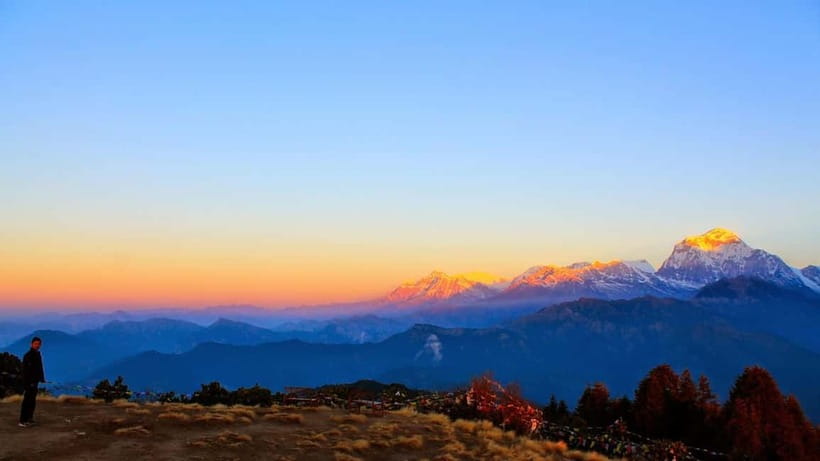
The “up to 32 peaks” promise isn’t just marketing fluff. It helps you understand why this area gets so much attention. Poon Hill sits at the right vantage point to catch multiple ranges at once.
The added clue is Bhara Shikhar. If you can spot the 12 peaks connected to it, you’ll leave with a clearer mental map of what you saw. That matters because it turns the sunrise from a random snapshot into a story you can recall.
Also, the viewpoint is described as offering views of major highlights like Annapurna and Dhaulagiri, plus other prominent peaks. In the 3-day route description, the sunrise mentions Annapurna, Dhaulagiri, Machhapuchhre, and surrounding peaks, which gives you a strong idea of what you’re waiting for.
Guides and the human touch: names like Tanka, Dhanapatir, Shiva, and more
On a short trek, your guide has a big influence on how it feels. The difference is rarely about “expert facts.” It’s about pacing, comfort, and keeping you positioned at the right moments.
Here are the names that show up in the experience notes, which tells you the service is not generic:
- Dhanapati: described as kind and patient, sharing geography and culture, and even helping shape an evening with locals (jazz music came up)
- Tanka: described as highly organized, checking weather early (even at 2 a.m.), and helping with photos
- Shiva, Padam, Mohor, Jogan: described as attentive, adjusting pace as needed, and explaining mountains and surroundings
One note stands out for care: Tanka was described as adjusting speed when a partner had a heart condition, with regular check-ins during the climb. That’s the kind of small, practical attention that makes a short trek feel safe and respectful.
Why private guidance matters here
Poon Hill is popular. During sunrise, crowds and timing can stress people out. With a private guided setup, you’re more likely to move at your pace, stop when you need, and still arrive on time.
Food, tea, and the rhythm of included meals
Food can make or break a short trek. The included meals during the trek are breakfast, lunch, and dinner, which is exactly what you want when you only have one overnight.
Expect simple, filling trekking-food choices. Tea shows up constantly along the trail and at lodges. One note mentions delicious tea being part of the experience, which makes sense because it’s a warm-up tool as much as a drink.
One practical tip: you’ll walk early and you’ll return for breakfast before starting your descent. If you’re sensitive to early mornings, plan to eat what you can quickly and keep your energy up for the downhill.
After Poon Hill: breakfast and then the long descent
After the sunrise viewpoint, you’ll return to camp for hot breakfast and begin descending. On the 2-day plan, that descent follows the same trail. On the 3-day plan, after sunrise you return for breakfast and then descend to Nayapul around 1,070m, roughly 5–6 hours, before driving back to Pokhara.
That descent is where legs can go from “okay” to “why did I think this was easy.” Take it slow. Don’t let adrenaline carry you into over-striding.
Price and value at about $118 per person
At $118 per person for a 2–3 day private guided trek, you’re paying for three things:
- Short, structured time (you’re not wasting hours on logistics)
- Private jeep transport between Pokhara and the trekking area
- Professional guidance plus permits and support items
The included list is also fairly detailed: hotel pickup/drop-off, trekking guide support, and administrative items like TIMS and conservation entry permits. You’ll also get a first-aid kit and water purification tabs, which is a practical safety and hygiene component.
What’s not included is drinks (hot, cold, and alcoholic). So if you’re a tea-and-water sipper all day, you’ll likely spend some extra money. But you’re also not paying for every meal from scratch—the trek includes meals during the hike, and the notes indicate meal/porter coverage may depend on whether you choose a budget or all-inclusive option.
Is it good value for you?
If you want a big-view experience with minimal planning time, the private structure is where the value lives. If you’re traveling ultra-budget and don’t care about private transport, you might find cheaper group treks. But for many people, this price feels fair because it buys time, comfort, and smoother logistics.
What to bring and how physically ready you need to be
The trek isn’t a technical climbing challenge. But it is walking at altitude, with lots of steps on key sections.
Bring:
- Passport or ID card
- Comfortable shoes (and proper hiking shoes if you have them)
- Snacks
- Water
- Daypack
That’s the basics. I’d add one personal rule: if you’re tempted to pack only “fashion shoes,” don’t. Steps can be repetitive and unforgiving.
How hard is it, really?
This trek is described as easy and short, but one note says it was hard work because of many steps. Another note says it was doable for people with regular physical activity and that poles helped.
Altitude is the other factor. You’ll reach around 3,210m at Poon Hill. Even if you feel fine on day 1, sunrise day can be a surprise. The good news: the route is short, and guides can adjust pace.
Not suitable for everyone
This trek is not suitable for:
- Pregnant women
- People with mobility impairments
If either applies, it’s better to choose a different style of trip or a gentler route with fewer steps.
Should you book this private Ghorepani and Poon Hill trek?
If you fit the common pattern—short time in Nepal, wanting Annapurna-region scenery, and willing to hike up and down for sunrise—this is a strong choice. The biggest reasons I’d book are the short duration, the private jeep support, and the focus on sunrise timing with knowledgeable guides.
I’d think twice if you:
- Want a fully flat hike (this route includes steps and climbs)
- Are very sensitive to altitude (you’ll be around 3,210m at Poon Hill)
- Need step-free mobility options (this trek isn’t suitable for mobility impairments)
If you can handle early mornings and comfortable walking, you’ll get the core payoff: sunrise views, village paths in the Annapurna region, and a one-night mountain stay that makes it feel like a real trek, not a rushed sightseeing stop.
FAQ
How long is the Ghorepani and Poon Hill trek?
You’ll do a 2- or 3-day trek depending on the option you choose.
Where does the trek start?
It starts in the Pokhara area, with travel that includes getting to Nayapul and then trekking toward Ulleri (and later Ghorepani and Poon Hill).
Is transportation from Pokhara included?
Yes. You get hotel pickup and drop-off and jeep transfer for the route (Pokhara to the trekking area and back).
What time do you hike to Poon Hill for sunrise?
For the 2-day plan, you hike to Poon Hill before sunrise, taking about 45–60 minutes. On the 3-day plan, the sunrise hike from Ghorepani takes about 2–3 hours.
How long is the trek each day?
Day 1 involves driving plus trekking to Ghorepani, and Day 2 includes the sunrise hike and then descent. For the 3-day plan, Day 2 is about 5–6 hours to reach Ghorepani, and Day 3 includes sunrise walking and a longer descent back toward Nayapul.
What views can you expect from Poon Hill?
On clear days, you can see up to 32 peaks, including the 12 peaks of Bhara Shikhar.
Are meals included?
Meals are included during the trek (breakfast, lunch, and dinner). The lists also mention that what’s included can vary by option, such as budget vs all-inclusive.
Do I need permits?
Yes. The package includes the necessary paper work, including TIMS and conservation entry permits.
What should I bring?
Bring a passport or ID card, comfortable shoes (hiking shoes if you have them), snacks, water, and a daypack.
Can I cancel and get a refund?
Yes. You can cancel up to 24 hours in advance for a full refund.